
Reviewed · WORKSHOPS
Venice: Venetian Masks Workshop
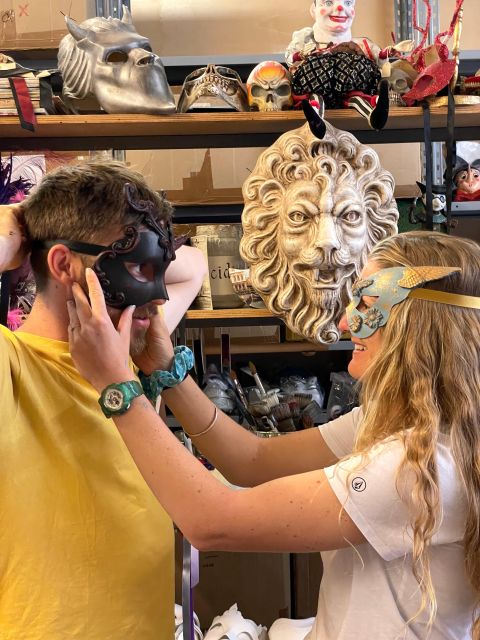
Venice’s mask tradition becomes much more memorable when you make one yourself. At Carta Alta’s working studio on Giudecca, you choose a paper-mâché mask, learn about the Bauta, Moretta, Commedia dell’Arte characters, and Dottore della Peste, then decorate your own piece with paint and applied details.
I like the small groups of up to eight, which give Augusto and his assistants time to help without taking over your design. I also like the film connection: Carta Alta has made masks for productions including Gossip Girl, Fifty Shades of Grey, and Spider-Man: Far From Home. The main thing to consider is the trip across the water and the compact 90-minute schedule. Some masks are smaller than expected, and you may wish for extra time or more decorative choices.
Key points to know
- A working studio on Giudecca: You leave the crowded center and visit Carta Alta in a quieter part of Venice.
- Augusto and patient instructors: The team explains the craft clearly and helps you create a mask even if you do not think of yourself as artistic.
- Historic Venetian designs: You learn about the Bauta, Moretta, Commedia dell’Arte masks, and Dottore della Peste.
- Baroque decoration: You do more than paint, adding decorative pieces and layers to make the mask your own.
- A useful family activity: Children, adults, and older family members can take part, with explanations adjusted to age and interest.
- A souvenir with a story: You take home a handmade mask rather than another shop-bought trinket.
Crossing to Giudecca for a quieter Venice
Carta Alta is at Fondamenta S. Biagio, number 796, on Giudecca. The meeting point is at the palace door, a short walk from the Giudecca Palanca vaporetto stop.
From the stop, go right, cross the first bridge, and walk for about two minutes. The studio is also near the Hilton Hotel and Harry’s Dolci, which are the closest taxi drop-off points listed for the area.
The crossing matters. This is not a workshop tucked beside St. Mark’s Square, so you need to allow time for the vaporetto. One person calculated the boat journey from central Venice at about an hour, depending on the route and starting point. Another found it only a few minutes by water bus from St. Mark’s Square. Those accounts can both make sense because vaporetto routes, waiting time, and transfers vary.
My practical advice is simple: do not schedule this with a tight connection to a train, flight, or timed museum entry. Give yourself a generous margin. The ride to Giudecca is part of seeing Venice from the water, and the quieter setting is a welcome change from the lanes around the main sights.
The studio’s location gives you a reason to linger on Giudecca after the workshop. The area has atmospheric restaurants, and the staff are happy to suggest local places to eat and drink. You can turn the class into a half-day outing rather than treating it as a quick detour.
A few other Venice mornings to weigh against this
- Venice: Carnival Mask Workshop
★ 4.5 · 1,925 reviews - Venice: Pasta and Tiramisu Cooking Class with Wine
★ 4.9 · 1,010 reviews - Pasta and Tiramisu Cooking Class with Wine in Venice
★ 5.0 · 945 reviews
Inside Carta Alta’s mask-making studio
Carta Alta is not presented as a classroom in a hotel or a temporary activity room. You work in an artisanal mask studio, surrounded by masks and examples that show the range of Venetian design.
That setting gives the class a useful sense of place. You can see the kind of work the artisans make, notice how shapes and finishes differ, and use the displays for ideas. The studio is air-conditioned, which is especially helpful during Venice’s warmer months when you may already have spent hours walking on stone streets.
The film connection adds another layer. Carta Alta has produced masks used in several well-known film and television productions, including Gossip Girl, Fifty Shades of Grey, Fifty Shades of Black, Spider-Man 2, and Spider-Man: Far From Home. The exact productions discussed may depend on the guide and the group, but you can ask about the studio’s work.
This is a nice bonus, not the main reason to book. The stronger appeal is working in a real craft setting and taking part in the process. If you are interested in cinema, costume, or stage design, the connection makes the studio visit more distinctive.
The opening lesson: four Venetian mask traditions
The session begins with an explanation of masks in Venice. The introduction focuses on several important models, and this short talk helps you understand what you are looking at before you start decorating.
The Bauta is one of the most recognizable Venetian mask forms. The traditional shape covers much of the face and has a strong, angular profile. It is linked with the old Carnival tradition and is useful for understanding why Venetian masks can look dramatic even before paint or decoration is added.
The Moretta has a different character. It is associated with a smaller, oval face covering and a more restrained look. Learning about the contrast between the Bauta and Moretta shows you that Venetian masks were not all made for the same effect.
You also hear about Commedia dell’Arte masks. These come from stock characters in Italian theater, with exaggerated features and instantly readable personalities. A mask inspired by this tradition can feel playful, comic, or theatrical.
Then there is the Dottore della Peste, the plague doctor mask with its long beak. It is one of Venice’s most familiar images, though its modern Carnival association is stronger than the everyday experience many people imagine from souvenirs.
The opening explanation is brief, so do not expect a long academic lecture. That is appropriate for a hands-on class. The useful part is the context: you learn why certain shapes look the way they do, then choose a form with more intention.
Choosing your paper-mâché mask
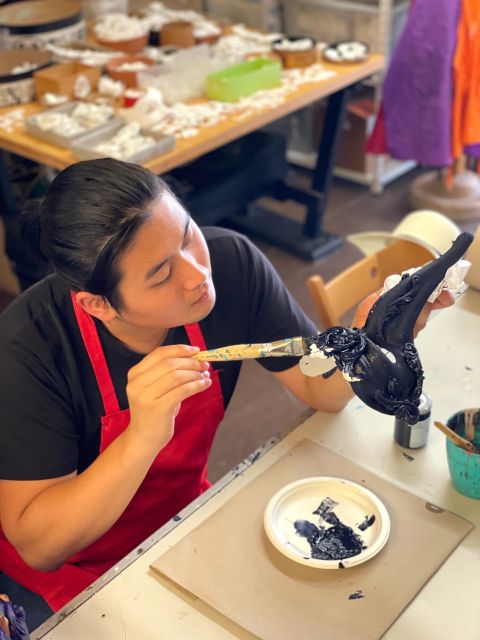
After the introduction, you select from a broad range of paper-mâché masks. Shape is your first major decision, and it affects the whole design.
Some people know at once that they want a theatrical face or a classic Carnival form. If you are unsure, ask the instructor which shapes are easiest to decorate or which will best suit the style you have in mind. The team is used to helping beginners, so you do not need to arrive with a finished concept.
The masks are described as good quality, and several participants were surprised by how substantial they felt. Still, keep expectations realistic. One person found the masks smaller than expected. If you are picturing a huge wall decoration or a full-face costume piece, ask to see the available sizes before you settle on a design.
The choice of base is one of the class’s better features. You are not all handed the same blank mask and told to copy a sample. You begin with a form that feels like your own, then build from there.
Same city, an entirely different afternoon:
- Venice: Doge’s Palace Reserved Entry Ticket
★ 4.6 · 42,716 reviews - Venice: Grand Canal Gondola Ride with App Commentary
★ 4.1 · 18,908 reviews - Boat Trip: Glimpse of Murano, Torcello & Burano Islands
★ 4.3 · 15,699 reviews - Venice: Grand Canal by Gondola with Live Commentary
★ 4.1 · 13,681 reviews
Learning Carta Alta’s baroque decoration method
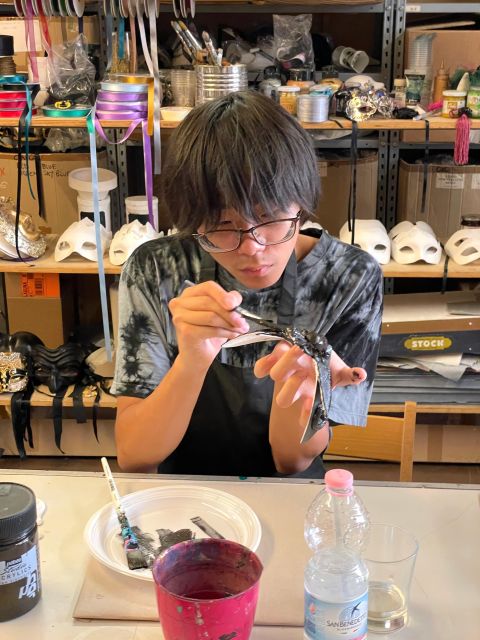
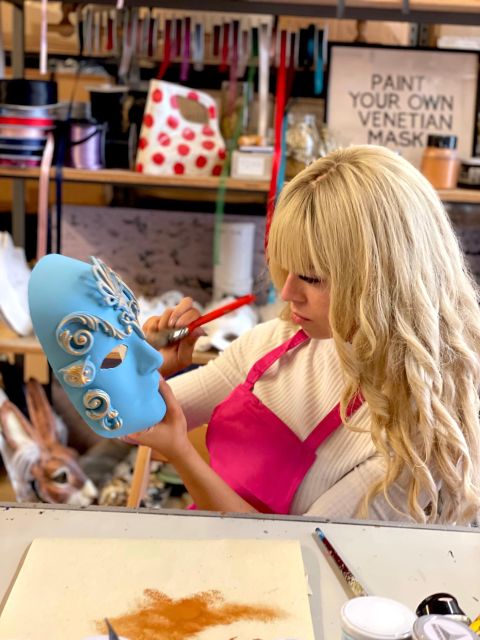
The signature lesson focuses on a baroque technique used to decorate the masks. You learn how the studio combines color, surface detail, and applied elements to create a more finished look.
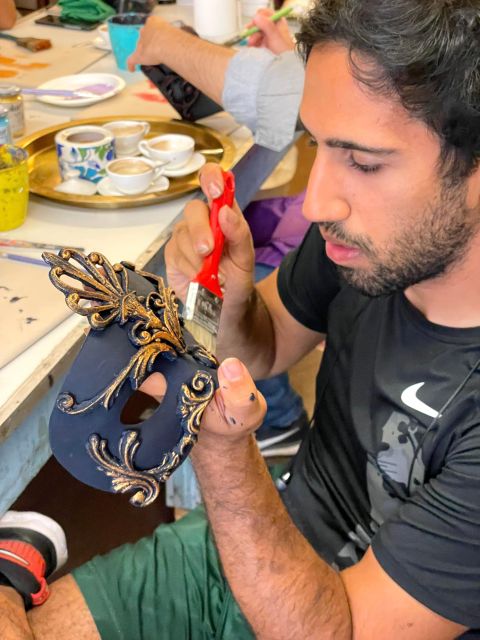
This is where the activity becomes more than a simple painting session. You can select decorative pieces, place them on the mask, paint the surface, and add highlights. The final appearance comes from several small choices rather than one large artistic gesture.
The instructors demonstrate the process and then let you work. That balance is important. You receive enough direction to avoid feeling lost, but you still have room to choose colors and arrange the details in your own way.
Several people who described themselves as non-artistic were pleased with their finished masks. I can see why. The workshop breaks the work into manageable decisions, and the supplied pieces help create a polished result even when your drawing skills are limited.
You may want glitter, feathers, or other extras, but the available materials can vary. One person specifically wished for more options such as glitter or feathers. If those details are important to your design, ask what is available before you begin. The class gives you decoration choices, but it is not a fully open-ended art supply studio.
Why the instructors make a difference
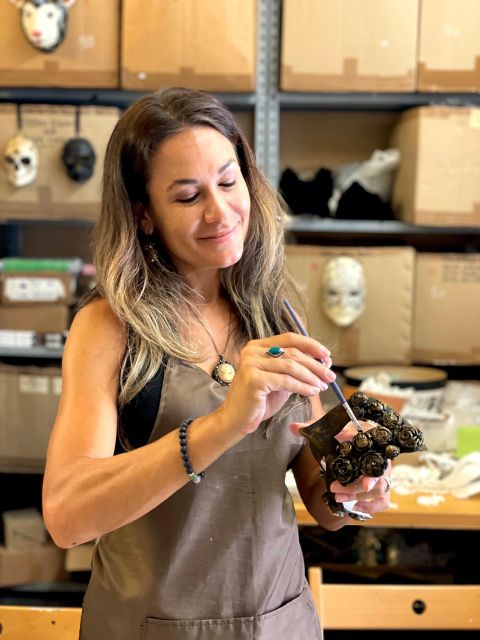
The people guiding the class are a major part of its appeal. Augusto is frequently singled out for his warmth, patience, and creative skill. He may lead the session with an assistant, including an artist and painter who helps participants with their designs.
His experience making masks for film productions gives the history and craft discussion a personal angle. You can ask how professional masks are designed, how theatrical effects differ from a souvenir mask, or what makes a finished piece read well on camera.
The team also adjusts explanations to the age and interests of the group. That makes the class workable for families with children as well as adults who want more detail about the craft.
Language support is offered in English, Spanish, and Italian. One booking was made specifically in Spanish but ended up being conducted in English, with family translation filling the gap. The activity still worked well for that group, but if language is important to someone in your party, confirm the expected teaching language ahead of time.
The small group limit of eight is another practical strength. You can ask for help with painting, placement, or color choices without waiting behind a large crowd. The instructors guide you, but they do not appear to insist on a single correct style.
A good choice for families and reluctant artists
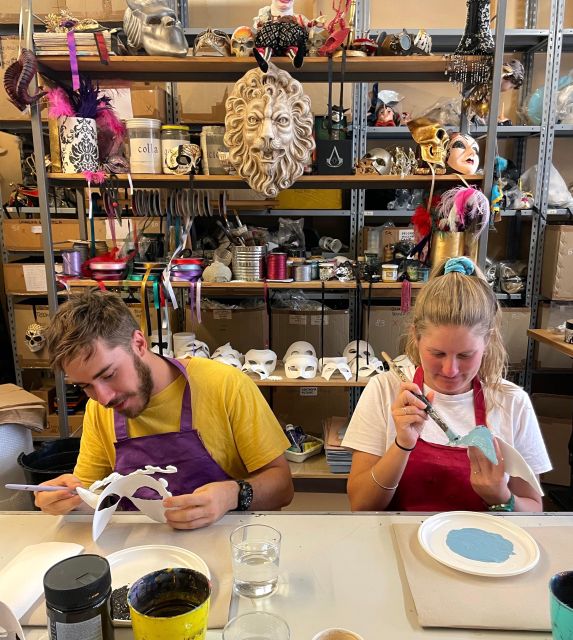
I would put this near the top of the list for a family visiting Venice. Children can make visible progress quickly, and the process gives them something concrete to do. The historical introduction adds learning without turning the outing into another formal museum visit.
The activity has worked well for children as young as three when accompanied by adults, as well as older children and teenagers. A child who enjoys coloring, costumes, theater, or making things will likely find plenty to do. Adults can take the decoration in a more detailed direction, so the class does not feel like a children-only activity.
It also suits the person in your group who says they are not creative. The instructors show you what to do, the mask shapes provide a starting point, and the decorative pieces reduce the pressure to invent everything from scratch.
The 90-minute length is both a benefit and a limit. It fits neatly into a sightseeing day and is long enough to produce a finished mask. But you will need to keep moving, especially if you spend too long deciding between colors or designs.
If you enjoy slow craft work, you might wish for a longer session. Some people wanted more time or a wider range of materials. If your group likes to work at an unhurried pace, arrive with a rough idea of the colors and mood you want.
What the $71 price includes
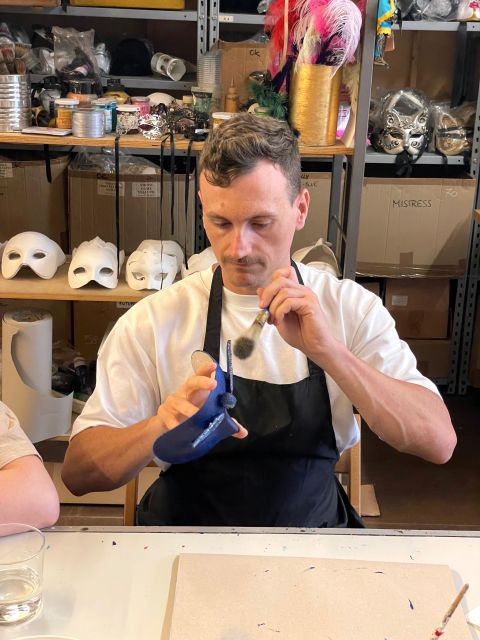
At $71 per person, this is not the cheapest souvenir stop in Venice. You are paying for a guided workshop, the mask itself, decoration materials, instruction, a short history lesson, and the use of a professional studio.
I think the price makes sense if you value the activity as well as the object. A mass-produced mask from a tourist stall may cost less, but it will not carry the same memory of choosing the form, painting it, and adding the final details yourself.
The value is also stronger for families or couples who want a shared activity. You each create something different, and the finished masks become physical reminders of the trip. Several participants described the process as relaxing, and I can understand that appeal after a morning of navigating Venice’s crowds and bridges.
The value is less clear if you only want a traditional mask to hang on the wall and do not enjoy crafts. In that case, buying one may be faster and cheaper. This class is worth the price because of the time with the artisans and the chance to make the piece yourself.
Photos, local tips, and the finished mask
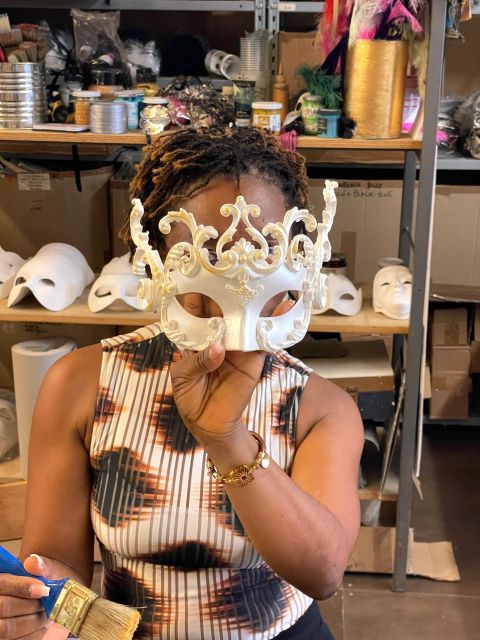
At the end, you can take photos with your creation and with the studio’s famous masks. That is useful because the finished piece may be the only record of the process once you leave.
The staff are also happy to answer questions about Venice. They can suggest traditional places to eat, local drinks, and less touristy things to see. Several people valued the restaurant advice, including a recommendation for pasta nearby.
Treat these suggestions as an added benefit rather than the main product. The quality of the advice will depend on who is working and what you enjoy. Still, getting a local tip while you are already in a quieter neighborhood can improve the rest of your day.
You take the finished mask home with you. The experience provides what you need, so you do not have to bring paints, brushes, or protective equipment. It is sensible to carry the mask carefully after the class, especially if you still have a full day of sightseeing ahead.
Timing, transport, and small limitations
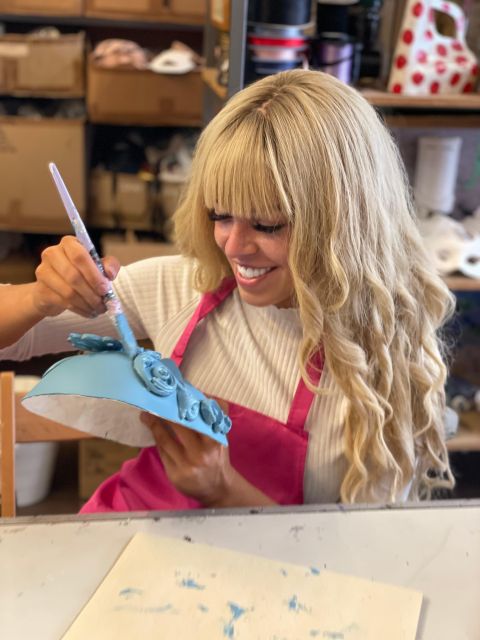
Plan the crossing before booking. From central Venice, the water journey can take much longer than the 90-minute workshop, particularly if you need to wait for a boat or change routes. Check the vaporetto schedule on the day and leave a cushion around your appointment.
The meeting instructions are specific: Fondamenta S. Biagio 796, at the palace door. From Giudecca Palanca, go right, take the first bridge, and continue for about two minutes. These directions are worth saving on your phone because Giudecca’s paths and bridges can be confusing when you are rushing.
The workshop is air-conditioned, a real plus in summer. The group cap keeps the class personal, and the guides speak English, Spanish, and Italian. Free cancellation is available up to 24 hours before the start, and you can reserve while paying later, which helps if your Venice plans are still shifting.
The main drawbacks are modest but real:
- The studio is away from the central sights, and transport can take time.
- Ninety minutes may feel short if you like elaborate craft work.
- Mask sizes may be more compact than expected.
- Materials include decorative pieces and paint, but extra items such as feathers or glitter may not be available.
- The advertised language and the language used in practice should be confirmed if translation is important.
Who should book this mask workshop
I would recommend Carta Alta to families, couples, creative people, and anyone who wants a souvenir with a personal story. It is especially good for a rainy afternoon, a hot day when you want air-conditioning, or a break from churches and galleries.
It is also a smart choice for a repeat visitor who has already seen Venice’s headline sights. Giudecca gives you a different setting, and the studio offers an activity rather than another viewing experience.
You may want to skip it if your schedule is packed, you dislike hands-on projects, or you are unwilling to spend time crossing to Giudecca. You should also look elsewhere if you want to build a mask from raw paper-mâché. This class begins with prepared paper-mâché forms and concentrates on choosing, decorating, and finishing your piece.
My verdict: a personal Venetian souvenir worth the crossing
I would book this workshop if I wanted a memorable Venice activity rather than another purchase. The best parts are the working studio, the patient guidance from Augusto and his team, the short lesson on classic mask forms, and the freedom to make a design that does not look like everyone else’s.
Allow more time than the class itself, confirm the language your group needs, and keep expectations in check about mask size and decorative materials. With those points understood, $71 buys you a creative afternoon, a glimpse into a long Venetian craft tradition, and a handmade object you can carry home. That is good value for the right kind of visitor.
FAQ
Where does the Venetian mask workshop take place?
The workshop takes place at Carta Alta on Giudecca, at Fondamenta S. Biagio, number 796. The meeting point is at the palace door.
How do I reach Carta Alta by vaporetto?
From the Giudecca Palanca vaporetto stop, go right, cross the first bridge, and walk for about two minutes. The activity information also lists the Hilton Hotel and Harry’s Dolci as the closest taxi stops.
How long does the workshop last?
The workshop lasts 1.5 hours, or 90 minutes.
What languages are available?
Instruction is offered in English, Spanish, and Italian. If a specific language is essential for someone in your group, confirm it before attending.
Is the mask included?
Yes. You choose from a range of paper-mâché masks, decorate it with guidance and supplied materials, and take your finished mask home.
What is the cancellation policy?
You can cancel up to 24 hours in advance for a full refund. The activity also allows you to reserve now and pay later.
Fresh on the Venice list
- Venice Doge’s Palace & St. Mark’s Semi-Private Tour, Max 6 People★ 5.0 · 192 reviews
- Venice: Crimes, Legends, and Mysteries Sunset Tour★ 4.9 · 195 reviews
- Venice Small Group Walking Tour of Most-Famous Sites &Attractions★ 4.5 · 195 reviews
- Murano and Burano Islands Semi-Independent Tour★ 4.0 · 195 reviews
- From Venice: Dolomites Day Trip★ 4.8 · 197 reviews
- 4 hours Private Boat Tour to Murano, Burano with local real guide★ 4.5 · 203 reviews
- St Mark’s Basilica & Doge’s Palace with Secret Passages Access★ 4.5 · 204 reviews
- Murano and Burano half-day trip from Punta Sabbioni Jesolo★ 3.9 · 204 reviews
Workshops, compared.
3 in 1 Cooking Class near Navona: Fettuccine, Ravioli & Tiramisu
Read our review →
Florence Pizza or Pasta Class with Gelato Making at a Tuscan Farm
Read our review →
Pasta & Tiramisu Cooking Class with Unlimited Wine
Read our review →
Pizza-Making Workshop with Drink and Appetizer
Read our review →
Pasta & Tiramisu Class with Fine Wine by the Vatican
Read our review →
Cooking Class and Lunch at a Tuscan Farmhouse with Local Market Tour from Florence
Read our review →Browse the lists this tour appears in