
Reviewed · COOKING CLASSES
Florence: Pasta Cooking Class with Unlimited Wine
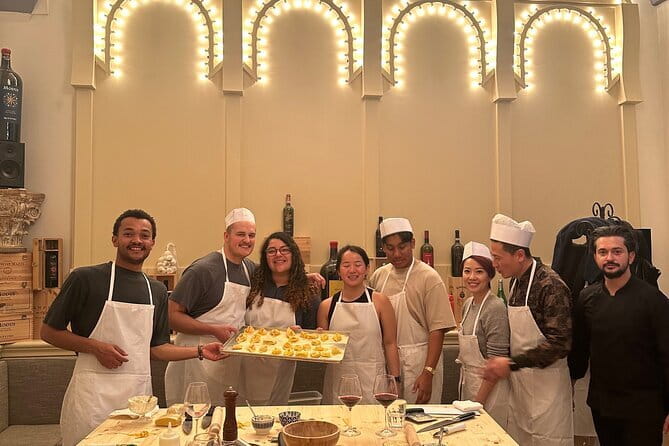
The unusual part comes before the first sheet of pasta: you cook inside a 13th-century medieval tower just a short walk from Brunelleschi’s Dome. A chef leads you from flour to finished meal, with ravioli, tortelli, pappardelle, and matching sauces on the menu.
I like the hands-on format, since you make the food rather than watch a demonstration. I also like the plain value: for about $21, your class includes ingredients, equipment, a meal, Tuscan wine, and unlimited soft drinks. The main consideration is pace. One participant found the instructions moved a little fast, so you should be ready to keep up and ask for help.
Key points to know
- Cook in Dante-related surroundings: The school occupies a medieval tower that belonged to the family of Dante Alighieri’s wife.
- Make three kinds of pasta: The class may include ravioli, tortelli, and pappardelle, with sauces such as butter and sage, arrabbiata, and Tuscan ragù.
- Eat everything you prepare: The finished dishes become your meal, usually with several pasta and sauce combinations.
- Meet different chefs: In recent sessions, Andrea, Victoria, Antonio, and Valentino have led classes.
- Good value at about $21: Ingredients, tools, instruction, Tuscan wine, and unlimited soft drinks are included.
- Suitable for many diets and mobility needs: Vegetarian and other dietary options are available, and the activity is wheelchair accessible.
Pasta making inside a medieval Florence tower
Florence has no shortage of food classes, but the setting gives this one a useful sense of place. You are not cooking in a generic modern studio. The school is inside a stone medieval tower dating from the 1200s, near Florence’s famous cathedral dome.
The tower also has a literary connection. It belonged to the family of Dante Alighieri’s wife. Dante is closely tied to Florence and to the development of the Italian language, so the building adds a small but memorable link between your meal and the city’s cultural past.
That does not mean you receive a long history lecture. The focus stays on cooking. Still, the old walls help the class feel connected to Florence rather than simply imported into it. If you are choosing between a cooking class in a standard classroom and one in a medieval structure near the Duomo, this setting is a real advantage.
The exact meeting point can vary according to the option you book, so check your confirmation carefully. The school is described as a short distance from Brunelleschi’s Dome, but you should still allow time to locate the correct entrance.
More Cooking Classes in Florence
- Florence Pizza or Pasta Class with Gelato Making at a Tuscan Farm
★ 5.0 · 6,801 reviews - Florence: Pasta & Tiramisu Cooking Class with Unlimited Wine
★ 4.9 · 6,708 reviews - Florence: Pasta Cooking Class with Unlimited Wine
★ 5.0 · 6,413 reviews
From flour to pasta dough
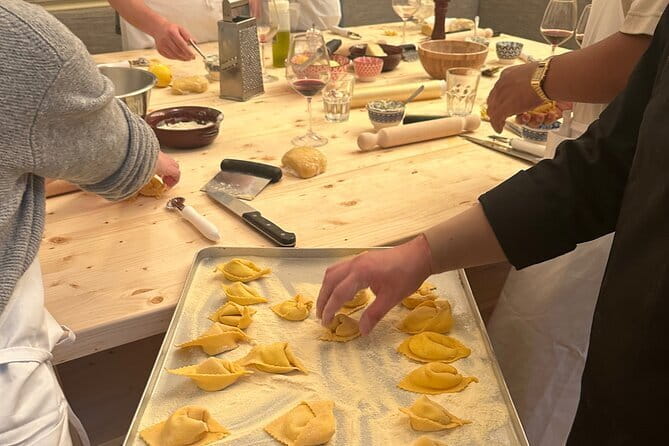
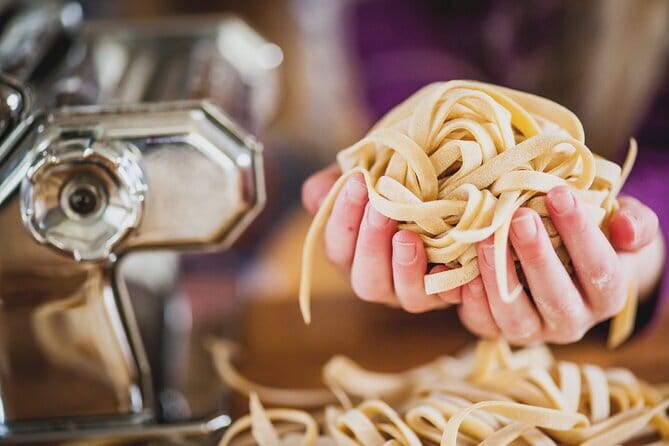
The class lasts about three hours and begins with the basics. You do not need to bring cooking equipment. Ingredients and all necessary tools are supplied, and the chef explains each stage as you work.
The central lesson is fresh pasta from scratch. You start with the dough, then work through the steps needed to make several shapes. The point is not simply to produce one attractive plate. You learn how the same basic ingredients can become different kinds of pasta, each with its own shape and use.
The class may include three types such as ravioli, tortelli, and pappardelle. Ravioli and tortelli require attention to filling, sealing, and cutting. Pappardelle gives you a different task, with broad ribbons that show off the texture of freshly rolled dough.
This variety keeps the three hours moving. It also gives you skills you can repeat at home. You will leave with more than a single recipe because the lesson covers the process, not just the final dish.
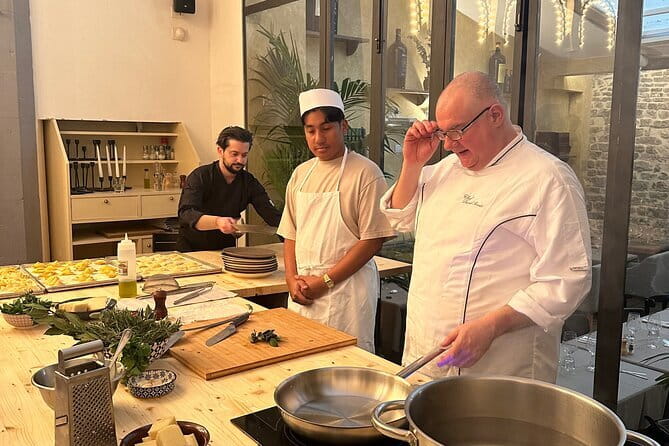
The chef stays involved throughout. Recent classes have been led by Andrea, Victoria, Antonio, and Valentino, though the chef depends on the session. The teaching style appears friendly and active. Andrea was noted for keeping the class fun while explaining the cooking, and Antonio helped participants throughout the work. Valentino was especially helpful during a family class.
You should expect to work at the table and receive individual guidance. One participant found the pace a little quick, so do not hesitate to ask the chef to repeat a step. Pasta dough is forgiving enough for a correction, and hands-on help is one of the strongest parts of the class.
Three pastas, three sauces, one shared meal
The cooking does not stop at pasta. You also prepare sauces to match the shapes. Possible combinations include butter and sage, arrabbiata, and an old-fashioned Tuscan ragù.
This matters because sauce is part of the lesson. A cooking class that teaches only how to roll dough leaves out half the meal. Here, you see how a simple butter and sage sauce differs from a spicy arrabbiata or a slow, hearty ragù.
The final menu may vary, but the basic promise is clear: you eat what you make. Recent sessions served three to four pasta items prepared by the group, with three sauce combinations mentioned in one class. Since everyone is cooking together, the meal reflects the work of the whole table rather than just one person’s plate.
That shared result is part of the fun. You may shape one pasta particularly well and another less neatly, but the meal still comes together. The class rewards participation more than perfect technique.
The food also gives you a useful comparison with restaurant pasta. Fresh pasta has a different texture from dried pasta, and ravioli or tortelli made during class can feel more personal than another plate ordered at a trattoria. One participant rated the pasta as the best they ate during a Florence trip. That is a personal judgment, of course, but it points to the value of eating the finished work while the lesson is still fresh.
Tuscan wine and unlimited soft drinks
Wine is included, and the experience provides Tuscan wine during the class and meal. Soft drinks are also unlimited, which makes the activity easier for families and for anyone who does not want to drink alcohol.
The wine is not an optional extra added to the bill at the end. It is part of the social rhythm of the class. You cook, pause, taste, and continue. Several people especially enjoyed the relaxed atmosphere created by the wine.
Still, keep the setting in mind. This is a cooking lesson first. You should pace yourself, particularly if you have plans immediately afterward. The three-hour duration already allows time for cooking and eating, so the wine works best as a complement rather than the main event.
For families, the unlimited soft drinks are a practical touch. A parent can enjoy Tuscan wine while children choose a nonalcoholic drink. The class has also worked well for older children and teenagers. A family with two teenage daughters found the atmosphere lively and enjoyed the playful call-and-response energy of the kitchen.
Same city, an entirely different afternoon:
- Florence: Skip-The-Line Uffizi Gallery Timed Entry Ticket
★ 4.5 · 27,832 reviews - Tuscany Day Trip from Florence: Siena, San Gimignano, Pisa and Lunch at a Winery
★ 5.0 · 21,634 reviews - Florence: Timed Entrance Ticket to Michelangelo’s David
★ 4.6 · 16,983 reviews - Florence: Michelangelo’s David Skip-the-Line Entry Ticket
★ 4.5 · 12,764 reviews
Why the $21 price matters
At about $21 per person, this is unusually inexpensive for a three-hour activity in central Florence. Price can change, but the included package gives you a clear way to judge the value.
You are paying for:
- A chef instructor
- All ingredients
- All cooking equipment
- Three hours of instruction
- The food you prepare
- Tuscan wine
- Unlimited soft drinks
Even if you compare it only with the cost of a meal, the value is strong. You receive dinner and an activity in one booking. Add the setting, instruction, and practical pasta skills, and the price becomes especially appealing for families or anyone watching a Florence budget.
The tradeoff is that the class may be busy and energetic rather than slow and private. No group size is specified, so you should not assume a one-on-one lesson. The chef works with the full group while also offering personal tips.
That format suits people who want a social evening. It may be less suitable if you want a quiet, highly specialized class focused on perfecting one pasta shape. At this price, the goal is broad participation, plenty of food, and a good time.
A lively class for families and couples
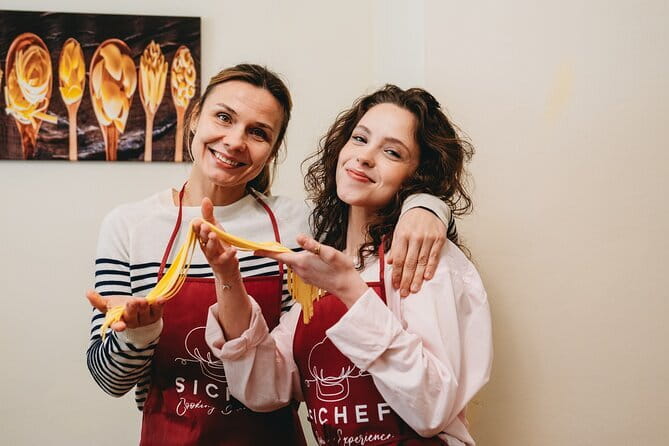
The class works well for a mixed group. Children, teenagers, and middle-aged adults have all taken part successfully. You do not need advanced cooking skills, and the chef starts with the foundations.
Families should consider this one of the better food activities in Florence because everyone has a job. You are not asking children to sit still while someone else cooks. They can help make pasta, watch it come together, and eat the result.
The atmosphere can be playful. One family enjoyed calling out yes chef during the class, and that gives you a fair idea of the tone. It is lively rather than formal.
Couples and friends also get something useful from the format. You share a task, sit down for a meal, and have a natural way to meet other people in the room. The wine adds to the social side, while the cooking gives you something to focus on beyond small talk.
Solo visitors can also fit in easily because the activity is structured around a group. The English-speaking chef keeps the instructions accessible, and you will have a shared meal at the end rather than finishing the class alone.
What the three hours feel like
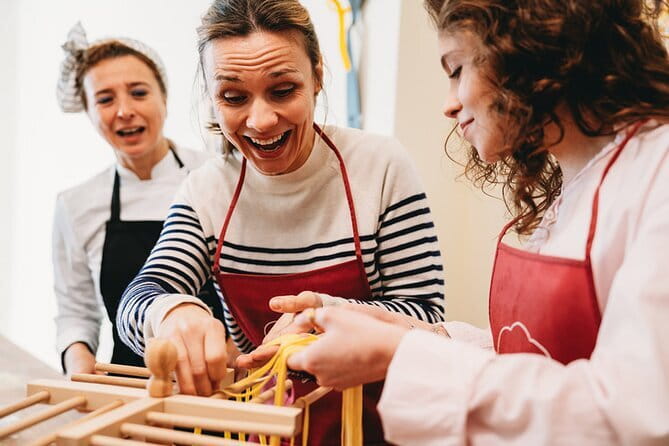
The class follows a practical sequence, although the exact order and pasta shapes can change.
First, the chef introduces the ingredients, tools, and basic pasta process. You begin with flour and work toward a workable dough. This opening is important because it shows you what the dough should feel like, not just what it should look like.
Next, you roll and shape the pasta. Ravioli and tortelli require care around fillings and edges, while pappardelle involves cutting broad strips. The chef demonstrates the process and then moves through the group to offer corrections.
After that, the sauces are prepared. Butter and sage keeps things simple, arrabbiata adds heat, and Tuscan ragù gives the meal a more substantial regional flavor. Preparing the sauces alongside the pasta helps you see how timing affects the final dish.
Finally, the group cooks and eats the food. The meal can include several pasta dishes, and the wine or soft drinks accompany the finished plates. You are not handed a small sample and sent away. The stated format is to eat everything you prepare.
A little flexibility helps. Because the class covers three pasta styles and sauces in three hours, the chef needs to keep the group moving. If you are a complete beginner, watch closely and ask questions early rather than waiting until the dough is already shaped.
Dietary needs and practical access
Vegetarian and other dietary options are available, but you need to tell the activity provider about your needs when booking. Do not wait until you arrive. The more specific you are in advance, the easier it is for the kitchen to plan.
The activity is wheelchair accessible. Since the meeting point may vary by booking option, check the access details attached to your selected time and option if you use a wheelchair or have mobility concerns.
The live instruction is in English. That makes the class workable for English-speaking visitors who want explanations as they cook. The chefs named in recent sessions have varied, so do not book expecting a particular person unless the provider confirms that detail.
You need not bring equipment. The school supplies what you use in class, which makes this easy to fit into a day of sightseeing. Wear clothing you do not mind cooking in, though the available information does not specify a dress code.
How it fits into a Florence itinerary
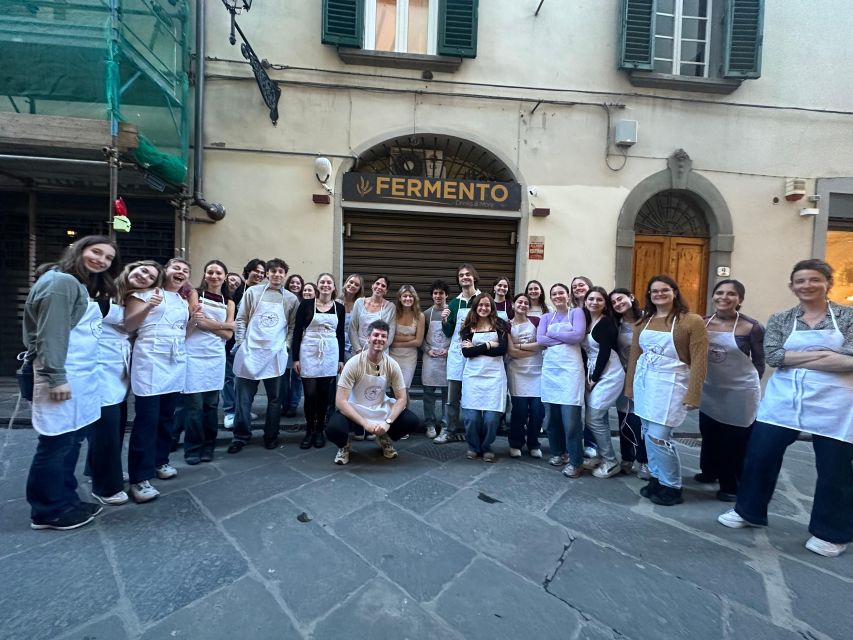
The three-hour length makes this easy to place in a Florence visit. It can fill an afternoon or evening, depending on the available start time. Check the schedule when booking because starting times are not fixed in the information provided.
Its location near Brunelleschi’s Dome also helps with planning. You can combine the class with time in the cathedral area, but do not cut it close. The meeting point can vary, and a medieval tower entrance may not be as obvious as a large museum door.
I would not schedule a major timed attraction immediately afterward. The class includes cooking, eating, and drinks, and the pace depends on the group. Give yourself breathing room at the end.
It makes a particularly good final Florence activity. You finish with a meal you helped create and a skill you can use after returning home. One class was described as a good farewell to Florence, and that makes sense: pasta, wine, old stone, and a practical memory fit together well.
Who should book this pasta class
I would recommend it most strongly to:
- Families with children or teenagers
- Couples who want a shared activity
- First-time cooks who like clear, guided instruction
- Budget-conscious visitors who want a meal plus an activity
- Solo visitors who enjoy social group experiences
- Pasta fans who want to learn fresh shapes and sauces
- Visitors who prefer an English-language class
You may want another option if you are seeking a private lesson, a long specialist discussion of regional pasta, or a quiet tasting with little group interaction. The class covers a lot in three hours, and the pace can feel quick.
The strongest praise centers on the chef-led teaching, the fun atmosphere, the three kinds of pasta, and the value. Those are exactly the areas where this experience delivers most. The medieval tower is an added reason to choose it, not a substitute for the cooking.
Should you book it?
For about $21, this is an easy recommendation if you want to cook, eat, and drink in a memorable Florence setting without spending half a day’s sightseeing budget. You make several pastas, prepare sauces, receive help from a chef, and eat the results.
Book it if you like active classes and do not mind a lively group pace. Tell the provider about dietary needs in advance, check the meeting point for your booking option, and leave some time around the three-hour session.
Skip it only if you want a private or highly polished culinary lesson. For everyone else, especially families and budget-minded food lovers, this offers unusually good value and a useful taste of Italian home cooking.
FAQ
How long does the pasta cooking class last?
The activity lasts three hours.
Where does the cooking class take place?
The cooking school is inside a medieval tower from the 1200s in Florence, a short distance from Brunelleschi’s Dome.
What types of pasta will I make?
The class prepares three types of fresh pasta, such as ravioli, tortelli, and pappardelle. The exact selection may vary.
Will I eat the pasta I make?
Yes. You eat everything prepared during the experience, including the pasta and sauces made by the group.
What sauces are included in the class?
Possible sauces include butter and sage, arrabbiata, and old-fashioned Tuscan ragù.
Is wine included?
Yes. Tuscan wine is included, and you can also have unlimited soft drinks.
Is the class taught in English?
Yes. The activity includes a live English-speaking chef guide.
Can I request a dietary option?
Yes. Vegetarian and other dietary options are available. You should tell the activity provider about your needs when booking.
Is the experience wheelchair accessible?
Yes. The activity is listed as wheelchair accessible. The meeting point may vary according to the option booked, so check your booking details.
More Workshops in Florence
- Cooking Class and Lunch at a Tuscan Farmhouse with Local Market Tour from Florence
★ 5.0 · 4,831 reviews - Florence Cooking Class The Art of Making Gelato & Authentic Pizza
★ 5.0 · 2,053 reviews - Small Group Cooking Class & Market Food Tour in Florence
★ 5.0 · 1,574 reviews - Florence: Pizza and Gelato Preparation Class
★ 4.8 · 1,143 reviews
More Pasta in Florence
- Pastamania – Florence Pasta Making Class
★ 5.0 · 3,050 reviews - Florence: Cooking Class Pasta & Tiramisu Making Unlimited Wine
★ 5.0 · 2,234 reviews - Florence: Pasta & Tiramisu Cooking Class with Unlimited Wine
★ 4.8 · 828 reviews - Florence: Handmade Pasta & Dessert Class with Unlimited Wine
★ 4.8 · 788 reviews
Fresh on the Florence list
- Florence: Uffizi Guided Tour with Skip-the-Line Entry Ticket★ 4.8 · 499 reviews
- The Best of Florence Walking Tour in a Small Group★ 5.0 · 503 reviews
- Florence: Uffizi Gallery Tickets with Optional Audio Guide★ 4.1 · 503 reviews
- Premium Pasta and Gelato Cooking Class in Florence★ 5.0 · 508 reviews
- From Florence: Tuscany & San Gimignano Tour with 2 Tastings★ 4.8 · 511 reviews
- Florence: Guided Tour of Medici Family Secrets and Chapels★ 4.7 · 512 reviews
- Tuscany Vespa Tours Through the Hills of Chianti★ 5.0 · 515 reviews
- Pasta and Tiramisu Cooking Class with optional Local Market Tour★ 5.0 · 515 reviews
Cooking Classes, compared.
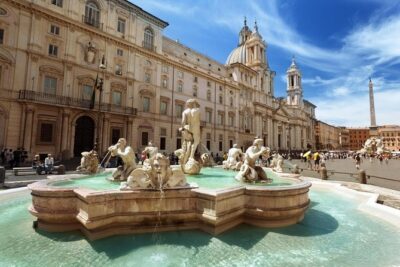
3 in 1 Cooking Class near Navona: Fettuccine, Ravioli & Tiramisu
Read our review →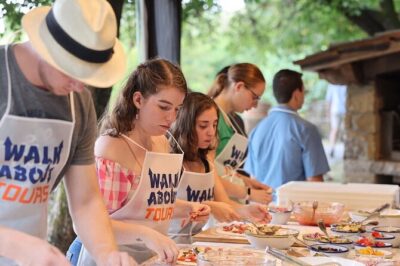
Florence Pizza or Pasta Class with Gelato Making at a Tuscan Farm
Read our review →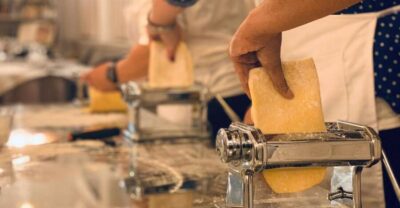
Pasta & Tiramisu Cooking Class with Unlimited Wine
Read our review →
Cooking Class and Lunch at a Tuscan Farmhouse with Local Market Tour from Florence
Read our review →
Authentic Pizza Making Class in Naples with Appetizers and Drink
Read our review →
Pasta Making Class with Wine, Limoncello, and Dessert
Read our review →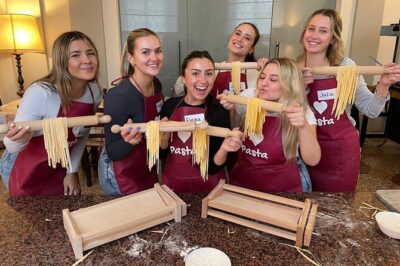
Browse the lists this tour appears in