

Reviewed · UFFIZI & ACCADEMIA GALLERY TOURS
Florence: Michelangelo’s David Skip-the-Line Entry Ticket
Michelangelo’s David is the reason most people enter Florence’s Accademia Gallery, and the first sight of the 17-foot marble figure can stop you in your tracks. This skip-the-line ticket gets you past the regular ticket queue and into the museum without tying you to a guided group.
I like two things here: you can move at your own pace, and you get access to far more than David alone, including Michelangelo’s unfinished Prisoners and the unusual Museum of Musical Instruments. The main consideration is price. At $45 per person, you are paying a substantial premium over the museum’s basic admission, which has been cited at €12, so the value depends on how much you value saved time.
Key points to know before booking
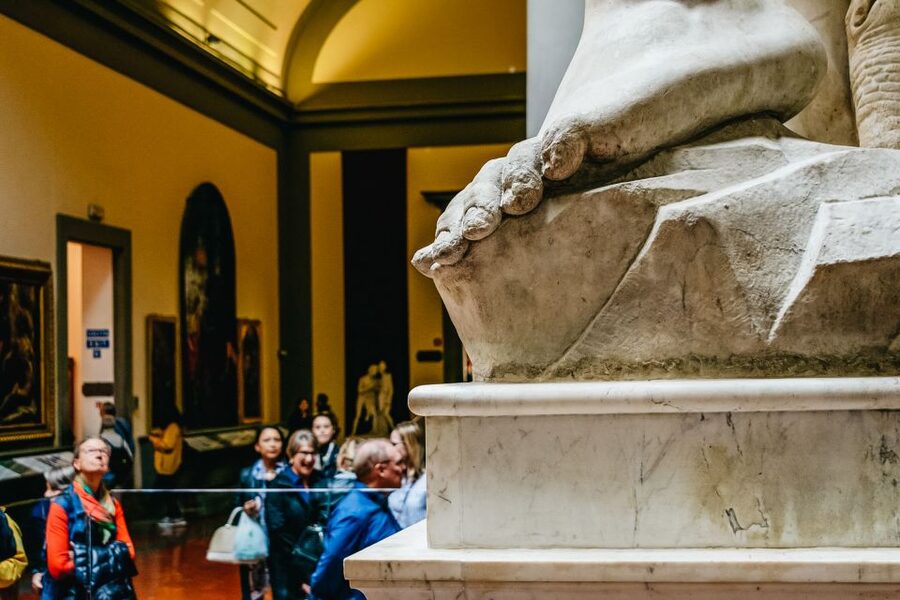
- David is the main event: See Michelangelo’s original marble sculpture in the Hall of Michelangelo, not a copy in a public square.
- The ticket is self-guided: You explore independently, with an optional audio guide rather than a standard tour included.
- Skip-the-line does not mean instant entry: Security screening can still add about 15 minutes, and timed-entry queues may form.
- The ticket office is nearby: It is generally about one block from the museum, though the collection point can be hard to spot.
- Do not rush the side rooms: The Four Prisoners, San Matteo, musical instruments, and Gipsoteca Bartolini add real value.
- Go early if you can: The gallery and even the reserved-entry area can become crowded later in the day.
Why David is worth seeing in person
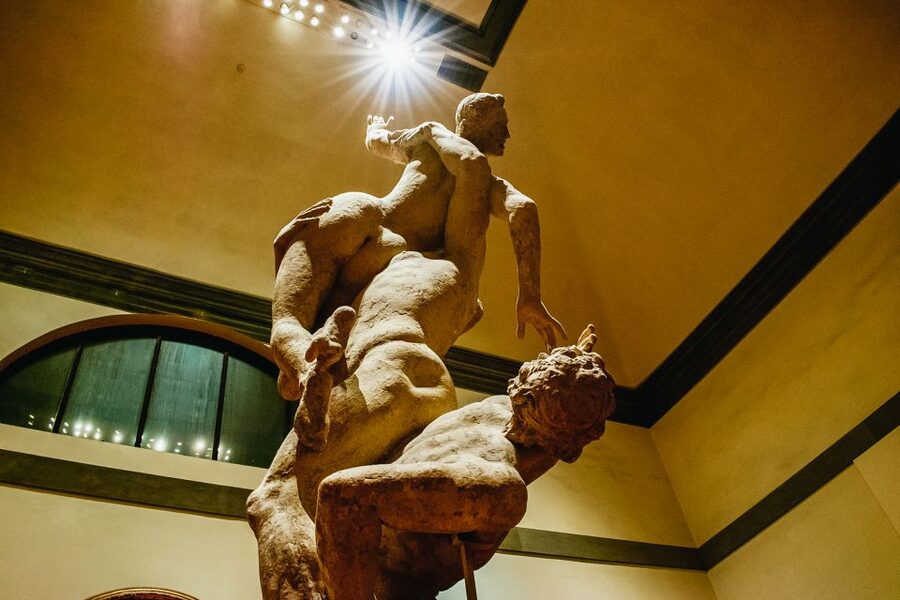
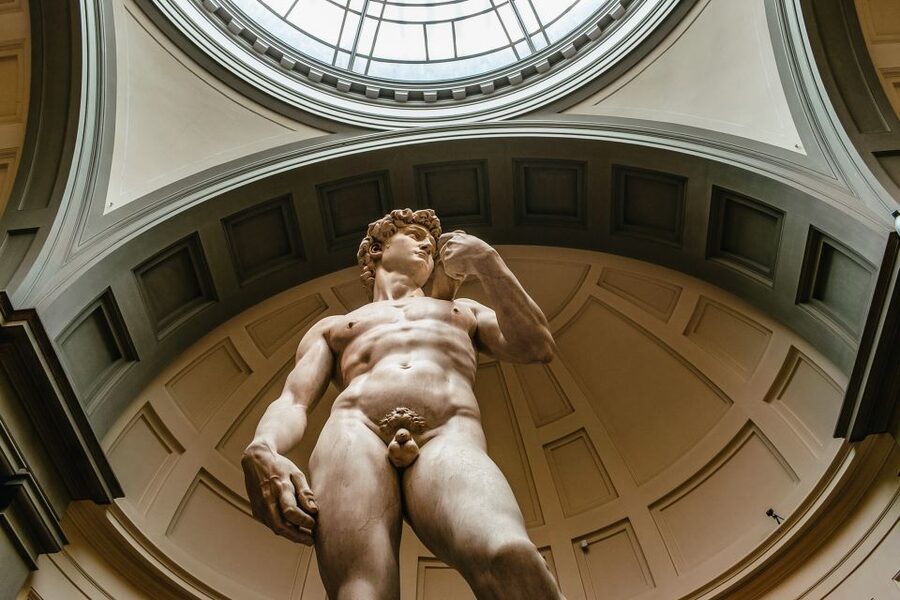
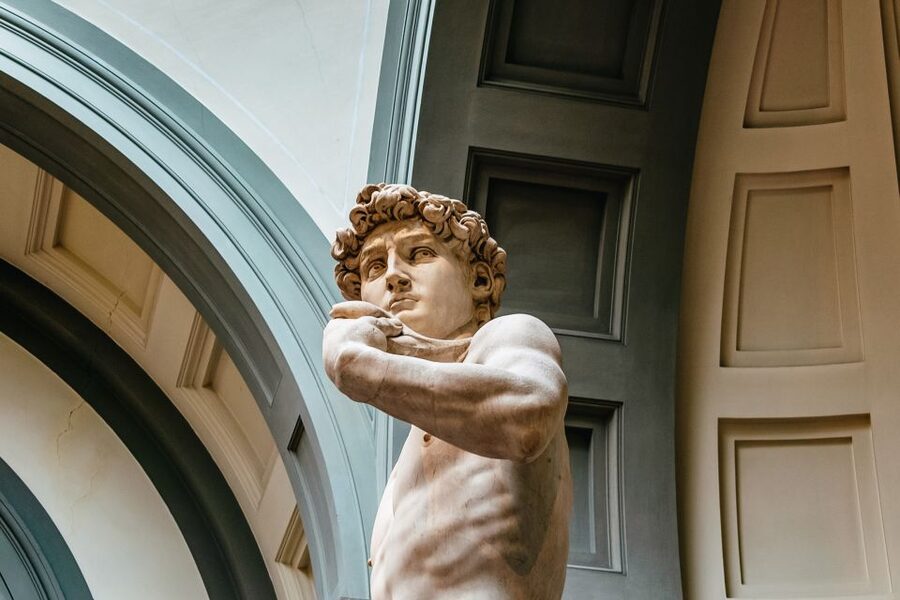
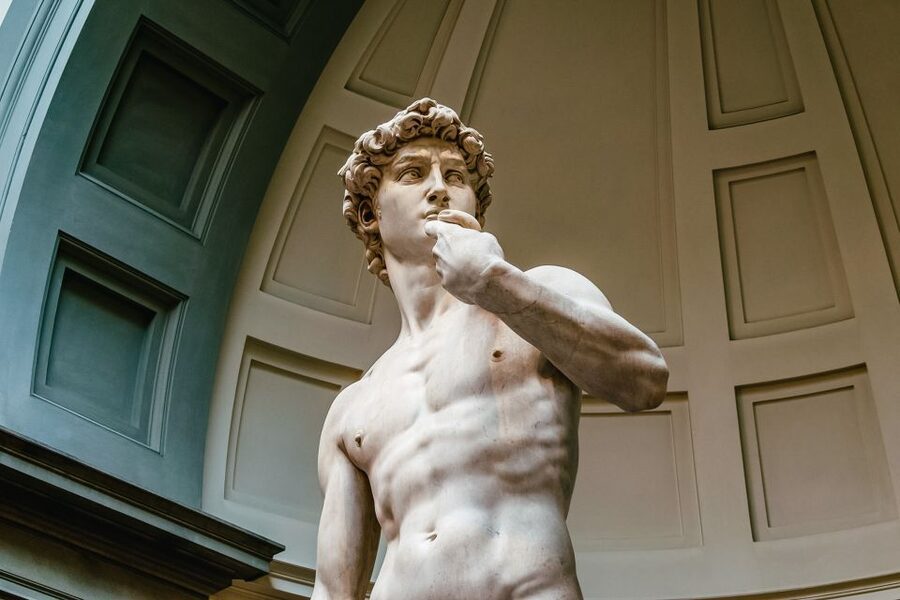
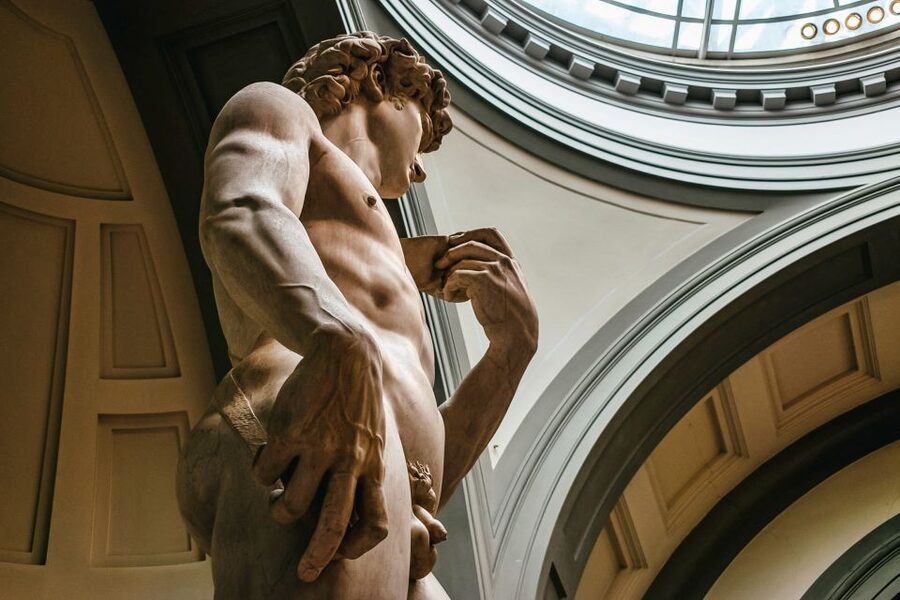
Photos flatten David. In the gallery, you see the scale, the slight turn of the body, the alert expression, and the small details in the hands and face. Michelangelo carved the statue from a single block of marble, and the work is remarkable not only for its size but also for its sense of controlled tension.
David is shown before his fight with Goliath. He is not celebrating a victory. His eyes look alert, his brow tight, and his body ready to act. That quiet pause gives the statue its power.
The sculpture was originally made for Florence Cathedral but was placed in front of the Palazzo Vecchio in 1504. The original now has a protected indoor home at the Accademia, while copies can be seen elsewhere in Florence. If you have already seen one of those copies, expect the museum version to feel very different.
The room is large enough to let you walk around David and see him from several angles. You will probably spend most of your time here, and that is perfectly reasonable. The museum is not huge, so the visit does not require an entire day unless you prefer to read every label and study each room carefully.
More Skip-the-Line Tickets in Florence
- Florence: Skip-The-Line Uffizi Gallery Timed Entry Ticket
★ 4.5 · 27,832 reviews - Florence: Skip-the-Line Uffizi Small Group Tour
★ 4.6 · 5,926 reviews - Skip the line: Uffizi and Accademia Small Group Walking Tour
★ 4.5 · 3,135 reviews
What your timed entry actually does
This is not a guided tour in the usual sense. You meet a host or greeter near the Accademia, receive or collect your reserved ticket, and are directed to the proper entry line for your time slot. Once inside, you are free to explore on your own.
That setup suits you if you want control. You can go straight to David, take a slow look at the paintings, or spend extra time with the unfinished marbles. You are not waiting for a group to gather or following a guide from room to room.
The phrase skip-the-line needs a little explanation. It generally means skipping the regular ticket-purchase queue, not skipping every part of the entrance process. All visitors must pass through a metal detector and security check. At busy times, that can add around 15 minutes.
Some bookings have reported a short wait even with reserved access, including delays of about 15 to 30 minutes. That is still far better than facing an unreserved queue that can run along the block, but you should not plan your schedule as if entry is guaranteed to the exact minute.
Arrive about 15 minutes early. Staff have sometimes helped early arrivals enter sooner when space allowed, but that is not something to count on. If you miss your original time, quick help with rebooking has been possible in at least one case, yet changing times remains dependent on availability.
Finding the meeting point near the Accademia
The meeting point varies by booking option, so read the voucher closely before walking to the museum. The collection office is usually described as being about one block away or directly across from the Accademia.
This is the least polished part of the experience. The office can be located inside an arts and crafts shop, and several people have found the instructions less clear than expected. Give yourself extra time, especially if you are unfamiliar with Florence’s narrow streets and busy museum zone.
Once you find the office, the process is usually quick. Show the booking on your phone, collect the ticket, and follow the host to the correct queue. Some people receive a small physical ticket, which makes a nice souvenir.
The staff speak English, German, Italian, French, and Chinese. Several named hosts and guides have received warm praise, including Camilla and Alessandria, though the basic product described here remains self-guided. If your option includes only entry, do not expect a full art-history talk at the museum door.
The Hall of Michelangelo: unfinished marble with a pulse
After David, make time for the Hall of Michelangelo. The Four Prisoners are the room’s other major attraction. These figures appear to struggle out of rough marble, as if their bodies are still trapped inside the stone.
The unfinished quality is part of their appeal. You can see the marks and stages of carving rather than only the polished final surface. They offer a useful contrast with David, whose marble body appears complete and sharply defined.
San Matteo is another important unfinished work in the same area. It was intended for Florence Cathedral but was never completed. Together, these sculptures give you a look at Michelangelo’s working process, not just the finished image that made him famous.
I recommend visiting the Hall of Michelangelo twice. First, go in for the immediate impact. Then return after seeing the other galleries, when you can compare the rough surfaces of the Prisoners with the smooth finish of David.
A few other Florence mornings to weigh against this
- Florence: Timed Entrance Ticket to Michelangelo’s David
★ 4.6 · 16,983 reviews - Florence: Cathedral & Brunelleschi’s Dome Ticket & Audio App
★ 4.4 · 6,973 reviews - Florence: Michelangelo’s David Priority Ticket & Audio App
★ 4.4 · 6,812 reviews - Florence: Uffizi Priority Ticket & Masterpieces Audio App
★ 4.2 · 6,402 reviews
Renaissance paintings beyond the famous statue
The Accademia is best known for sculpture, but its painting collection fills out the visit. You can see works connected with artists who lived and worked in Florence during the Renaissance, including Sandro Botticelli, Filippino Lippi, Pietro Perugino, and Paolo Uccello.
Do not expect the scale of the Uffizi. The Accademia is a smaller museum, and that can be an advantage. You can see its main rooms without wearing yourself out, and the paintings do not have to compete with dozens of major galleries.
If you are mainly interested in David, allow at least an hour. If you want to read the labels, listen to the audio guide, and examine the paintings, plan on more time. The ticket provides access for a period ranging from one hour to a full day, depending on the selected option and availability.
The paintings also help place David in context. Florence was not only a city of individual geniuses. It was a working center filled with painters, sculptors, workshops, patrons, and religious commissions. The Accademia gives you a compact look at that wider artistic world.
The Museum of Musical Instruments
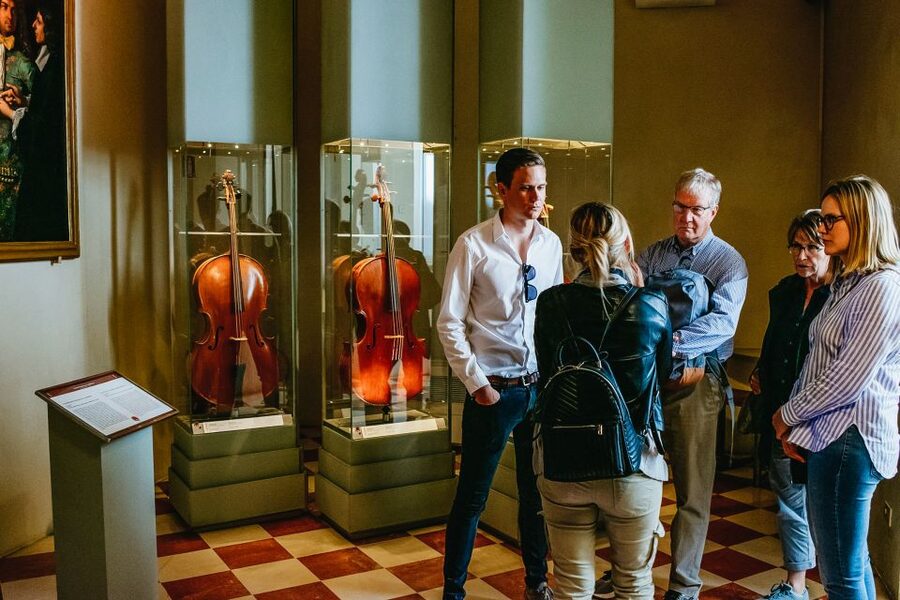
The musical instrument collection is easy to overlook because David gets nearly all the attention. It is worth seeking out, especially if you want something different from another room of marble and altarpieces.
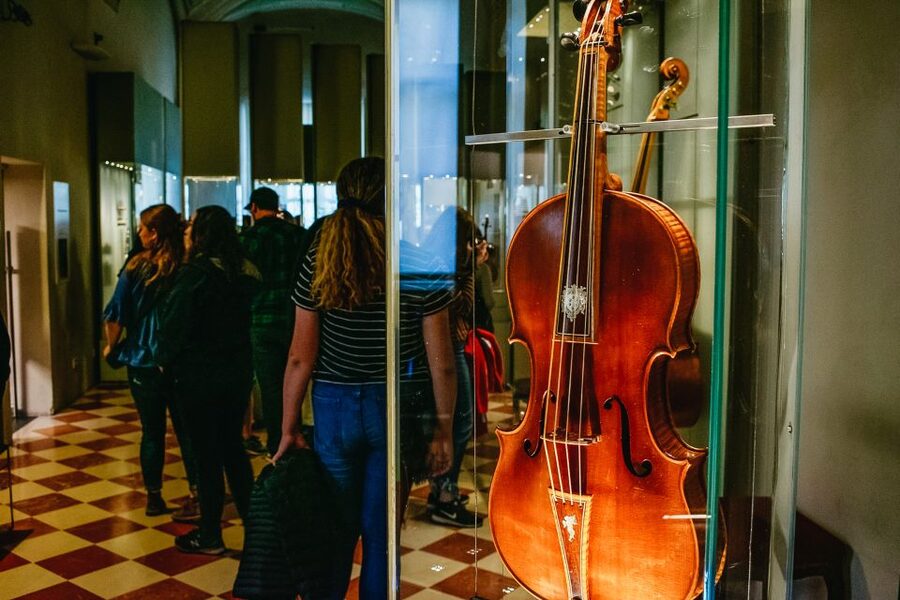
The collection includes a piano described as the most ancient existing piano in the world. You can also see the Viola Stradivari, made for Grand Prince Ferdinando de’ Medici. These objects connect art with the Medici court and show how music, craftsmanship, and status came together in Florence.
This section will not take as long as the Hall of Michelangelo, but it gives the visit a welcome change of pace. If you are visiting with someone who is less interested in sculpture, the instruments may be the room that keeps the experience varied.
Gipsoteca Bartolini and the museum’s quieter side
Before leaving, look for the renovated Gipsoteca Bartolini. This showroom contains plaster sculptures and busts related to the work of Lorenzo Bartolini.
Plaster casts can seem less exciting than famous marble, but they reveal how sculptors developed forms and prepared finished works. Busts also reward a close look because facial expression, hair, clothing, and surface texture become the main subjects.
The Gipsoteca is a quieter counterpoint to David’s grand room. I would not choose this ticket only for the Bartolini collection, but skipping it would leave out one of the museum’s more distinctive sections.
Choosing the audio guide option
The optional audio guide can make a self-guided visit more satisfying. It gives you background on the major works while leaving you free to pause, move ahead, or ignore sections that do not interest you.
Bring your own headphones. You may also need to install or preload an app, depending on the option you book. One practical complaint has been that this was not always made clear before arrival, so do not wait until you are standing at the museum entrance to sort it out.
The audio guide is a supplement, not a substitute for a personal art historian. It works best if you want basic context and a suggested route without committing to a group tour. If you already know Renaissance art well, you may prefer the freedom of reading the museum labels and looking quietly.
Some separate options may include a live guide or host. Reports have praised guides such as Camilla and Alessandria for clear, engaging explanations, while other bookings are explicitly self-guided. Check the exact option before paying more for commentary you may not receive.
Is $45 good value for the Accademia?
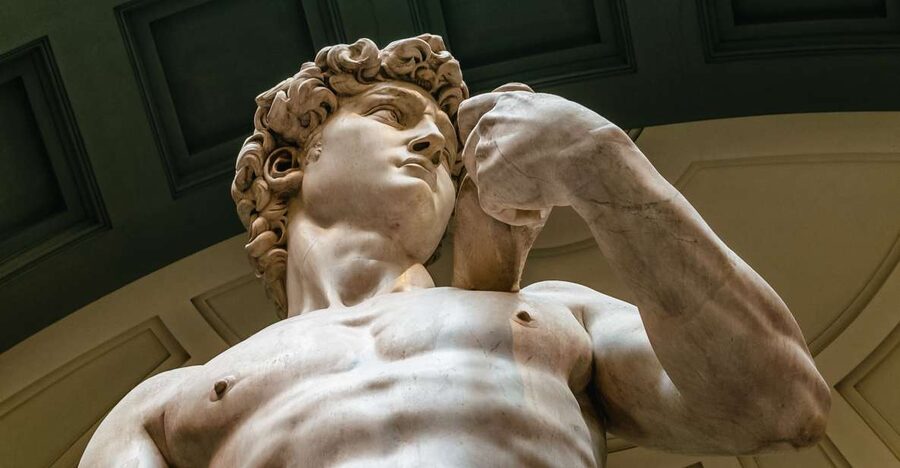
At $45, this is a convenience purchase. You are not paying only for access to a museum. You are paying for a reserved entry arrangement, help finding the correct queue, and protection against the risk of showing up when regular admission is sold out.
The basic admission price cited in the available information is €12. That makes the $45 price look high if you judge it only by the artwork inside. It can be reasonable if your time in Florence is limited, the regular line is very long, or your visit falls during a busy period.
I would think of the value this way:
- If you have only one day in Florence, saved time can be worth more than the price difference.
- If you are visiting during a quieter period and can reserve regular admission easily, the premium may not suit your budget.
- If regular tickets are sold out, this option may be the practical way to see David.
- If you want a full guided lesson, confirm the booking details because the standard experience is self-guided.
You might still wait after paying for skip-the-line access. That can feel frustrating, especially when the remaining queue is not clearly separated from regular admission. Still, the time saved can be substantial when the unreserved line stretches along the block.
When to go and how long to allow
The exact start time depends on availability. Early morning is usually the best bet for a calmer visit, based on the repeated advice to arrive early and the reports of heavier crowds later in the day.
Allow at least one hour for a focused visit. That gives you time for David, the Four Prisoners, and a quick look at the main galleries. I would set aside 90 minutes to two hours if you want to include the paintings, musical instruments, Gipsoteca Bartolini, and audio guide.
The ticket duration is listed as one hour to one day, but the practical visit length depends on your selected entry. Check your confirmation for the exact time and access rules.
Wear comfortable shoes for Florence generally, but you will not need special equipment inside. Bring your phone, booking confirmation, headphones if using the audio guide, and identification for children under 18. Children must have a passport, ID card, or photocopy proving age.
The museum is wheelchair accessible. Everyone must pass through security, and large bags or other restricted items may affect your entry, though the supplied details do not specify a full luggage policy.
Who should book this ticket?
This ticket suits a first visit to Florence, a short city break, or a packed day when waiting in line would disrupt your plans. It is also useful if you want to visit independently rather than follow a fixed tour.
Families may appreciate the clear entry arrangement, but remember the ID requirement for children under 18. Art lovers will enjoy the chance to linger with the unfinished Michelangelo sculptures and the Renaissance paintings after seeing David.
Budget-conscious visitors should compare the $45 price with regular admission before booking. If you can reserve a standard ticket and have flexible time, the premium may be hard to justify. If your schedule is tight or normal entry is sold out, the calculation changes.
Final verdict: book it when time matters
I would book this experience if seeing David is high on your Florence list and you do not want to gamble on a long queue. The smoothest part is the simple formula: collect the ticket nearby, join the reserved entry line, pass security, and explore without a guide setting the pace.
I would skip it if you are comfortable waiting, have a flexible schedule, and can secure regular admission at the lower museum price. For everyone else, especially visitors with only a day or two in Florence, the time saved can make the $45 worthwhile.
Just arrive early, read the meeting-point instructions carefully, bring headphones for the audio option, and remember that skip-the-line still includes security. David is the star, but the Four Prisoners, San Matteo, musical instruments, paintings, and Gipsoteca Bartolini give you good reasons to stay after the famous statue has had its moment.
FAQ
Is this a guided tour of the Accademia Gallery?
No. The standard experience is self-guided. An optional audio guide is available with some booking choices, and certain options may include a host or guide, so check the exact selection before booking.
Does skip-the-line mean I enter immediately?
Not always. You skip the regular ticket-purchase queue, but all visitors must pass through a metal detector and security check. Security can sometimes add about 15 minutes, and a reserved-entry queue may still form.
How long does the visit last?
The listed duration ranges from one hour to one day, depending on the option and availability. Allow at least one hour for David and the main Michelangelo works, or 90 minutes to two hours for a fuller visit with the other museum sections.
What can I see besides David?
You can see Michelangelo’s Four Prisoners and San Matteo, Renaissance paintings by artists including Botticelli, Filippino Lippi, Pietro Perugino, and Paolo Uccello, musical instruments, the historic piano, the Viola Stradivari, and the renovated Gipsoteca Bartolini.
Where do I collect the ticket?
The meeting point varies by booking option. It is generally about one block from the Accademia or directly across from it, but the collection office may be inside an arts and crafts shop. Follow the instructions on your booking confirmation.
What should I bring?
Bring your booking confirmation, headphones if you select the audio guide, and identification for children under 18. Children need a passport, ID card, or photocopy proving their age. The museum is wheelchair accessible.
Fresh on the Florence list
- Florence: Uffizi Guided Tour with Skip-the-Line Entry Ticket★ 4.8 · 499 reviews
- The Best of Florence Walking Tour in a Small Group★ 5.0 · 503 reviews
- Florence: Uffizi Gallery Tickets with Optional Audio Guide★ 4.1 · 503 reviews
- Premium Pasta and Gelato Cooking Class in Florence★ 5.0 · 508 reviews
- From Florence: Tuscany & San Gimignano Tour with 2 Tastings★ 4.8 · 511 reviews
- Florence: Guided Tour of Medici Family Secrets and Chapels★ 4.7 · 512 reviews
- Tuscany Vespa Tours Through the Hills of Chianti★ 5.0 · 515 reviews
- Pasta and Tiramisu Cooking Class with optional Local Market Tour★ 5.0 · 515 reviews
Uffizi & Accademia Gallery Tours, compared.
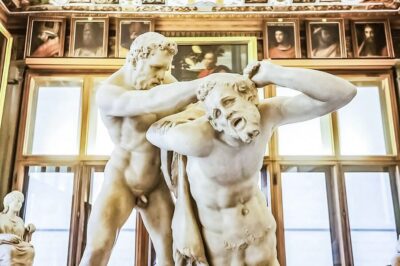
Skip-The-Line Uffizi Gallery Timed Entry Ticket
Read our review →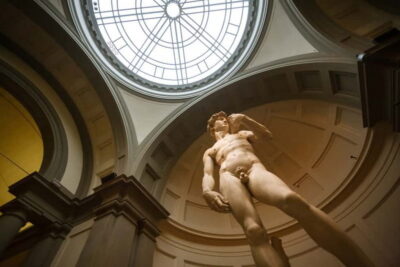
Timed Entrance Ticket to Michelangelo’s David
Read our review →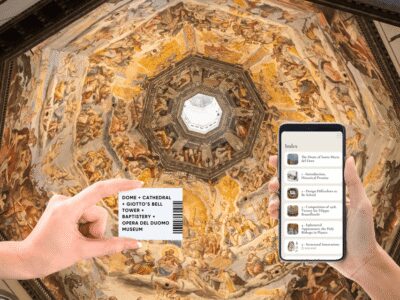
Cathedral & Brunelleschi’s Dome Ticket & Audio App
Read our review →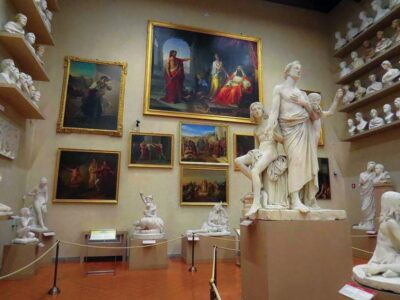
Michelangelo’s David Priority Ticket & Audio App
Read our review →
Uffizi Priority Ticket & Masterpieces Audio App
Read our review →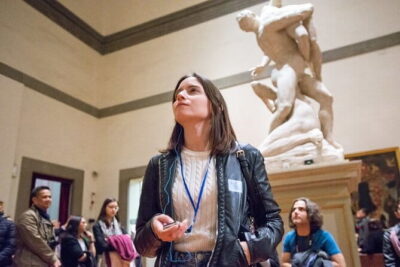
Florence Accademia Gallery Tour with Entrance Ticket Included
Read our review →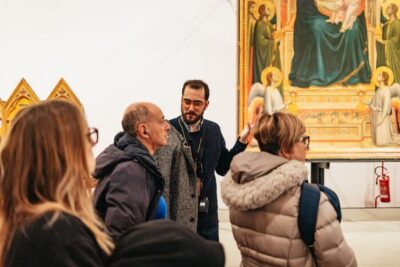
Browse the lists this tour appears in