
Reviewed · UFFIZI & ACCADEMIA GALLERY TOURS
Florence: Michelangelo’s David Priority Ticket & Audio App
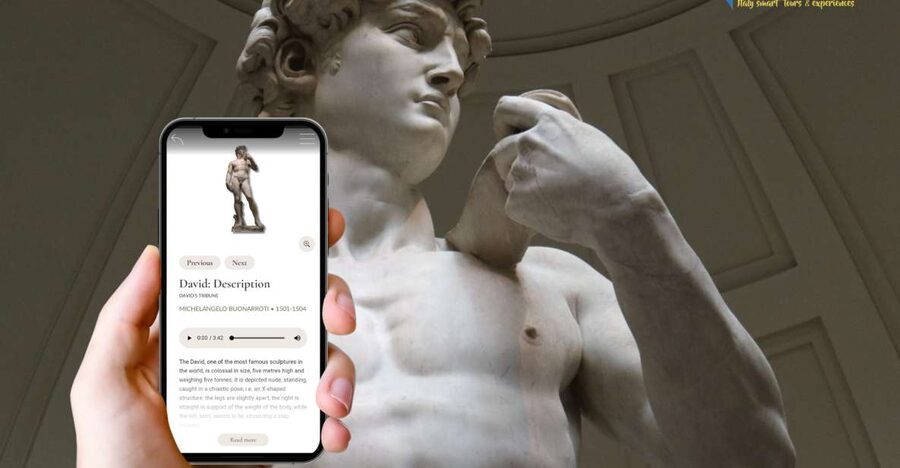
Florence’s Accademia Gallery is home to Michelangelo’s original David, and this ticket is built around getting you to that famous marble without wasting half your day in a ticket queue. You meet a host near the entrance, receive your reserved ticket, pass through security, and explore independently with an audio app.
I like the timed entry, especially during busy periods when the ordinary ticket line can stretch well beyond the museum entrance. I also like the freedom of a self-guided visit: you can spend ten minutes with David, or linger over the unfinished Prisoners and the musical-instrument collection without being tied to a group.
The main catch is that this is not a live guided tour. The audio app can be helpful, but some people find it less complete or awkward to download, so arrive prepared with the app installed, a charged phone, and your own headphones.
Key points to know before booking
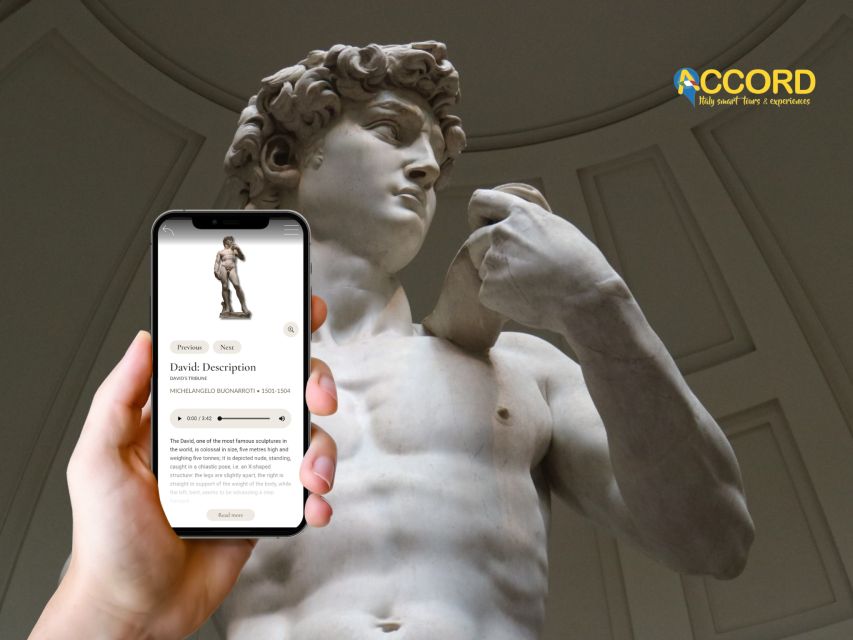
- David is the star: See Michelangelo’s original marble sculpture in the Tribune, along with the unfinished Prisoners and St. Matthew.
- Timed priority entry saves time: A host provides your ticket near Via Ricasoli 57, then directs you to the correct entrance line.
- Security still takes time: Every visitor passes through a check, which can take around 10 to 15 minutes at busy times.
- The audio app is flexible: Choose from many languages and move through the museum at your own pace.
- The museum offers more than one statue: Look for works by Botticelli, Ghirlandaio, Gaddi, Orcagna, and other Italian masters.
- Bring the basics: You need your phone, downloaded app, charged battery, headphones, and a passport or ID card.
Why timed entry matters at the Accademia
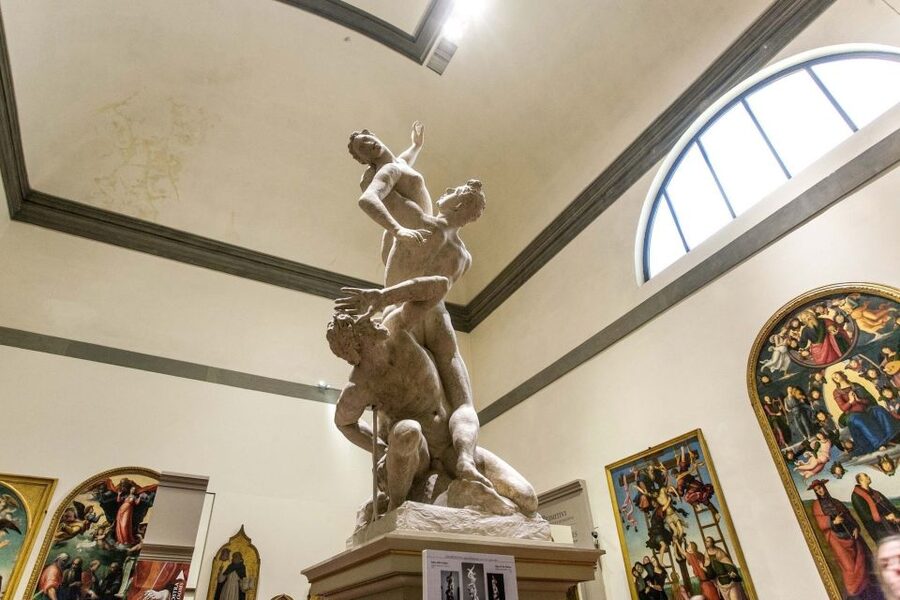
The Accademia is smaller than Florence’s Uffizi Gallery, but its fame creates a serious bottleneck. Most people come for David, and the regular ticket-buyers line can be long enough to disrupt an already tight Florence schedule.
This experience gives you a reserved entry at a chosen date and time. You do not need to visit a ticket office first. Instead, you meet the local host a few steps from the museum at Via Ricasoli 57, directly opposite the Carrefour Express supermarket.
Look for the assistant wearing a yellow vest and an ACCORD ID badge. Arrive 15 minutes before your scheduled time. The host provides the ticket and points you toward the security entrance. This arrangement is simple, but it is not quite the same as walking straight into the museum. Security is required for everyone, and at the busiest times that line may take about 10 to 15 minutes.
That distinction matters. You are skipping the ticket-purchase and ticket-pickup queues, not the museum’s safety check. Even so, the time saved can be substantial. Several visitors entered in roughly ten minutes after meeting the host, while the ordinary line looked considerably longer.
Earlier time slots may help you get through the entry process with less fuss. Availability varies, so check the times offered for your date rather than assuming a particular hour will always be best.
A few other Florence mornings to weigh against this
- Florence: Skip-The-Line Uffizi Gallery Timed Entry Ticket
★ 4.5 · 27,832 reviews - Florence: Timed Entrance Ticket to Michelangelo’s David
★ 4.6 · 16,983 reviews - Florence: Michelangelo’s David Skip-the-Line Entry Ticket
★ 4.5 · 12,764 reviews
Finding the host on Via Ricasoli 57
The meeting point is close to the Accademia entrance, not at a distant office. Go to Via Ricasoli 57 and look across from the Carrefour Express supermarket for the yellow vest and ACCORD badge.
The host speaks English and Italian and introduces you to the security-check entrance. This is useful if you are unsure which queue is meant for reserved ticket holders. The practical job of the host is short: provide the ticket, help with directions, and explain how to proceed.
Do not arrive at the last second. One person described the host as appearing only a few minutes before the scheduled time, which made the beginning feel rushed. That may not be typical, but it is a good reason to arrive early and keep your voucher ready on your phone.
You will receive a WhatsApp reminder the day before the visit, including meeting-point details and instructions for the audio application. Keep your phone charged. If your group includes children, bring a passport or ID card for them, and bring identification for yourself as well.
Large luggage and bags are not allowed inside. You may bring one water bottle per person, with a maximum capacity of 500 milliliters. Pets are not permitted.
Michelangelo’s David and the first great reveal
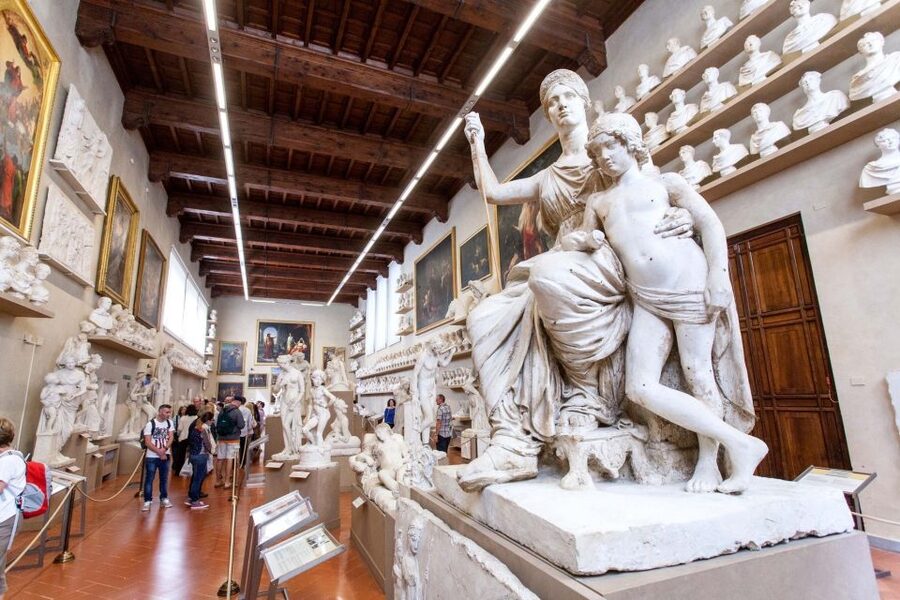
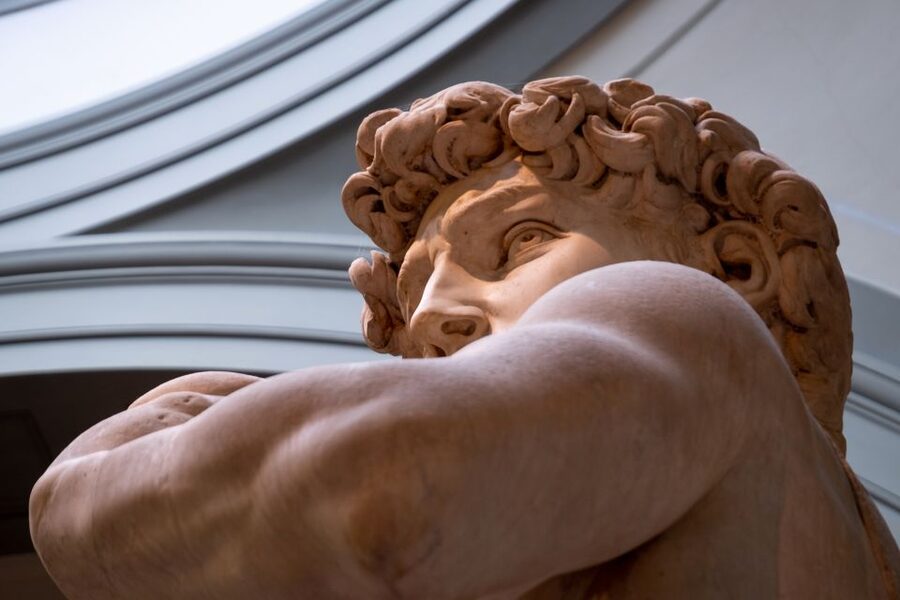
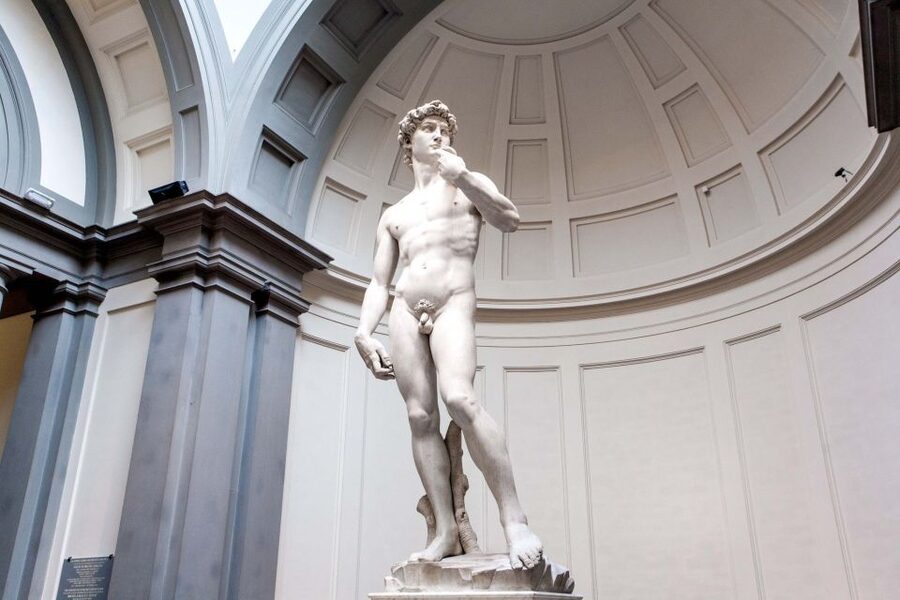
Once inside, make your way toward David. The sculpture is displayed in the Accademia’s central Tribune, where its scale, detail, and pose are easier to appreciate than they are in photographs.
Michelangelo carved David from a single block of marble. The figure represents the biblical hero before or around his victory over Goliath, and Florence adopted the image as a symbol of civic liberty. The city was an independent republic during the medieval and Renaissance periods, so David carried a political meaning as well as a religious one.
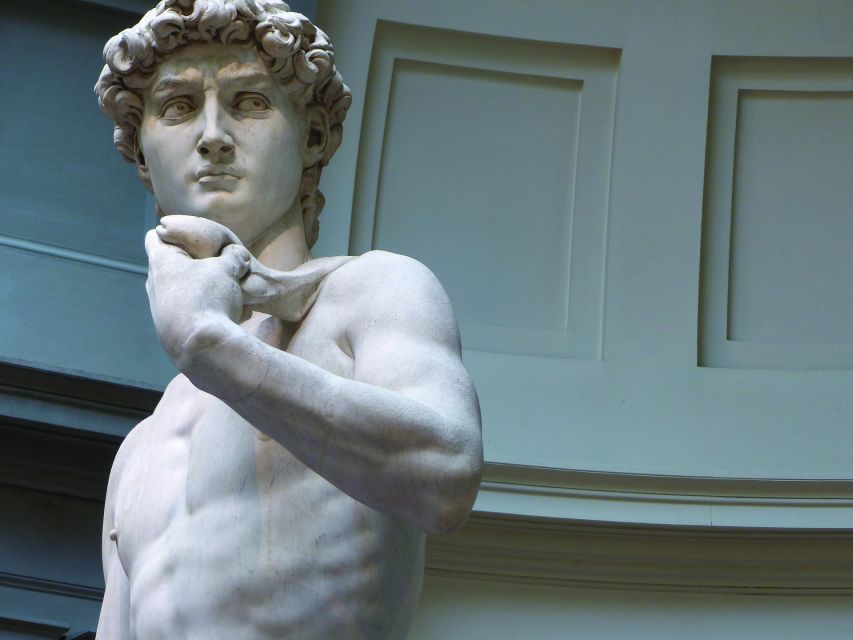
The sculpture’s expression changes as you walk around it. From one angle, David appears watchful and controlled. Move to another position and the tension in his face and body becomes more apparent. The hands, feet, hair, veins, and carefully balanced stance reward a slow look.
I would not rush through this room simply because David is the item everyone came to see. Give yourself time to walk around the statue, then return to the front for a second look. The audio app provides context about Michelangelo and the sculpture, but you can pause it whenever you want and study the marble in silence.
The museum can feel crowded around David, especially at popular times. The timed admission helps control the flow, though it does not guarantee an empty room. If you prefer a calmer visit, choose an earlier available time and be ready to spend your first minutes looking carefully rather than trying to photograph everything.
The Prisoners and St. Matthew
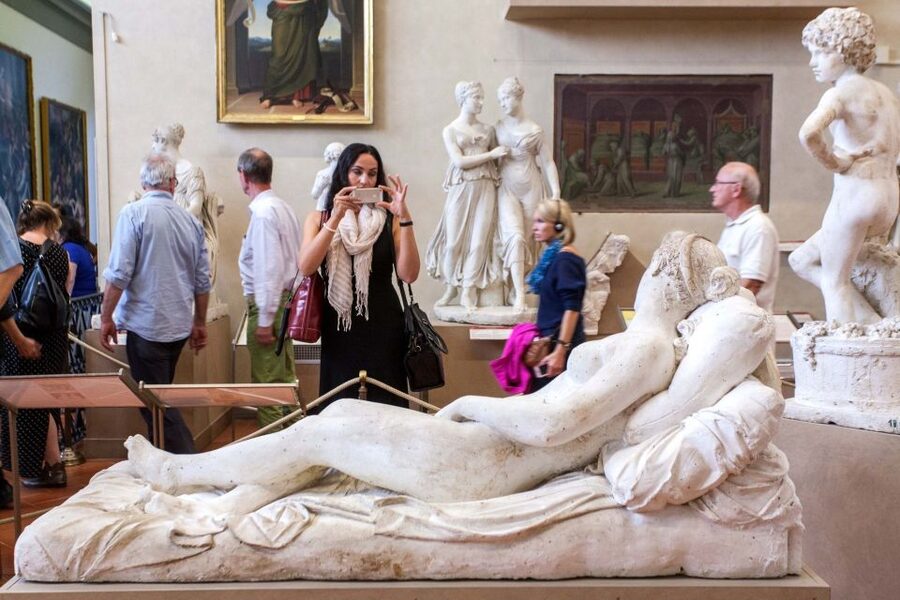
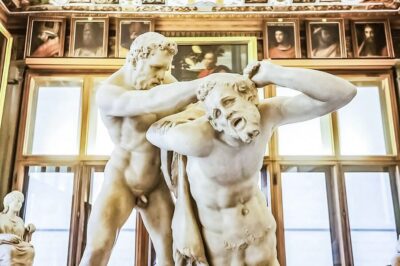
David receives most of the attention, but the unfinished sculptures known as the Prisoners give you a different way to understand Michelangelo’s work. These contorted bodies were intended for the tomb of Pope Julius II, a project that was never completed.
Their unfinished surfaces are part of the point. You can see forms emerging from the marble, with sections that look partly released and partly trapped. The contrast with David’s polished finish is striking. Instead of presenting a complete ideal figure, the Prisoners let you think about the act of carving itself.
Michelangelo’s St. Matthew is another important work in this group. Like the Prisoners, it remains unfinished, and the rough marble helps you see how a figure can appear to take shape within the stone.
The audio app can add useful background here, particularly if you are not already familiar with Michelangelo’s unfinished works. Some visitors find the commentary adequate but wish it covered more of the museum. I would use it as a guide to the main pieces, not as a substitute for reading every label or exploring every room.
Same city, an entirely different afternoon:
- Tuscany Day Trip from Florence: Siena, San Gimignano, Pisa and Lunch at a Winery
★ 5.0 · 21,634 reviews - The Best tour in Florence: Renaissance & Medici Tales – guided by a STORYTELLER
★ 5.0 · 12,316 reviews - Florence: Leonardo Interactive Museum Entry Ticket
★ 4.5 · 11,763 reviews - The Best Tour in Florence: Renaissance and Medici Tales
★ 5.0 · 10,810 reviews
Renaissance paintings beyond Michelangelo
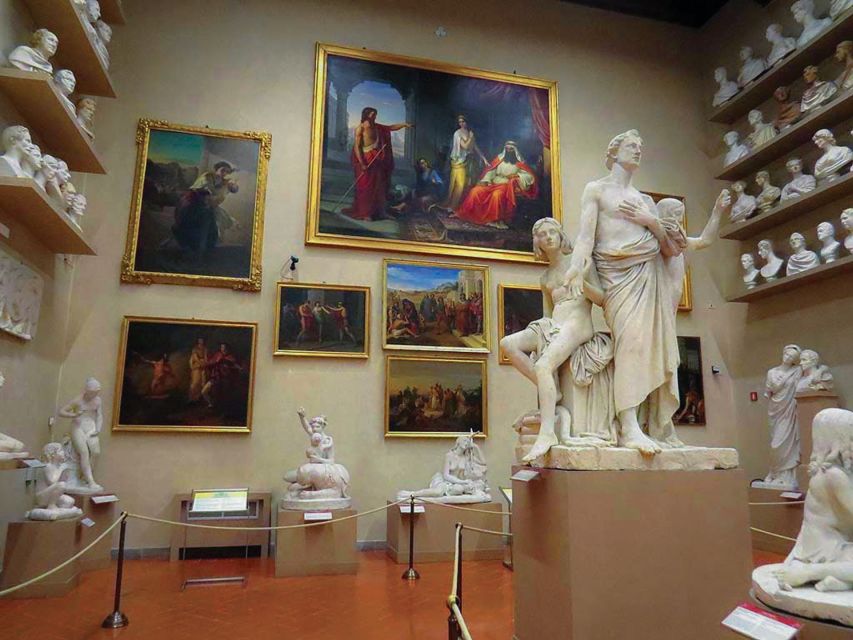
The Accademia is not only a single-statue museum. Its collection includes paintings and sculptures by several important Italian artists, including Sandro Botticelli, Domenico Ghirlandaio, Taddeo Gaddi, Andrea Orcagna, and Filippino Lippi.
These works help place Michelangelo within Florence’s wider artistic tradition. You can compare the treatment of faces, drapery, religious stories, and human movement across different generations of artists.
The museum is manageable in size compared with the Uffizi, which makes it a reasonable choice when you want serious art without committing to a much larger collection. Still, its compact layout does not mean you should treat it as a quick David stop. After seeing the sculpture, slow down in the painting galleries and give the earlier works a fair chance.
The audio guide app points out selected highlights in several languages. Its listed options include English, Italian, Spanish, German, French, Russian, Chinese, Japanese, Polish, Turkish, Portuguese, Dutch, Korean, Hungarian, Greek, Croatian, and Romanian.
Because this is a mobile guide, you can move at your own pace. You are free to skip a painting that does not interest you, replay a section, or stop listening while you look. That flexibility is one of the strongest reasons to choose this format over a fixed group tour.
The Stradivarius violin and old instruments
One of the more unusual parts of the Accademia is its collection of old musical instruments from the Cherubini Conservatory’s Department of Musical Instruments.
The collection includes a violin by Antonio Stradivarius belonging to the Medicean Quintet. It is easy to overlook this room when your attention is fixed on Michelangelo, but it adds a welcome change of pace. You move from marble and painted panels to objects shaped for sound, craft, and courtly performance.
The instrument collection is especially useful for anyone who wants a broader view of Medici Florence. It is not merely another room of paintings. The Stradivarius gives the visit a practical link to music, patronage, and the material culture of the period.
Allow extra time for this section if musical instruments interest you. The available commentary may be shorter than what you would receive from a specialist museum tour, but the room is a worthwhile part of the visit.
How the mobile audio guide works
The audio guide is delivered through a mobile application rather than a handset issued at the museum. The instructions arrive with your voucher and through the reminder message sent the day before.
Install the app before you go, preferably over Wi-Fi. This is the most important practical tip for the entire experience. Some phones have had trouble downloading the app because of weak service near the meeting point or inside the museum. Staff have helped resolve the problem, but it is better not to depend on a last-minute download.
Bring your own earphones. They are not included. Also check that your phone has enough battery for the visit, since the app and screen use can drain it.
The app is best understood as a flexible introduction to the museum. It offers information on highlighted artworks and lets you listen in a language that suits you. It is not a live guide who can answer questions, adjust the pace for your group, or point out details in real time.
Some people find the app informative and easy to follow. Others find the route or commentary less complete than expected. I would choose this ticket if you value independence and basic context. If you want a detailed art lecture, personal discussion, or a carefully managed route through every room, look for a live tour instead.
What the $23 price gives you
At $23 per person, the main value is the reserved access. The audio guide is useful, but the time savings are the part that can make the purchase worthwhile.
If you are visiting Florence for only a day or two, spending a long stretch in the ordinary ticket line has a real cost. You lose time that could go toward the Duomo, the historic center, a meal, or another museum. Paying a premium over a basic admission can make sense when your schedule is tight or when official timed tickets are unavailable.
The value is less obvious if you are visiting in a quiet period and can obtain a convenient timed ticket another way. In that case, the audio app may not be enough reason by itself to pay extra, particularly if you already have a guidebook or prefer to read museum labels.
The bonus Tuscan food tasting selection adds some extra appeal. It may include extra-virgin olive oil, truffle specialties, schiacciata, cantuccini, and other traditional baked goods. Treat this as a bonus rather than the main reason to book, since the central experience is the Accademia visit.
Who should choose this Accademia ticket
I would recommend it most strongly for:
- First-time Florence visitors who want to see David without gambling on a long queue.
- Short-stay visitors who need a fixed entry time and a predictable plan.
- Independent museumgoers who dislike moving through a gallery in a large guided group.
- Families and mixed-interest groups who may want to pause, split up briefly, or move at different speeds.
- Visitors who prefer multilingual commentary and are comfortable using their own phone.
You may want another option if you need a live expert, a fully narrated route through every room, or personal help throughout the visit. The app has had occasional download problems, and its coverage is strongest for selected highlights rather than every artwork.
The experience is wheelchair accessible, though all visitors still need to pass through security. Large bags remain prohibited, so plan to visit without luggage.
Cancellation and planning details
You can cancel up to 24 hours before the scheduled activity for a full refund. The reserve-now, pay-later option can help if your Florence plans are still shifting.
The listed duration is one day, but this refers to the activity validity rather than a full-day guided program. You select an available starting time and then explore the museum on your own.
Keep the voucher available, arrive 15 minutes early, and install the app before leaving your hotel. Those three steps remove most of the avoidable stress.
Is this the right way to see David?
If seeing the original David is high on your Florence list, I think this is a practical choice when ordinary ticket lines are long or official timed reservations are gone. The host arrangement is straightforward, and the reserved entry can protect a valuable part of your day.
The audio app adds helpful context, but it should not be the deciding factor for everyone. Its occasional technical problems and limited coverage mean you should think of it as a bonus and bring your own backup interest in the art.
Book this ticket if you want priority access, a set time, and freedom to explore alone. Skip it if you already have a reliable timed ticket or if you want a live guide who will explain every room and answer questions. For most independent visitors, the combination of David, the Prisoners, Renaissance art, and the Stradivarius violin makes the $23 fee worthwhile when Florence is busy.
FAQ
Where is the meeting point?
Meet at Via Ricasoli 57, a few steps from the Accademia Gallery entrance and directly in front of the Carrefour Express supermarket. Look for an assistant wearing a yellow vest and ACCORD ID badge.
How early should I arrive?
Arrive 15 minutes before your scheduled activity time. The host will provide your reserved ticket and direct you toward the correct entrance.
Does the ticket skip the security check?
No. All visitors must pass through museum security. At busy times, the security line can take approximately 10 to 15 minutes.
Is a live tour guide included?
No. English-speaking and Italian-speaking on-site staff help with the ticket and entry process, while the museum visit uses a multilingual mobile audio guide app.
What do I need for the audio guide?
Bring your own headphones, a charged phone, and the downloaded app. Install the application before your visit using Wi-Fi when possible, since mobile service may be unreliable.
Can I bring luggage or water inside?
Large bags and luggage are not allowed. You may bring one water bottle per person, with a maximum size of 500 milliliters. Pets are not permitted.
More Audio Tours in Florence
- Florence: Eco-Friendly Golf Cart City Tour with Audio Guide
★ 4.6 · 1,094 reviews - Florence: Uffizi Skip-the-Line Ticket & Digital Audio Guide
★ 4.2 · 1,044 reviews - Florence Duomo Cathedral with Host & Audio Guide (Interior Only)
★ 3.5 · 702 reviews - Florence: Accademia Gallery Ticket with Optional Audio Guide
★ 4.3 · 586 reviews
More Self-Guided Tours in Florence
- Florence: Cathedral & Brunelleschi’s Dome Ticket & Audio App
★ 4.4 · 6,973 reviews - Florence: Uffizi Priority Ticket & Masterpieces Audio App
★ 4.2 · 6,402 reviews - Florence: Michelangelo’s David Entrance Ticket and Audio App
★ 4.3 · 1,901 reviews - Florence: Uffizi & Accademia Priority Tickets with Audio App
★ 4.4 · 1,253 reviews
Fresh on the Florence list
- Florence: Uffizi Guided Tour with Skip-the-Line Entry Ticket★ 4.8 · 499 reviews
- The Best of Florence Walking Tour in a Small Group★ 5.0 · 503 reviews
- Florence: Uffizi Gallery Tickets with Optional Audio Guide★ 4.1 · 503 reviews
- Premium Pasta and Gelato Cooking Class in Florence★ 5.0 · 508 reviews
- From Florence: Tuscany & San Gimignano Tour with 2 Tastings★ 4.8 · 511 reviews
- Florence: Guided Tour of Medici Family Secrets and Chapels★ 4.7 · 512 reviews
- Tuscany Vespa Tours Through the Hills of Chianti★ 5.0 · 515 reviews
- Pasta and Tiramisu Cooking Class with optional Local Market Tour★ 5.0 · 515 reviews
Uffizi & Accademia Gallery Tours, compared.
Skip-The-Line Uffizi Gallery Timed Entry Ticket
Read our review →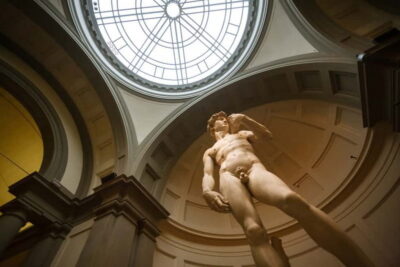
Timed Entrance Ticket to Michelangelo’s David
Read our review →
Michelangelo’s David Skip-the-Line Entry Ticket
Read our review →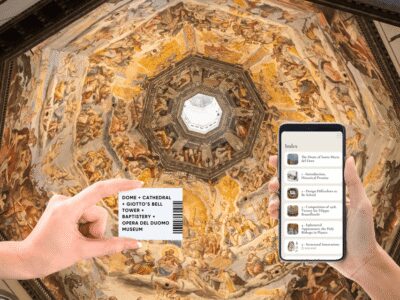
Cathedral & Brunelleschi’s Dome Ticket & Audio App
Read our review →
Uffizi Priority Ticket & Masterpieces Audio App
Read our review →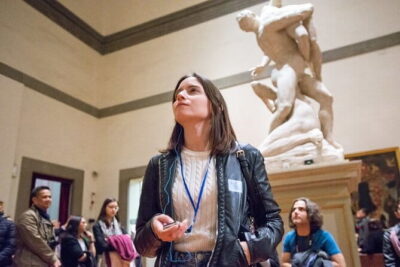
Florence Accademia Gallery Tour with Entrance Ticket Included
Read our review →
Browse the lists this tour appears in