
Reviewed · MUSEUMS
Florence: Leonardo Interactive Museum Entry Ticket
Leonardo da Vinci’s sketches become much easier to understand when you can turn a crank, test a mechanism, and handle a working model. This small, hands-on museum near Florence’s Duomo focuses on the practical side of Leonardo’s genius, from engineering and physics to anatomy and painting.
I like the museum’s excellent family appeal and its low $9 price. Children can build bridges, domes, and polyhedrons instead of being told not to touch anything, while adults get a clear glimpse into how Leonardo’s ideas still connect to modern machines. The main drawback is that this is a self-guided museum with no live guide, and the compact visit can feel brief if you want a full biography or a major art collection.
Key points to know before you go
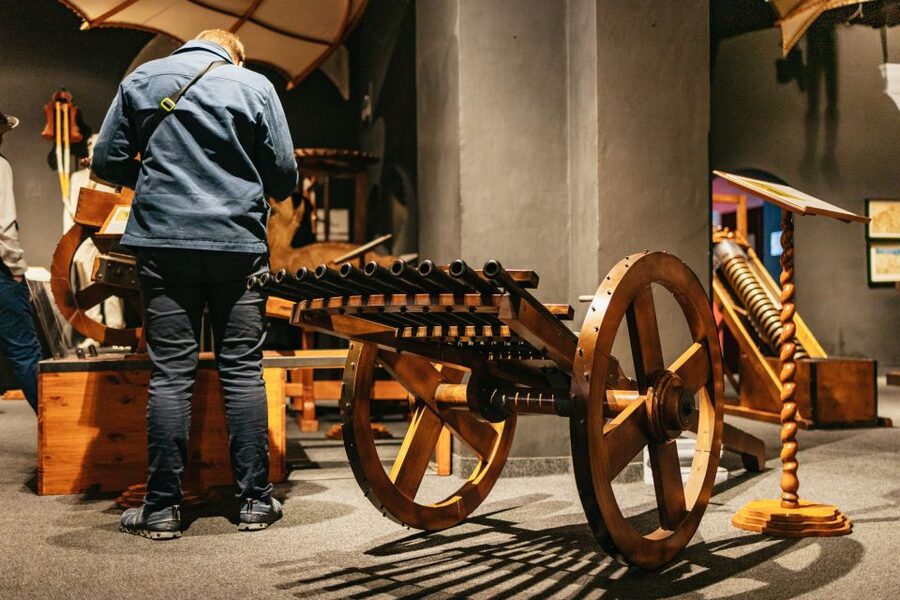
- Working replicas based on Leonardo’s codices: Try the tank, catapult, worm screw, vertical screw, hydraulic saw, and printing press.
- Best for curious children and teenagers: The museum is designed for visitors around age 7 or 8 and older, though younger children may still enjoy the machines with adult help.
- A short, easy city-center stop: Plan on about one hour, or up to 90 minutes if you take your time with the puzzles and mechanisms.
- Audio guide on your own phone: Commentary is available in Italian, English, French, Spanish, German, and Portuguese. Bring your own earphones.
- Near two major Florence sights: The entrance is only a few steps from the Accademia Gallery and the Duomo.
- Book the correct entrance: A second Florence museum uses a very similar name. The red signs near the Duomo can also point you the wrong way.
Why Leonardo’s machines work better than a glass case
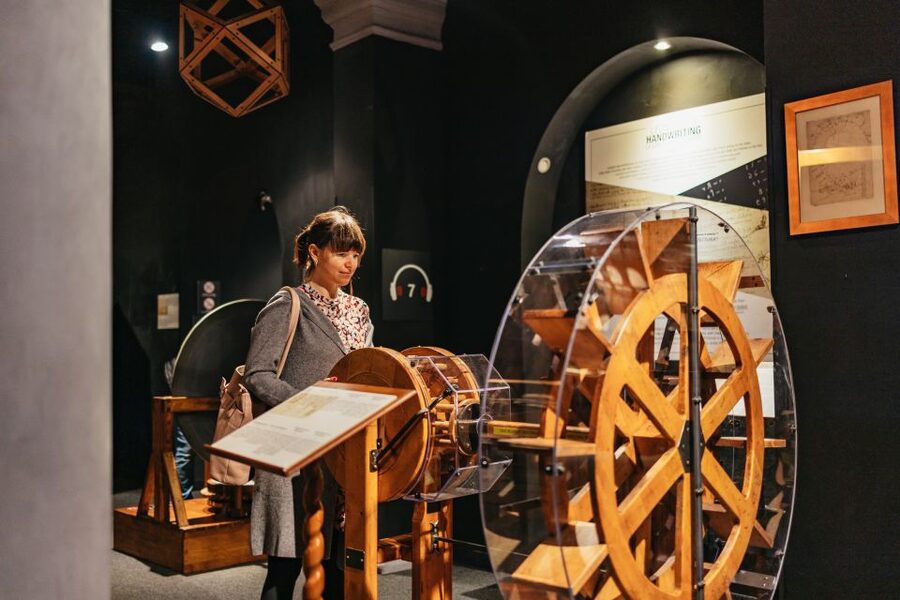
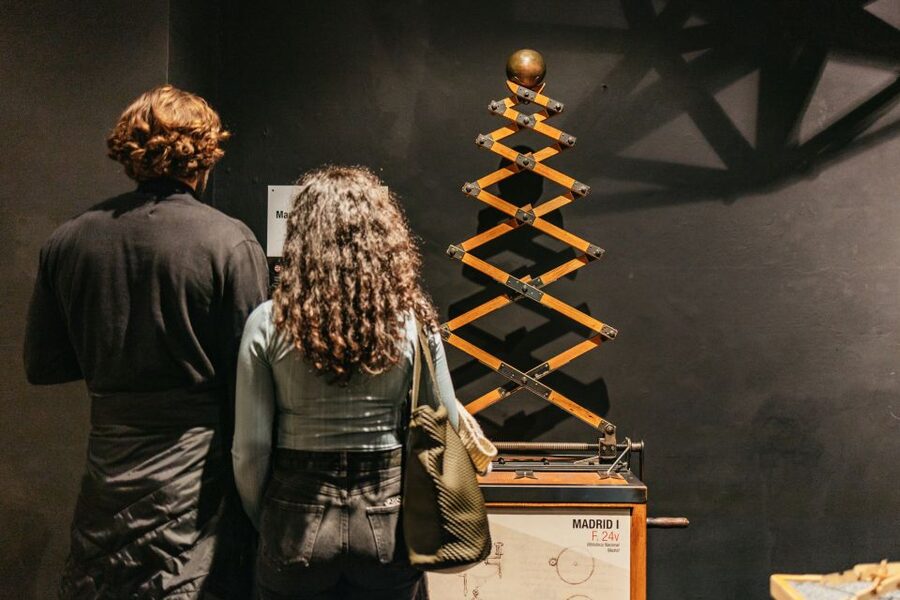
Florence is packed with paintings, sculptures, and grand rooms where the rule is simple: look, do not touch. This museum offers a welcome change. Here, you are encouraged to test selected machines based on Leonardo’s drawings, carefully and with respect for the models.
That physical contact gives the museum its real value. A sketch of a gear, screw, pulley, or bridge can seem abstract on a page. Once you operate a replica, you begin to see the problem Leonardo was trying to solve. You feel how one part transfers motion to another, or how a structure gains strength from its shape.
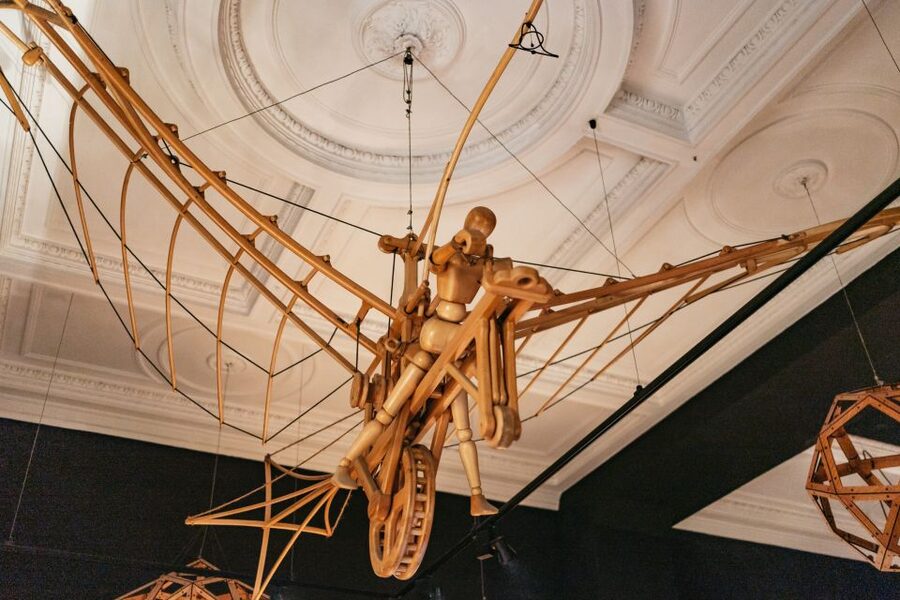
The museum does not present Leonardo only as a painter. You get a look at his work in engineering, physics, anatomy, and painting, which helps explain why he remains such a major Renaissance figure. His curiosity crossed borders that modern museums often separate into different departments.
You should set your expectations correctly. This is not the place for original Leonardo paintings, a long scholarly lecture, or a grand palace setting. It is a compact interactive exhibit built around reproductions and explanations. For most people, that is the point. You can learn by trying things rather than standing in front of them.
More Museums in Florence
- Florence: Skip-The-Line Uffizi Gallery Timed Entry Ticket
★ 4.5 · 27,832 reviews - Florence Accademia Gallery Tour with Entrance Ticket Included
★ 4.5 · 6,148 reviews - Uffizi Gallery Small Group Tour with Guide
★ 4.5 · 4,923 reviews
Finding the entrance near the Duomo
The location is convenient, but the entrance can cause confusion. The museum is in central Florence, just a few steps from the Duomo and the Accademia Gallery, making it easy to pair with a day of sightseeing in this part of town.
If you walk from the Duomo, take care with the signs. A red vertical advertisement marked Da Vinci Museum, with two arrows pointing right, does not lead to this museum’s entrance. Follow your booked address and check the name carefully before joining the line.
There are also two Florence museums with very similar Leonardo names. One review specifically identifies this venue as the original and notes that booking here can provide a discount at the other museum a few blocks away. Since names and arrangements can change, I would still check your ticket details before setting off.
Your timed entry matters because tickets are sold online, and the museum uses selected visiting times to help avoid entrance queues. You do not need transport or a complicated meeting point. The activity begins and ends at the museum entrance.
The first hour: a self-guided route through Leonardo’s ideas
Allow at least one hour for the visit. If you have children, teenagers, or a strong interest in mechanics, you may spend closer to 90 minutes working through the models and puzzles.
There is no live guide. Instead, you explore at your own pace and use the audio guide on your smartphone. It is offered in English, Italian, French, Spanish, German, and Portuguese. Bring earphones, since the audio is designed for personal listening and the museum does not include a separate guided tour.
The self-guided setup has both good and bad sides. You can linger over a machine that catches your attention, skip a section that does not, and let children move ahead without holding up a whole group. On the other hand, you will need to manage your own route and decide how much explanation you want.
Read the labels as you go. The models are not toys, even though they are made to be handled. The museum asks you to try the machines with caution, and that is sensible. Moving parts and repeated use require a little care, especially when several people want the same exhibit.
Trying the tank, catapult, and mechanical devices
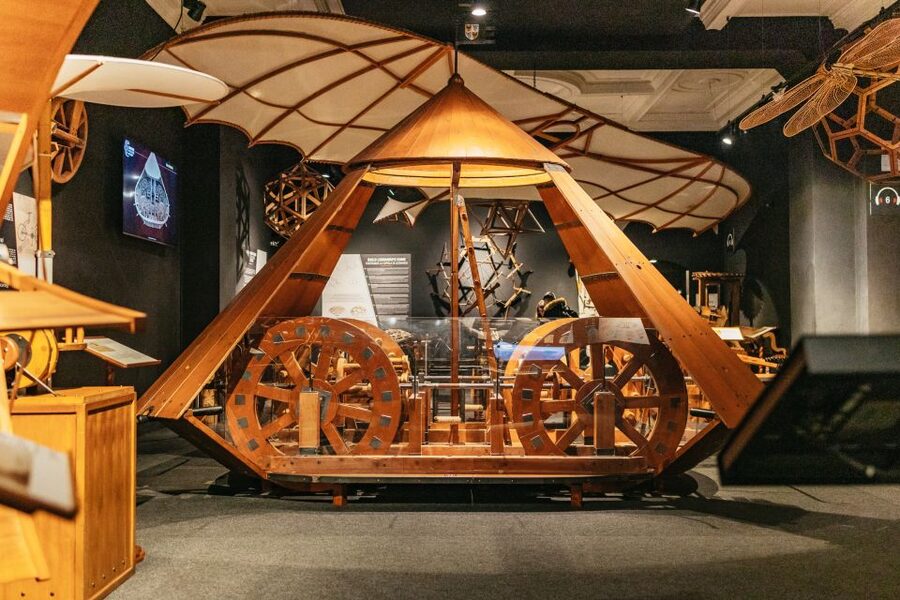
The most memorable part of the museum is the chance to operate machines inspired by Leonardo’s codices. The selection includes a tank and a catapult, both of which help translate his drawings into something you can understand with your hands.
The tank is a useful example of Leonardo thinking about movement, protection, and military design. You do not simply read about a machine from five centuries ago. You examine how its parts relate to one another and gain a practical sense of what the design was attempting to do.
The catapult shows another side of Leonardo’s interest in force and motion. Children tend to connect quickly with devices that have a clear action, while adults may pause over the engineering behind them.
Other exhibits focus on mechanical principles rather than dramatic scale. The worm screw and vertical screw show how a simple rotating movement can produce a different kind of motion. These are the displays that make the museum more than a collection of odd inventions. They let you notice the reasoning behind the designs.
You may also encounter the hydraulic saw, a printing press, and other mechanisms drawn from Leonardo’s studies. These are especially useful if you enjoy seeing how an invention changes a basic task. A machine becomes easier to remember when you have just tried its movement yourself.
Same city, an entirely different afternoon:
- Tuscany Day Trip from Florence: Siena, San Gimignano, Pisa and Lunch at a Winery
★ 5.0 · 21,634 reviews - Florence: Timed Entrance Ticket to Michelangelo’s David
★ 4.6 · 16,983 reviews - Florence: Michelangelo’s David Skip-the-Line Entry Ticket
★ 4.5 · 12,764 reviews - The Best tour in Florence: Renaissance & Medici Tales – guided by a STORYTELLER
★ 5.0 · 12,316 reviews
Building bridges, domes, and polyhedrons
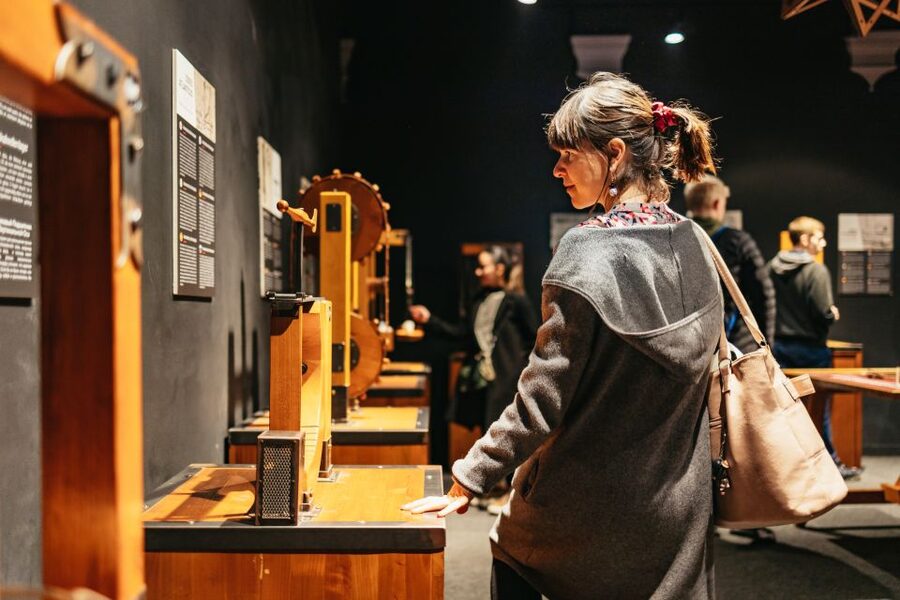
The construction activities are among the strongest reasons to bring children and teenagers. You can take part in workshops and build bridges, domes, and polyhedrons, giving you a direct lesson in balance, geometry, and structure.
These activities also suit adults who like puzzles. You do not need a technical background to understand the basic challenge. You test a shape, adjust the pieces, and see what holds together. The lesson arrives through trial and error, not through a long wall of text.
For a family, this changes the pace of a Florence sightseeing day. After several churches and galleries, a hands-on activity gives young visitors something active to do. Parents can join in rather than simply supervise.
Teenagers may get more from the museum than you expect. One family found that teenage boys who usually did not care for museums spent more than an hour trying the inventions. That makes sense: the museum presents Leonardo as a problem-solver, not just a historical name.
You should not expect every model to be equally exciting. Some mechanisms are small or require more patience, and the museum’s enjoyment depends partly on how much you like figuring out systems. Still, the range of construction puzzles and machines keeps the experience from feeling like one repeated display.
Leonardo’s science beyond the machines
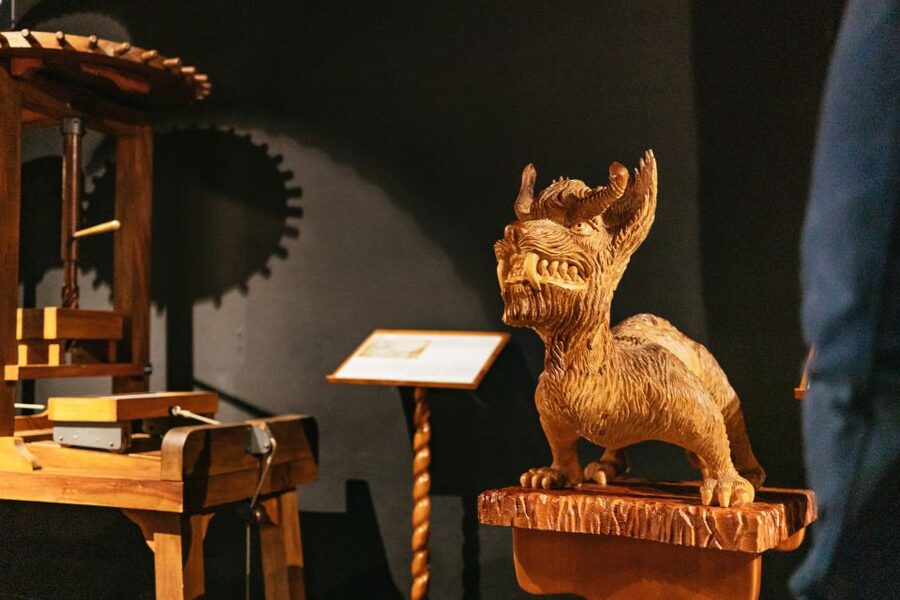
The machines get most of the attention, but the museum also introduces Leonardo’s studies in anatomy and painting. These sections give you a broader picture of his working mind.
Leonardo’s anatomical studies show his habit of examining the human body through careful observation. The museum uses this material to explain another field in which he worked, rather than presenting him only as the designer of military devices and mechanical gadgets.
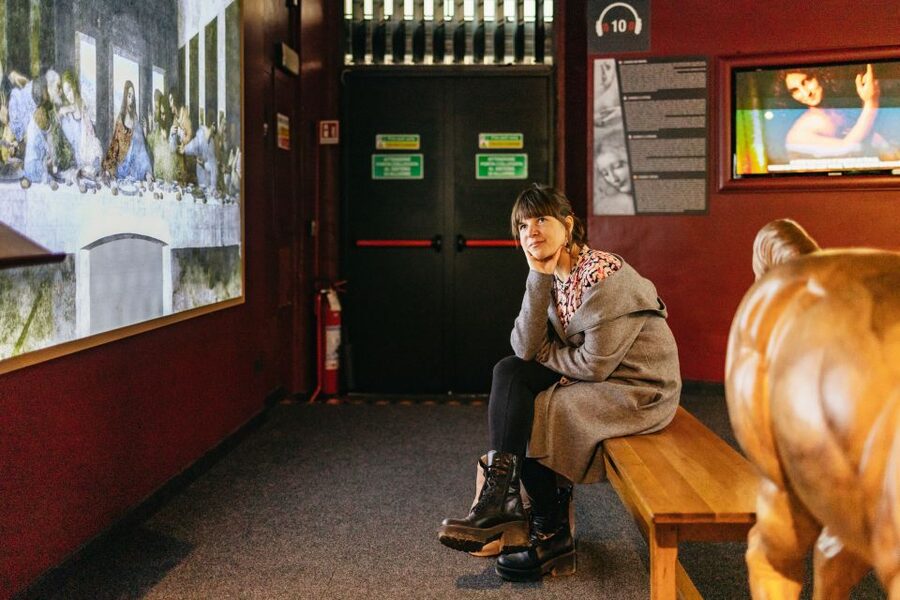
The painting material provides useful context for visitors who know Leonardo mainly through his artworks. You may find that the museum’s biggest lesson is not one particular machine. It is the sheer range of subjects that he studied and connected.
The designs are also a reminder that old does not always mean irrelevant. Some ideas shown here still resemble principles used in modern tools and machines. You should not treat every drawing as a finished invention or assume Leonardo personally built every concept in working form. The value is in seeing how he observed, tested, and imagined solutions.
That distinction matters. This museum brings sketches to life through modern replicas, so you are seeing an interpretation of an old design. The experience is most useful when you treat the models as a way to understand Leonardo’s thinking, not as original Renaissance objects.
Why the $9 ticket is good value
At $9 per person, this is one of the easier Florence admissions to justify, especially for a family. A one-hour stop at that price costs far less than many major attractions, and the interactive element gives you something different from the city’s traditional art museums.
The value is strongest if you plan to use the exhibits. Children can work through puzzles and mechanisms, while adults can listen to the audio guide and study the explanations. If you only glance at the machines and leave after 20 minutes, the price will feel less impressive.
The ticket includes museum entry, free Wi-Fi, and the audio guide. You supply the smartphone and earphones. There is no live guide, so the low price also reflects a more independent format.
You can cancel up to 24 hours before the visit for a full refund, and the reserve-now, pay-later option can help if your Florence plans are still shifting. The main practical point is to choose your day and time online, since tickets are sold exclusively online to reduce queues.
When to fit it into your Florence day
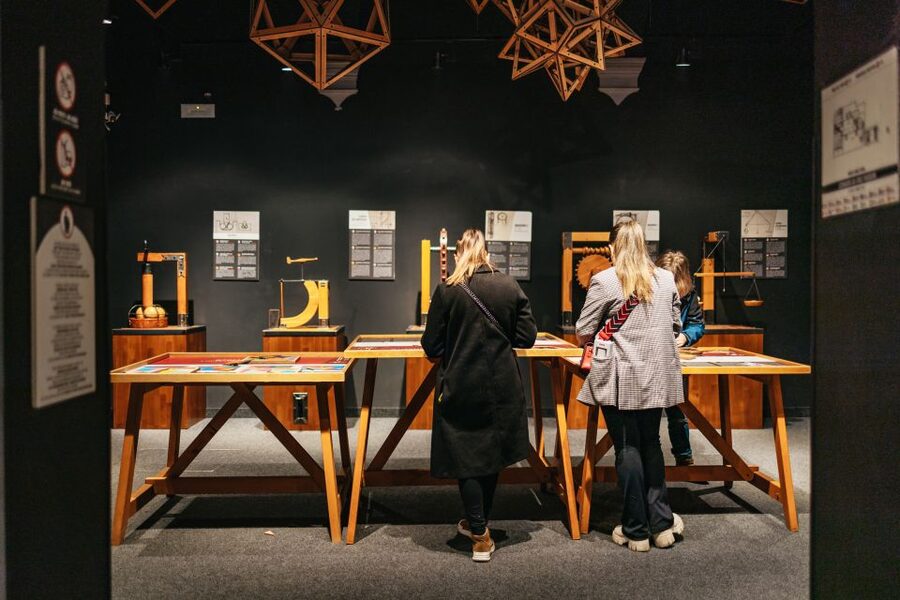
The museum works well between the Duomo and Accademia Gallery, though you should not assume that it replaces either attraction. It is a separate, smaller experience that adds a science and design angle to the usual Florence itinerary.
An early time may give you more room around the models. One family visiting at 10 a.m. found the museum quiet, and a February visit was also described as calm. Crowd levels can change, but choosing an earlier slot is a sensible way to improve your chances of using the hands-on exhibits without waiting.
The one-hour duration makes this easy to place before lunch, after a Duomo visit, or during a break from long museum halls. If your children become absorbed in the machines, keep a little extra time available. The official duration is one hour, but several activities can hold your attention for longer.
You will not need a bus, taxi, or tour transfer. The activity starts and ends at the museum entrance, right in the city center. Wear whatever is comfortable for walking around Florence, and keep your phone charged enough for the audio guide.
Who will enjoy this museum most
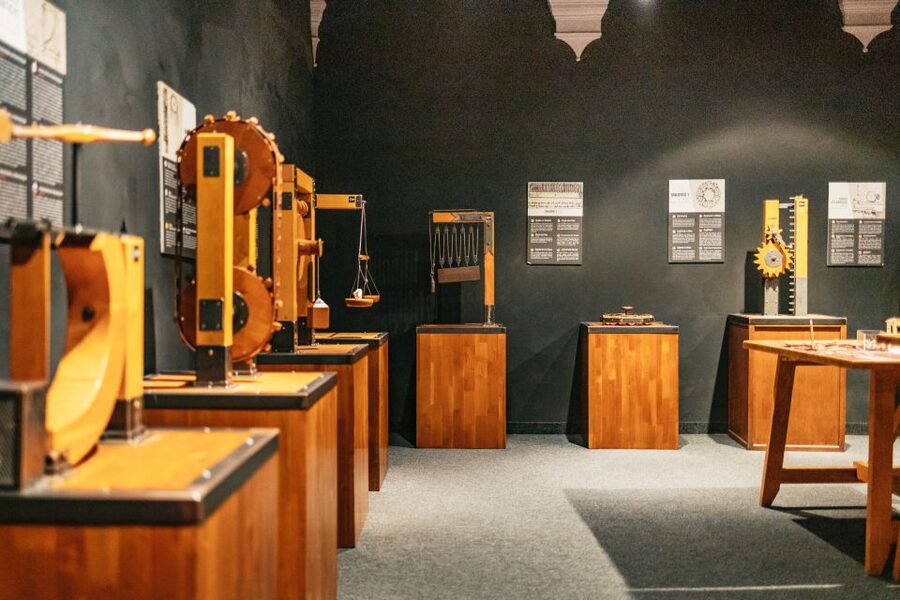
I would recommend this experience most strongly to families with children around 7 or 8 and older, teenagers, engineering fans, and anyone who learns best by handling objects. It is also a good choice if you want a break from conventional art museums.
Children get clear rewards from the visit. They can try machines, solve puzzles, and build structures. The experience gives them permission to be active in a city where many famous interiors require quiet attention and careful distance.
Adults who already know Leonardo’s name but not his engineering studies will find an accessible introduction. You do not need to understand physics before entering. The models give you a starting point, and the audio guide adds background in a language you choose.
Art specialists looking for original works should choose carefully. This is not a substitute for Florence’s major art collections. It is best viewed as an interactive companion to them, one that explains the practical and scientific side of a famous Renaissance figure.
Very young children may enjoy the moving parts, but the museum is officially suited to ages 7 or 8 and over. Younger visitors may need closer supervision and may not follow the explanations. The models are available to try, but they should be used carefully.
A few practical cautions before booking
Check the exact museum name and entrance address before you go. The similar names of two Leonardo museums have caused confusion, and the red advertisement near the Duomo can send you in the wrong direction.
Bring earphones for the smartphone audio guide. Without them, you may miss part of the included commentary or find listening less convenient.
Do not expect a live guide, formal workshop leader, or fixed tour narration. You control the pace. That is helpful for families with different interests, but it means you should read, listen, and explore actively.
Photography may not be possible throughout the museum. One visitor particularly regretted not being able to take pictures and also found the gift shop lacked a substantial picture book. If souvenirs matter to you, keep expectations modest and focus on the hands-on visit itself.
Should you book the Leonardo Interactive Museum?
Book it if you want an affordable, central, family-friendly hour that turns Leonardo’s drawings into physical experiences. The tank, catapult, screws, hydraulic saw, printing press, construction puzzles, and audio commentary offer much more than a quick display of old sketches.
Skip it if your priority is original art, a long guided explanation, or a large museum with grand architecture. For most other visitors, especially families and curious teenagers, the $9 ticket is a sensible Florence add-on. Just choose the correct entrance, bring earphones, and allow enough time to actually use the machines.
FAQ
How long does the Leonardo Interactive Museum visit last?
The stated duration is one hour. You may spend up to 90 minutes if you take your time with the machines, puzzles, and construction activities.
Is there a live guide?
No. The ticket includes an audio guide that you listen to on your smartphone with your own earphones.
Which languages are available for the audio guide?
The audio guide is available in Italian, English, French, Spanish, German, and Portuguese.
What machines can I try inside the museum?
You can try models including a tank, catapult, worm screw, vertical screw, hydraulic saw, printing press, and other mechanisms based on Leonardo’s codices.
Is the museum suitable for children?
The museum is described as suitable for everyone aged 7 or 8 and older. Its hands-on machines, puzzles, and building activities are particularly suitable for children and teenagers.
Where is the museum entrance?
The entrance is a short walk from the Accademia Gallery and the Duomo in central Florence. Be careful because a red sign near the Duomo marked Da Vinci Museum does not lead to this museum’s entrance.
Fresh on the Florence list
- Florence: Uffizi Guided Tour with Skip-the-Line Entry Ticket★ 4.8 · 499 reviews
- The Best of Florence Walking Tour in a Small Group★ 5.0 · 503 reviews
- Florence: Uffizi Gallery Tickets with Optional Audio Guide★ 4.1 · 503 reviews
- Premium Pasta and Gelato Cooking Class in Florence★ 5.0 · 508 reviews
- From Florence: Tuscany & San Gimignano Tour with 2 Tastings★ 4.8 · 511 reviews
- Florence: Guided Tour of Medici Family Secrets and Chapels★ 4.7 · 512 reviews
- Tuscany Vespa Tours Through the Hills of Chianti★ 5.0 · 515 reviews
- Pasta and Tiramisu Cooking Class with optional Local Market Tour★ 5.0 · 515 reviews
Museums, compared.

Vatican: Museums & Sistine Chapel Entrance Ticket
Read our review →
Vatican Museums & Sistine Chapel Tour with Optional Basilica
Read our review →
Vatican Museums, Sistine Chapel & St Peter’s Basilica Guided Tour
Read our review →
Skip-The-Line Uffizi Gallery Timed Entry Ticket
Read our review →
Vatican Museums, Sistine Chapel & Basilica Tour
Read our review →
Vatican Museums & Sistine Chapel Skip-the-Line Entry Ticket
Read our review →Vatican Museums, Sistine Chapel & Basilica Tour
Read our review →
Vatican Museums & Sistine Chapel Guided Tour
Read our review →Browse the lists this tour appears in