
Reviewed · WORKSHOPS
Venetian Carnival Mask Making Class in Venice, Italy
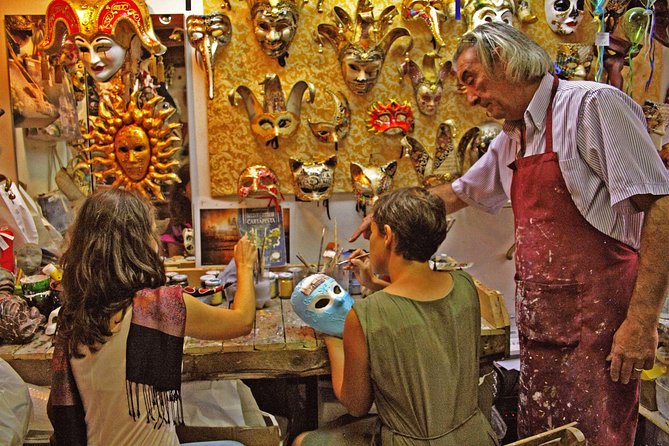
Venice’s Carnival masks are not just pretty souvenirs. They once helped people hide their names, rank, and daily identity, and this small workshop gives you a hands-on way to connect with that old tradition. At an atelier near Saint Mark’s Square, a Venetian artisan explains mask styles and guides you as you paint a papier-mâché mask of your own.
I like two things right away: you get a personal souvenir rather than another shop-bought trinket, and the class fits neatly into a day of sightseeing. The small maximum of four people should also make it easier to ask questions and get help. The main consideration is that the painting can feel slightly rushed, and the artisan may draw the main design and add the final embellishment himself.
Key points at a glance
- A four-person maximum: This is a small workshop, not a large craft demonstration.
- A mask you take home: Paints, supplies, and the decorated papier-mâché mask are included.
- A central Venice setting: The class takes place near Saint Mark’s Square, handy before or after the Doge’s Palace and basilica.
- Carnival traditions included: Your artisan explains old mask types and the role masks played in Venetian life.
- Good for families: Children and adults can take part, even without much artistic confidence.
- Plan for about 75 minutes: Some sessions have lasted closer to 90 minutes or longer, so avoid booking it between two tight appointments.
Why this modest workshop works so well in Venice
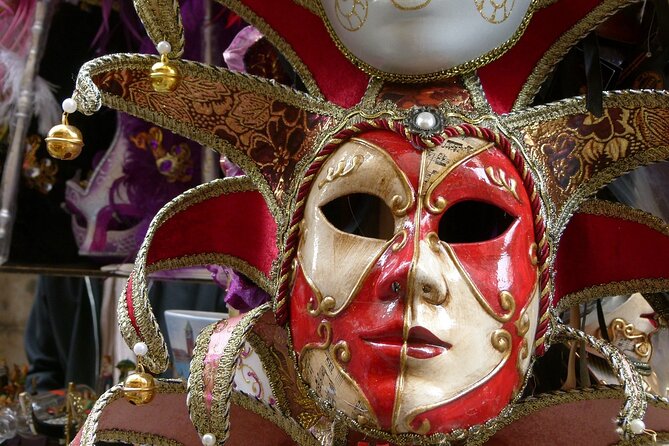
Venice can become a parade of churches, palaces, and crowded photo stops. Those sights matter, but after a morning of grand interiors, sitting down with paint and a blank mask can be a welcome change.
This class gives you something many standard sightseeing tours do not: time to make an object with your own hands. You are not simply buying a mask from a shelf. You choose colors, paint a design, and leave with a piece that carries the memory of your trip.
The workshop also offers a simple introduction to Carnival. The artisan explains how Venetian masks were used in past centuries and discusses traditional designs and mask types. The exact depth of the talk depends on the person leading your session. Giorgio is praised for explaining both the history of masks and his own life in Venice, while Nicola has been described as patient and encouraging. Alvis is known for offering ideas that help people decide how to approach their designs.
Those names are useful to know, but your specific instructor may vary. The experience provider is City Tours Co. Ltd., and the activity is offered in English.
A few other Venice mornings to weigh against this
- Venice: Carnival Mask Workshop
★ 4.5 · 1,925 reviews - Venice: Pasta and Tiramisu Cooking Class with Wine
★ 4.9 · 1,010 reviews - Pasta and Tiramisu Cooking Class with Wine in Venice
★ 5.0 · 945 reviews
Arriving at Saint Mark’s Square
Your meeting area is in the heart of Venice, at or near Piazza San Marco. That location is a major practical advantage. You can visit the square, the Doge’s Palace, the basilica, or the nearby arcades before class, then step into the workshop for a quieter hour.
Give yourself extra time to find the venue. Venice’s lanes can make a short map distance feel longer, and a few minutes spent looking for the entrance is better than arriving flustered. One useful tip is to arrive early, particularly if you have a fixed afternoon plan afterward.
The activity does not include hotel pickup. You make your own way to the workshop, and the venue is near public transportation. In Venice, that usually means planning around walking and waterbus connections rather than expecting a vehicle to take you door to door.
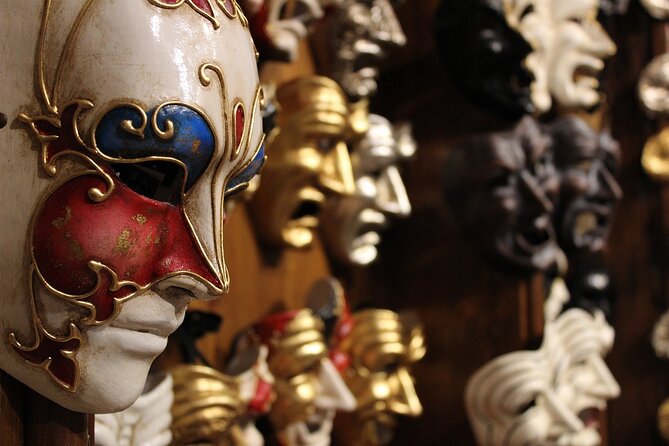
The setting itself is part of the appeal. The class takes place in an artisan shop or atelier displaying decorated masks. You may see finished examples before you begin, which helps if you arrive without a clear idea of what you want to paint.
The artisan’s introduction to Venetian masks
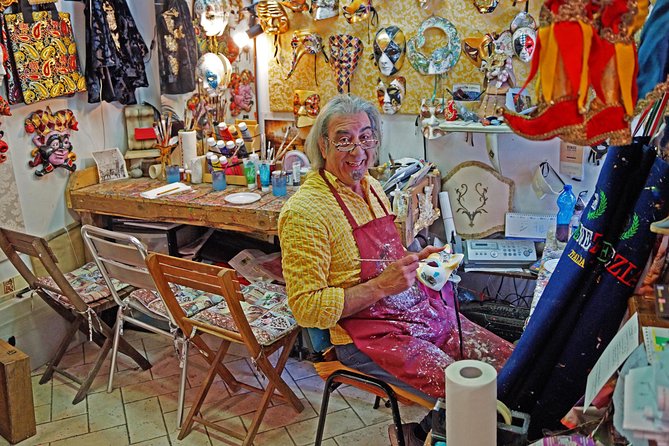
The first part is a short explanation of papier-mâché masks and Venetian Carnival customs. You learn that masks were connected with changing identity and social rules, not only with costumes and parties.
The artisan may also explain how different designs developed and how masks were decorated. The best sessions add personal stories about Venice and mask making, turning the activity into a conversation rather than a simple paint-and-go project.
This portion is valuable because it gives your souvenir a story. A mask painted after hearing why masks mattered in Venetian society feels different from one decorated without any context.
Still, keep your expectations sensible. The published format describes live commentary and instruction, not a formal museum lecture. Some sessions have offered only a short explanation before the painting began. If the cultural background is your main reason for booking, ask questions while you work and tell the artisan you would like to hear more about Carnival traditions.
Painting your own papier-mâché mask
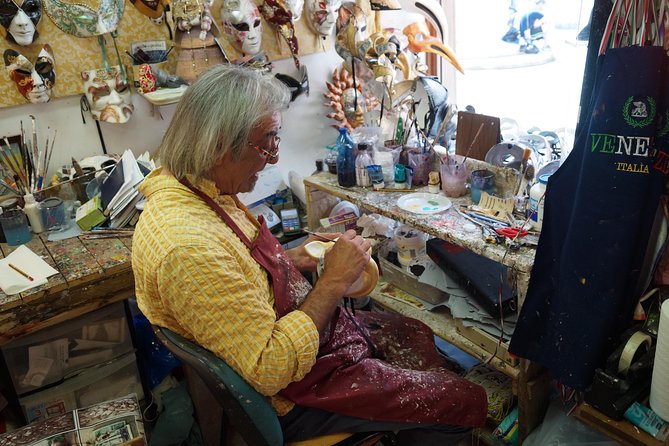
Once the introduction is finished, you receive a mask along with the paints and other supplies. The artisan helps you choose an approach and provides direction as you work.
You do not need to be an artist. That is one of the strongest reasons to choose this class. The artisan may sketch traditional patterns or lines on the mask first, giving you a structure to follow. In some sessions, participants selected three colors and painted within the drawn design.
That setup makes the activity approachable for children, hesitant painters, and adults who would rather not begin with a completely blank surface. It also explains one small limitation: the final mask may be personalized, but not every part of the design is fully your own invention.
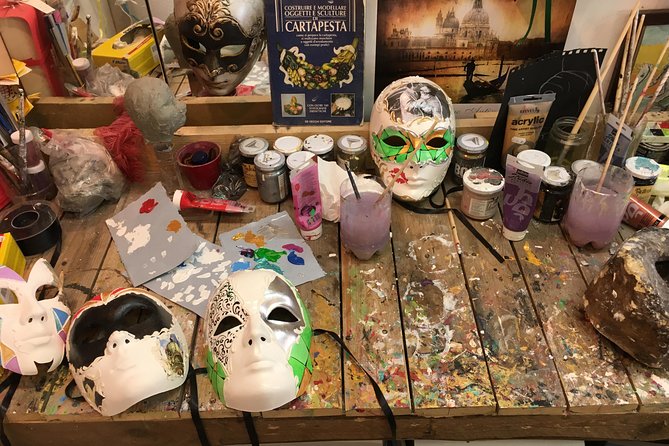
The supplied accounts describe a range of finishing materials, including paints, glitter, sprays, and three-dimensional pens. The exact supplies may vary by session, so think of the list as a guide rather than a guarantee of every item.
As you paint, the artisan checks your progress and offers suggestions. The activity has a relaxed, social feel when the session runs well. Families can work side by side, and couples or friends can compare colors and patterns without needing to produce matching masks.
The pace is usually manageable, but some participants have found the class rushed. That is worth noting if you like to work slowly or want a highly detailed design. The advertised duration is approximately one hour and 15 minutes, while some sessions have lasted about an hour and a half or nearly two hours. Plan for the longer possibility, but do not assume every class will provide extended studio time.
Same city, an entirely different afternoon:
- Venice: Doge’s Palace Reserved Entry Ticket
★ 4.6 · 42,716 reviews - Venice: Grand Canal Gondola Ride with App Commentary
★ 4.1 · 18,908 reviews - Boat Trip: Glimpse of Murano, Torcello & Burano Islands
★ 4.3 · 15,699 reviews - Venice: Grand Canal by Gondola with Live Commentary
★ 4.1 · 13,681 reviews
The artisan’s finishing touch
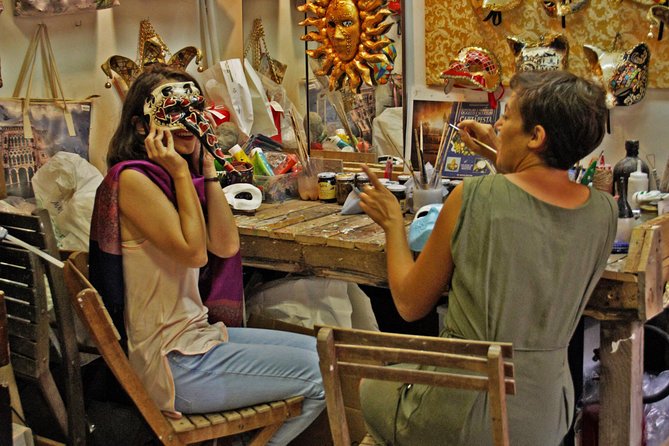
At the end, the instructor tidies the mask and adds decorative details. This final step is important. Even a simple painted design can look much more polished after the artisan adds embellishment and professional finishing touches.
It also creates the main creative trade-off. You make the basic painted design, but the master artisan may complete the mask rather than letting you handle every stage. One participant appreciated the help but expected to decorate the entire mask personally. If full artistic control matters to you, ask what you will paint and what the artisan will finish before you begin.
For most people, the finishing touch is a benefit. It helps children and inexperienced painters leave with a mask that feels special rather than unfinished. The artisan’s skill is part of what you are paying for, not merely the use of paints and a work table.
The result is a souvenir you can carry home. If you are visiting during Carnival, you can wear it during the celebrations. At other times of year, it remains a colorful reminder of Venice, with the added satisfaction of having made it yourself.
How much value do you get for $83.44?
At $83.44 per person, this is not the cheapest craft activity you will find. The price makes more sense when you separate the materials from the experience itself.
You are paying for:
- A small-group class with a maximum of four people
- Instruction from a Venetian mask artisan
- Commentary about Carnival and mask traditions
- The mask, paints, and other supplies
- A finished souvenir to take home
- A central location near Saint Mark’s Square
If you only want an inexpensive mask, a shop will offer cheaper choices. If you want a polished object with no effort, you can also buy a finished mask from an atelier. The class earns its price by adding personal instruction, stories, and the memory of making the piece yourself.
The value is strongest for families, couples, and friends who want a shared activity. Four people can make the session feel personal, and the small group may be worth more to you than a lower-priced class with a crowded table.
For solo participants, the value depends on how much you enjoy craft activities. You will still receive a mask and instruction, but the social side may feel different if the rest of the group is a family or couple.
Who should book this class?
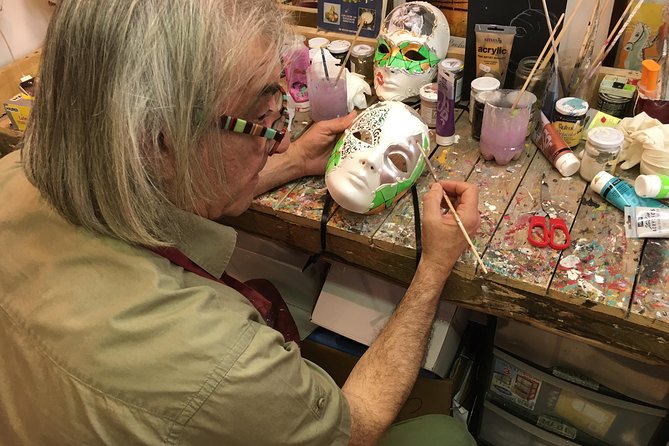
I would recommend it to families with children old enough to paint carefully, especially if everyone needs a break from churches and museums. Children around the age of 10 or 12 have enjoyed the activity, and college-age children can find it worthwhile too.
It also suits couples and friends looking for a low-pressure activity. You can talk while you work, and you do not need special skills. The atmosphere is generally calm, with some sessions using quiet music in the background.
This is a good choice if you want a practical souvenir. You will leave with something more personal than a postcard and more useful than a fragile decorative object, although you should still protect it during the journey home.
You may want to skip it if you expect a long, formal lesson in Venetian history. The cultural explanation can be excellent, especially with an artisan who enjoys telling stories, but the main focus is painting. You should also think twice if you want complete control over the mask’s decoration, since the instructor may draw the pattern and apply the final embellishments.
Timing, group size, and useful planning tips
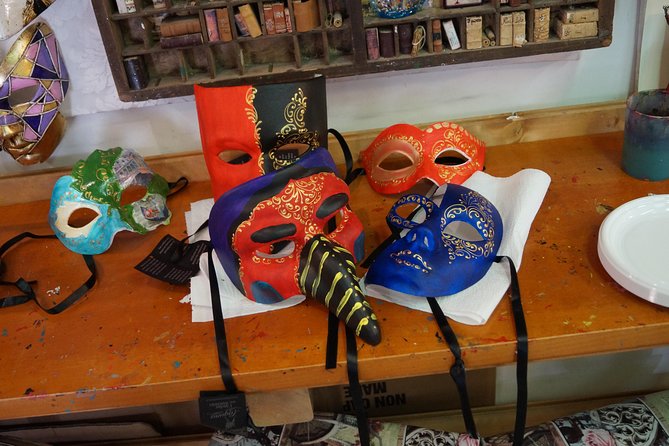
You can choose from several time slots, which makes the workshop easy to add to a busy Venice schedule. I would place it either after a morning around Saint Mark’s Square or before an evening meal nearby.
Do not schedule it immediately before a train, airport transfer, or timed museum entry. The official duration is about 75 minutes, but individual sessions have varied. Add time for finding the venue, settling in, and carrying your mask away safely.
The class has a maximum of four participants. That is a major advantage for anyone who wants personal help, but it also means popular dates can fill early. The experience is booked, on average, well ahead of the visit, so reserve early if your Venice dates are fixed.
The activity is offered in English, and confirmation is provided at booking. Most people can participate, and the venue is near public transportation. An exceptional high tide can cause the class to be postponed to a later day. If it cannot be rescheduled, the amount paid is refunded.
On certain dates, day visitors to Venice may need to pay a €5 access fee. Exemptions and applicable dates change, so check the official Venice access-fee website before your visit.
Free cancellation is available up to 24 hours before the scheduled start time. Cancellations or changes made inside that window are not accepted for a refund.
What the experience gets right, and where it falls short
The strongest part is the combination of hands-on creativity and Venetian character. You are working with a traditional local craft in the middle of the city, not completing a generic painting activity in a hotel conference room.
The artisan’s personality can make a large difference. Giorgio, Nicola, Alvis, and Jo Jo are all named in feedback about different sessions, with particular praise for patience, encouragement, stories, and artistic skill. The experience is at its best when the instructor talks while you paint and helps you shape a design that feels like your own.
The workshop is also forgiving. You can be left-brained, unsure of your artistic ability, or simply tired after sightseeing, and still finish with a mask that looks presentable. The artisan’s final work helps turn basic brushwork into a more finished piece.
The weak point is inconsistency. A few sessions have provided little historical explanation, leaving people in a small arts-and-crafts room with paint and instructions but not much context. There has also been a report of an instructor arriving late and another session where the instructor did not appear. The venue staff offered a later session and complimentary museum admission in one such case, but the disruption still mattered.
Those problems appear to be exceptions rather than the normal experience, but they are a reminder to keep your schedule flexible. Confirm the meeting details, arrive early, and avoid putting an important reservation directly afterward.
Should you book the Venetian mask-making class?
Book it if you want a relaxed, family-friendly activity that connects you with Carnival traditions and gives you a keepsake you made yourself. The Saint Mark’s Square location, small group, English instruction, and artisan finishing touch make it easy to fit into a Venice itinerary.
At $83.44, it is best viewed as a cultural activity plus a souvenir, not as a cheap painting lesson. I would book it for children tired of museums, couples wanting something different, or anyone who likes the idea of carrying home a mask with a personal story.
Skip it if you want a full historical lecture, complete control over every decorative step, or the lowest-cost way to buy a mask. For most visitors, though, this is a pleasant change of pace and one of the more personal ways to remember Venice.
FAQ
Where does the Venetian mask-making class take place?
The workshop takes place near Saint Mark’s Square in Venice, in an artisan shop or atelier.
How long does the class last?
The stated duration is approximately one hour and 15 minutes. Some sessions have lasted about an hour and a half or longer.
How many people can join the class?
The activity has a maximum of four participants.
Is the class offered in English?
Yes. The experience is offered in English and includes live commentary.
Do I get to keep the mask?
Yes. You keep the decorated papier-mâché mask as a souvenir.
Are paints and supplies included?
Yes. The decoration course includes the necessary paints and supplies.
Do I need to be artistic to take part?
No. The artisan provides instruction and guidance, and the final embellishment can help make the mask look more polished.
Is hotel pickup included?
No. Hotel pickup is not included. You make your own way to the venue near Saint Mark’s Square.
Can the class be postponed?
Yes. The activity may be postponed if there is an exceptional high tide. If it cannot be rescheduled, it will be refunded.
What is the cancellation policy?
You can cancel up to 24 hours before the start time for a full refund. Cancellations or changes made less than 24 hours before the start time are not accepted for a refund.
Fresh on the Venice list
- Murano: Glass Blowing Demonstration and Artistic Glass Gift★ 4.6 · 507 reviews
- From Venice: Dolomites, Lake Misurina, and Cortina Day Trip★ 4.6 · 508 reviews
- Venice Islands: Murano Glass & Burano Colors Guided Visit★ 4.5 · 510 reviews
- The Majestic Teatro La Fenice: Guided Tour in Venice★ 4.3 · 513 reviews
- Real Venetian Kayak – Tour of Venice Canals with a Local Guide★ 4.5 · 518 reviews
- Half Day Murano and Burano Island Tour by Private Boat★ 4.5 · 529 reviews
- Venice Trilogy: Murano, Burano & Torcello by Lagoon Boat★ 4.5 · 532 reviews
- Create Your Glass Artwork: Private Lesson With Local Artisan★ 5.0 · 556 reviews
Workshops, compared.
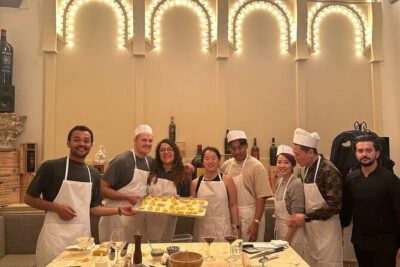
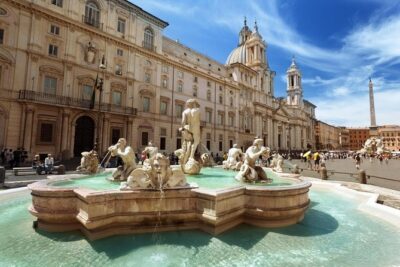
3 in 1 Cooking Class near Navona: Fettuccine, Ravioli & Tiramisu
Read our review →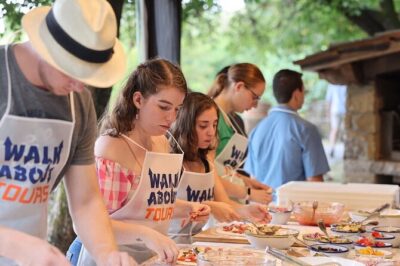
Florence Pizza or Pasta Class with Gelato Making at a Tuscan Farm
Read our review →
Pasta & Tiramisu Cooking Class with Unlimited Wine
Read our review →
Pizza-Making Workshop with Drink and Appetizer
Read our review →
Pasta & Tiramisu Class with Fine Wine by the Vatican
Read our review →
Cooking Class and Lunch at a Tuscan Farmhouse with Local Market Tour from Florence
Read our review →Browse the lists this tour appears in