

Reviewed · POMPEII & VESUVIUS TOURS
Ercolano: Herculaneum Entry Ticket with Optional Audio Guide
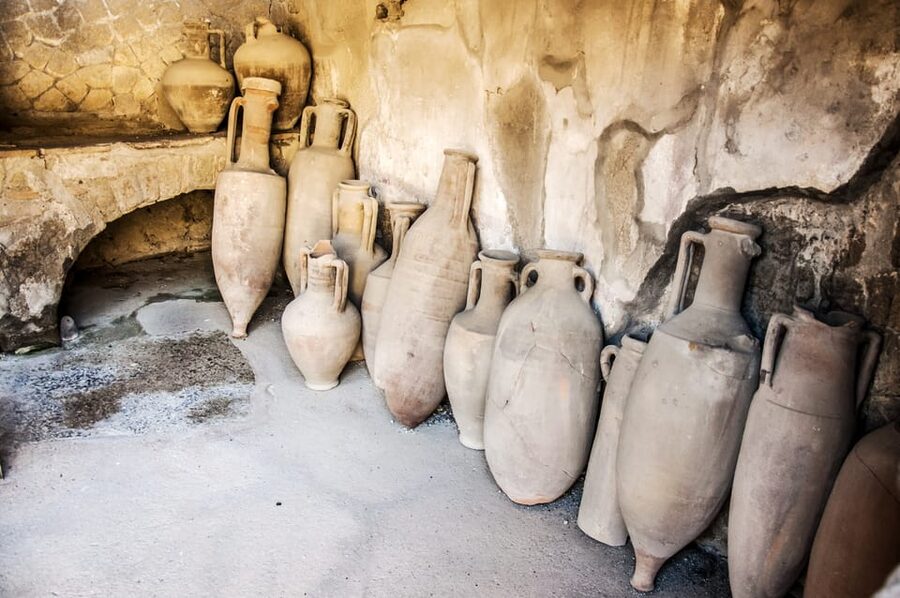
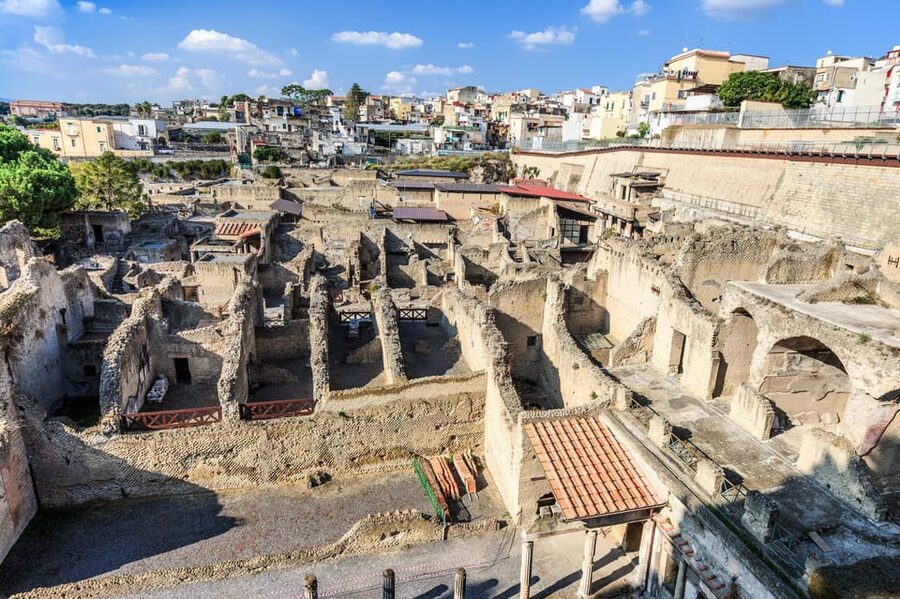
Herculaneum gives you one of the clearest glimpses of ordinary Roman life anywhere in Italy. Roofs, wooden doors, beds, food, frescoes, and whole rooms survived the eruption of Mount Vesuvius in 79 AD. You can walk into homes and shops rather than simply peer at broken walls.
I like the site for two big reasons: it is compact enough to explore in about three hours, and it often feels calmer than Pompeii. I also like the freedom to linger over small details, from painted walls to ancient street crossings. The main drawback is the optional audio guide. The app can be useful, but several visitors found it confusing to navigate, and the ticket redemption process may not be as quick as expected.
Key points to know before you book

- See unusually complete Roman buildings: Roofs, doors, beds, mosaics, frescoes, and household objects survived here.
- Expect a compact archaeological site: You can see the main area in roughly three hours, though the ticket is valid for one day.
- Compare it with Pompeii carefully: Herculaneum is smaller, less tiring, and often less crowded, but Pompeii covers a much larger town.
- Treat the audio guide as optional: The app offers useful background, but its map and track system can be hard to follow.
- Plan around the heat and sun: Wear sturdy comfortable shoes, bring water, and consider an umbrella for shade in summer.
- Check the ticket desk on arrival: You redeem the mobile voucher at the online ticket desk at the archaeological site.
Why Herculaneum feels different from Pompeii
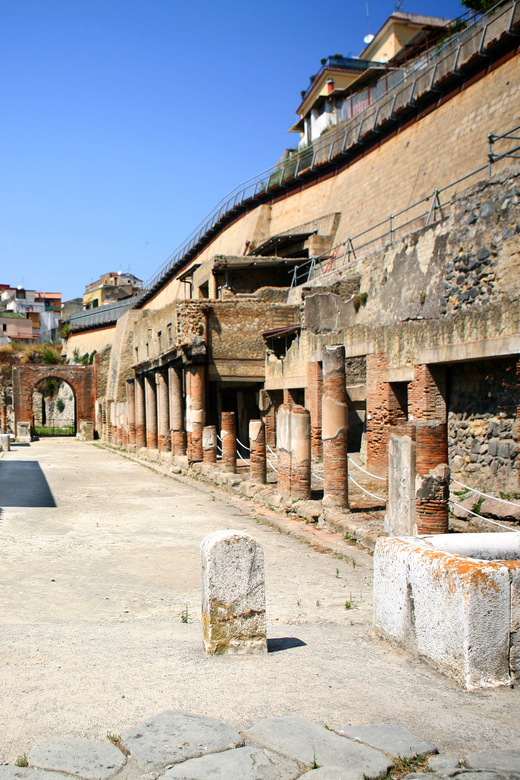
Pompeii is the famous giant, with broad streets and a huge number of buildings. Herculaneum is smaller, but its preservation can feel more personal. You see the physical details of domestic life: a doorway, a sleeping area, a painted room, a shop counter, or an object left behind.
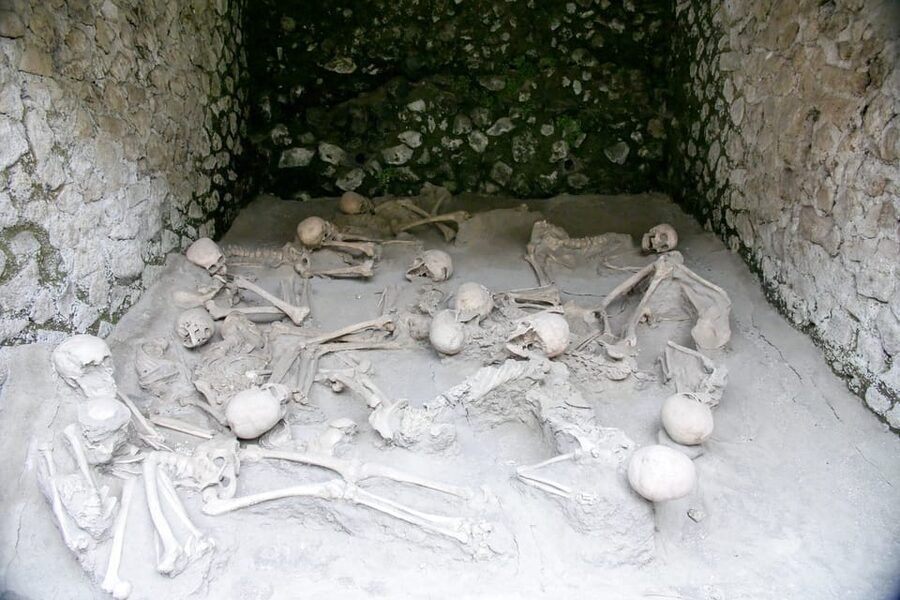
The reason is tied to the eruption. Herculaneum was buried under a thick mass of volcanic material, which helped protect upper floors, roofs, wooden fittings, and other items that usually vanish over time. That does not make the site cheerful. Some of what you see is deeply moving, especially the remains of about 300 people found near the ancient waterfront. But the preserved town also gives you a close look at how people lived, worked, washed, worshipped, and socialized.
I find Herculaneum easier to absorb than Pompeii because the scale is more manageable. You are less likely to spend the day marching from one distant quarter to another. A visit of about three hours works well for most people, though the ticket remains valid for the full day if you want to take your time.
A few other Pompeii mornings to weigh against this
- Pompeii: Entry Ticket and Guided Tour with an Archaeologist
★ 4.8 · 19,459 reviews - Pompeii: Entry Ticket with Optional Audio Guide
★ 4.2 · 12,360 reviews - Pompeii: Small Group Tour with an Archaeologist
★ 4.8 · 12,264 reviews
Entering the site and getting your bearings
The experience begins with your mobile voucher. Show it at the online ticket desk on site to redeem your entry. This is simple in theory, but allow a little patience. Some people have found that the process involves more than a quick QR scan, and the ticket desk can be difficult to spot at first.
Look for the redemption point at the actual archaeological entrance, where other visitors are heading. One visitor found a small map helpful for locating the entrance and moving around the site without paying for a transfer or a more expensive tour. If you are visiting independently, download everything you need before arriving.
The site itself does not always provide enough explanatory boards for every room and building. A map is useful, and the audio guide can fill some of the gaps. If you choose the app, read the booking instructions carefully and download it before you reach Herculaneum. Mobile coverage can be weak, and the app may use a good deal of data.
The cobbled streets and preserved homes
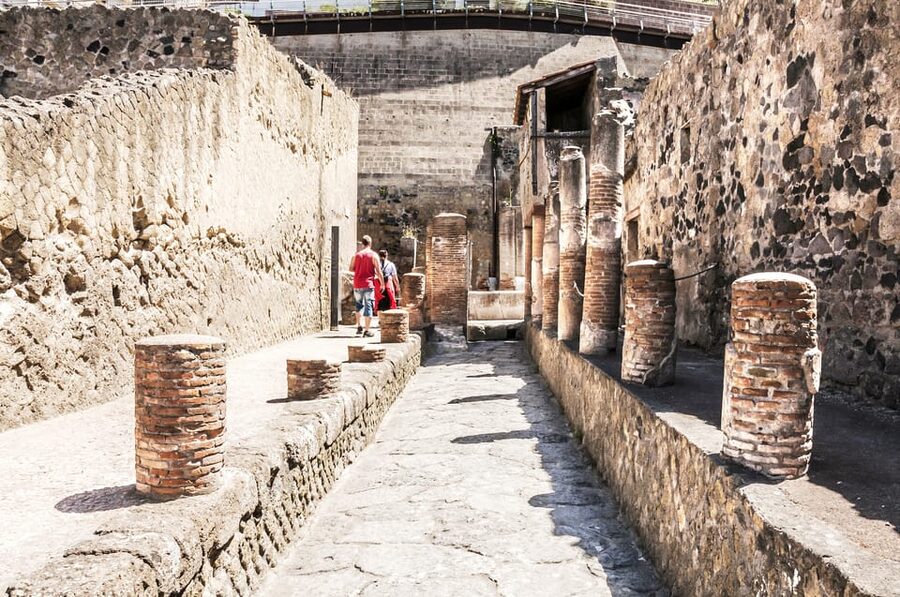
Once inside, you follow ancient streets through a town that feels more intimate than Pompeii. The road surfaces are uneven, so comfortable shoes matter. This is not a place for delicate footwear or a rushed stroll.
The best part is stepping into buildings and seeing more than foundations. You might find painted walls still holding their color, mosaics underfoot, and rooms that retain their shape. Doors, beds, and household items help you picture daily routines without needing much imagination.
Look closely at the walls and thresholds. Architecture tells you about social life, but so do the small practical details. A shop opening onto the street suggests business and foot traffic. A private room set back from the road tells a different story. The town’s layout gives you clues about status, work, family life, and public behavior.
The physical remains are valuable because they make ancient life concrete. A general explanation about Roman society is easy to forget. A preserved room, with its painted decoration and narrow entrance, stays with you.
Frescoes, mosaics, and ancient interiors
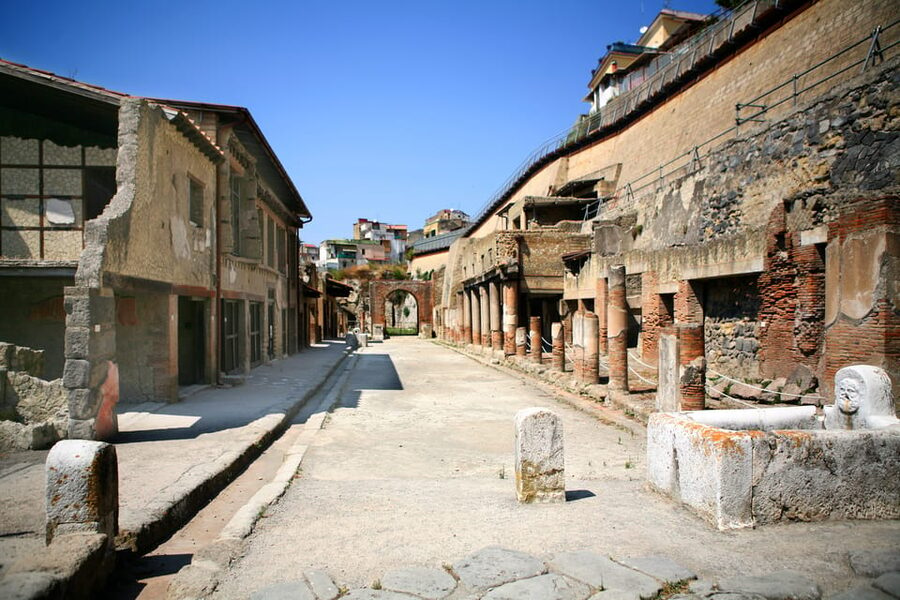
Herculaneum rewards slow looking. The site contains well-preserved frescoes and mosaics, and many buildings still show the decorative choices of their owners. You do not need to be an art specialist to appreciate them. Notice the colors, repeated patterns, framing, and the way decoration changes from one room to the next.
Some visitors move too quickly because the town looks small on a map. I suggest stopping in each accessible building for a few minutes. Read the room as a living space, not just a monument. Ask yourself what would have happened there, who would have used it, and how light, heat, and movement may have shaped the day.
The audio guide can help with this human angle. One useful feature is its attention to people and social structures, not only walls and construction. That makes it a better choice for you if you want context rather than a list of architectural terms.
Still, the app has limits. It may be unclear which track belongs to the building in front of you. The map and location tracking can be unreliable, and some people have stopped using it after a short time. Bring headphones if you select the digital option, and do not depend on the app as your only source of orientation.
Same city, an entirely different afternoon:
- Pompeii Small Group Tour with an Archaeologist
★ 5.0 · 6,593 reviews - Pompeii: Skip-the-Line Entrance Ticket with Audio Guide
★ 4.0 · 2,509 reviews - Naples: Pompeii and Mt. Vesuvius with Lunch and Wine Tasting
★ 4.5 · 2,454 reviews - Pompeii: Archaeological Park Tour with Ticket on request
★ 4.5 · 2,283 reviews
Baths, shops, and public life

Herculaneum is not only a collection of private houses. You can also see evidence of shared public life, including shops, a public gymnasium, and public swimming baths.
The baths are especially helpful for understanding Roman society. Bathing was not simply a matter of getting clean. Public bathing formed part of the social rhythm of the town, where people could meet, talk, and spend time outside the home. The surviving rooms and decorative work give you a sense of how carefully these public spaces were designed.
The gymnasium offers another view of community life. Together, these public buildings balance the private homes. You see how the town worked at several levels: families inside their houses, tradespeople serving customers, and residents using shared facilities.
The site is rewarding for anyone interested in architecture, but it also works for people who prefer stories about ordinary life. The audio guide is strongest when it explains these routines and relationships. Without it, you can still enjoy the ruins, though sparse signage may leave some rooms hard to interpret.
The waterfront and the human cost of 79 AD
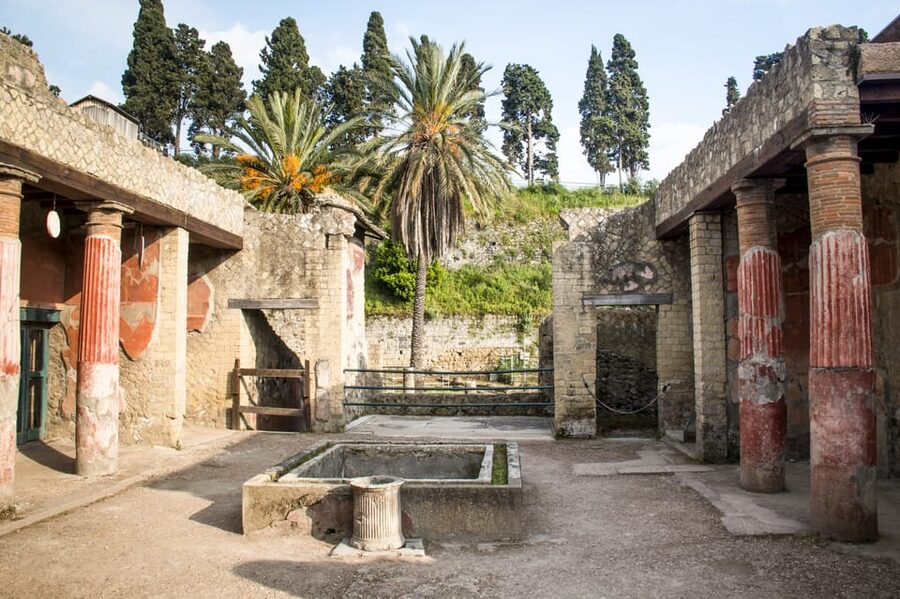
The most haunting part of the visit is the area near the ancient waterfront, where the remains of roughly 300 people were found. These skeletons are a stark reminder that Herculaneum was not simply abandoned or frozen in a picturesque moment. The eruption was a disaster that killed residents who were trying to escape.
Take your time here, but approach it with respect. The setting changes the way you see the rest of the town. A decorated room is no longer just a fine example of Roman design. A doorway is not merely an architectural feature. Each detail belongs to a real community that had homes, habits, worries, and plans for the next day.
This section may not suit very young children or anyone who finds human remains distressing. For many people, though, it provides the emotional weight that makes the rest of the visit meaningful.
How long you need and how to pace the visit
The ticket is valid for one day, so you do not need to rush through the entrance. Most people can cover the main site in about three hours. That is enough time to walk the streets, enter the major buildings, pause at the public facilities, and spend time near the waterfront.
If you are visiting in summer, three hours may be the sensible limit. The site has sunny stretches, and the heat can build quickly. There is some shade inside buildings and beneath roofs along parts of the streets, but you should still bring water and consider an umbrella for sun protection.
A good pace is to begin with the main streets, then focus on the buildings that interest you most. Do not treat the map as a race route. Herculaneum is small enough that you can stop, turn back, and compare two houses without losing half a day.
In cooler months, the experience can be much quieter. Winter opening hours are shorter, so check the schedule before setting out. From October 15 through March 15, opening is from 8:30 AM to 5:00 PM, with last admission at 3:30 PM. The archaeological area must be cleared by 4:40 PM.
From March 16 through October 14, opening is from 9:30 AM to 7:30 PM. Last admission is at 6:00 PM, and the site must be left by 7:00 PM. These hours make a late afternoon visit possible in summer, but do not arrive close to the final entry time if you want to see the main buildings.
Choosing the digital or physical audio guide
You have two audio choices. The digital guide is downloaded to your smartphone, while the physical option uses a separate audio guide device. The digital app is listed in English, French, Italian, and Spanish. The activity information also lists German among the optional audio guide languages, so confirm the language and format offered with your booking.
The app is worth considering if you enjoy learning as you walk. It can explain the town’s social structure, the purpose of individual rooms, and the significance of architectural details. It also lets you move at your own pace instead of staying with a group.
The weak point is navigation. The tracks may not be arranged in an obvious order, and the map can be difficult to match with your position. Download the app and audio content before arrival, carry headphones, and be ready to skip it if it becomes more work than help.
A private guide would suit you better if you want a clear story, easy questions, and someone to point out details in the right order. This ticket does not include a guided tour. It gives you entry and, if selected, the audio option.
Is the $21 price good value?
At about $21 per person, the ticket is reasonable if you want independent access to a UNESCO World Heritage archaeological site and do not need transport or a live guide. The visit can fill three hours comfortably, and the one-day validity gives you flexibility.
The value becomes less clear if the booking price is much higher than the official entrance cost. One person reported paying 56 euros for tickets that cost 32 euros directly, with an audio guide that was never supplied. That experience points to an important check: compare the total price with the official site before booking, especially if you do not care about the app.
The advantage of booking ahead is convenience and a clear mobile voucher. The possible disadvantage is that you may still need to visit the ticket desk and wait for redemption, rather than walking straight through. If the price difference is small, the convenience may be worth it. If the difference is large, buying directly at the site may make more sense.
Free cancellation up to 24 hours before the visit and the reserve-now, pay-later option add flexibility. Check the available starting times and final admission hour for your date.
Who should book this experience?
I would choose this ticket for independent sightseers, history fans, architecture lovers, and anyone who found Pompeii too vast or tiring. It is also a smart choice if you have limited time near Naples and want a major archaeological site that can be covered in half a day.
Families may appreciate the compact layout, though the uneven cobbles and serious subject matter near the waterfront require care. Bring comfortable shoes for everyone, and plan a slower pace for anyone who does not enjoy long periods of walking.
I would think twice about choosing the audio option if you dislike phone apps or have limited mobile data. You may get more from a live guide, or you can visit with a map and a guidebook. Herculaneum itself is the reason to go. The audio add-on is not essential.
Should you book the Herculaneum ticket?
Yes, if you want to see one of Italy’s most revealing ancient towns without committing to the larger scale of Pompeii. The preserved roofs, rooms, objects, baths, and frescoes make the visit unusually vivid, while the smaller footprint lets you look carefully instead of simply covering ground.
Book it if the price is close to the official entry cost and you value a mobile reservation. Download the audio before you arrive, bring headphones, water, an umbrella in hot weather, and comfortable shoes. Skip the audio add-on if the extra cost is high or if you prefer to explore with a guidebook.
For a first visit to the Bay of Naples, Herculaneum deserves more than a quick substitute role after Pompeii. It offers a quieter, more intimate look at a Roman town, with enough detail to reward three hours and enough emotional force to stay in your mind long after you leave.
FAQ
How long is the Herculaneum ticket valid?
The ticket is valid for one day. Most people can see the main site in about three hours, but you can stay longer during the opening period if you wish.
Does the ticket include a guided tour?
No. The ticket includes entry only. You can select a digital audio guide app or a physical audio guide device, but there is no live guided tour included.
What languages are available for the audio guide?
The digital audio guide is listed in English, French, Italian, and Spanish. The activity information also lists German among the optional audio guide languages, so confirm the exact option when booking.
Where do I redeem the mobile voucher?
Show your mobile voucher at the online ticket desk at the archaeological site. The redemption point is at the site entrance, although it may take a little time to locate.
What should I wear to Herculaneum?
Wear suitable clothing and comfortable shoes. The ancient streets are cobbled and uneven, and summer visits can be hot and sunny.
What are the opening hours?
From March 16 to October 14, the site is open from 9:30 AM to 7:30 PM, with last admission at 6:00 PM. From October 15 to March 15, it is open from 8:30 AM to 5:00 PM, with last admission at 3:30 PM.
Can I cancel the booking?
Yes. You can cancel up to 24 hours in advance for a full refund. The reserve-now, pay-later option also allows you to keep your plans flexible.
More Audio Tours in Pompeii
- Venice: La Fenice Opera House Entry Ticket with Audio Guide
★ 4.6 · 11,742 reviews - Rome: St. Peter’s Basilica & Dome Entry Ticket & Audio Tour
★ 4.2 · 7,537 reviews - Florence: Cathedral & Brunelleschi’s Dome Ticket & Audio App
★ 4.4 · 6,973 reviews - Florence: Michelangelo’s David Priority Ticket & Audio App
★ 4.4 · 6,812 reviews
More Self-Guided Tours in Pompeii
- Pompeii: Skip-the-Line Entry Ticket with Digital Guide App
★ 4.1 · 770 reviews - Rome: Colosseum & Forum with Audio Guide App -Optional Arena
★ 4.2 · 24,770 reviews - Rome: Pantheon Fast-Track Ticket and Official Audio Guide
★ 4.3 · 21,008 reviews - Venice: Grand Canal Gondola Ride with App Commentary
★ 4.1 · 18,908 reviews
Fresh on the Pompeii list
- Explore Pompeii with an Archaeologist★ 5.0 · 511 reviews
- Pompeii Skip-the-line Tour with Archaeologist Guide★ 5.0 · 559 reviews
- Pompeii Private Tour with an Archaeologist and Skip The Line – 3 hours★ 5.0 · 564 reviews
- Pompeii private tour with an Official Guide★ 5.0 · 631 reviews
- Pompeii: Exclusive Tour with Archaeologist and Entry Tickets★ 4.9 · 634 reviews
- Pompeii Ticket + Tour with Optional Tasting Experience at Pompeii★ 5.0 · 663 reviews
- From Naples: All-Inclusive Mount Vesuvius Half-Day Tour★ 4.2 · 674 reviews
- From Pompeii: Bus Transfer to Vesuvius with Park Entry Fee★ 4.2 · 700 reviews
Pompeii & Vesuvius Tours, compared.

Entry Ticket and Guided Tour with an Archaeologist
Read our review →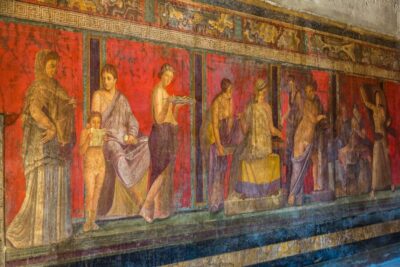




Pompeii Small Group Tour with an Archaeologist
Read our review →
Pompeii, Amalfi Coast and Positano Day Trip from Rome
Read our review →Browse the lists this tour appears in