
Reviewed · POMPEII & VESUVIUS TOURS
Herculaneum: Tickets & Tour with a Local Archaeologist
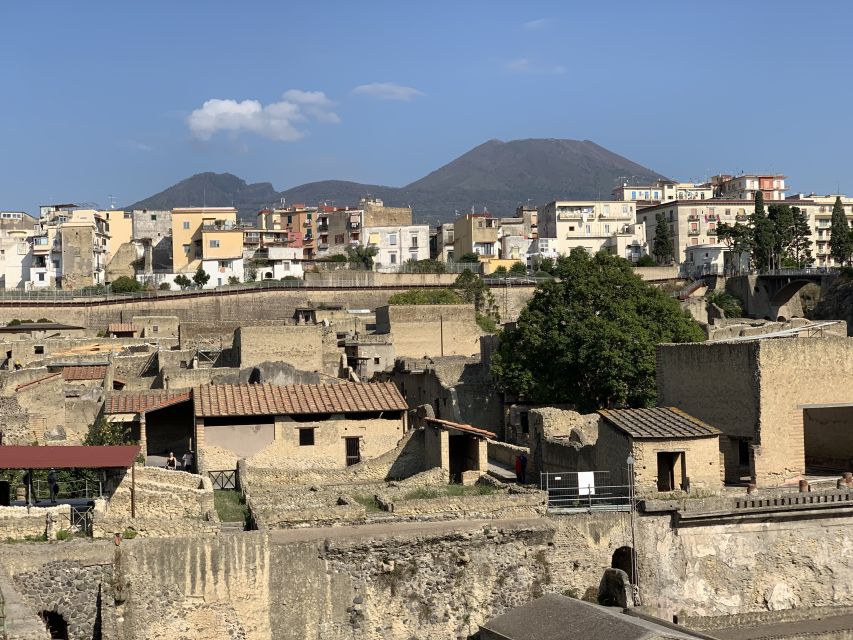
Herculaneum gives you something Pompeii cannot: an ancient Roman town preserved with startling intimacy. Wooden doors, furniture, carbonized food and skeletons survived here beneath volcanic material from Mount Vesuvius, so you can read the place as a town, not just a field of ruins.
I like the small-group feel and the way guides such as Raffaele, Riccardo, Enrica and Carlo turn tiny details into memorable stories. I also like the tight two-hour route, which gives you a clear picture of the town without the long, tiring march that Pompeii can demand. The tradeoff is pace: two hours is enough for the main sights, but not every corner, and a strong accent or nearby crowd noise can occasionally make explanations hard to catch.
Key points to know before you go
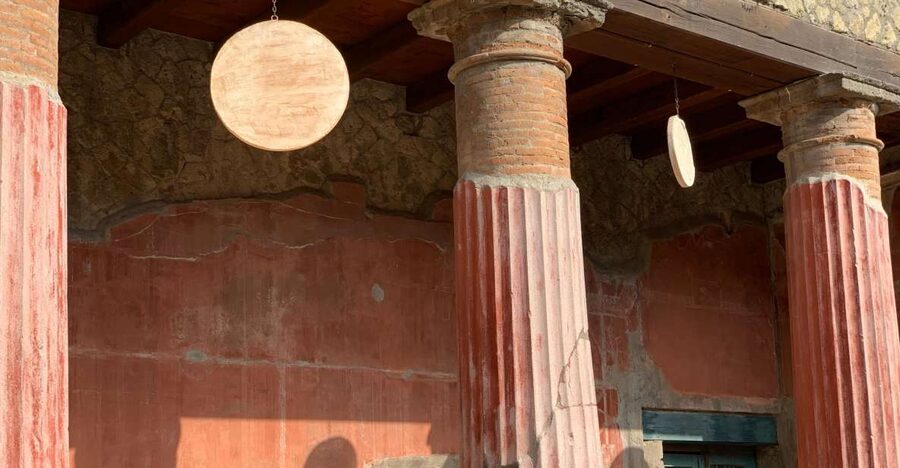
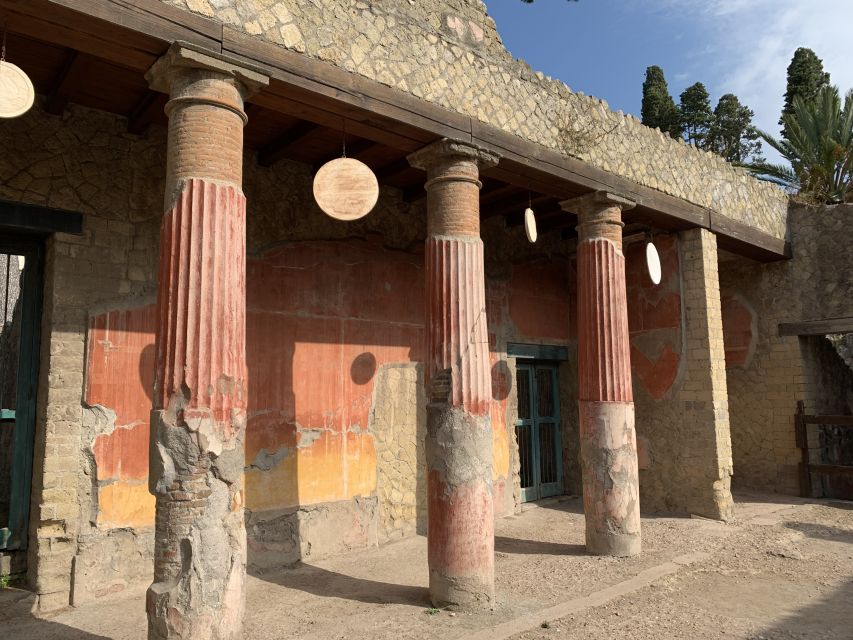
- Original Roman homes: Upper floors, wooden features, mosaics and painted rooms make Herculaneum unusually easy to imagine.
- An archaeologist at your side: The guide explains what rooms were for, how water systems worked and where the site’s human stories appear.
- A powerful final stop: The boat houses and skeletons bring the eruption close in a quiet, serious way.
- A compact two-hour visit: You cover several major buildings without spending a full day on the site.
- Skip-the-line entry: Your ticket includes access without waiting in the regular ticket queue.
- Best for curious walkers: Expect uneven paths and stairs. The site is not suitable for wheelchair users.
Why Herculaneum feels different from Pompeii
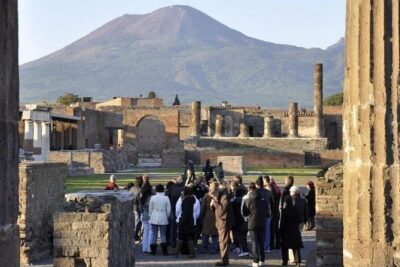
Herculaneum was a Roman seaside town near Naples, buried when Vesuvius erupted in 79 AD. Pompeii is larger and offers a broad sweep of streets and public buildings. Herculaneum is smaller, more concentrated and often more personal.
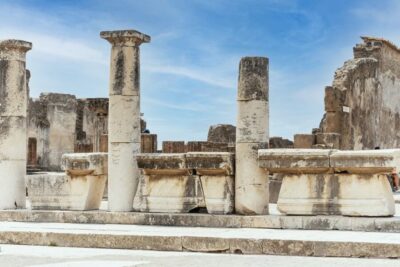
The volcanic material that covered Herculaneum helped preserve objects that normally vanish: wood, beds, doors, furniture and food. Buildings also retain more height in places, which changes the whole feel of the visit. You may look up and see upper floors rather than only low walls.
That preservation helps you picture ordinary life. A painted room is not merely decoration. It tells you about taste and money. A shop opening onto the street hints at work and trade. A bath complex shows how public life depended on engineering, plumbing and shared routines.
I would not treat Herculaneum as a lesser Pompeii. They complement each other. If you have already visited Pompeii, this tour helps you notice the contrast. If Herculaneum is your only ancient site, the guide’s explanations become even more useful because the compact route supplies context quickly.
A few other Pompeii mornings to weigh against this
- Pompeii: Entry Ticket and Guided Tour with an Archaeologist
★ 4.8 · 19,459 reviews - Pompeii: Entry Ticket with Optional Audio Guide
★ 4.2 · 12,360 reviews - Pompeii: Small Group Tour with an Archaeologist
★ 4.8 · 12,264 reviews
Meeting your archaeologist at Biglietteria Ercolano
The meeting point is the ticket office, called Biglietteria Ercolano. Arrive 10 minutes before the scheduled start. The tour includes skip-the-line admission, so you do not need to arrange a separate site ticket.
The guide may be Italian, English, Spanish or French speaking. Several guides have made a strong impression on past groups, including Riccardo, Raffaele, Giovanni, Livio, Ornella, Carlo and Enrica. Raffaele Romano is described as having doctoral training in archaeology and a particularly strong grasp of the site. Your assigned guide can vary, so do not book on the promise of one particular person unless the booking specifically confirms it.
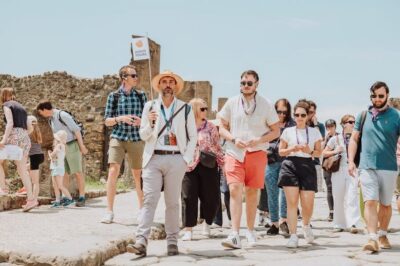
The tour is offered as a shared experience, with a private group option available. Group size matters here. Herculaneum’s lanes and rooms are close together, and a small group makes it easier to hear, ask questions and pause at a detail without blocking everyone else.
A headset is supplied if the group exceeds 11 people. That is helpful, but it does not remove every sound problem. One group found that nearby noise made some explanations difficult, while another praised the guide for repeating points when needed. If you are visiting with young children, an especially strong accent may also make it harder for them to follow every word.
House of the Deer and the town’s grander side
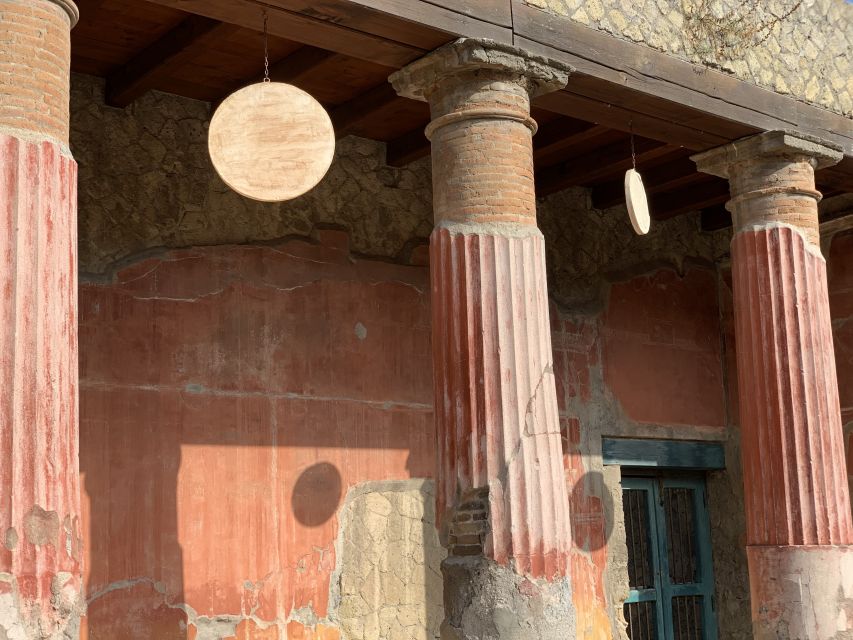
The first listed stop is the House of the Deer, or Casa dei Cervi. This is one of Herculaneum’s grand villas, and it gives the tour an early look at the wealthier side of the town.
Here, the guide can help you read the house as a lived space. Instead of seeing disconnected walls, you begin to understand how rooms related to one another, how decoration signaled status and how a villa opened toward views and outdoor areas. The name comes from deer sculptures associated with the property.
The value of this stop is not just the villa itself. It establishes a question that follows you through the rest of the visit: who lived here, who worked here and how did their lives overlap? A good guide moves between architecture and people, explaining both the grand design and the daily routines behind it.
This is also one place where the two-hour limit becomes real. You will get the major points and the visual character of the house, but you should not expect a room-by-room architectural study.
Neptune and Amphitrite: color, glass and household display
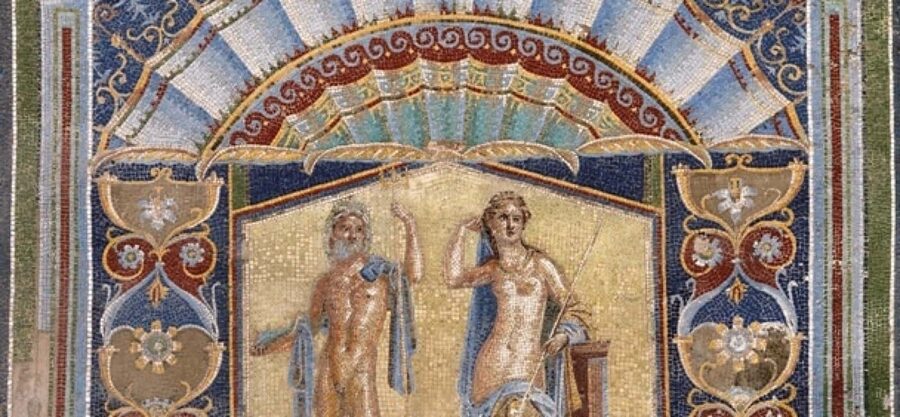
Casa di Nettuno ed Anfitrite is one of the most memorable houses on the route. It is known for its wall decoration and mosaic work, including a striking mosaic associated with Neptune and Amphitrite.
The preserved color can be a surprise. Herculaneum is not simply gray stone and broken columns. Painted walls and patterned floors show how strongly Roman interiors depended on color, design and display. Your guide can point out how decoration was arranged and what it tells you about the owner’s social position.
This is the sort of room that benefits greatly from an expert eye. Without explanation, you might admire the pattern and move on. With context, you can ask why a particular wall was decorated, how water was handled and how the room fitted into the house.
The comparison with Pompeii is worth keeping in mind. One recent assessment found some Pompeian frescoes more impressive, while many people prefer Herculaneum’s overall preservation and intimacy. The best choice depends on what you want. Choose Pompeii for scale and variety. Choose Herculaneum for close-up domestic detail.
Same city, an entirely different afternoon:
- Pompeii Small Group Tour with an Archaeologist
★ 5.0 · 6,593 reviews - Pompeii: Skip-the-Line Entrance Ticket with Audio Guide
★ 4.0 · 2,509 reviews - Naples: Pompeii and Mt. Vesuvius with Lunch and Wine Tasting
★ 4.5 · 2,454 reviews - Pompeii: Archaeological Park Tour with Ticket on request
★ 4.5 · 2,283 reviews
The Augustales and public life in a private town
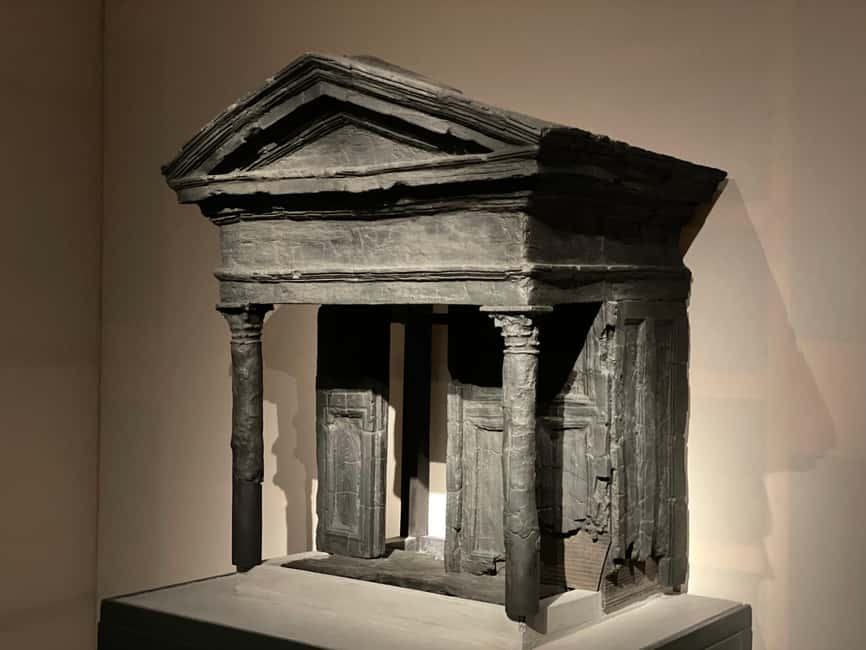
The Sacellum of the Augustales was linked to the Augustales, a religious and civic group connected with the imperial cult. This stop shifts attention from private homes to public identity.
Your guide can explain how Roman towns brought religion, politics and social standing together. Buildings like this were not isolated worship spaces in the modern sense. They also reflected the power of local families and the way civic life worked under the Roman Empire.
For you, the stop adds balance to the villas. Herculaneum was not only a place of elegant houses. It had institutions, public duties and shared beliefs. The guide’s role is important because the building’s purpose may not be obvious from the remains alone.
This is also where a strong storyteller earns the fee. Past tours have been praised for avoiding a dull stream of dates and instead connecting Roman words, customs and social habits to things you recognize today. That approach helps the information stick.
The House of Skeletons and the human cost of 79 AD
The House of Skeletons, or Casa degli Scheletri, is one of the more sobering stops. The name points to the human remains found in the town, and the subject requires a respectful approach.
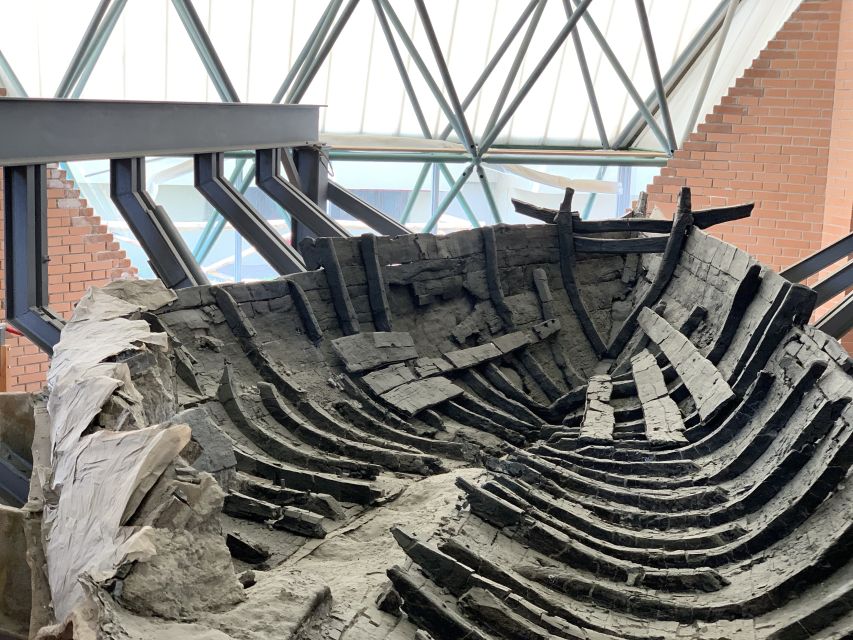
Herculaneum’s final moments are especially striking because many residents fled toward the waterfront, hoping to escape by sea. The boat houses, visited as part of the wider site tour, preserve evidence of people who sought shelter there. The skeletons are not a theatrical display. They are a reminder that this was a real town interrupted by a sudden disaster.
A good guide gives you historical context without turning tragedy into spectacle. One particularly effective approach noted by past groups was the contrast between quiet reflection at Herculaneum’s port remains and the hurried selfie culture sometimes seen around human remains elsewhere. That contrast captures why this visit can feel more intimate than Pompeii.
If you are visiting with children, decide in advance how much detail you want. The subject is part of the site’s meaning, but you can ask the guide to keep the explanation appropriate for your group.
Casa dell’Albergo and the clues in ordinary buildings
Casa dell’Albergo is another major building on the route. The name suggests an inn or lodging house, though ancient building labels can reflect later interpretation rather than a perfectly certain modern category.
This stop helps widen your view beyond elite villas. Herculaneum’s remains include homes, shops, public facilities and spaces tied to work and commerce. The guide can show you how doorways, room layouts and street access offer clues about how people used a building.
That is one of the tour’s strongest habits: it treats small evidence as meaningful. A doorway can reveal movement between street and house. A water feature can point to household comfort. A painted surface can suggest money, fashion or the desire to impress.
You may also see original cobbled streets and traces of ancient water systems during this part of the walk. Bring water for yourself, since food and drinks are not included.
The wider archaeological site and the boat houses
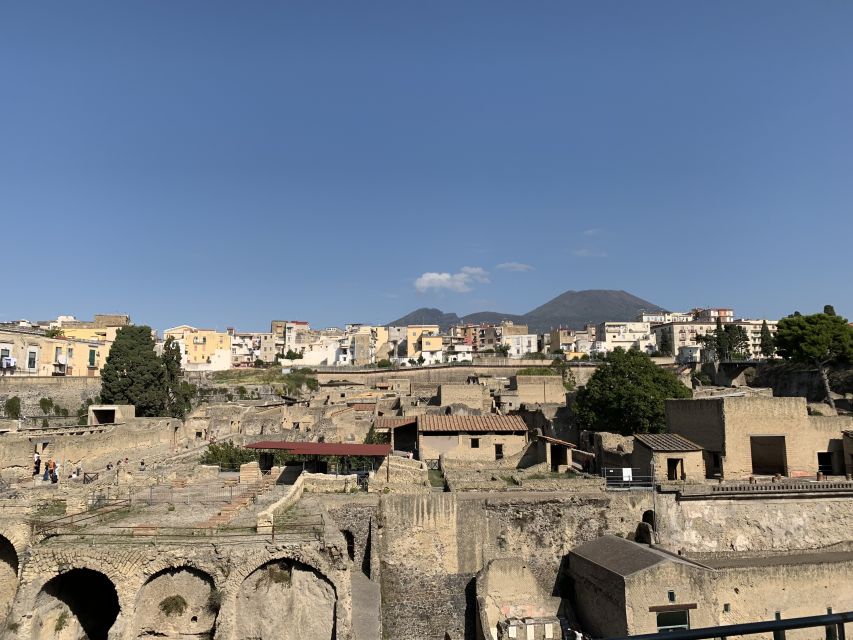
The tour then opens into the archaeological site as a whole, with time for a photo stop and a broader look at Herculaneum’s layout. You walk original streets and see how tightly packed homes, shops and public buildings once formed a working town.
The boat houses are among the most emotionally difficult places here. They sit near the old shoreline area and are tied to the remains of people who sought refuge during the eruption. The location gives the disaster a physical setting. You are not just hearing that residents tried to escape. You are standing near the place where that desperate choice played out.
This final stretch also helps connect the polished villas to the town’s wider story. The House of the Deer and Neptune’s mosaic rooms show comfort. The baths show public engineering and shared life. The boat houses show the sudden end. In two hours, the route moves from daily routine to catastrophe without losing sight of the people involved.
You return to Biglietteria Ercolano at the end. The format is useful if you have a train, another archaeological site or a meal planned afterward. Some guides may offer extra time when schedules allow, but you should not rely on that. Plan around the stated two-hour duration.
What the $58 price buys you
At $58 per person, this is not the cheapest way to enter Herculaneum. You are paying for admission, skip-the-line access and a licensed guide who can interpret the site while you walk through it.
For me, the value rests almost entirely on the guide. The ruins are impressive on their own, but much of Herculaneum’s meaning is hidden in layout, decoration, plumbing, building use and archaeological evidence. A written guide can supply facts. An archaeologist can point to the exact doorway, wall or street feature that makes those facts real.
The price is easier to justify if this is your first visit, if you are short on time or if you want to compare Herculaneum with Pompeii. It is also a sensible choice for families. One family of five found that a private, focused explanation kept children engaged after a morning at Pompeii.
The value is less clear if you prefer to wander alone, read every panel at your own pace or spend several hours on one villa. The fixed two-hour route favors a clear overview rather than slow independent study.
The activity allows free cancellation up to 24 hours before the start and lets you reserve now and pay later. That flexibility matters in Campania, where transport and weather can complicate a packed schedule.
Practical advice for a smoother visit
Wear shoes you can manage on uneven paths and stairs. The site is not suitable for wheelchair users, and electric wheelchairs are not allowed. The tour data does not give a detailed accessibility assessment beyond those limits, so ask the operator directly if you have other mobility concerns.
Bring a passport or ID card and water. Hotel pickup and drop-off are not included, so you need to make your own way to the ticket office. Food and drinks are also your responsibility.
Timing can shape the experience. One group visiting at 4 pm found the site quiet and had an easier time hearing the guide. That does not guarantee the same conditions every day, but a later start may be worth considering if available.
Ask questions. The guides have been praised for adapting explanations to a group’s interest, including links to Pompeii, local history, Roman language and daily life. If you have already visited Pompeii, say so at the start. The guide can spend less time on basics and more time on the differences between the two towns.
Who should book this Herculaneum tour?
I would choose this tour for anyone who wants ancient sites to make human sense, not just look impressive in photographs. It suits first-time visitors, families with older children, couples, and anyone who has only two hours for Herculaneum.
It is especially useful after Pompeii. The smaller scale and better-preserved domestic details can feel like a welcome change after Pompeii’s broad avenues and long distances. If you have only one site available, Herculaneum offers a compact, powerful look at Roman life.
I would skip the guided format if you strongly prefer solitude or need a very slow pace. I would also think twice if your group includes wheelchair users, since the activity is not suitable for them.
Should you book it?
Book it if you want the preserved wood, mosaics, frescoes, baths and skeletons explained by someone trained to read the evidence. The most praised qualities are consistent: guides bring energy, answer questions, tell human stories and make the two hours count.
The main caution is simple: this is a focused introduction, not an exhaustive archaeological study. At $58, it offers good value when expert interpretation and saved ticket time matter more to you than wandering alone. For most visitors, that is a fair trade at one of Italy’s most revealing ancient sites.
FAQ
Where does the Herculaneum tour begin?
It begins at Biglietteria Ercolano, the site’s ticket office. You should arrive 10 minutes before the start time.
How long does the tour last?
The tour lasts two hours and returns to Biglietteria Ercolano.
Is admission to Herculaneum included?
Yes. Skip-the-line entrance tickets are included in the price.
What languages are available?
Live guides are available in English, Spanish, Italian and French.
Is the tour private?
A private group option is available. The standard format may be shared with other participants.
Are headphones provided?
A headset is provided if the group exceeds 11 people.
What buildings are visited?
The route includes the House of the Deer, Casa di Nettuno ed Anfitrite, the Sacellum of the Augustales, the House of Skeletons, Casa dell’Albergo and the wider archaeological site.
Does the tour include hotel pickup?
No. Hotel pickup and drop-off are not included.
What should I bring?
Bring a passport or ID card and water.
Is the tour suitable for wheelchair users?
No. The activity is not suitable for wheelchair users, and electric wheelchairs are not allowed.
Fresh on the Pompeii list
- Stories of Pompeii: Small Group tour with archeology expert guide★ 5.0 · 191 reviews
- Mount Vesuvius: Vineyard Tour with Wine Tasting and Lunch★ 4.8 · 193 reviews
- Pompeii: Skip-the-Line Guided Tour with Expert Archaeologist★ 4.8 · 196 reviews
- Pompeii: 2 Hour Private Tour with an Archeologist Guide★ 5.0 · 214 reviews
- Pompeii: Skip-the-Line Entry & Audioguide★ 3.8 · 225 reviews
- Pompeii and Mount Vesuvius Small Group Tour★ 4.5 · 233 reviews
- Pompeii: Day Tour of Pompeii and Vesuvius with Bus Transfer★ 4.2 · 250 reviews
- From Naples/Salerno: Pompeii, Sorrento, and Positano Tour★ 4.5 · 250 reviews
Pompeii & Vesuvius Tours, compared.
Entry Ticket and Guided Tour with an Archaeologist
Read our review →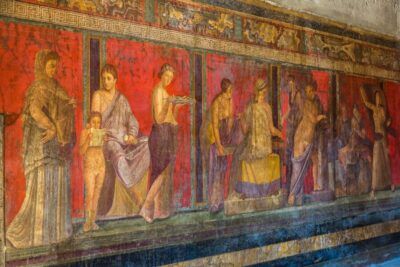
Pompeii Small Group Tour with an Archaeologist
Read our review →
Pompeii, Amalfi Coast and Positano Day Trip from Rome
Read our review →Browse the lists this tour appears in