
Reviewed · 2-HOUR EXPERIENCES
Rome: 2-Hour Gladiator School
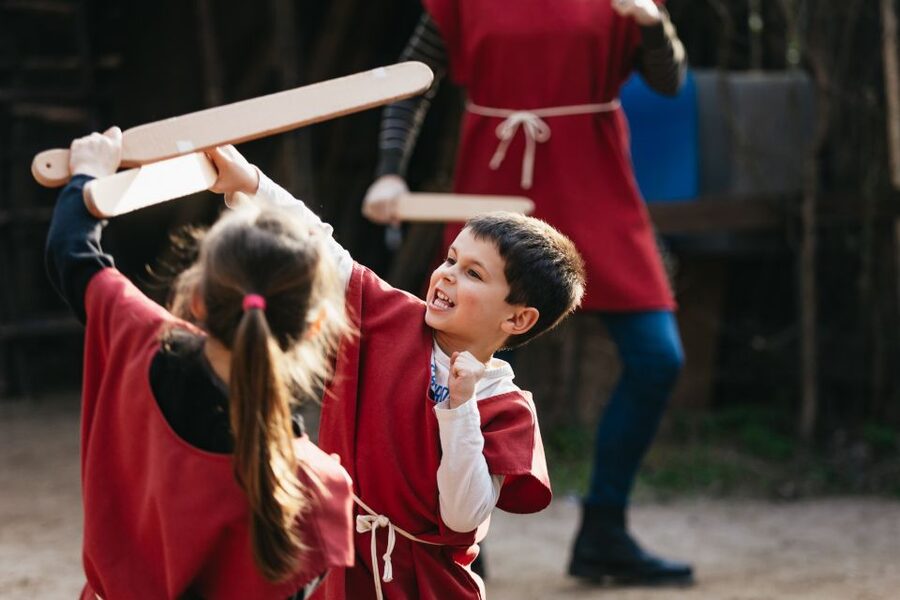
The best part of this Rome experience is that you do not just look at Roman weapons behind glass. You put on a gladiator tunic, learn basic sword moves, and face other students in a safe final battle with foam swords. The setting on the ancient Appian Way adds a welcome sense of place.
I like the mix of history and hands-on action, especially for families who want more than another quiet museum visit. I also like that parents can watch without buying a ticket if they do not take the class. The main drawback is the price, $135.94 per participant, which feels high for two hours, and the outdoor site can be very hot with mosquitoes.
Key points to know before booking
- The class takes place on the Appian Way, away from central Rome and near the Appia Antica-Travicella bus stop.
- You learn and practice sword fighting, rather than sitting through a long lecture.
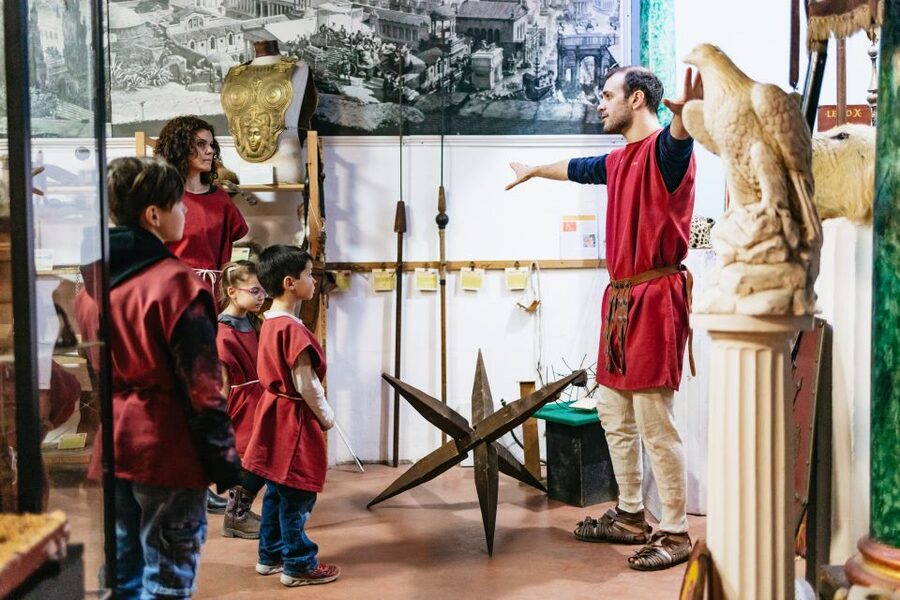
- A small museum visit comes first, with Roman weapons, armor, gladiator life, and military details.
- The final battle uses foam swords, making the activity suitable for children and adults.
- Guides bring different strengths, with past instructors including Mirko, Cena, Patriccio, Marko, Sina, and Olympus.
- The two-hour price includes drinks, a certificate, training, and museum entry, while nonparticipating companions can attend free.
Why this class works after the Colosseum
A visit to the Colosseum gives you the grand scale: stone seating, underground passages, and the famous arena. This class gives you a small, playful sense of what it took to handle a weapon, follow instructions, and perform in front of a crowd.
I would schedule it after visiting the Colosseum or another Roman site. The timing helps children connect the ruins they have seen with the clothing, weapons, and basic fighting techniques introduced here. One family paired the class with an underground Colosseum visit later the same day, creating a useful link between the gladiators waiting below the arena and the mock battles at the school.
This is not a serious combat course, and it does not recreate ancient fighting in a museum-quality historical setting. It is an educational activity with theatrical touches. You get facts about gladiators and soldiers, then plenty of movement, practice, jokes, and staged combat.
That balance is the reason the class works for mixed ages. Young children can enjoy the costume and action, while older children and adults still get a real lesson in Roman life and weapons.
A few other Rome mornings to weigh against this
- Vatican Museums & Sistine Chapel Express 2-Hour Guided Tour
★ 4.5 · 1,037 reviews - Lucca: 2-Hour City Center Walking Tour
★ 4.7 · 1,314 reviews - Milan Duomo and Rooftop 2-Hour Guided Tour
★ 4.6 · 1,076 reviews
Arriving at the Appian Way
The meeting point is the Gladiator School of Rome on the Via Appia Antica. By public transport, the nearest stop is Appia Antica-Travicella, served by bus lines 118 and 218.
The location matters. The Appian Way is one of Rome’s ancient roads, and the setting feels more connected to Roman history than a generic indoor activity near Termini. At the same time, it is not as easy to reach as the Colosseum or the Pantheon, so allow time for the bus ride and finding the meeting point.
Starting times vary, so you need to check availability when booking. The activity lasts two hours and ends where it begins, which keeps the day simple once you arrive.
Bring water and insect repellent. Drinks are included, and the staff have made a point of keeping students hydrated, but summer heat can still make the training tiring. Mosquitoes are a practical nuisance at the site, especially when you are standing outside for much of the session.
The activity is listed as wheelchair accessible. If access needs are important for your group, I would still confirm the exact arrangements for the museum, training area, and arena before arrival.
The museum visit and Roman background

The session begins with an introduction to Roman history and a visit to the school’s museum. It is small, so do not expect a replacement for the Capitoline Museums or the Colosseum exhibits. Its value is focus: the objects relate directly to the lesson that follows.
You learn about gladiators, Roman soldiers, weapons, armor, and daily life in imperial Rome. The guide explains what gladiators did and how their fighting roles fit into Roman society. The subject is more complicated than the Hollywood version, and the lesson gives you a chance to hear about the real people behind the public spectacle.
The museum also gives the instructor something concrete to point to. Instead of explaining a sword in the abstract, the guide can connect the object to the grip, stance, or movement you will practice later.
This part is especially useful for children who need a story before they start swinging foam swords. The instructors use humor and questions to keep the history moving. Guides such as Cena have been praised for bringing Rome to life across a wide age range, from children to grandparents.
Still, keep your expectations in proportion. The museum is compact, and the class does not promise a long academic lecture. If your group wants detailed Roman military history, you will need a separate museum or archaeological visit.
Getting dressed as a Roman fighter

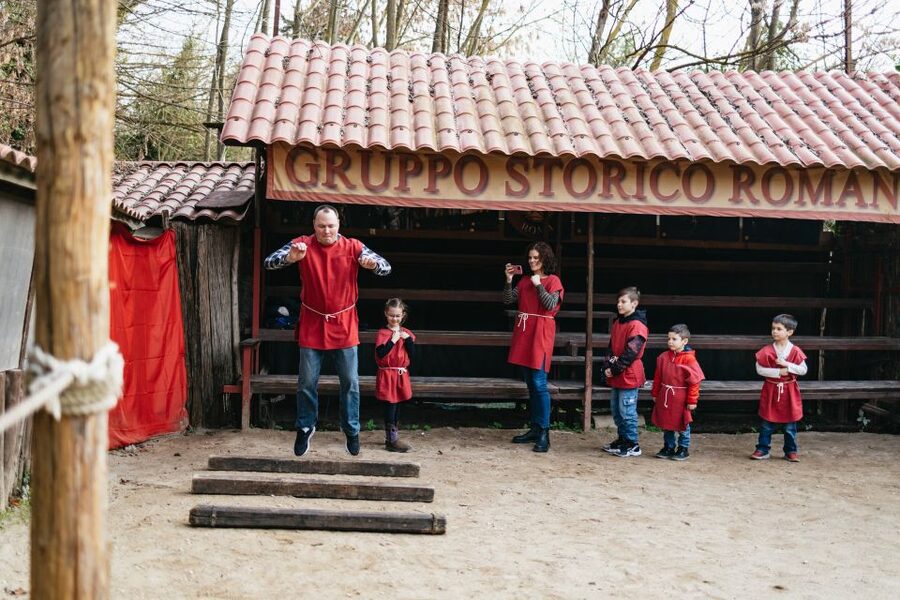
After the introduction, participants wear a gladiator tunic and prepare for the practical lesson. The costume is simple, but it changes the mood quickly. Children who might lose interest during a standard history talk now have a role to play.
Adults can take part too. Parents are not required to remain spectators, and several families have enjoyed joining their children in the training and final battle. If you would rather take photographs and watch, you can attend as a nonparticipating companion without paying for a ticket.
The group may include different ages, including very young children and adults. The instructors adjust the pace and keep the tone encouraging rather than competitive. Reports from families with children as young as five, as well as groups spanning several generations, suggest that the format can work well for a broad family group.
The tunic is part of the show, not specialist protective equipment. The activity uses safe practice weapons, and the instructors teach control before the mock fighting begins. You should still follow directions closely, particularly if younger children are in the same practice space.
Same city, an entirely different afternoon:
- Vatican Museums & Sistine Chapel Tour with Optional Basilica
★ 4.3 · 67,413 reviews - Colosseum, Roman Forum & Palatine Guided Tour
★ 4.7 · 63,148 reviews - Vatican Museums, Sistine Chapel & St Peter’s Basilica Guided Tour
★ 4.5 · 39,149 reviews - Rome: Colosseum, Palatine Hill and Roman Forum Guided Tour
★ 4.8 · 32,814 reviews
Learning Roman swordplay
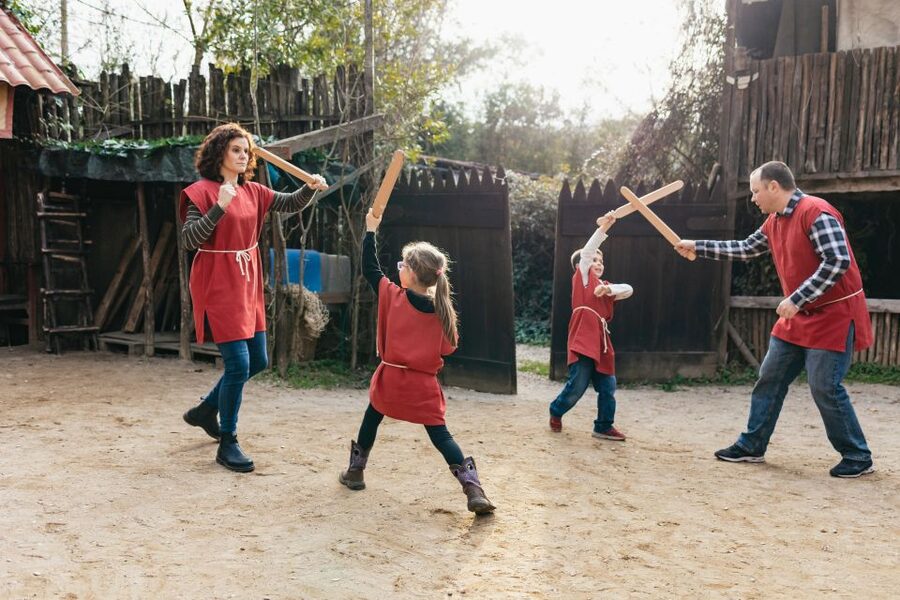
The training is the active heart of the experience. You learn basic techniques for gladiatorial sword fighting, including how to hold and move with a Roman weapon. The instructor demonstrates, then has students repeat the movements.
I like that the class is not mainly a safety briefing followed by a few photographs. The practical work takes up a substantial part of the two hours. You keep moving, practice techniques, and receive corrections and encouragement from the instructor.
The exact teaching style depends on the guide. Mirko and Marko have been singled out for keeping children engaged, while Patriccio has been noted for helping a child feel capable and successful. Olympus brings experience as a real gladiator performer and adds detail about fighting methods and Roman military life.
Those names matter because the instructor shapes the day. A lively guide can keep a group of excited children focused, while a patient guide can make a nervous child feel ready to participate. The school’s staff seem to rely on energy, humor, and constant interaction rather than a fixed speech.
You should not expect authentic combat training or a full study of ancient martial arts. The focus is simple technique, safe movement, and historical context. The lesson succeeds as a shared activity, not as a path toward becoming a trained swordsman.
The mock battle in the arena

The session builds toward a final battle in the school’s arena or amphitheatre. Participants use foam swords, and the action is staged for safety and fun. Depending on the group, children may face parents or other families, creating the sort of photographs and family jokes that last beyond the day.
This final section gives the earlier instruction a clear purpose. You are not merely copying moves and putting the sword away. You use what you have learned in a playful contest, with the instructor organizing the action and keeping the atmosphere under control.
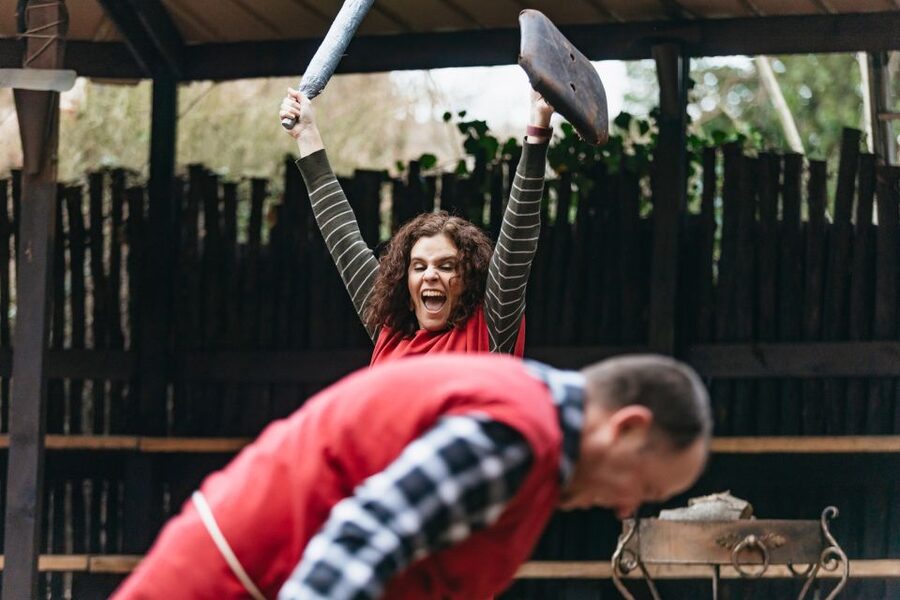
The battle can be a highlight for adults as well as children. Parents who join in may find themselves defeated by a determined eight-year-old in front of the group. If you prefer not to fight, you can watch and take pictures, though the activity is designed around participation.
The arena is part of the theatrical appeal. An emperor may be included in the presentation, and the final battle has a show-like quality. That does not make it historically exact, but it helps children understand how public spectacle was part of Roman life.
Very young children may need more help with the rules and sword control. Older children often enjoy the competitive element, while adults can choose how seriously to take it. The instructor’s job is to keep the battle safe, organized, and friendly.
The certificate, drinks, and overall value
The price is $135.94 per person. That is a substantial cost for a two-hour activity, especially if several family members participate. You need to compare it with the price of other guided Rome experiences and decide how much you value active entertainment.
The fee includes the museum visit, gladiator training, drinks, and a certificate. The certificate gives children a physical souvenir, and the drink service is useful on a warm day. Nonparticipating parents or companions do not need to buy a ticket, which can make the total more reasonable for a family where only the children want to fight.
I see the strongest value for families with children between roughly school age and early teens, though the activity is open to adults and much younger children have taken part. It combines a lesson, a costume, exercise, a performance, and a keepsake in a single visit.
The value is weaker if you want a quiet, highly detailed historical tour or if your group is not interested in role-play. It is also less appealing on an extremely hot day if your family dislikes outdoor physical activity. Cold drinks and shady spots help, but they do not remove the heat.
The class is best judged as a special family activity, not as a conventional museum tour. For many families, the chance to take part together is what makes the price worthwhile.
What your guide can add to the experience
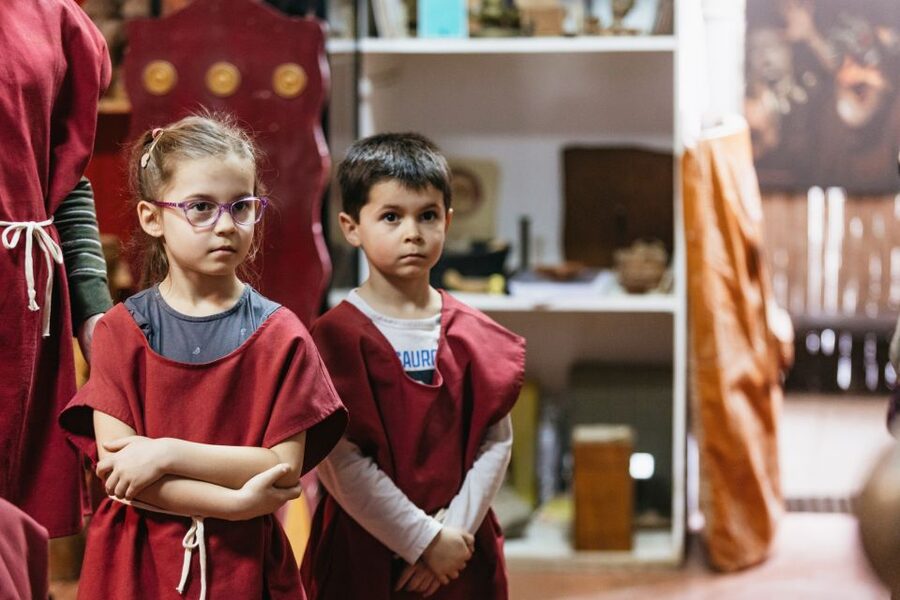
The staff members bring much of the personality. Cena has led multigenerational groups with ages ranging from children to older adults, while Sina has been praised for fluent English, energy, and an ability to keep young children focused. Mirko has been described as both entertaining and strong on historical detail.
Olympus adds another angle. He has experience as a gladiator performer and can discuss the difference between the real gladiators of Rome and the Hollywood image. That distinction is useful because the activity keeps one foot in history even while it plays up the spectacle.
The class is offered in English and Italian. If you are booking for a group with mixed language needs, check that the available session suits everyone. A guide who can explain the movements clearly matters more here than on a standard walking tour, since you need to understand what to do before the mock battle begins.
One of the nicest details is the attention given to individual children. A good instructor does not simply demonstrate once and move on. The guide watches, encourages, and helps a child feel that a move was done correctly. That personal attention can be the difference between a shy child standing aside and taking part fully.
Who should book this Rome gladiator school?
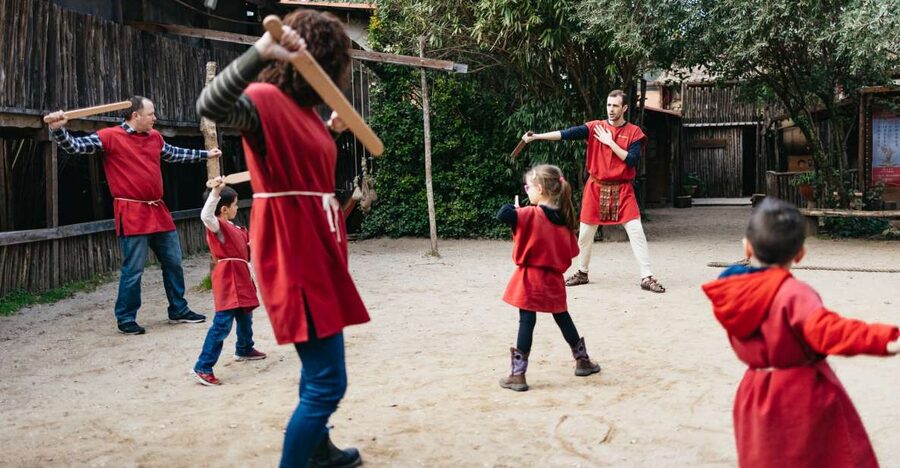
I would book this for a family that wants an active break between Roman ruins and formal sightseeing. It is particularly strong for children who enjoy costumes, sports, stories, or anything that lets them take a role rather than sit still.
It also works for adults who are willing to be playful. You do not need to be fit or experienced with weapons, and the foam-sword format keeps the mood light. A family group can participate together, then keep the certificate and photographs as a shared Rome memory.
I would think twice if your group has limited mobility, dislikes heat, or wants serious archaeological detail. The activity is wheelchair accessible, but the practical setup and outdoor training conditions are still worth confirming for your needs.
I would also avoid placing it immediately after a long, exhausting day of walking unless your children still have energy. The class involves movement, attention, and participation. It is more fun when you arrive ready to play.
Practical ways to plan the visit
Schedule the class after a Colosseum visit if Roman combat is a main interest. The connection between the two activities is clear, and children can use the class to act out ideas they have just seen in the ruins.
Allow extra time for the journey to the Appian Way. The bus stop is Appia Antica-Travicella, served by routes 118 and 218, and the tour returns to the same meeting point. Check the selected starting time carefully because sessions are offered at different times.
Wear clothing suitable for outdoor movement and warm weather. Use insect repellent, especially in summer, and accept the included drinks as part of your heat plan rather than as a substitute for preparing sensibly.
Cancellation is flexible up to 24 hours before the activity for a full refund, and you can reserve now and pay later. That helps if your Rome schedule is still shifting, though the main decision remains whether your group will use the training enough to justify the per-person cost.
Should you book the two-hour gladiator class?
Book it if you want active Roman history, a family-friendly experience, and a break from looking at ruins. The museum gives the class substance, the sword lesson gives it structure, and the foam-sword battle supplies a memorable finish.
Skip it if your priority is a long archaeological lecture or a low-cost attraction. At $135.94 per participant, this is a premium two-hour activity. Its value comes from the shared fun, the enthusiastic instructors, the costume, and the chance to turn Roman history into something you physically act out.
For families, I would call it one of the stronger choices for a special Rome day, especially when paired with the Colosseum. Bring repellent, plan for heat, and be ready to lose the final battle to your child.
FAQ
Where does the gladiator school take place?
The activity takes place at the Gladiator School of Rome on the ancient Via Appia Antica in Rome.
How long does the activity last?
The gladiator school lasts two hours. Starting times vary, so check availability when booking.
Is the class suitable for children?
Yes. The activity is designed for both children and adults. Children as young as five have taken part, and the instructors adapt their approach for different ages.
What is included in the price?
The price includes the museum visit, gladiator training, drinks, and a certificate.
Do parents have to buy a ticket if they only watch?
No. Parents or companions who do not attend the course do not have to pay for a ticket.
How do I reach the meeting point by bus?
The nearest bus stop is Appia Antica-Travicella, served by bus lines 118 and 218. The activity ends back at the meeting point.
Fresh on the Rome list
- Exclusive Golf Tour Private VIP with Local & Gelato o Wine★ 5.0 · 500 reviews
- Colosseum, Palatine Hill and Roman Forum with Guided Tour★ 5.0 · 500 reviews
- Rome Trastevere Pasta Making Class with Eating Europe★ 5.0 · 505 reviews
- Rome by Night Walking Tour★ 4.5 · 506 reviews
- Rome: Colosseum Express Tour with Forum & Palatine Access★ 4.5 · 511 reviews
- Rome Food Experience Max 6 People Group Tour | w/Private Option★ 5.0 · 516 reviews
- Rome: Navona Square Underground Ticket with Audio Guide★ 4.0 · 518 reviews
- Rome: Escorted Papal Audience Experience with Entry Ticket★ 4.4 · 518 reviews
2-Hour Experiences, compared.


Vatican Museums & Sistine Chapel Express 2-Hour Guided Tour
Read our review →



2-Hour Guided Walking Tour of the Historical Center
Read our review →Browse the lists this tour appears in