
Reviewed · WALKING TOURS
Genoa: 2-Hour Guided Walking Tour of the Historical Center
Genoa’s caruggi, its tight medieval lanes, are the point of this tour. They twist between churches, palaces, small squares, and traces of the city’s seafaring past, creating a place that is hard to understand from a map alone. I like that the route focuses on the historic center rather than racing between distant sights, and I like that the $16 price includes museum admission after the walk.
The two-hour length is another strength. It gives you a useful first look without taking over your day, especially if you are visiting from a cruise ship. The main consideration is the bilingual format: the guide speaks in English and Italian, so some explanations take longer. You also visit the museums independently, not with the guide.
Key points at a glance
- Caruggi walking route: Follow Genoa’s narrow medieval lanes, where the city’s old character is easy to miss without local direction.
- Rolli palaces on Via Garibaldi: See grand aristocratic residences built in the 16th and 17th centuries, now protected as a UNESCO World Heritage Site.
- San Matteo Square: Learn how the Doria family used this handsome square as a base of power.
- San Lorenzo Cathedral: Visit the Gothic cathedral and hear about its religious treasures, including relics connected with St. John the Baptist.
- Two museums included: Use your same-day admission at the Strada Nuova Museums and Sant’Agostino Museum after the guided walk.
- English and Italian guide: Expect a bilingual tour, with guides such as Irene, Roberta, Daniel, Barbara, Marina, and Paola praised for clear explanations and local tips.
Starting on Via Garibaldi, Genoa’s palace street
The meeting point is the Tourist Information Center at Via Garibaldi 12red. This puts you right beside one of Genoa’s grandest historic streets, so the tour begins in a useful location rather than at a random transport stop.
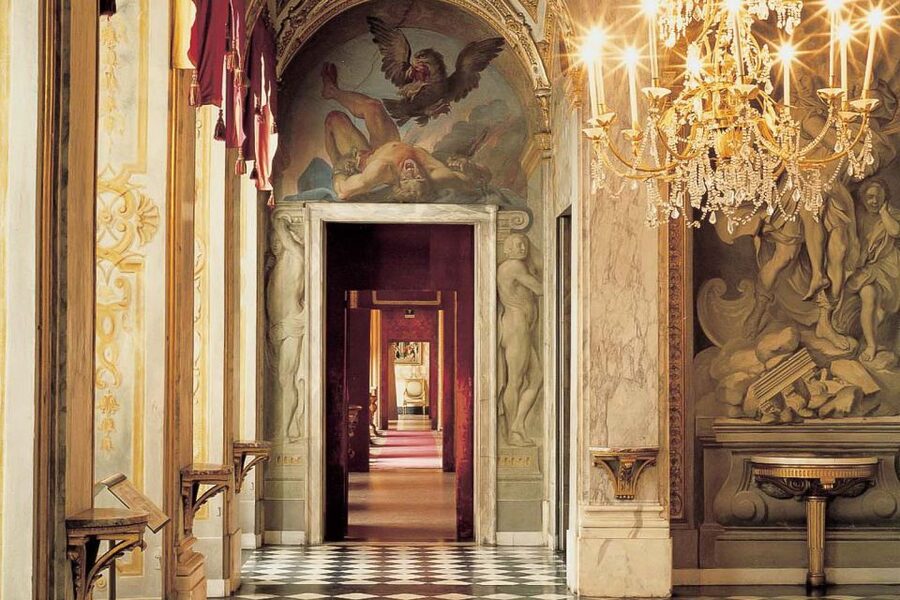
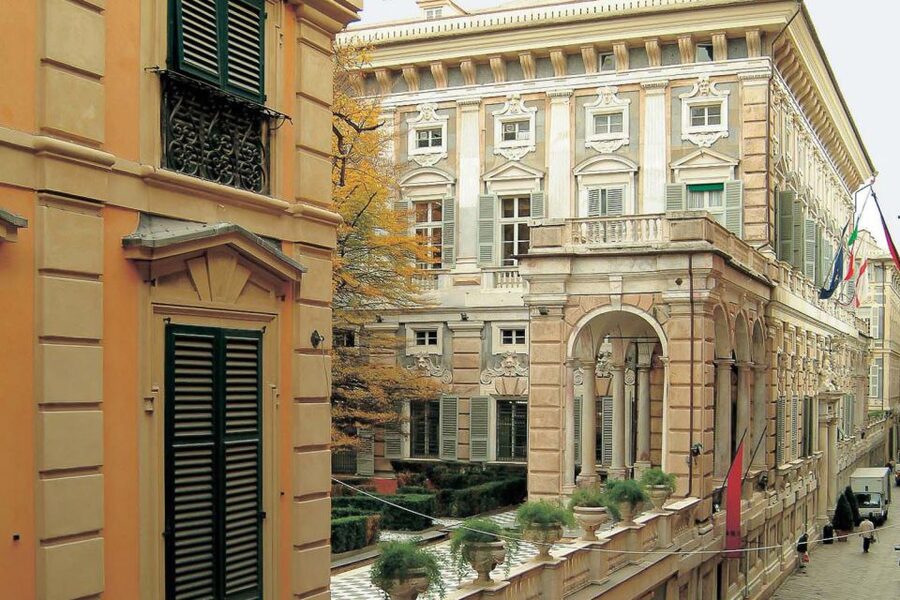
Via Garibaldi was once the residential address of Genoa’s most powerful families. The palaces here formed part of the Rolli system, a remarkable arrangement in which selected aristocratic homes were required to host important visitors. Their owners were not simply displaying wealth. They were taking part in the public life and political machinery of the city.
Look up as you walk. Genoa often reveals its best details above street level: carved façades, painted decoration, balconies, and elaborate entrances. The street is much more formal than the alleys nearby, which makes the contrast especially clear.
The Palazzi dei Rolli date mainly from the 16th and 17th centuries. Their UNESCO status reflects the unusual way this group of private residences helped create a formal hospitality system for the republic. The walk gives you the setting and historical explanation, while the museum visits let you see some of the interiors and art at your own pace.
A few other Italy mornings to weigh against this
- Lucca: 2-Hour City Center Walking Tour
★ 4.7 · 1,314 reviews - Milan Duomo and Rooftop 2-Hour Guided Tour
★ 4.6 · 1,076 reviews - Vatican Museums & Sistine Chapel Express 2-Hour Guided Tour
★ 4.5 · 1,037 reviews
Entering the caruggi of the Old Town
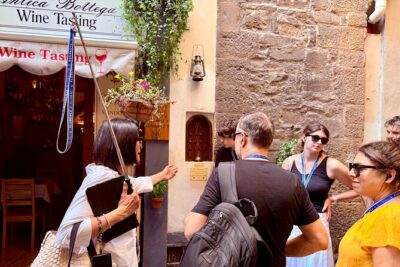
From the broad palace street, the route leads into Genoa’s caruggi. These lanes are narrow, often shadowed, and easy to confuse with one another. That is exactly why a guide helps here. A standard sightseeing bus cannot reach this part of the city, and even a confident independent walker can pass a small square or important doorway without noticing it.
I like this part of the tour because it gives you Genoa as a lived-in city rather than a row of isolated monuments. The historic center is described as the widest in Europe, and its old streets hold layers of trade, religion, noble power, and ordinary urban life close together.
The pace is generally steady rather than strenuous. Past groups have included people with different physical limits, and guides have been praised for keeping the walk manageable. Still, you should expect a lot of standing and walking on uneven historic streets. The route does not cover huge distances, but its close quarters and frequent stops make comfortable shoes a sensible choice.
Your guide points out curiosities and local details along the way. Several guides have also offered useful suggestions for food, chocolate, ice cream, and other places to enjoy after the tour. These small tips can be as useful as the formal history, particularly if Genoa is your first stop in Liguria.
San Matteo Square and the Doria family
San Matteo Square offers one of the clearest looks at Genoa’s old power structure. The square is closely tied to the Doria family, one of the city’s most important ruling families, and its buildings give you a compact lesson in how aristocratic influence shaped the center.
This is the sort of stop that benefits from a guide. Without context, a square can look attractive but anonymous. With an explanation of who built it, who controlled it, and how it fit into the republic, the buildings begin to make sense as parts of a political story.
The tour does not present Genoa as only a polished palace city. It also shows the tight medieval fabric around these formal residences. The narrow lanes and grand façades belonged to the same urban world, although they served very different people and purposes.
San Lorenzo Cathedral and Genoa’s religious treasures
San Lorenzo Cathedral is one of the major stops. Its Gothic form gives the tour a change of mood after the aristocratic palaces and cramped lanes. The cathedral houses important religious objects, and the guide explains the role these objects played in Genoa’s religious and civic identity.
One especially memorable subject is the connection with St. John the Baptist. Genoese forces brought relics associated with the saint back from the Crusades in the 12th century, and they are now linked with the cathedral. This is a good example of how Genoa’s maritime and commercial reach affected what you see inside its churches.
The cathedral is not just an art stop. It also helps explain the city’s status as a major port and trading power. Genoa’s wealth moved through ships, banks, families, churches, and public buildings, and San Lorenzo sits at the center of those connections.
More historic sites in Italy:
- Venice: St. Mark Basilica Ticket, Audioguide+History Gallery
★ 3.9 · 4,780 reviews - Venice’s Best: Basilica, Doge’s Palace, Gondola & History Gallery
★ 4.5 · 2,478 reviews - Historic Milan Tour with Skip-the-Line Last Supper Ticket
★ 4.5 · 1,976 reviews - Venice: City Center Historical Guided Walking Tour
★ 4.2 · 1,873 reviews
The Doge’s Palace and Opera House
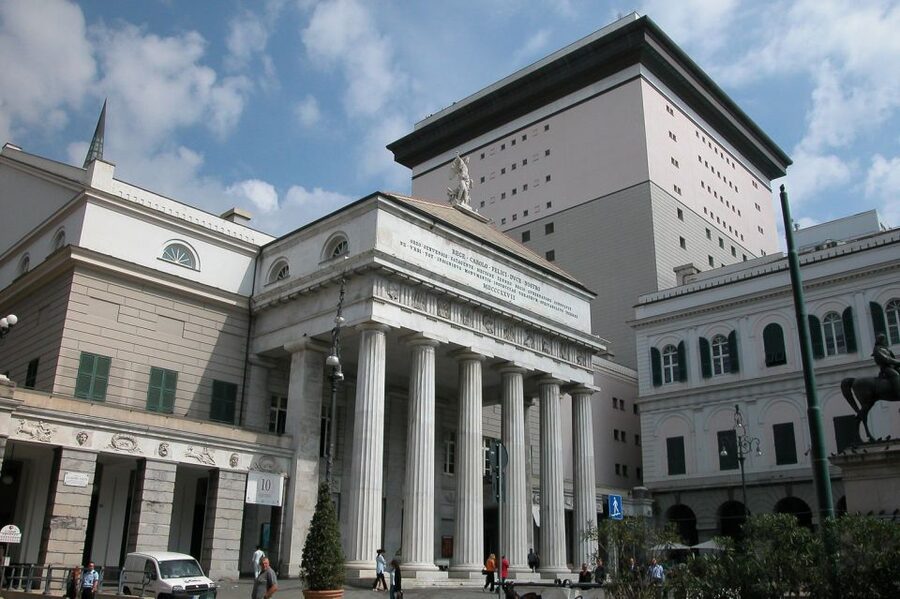
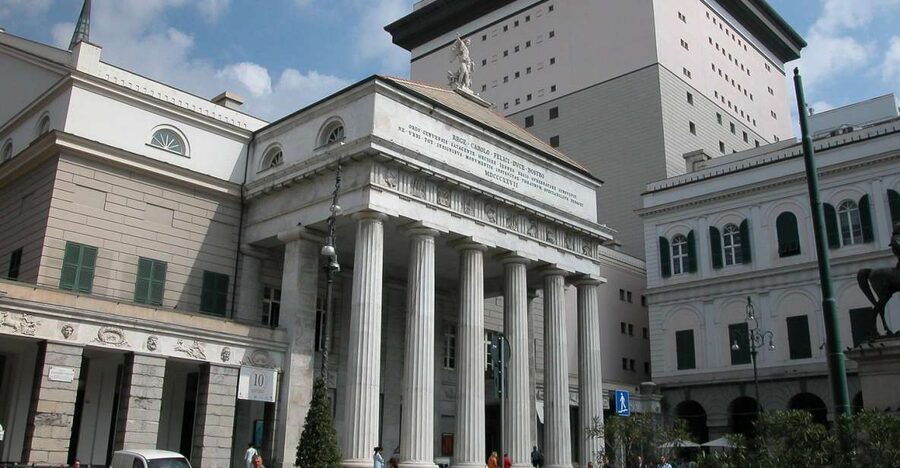
The route also takes in the Doge’s Palace and the Opera House. The Doge’s Palace represents the civic government of the old republic, while the Opera House points to a later cultural chapter in Genoa’s urban life.
You should think of these as exterior orientation stops rather than guaranteed extended interior visits. The tour is designed to explain the city center and show you its main landmarks. The included museum admission is for independent visits after the guided portion, not a guided tour through every building on the route.
This distinction matters when you compare the experience with a longer private tour. At $16, you are buying a focused introduction, not an all-day monument program. The tradeoff is sensible for most first-time visitors: you get the story of the center, then decide which interiors deserve more of your time.
Via Garibaldi museums: use the included admission well
At the end of the walk, the guide introduces the Strada Nuova Museums, then leaves you to continue alone. The museum center is located along Via Garibaldi and contains works by Italian and foreign artists dating from the 15th through the 19th centuries.
The displays include important examples from the Genoese and Flemish schools. If you enjoy painting, this is a useful extension of the palace walk. You have already seen the streets where Genoa’s wealthy families lived, and the museum visit lets you consider the art and taste associated with that world.
The admission is part of the value of the tour, but you need to plan your time. The guided walk lasts two hours, and the museum visit must take place on the same day. Do not treat the tickets as an open-ended pass for another date.
Because you visit without the guide, you can move at your own pace. You might spend a long time with a few paintings, or make a shorter visit before lunch or another appointment. The only drawback is that you will not receive the guide’s commentary inside the galleries.
Sant’Agostino Museum and medieval Genoa
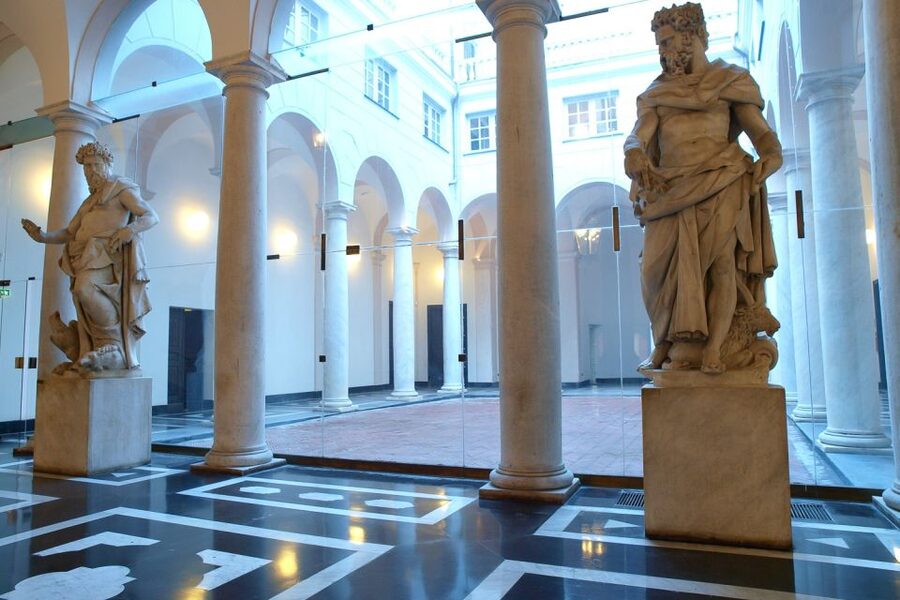
Sant’Agostino Museum adds a different focus. It occupies the spaces of a triangular cloister and the largest preserved Gothic church, displaying important art from medieval Genoa.
This museum pairs well with San Lorenzo Cathedral and the Old Town walk. The cathedral shows the continuing religious importance of the city, while Sant’Agostino helps you look at medieval art in a setting tied to Genoa’s earlier development.
Again, the visit is independent and must be completed on the tour day. If you want to see both museum sites carefully, leave enough space in your schedule after the walk. The tour itself does not promise a guided museum session, so consider reading the opening information and deciding in advance which collection matters most to you.
What the bilingual format is really like
The tour is conducted in English and Italian by one bilingual guide. That means you may hear each explanation twice. The format can add time, especially when the group is large or when the guide stops to answer questions in both languages.
I would not book this expecting a fast, single-language walk. At the same time, the bilingual structure has often worked well. Guides such as Barbara and Anna were praised for giving comparable explanations in both languages, while other guides, including Roberta, Daniel, Irene, Marina, and Paola, received strong marks for clear delivery, humor, and local insight.
The practical issue is hearing. One past participant suggested that a microphone and earpieces could help larger groups, while another liked the quieter pace without intrusive equipment. If you have hearing difficulties, stay close to the guide and ask to be positioned where you can see and hear clearly.
The bilingual setup can also create a little breathing room. While the guide speaks Italian, you have time to take photos or study a façade, then listen for the English explanation. It is less efficient than a single-language tour, but not necessarily wasted time.
Timing, value, and cruise-day use
Two hours is a good length for a first orientation. You see the main historic center, hear how Genoa developed as a Roman port and later trading power, and finish with two museum options. The route is short enough to fit into a broader day, but substantial enough to help you return independently to places that caught your attention.
The $16 cost is especially attractive because museum admission is included. Even if you spend only a moderate amount of time inside the collections, the combination of a guided walk and same-day entry gives you more than a basic street tour.
The meeting point is within walking distance of the port, according to one cruise visitor who estimated roughly one kilometer and about 20 minutes on foot. That makes it a useful alternative to a cruise-line excursion, but you must allow time to reach the meeting point and check in. If your ship is delayed, contact the Tourist Information Center as soon as possible. One delayed group was helped to catch up with the tour, but you should not count on that outcome.
The start time varies, so check the available departure before booking. The reservation can be canceled up to 24 hours in advance for a full refund, and the reserve-now, pay-later option keeps your plans flexible.
Who will enjoy this Genoa walk most
I would choose this tour if you want a solid first look at Genoa before exploring alone. It suits first-time visitors, cruise passengers with a half-day ashore, and anyone who wants the Old Town explained rather than simply photographed.
It is also a good fit if you care about architecture and art. The Rolli palaces, San Matteo Square, San Lorenzo Cathedral, Via Garibaldi, and the two museums create a useful arc from aristocratic power to religious art and civic history.
Families may appreciate the manageable two-hour format, though narrow lanes and uneven paving can make the walk less convenient with very young children or mobility limits. A slower pace has worked well for some groups, but the exact conditions depend on the group and guide.
You may want a different option if you dislike bilingual tours, need a fully private experience, or want extended interior visits with one guide. This tour gives you an overview and then sends you into the museums on your own.
My verdict: a smart first step in Genoa
I would book this for the beginning of a Genoa visit, especially at $16. The caruggi, Rolli palaces, Doria connection, cathedral, and museum access give you a well-chosen introduction to a city that can feel confusing at first.
Go in knowing what you are buying: a bilingual guided walk, not a private tour and not a guided museum program. Stay near the guide, wear sensible shoes, and protect time on the same day for both museum visits. If you want Genoa’s historic center to come into focus quickly, this is a strong-value choice.
FAQ
How long does the Genoa walking tour last?
The guided walking tour lasts two hours.
What languages are available?
The live guide speaks English and Italian. The tour takes place in both languages with a bilingual guide.
Where does the tour begin?
The meeting point is the Tourist Information Center at Via Garibaldi 12red.
What sights are included on the walking route?
The route includes the historic center, the caruggi, the Palazzi dei Rolli, San Matteo Square, San Lorenzo Cathedral, the Doge’s Palace, the Opera House, and Via Garibaldi, also known as Strada Nuova.
Are museum tickets included?
Yes. The activity includes access to the Strada Nuova Museums and Sant’Agostino Museum.
Are the museum visits guided?
No. At the end of the walking route, the guide introduces the Strada Nuova Museums, and you continue the museum visits independently.
When must I visit the museums?
You should visit both the Strada Nuova Museums and Sant’Agostino Museum on the same day as the walking tour.
Can I cancel for a full refund?
Yes. You can cancel up to 24 hours in advance for a full refund.
Do I have to pay at the time of booking?
No. The reserve-now, pay-later option lets you book your place without paying immediately.
More Walking Tours in Italy
- Milan: Guided Walking Tour & Last Supper Visit with Ticket
★ 4.7 · 5,409 reviews - Naples: Street Food Walking Tour with Local Guide
★ 4.8 · 4,256 reviews - Venice Walking Tour and Gondola Ride
★ 3.5 · 3,630 reviews - Venice: Rialto Bridge & Offbeat Unusual Venice Walking Tour
★ 4.2 · 3,538 reviews
Fresh on the Italy list
- Florence: Uffizi Guided Tour with Skip-the-Line Entry Ticket★ 4.8 · 499 reviews
- Milan: Last Supper and Sforza Castle Guided Tour★ 4.6 · 498 reviews
- Boat trip La Maddalena Archipelago – Departure from Palau★ 4.5 · 499 reviews
- Turin: Egyptian Museum Skip-the-Line Group Tour★ 4.7 · 500 reviews
- Exclusive Golf Tour Private VIP with Local & Gelato o Wine★ 5.0 · 500 reviews
- Itria Valley: Polignano, Ostuni, and Locorotondo, from Bari★ 4.6 · 502 reviews
- Colosseum, Palatine Hill and Roman Forum with Guided Tour★ 5.0 · 500 reviews
- Catania: Etna Nature Tour with Hiking, Cave Visit, & Tasting★ 4.7 · 502 reviews
Walking Tours, compared.
Guided Walking Tour & Last Supper Visit with Ticket
Read our review →
Rialto Bridge & Offbeat Unusual Venice Walking Tour
Read our review →
Private 3 hrs Venice Tour: St Mark’s, Walking tour & Boat tour
Read our review →
Skip the line: Uffizi and Accademia Small Group Walking Tour
Read our review →Browse the lists this tour appears in