
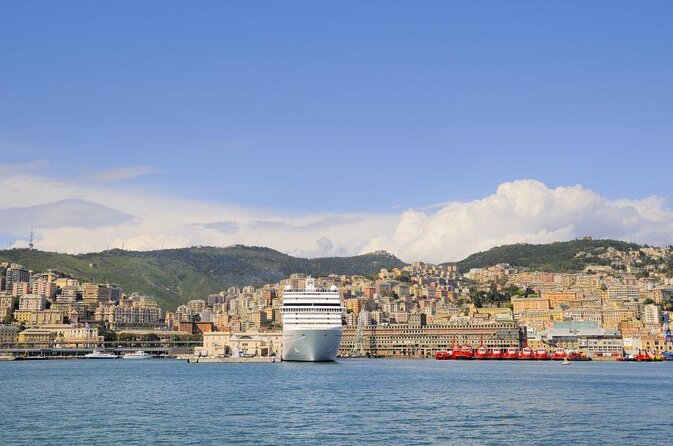
Reviewed · GENOA TOURS
2 Hours Private Historical Tour in Genoa
The clever part of this private Genoa tour is its little vehicle. A rickshaw or electric pedal bike can slip through lanes that are awkward by car and tiring on foot, while you sit back and watch the city unfold. Guides such as Eleonora, Giulia, Yusuf, Sophie, and Beatrice have been praised for making the history easy to follow and personal.
I like the route for two clear reasons: it gives you a quick look at both medieval Genoa and the grander nineteenth-century city, and it leaves you at the Old Port with a useful sense of where to return. The main caution is mechanical trouble. Flat tires, broken spokes, and replacement vehicles have caused delays on some rides, so keep a little breathing room if your ship is waiting.
Key points to know before booking
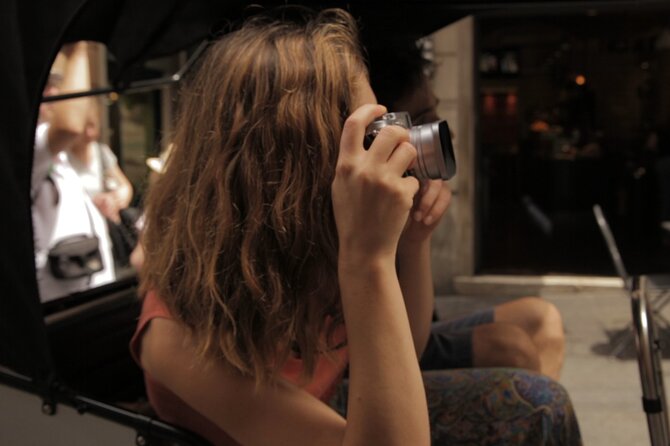
- A private ride for up to two people: The $114.93 price covers your group, not each person, which makes the cost easier to justify for a couple.
- A strong first look at Genoa: Ten stops connect the old lanes, grand palaces, cathedral quarter, main square, and waterfront.
- A practical choice for cruise port calls: The meeting point is at Galata Museo del Mare, close to the terminal exit.
- Local guides shape the experience: Eleonora, Giulia, Yusuf, Sophie, Beatrice, and others have been praised for clear history and friendly conversation.
- Free cancellation with a weather safeguard: Cancel at least 24 hours ahead for a full refund, and poor weather can lead to a new date or full refund.
- Allow time for vehicle problems: Most rides finish as planned, but mechanical delays have shortened or interrupted a few outings.
Why a rickshaw works so well in Genoa
Genoa is not a city that reveals itself from a sightseeing bus. Its old center is a tight web of lanes, stairways, churches, small squares, and tall buildings packed close together. A normal car cannot reach much of it, and two hours of walking can be a lot if you have just arrived from a cruise ship or have limited mobility.
The rickshaw solves that problem in a simple way. You do not need to pedal, and the driver handles the route while you look around. Some rides have used an electric rickshaw, while others are described as pedal-bike tours, so you should be prepared for the exact vehicle to vary.
I like this format because it gives you an overview without turning the city into a blur. The guide can stop for photographs and explain why a lane, church, or palace matters. You still see Genoa at street level, not through a coach window.
The tour is private, so only your party participates. For two people, the listed price of $114.93 works out to about $57.47 each. That is not the cheapest way to see Genoa, but it is fair if you value a dedicated guide, a vehicle in the historic center, and a route that would take more planning to manage alone.
A few other Genoa mornings to weigh against this
- Genoa: 2-Hour Guided Walking Tour of the Historical Center
★ 4.2 · 605 reviews - Lucca: 2-Hour City Center Walking Tour
★ 4.7 · 1,314 reviews - Milan Duomo and Rooftop 2-Hour Guided Tour
★ 4.6 · 1,076 reviews
Starting at Sarzano Square, Genoa’s early core
The route begins near Piazza Sarzano, an easy place to find in the central city. The square is linked to the original nucleus of Genoa, or Ianua, and gives you an early lesson in how the city grew around compact medieval quarters.
You will have about 15 minutes here. Look toward the bell tower of Sant’Agostino church, the small temple, and the colorful Ravecca street behind them. This is a good opening stop because it feels less formal than the grand squares later in the route.
The point is not to spend the whole morning studying one monument. Instead, your guide can give you a basic map of old Genoa: where the medieval center lies, how the streets lead toward the harbor, and why the city can feel confusing when you first arrive.
From here, the vehicle is especially useful. Narrow streets and small changes in elevation are easier to handle with a local driver than with a rented car or a phone map.
Medieval churches and lanes around Santi Cosma e Damiano
The stop at Chiesa Santi Cosma e Damiano is brief, about five minutes. That may sound too short, but it fits the purpose of the outing. You are getting a series of carefully chosen glimpses rather than a long interior visit at every church.
The church sits in Genoa’s medieval historic center, where the pleasure comes from the setting as much as from any single building. Pay attention to the scale of the lanes, the stonework, and the way the old buildings block out much of the modern city.
This is also one of the places where a local guide earns the fee. Genoa’s old center can look like a maze of similar streets when you first see it. A guide can point out the details you might otherwise pass without noticing, then get you moving before the ride loses its rhythm.
Via Garibaldi and Genoa’s grand palace district
At Via Garibaldi, the mood changes. This is one of Genoa’s major streets and one of the grandest stretches in the historic center, lined with imposing palaces and architectural detail.
You will spend about 15 minutes here. The street was once called Strada Maggiore and later Strada Nuova. It was also known as Via Aurea, or the Golden Street, before taking its present name in honor of Giuseppe Garibaldi in 1882.
This is the right place to ask your guide about Genoa’s wealthy merchant families and the city’s place in Mediterranean trade. Even without entering a palace, the façades tell you that this was a powerful port city, not merely a provincial harbor.
I would use this stop to take photographs upward. The grand fronts, balconies, and upper stories are easy to miss when you are focused on traffic or street level. The rickshaw gives you a slower view than walking in a crowd, though the stop itself is short.
More historic sites in Genoa:
- Genoa Food, Wine Tasting & History Walking Tour
★ 5.0 · 212 reviews - Venice: St. Mark Basilica Ticket, Audioguide+History Gallery
★ 3.9 · 4,780 reviews - Venice’s Best: Basilica, Doge’s Palace, Gondola & History Gallery
★ 4.5 · 2,478 reviews - Historic Milan Tour with Skip-the-Line Last Supper Ticket
★ 4.5 · 1,976 reviews
Columbus’s house near Porta Soprana
La Casa di Colombo sits close to Porta Soprana, just outside the medieval walls. The building is thought to be an eighteenth-century reconstruction of the medieval house where Christopher Columbus spent part of his youth, rather than the untouched original.
You have roughly 10 minutes here. The house has two floors. The ground floor was used as a workshop by his father, Domenico Columbus, who worked in wool weaving and trade. The family home was upstairs, and written sources place Columbus here between 1455 and 1470.
The building was likely destroyed during the French fleet’s bombardment of Genoa in 1684. That detail helps explain why the site should be treated as a historical reconstruction, not as a perfectly preserved childhood home.
This stop works best as a quick piece of context. It connects Genoa to one of the most famous names in European exploration, while also reminding you that the city’s story is broader than Columbus. The nearby gate and old walls help you picture the edge of medieval Genoa.
Piazza Banchi and the money-changing quarter
The ride continues to Piazza Banchi, a square near one of Genoa’s important docks. In the twelfth century, it was associated with money changers whose stalls sat beneath the surrounding porticoes. The square also served as the city’s old grain market.
You get about 15 minutes here, enough for an explanation and a few photographs. This is one of my favorite kinds of stop because it connects architecture to ordinary business. Genoa’s wealth did not come from grand palaces alone. It came through grain, shipping, credit, trade, and the constant movement of goods through the port.
The square also helps you understand the city’s geography. The historic center is not separate from the harbor. Its commercial life was built around the water, and streets from the old quarters lead toward the docks.
San Lorenzo, Genoa’s cathedral quarter
The cathedral area gets another 15 minutes. Cattedrale di San Lorenzo is Genoa’s most important church, and its walls have inspired legends and curious stories that your guide can explain as you look around the parvis.
The square in front of the cathedral mattered greatly during the Middle Ages. Genoa had few true public squares, so this open space became a stage for social and political life. The relocation of the cathedral and the building of the city walls helped turn the San Lorenzo area into the heart of the growing city.
The itinerary identifies this stop through the Genoa archdiocese, so the focus is primarily on the cathedral and its setting. Do not assume the two-hour schedule includes a full interior visit or a dedicated museum tour. The value here is the historical explanation and the chance to see how the church fits into the old city.
If you want more time inside San Lorenzo, make a note to return after the ride. That is one of the tour’s strengths: it helps you decide which places deserve a slower visit later.
Giardini Luzzati and the everyday side of old Genoa
The stop at Giardini Luzzati lasts about 10 minutes. It offers another view of the medieval center, this time through a smaller urban space rather than a famous palace or church.
The area is described as one of the beautiful corners of the old center, with the details left for the guide to reveal. That makes it a useful counterpoint to Via Garibaldi and De Ferrari Square. Genoa is not just a sequence of major monuments. Its character also comes from small open areas tucked among old streets.
I would pay attention to how the guide frames this part of the city. The best rides use such stops to show how people move through the historic center today, not just to recite dates from the past.
Piazza De Ferrari and the modern city center
At Piazza Raffaele De Ferrari, the city opens up. This is Genoa’s main square and a common setting for major public events. It is named for Raffaele De Ferrari, Duke of Galliera, who gave a large sum in 1875 to help expand the port.
A monumental bronze fountain occupies the center. Around it are the Teatro Carlo Felice, the Accademia Ligustica di Belle Arti, the side façade of Palazzo Ducale, the Liguria regional government building, and Palazzo della Nuova Borsa.
You have about 10 minutes, so use the time to take in the contrast between periods. Palazzo Ducale links the square to Genoa’s political power, while the stock exchange building shows the city’s commercial and Art Nouveau side. The theater and academy add a cultural layer.
This stop is a good visual reset after the tight medieval lanes. It also makes clear that Genoa’s history did not stop at the Middle Ages. The city kept reshaping itself as its port, government, arts, and finance changed.
Palazzo San Giorgio and the road to the water
The brief stop at Palazzo San Giorgio lasts about 10 minutes. It is one of the medieval palaces in the historic center and another reminder of Genoa’s long connection with commerce and government.
Because the stop is short and no admission fee is listed, expect to see the exterior and hear the story rather than take a full guided tour inside. That is typical of this experience: the guide gives you a chain of useful introductions, then lets you choose where to spend more time later.
From here, the route moves naturally toward the harbor. The transition matters. You have seen Genoa’s old religious, political, and commercial quarters, and now you reach the water that made the city powerful.
Finishing at the Old Port with room to explore
The final stop is Genoa’s Old Port, with about 15 minutes to look around. The waterfront plaza was redesigned by Genoese architect Renzo Piano and now combines harbor views with cultural and recreational activities.
This is a practical ending point, especially if you are visiting during a cruise stop. You can compare the old docks with the medieval lanes you have just passed through, then decide if you want to remain in the port area or walk back into the center.
The tour returns to the meeting point at Galata Museo del Mare. The stated start is Calata Ansaldo De Mari, 1, and the driver is to be found in the square in front of the terminal exit. If you are coming off a ship, allow time to leave the terminal and locate the vehicle before the scheduled departure.
Guides, comfort, and the occasional rough ride
The strongest part of this experience is the human guide. Eleonora is praised for local knowledge and for being from Genoa. Giulia is also described as a local who grew up in the city, while Yusuf, Sophie, Beatrice, Lucia, Gavino, and others have been singled out for clear explanations, warmth, and good route choices.
The ride is especially useful if you want to save your legs. One guide even dropped a party at its hotel and offered a dinner recommendation, though you should not treat that as a guaranteed part of every booking. The main service is the two-hour city ride.
There is one real weakness: the vehicles are not perfect. One outing involved three different rickshaws after a breakdown, a broken wheel spoke, and a vehicle that could not manage a hill without passengers getting out to push. Another was shortened after a flat tire and a long wait for help.
These appear to be exceptions rather than the normal pattern, since the overall score is 4.8 from 248 ratings and 94 percent of participants recommend it. Still, the risk matters if you have a strict departure time. For a cruise stop, avoid booking the final possible activity of the day.
The ride also exposes you to the weather. One person specifically advised a hat or sunscreen and noted that there can be a breeze. The tour requires good weather, so poor conditions can lead to a different date or a full refund.
Who gets the most from this two-hour route
I would choose this tour if you have only a few hours in Genoa, want a broad introduction, or find the historic center difficult to navigate. It is also a good fit if walking long distances is tiring, though the data says most people can participate without promising a specific accessibility setup.
Couples get the clearest price advantage because the fee covers up to two people. Solo participants pay the same group price, so the value is less compelling unless the private format is important to you.
This is not the right choice if you want long museum visits, a slow church study, or a detailed architectural tour of each palace. The schedule moves quickly, with stops ranging from five to 15 minutes. Think of it as a guided orientation with historical substance, not a full-day examination of Genoa.
The English option is clearly offered. A German-language ride is also described in the feedback, but you should rely on the booking details for the language available to you.
Should you book the Genoa rickshaw tour?
I would book it early if you are visiting Genoa from a cruise ship or using the city as a short stop. The fact that it is often reserved 43 days ahead suggests that planning matters, especially in the busy season.
Book this tour if you want to see more than the waterfront without spending two hours on foot. You will get medieval lanes, famous squares, churches, palaces, Columbus’s reconstructed house, and the Old Port in one compact ride, with a local person explaining the connections.
I would skip it only if a mechanical delay would seriously disrupt your plans, or if you prefer to spend your time inside monuments rather than seeing many places from outside. For most couples with limited time, the private vehicle and strong local guiding make $114.93 a reasonable way to get your bearings before exploring Genoa on foot.
FAQ
How long is the private Genoa historical tour?
The activity lasts approximately two hours. The route includes ten stops, with individual visits lasting from about five to 15 minutes.
Where does the tour start?
It starts at Galata Museo del Mare, Calata Ansaldo De Mari, 1, in Genoa. The driver meets you in the square in front of the terminal exit.
Where does the tour finish?
The activity ends back at the meeting point at Galata Museo del Mare.
How many people can join the private tour?
The price of $114.93 covers one private group of up to two people. Only your group participates in the activity.
Is the tour offered in English?
Yes. English is one of the languages offered.
What happens if the weather is poor?
The experience requires good weather. If it is canceled because of poor weather, you can be offered another date or receive a full refund. You can also cancel for a full refund if you do so at least 24 hours before the start time.
Fresh on the Genoa list
- Genoa Food, Wine Tasting & History Walking Tour★ 5.0 · 212 reviews
- Genoa: Food and Wine Tasting Walking Tour★ 4.9 · 215 reviews
- Genova: Homemade Pasta & Pesto Local Chef Class with Wine★ 5.0 · 217 reviews
- Genoa: Impossible Museum Entry Ticket★ 4.2 · 226 reviews
- Genoa: Aquarium of Genoa & City of Children and Youth Ticket★ 4.5 · 258 reviews
- City Sightseeing Genoa Hop-On Hop-Off Bus Tour★ 3.0 · 259 reviews
- Genova: Segway Tour★ 4.9 · 275 reviews
- Genoa: The City of Children and Young Museum Entry Ticket★ 4.1 · 303 reviews
Genoa Tours, compared.




Cetacean Watching Cruise with Marine Biologist Guide
Read our review →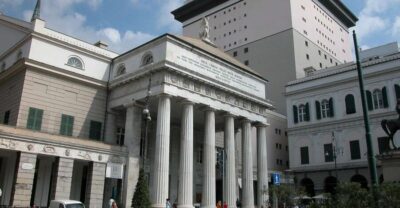
2-Hour Guided Walking Tour of the Historical Center
Read our review →
Boat Tour to Portofino with Free Time to Explore
Read our review →Browse the lists this tour appears in