
Reviewed · CRUISES & BOAT TOURS
Genoa: Pelagos Sanctuary Whale Watching Cruise
Whale watching from Genoa means spending several patient hours in the open Tyrrhenian Sea, where the water reaches 1,000 to 1,500 meters deep. That depth attracts species such as striped dolphins, sperm whales, Cuvier’s beaked whales, fin whales, and pilot whales. The search itself is part of the experience, since these are wild animals with no fixed appointment.
I like the biologist-led guidance, which turns quiet stretches of sea into useful lessons about cetacean behavior. I also like the crew’s persistence: spotters keep watch with binoculars, and the boat moves toward an animal before it disappears below the surface. The main drawback is simple: you can spend much of the four-hour trip scanning empty water, and rough seas can make that waiting uncomfortable.
Key points to know before you book
- The boat reaches deep water after about 30 minutes, where the search for cetaceans begins.
- Sightings are possible from April through October, with calmer weather often making the biggest difference.
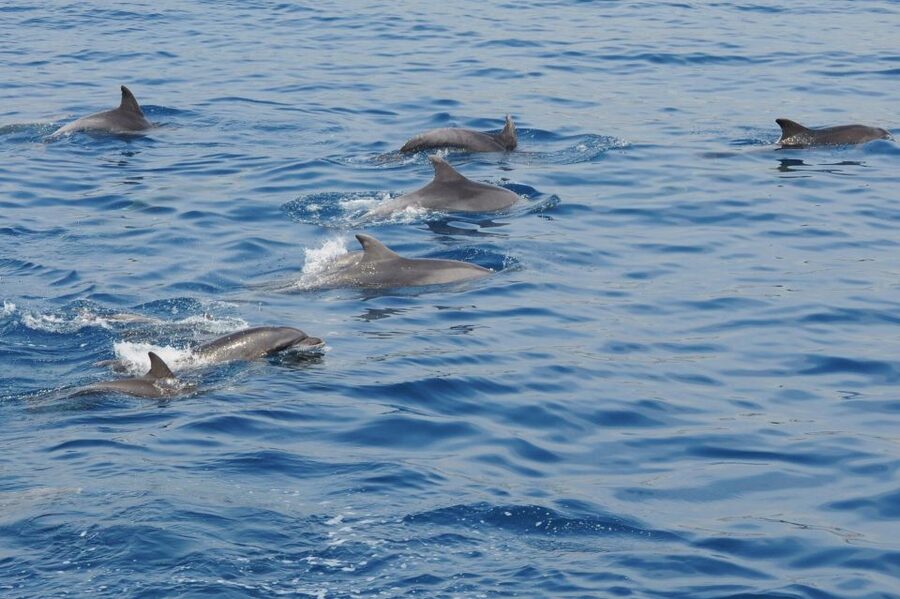
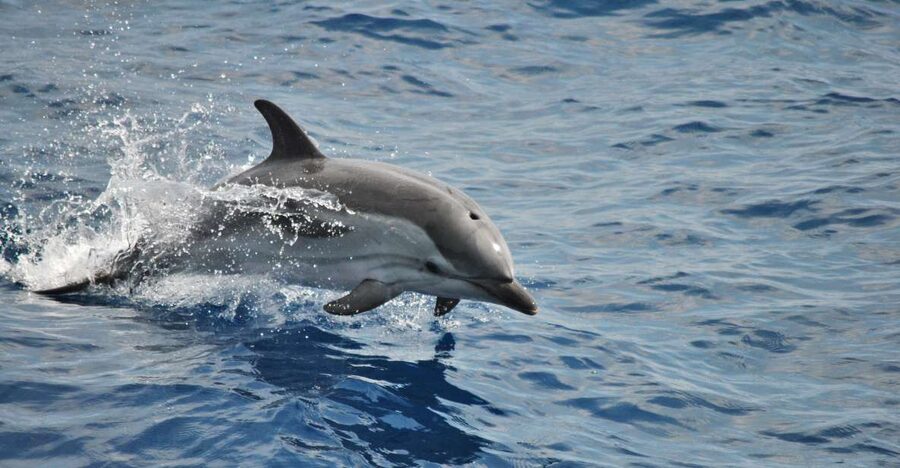
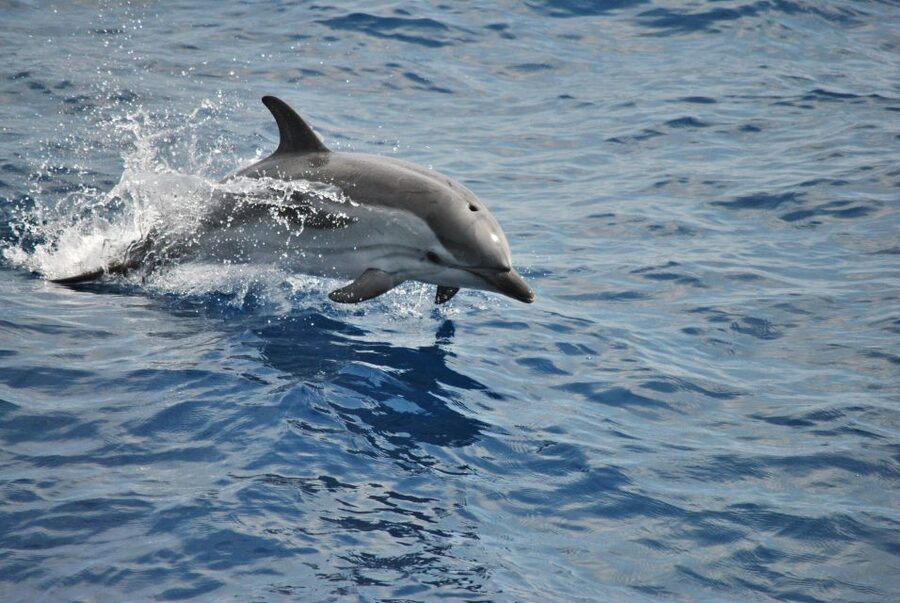
- Dolphins are among the most commonly reported sightings, sometimes in large groups racing beside the boat.
- Whales are possible but never promised, from sperm whales and fin whales to rare Cuvier’s beaked whales.
- A biologist guides every trip, with English and Italian available and German or English support possible on request.
- No sighting of any kind brings a free return option, usable within one year of the first cruise.
From Genoa’s Porto Antico to the open sea
Your meeting point is Calata Mandraccio in Genoa’s Porto Antico, near the Bigo and the Genoa Coast Guard patrol boats. This is a handy location in the old harbor area, but give yourself enough time to find the exact quay. The departure time is 1 p.m.
The first half hour is a transfer from the harbor toward the open sea. You get broad views back toward Genoa as the port recedes, then the city gives way to a wide horizon. This part is not the wildlife search yet, so use it to settle in, find a comfortable place, and prepare for several hours outside.
Once the boat reaches water roughly 1,000 to 1,500 meters deep, the crew begins the main search. That depth matters because several large cetacean species feed in or pass through these deeper waters. The boat slows or changes direction as the spotters scan the surface for a blow, a dorsal fin, a group of dolphins, or a sudden movement in the water.
You should think of this as a marine observation trip, not a fast sightseeing ride. The crew may spend time in one area, then move to another. An animal can appear for only a few seconds before vanishing, so keep your eyes on the water even when the boat seems to be doing very little.
More boat trips in Italy:
- Boat Trip: Glimpse of Murano, Torcello & Burano Islands
★ 4.3 · 15,699 reviews - Venice: Burano, Torcello & Murano Boat Tour w/Glassblowing
★ 4.4 · 10,245 reviews - From Milan: Como & Bellagio with Private Lake Como Cruise
★ 4.6 · 9,788 reviews
What the biologist adds to the outing
A biologist accompanies every excursion. The guide explains the habits of the animals you are seeking and answers questions during the cruise. English and Italian are listed as the main languages, and German or additional English guidance may be available if requested.
This makes a real difference during the waiting periods. Without context, twenty quiet minutes can feel like a long time at sea. With an explanation of how whales surface, how dolphins travel in groups, or why the crew is watching a particular patch of water, the pause becomes part of the work.
The guide also helps you understand the limits of the experience. The boat cannot schedule a whale, and the crew does not know exactly where an animal will appear. Several people may spot the same whale at once, while others may miss it because the sighting is brief. Listen for directions and watch the area the crew indicates.
English translation can sometimes be difficult to follow, especially when several things are happening at once. If you need explanations in a specific language, ask about German or English support when booking. The main listed languages are English and Italian.
The wildlife you might see
Dolphins are often the most rewarding sighting. The cruise can encounter striped dolphins, pilot dolphins, and other Mediterranean dolphin groups. Some reported outings have seen pods of more than 25 animals, with dolphins swimming below the boat and racing alongside it.
A large pod can transform a quiet afternoon in seconds. You may see several animals surface together, then watch the group spread out and reappear farther away. Mothers with calves have also been seen, though you should never count on a particular species or behavior.
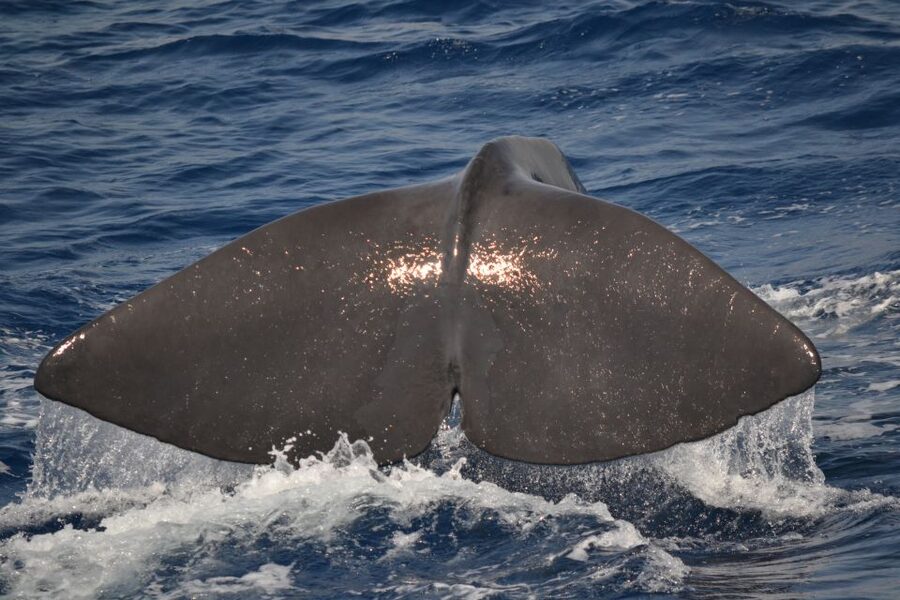
Whales add a different kind of drama. Sperm whales have appeared on several trips, and some outings have recorded more than one. Fin whales and smaller whales have also been seen. Cuvier’s beaked whales are especially notable because they spend much of their time below the surface and are rarely easy to spot.
The cruise can also produce smaller surprises. Sightings have included loggerhead sea turtles, a sea turtle, seabirds, and groups of whales with calves. These encounters help make the trip worthwhile even when the largest animals stay hidden.
Do not measure success only by the number of species. A single whale surfacing in calm water can be the main event, while a large dolphin pod may provide the most sustained action of the afternoon. The crew’s aim is to observe wild animals without disturbing them, so the boat may avoid chasing an animal once it moves away.
Why calm weather matters more than the month
The operator runs these trips from April through October because the weather is generally more suitable. The chance of seeing cetaceans is described as similar across the season, but calm seas and little wind make it easier to see animals when they surface.
That distinction is useful. A summer booking does not guarantee whales, and an April or October trip is not automatically poor. Instead, sea conditions are the key factor. When the surface is smooth, you can spot a distant fin or blow more easily. Wind and waves hide small signs and can make the ride less pleasant.
The months before the busiest part of summer may offer lower shipping traffic. The schedule is Sundays in April, May, and October. From June through September, departures are on Wednesdays, Fridays, and Sundays. Check the current availability for the exact date and time before building the rest of your day around it.
A calm day also gives you a better chance to enjoy the views. The outing reaches far beyond the harbor, so you spend much of the time surrounded by open water and sky. It is a peaceful setting, but that peace comes with long periods of looking and waiting.
Same city, an entirely different afternoon:
- Vatican: Museums & Sistine Chapel Entrance Ticket
★ 4.5 · 144,003 reviews - Vatican Museums & Sistine Chapel Tour with Optional Basilica
★ 4.3 · 67,413 reviews - Colosseum, Roman Forum & Palatine Guided Tour
★ 4.7 · 63,148 reviews - Milan: Cathedral and Duomo’s Terraces Entrance Ticket
★ 4.6 · 61,054 reviews
A realistic four-hour timetable
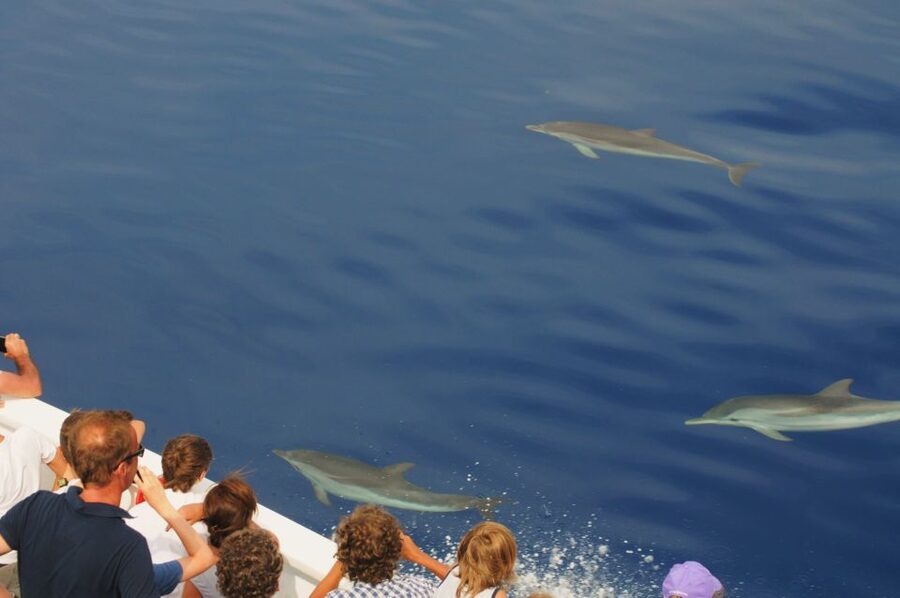
The full excursion lasts about four hours. The boat leaves Genoa at 1 p.m., making the experience an afternoon commitment rather than a short harbor tour.
The opening section takes you from Porto Antico toward deeper water. During this time, you can enjoy the views and listen to the initial briefing. The search begins after about 30 minutes, and the rest of the cruise is shaped by what the crew finds.
Some trips start slowly. It may take close to an hour before the first animal appears. That is normal for this type of outing, not a sign that the crew has stopped looking. Spotters remain focused on the horizon and surface, often using binoculars.
When something is sighted, the boat may accelerate to reach the area before the animal submerges. This can create a burst of activity after a long quiet stretch. The captain’s approach is intended to respect the animals rather than pursue them aggressively.
The return trip completes the four-hour schedule, though the timing can run longer when an important sighting occurs. If you have a train, dinner reservation, or another timed activity, leave extra room. One reported trip ran over because the group was able to see a whale, and the operator helped with the next train. That was a kind solution, but you should not rely on an overrun being handled the same way every time.
The boat, comfort, and sea conditions
The boat is described as clean and comfortable, with toilets available onboard. Drinks can also be purchased during the cruise. Those are useful details on a four-hour trip, especially since the search takes place far from shore.
The boat can be busy. One account described a full vessel and limited chances to speak directly with the marine biologist. If you are expecting a small, quiet group where you can ask constant questions, adjust your expectations. The strength of this format is the professional search effort, not an intimate private lesson.
People sensitive to motion should take the possibility of seasickness seriously. The boat may drift or move across open water, and one passenger became uncomfortable toward the end of a trip. Calm conditions help, but they cannot remove the risk. Bring any personal precautions you normally use for boat rides.
The experience is not suitable for people with mobility impairments. The information provided does not give detailed access specifications, so ask the operator before booking if you have questions about boarding, seating, or moving around onboard.
Is the $51 price good value?
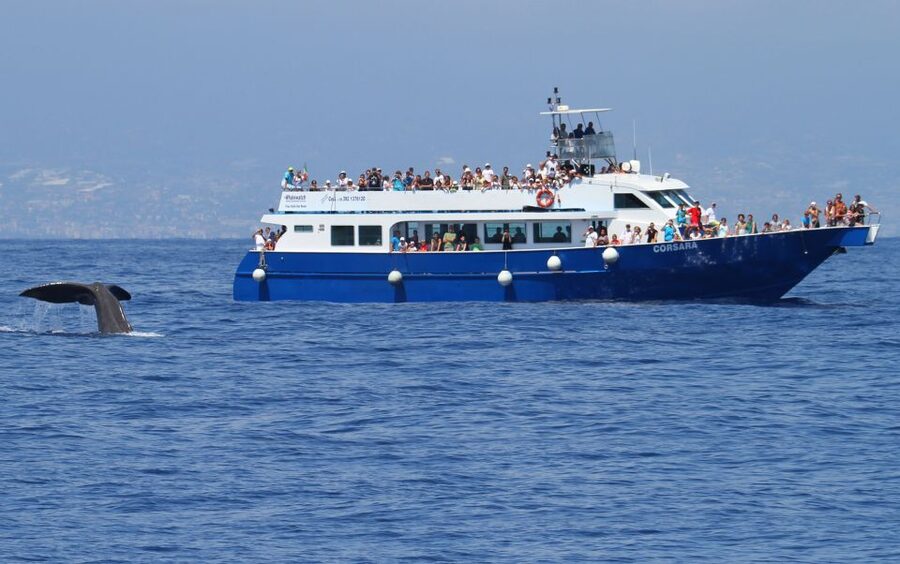
At about $51 per person, this is a reasonable price for a four-hour boat excursion with a biologist guide. You are paying for the boat, the crew’s search skills, and access to deep offshore waters, not for a guaranteed animal encounter.
The value is strongest if you already enjoy being at sea and can accept uncertainty. A single sperm whale or a group of Cuvier’s beaked whales can make the price feel modest. Several large dolphin pods, turtles, and seabirds can also turn the trip into a memorable afternoon even without a whale.
The value is weaker if you need a tightly timed activity or a guaranteed result. The cruise may spend a long time scanning empty water, and even an experienced crew cannot control wild animals. I would not book it as a quick add-on between fixed plans.
The free second-excursion option improves the deal. If you see no animals at all, you can return for another trip within one year of the first outing. You need to contact the provider to arrange that additional booking. This policy does not apply simply because you hoped to see a different species, so treat it as protection against a completely empty search.
Free cancellation is available up to 24 hours before departure, and you can reserve now and pay later. Those terms make it easier to watch the weather forecast before committing, within the stated cancellation window.
Who will enjoy this cruise most?
I would recommend this outing to anyone who enjoys wildlife, open water, and patient observation. It suits families with children who can manage a long boat ride, couples looking for a memorable afternoon, and anyone who wants something beyond Genoa’s streets and museums.
It is also a good choice for people who care about responsible viewing. The crew’s approach is to locate the animals and observe them without trying to force a close encounter. That means your best sighting may be brief, but it also keeps the focus on wild behavior.
You should think twice if you dislike boats, become seasick easily, or need constant activity. Four hours is a long time when the sea is rough or the animals remain out of sight. The cruise rewards patience more than speed.
Bring practical protection for sun, wind, and changing conditions. The best sightings happen on calm days, but even then you are exposed to the open sea for much of the afternoon. Keep your camera ready, but do not spend the whole trip looking through a screen. A whale can surface and disappear while you are framing the shot.
Should you book the Pelagos Sanctuary cruise?
Book it if you want a serious attempt at seeing Mediterranean cetaceans from Genoa and you are comfortable with nature setting the timetable. The strongest reasons are the four-hour search in deep water, the biologist guide, the crew’s steady scanning, and the chance to return free after a completely empty outing.
I would choose a calm-weather date if possible, with an early-season or late-season Sunday worth considering because shipping traffic may be lighter. Leave space after the cruise, bring precautions for seasickness, and accept that dolphins may be the main event rather than a consolation prize.
For $51, this is a fair-value wildlife experience with genuine potential for a remarkable sighting. It is not a guaranteed whale encounter, but that uncertainty is part of the deal. If you can enjoy the open sea even during the quiet stretches, this cruise deserves a place on your Genoa plans.
FAQ
Where does the whale-watching cruise leave from?
The boat departs from Calata Mandraccio in Genoa’s Porto Antico. The boarding point is near the Bigo and the Genoa Coast Guard patrol boats.
How long does the cruise last?
The excursion lasts about four hours, including the journey from the harbor to the open sea and the return trip.
What time does the cruise depart?
The stated departure time from Genoa’s Porto Antico is 1 p.m. Check availability for the date you want to book.
Which animals can I see?
Possible sightings include dolphins, striped dolphins, pilot dolphins, sperm whales, fin whales, Cuvier’s beaked whales, turtles, and seabirds. No particular species is guaranteed.
Are whales guaranteed?
No. The crew searches for wild animals, and there are no fixed times or locations for sightings. If you see no animals of any kind, you can request a second excursion free within one year of the first trip.
What languages are available?
The listed languages are English and Italian. A German or English-speaking guide may also be available if requested.
Is the cruise suitable for people with mobility impairments?
No. The experience is listed as unsuitable for people with mobility impairments. Ask the provider directly if you need specific information about boarding or onboard access.
Can I cancel or pay later?
You can cancel up to 24 hours in advance for a full refund. A reserve-now, pay-later option is also available.
Fresh on the Italy list
- Florence: Uffizi Guided Tour with Skip-the-Line Entry Ticket★ 4.8 · 499 reviews
- Milan: Last Supper and Sforza Castle Guided Tour★ 4.6 · 498 reviews
- Boat trip La Maddalena Archipelago – Departure from Palau★ 4.5 · 499 reviews
- Exclusive Golf Tour Private VIP with Local & Gelato o Wine★ 5.0 · 500 reviews
- Turin: Egyptian Museum Skip-the-Line Group Tour★ 4.7 · 500 reviews
- Itria Valley: Polignano, Ostuni, and Locorotondo, from Bari★ 4.6 · 502 reviews
- Colosseum, Palatine Hill and Roman Forum with Guided Tour★ 5.0 · 500 reviews
- Catania: Etna Nature Tour with Hiking, Cave Visit, & Tasting★ 4.7 · 502 reviews
Cruises & Boat Tours, compared.
Boat Trip: Glimpse of Murano, Torcello & Burano Islands
Read our review →
Burano, Torcello & Murano Boat Tour w/Glassblowing
Read our review →
Como & Bellagio with Private Lake Como Cruise
Read our review →
Murano and Burano Boat Tour with Glass Factory Visit
Read our review →
Murano & Burano Islands Guided Small-Group Tour by Private Boat
Read our review →
Murano & Burano Panoramic Boat Tour w/ Glassblowing
Read our review →
Browse the lists this tour appears in