Reviewed · GUIDED
Rome: Domus Aurea Guided Tour and Virtual Reality Experience
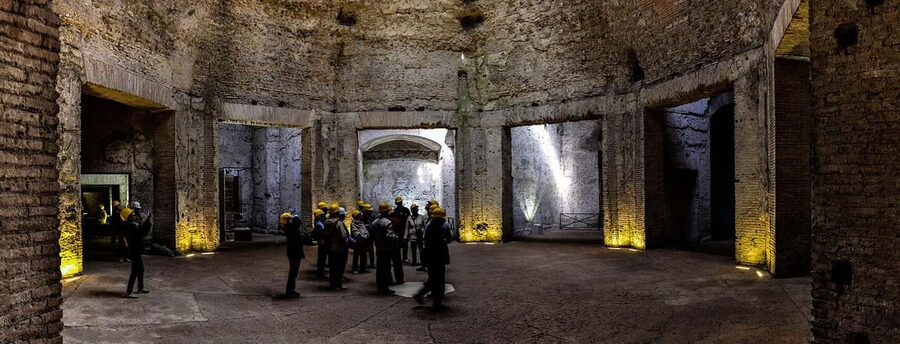
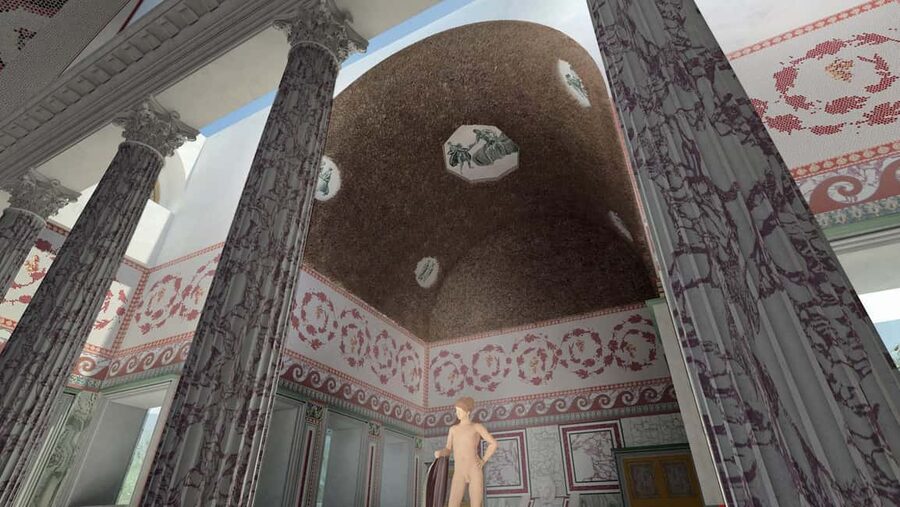
Nero’s Domus Aurea is one of Rome’s strangest sights: a ruined palace buried beneath later buildings, brought back to life through an Oculus virtual reality reconstruction. You walk through dark, unfinished rooms, then see how historians think the Golden House looked when Nero held court and staged lavish parties. I like the sharp contrast between bare Roman concrete and the grand palace shown through the headset.
I also like that the guide explains the site rather than leaving you alone with a screen. The story of Nero’s palace, its painted decoration, and its bold use of concrete gives the ruins real meaning. The main drawback is the setting itself: the rooms are cool, dim, and sometimes hard for everyone to hear, so bring a jacket and stay close to the guide.
Key points to know before you book
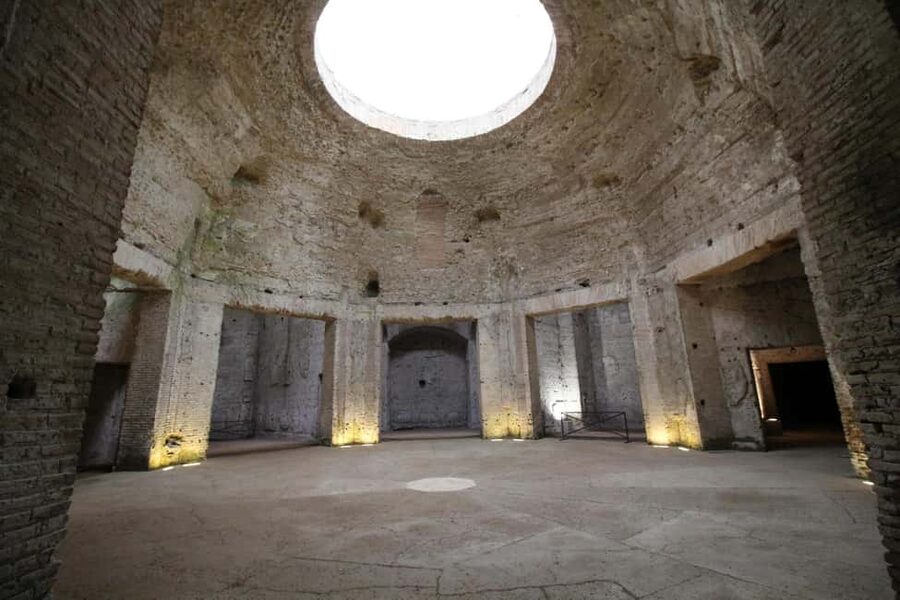
- The VR scene changes the way you read the ruins: The Golden Vault appears as a finished imperial room, helping you picture what is now mostly an archaeological shell.
- You see major rooms in a short visit: The 70-minute guided tour includes the Octagonal Hall, Cryptoporticus, Hall of Birds, and other decorated spaces.
- The palace tells a story about Nero’s ambition: He wanted a huge dynastic residence linking the Palatine homes with gardens on the Esquiline.
- The site is cool inside: The temperature is around 10 degrees, so a sweater or jacket is not optional for most people.
- The acoustics can be tricky: A guide may be clear and well prepared, but the hard surfaces and large rooms can make some explanations difficult to catch.
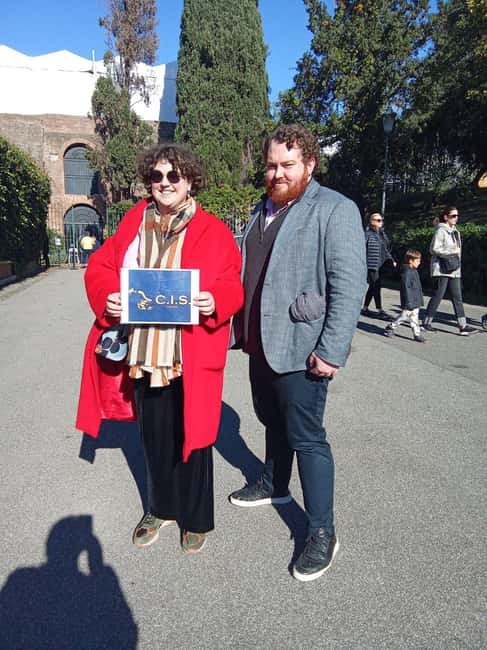
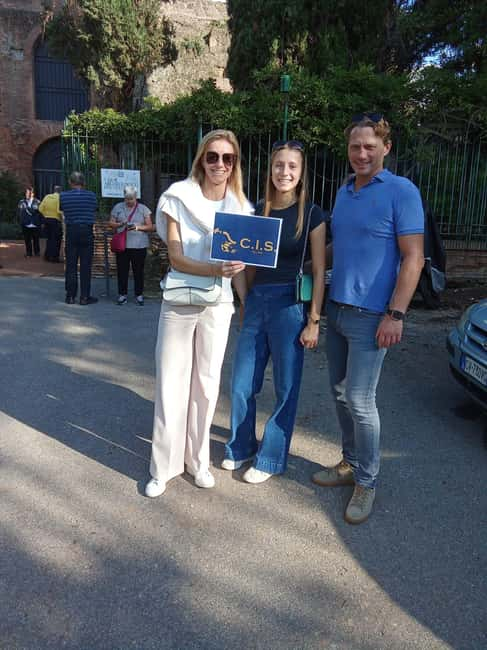
- The meeting point matters: Meet 20 minutes early at the lower floor of the Colosseo metro station, near the green kiosk, and look for the C.I.S. Tours sign.
Why the Domus Aurea feels different from other Rome sights
The Domus Aurea is not a grand palace waiting in perfect condition. It is a network of underground rooms, damaged walls, faded decoration, and carefully managed archaeological spaces. That may sound less immediately impressive than the Colosseum, but it gives you a rare look at how Roman imperial architecture worked behind the public monuments.
Nero built the Golden House after the great fire of Rome in AD 64. The complex stretched across a large part of central Rome, joining areas around the Palatine Hill with gardens and buildings on the Esquiline. His aim was not simply to create a private home. He wanted a residence large enough for an imperial court, ceremonial rooms, gardens, and productive activities, with the scale of a Hellenistic royal palace.
That ambition helps explain the unusual feel of the site. You are not just looking at domestic rooms. You are seeing a huge courtly project designed to make the emperor the center of an artificial world.
After Nero’s death, later emperors erased much of the palace from public view. The rooms were filled in and built over, including by the Baths of Trajan. This helped preserve some of the wall paintings, but it also left the Domus Aurea underground and fragile. The visit is therefore controlled and limited, not a free wander through open ruins.
A few other Rome mornings to weigh against this
- Colosseum, Roman Forum & Palatine Guided Tour
★ 4.7 · 63,148 reviews - Vatican Museums, Sistine Chapel & St Peter’s Basilica Guided Tour
★ 4.5 · 39,149 reviews - Rome: Colosseum, Palatine Hill and Roman Forum Guided Tour
★ 4.8 · 32,814 reviews
Meeting near the Colosseo metro station
The tour begins at the Colosseo metro station, on the lower floor at street level, near the green kiosk. Look for staff carrying the C.I.S. Tours sign. You need to arrive 20 minutes before your booked time, which is sensible here because the meeting point can be busy and the group must enter together.
Bring the full names of everyone in your party. The tickets are nominative, so the operator requires each participant’s name. You should also carry a passport or ID card, including identification for children.
The meeting arrangement deserves attention because one visitor had to wait after the staff member arrived only shortly before the scheduled time and the tickets were not ready for the original entry. That appears to have been an isolated scheduling problem, but it is a useful reminder: arrive early, confirm the sign, and allow some flexibility in your Rome day.
The Domus Aurea is close to the Colosseum, but do not plan this as a last-minute stop between tightly timed attractions. The tour lasts about 1.5 hours overall, with roughly 70 minutes inside the archaeological complex, and the starting time needs to be respected.
Entering Nero’s underground palace
Once inside, your guide sets the scene before the technology takes over. The most useful part of the explanation is the political and architectural context. Nero’s residence was designed to connect imperial living spaces with gardens and court functions, creating a palace complex on a scale that Rome had rarely seen.
You’ll hear about the importance of concrete in Roman building. Concrete let Roman architects shape large vaulted interiors and cover wide spaces without relying only on traditional cut-stone construction. In the Domus Aurea, that material helped create the broad rooms, curved ceilings, and dramatic forms that made the palace feel more like a royal compound than a conventional Roman house.
The ruins are often more powerful once you know what to look for. A plain curve in a wall may be part of a large vaulted room. A damaged painted surface may belong to an elaborate decorative program. The guide connects these fragments to the original design, so you are not left trying to interpret every dark chamber on your own.
The site’s fragility also affects the mood. Restoration work continues, and sections may feel unfinished. That is not a flaw in the tour. It is part of seeing an active archaeological site, where preservation comes before easy access.
The Octagonal Hall and the palace’s bold design
The Octagonal Hall is one of the signature spaces on the route. Its shape and design show how Roman builders used geometry to create a room meant to impress. The space gives you a clear sense of Nero’s taste for theatrical architecture, even when the original finishes and furnishings are gone.
This is a place where the guided explanation matters. The room does not announce its purpose in an obvious way, and its scale can be hard to judge in dim light. Listen for how the guide explains the relationship between the room, the surrounding passages, and the palace’s overall plan.
The Domus Aurea was built to produce surprise. Light, changing views, painted walls, vaults, and unusual room shapes all played a role. The VR segment helps restore some of that intended effect, but the physical remains show you the construction behind the spectacle.
Same city, an entirely different afternoon:
- Vatican Museums & Sistine Chapel Tour with Optional Basilica
★ 4.3 · 67,413 reviews - Rome: Guided Tour of Colosseum, Roman Forum & Palatine Hill
★ 4.7 · 27,897 reviews - Rome: Colosseum & Forum with Audio Guide App -Optional Arena
★ 4.2 · 24,770 reviews - Rome: Colosseum, Roman Forum and Palatine Hill Guided Tour
★ 4.5 · 23,903 reviews
Cryptoporticus and the painted decoration
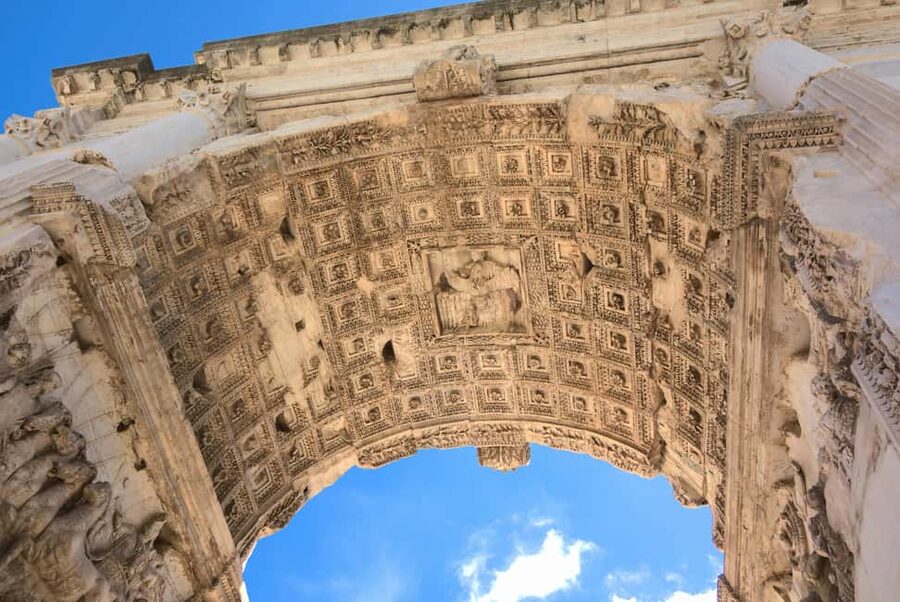
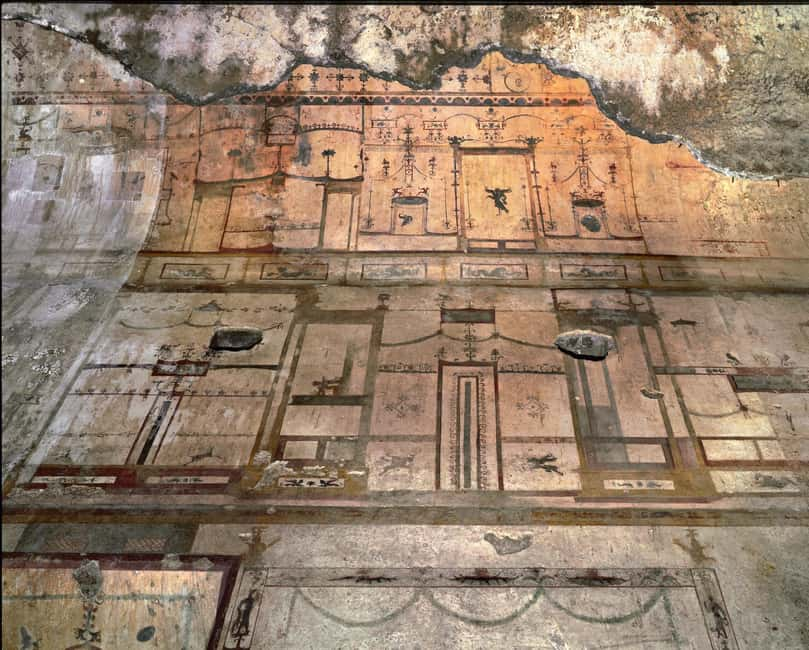
The Cryptoporticus is a covered passage, and it gives you a closer look at the palace’s decorative program. The Domus Aurea is especially important for its Roman wall painting, including the style later called grotesque decoration. The designs mixed delicate figures, animals, plants, architectural details, and imaginative scenes in ways that influenced European art centuries later.
You should pay attention to the surviving fragments rather than expecting bright, complete murals. Some areas are faint or damaged. Even so, the walls reveal how much effort went into making service passages and connecting corridors part of the palace experience.
This is also where the cool temperature and dark surroundings become most noticeable. The inside temperature is around 10 degrees. Comfortable shoes are essential, and a jacket will make the visit far more pleasant. Food and drinks are not allowed, and large bags or luggage cannot come inside.
Hall of Birds and the Golden Vault
The Hall of Birds is another important stop. Its name points to the decorative scenes that once animated the walls and ceilings. You can use this room to understand the gap between the palace as it survives and the palace as Nero intended it to be seen.
The Golden Vault is the key setting for the virtual reality experience. Through the Oculus headset, you see a reconstruction of the room as it may have appeared in Nero’s time. The program uses video, sound, and visual storytelling to fill in the missing marble, color, ornament, and architectural finish.
The presentation is short, but its value is high because it answers the question that naturally follows any visit to the ruins: what am I actually looking at? Instead of treating the Domus Aurea as a collection of broken walls, the VR sequence gives those walls a possible former life.
You should keep in mind that the reconstruction is based on archaeological and historical interpretation. It is not a time machine or a perfect record. That distinction makes the presentation more useful, not less. You are shown a reasoned picture of the palace, while the physical rooms remind you where the evidence ends and interpretation begins.
How good is the guided explanation?
The quality of the visit depends partly on communication inside the rooms. Guides speak Italian, English, French, and Spanish, and an audio guide is included in the same languages. The guide may also answer questions directly, which is helpful when you want to understand the building methods or Nero’s plans in more detail.
Claudia received specific praise for her clear subject knowledge and passion, but the acoustics inside the Domus Aurea can work against even a strong guide. Hard surfaces and open rooms may make some sentences difficult to catch, especially if you stand at the back of the group.
My advice is simple: stay near the guide, do not drift behind while taking photographs, and ask for a point to be repeated if needed. Some people have found the explanations hard to understand at times, even while finding the guide friendly and well prepared. The audio guide gives you another way to follow the content, but it may not replace the value of live questions.
Is $67 good value for 90 minutes?
At $67 per person, this is not a bargain basement Rome activity. The price includes the Domus Aurea entry ticket, guided tour, virtual reality experience, taxes, and fees. You also skip the ticket line, which matters in a city where saved time can be worth real money.
The value depends on your interests. If you want a quick photo stop or prefer open-air ruins, the price may feel high for a site that is dark, incomplete, and visited in a controlled format. If you care about Roman architecture, painting, archaeology, or Nero’s imperial world, the guide and VR reconstruction add much more than a basic admission ticket.
I see the tour as especially useful for people who have already seen the Colosseum and Roman Forum but want something less familiar. The Domus Aurea gives you a different side of imperial Rome, one focused on private power, court ceremony, decoration, and construction.
The 1.5-hour length also fits well into a busy Rome schedule. It is long enough to give the site context, but short enough to pair with another attraction. Just avoid stacking it with a faraway booking immediately afterward. The meeting time, entry process, and slow pace inside the ruins need some breathing room.
Who should take this tour?
You should consider booking if you enjoy guided archaeology and want help making sense of incomplete remains. The tour also suits anyone interested in Roman engineering, since the discussion of concrete gives the visit a strong building and design focus.
It works well for adults and older children who can listen in a dim archaeological setting. Children must have identification, and unaccompanied minors are not allowed. The subject is more about architecture, imperial history, and visual reconstruction than hands-on entertainment, so younger children may need extra help staying engaged.
This is not a good choice for wheelchair users or people with mobility impairments. It is also unsuitable if you are claustrophobic. The underground rooms can feel enclosed, and the temperature remains around 10 degrees.
Wear comfortable shoes and a warm layer. Do not bring food, drinks, luggage, or large bags. Those small preparations have a direct effect on how much you enjoy the visit.
The main strengths and limitations
The strongest feature is the meeting of archaeology and technology. The ruins give you genuine evidence, while the VR program supplies a visual idea of the original palace. Neither works as well alone. Together, they let you compare the damaged structure with its possible imperial appearance.
The second strength is the subject itself. Nero’s palace is tied to one of Rome’s most notorious emperors, but the visit does not depend only on scandalous stories about parties. It shows how Nero used architecture to express power and how his residence was planned as a dynastic center.
The restoration work is another reason to pay attention. You can see that the site is being protected and studied rather than dressed up as a polished attraction. That may mean some rooms feel raw, but it also gives you a more honest view of archaeology.
The weaknesses are practical. The meeting process needs punctuality and attention. The acoustic problem can affect the live commentary. The cold, dark setting will not suit everyone, and the experience has limited accessibility.
Should you book the Domus Aurea tour?
Book it if you want a focused look at Nero’s Golden House and value a guide who can explain what the ruins cannot show. The VR experience is the deciding feature for many people, especially if you find it difficult to picture missing walls, color, furniture, and decoration.
Skip it if you dislike enclosed archaeological sites, need step-free access, or want a relaxed open-air walk. You should also choose another activity if your Rome schedule cannot handle an early meeting or a little waiting.
For the right visitor, $67 is fair value. You get entry, live interpretation, audio support, and a visual reconstruction that turns a hard-to-read ruin into a palace you can begin to understand. Bring a jacket, arrive 20 minutes early, stand close enough to hear, and you’ll get the most from this unusual corner of imperial Rome.
FAQ
Where is the meeting point?
Meet in front of the Colosseo metro station, on the lower floor at street level, near the green kiosk. Look for staff with the C.I.S. Tours sign.
How long does the tour last?
The total activity lasts about 1.5 hours. The guided visit inside the Domus Aurea lasts about 70 minutes.
What languages are available?
Live guides and the included audio guide are available in Italian, English, French, and Spanish.
Is the virtual reality experience included?
Yes. The Oculus virtual reality experience is included with the Domus Aurea ticket and guided tour.
How cold is the Domus Aurea?
The temperature inside is around 10 degrees. Bring a jacket or sweater, even if Rome is warm outside.
Is the tour suitable for wheelchair users or people with claustrophobia?
No. The experience is not suitable for wheelchair users, people with mobility impairments, or people with claustrophobia.
Fresh on the Rome list
- Rome: Guided Catacombs Tour & Capuchin Crypt (Audio Guide)★ 4.3 · 191 reviews
- Guided tour of the Colosseum, Roman Forum and Palatine in Spanish★ 4.5 · 191 reviews
- Rome: Borghese Gallery Guided Tour with Skip-the-Line Ticket★ 4.5 · 192 reviews
- Rome: Arena Colosseum Tour with Arena Access★ 4.6 · 193 reviews
- Colosseum, Forum, Palatine Hill with audio guide and Arena or Bus option★ 4.0 · 193 reviews
- Rome: Colosseum & Roman Forum Guided Tour★ 5.0 · 194 reviews
- Rome Vintage Fiat 500 car Tour With Photographer★ 5.0 · 194 reviews
- Rome by Night Private Walking Tour★ 5.0 · 194 reviews
Guided, compared.
Colosseum, Roman Forum & Palatine Guided Tour
Read our review →
Vatican Museums, Sistine Chapel & St Peter’s Basilica Guided Tour
Read our review →
Colosseum, Palatine Hill and Roman Forum Guided Tour
Read our review →
Guided Tour of Colosseum, Roman Forum & Palatine Hill
Read our review →
Colosseum & Forum with Audio Guide App -Optional Arena
Read our review →
Colosseum, Roman Forum and Palatine Hill Guided Tour
Read our review →
Naples Underground Entry Ticket and Guided Tour
Read our review →