
Reviewed · WALKING TOURS
Verona: City Walking Tour with Cable Car & Wine Aperitif
Verona’s best introduction may be the simplest one: walk through its old center, then look down on it from Saint Peter Hill. This three-hour small-group tour links the Arena, Roman gates, medieval squares, river bridges, and Romeo and Juliet landmarks before ending with a substantial plate of local food and two Veneto wines.
I like the way the route mixes famous sights with less obvious stops such as the Gavi Arch, Borsari Gate, Ponte Pietra, and the Adige riverfront. I also like the practical rhythm: your guide gives you the city’s story while you walk, then the cable car saves your legs on the climb to Castel San Pietro. Guides such as Mauro, Monica, Andrea, and Elisabeth have been especially praised for their storytelling and personal tips.
The main consideration is that this is a walking tour first and a food tour second. The walk may cover roughly four miles, and the cable car ticket is described as uphill only, so you should expect to walk back down. The final platter can feel more like a light lunch than a small tasting, which is good value for some people but not ideal if you have already eaten.
Key points to know before booking
- The Arena is viewed from outside: You learn about Verona’s Roman amphitheater, but the admission ticket and interior visit are not included.
- Saint Peter Hill supplies the big panorama: The uphill cable car ride reaches Castel San Pietro and its Belvedere viewpoint.
- The route covers a lot of Verona: Expect Roman monuments, medieval squares, the Adige river, bridges, Juliet’s Balcony, and the Della Scala tombs.
- The final aperitif is generous: Two regional wines come with local ham, cheeses, bread, and other antipasti.
- Small groups improve the guiding: The experience may be private or shared, with enough room to ask questions.
- Plan for steps and a downhill walk: The tour is not suitable for wheelchair users, and the return from the hill forms part of the route.
Starting at Piazza Bra and meeting ancient Verona
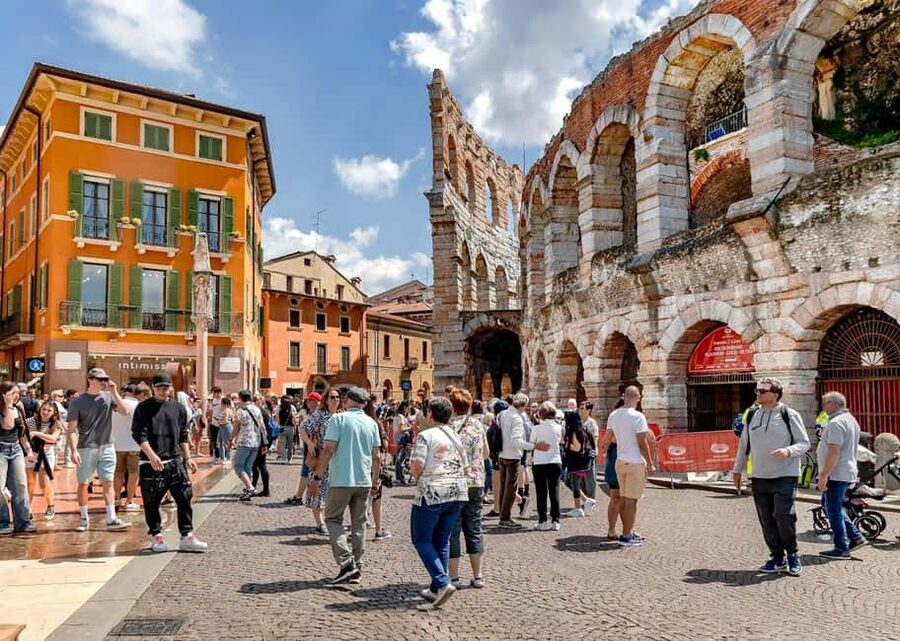
The tour begins at Piazza Bra, at number 10, beside one of Verona’s grandest public spaces. Look for the guide holding a Walks In Europe signboard, and arrive five to ten minutes early. Late arrivals cannot join after the group has set off, so this is not the time to cut things close after a train journey.
Piazza Bra gives you an immediate sense of Verona’s scale. The Arena dominates the square, a Roman amphitheater still used for performances and opera. You view it from outside rather than entering, but a good guide can explain how the building fits into the city’s Roman past and why it remains Verona’s signature sight.
The outside visit is enough for orientation, but you should be clear about the tradeoff. If stepping inside the Arena is high on your list, you will need to arrange a separate ticket and visit. This tour is designed to show you the city around the monument, not replace an Arena admission.
More Walking Tours in Verona
- Verona: History and Hidden Gems Guided Walking Tour
★ 5.0 · 1,379 reviews - Verona: Small Group Guided Walking Tour with Arena Tickets
★ 4.9 · 848 reviews - Verona Highlights Walking Tour in Small-group
★ 5.0 · 493 reviews
From the Gavi Arch to Porta Borsari
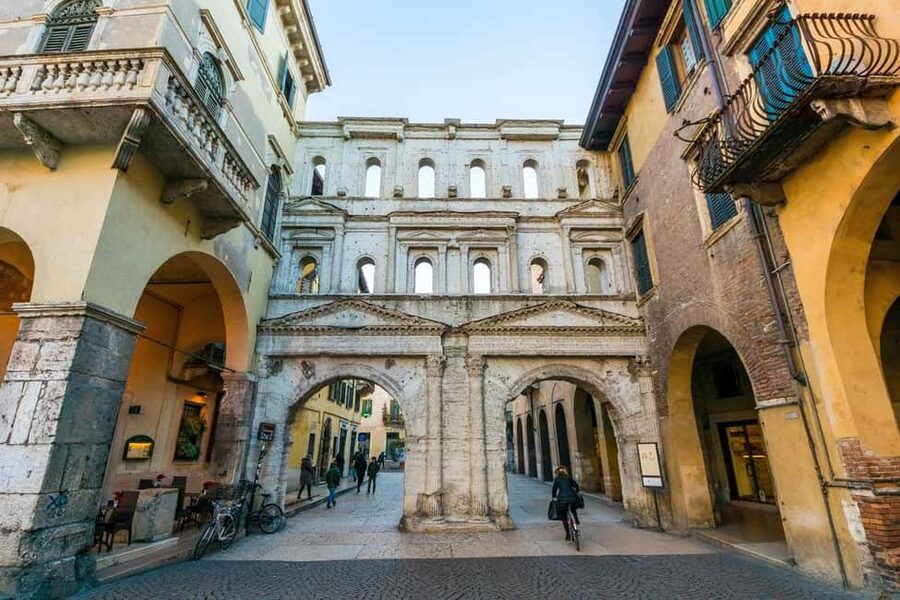
From the Arena, the route moves toward the Roman Gavi Arch. This stop is useful because it shows how Roman Verona was organized and how monuments once marked the entrances and important roads of the city.
You then reach Porta Borsari, another major Roman remnant. The gate is far more than a quick photo stop when the guide explains its position in the ancient city and points out the surviving details in the stone facade. I find stops like this particularly helpful because they turn Verona from a collection of pretty streets into a city with visible layers.
The pace is generally described as steady and manageable, with time to look around rather than race from one monument to the next. Still, three hours is a tight window for this many sights. You will get a strong overview, but not long interior visits or extended time at each location.
Bridges, river stories, and Verona’s changing shape
The route continues past Ponte Pietra, Verona’s ancient Stone Bridge, and later Ponte Scaligero. Both bridges help you understand why the Adige River shaped the city’s defenses, trade, and neighborhoods.
Along the riverfront, the guide also discusses the former Saint Thomas Island and the changes that affected this part of Verona. This is the kind of context you would likely miss on a self-guided walk, especially if you are focused on taking photos rather than reading small signs.
Ponte Scaligero brings a different mood. Its medieval defensive character contrasts with the Roman gates seen earlier, and the walk between the bridges gives you a useful visual lesson in Verona’s long development. You are not simply collecting monuments. You are crossing the city through the structures that once helped protect and connect it.
The walk is mostly easy underfoot, but some groups have covered close to four miles in total. Guides have adjusted the pace for older participants and tried to use shade during hot weather, yet this remains a substantial walking outing. Comfortable shoes, water, and weather protection will make a real difference.
The cable car to Castel San Pietro
The uphill cable car is the route’s smartest bit of transport. Rather than spending part of the tour climbing Saint Peter Hill, you ride up in about five minutes to Castel San Pietro and the Belvedere viewpoint.
At the top, Verona opens out below you. The red roofs, church towers, river bends, bridges, and compact old center make much more sense from this height. This is the tour’s strongest photo stop, but it also has real practical value: after walking through the streets, you can finally see how the city fits together.
The ticket covers the uphill journey only according to the tour information. The published route has you walk downhill afterward along a scenic section of the Adige, so prepare for steps and a descent. One participant with troublesome knees was accommodated with the funicular in both directions, but you should not assume that a return ride is part of the standard package.
The hilltop section is worth keeping even if views are not your main reason for booking. It breaks up the urban walking and gives the tour a change of pace. If you dislike heights, steps, or downhill walking, this is the part to consider carefully.
More cable car rides in Verona:
- Verona walking tour:food, wine, legends, lunch/dinner & cable car
★ 5.0 · 386 reviews - Verona Small Group Walking Tour with Cable Car and Arena Tickets
★ 5.0 · 311 reviews - Mount Etna: Guided Volcano Summit Hiking Tour with Cable Car
★ 4.7 · 3,784 reviews - Mount Etna: Trek to 3000m with cable car and jeep
★ 4.7 · 1,978 reviews
Walking back along the Adige
After the viewpoint, the group follows a different route back toward the center. This return section along the river is not just a way to get back to town. It gives you another angle on Verona and avoids retracing every street.
The river walk also makes the tour feel less like a checklist. You see the city from street level, bridge level, and hilltop level in one morning or afternoon. That variety is one reason the experience works well for a first visit, especially if you have only a day in Verona.
The guide remains important here. The best leaders on this route, including Mauro, Monica, Andrea, and Elisabeth, have been praised for combining dates and architecture with food advice, restaurant suggestions, and stories about daily life. You should expect the guide’s style to shape the experience, but the repeated praise for warm, clear storytelling is encouraging.
Romeo’s House and Juliet’s Balcony from outside
Back in the historic center, the tour passes Romeo’s House and Juliet’s Balcony. Both are viewed from outside, and Juliet’s House is not entered.
That limitation matters because these landmarks can attract visitors expecting a full literary museum visit. This tour treats the Romeo and Juliet story as part of Verona’s cultural identity and urban folklore, not as a dedicated attraction visit.
The outside stops make sense in a city overview. You can hear the background, see where the sites sit within the old center, and decide later if you want to return on your own. If you want to stand in Juliet’s courtyard or visit the interior, allow separate time and budget.
Piazza dei Signori, Piazza Erbe, and the medieval center
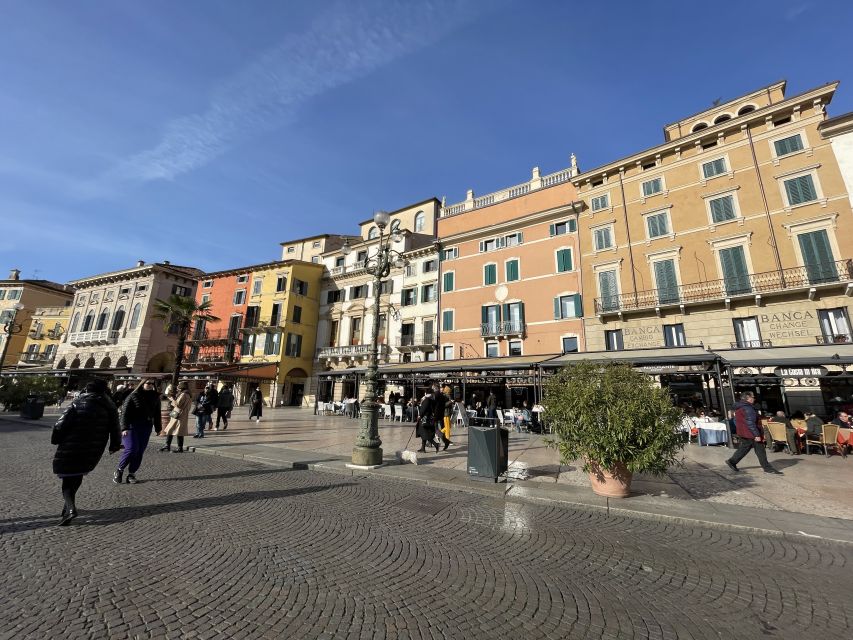
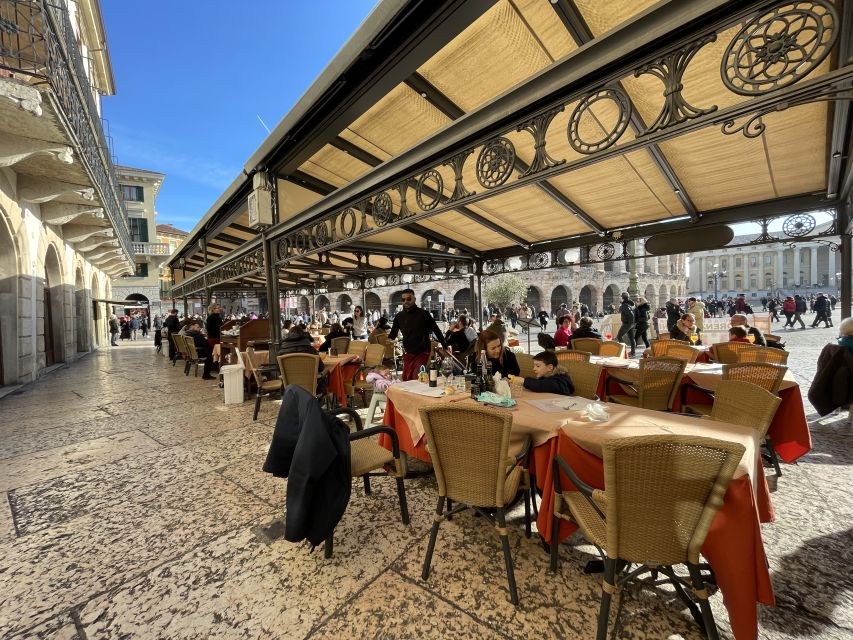
The route also reaches Piazza dei Signori and Piazza Erbe, two of Verona’s most atmospheric squares. Piazza dei Signori has an elegant, formal feel, while Piazza Erbe brings more everyday movement, cafes, market activity, and people passing through.
Your guide points out the distinctive buildings and medieval architecture as you move through the lanes. This is where the tour earns its keep for first-time visitors. You learn where the main squares are, how they connect, and which areas are worth revisiting after the tour.
The Della Scala Medieval Tombs and the Roman Theatre are also included as outside or pass-by sights. The Roman Theatre adds another layer to the city’s Roman story, while the Scala tombs show the power of medieval Verona’s ruling family. Neither is treated as a long museum stop, but together they widen the picture beyond the Arena and Juliet.
The wine aperitif at the end
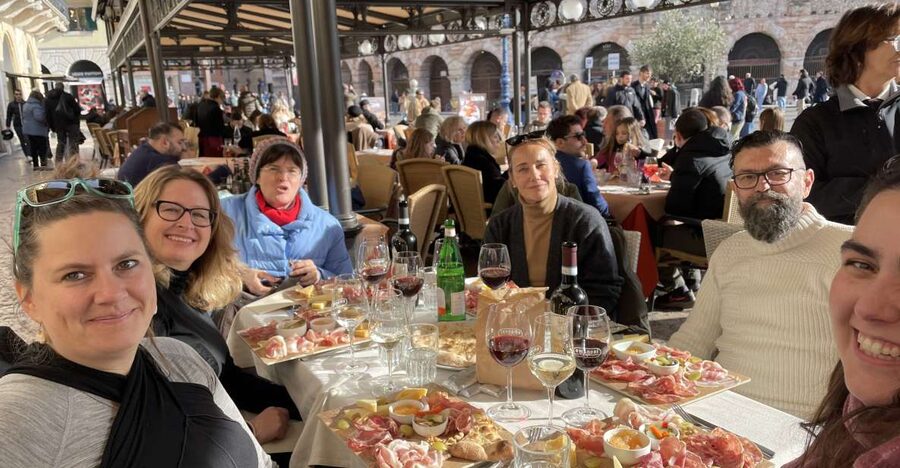
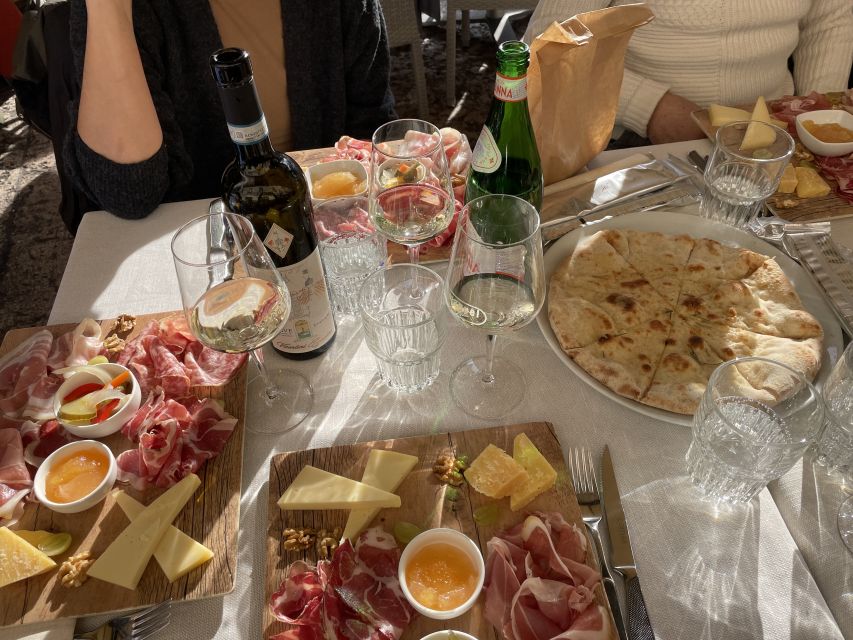
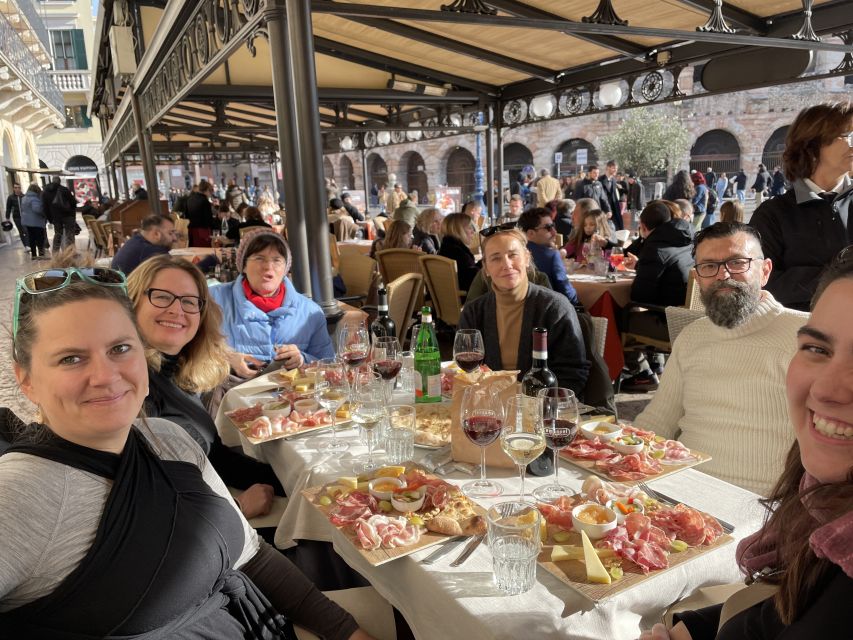
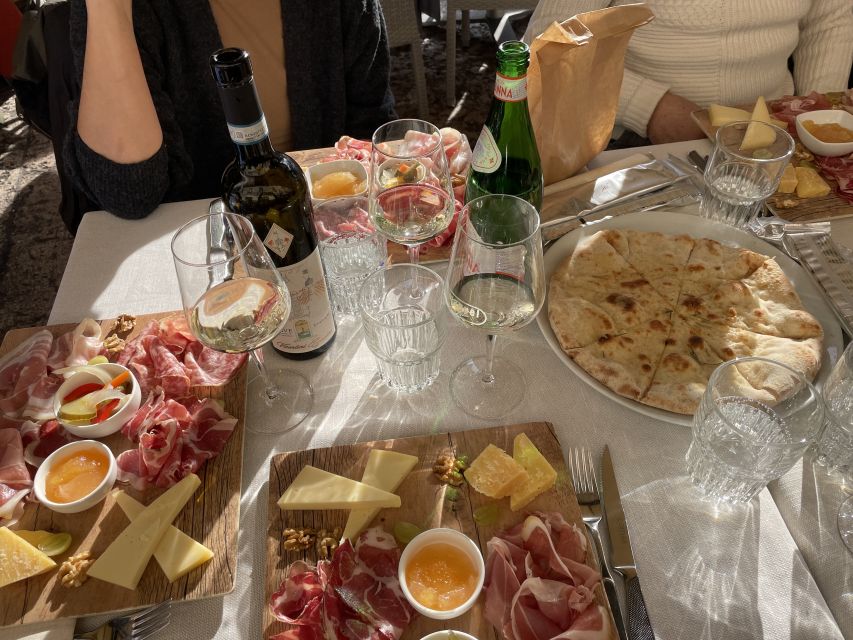
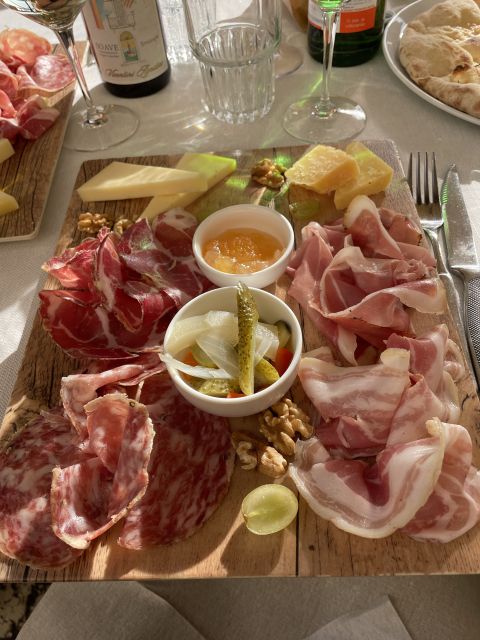
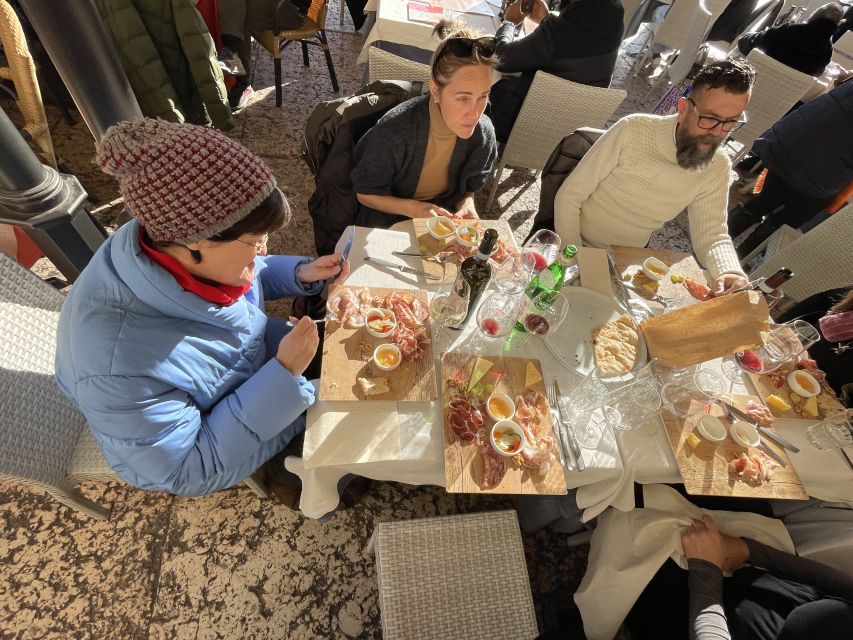
The tour returns to Piazza Bra for its final stop at a local restaurant. You receive two different regional wines, usually one red and one white, paired with local ham, cheeses, bread or focaccia, and other antipasti.
This is not a token nibble. Several participants describe the portions as generous enough for lunch, with foods such as Monte Veronese cheese, prosciutto, bresaola, soppressa, and focaccia. One person called it more like a buffet at the end of a city walk than a formal tasting, which is a fair description.
I see that as a strength if you want the tour to cover both sightseeing and a meal. At $81 per person, the food and wine help the price feel more reasonable, especially when you also count the guide, the cable car, and the time saved finding the city’s main sights.
The drawback is that the guide may leave once the food arrives, and the group may not spend much time eating together. One participant felt the food stop did not fully match the idea of a guided tasting because several people skipped that part. You should book it for the food itself, not because you expect a guided lesson in Veneto wine.
Dietary needs deserve advance attention. Vegetarians have been accommodated, and one restaurant provided careful gluten-free and celiac-safe service with separate utensils and suitable bread and antipasti. The booking information does not provide a dedicated allergy-notes field, so contact the operator before the day rather than relying on a last-minute explanation.
Is $81 a fair price?
For three hours, $81 is not the cheapest way to walk around Verona. You can see Piazza Bra, Piazza Erbe, the Arena exterior, and several streets without paying for a guide.
The value comes from the amount of ground covered and the way the stops connect. You get a local guide, the uphill cable car, organized access to the route, and a substantial aperitif with two wines. If you are visiting for a short time, the tour also helps you decide where to return later.
The small-group format matters. A group of six allows questions and makes it easier to hear explanations in narrow streets. The tour can also be private, though the price and availability may depend on the booking selected.
I would consider it good value for a first day in Verona, particularly if you want a meal included and prefer not to plan every stop yourself. It is less compelling if you have already taken a detailed city tour, intend to visit the Arena and Juliet’s House interiors, or mainly want a short wine tasting.
Who will enjoy this Verona tour most?
This experience fits you best if:
- You are visiting Verona for the first time.
- You want a broad introduction in three hours.
- You enjoy Roman and medieval sights but prefer to see them from the streets.
- You like a guided walk with a meal-style aperitif afterward.
- You want a hilltop view without walking uphill.
- You are comfortable with a fairly long walk and some downhill steps.
It may not suit you if you use a wheelchair, need a completely step-free route, or dislike walking in warm weather. It is also not the right choice if your main goal is an inside visit to the Arena or Juliet’s House.
English and German tours are available. The guide names vary by departure, but the strongest guide feedback centers on Mauro, Monica, Andrea, Elisabeth, and several other guides praised for clear history, humor, good pacing, and useful restaurant or food tips.
Practical verdict: book it for orientation and a full aperitif
I would book this tour early in a Verona stay, not at the end. The route gives you a map of the city in your head, and the guides often point out restaurants, food shops, and places worth revisiting. Afterward, you can return to the Arena, Juliet’s House, the Roman Theatre, or any square that caught your attention.
Book it if you want history, views, and a generous food finish in one outing. Skip it if you want museum interiors, a short stroll, or a carefully led wine seminar. For most first-time visitors who can manage the walking, it is a friendly and efficient way to meet Verona.
FAQ
How long does the Verona walking tour last?
The tour lasts three hours, including the guided walk, the uphill cable car ride, the return walk, and the wine aperitif.
Where does the tour meet?
The meeting point is Piazza Bra, 10, 37121 Verona. The guide carries a Walks In Europe signboard.
Is the Arena visited inside?
No. The Arena is viewed from outside, and an interior visit is not included.
Is Juliet’s House visited inside?
No. Romeo’s House and Juliet’s Balcony are viewed from outside only.
Does the cable car ride include the return journey?
The included ticket covers the uphill journey. The route information says the downhill section is walked and includes scenic views along the Adige River.
What food and drink are included?
The finale includes two regional wines, local ham, cheese, and a platter with bread or focaccia and other antipasti. Portions may be substantial enough to serve as a light lunch.
What languages are available?
The live guided tour is available in English and German.
Fresh on the Verona list
- Verona Full Meal & Wine Tasting Walking Tour by Do Eat Better★ 5.0 · 197 reviews
- Verona: Highlights Walking Tour with Arena Priority Access★ 4.8 · 201 reviews
- Verona Arena Skip-the-line Tour★ 4.5 · 208 reviews
- Verona: Montresor Winery Visit with Wine Tasting and Snacks★ 4.6 · 217 reviews
- Guided Food Tour with Wine Tasting in Verona★ 4.3 · 229 reviews
- Verona: Food and Wine Tasting Walking Tour★ 4.9 · 238 reviews
- City Sightseeing Verona Hop-On Hop-Off Bus Tour★ 4.0 · 247 reviews
- Verona: Italian Cooking Class with Pasta, Risotto and Tiramisù★ 5.0 · 268 reviews
Walking Tours, compared.
Guided Walking Tour & Last Supper Visit with Ticket
Read our review →
Rialto Bridge & Offbeat Unusual Venice Walking Tour
Read our review →
Private 3 hrs Venice Tour: St Mark’s, Walking tour & Boat tour
Read our review →
Skip the line: Uffizi and Accademia Small Group Walking Tour
Read our review →Browse the lists this tour appears in