Reviewed · PASTA
Rome Pasta & Tiramisu Making Class with Fine Wine
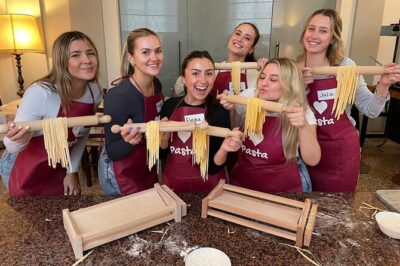
Fresh pasta is the star here, but the clever part is the two-stage format. You begin with a tasting of Italian specialties, then walk to a nearby restaurant to make fettuccine, ricotta-and-spinach ravioli, and tiramisu under the guidance of a chef. Nina and Lise have been praised for their warm introductions, while chefs such as Patrick and Jason keep the kitchen lesson lively.
I like the chance to eat your way through Italian ingredients before you cook with them, and I like the price: at $32.67, this can cost less than a typical Rome dinner while also giving you a useful skill. The main caution is time. The advertised three and a half hours can stretch toward four or five, and the wine and prosecco are poured generously.
Key points to know before booking
- Two-part afternoon: Start with tastings of cheese, olive oil, balsamic vinegar, pesto, truffles, and other Italian products before the cooking begins.
- Three hands-on dishes: Make fettuccine, ricotta-and-spinach ravioli, and tiramisu, then sit down to eat them.
- Near Vatican City: The meeting point is at Via Cipro, 4/L, close to public transportation and the Vatican area.
- Wine is a major part: Prosecco, red wine, white wine, and non-alcoholic drinks are included, with pours described as generous.
- Social small-group setting: The class can include up to 16 people, making it easy to meet others but not especially intimate.
- Plan your afternoon carefully: It starts at 2 p.m. and may take longer than the stated three-and-a-half-hour estimate.
Why this cooking class works so well in Rome
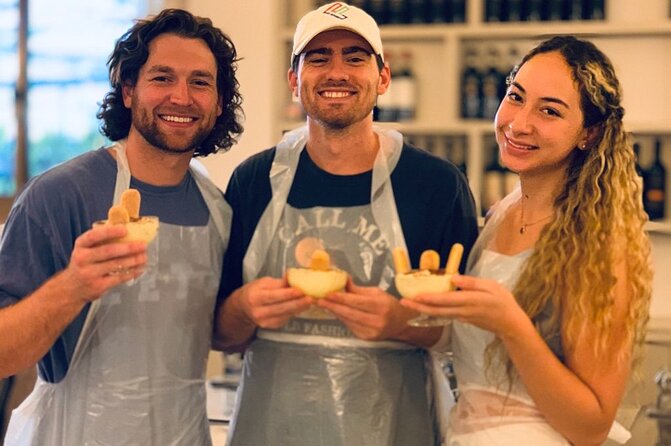
Rome gives you no shortage of churches, ruins, fountains, and crowded streets. A cooking class changes the rhythm. Instead of looking at food behind a restaurant window, you handle the dough, shape the ravioli, layer the tiramisu, and then eat the results.
That makes this especially useful in the middle of a busy sightseeing schedule. You can pair it with a morning visit to the Vatican area, then head to Via Cipro for a relaxed afternoon. Just avoid booking an important evening plan too soon afterward. The class is designed as a full social meal, not a quick demonstration.
The experience is offered in English, and the group size can reach 16 people. That is large enough to create plenty of conversation and laughter, but it also means you should expect shared instruction rather than constant one-to-one coaching.
A few other Rome mornings to weigh against this
- Rome: Pasta & Tiramisu Class with Fine Wine by the Vatican
★ 4.9 · 4,852 reviews - Rome: Pasta Making Class with Wine, Limoncello, and Dessert
★ 4.9 · 3,177 reviews - Rome: Fettuccine Pasta Cooking Class in Rome’s City Center
★ 4.8 · 2,414 reviews
Meeting near Via Cipro, close to the Vatican
The class begins at Via Cipro, 4/L, 00136 Roma RM, with the activity ending back at the meeting point. This is a practical base on the northwest side of central Rome, near public transportation and close to Vatican City.
The location is useful if you are already visiting St. Peter’s Basilica or the Vatican Museums. The class begins at 2 p.m., so a morning Vatican visit can fit nicely beforehand. Give yourself enough time to reach the meeting point, especially if your museum entry time runs late or you stop for lunch.
The area is not the postcard center of Rome, which is part of the appeal. You are away from the most heavily toured streets and in a neighborhood used for everyday Roman life. Several people have found the meeting point easy to locate and well marked, but you should still allow time to get there without rushing.
The opening tasting of Italian specialties
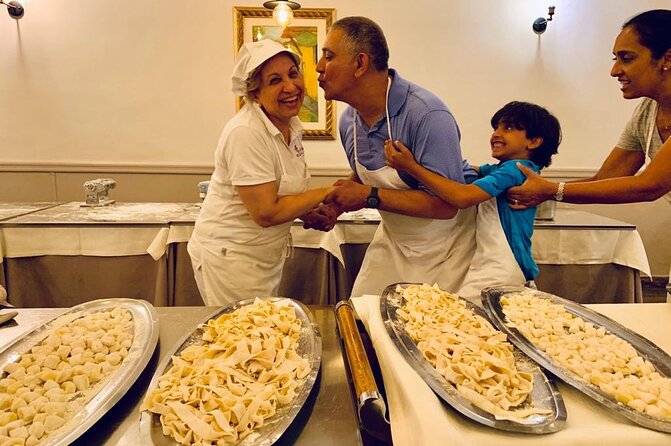
The first part is more than a quick welcome drink. You are introduced to Italian ingredients and regional food traditions through a tasting session, often led by a host such as Nina or Lise.
The exact tasting selection may vary, but the experience has included:
- Parmigiano Reggiano
- Italian cheeses
- Aged balsamic vinegar
- Olive oil
- Pesto
- Truffle products
- Other local specialties
- Prosecco and wine
This opening section gives the class useful context. You learn why a carefully aged balsamic vinegar tastes different from an ordinary supermarket version, how Italian cheese is used, and how regional products fit into the country’s food culture.
I particularly like this setup because it gives you something to talk about before the pasta work begins. You are not simply dropped into a kitchen with strangers. Food provides an easy way to meet the people around you, and the tasting gives the host room to explain ingredients in plain, practical terms.
The wine starts here, too. Prosecco is commonly poured during the tasting, followed by red and white wine later in the meal. Several descriptions of the experience point to very generous pours, sometimes amounting to six or more glasses over the afternoon. If you are drinking, pace yourself. The walk to the restaurant is welcome, and non-alcoholic drinks are included for anyone who prefers them.
Walking to the restaurant kitchen
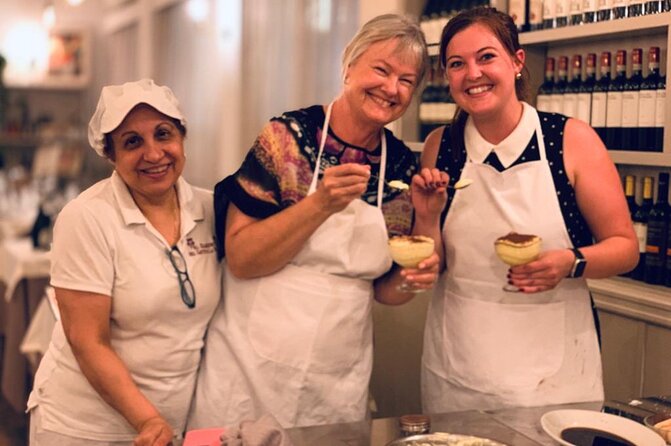
After the tasting, the group moves to a nearby restaurant for the cooking lesson. The walk is short enough to serve as a useful pause between courses, though the exact route and restaurant arrangement can vary.
The change of location gives the class a nice sense of progression. You start in a food shop or tasting setting, then move into a working restaurant environment where you can prepare the meal. The restaurants identified in the experience include La Nicchia for the tasting and Il Segreto for the cooking portion.
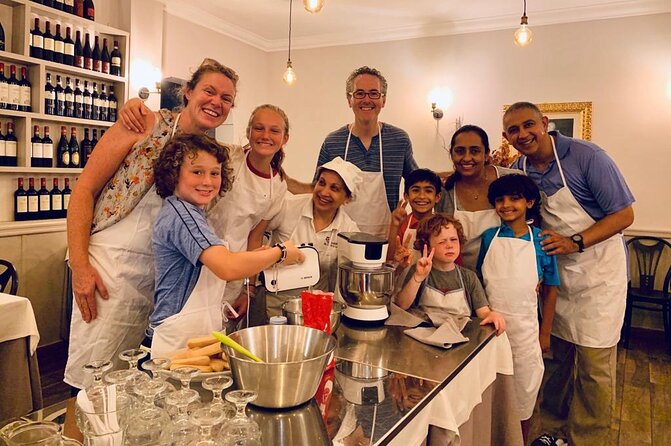
Do not expect a formal culinary-school setup with each person working at a private station. This is a social class in a professional kitchen, with the chef showing techniques and then helping you put them into practice. The group size can be as high as 16, so some steps may be demonstrated to everyone before you work on your own portion.
Chefs including Patrick and Jason have been praised for being patient, funny, and willing to help when someone’s dough or filling needs a little rescue. That matters for beginners. Fresh pasta can look simple until the dough sticks, the filling escapes, or the sheets come out uneven. The point here is to learn enough to succeed, not to produce restaurant-perfect pasta on your first try.
Same city, an entirely different afternoon:
- Vatican Museums & Sistine Chapel Tour with Optional Basilica
★ 4.3 · 67,413 reviews - Colosseum, Roman Forum & Palatine Guided Tour
★ 4.7 · 63,148 reviews - Vatican Museums, Sistine Chapel & St Peter’s Basilica Guided Tour
★ 4.5 · 39,149 reviews - Rome: Colosseum, Palatine Hill and Roman Forum Guided Tour
★ 4.8 · 32,814 reviews
Making fettuccine from scratch
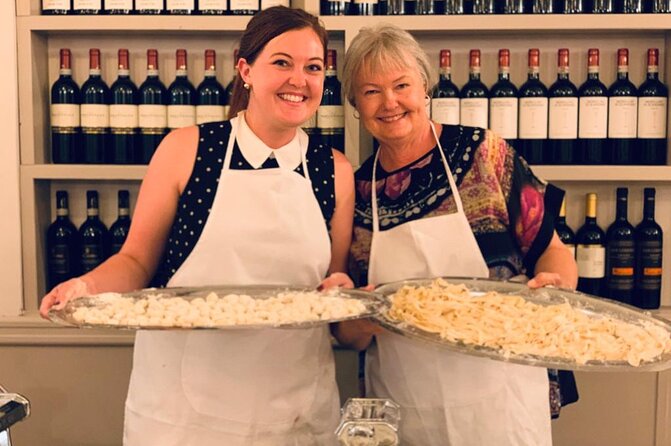
The pasta lesson focuses on fresh dough and fettuccine. You learn the basic process of combining ingredients, working the dough, rolling it, and cutting it into strands.
The most useful part is not just the recipe. It is learning how the dough should feel. A written recipe can tell you quantities, but a chef can show you when the dough is too dry, too wet, or ready to roll. That kind of practical instruction is what makes the class worth remembering after you return home.
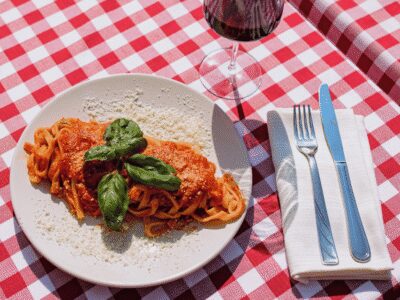
The finished fettuccine is served with tomato sauce. It is a straightforward Roman-style combination, which is exactly right for a class like this. The sauce lets the pasta remain the focus rather than burying it under heavy ingredients.
You should be prepared to work with your hands and accept a little mess. That is part of the fun. If you want a polished cooking demonstration where you only watch, choose a different food experience. Here, the value comes from making the pasta yourself.
Shaping ricotta and spinach ravioli
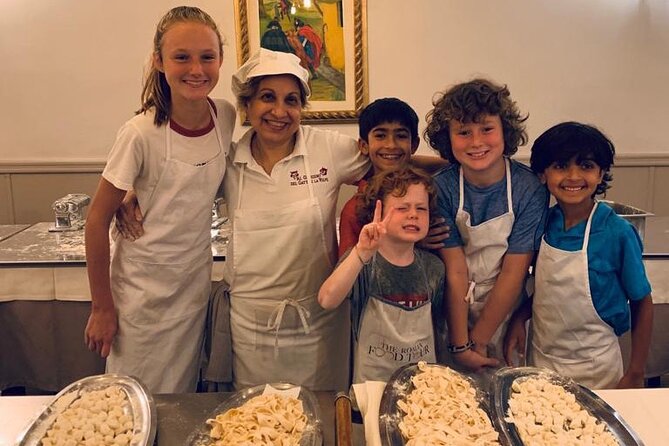
The second pasta dish is ravioli filled with ricotta and spinach. You prepare the filling, place it on the pasta sheet, seal the dough, and shape the individual pieces.
This is a good choice for a beginner’s class because the technique feels different from fettuccine. You get practice with both long-cut pasta and filled pasta, rather than spending the whole session on one shape.
The ravioli is served with butter and sage. The sauce is simple and classic, allowing the filling and pasta to carry the dish. It also gives the chef a chance to explain how a few strong ingredients can create a satisfying meal without a complicated recipe.
You may work at different speeds from the rest of the group. That is normal. The best approach is to follow the chef’s demonstration, ask for help early, and avoid worrying about making every raviolo identical. The instructors are there to keep the process moving and help you finish successfully.
Layering and eating the tiramisu
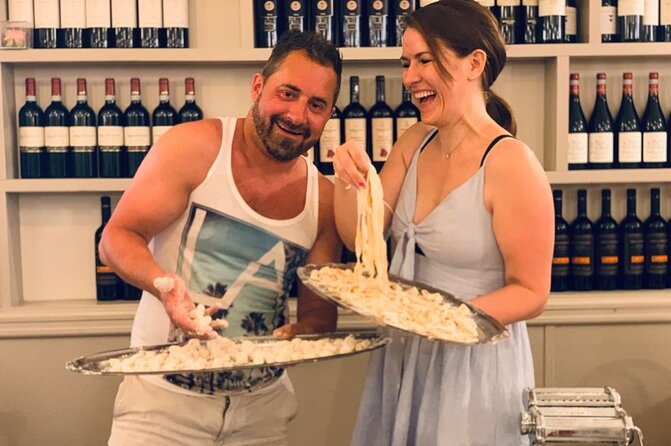
Dessert is tiramisu, prepared during the same kitchen session. You learn the basic construction of the dessert and then let it come together while the pasta is finished.
Tiramisu is a smart addition because it breaks up the cooking. You can prepare dessert first, set it aside, and then focus on the pasta before sitting down to eat. It also gives the class a second type of Italian kitchen lesson, with different textures and a different pace from pasta making.
The menu lists tiramisu as the dessert, with no claim that every step follows one rigid recipe. If you are hoping for a pastry course, this will feel fairly simple. If you want a practical dessert you can try at home, it fits the afternoon well.
By the end, you have made a complete meal rather than a single sample. The combination of fettuccine, ravioli, and tiramisu can be surprisingly filling, so you probably will not need a large dinner afterward.
Wine, prosecco, and the social side
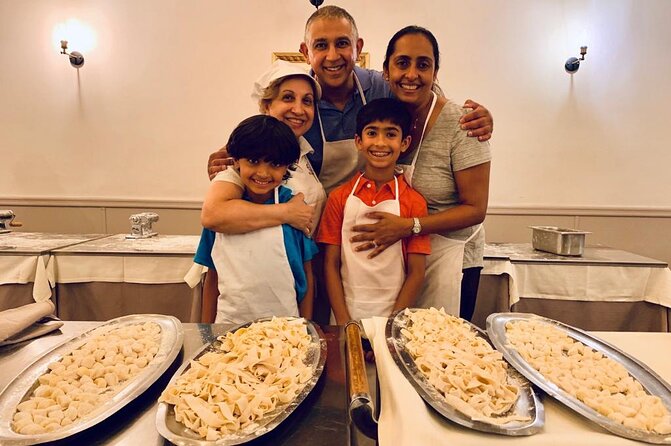
The drinks are a major feature, not a minor extra. The menu includes prosecco, red wine, white wine, and non-alcoholic beverages. Descriptions of the class repeatedly point to drinks being topped up throughout the afternoon.
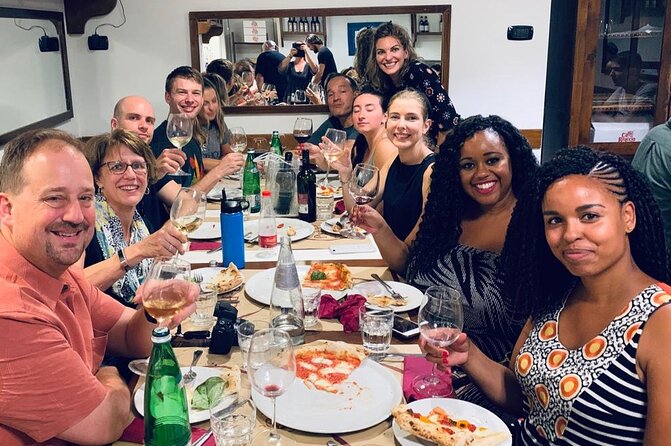
That generous approach helps create the relaxed, friendly mood. Solo participants can easily meet people, and couples or families get an activity that encourages conversation instead of another meal across a quiet table. Several families with children and teenagers have enjoyed the format, particularly the tasting and the hands-on pasta work.
Still, the drinking deserves a clear warning. This is not a restrained wine-pairing seminar. If you accept every pour, you may drink far more than expected over three to five hours. Alternate with water or choose the non-alcoholic drinks if you want to stay sharp.
The class is best for adults who like a lively meal and for families with older children who can follow kitchen instructions. It may not suit anyone looking for a quiet, highly technical lesson or an alcohol-free atmosphere unless they are comfortable opting out of the wine.
Value at $32.67 per person
The price is the strongest practical argument for booking. At $32.67 per person, you receive the tasting session, the cooking instruction, three dishes, and included drinks. In Rome, that can compare favorably with the cost of an ordinary dinner, before adding a wine tasting or cooking lesson.
The value is even better if you treat the class as both a meal and an activity. You are not paying only for a plate of pasta. You are paying for the chef’s instruction, the food used in class, the tasting of Italian products, the restaurant setting, and the chance to meet people from different places.
Price alone should not set your expectations too high. The class may use shared work areas, and a group of 16 cannot receive private chef attention every minute. But the format appears designed to keep everyone involved, with instructors stepping in when help is needed.
The experience is often booked about 39 days ahead. That suggests you should reserve early if the 2 p.m. time fits your Rome plans, especially during a busy travel season.
Timing, group size, and practical planning
The stated duration is about three hours and 30 minutes. In practice, you should leave four hours free, and perhaps five if you prefer not to feel rushed. The class has been known to continue beyond the scheduled time while people finish eating and enjoying the drinks.
That relaxed pace is a benefit if you want a generous afternoon. It is a drawback if you have an evening train, a timed museum entry, or a restaurant reservation soon afterward. I would not place this activity between two fixed appointments.
The tour starts at 2 p.m. and finishes back at the original meeting point. It is near public transportation, which makes the return trip manageable, but the experience does not include a transfer around Rome.
There is free cancellation up to 24 hours before the start time for a full refund. Changes or cancellations made within 24 hours are not accepted for a refund, and the cut-off follows local Rome time.
Who should book this Rome pasta class
I would choose this class for you if you want a break from sightseeing, enjoy meeting people, and like the idea of learning by doing. It is also a good match for solo visitors who want an easy social afternoon, couples looking for something more memorable than another restaurant meal, and families with children old enough to take part.
The class suits beginners. You do not need to arrive with pasta-making experience, and the instructors are expected to guide you through the difficult steps. The finished meal is part of the reward, but the technique is useful too. With practice, you can try the pasta and tiramisu again at home.
I would hesitate if your Rome schedule is packed or if you dislike group activities. The 16-person maximum keeps the class from becoming enormous, but it is still a group experience. I would also think twice if you do not drink alcohol, unless you are happy to use the included non-alcoholic options while others enjoy wine and prosecco.
Food restrictions and hearing needs have received individual attention during the activity, but the supplied details do not state a formal policy or list every accommodation. If you have a serious allergy or specific access need, contact the provider before booking rather than relying on an informal adjustment on the day.
Should you book it?
Yes, if you can spare the whole afternoon. This is one of the better-value food activities near the Vatican because it combines a product tasting, a cooking lesson, a full meal, and included drinks for $32.67.
Book it early if your dates are fixed, and keep your evening open. Go ready to work with your hands, meet a group of strangers, and say no to another glass when you have had enough. If you do that, you get more than a meal: you leave with a little Roman food know-how and a recipe memory tied to your time in the city.
FAQ
Where does the pasta and tiramisu class begin?
The meeting point is Via Cipro, 4/L, 00136 Roma RM, Italy, near public transportation and the Vatican City area.
What time does the activity start?
The class starts at 2:00 p.m.
How long does the experience last?
The stated duration is approximately three hours and 30 minutes. It can run longer, with some sessions lasting closer to four or five hours.
Where does the activity finish?
The experience ends back at the original meeting point.
What food will I make?
You will make fettuccine with tomato sauce, ricotta-and-spinach ravioli with butter and sage, and tiramisu.
What drinks are included?
The menu includes prosecco, red wine, white wine, and non-alcoholic beverages.
How many people can join the class?
The maximum group size is 16 people.
Can I cancel for a full refund?
Yes. You can cancel at least 24 hours before the local start time for a full refund. Cancellations or changes made less than 24 hours before the start time are not refunded.
More Workshops in Rome
- 3 in 1 Cooking Class near Navona: Fettuccine, Ravioli & Tiramisu
★ 5.0 · 7,376 reviews - Rome: 3-in-1 Fettuccine, Ravioli, and Tiramisu Cooking Class
★ 4.9 · 2,704 reviews - Rome: Traditional Pasta with Cocktails Cooking Class
★ 5.0 · 2,374 reviews - Become a Masterchef in Rome: Pasta, Ravioli and Tiramisù Class
★ 5.0 · 2,156 reviews
Fresh on the Rome list
- Rome: Guided Catacombs Tour & Capuchin Crypt (Audio Guide)★ 4.3 · 191 reviews
- Guided tour of the Colosseum, Roman Forum and Palatine in Spanish★ 4.5 · 191 reviews
- Rome: Borghese Gallery Guided Tour with Skip-the-Line Ticket★ 4.5 · 192 reviews
- Rome: Arena Colosseum Tour with Arena Access★ 4.6 · 193 reviews
- Colosseum, Forum, Palatine Hill with audio guide and Arena or Bus option★ 4.0 · 193 reviews
- Rome: Colosseum & Roman Forum Guided Tour★ 5.0 · 194 reviews
- Rome: Domus Aurea Guided Tour and Virtual Reality Experience★ 4.7 · 194 reviews
- Rome Vintage Fiat 500 car Tour With Photographer★ 5.0 · 194 reviews
Pasta, compared.
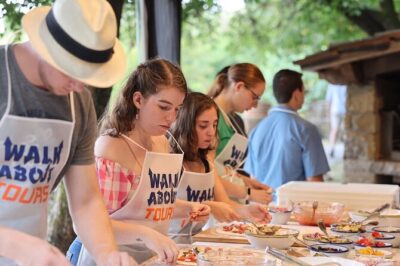
Florence Pizza or Pasta Class with Gelato Making at a Tuscan Farm
Read our review →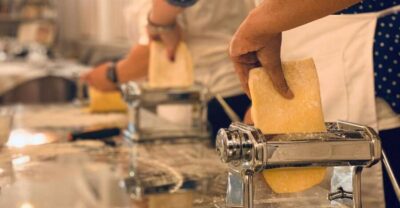
Pasta & Tiramisu Cooking Class with Unlimited Wine
Read our review →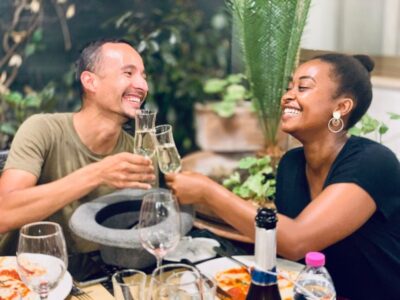
Pasta & Tiramisu Class with Fine Wine by the Vatican
Read our review →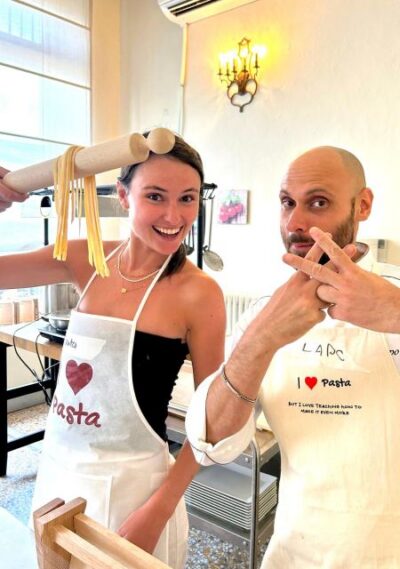
Pasta Making Class with Wine, Limoncello, and Dessert
Read our review →