
Reviewed · COOKING CLASSES
Rome Pasta Making Class with Italian Sauces and Wine Included
Rome’s best pasta lesson is not a demonstration from the sidelines. Here, you mix, roll, shape, and cook the pasta yourself, then sit down to eat it with wine. Chef Riccardo and instructors such as William and Leo keep the class moving with clear guidance, jokes, and useful kitchen tips.
I especially like the small-group format, which gives you a real chance to get help with dough and shaping. I also like the practical focus: you learn why a sauce works, how to judge pasta by taste, and how to repeat the meal at home. The main consideration is the location, which is outside Rome’s historic center, and dietary changes beyond the standard vegetarian option require a private class.
Key points at a glance
- Three pasta styles in one class: Make dishes such as ravioli, fettuccine, and spaghetti alla chitarra from scratch.
- Classic Roman sauces: Work with carbonara, arrabbiata, cacio e pepe or gricia-style sauce, and butter with sage.
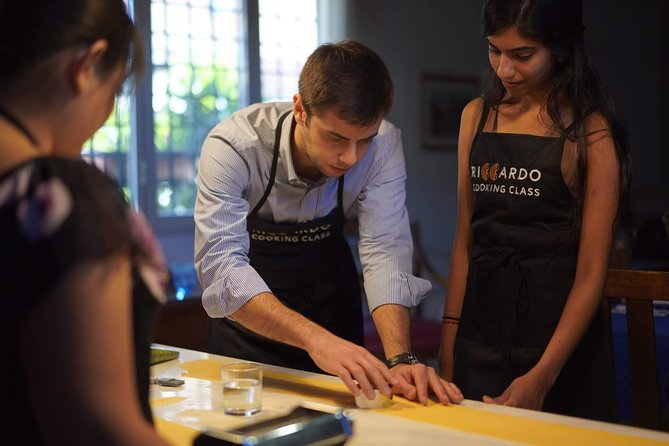
- Hands-on instruction: You knead, roll, fill, shape, and cut the dough instead of simply watching a chef.
- A social meal at the end: Eat the pasta you prepare with complimentary wine and coffee.
- Small class size: The maximum is 10 people, creating a more personal setting than a large cooking show.
- Private-class options: A private booking can be arranged for vegan, gluten-free, dairy-free, or custom recipes such as gnocchi, risotto, or tiramisu.
What you actually do during the three hours
This is built as a complete food experience, not just a pasta lesson. You meet Chef Riccardo or one of his instructors at the stated meeting point on Circonvallazione Gianicolense, 418, in Rome. The class may take place at Riccardo’s grandmother’s house or at The Cooking Lab, depending on the arrangement.
The setting is meant to feel like cooking with an Italian family. You should expect a friendly, informal room rather than a grand culinary school. That helps the class feel relaxed, though you should pay attention to the meeting instructions because this is not a central landmark such as the Colosseum or Piazza Navona.
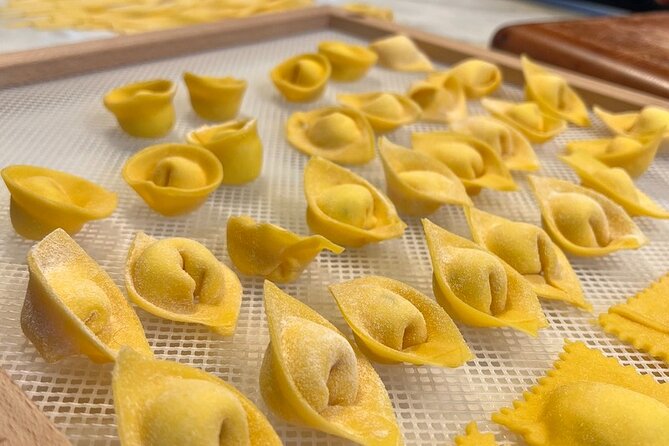
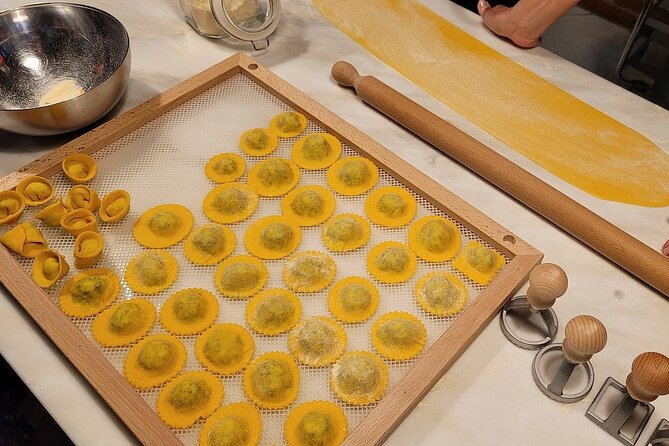
Once everyone is settled, the work begins with fresh ingredients and an explanation of the pasta-making process. You make the dough, work it by hand, roll it thin, and shape it into different forms. The lesson can include ricotta-filled ravioli, fettuccine, tortellini, cappelletti, and spaghetti alla chitarra.
The exact mix may vary. That is useful because you are not locked into one identical recipe every time. Some classes focus on ravioli, fettuccine, and spaghetti alla chitarra, while the chef may offer choices about pasta shapes and sauces.
You do not need advanced cooking skills. Several instructors, including William and Leo, are praised for making the process easy to follow and for giving beginners confidence. At the same time, an experienced home cook can still pick up small but valuable lessons about dough texture, tools, shaping, and sauce consistency.
More Cooking Classes in Rome
- 3 in 1 Cooking Class near Navona: Fettuccine, Ravioli & Tiramisu
★ 5.0 · 7,376 reviews - Rome: Pasta Making Class with Wine, Limoncello, and Dessert
★ 4.9 · 3,177 reviews - Rome: 3-in-1 Fettuccine, Ravioli, and Tiramisu Cooking Class
★ 4.9 · 2,704 reviews
Rolling dough, shaping ravioli, and making three pastas
The most rewarding part is the hands-on work. Pasta dough looks simple, but it has a feel that is hard to learn from a recipe alone. You will get a sense of how firm the dough should be, how thin to roll it, and how much filling ravioli can hold before it breaks.
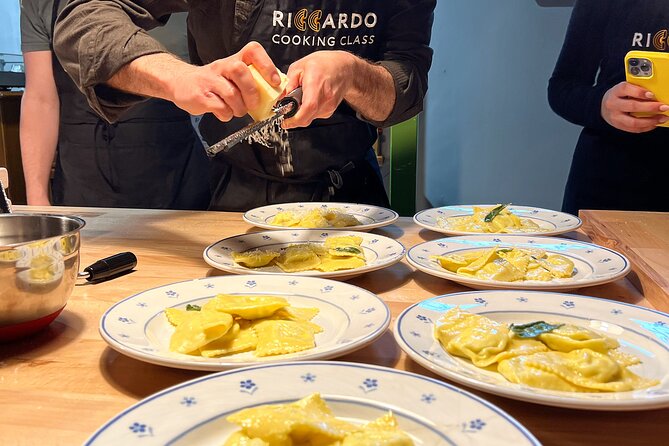
Ravioli is often the class centerpiece. You prepare a ricotta filling, place it on the pasta, seal the edges, and cut the parcels. The lesson also covers butter and sage sauce, a good match for delicate filled pasta because it does not bury the filling under heavy seasoning.
Fettuccine gives you a different task. You roll and cut the pasta into ribbons, then learn how fresh noodles behave in boiling water. Spaghetti alla chitarra adds another texture and a bit of Italian kitchen theater, since the pasta is made with a traditional stringed cutting tool.
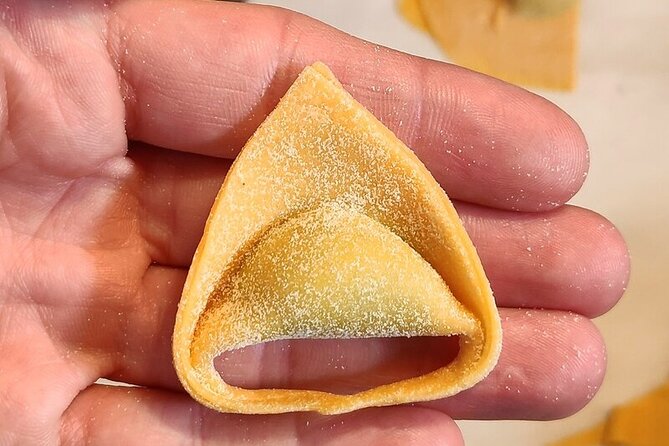
You may also encounter tortellini or cappelletti. These smaller stuffed shapes take more patience, so the instructor’s help matters. The class is not designed to rush you through a long list of recipes. The point is to learn a few forms well enough that you can make them again.
I like that the teaching goes beyond quantities. One useful lesson is to cook by taste rather than blindly following measurements. That advice applies to pasta water, cheese, pepper, butter, and sauce. It is the kind of tip that can improve your everyday cooking long after your Rome visit.
Roman sauces with real character
The sauce portion gives the class its Roman identity. You are not just making generic tomato sauce to go with fresh noodles. The standard menu includes several classic combinations with different levels of richness and heat.
Carbonara brings egg, cheese, and cured pork into the discussion for the traditional menu. If you choose the vegetarian path, the class can use cacio e pepe or a gricia-style preparation instead, depending on preference and availability. These sauces teach an important Roman lesson: a short ingredient list demands careful technique.
Arrabbiata offers a sharper contrast. Tomato and chili give it a bold, spicy edge, and it is a good way to see how a simple sauce can change the character of fresh pasta. Butter and sage is gentler, especially with ricotta ravioli, and shows why a sauce does not need many ingredients to taste complete.
The instructors also explain the background of the sauces. That context matters because you learn not only what to add, but why a Roman sauce is built in a particular way. William, Leo, and Riccardo are all described as willing to answer questions and share tips that do not always appear in a cookbook.
You should come hungry. The class commonly produces three pastas and three sauces, followed by a meal. It is not a small tasting menu. The amount of food is one reason some people describe the class as a full activity rather than a quick lesson.
Wine, coffee, and the meal you made yourself
After the cooking, you sit down and eat what the group has prepared. Complimentary wine is included, and coffee is served as part of the meal. Some class sessions may begin with cheese tasting and prosecco, but the main promise is wine with the finished pasta.
This final meal is more than a reward. It lets you taste the effect of your work immediately. You can compare the pasta shapes, see how the sauces cling, and ask questions while the techniques are still fresh.
There is also a social side. A small cooking class naturally puts you at a table with other people, and the shared work makes conversation easy. Several people describe the class as a good break after days of sightseeing, while couples and families have used it as a relaxed activity together.
The tone depends partly on the instructor. William is described as funny and generous with practical advice. Leo is noted for patience, warmth, and a good sense of humor. Riccardo is praised as a strong teacher, and Rocco has also led a successful class. You may not have a particular instructor guaranteed unless the booking specifies one, but the teaching style appears consistent: active, friendly, and focused on participation.
Same city, an entirely different afternoon:
- Vatican Museums & Sistine Chapel Tour with Optional Basilica
★ 4.3 · 67,413 reviews - Colosseum, Roman Forum & Palatine Guided Tour
★ 4.7 · 63,148 reviews - Vatican Museums, Sistine Chapel & St Peter’s Basilica Guided Tour
★ 4.5 · 39,149 reviews - Rome: Colosseum, Palatine Hill and Roman Forum Guided Tour
★ 4.8 · 32,814 reviews
Why the small group matters
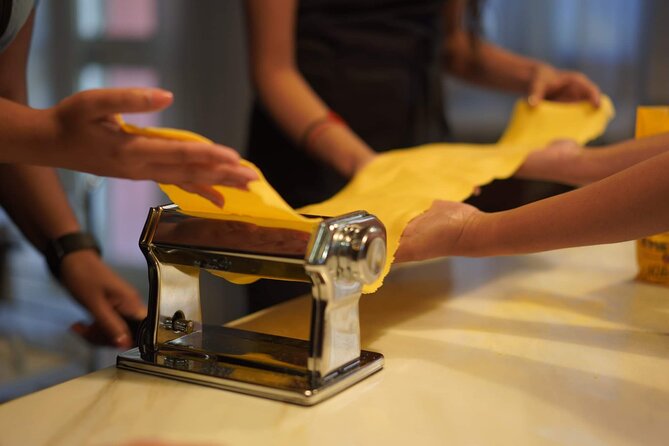
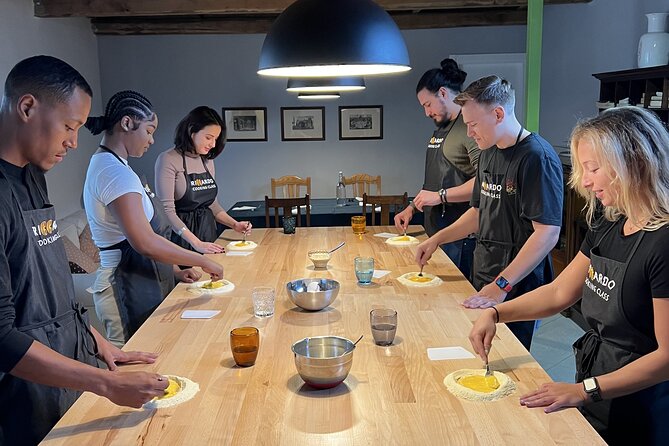
The maximum class size is 10 people. That is small enough for the instructor to see how your dough is behaving and correct your technique before you make a dozen misshapen ravioli.
It also keeps the meal more personal. You can ask about pasta tools, sauce adjustments, or how to recreate the recipes at home without waiting for a formal question period. Beginners benefit most from this access, but confident cooks can use the time to ask more detailed questions.
The class can still feel lively. It is not a silent workshop where everyone works alone. You share counters, compare shapes, and help create the sauces. If you prefer complete control over the menu and pace, a private class is the better choice.
Private bookings also matter for food restrictions. The regular class includes a vegetarian option, but gluten-free, dairy-free, vegan, or other special menus need to be arranged through a private class. Special recipes such as gnocchi, tiramisu, and risotto may also be possible privately.
Tell the provider about allergies or dietary needs before the class. Do not assume that a vegetarian menu automatically covers every restriction.
Is $95.53 a fair price?
At $95.53 per person, this is not the cheapest meal in Rome, but it offers more than dinner. You receive roughly three hours of instruction, several pasta preparations, multiple sauces, wine, coffee, and the meal itself.
The value is strongest if you want to learn a repeatable skill. You are not simply paying for a plate of pasta. You are paying for hands-on access to an instructor, ingredients, equipment, cooking guidance, and a social evening.
The price also compares favorably with a standard restaurant meal if you count the amount of food and the included drinks. Still, you should not book it only as a way to save money on dinner. The class takes time, requires participation, and may leave you full enough to skip a later meal.
Group discounts may be available, which can make it more attractive for families or friends. A private class costs more or may be priced differently, so check the available option if custom recipes are important to you.
The high booking demand, with reservations often made about 44 days ahead, is a useful warning. If your Rome dates are fixed, reserve early rather than treating this as a last-minute activity.
Getting to Circonvallazione Gianicolense
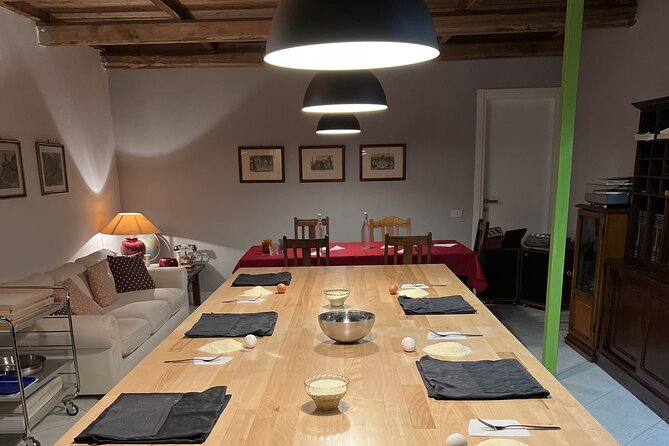
The meeting point is Circonvallazione Gianicolense, 418, 00151 Rome. The location is near public transportation, but it is away from the main ancient-Rome sights.
Allow enough time to reach the address. A cooking class has a firm start, and arriving late can mean missing the dough lesson or forcing the group to wait. Check the final meeting details carefully because the class may be held at Riccardo’s grandmother’s house or at The Cooking Lab.
The activity ends back at the meeting point. That makes planning easier, especially if you want to return to your hotel or continue with dinner elsewhere. Since the class lasts about three hours, it fits best on a morning or evening when you are not also trying to cross Rome for a timed museum entry.
Who will enjoy this class most?
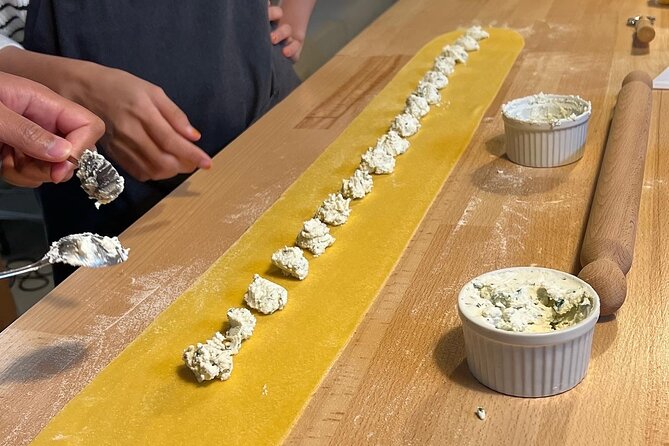
I would recommend it to couples, families with older children or teenagers, friends traveling together, and solo visitors who like meeting people over food. It works well as a break from churches, ruins, and crowded streets.
You do not need to be an accomplished cook. The instructors give enough direction for first-timers, and the work is broken into manageable stages. A reluctant partner may enjoy it more than expected because the class is active and social rather than technical in a stiff, formal way.
Experienced home cooks should also find value in the details about pasta tools, dough, sauce balance, and cooking by taste. Just keep your expectations sensible. This is a three-hour introduction, not professional culinary training.
It is less suitable if you want a quiet meal, dislike group activities, or have strict dietary requirements that cannot be handled in a standard shared class. In those cases, ask about a private booking before paying.
What to know before you book
Bring an appetite and wear something you do not mind cooking in. Flour, filling, and sauce are part of the work, so this is not a polished sit-down tasting where you remain spotless.
Read the menu details carefully. The sample menu includes ricotta ravioli, carbonara, arrabbiata, butter and sage sauce, fettuccine, and spaghetti alla chitarra, but the final combinations may differ. Instructors may also offer a choice of pasta types or sauces.
If you hope to learn one particular recipe, ask ahead of time. Private classes are the route for special requests such as gnocchi, risotto, tiramisu, gluten-free pasta, dairy-free cooking, or a vegan menu.
English is offered, and confirmation arrives at booking. Free cancellation is available up to 24 hours before the start time. Cancellations or changes made less than 24 hours ahead are not accepted, and the local Rome time controls the cut-off.
Should you book the Rome pasta class?
Yes, if you want a practical food activity with a real meal at the end. The strongest reasons are the hands-on format, the small group, the range of pasta shapes, and the chance to learn Roman sauces from instructors such as Riccardo, William, and Leo.
At $95.53, the class makes sense for anyone who values both dinner and a skill to take home. I would book early, especially for popular dates, and choose a private class if your diet requires more than the regular vegetarian option.
Skip it if you would rather spend three hours sightseeing or if you want a quiet restaurant meal. For everyone else, this is a warm, useful way to experience Rome through its kitchen, with enough technique to recreate the evening after you return home.
FAQ
Where does the pasta-making class meet?
The stated meeting point is Circonvallazione Gianicolense, 418, 00151 Roma RM, Italy. The class may take place at Riccardo’s grandmother’s house or at The Cooking Lab.
How long does the experience last?
The class lasts approximately three hours and ends back at the meeting point.
What pasta will I make?
Possible pasta types include ravioli, fettuccine, tortellini, cappelletti, and spaghetti alla chitarra. The sample menu includes ricotta-filled ravioli, fresh fettuccine, and spaghetti alla chitarra.
Which sauces are included?
The sample sauces are carbonara, arrabbiata, and butter with sage. A vegetarian menu may use cacio e pepe or a gricia-style sauce instead, depending on preference.
Is wine included?
Yes. Complimentary wine is served with the meal you prepare, and coffee is also included.
Can I request vegan or gluten-free cooking?
Special dietary menus, including gluten-free, dairy-free, and vegan options, can be arranged for a private class. You should provide details about allergies or restrictions before booking.
How many people are in the class?
The activity has a maximum of 10 people. A private class may also be arranged if you want a customized menu or a more personal format.
More Workshops in Rome
- Become a Masterchef in Rome: Pasta, Ravioli and Tiramisù Class
★ 5.0 · 2,156 reviews - Rome: Fettuccine and Tiramisu Cooking Class with Wine
★ 4.8 · 2,013 reviews - Pasta Cooking Class Near the Colosseum with 3 Spritz Cocktails
★ 5.0 · 1,686 reviews - Rome: Pasta & Tiramisu Cooking Class near the Spanish Steps
★ 4.8 · 1,395 reviews
More Pasta in Rome
- Rome: Pasta & Tiramisu Class with Fine Wine by the Vatican
★ 4.9 · 4,852 reviews - Rome: Fettuccine Pasta Cooking Class in Rome’s City Center
★ 4.8 · 2,414 reviews - Rome: Traditional Pasta with Cocktails Cooking Class
★ 5.0 · 2,374 reviews - Learn to Make Pasta & Tiramisu with Wine and Limoncello Included
★ 5.0 · 2,345 reviews
Fresh on the Rome list
- Exclusive Golf Tour Private VIP with Local & Gelato o Wine★ 5.0 · 500 reviews
- Colosseum, Palatine Hill and Roman Forum with Guided Tour★ 5.0 · 500 reviews
- Rome Trastevere Pasta Making Class with Eating Europe★ 5.0 · 505 reviews
- Rome by Night Walking Tour★ 4.5 · 506 reviews
- Rome: Colosseum Express Tour with Forum & Palatine Access★ 4.5 · 511 reviews
- Rome Food Experience Max 6 People Group Tour | w/Private Option★ 5.0 · 516 reviews
- Rome: Navona Square Underground Ticket with Audio Guide★ 4.0 · 518 reviews
- Rome: Escorted Papal Audience Experience with Entry Ticket★ 4.4 · 518 reviews
Cooking Classes, compared.
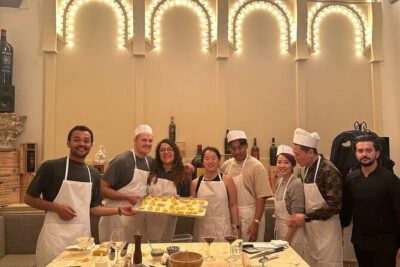
3 in 1 Cooking Class near Navona: Fettuccine, Ravioli & Tiramisu
Read our review →
Florence Pizza or Pasta Class with Gelato Making at a Tuscan Farm
Read our review →
Pasta & Tiramisu Cooking Class with Unlimited Wine
Read our review →
Cooking Class and Lunch at a Tuscan Farmhouse with Local Market Tour from Florence
Read our review →
Authentic Pizza Making Class in Naples with Appetizers and Drink
Read our review →
Pasta Making Class with Wine, Limoncello, and Dessert
Read our review →Browse the lists this tour appears in