

Reviewed · AUDIO TOURS
Rome: Navona Square Underground Ticket with Audio Guide
Beneath the cafés, fountains, and street performers of Piazza Navona lies the Stadium of Domitian, Rome’s first and only masonry-built stadium. Five meters below today’s street level, you’ll see ancient travertine blocks, brickwork, marble columns, and the remains of entrances that once led crowds toward an arena for as many as 30,000 spectators.
I like two things here: the clear visual reconstructions, which help you picture the vanished stadium, and the way the audio guide links ancient Roman sport with the modern shape of Piazza Navona. The main caution is size. The archaeological area is compact, and most people finish in about 45 minutes to an hour, so it works best as a focused historical stop rather than a major half-day attraction.
- Ancient stadium beneath a famous piazza: Descend 5 meters below Piazza Navona to see the remains of Domitian’s arena.
- Useful audio and visual material: Choose English, Italian, Spanish, French, German, Russian, or Portuguese.
- A story about Roman sport: Learn how spectators were arranged and how the piazza developed from the stadium.
- Strong presentation tools: Unpublished photographs, information panels, video, and 3D images show how the site once looked.
- Optional Roman refreshment: Add one cocktail with snacks, or two wines with a traditional appetizer board.
- Short, convenient visit: Allow roughly 45 minutes to an hour, then continue on foot around central Rome.
What lies beneath Piazza Navona
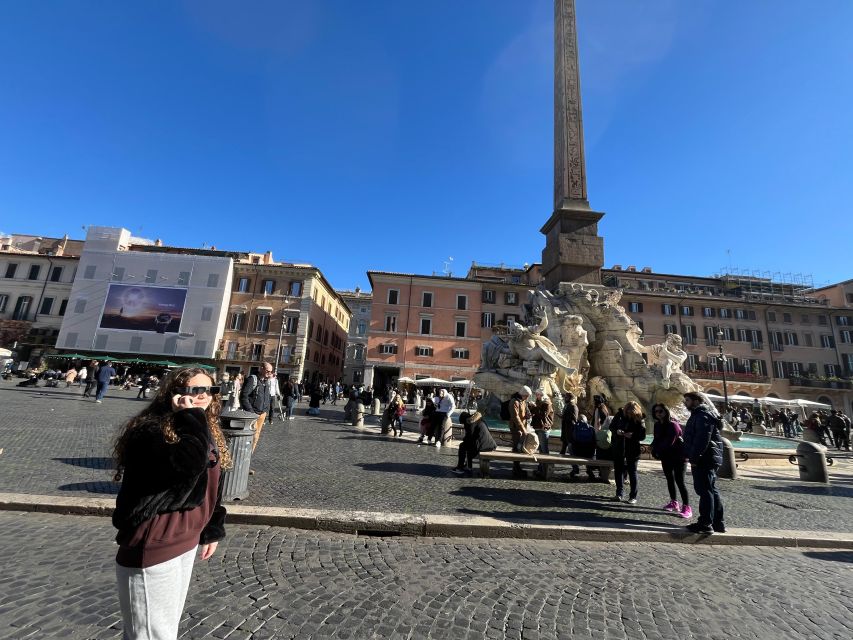
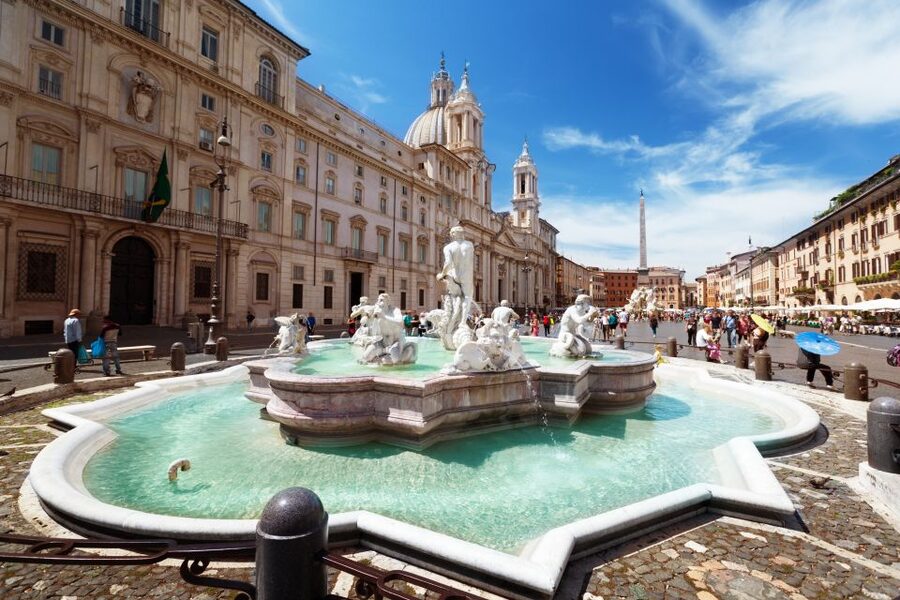
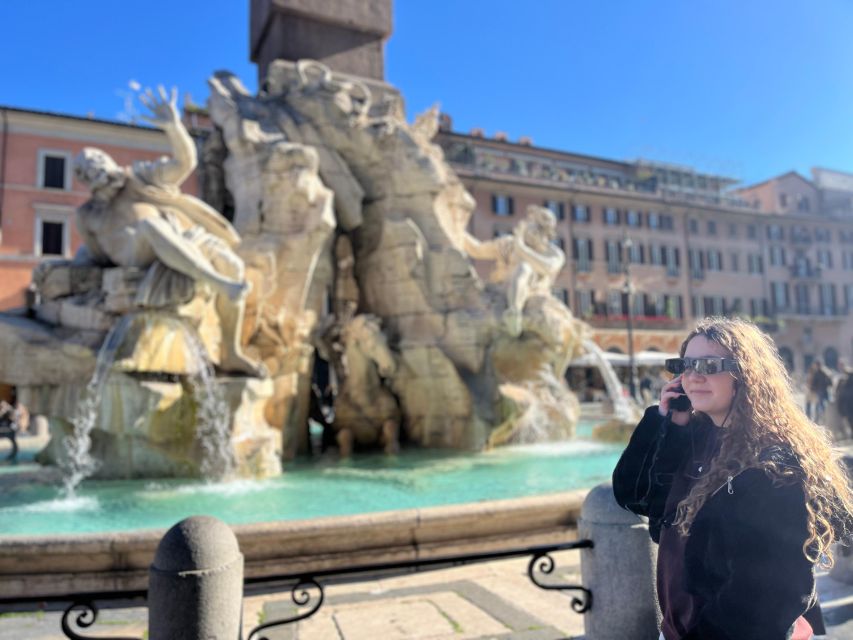
Piazza Navona is one of Rome’s most theatrical public spaces. Above ground, you have Bernini’s Fountain of the Four Rivers, the long oval shape of the piazza, church façades, restaurants, and a steady stream of people crossing from one landmark to the next.
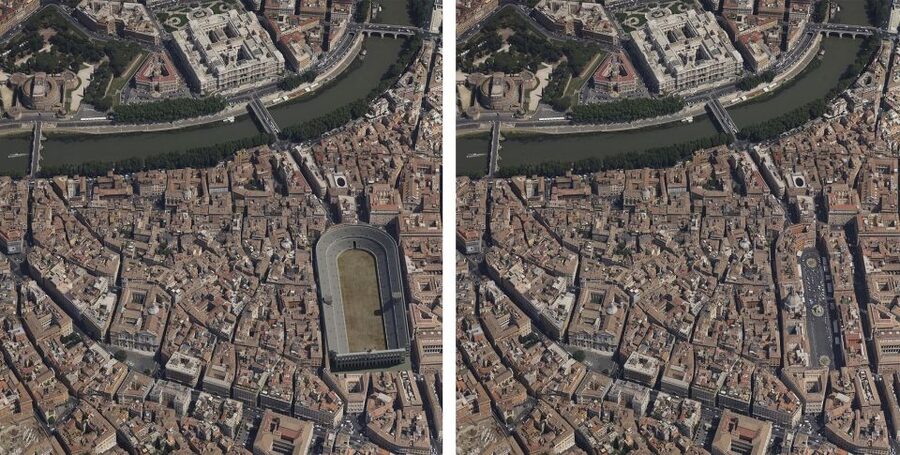
The shape is not accidental. It follows the footprint of the ancient Stadium of Domitian, built in the first century for athletic contests and public spectacles. The old arena was not a circus in the Colosseum sense, and this distinction matters. Its main purpose was sporting events, with the long track giving spectators a view across the field.
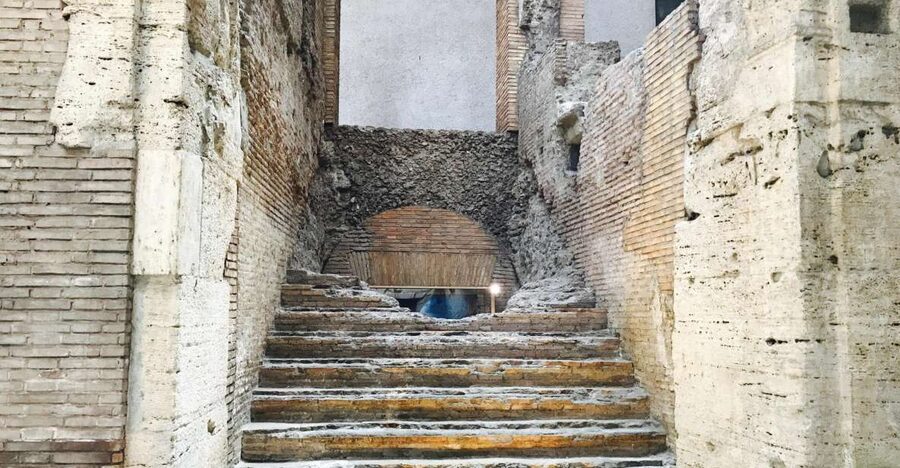
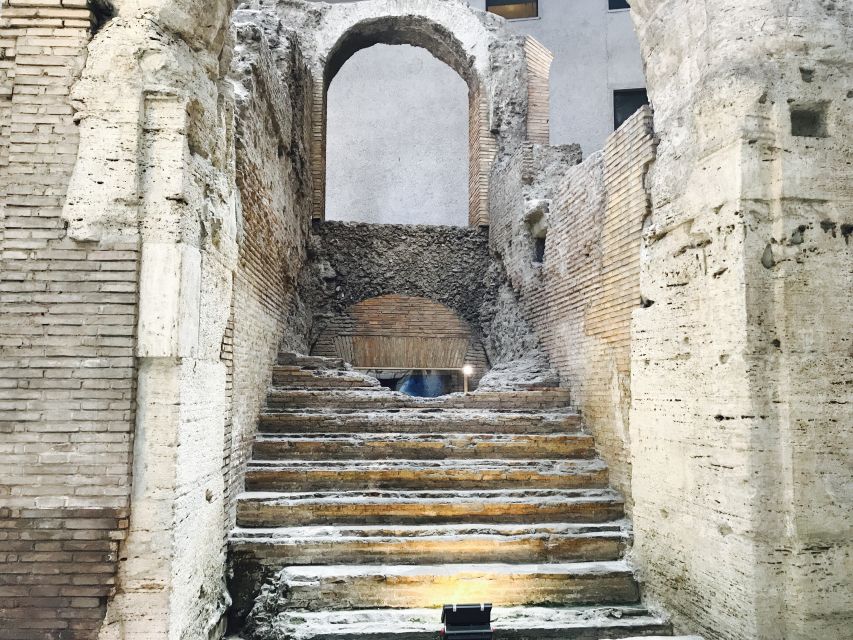
The ruins sit beneath the piazza at about 5 meters below current street level. You do not see the entire stadium preserved underground. Instead, you move through a compact archaeological area where surviving pieces of the structure help explain the larger building above and around you.
That limited size is the main point to understand before booking. If you expect a vast underground complex, you may be disappointed. If you enjoy fitting a small archaeological site into a walking day, the visit makes good sense.
Entering the Stadium of Domitian
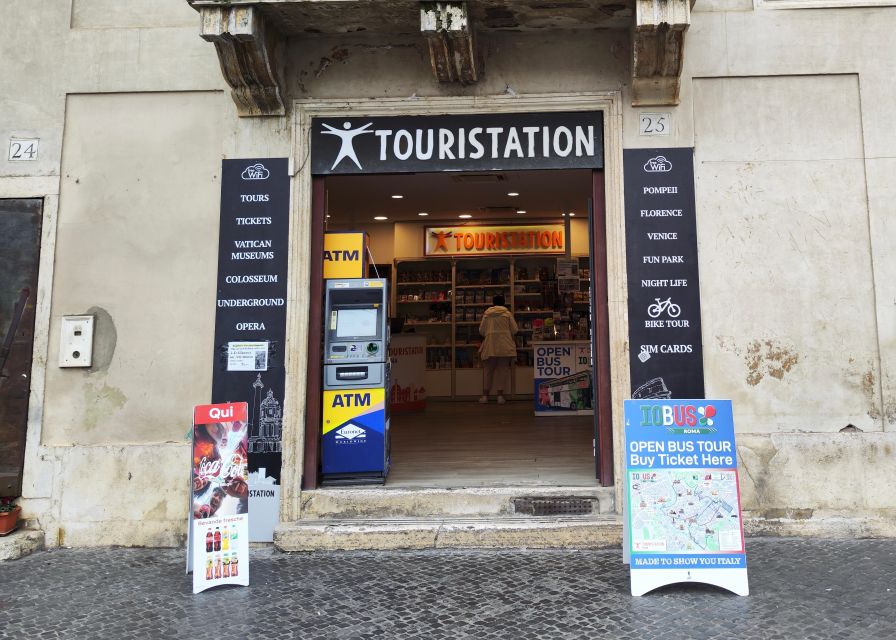
The meeting point is the tourist point at Piazza Navona 25, in front of the main fountain. It is easy to identify the general location, but allow a little extra time for the ticket exchange.
Some visitors with phone vouchers were directed first to a ticket office a couple of streets away, then back to the entrance with a printed ticket. The staff were described as helpful, but this extra step caused confusion. I would arrive early rather than cutting it close, especially if you have a timed start or plans immediately afterward.
Once inside, you descend below the modern piazza and begin with the story of the stadium itself. The route is self-guided, so you are not attached to a tour group or required to keep pace with a guide. That gives you room to stop at the displays, replay an audio section, or move on when a subject interests you less.
The site is wheelchair accessible according to the activity information. One parent found it unsuitable for a pram, so families with young children should check their needs before arriving. A children’s audio guide is available, and one five-year-old particularly enjoyed using the audio pen and map independently.
A few other Rome mornings to weigh against this
- Rome: Pantheon Fast-Track Ticket and Official Audio Guide
★ 4.3 · 21,008 reviews - Rome:Hop-On Hop-Off Panoramic Open Bus Ticket 3 Circuits x 1
★ 4.0 · 15,405 reviews - Vatican Museums & Sistine Chapel Skip-the-Line Entry Ticket
★ 4.4 · 13,838 reviews
The ruins and the building materials
The most useful part of the visit is learning to read the remains. The stone fragments are not simply old walls placed in a dark room. The displays explain the stadium’s travertine blocks, brickwork, marble columns, and the entrances used by the original crowd.
Travertine gives you a sense of the building’s weight and scale. Brickwork helps show how the structure was assembled, while the marble elements point to the finished public monument that Roman spectators would have encountered. The surviving pieces are partial, but the combination of physical remains and reconstruction makes them easier to understand.
You will also hear about the entrances and the way the crowd was organized. The stadium could accommodate up to 30,000 people, and the audio guide explains how spectators were divided within the arena. That detail helps turn an empty ruin into a working public building with routes, sections, and social order.
The site is not filled with a large number of objects. Its value comes from seeing the structure beneath a place you may already have visited above ground. I find that contrast more interesting than a room of disconnected artifacts. You are not only looking at Roman masonry. You are comparing ancient foundations with the living piazza directly overhead.
Audio guide, photographs, and 3D reconstructions
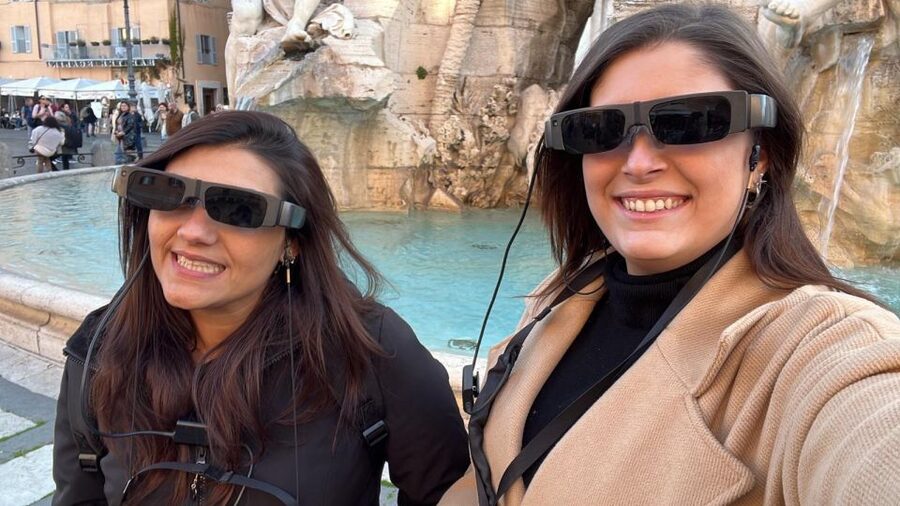
The audio guide is essential here. Without it, the ruins can be difficult to interpret, particularly if you do not already know why Piazza Navona has its distinctive shape.
The commentary is available in English, Italian, Spanish, French, German, Russian, and Portuguese. The material covers the stadium, Roman athletic traditions, the rulers connected with its development, and the gradual transformation of the ancient site into the piazza you see today.
The strongest presentation comes from combining several formats:
- Audio explanations at numbered stations
- Informative panels
- Photographs, including a selection described as previously unpublished
- Video material
- Three-dimensional reconstructions of the original stadium
The reconstructions do important work. Ancient ruins rarely preserve the full visual experience of a building, and the 3D images help you picture the stadium’s walls, entrances, and seating arrangement. The video presentation also adds movement to a place that can otherwise feel static.
The system is generally simple to follow, but the station numbers are not always perfectly clear. A few people found that the order felt mixed, and others felt the sound did not always match the pictures precisely. I would keep an eye on the numbered points and pause when necessary rather than assuming the guide is playing in a strict route order.
Sound clarity can vary, too. If a section seems out of sequence, check the station number before moving on. This is a self-guided exhibition, not a live explanation from a person who can immediately point to the exact wall or image.
How Rome’s sports culture comes into view
The stadium gives you a different angle on Roman life. Many first-time visits to Rome focus on emperors, temples, battles, and engineering. Here, the subject is public sport and the way rulers used large buildings to gather and entertain the population.
The audio guide explains the development of Roman athletic events and the role of the stadium. You learn how the arena functioned, how the audience was arranged, and how the building related to imperial power. This makes the stop especially useful for families and anyone who wants more than a list of dates and rulers.
I also like the connection between the ancient arena and the current piazza. Piazza Navona is not merely built near the stadium. Its long form preserves the memory of the earlier structure. Once you understand that, the fountains, cafés, and open space above seem less like an isolated Baroque setting and more like the latest chapter in a very old public gathering place.
The visit does not recreate the stadium with actors or a large immersive production. Its approach is quieter. You walk among remains, listen, and use the images to rebuild the missing structure in your mind. That is a strength if you like archaeology presented at a calm pace, but less appealing if you want a dramatic attraction.
Same city, an entirely different afternoon:
- Vatican Museums & Sistine Chapel Tour with Optional Basilica
★ 4.3 · 67,413 reviews - Colosseum, Roman Forum & Palatine Guided Tour
★ 4.7 · 63,148 reviews - Vatican Museums, Sistine Chapel & St Peter’s Basilica Guided Tour
★ 4.5 · 39,149 reviews - Rome: Colosseum, Palatine Hill and Roman Forum Guided Tour
★ 4.8 · 32,814 reviews
How long the visit takes
Plan on about 45 minutes to an hour if you listen to the audio sections and examine the displays. One careful visit took about an hour, while another person listening to every audio item finished in roughly 45 minutes.
The one-day validity is useful if your schedule changes, but this is not a full-day activity. I would place it between other central Rome stops. The Pantheon, Campo de’ Fiori, the Trevi Fountain, and the Spanish Steps are all part of the same general sightseeing area, though the activity itself does not provide transportation.
A good plan is to visit the underground stadium when you are already in Piazza Navona, then spend time above ground afterward. The contrast works well: first learn what the oval space once contained, then look again at the piazza with that information in mind.
The site may feel nearly empty at quieter times, which makes the small exhibition easier to follow. That also means it can feel a little bare if you expect a packed museum display. Clean facilities and toilets are available, and there is a gift shop at the end.
Is $18 a fair price?
At $18 per person, this is a moderate-cost attraction by Rome standards. The price includes admission and the audio guide, but not a live guide or transportation.
The value depends on what you want from your day. If you are visiting Rome for the first time with a tight budget, the Colosseum, Roman Forum, Pantheon, and Vatican may deserve priority. Piazza Navona itself is free, and you can appreciate much of its present appearance without going underground.
I would consider the ticket worthwhile if you have already seen the major monuments, have a strong interest in Roman construction, or want a short indoor stop in the center. The visual material adds value, especially because the archaeological remains alone are modest in scale.
It is also a sensible choice for repeat visits. You may have walked across Piazza Navona several times without realizing that the stadium’s foundations remain below. That change in perspective is the real payoff.
Adding a cocktail or wine tasting
You can book the archaeological visit on its own or choose an option with a drink afterward.
The aperitif option includes one cocktail and snacks at a viewpoint in central Rome. Staff reserve your table at the meeting point, so the refreshment is arranged as part of the booking rather than left for you to organize after the ruins.
The wine option includes two wines paired with a traditional appetizer board. This is a pleasant way to extend a short cultural visit, particularly if you want a pause in the middle of a walking day.
I would treat these additions as optional extras, not the reason to book the experience. The underground stadium is the main activity. The drink works best if you already want a relaxed break and the added price fits your plans.
Check the exact option before paying. The basic admission includes the archaeological site and audio guide, while the aperitif is included only when selected.
Who will enjoy this most?
I would recommend the Stadium of Domitian to:
- Repeat visitors who have already covered Rome’s major sights
- Anyone interested in ancient sports and public entertainment
- Families who can use the children’s audio guide
- Independent sightseers who prefer moving at their own pace
- People who want a short historical stop in central Rome
- Visitors who enjoy understanding how modern streets grew from ancient buildings
The site may be less satisfying if you want a large ruin complex or a live guide who can answer questions. The exhibition area is small, and the audio station order can take a little attention.
For children, the subject of sport may be easier to grasp than a long discussion of imperial politics. The special children’s guide and map are useful, though the compact area does not make the site pram-friendly according to one family’s experience.
Practical tips before you go
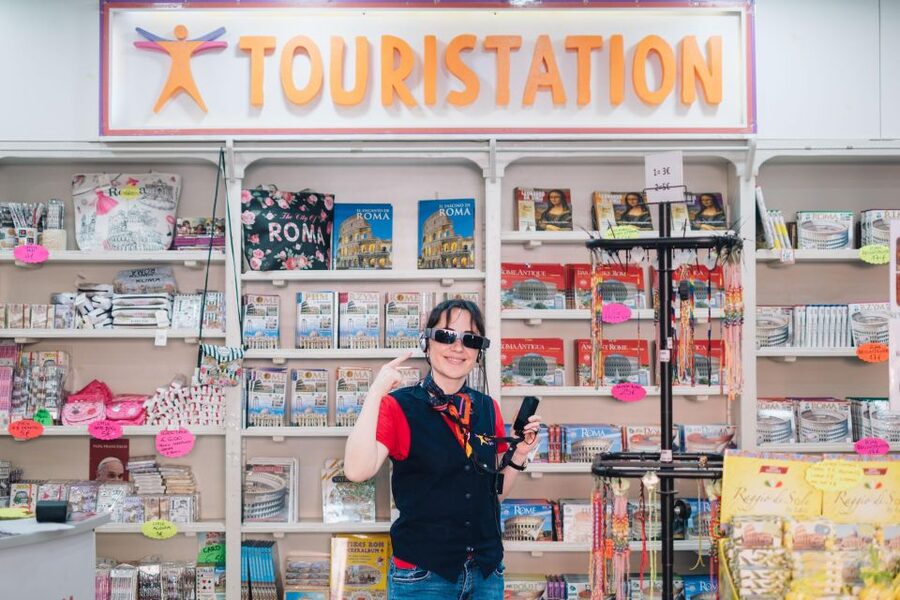
Keep your voucher details ready, but do not assume the phone voucher is the final ticket. The meeting point is in front of the main fountain at Piazza Navona 25, and you may be sent to a nearby ticket office before entering.
Allow extra time for that exchange. The streets around Piazza Navona can be crowded and confusing, so five to ten spare minutes will reduce stress.
Use the audio guide from the beginning. The ruins are much easier to follow when you understand the stadium’s purpose and original plan. If the numbered stations seem out of order, check the number on the display before listening.
Wear shoes suitable for walking on an archaeological floor. The activity is short, but you will be on your feet and moving through an underground site.
If you want the clearest experience, visit when you are not rushing to a restaurant booking or another timed attraction. The audio guide deserves attention, and the connection between the underground ruins and the piazza above is easy to miss if you hurry.
Should you book the Stadium of Domitian?
Book it if you want to see the ancient structure beneath Piazza Navona and you enjoy audio-guided museums with photographs and reconstructions. At $18, it offers a focused look at Roman public sport and the old building that shaped one of Rome’s best-known squares.
Skip it if this is your first Rome visit, your budget is tight, and you still have the Colosseum, Roman Forum, Pantheon, or Vatican Museums to cover. The ruins are fascinating but small, and the visit will not fill a morning.
My practical verdict: a good one-hour add-on, especially for repeat visits, history fans, and curious families. Book the drink option only if you want a planned aperitif or wine tasting after the archaeology.
FAQ
Where is the Stadium of Domitian entrance?
The voucher is redeemed at the tourist point in front of the main fountain at Piazza Navona 25 in central Rome.
How far underground is the archaeological site?
The ruins are located about 5 meters below the current street level of Piazza Navona.
How long does the visit take?
Most people need about 45 minutes to an hour to walk through the site and listen to the audio material.
Is a live guide included?
No. The ticket includes an audio guide, but not a guided tour with a live guide.
What languages are available for the audio guide?
The audio guide is available in Spanish, English, French, German, Italian, Russian, and Portuguese.
Is the site wheelchair accessible?
The activity information states that the site is wheelchair accessible.
What does the aperitif option include?
The aperitif option includes one cocktail and snacks. A separate wine tasting option includes two wines paired with a traditional appetizer board.
More Audio Tours in Rome
- Rome: Colosseum, Forum, & Palatine Hill with Audio Guide
★ 4.3 · 4,591 reviews - Pantheon Reserved Entry Ticket with Audio Guide
★ 4.0 · 4,486 reviews - Rome: Castel Sant’Angelo Skip-the-Line Ticket & Audio Guide
★ 4.4 · 3,500 reviews - Rome: Pantheon Priority Entry Ticket & Audio Guide App
★ 4.1 · 3,234 reviews
More Self-Guided Tours in Rome
- Rome: Colosseum & Forum with Audio Guide App -Optional Arena
★ 4.2 · 24,770 reviews - Rome: Colosseum, Forum, Palatine Hill Entry & Audioguide App
★ 4.4 · 10,957 reviews - Rome: St. Peter’s Basilica & Dome Entry Ticket & Audio Tour
★ 4.2 · 7,537 reviews - Vatican & Sistine Chapel Ticket with Optional Audio Guide
★ 4.1 · 5,405 reviews
Fresh on the Rome list
- Exclusive Golf Tour Private VIP with Local & Gelato o Wine★ 5.0 · 500 reviews
- Colosseum, Palatine Hill and Roman Forum with Guided Tour★ 5.0 · 500 reviews
- Rome Trastevere Pasta Making Class with Eating Europe★ 5.0 · 505 reviews
- Rome by Night Walking Tour★ 4.5 · 506 reviews
- Rome: Colosseum Express Tour with Forum & Palatine Access★ 4.5 · 511 reviews
- Rome Food Experience Max 6 People Group Tour | w/Private Option★ 5.0 · 516 reviews
- Rome: Escorted Papal Audience Experience with Entry Ticket★ 4.4 · 518 reviews
- Rome: Papal Audience Experience with Pope Leo XIV★ 4.8 · 518 reviews
Audio Tours, compared.
Colosseum & Forum with Audio Guide App -Optional Arena
Read our review →
Pantheon Fast-Track Ticket and Official Audio Guide
Read our review →

La Fenice Opera House Entry Ticket with Audio Guide
Read our review →
St. Peter’s Basilica & Dome Entry Ticket & Audio Tour
Read our review →
Cathedral & Brunelleschi’s Dome Ticket & Audio App
Read our review →
Michelangelo’s David Priority Ticket & Audio App
Read our review →
Uffizi Priority Ticket & Masterpieces Audio App
Read our review →Browse the lists this tour appears in