
Reviewed · SKIP-THE-LINE TICKETS
Rome: Castel Sant’Angelo Skip-the-Line Ticket & Audio Guide
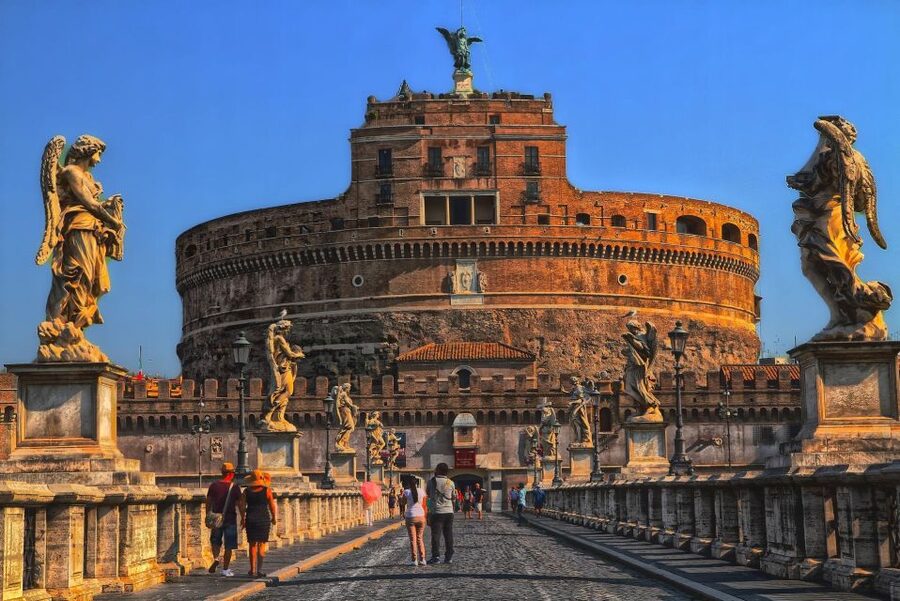
Castel Sant’Angelo is one of Rome’s great surprises: part imperial tomb, part fortress, part papal refuge, and one of the best places to look across the Tiber. The terrace view alone makes the climb worthwhile, with the Sant’Angelo Bridge and its statues laid out below and the city stretching toward the Vatican.
I like the reserved entry because the ticket queue can be long, even early in the day. I also like the freedom of the audio app, which lets you stop, read, take pictures, and move on without keeping pace with a group.
The main drawback is that this is not a fully guided tour, unless you arrange another guide separately. You must use your phone for the optional audio guide, climb stairs to reach the upper levels, and arrive at the exact scheduled time.
Key points to know before you go
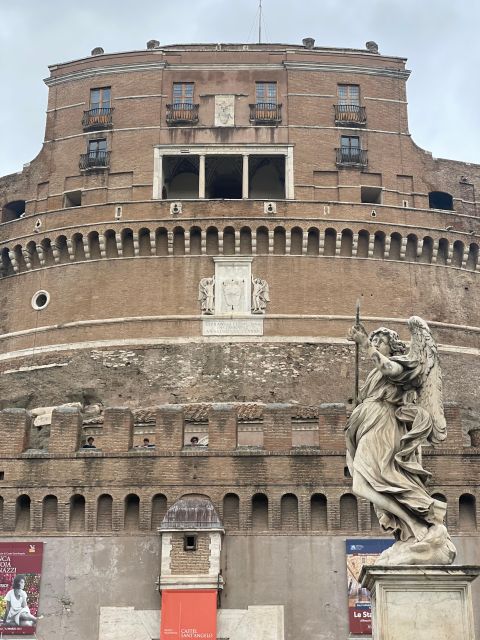
- Hadrian’s tomb is inside the fortress: You are visiting the burial monument of Emperor Hadrian, later reshaped into a military stronghold and papal retreat.
- The upper terrace is the payoff: You get wide views of Rome, the Tiber, the Vatican area, and Ponte Sant’Angelo.
- The audio guide is self-paced: It works through a smartphone app in six listed languages, but headphones are not supplied.
- Skip-the-line matters most at busy times: You can bypass the ticket-buying queue, though punctuality and the scheduled entry time still matter.
- The castle takes longer than it first appears: Some people spend several hours here, especially when they stop for the displays, views, and café.
- The route is stair-heavy: The visit is not suitable for wheelchair users or people with mobility impairments.
Why Castel Sant’Angelo feels different from Rome’s other monuments

Many Roman sites are ruins or formal palaces. Castel Sant’Angelo feels more like a building that kept changing jobs. It began as the Mausoleum of Hadrian, also called Hadrian’s Mole, then became a fortress and part of the papal defensive system.
That change of purpose is what makes the visit so interesting. You are not simply looking at an old monument. You are walking through layers of Roman imperial power, medieval defense, papal history, art, and legend.
The castle sits on the right bank of the Tiber, a short distance from Vatican City. Its round, heavy form is easy to spot, but the exterior gives little away. Inside, the route opens into rooms, passages, artworks, and elevated viewpoints that are far more varied than the fortress-like façade suggests.
I recommend allowing at least two hours if you want to read the information, use the audio guide, and enjoy the views without rushing. Some visitors spend around four hours here, especially when they stop at the café and take their time with the upper levels.
More Skip-the-Line Tickets in Rome
- Vatican Museums & Sistine Chapel Skip-the-Line Entry Ticket
★ 4.4 · 13,838 reviews - Skip-the-Line Group Tour of the Vatican, Sistine Chapel & St. Peter’s Basilica
★ 4.5 · 12,779 reviews - Vatican, Sistine Chapel & St. Peter’s Skip-the-Line Tour
★ 4.5 · 7,770 reviews
Entering with a reserved ticket
Your ticket is sent by email or WhatsApp, usually in the late afternoon of the day before your visit or about 24 hours before entry. There is no guide or central meeting point to find. You simply arrive at Castel Sant’Angelo and use the ticket at your scheduled entry time.
This is convenient, but it makes time management important. A reserved ticket does not mean you can wander in whenever you like. Entry is allowed only at the appointed time, and a late arrival can mean refusal without a refund.
The skip-the-line benefit is most useful when the ticket queue is long. One early visit had a line already forming at 9 AM, while a February visit had almost no queue. That tells you how to judge the value: the $20 price is most sensible during busy periods, holidays, or hot days when you would rather not stand outside.
The official ticket price is listed as €16, so you are paying a premium for the reserved booking service and convenience. If the entrance is quiet, the saving in time may be small. If the line snakes around the building, the extra few dollars can feel well spent.
Inside the Mausoleum of Hadrian
The first major idea to keep in mind is that this was built as a tomb. Hadrian ruled as Roman emperor from AD 117 to 138, and the monument was designed to project imperial authority even after his death.
The original purpose is easy to lose sight of once you see the fortress walls and papal rooms. The audio guide helps connect the building’s different eras, while the written information around the site also makes it possible to explore without extra commentary.
You will move through a mixture of interior spaces and open passages. The castle’s appeal comes from the way the route keeps changing. One moment you are looking at masonry and defensive features, and the next you are entering a more decorated room or stepping out for a view of Rome.
I like the audio option for this reason. It gives you a thread to follow without forcing you to move with a group. You can pause the recording when you reach a good photo spot, return to a section, or skip material that does not interest you.
The app is available in English, Italian, French, Spanish, German, and Chinese. You need to download it before the visit, and the file requires about 100 to 150 MB of free space. It works with Android version 5.0 and newer and with supported iPhones, but older devices such as the iPhone 5, iPhone 5C, older iPods, and older iPads are not compatible.
Bring your own headphones. They are not included, and listening from your phone speaker would be awkward in the interior rooms. A fully charged smartphone is also essential.
The papal corridors and defensive past
Castel Sant’Angelo’s later role was not just symbolic. The castle was connected to the Vatican by fortified papal corridors, giving popes a protected route during periods of danger. Seeing these areas helps explain why this massive tomb remained important long after the Roman imperial era.
The papal connection adds a different mood to the visit. Instead of thinking only about emperors and burial customs, you begin to see the building as a place where political power, religion, and military security met.
Do not expect every section to feel equally dramatic. Some areas are more about structure and history than decoration, and the route can include plain passages and steep stairs. That is part of the point: this was a working fortress, not a polished palace built for visitors.
The information panels are useful if you skip the audio guide. One visitor explored by following the signs and found enough material to understand the route without an app. If you prefer to look closely and read at your own pace, you can have a good visit without paying for the audio option.
Same city, an entirely different afternoon:
- Vatican Museums & Sistine Chapel Tour with Optional Basilica
★ 4.3 · 67,413 reviews - Colosseum, Roman Forum & Palatine Guided Tour
★ 4.7 · 63,148 reviews - Vatican Museums, Sistine Chapel & St Peter’s Basilica Guided Tour
★ 4.5 · 39,149 reviews - Rome: Colosseum, Palatine Hill and Roman Forum Guided Tour
★ 4.8 · 32,814 reviews
The Archangel Michael legend

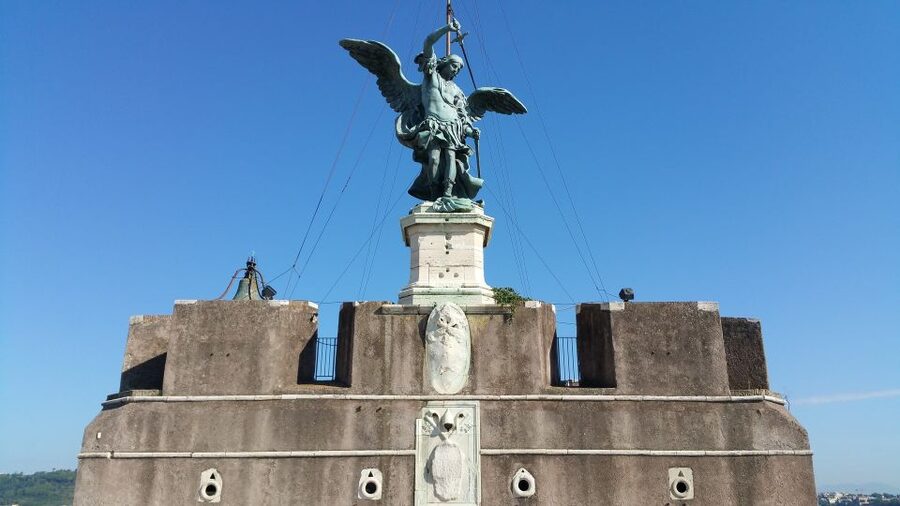
The castle’s present name comes from a story linked to the plague of 590. According to the legend, the Archangel Michael appeared above the mausoleum and sheathed his sword, signaling that the plague had ended.
Whether you approach the story as religious tradition or medieval legend, it explains why a building that began as Hadrian’s tomb became known as Castel Sant’Angelo. The image also helps you read the monument’s name and its connection to the statue of the archangel above the fortress.
This is a good example of how Rome mixes fact, belief, and memory. The imperial tomb is a real structure. The military and papal uses are part of its documented past. The story of Michael gives the site an extra layer that shaped how later generations understood the building.
The audio guide is useful here because context makes the castle easier to follow. Without it, you can still see the rooms and views, but the changes in name and purpose may feel less connected.
Reaching the terrace above the Tiber
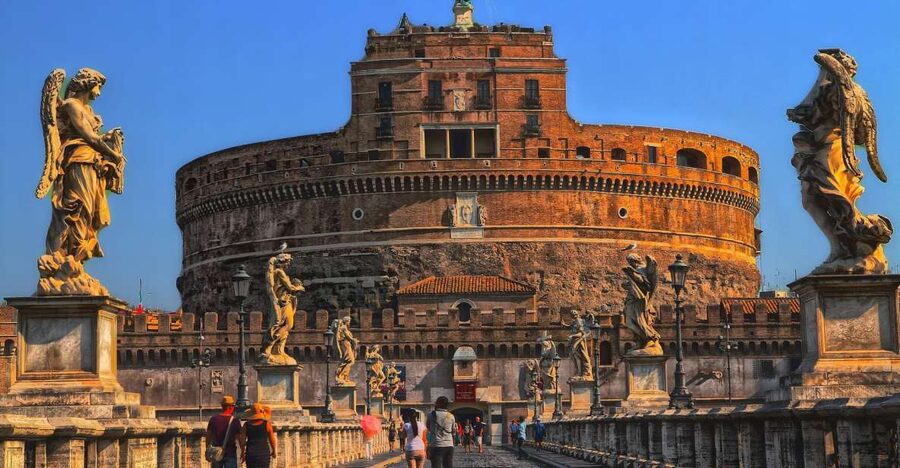
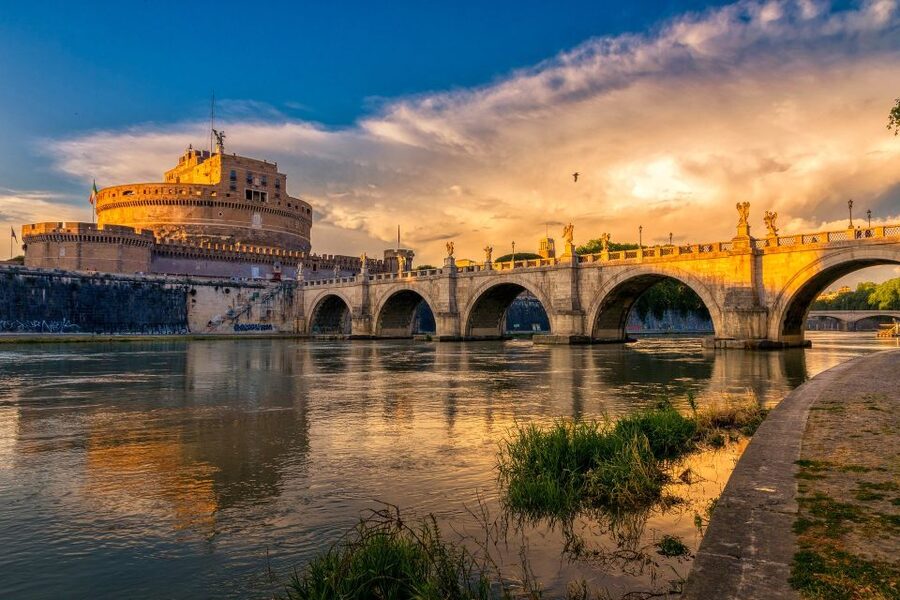
The terrace is the clear reward at the top. You look across the Tiber toward Rome’s rooftops and the Vatican area, while Ponte Sant’Angelo leads the eye toward the castle entrance.
This is also one of the best places to photograph the bridge. The bridge is known as the Bridge of Angels, and its position directly in front of the fortress gives you a classic Roman view from above.
You will need to climb stairs to reach the panoramic terrace. The activity is specifically not suitable for wheelchair users or people with mobility impairments, so consider that before booking. Even if stairs are manageable for you, wear comfortable shoes because the castle route involves several levels.
The view is not the only reason to go up. From the terrace, the building’s position makes sense. You can see how the fortress controlled a key point beside the river and why its connection to the Vatican mattered.
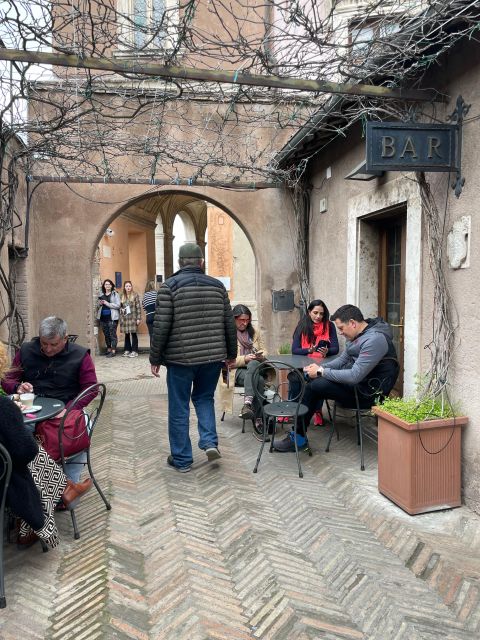
A café partway up offers another place to pause. It has views toward the Vatican City, and it can make the visit feel less hurried. The rooftop restaurant or café area can be busy, so do not plan your entire schedule around getting a table.
Choosing the audio guide or exploring alone
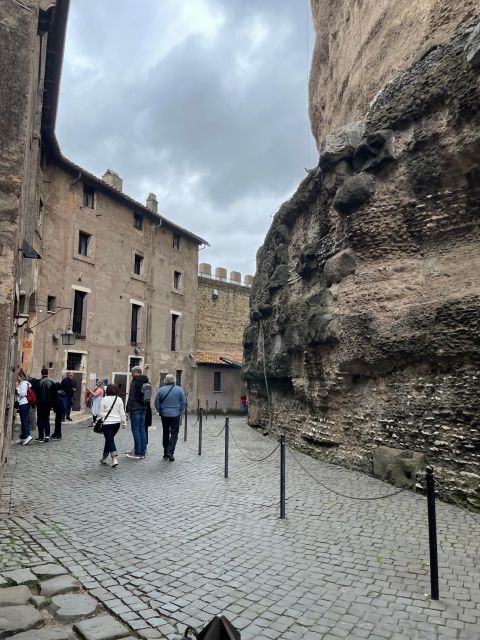
The audio guide suits you if you want background while keeping control of the visit. It is especially useful for understanding why one building contains an imperial tomb, military defenses, papal corridors, and religious symbolism.
It also prevents the common problem of rushing through a historic site with no idea what you are looking at. Several sections can seem plain until you know what they were used for.
On the other hand, you may prefer to explore without a phone in your hand. The castle has signs and information panels, and the site itself offers plenty to notice. If you want to focus on architecture, views, and photography, the basic ticket may be enough.
The app has text as well as audio, which is useful if you cannot listen continuously. Still, download the application before you leave for the castle. Do not assume you can sort it out at the entrance, especially if your phone signal or battery is weak.
How much time should you plan?
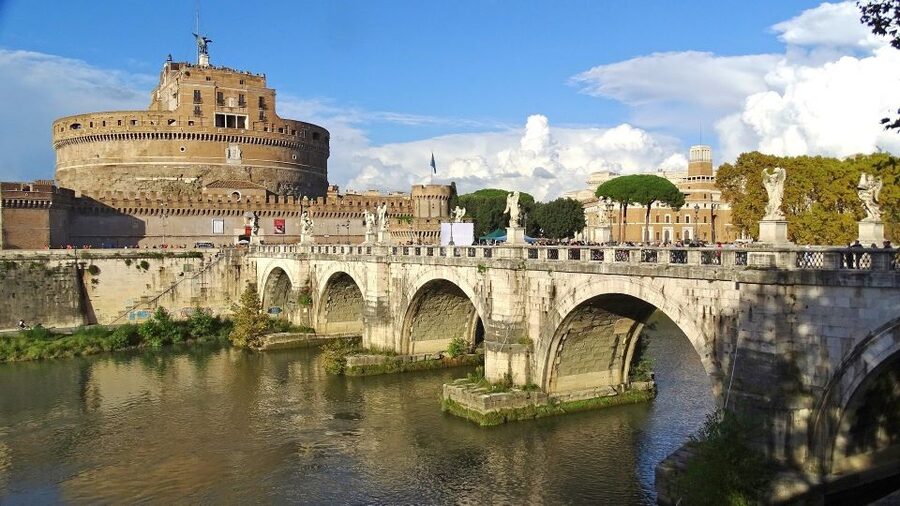
The ticket is valid for one day, but your entry remains tied to the scheduled time. Once inside, you can take your time during the visit rather than following a fixed tour schedule.
I would plan two to three hours for a comfortable visit. That gives you time to inspect the interior, understand the site’s different phases, reach the terrace, and stop for photos.
You might spend less time if you are mainly interested in the view. You might spend four hours if you listen to the full audio guide, read the signs, visit every accessible area, and stop at the café.
The castle works well as part of a Vatican-area day because it is only a short distance from Vatican City. Just remember that this is not a quick photo stop. The building has enough rooms and levels to reward a slower pace.
The $20 price and who gets the best value
At $20 per person, this is a reasonable purchase when the skip-the-line service saves meaningful time. The official ticket price is €16, so the difference is not small, but you are paying for advance handling and a reserved entry rather than simply admission.
I would book it during high season, on a tight sightseeing schedule, or when waiting outside in the heat would spoil your day. It is less essential in a quiet month such as February, when there may be little or no queue.
The audio guide is optional, so you can keep the cost down if you are happy with written signs. If you enjoy learning the story behind what you see, the added audio option gives the visit more shape and lets you explore independently.
This is a particularly good fit for:
- Independent sightseers who dislike fixed group schedules
- History fans interested in Rome’s imperial and papal eras
- Photographers who want strong views of the bridge, river, and city
- Visitors near Vatican City looking for a substantial nearby attraction
- People with flexible attention spans who want to skip some explanations and linger over others
It is a weaker choice if you need a wheelchair-accessible route, dislike stairs, have an old smartphone, or want a live guide telling stories throughout the visit.
Practical details that can save your visit
You will receive the ticket digitally, so keep access to your email or WhatsApp. Check your messages before leaving because restoration work connected with the Jubilee can change routes or access to parts of the monument.
Bring a passport or ID card, comfortable shoes, your charged smartphone, and headphones. Pets, weapons, sharp objects, luggage, and large bags are not allowed.
Last entry is at 6:30 PM. Since the entry time is strict, avoid booking a slot that depends on another attraction running perfectly on schedule.
The castle can still be enjoyable in poor weather. Rain may make the terrace less comfortable, but the interior rooms and views remain worthwhile. If the weather is clear, allow extra time at the top because the panorama and bridge views are among the strongest parts of the visit.
Should you book Castel Sant’Angelo?
I would book this experience if you want to see more than Rome’s famous churches and ruins. Castel Sant’Angelo offers a different kind of visit, with an imperial tomb at its core, fortress walls around it, papal history in the middle, and a sweeping city view at the top.
Choose the skip-the-line ticket when queues or a tight schedule matter. Add the audio guide if you want historical context but still prefer to move at your own pace.
Skip it if stairs are a serious problem, your phone cannot run the app, or you only have time for a quick exterior photo. For most visitors who can handle the climb, the combination of unusual history, flexible pacing, and the terrace overlooking Ponte Sant’Angelo makes the $20 price fair, especially on a busy day.
FAQ
How much does the Castel Sant’Angelo ticket cost?
The listed price is $20 per person. The official ticket price is listed as €16, with the difference covering the reserved booking service and convenience.
Is the ticket valid all day?
The activity is valid for one day, but entry is allowed only at the scheduled time shown when you book. Late arrivals may be refused without a refund.
Does the ticket include skip-the-line entry?
Yes. It includes a reserved skip-the-line entry ticket, allowing you to bypass the ticket-buying queue.
Is an audio guide included?
The smartphone audio guide is included only if you select that option. You can also visit without the audio guide and use the information provided around the castle.
Which languages are available for the audio guide?
The audio guide is available in English, Italian, French, Spanish, German, and Chinese.
Do I need to bring headphones?
Yes. Headphones are not included, so bring your own if you choose the audio guide.
How do I receive the ticket?
The ticket is sent by email or WhatsApp before the visit, generally about 24 hours in advance or in the late afternoon of the day before the entry date.
Can wheelchair users visit Castel Sant’Angelo with this activity?
The activity is not suitable for wheelchair users or people with mobility impairments. You must also climb stairs to reach the panoramic terrace.
What is the latest entry time?
The last entry to Castel Sant’Angelo is at 6:30 PM.
More Audio Tours in Rome
- Vatican & Sistine Chapel Ticket with Optional Audio Guide
★ 4.1 · 5,405 reviews - Rome: Colosseum, Forum, & Palatine Hill with Audio Guide
★ 4.3 · 4,591 reviews - Pantheon Reserved Entry Ticket with Audio Guide
★ 4.0 · 4,486 reviews - Rome: Pantheon Priority Entry Ticket & Audio Guide App
★ 4.1 · 3,234 reviews
More Self-Guided Tours in Rome
- Rome: Colosseum & Forum with Audio Guide App -Optional Arena
★ 4.2 · 24,770 reviews - Rome: Pantheon Fast-Track Ticket and Official Audio Guide
★ 4.3 · 21,008 reviews - Rome: Colosseum, Forum, Palatine Hill Entry & Audioguide App
★ 4.4 · 10,957 reviews - Rome: St. Peter’s Basilica & Dome Entry Ticket & Audio Tour
★ 4.2 · 7,537 reviews
Fresh on the Rome list
- Exclusive Golf Tour Private VIP with Local & Gelato o Wine★ 5.0 · 500 reviews
- Colosseum, Palatine Hill and Roman Forum with Guided Tour★ 5.0 · 500 reviews
- Rome Trastevere Pasta Making Class with Eating Europe★ 5.0 · 505 reviews
- Rome by Night Walking Tour★ 4.5 · 506 reviews
- Rome: Colosseum Express Tour with Forum & Palatine Access★ 4.5 · 511 reviews
- Rome Food Experience Max 6 People Group Tour | w/Private Option★ 5.0 · 516 reviews
- Rome: Navona Square Underground Ticket with Audio Guide★ 4.0 · 518 reviews
- Rome: Escorted Papal Audience Experience with Entry Ticket★ 4.4 · 518 reviews
Skip-the-Line Tickets, compared.

Skip-The-Line Uffizi Gallery Timed Entry Ticket
Read our review →
Vatican Museums & Sistine Chapel Skip-the-Line Entry Ticket
Read our review →
Skip-the-Line Group Tour of the Vatican, Sistine Chapel & St. Peter’s Basilica
Read our review →
Michelangelo’s David Skip-the-Line Entry Ticket
Read our review →
Vatican Museums & Sistine Chapel Skip-The-Line Ticket
Read our review →
Vatican, Sistine Chapel & St. Peter’s Skip-the-Line Tour
Read our review →
Skip-the-Line Vatican, Sistine Chapel & St. Peter’s | Small Group
Read our review →
Vatican: Vatican Museums Sistine Chapel Skip-the-Line Ticket
Read our review →Browse the lists this tour appears in