
Reviewed · AUDIO TOURS
Rome: Mamertime Prison Entrance Ticket with Audio guide
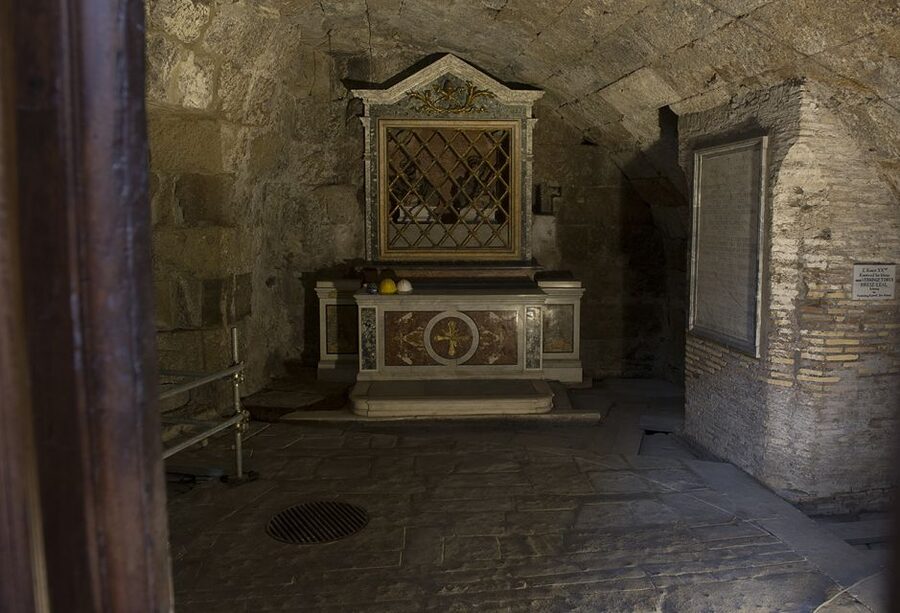
The most striking thing here is the setting: you descend into Carcer Tullianum, a small underground prison where Rome held defeated kings and political enemies before execution. Christian tradition also links the cell to Saints Peter and Paul, giving the place a powerful religious meaning.
I like two things in particular. The ticket costs about $11, so it is an easy addition to a day around the Roman Forum. I also like that you can move at your own pace, using the audio guide to connect the ancient prison, the later churches above it, and its Christian traditions.
The catch is the audio setup. You must download an app on your own phone, and the instructions and Wi-Fi connection can be awkward. The prison itself is small, so this is a short, focused visit rather than a full afternoon attraction.
Key points to know before you go
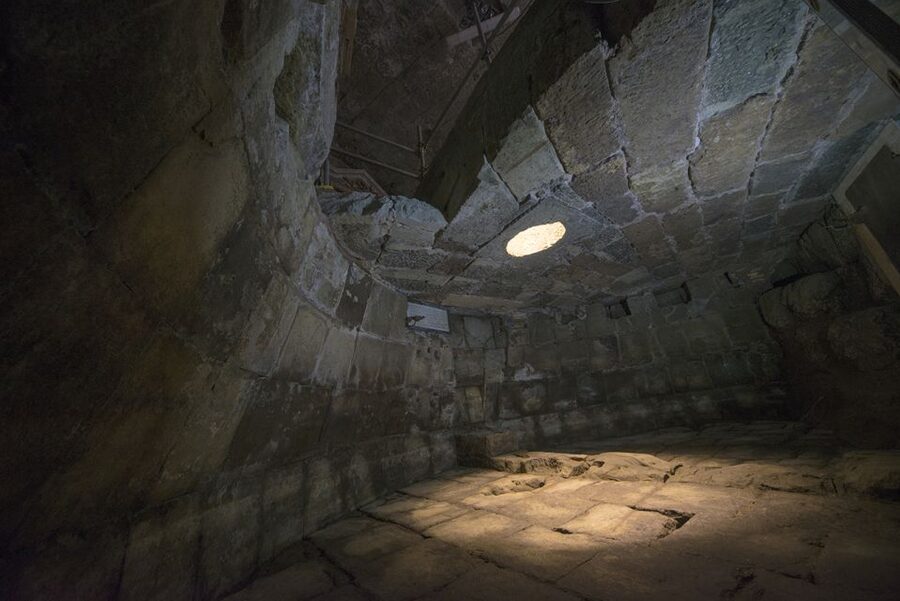
- A prison beneath later churches: The original Carcer Tullianum is now the lowest level of a layered religious site.
- Ancient prisoners: The cell is linked with Vercingetorix, Jugurtha, Catiline’s followers, and other enemies of Rome.
- Peter and Paul connection: Christian tradition holds that both apostles spent their final days here.
- Allow about an hour: The exhibit and prison chamber are compact, though you can take your time.
- Use your own phone: Download the Vatican&Rome App, or confirm the current audio app at the entrance.
- Bring headphones and travel light: Large bags and strollers are not allowed, and the site is unsuitable for people with mobility impairments.
Why Mamertine Prison is different from Rome’s big sights

Rome gives you grand ruins by the dozen. The Colosseum and Roman Forum spread across broad archaeological grounds, while Mamertine Prison brings you into a confined, personal place. You are not looking at an arena from a distance. You are standing in the chamber where Rome’s condemned enemies were held.
The official ancient name is Carcer Tullianum. The name Mamertine Prison came later. The site is often described as Rome’s oldest prison, and its role was grim: people brought here as enemies of the state did not leave alive.
That simple fact gives the visit its force. The room is not large, and the displays cannot recreate every detail of prison life. Still, the tight space helps you understand the fear attached to Roman punishment. This was not a long-term correctional facility in the modern sense. It was a holding place before execution.
I find the contrast especially effective. Rome used this dark place for political control, and later Christians treated it as sacred ground. The ancient prison, medieval and later religious layers, and Christian memorials all occupy the same small footprint.
A few other Rome mornings to weigh against this
- Rome: Pantheon Fast-Track Ticket and Official Audio Guide
★ 4.3 · 21,008 reviews - Rome:Hop-On Hop-Off Panoramic Open Bus Ticket 3 Circuits x 1
★ 4.0 · 15,405 reviews - Vatican Museums & Sistine Chapel Skip-the-Line Entry Ticket
★ 4.4 · 13,838 reviews
Entering Carcer Tullianum near the Roman Forum
Finding the entrance can take some patience. Mamertine Prison is near the Roman Forum, but the entrance is easy to miss if you expect a large museum doorway or a prominent ticket pavilion. Give yourself at least 15 minutes before your scheduled start time, and look carefully for the entrance and ticket office.
Your reservation should be on file at the desk. Several people found the ticket exchange simple once they reached the office, while others had trouble locating the correct place or understanding where to begin. I suggest saving your voucher before you arrive and asking the staff right away where to collect the audio instructions.
There is no transportation included, and no personal guide accompanies the ticket. A host or greeter may be available in Italian, English, Spanish, French, German, or Portuguese, but the visit itself is designed as a self-guided experience.
This matters if you are expecting a walking tour with a historian. You receive entry and recorded commentary, not a live explanation tailored to your questions. The upside is freedom. You can pause, replay sections, or move through the prison at your own pace.
The upper exhibit and the layers above the prison
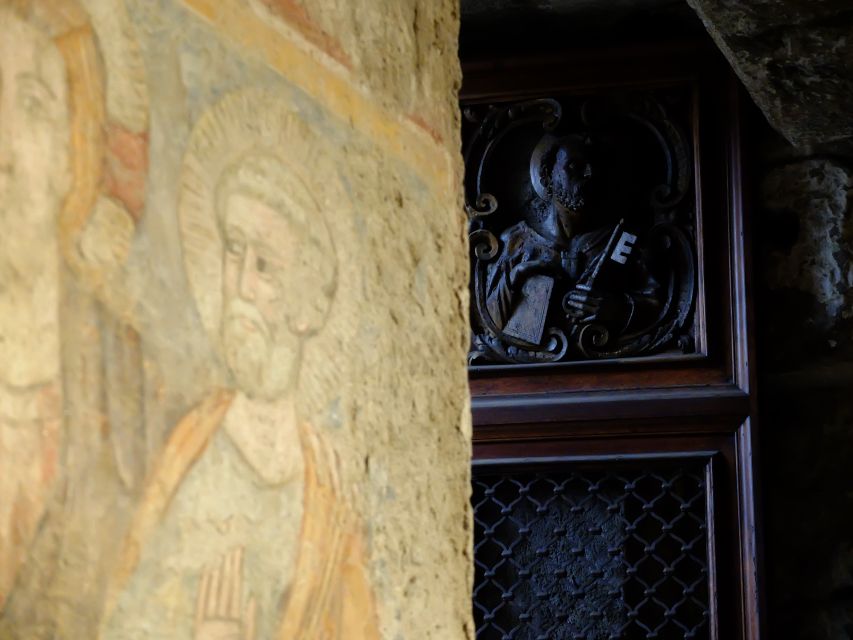
The visit leads you through a small museum area before or around the prison chamber. This section helps explain how the site changed over time and why an ancient jail now sits beneath places of worship.
The prison is the lowest level of a series of churches built over the original structure. That layering is one of the most interesting parts of the visit. You are seeing more than a preserved Roman room. You are seeing how later generations reused, protected, and reinterpreted a place associated with death.
The audio guide is useful here because the visual displays alone may not explain every connection. It points out architectural and artistic details that can be easy to miss, including the relationship between the prison below and the religious setting above.
The experience has changed over the years. One past visitor remembered an older arrangement with access to a naturally formed well and an original altar. Those features are now sectioned off or moved, and a silver staircase has altered the presentation. If you visited long ago, do not expect the same layout.
The current setup is more controlled. That may limit the sense of an untouched ruin, but it also helps protect the site and directs you through the areas open to the public.
The lower chamber and the ancient prisoners

The most important part of the visit is the lower prison. You descend into a dark, compact room that gives the attraction its emotional weight.
The audio guide introduces figures connected with the prison, including Jugurtha, king of Numidia, and Vercingetorix, the Gallic leader defeated by Julius Caesar. These are not minor historical names. They were powerful opponents brought to Rome after defeat, then held here during their final days.
The site is also associated with the followers of Catiline, whose political conspiracy threatened the Roman state. The prison therefore connects military conquest, political rebellion, and Roman punishment in one place.
You should keep your expectations realistic. Only one room of the lower prison is open to visitors, according to the available site information. The chamber is small, and the entire visit often takes an hour or less. If you want a large collection of objects or a long sequence of rooms, this will feel brief.
I think the small size works best when you treat it as a concentrated historical stop. You do not need half a day here. Instead, you spend a short period considering the people who passed through this room and the machinery of Roman power around them.
The audio commentary does not always answer every practical question. You may still wonder about food, lighting, visitors, sickness, or the number of people held in the cell. The experience gives you the basic setting and major stories, but it does not provide a full reconstruction of daily prison conditions.
Same city, an entirely different afternoon:
- Vatican Museums & Sistine Chapel Tour with Optional Basilica
★ 4.3 · 67,413 reviews - Colosseum, Roman Forum & Palatine Guided Tour
★ 4.7 · 63,148 reviews - Vatican Museums, Sistine Chapel & St Peter’s Basilica Guided Tour
★ 4.5 · 39,149 reviews - Rome: Colosseum, Palatine Hill and Roman Forum Guided Tour
★ 4.8 · 32,814 reviews
The Peter and Paul tradition
For many people, the Christian connection is the reason to visit. Tradition holds that the apostles Peter and Paul were imprisoned here, along with other Christian martyrs. The site is often treated as the place where they spent their final days before execution.
The careful wording matters. The connection is a long-standing Christian tradition, not a point that can be proven in the same way as the prison’s physical location. The attraction presents the religious story alongside the ancient Roman setting, so you can approach it as a site of faith, history, or both.
The lower cell is especially moving for people familiar with the New Testament. The visit can feel like a quiet pause from Rome’s crowded major sights, particularly if you have read about Paul’s imprisonment or his letters.
At the same time, the Christian narrative may not receive as much detail as you expect. Some of the recorded commentary gives only a brief account of Peter and Paul rather than explaining every tradition connected with them. If their story is your main reason for coming, read a little about the site beforehand so the visit has more context.
The setting itself does much of the work. Standing in the low chamber, with the later religious layers above, makes the connection feel immediate even when the spoken explanation is limited.
Making the audio guide work
The audio guide is included in Italian, English, French, German, Spanish, and Portuguese. It is meant to add the historical and artistic details that are not obvious from the room itself.
You need to download the Vatican&Rome App from the App Store or Google Play. You then use the supplied access information to open the commentary. The entrance office provides Wi-Fi, which is helpful, but the connection has not always been fast or reliable.
The app process is the weakest part of the visit. Instructions can seem unclear, and some booking materials or on-site directions have referred to the Pop Guide system. Ask the desk which app and access code are current before you start downloading anything.
Bring your own headphones. One visitor had a memorable experience but could not use the audio because no smartphone was available. Another found that the audio worked for only four people in a family group. If you are sharing a phone, plan ahead.
Phone reception can also be poor in the lower cell. In some cases, the audio stopped after the descent because Wi-Fi or mobile service did not reach the chamber. Download everything before going downstairs, and do not assume you can reconnect once inside.
If the audio fails, you can still view the exhibits and read the captions. That fallback is better than losing the entire visit, but the recorded material adds useful structure, so it is worth making the effort.
How long the visit takes and what it costs
The ticket is priced at about $11 per person and is valid for one day. For Rome, that is a modest cost, especially if you are already visiting the Roman Forum area. You can add this stop without committing to a long guided excursion or a major transport plan.
The value depends on your interests. If you enjoy ancient history, early Christianity, archaeology, or places connected with Roman punishment, the price is easy to justify. If you prefer large monuments, wide ruins, and many rooms to explore, the short visit may feel less substantial.
Plan on roughly 45 minutes to an hour. You can stay as long as you like within the opening period attached to your ticket, but the compact layout naturally limits the time most people need.
This makes Mamertine Prison a good filler between larger sights. It can fit before or after a Roman Forum visit, though you should not treat it as a replacement for the Forum. The two sites offer very different experiences: the Forum shows public life and government, while the prison offers one enclosed glimpse of Roman punishment.
Online booking can also be useful if you want the option to cancel up to 24 hours ahead for a full refund or reserve now and pay later. Some people may find that buying in person is just as easy, but the online option gives you more flexibility if your schedule is uncertain.
Who will appreciate this small, serious site
I would recommend Mamertine Prison most strongly to people with a clear interest in Christian history or ancient Rome. The Peter and Paul tradition gives the chamber its emotional center, while the stories of Vercingetorix and Jugurtha make it worthwhile for readers of Roman history.
It also suits anyone who wants a quieter, less expansive stop near the Roman Forum. You will not spend hours here, and the atmosphere is more restrained than at Rome’s headline attractions.
Families should consider the confined setting and restrictions on strollers. The site is not suitable for people with mobility impairments, so check your personal needs before booking.
I would be more cautious if you dislike app-based tours. The ticket is inexpensive, but technical trouble can take up much of your limited visit. Bring a charged phone, headphones, and enough time to sort out the app at the desk.
The lack of a live guide is another important point. You will not have someone explaining the site in real time or answering questions about the evidence behind the traditions. For some people, self-guiding is ideal. For others, it will feel thin.
Practical tips for a smoother visit
- Arrive 15 minutes early: The entrance is not always obvious, even though the prison is close to the Roman Forum.
- Keep your voucher ready: The desk can locate the reservation, and staff may print or provide the code needed for the audio.
- Download before descending: The lower cell may have weak Wi-Fi or phone reception.
- Bring headphones: The audio runs through your smartphone rather than a standard device handed to every visitor.
- Ask which app to use: The official instructions name Vatican&Rome App, while some past directions have mentioned Pop Guide.
- Leave large bags elsewhere: Luggage, large bags, and baby strollers are not allowed.
- Give the prison time to work on you: Read the captions, look at the architecture, and do not rush simply because the room is small.
Should you book Mamertine Prison?
Book it if the idea of standing in the traditional prison of Peter and Paul matters to you, or if ancient Roman punishment interests you. At around $11, it is a reasonably priced, one-hour addition to a day near the Roman Forum.
Go with the right expectations. This is a small museum and one principal prison chamber, not a sprawling ruin. The audio guide can be helpful but may require patience, and the Christian story may feel less developed than you hoped.
For a compact, serious visit with unusual historical and religious meaning, I think it earns its place on a Rome itinerary. Just prepare the app in advance, bring headphones, and allow extra time to find the entrance.
FAQ
How long does the Mamertine Prison visit take?
The visit generally takes about an hour or less. The prison and museum are small, but you can move at your own pace.
Is a live tour guide included?
No. The ticket includes entry to Carcer Tullianum and a multilingual audio guide, but not a personal tour guide.
Which languages are available for the audio guide?
The audio guide is available in Italian, English, French, German, Spanish, and Portuguese.
Do I need a smartphone for the audio guide?
Yes. You need to download the Vatican&Rome App from the App Store or Google Play to use the audio guide. Bring headphones and make sure your phone is charged.
Can I bring luggage or a baby stroller?
No. Large bags, luggage, and baby strollers are not allowed inside.
Is the site suitable for people with mobility impairments?
No. The experience is listed as unsuitable for people with mobility impairments.
More Audio Tours in Rome
- Rome: Colosseum, Forum, & Palatine Hill with Audio Guide
★ 4.3 · 4,591 reviews - Pantheon Reserved Entry Ticket with Audio Guide
★ 4.0 · 4,486 reviews - Rome: Castel Sant’Angelo Skip-the-Line Ticket & Audio Guide
★ 4.4 · 3,500 reviews - Rome: Pantheon Priority Entry Ticket & Audio Guide App
★ 4.1 · 3,234 reviews
More Self-Guided Tours in Rome
- Rome: Colosseum & Forum with Audio Guide App -Optional Arena
★ 4.2 · 24,770 reviews - Rome: Colosseum, Forum, Palatine Hill Entry & Audioguide App
★ 4.4 · 10,957 reviews - Rome: St. Peter’s Basilica & Dome Entry Ticket & Audio Tour
★ 4.2 · 7,537 reviews - Vatican & Sistine Chapel Ticket with Optional Audio Guide
★ 4.1 · 5,405 reviews
Fresh on the Rome list
- Exclusive Golf Tour Private VIP with Local & Gelato o Wine★ 5.0 · 500 reviews
- Colosseum, Palatine Hill and Roman Forum with Guided Tour★ 5.0 · 500 reviews
- Rome by Night Walking Tour★ 4.5 · 506 reviews
- Rome Trastevere Pasta Making Class with Eating Europe★ 5.0 · 505 reviews
- Rome: Colosseum Express Tour with Forum & Palatine Access★ 4.5 · 511 reviews
- Rome Food Experience Max 6 People Group Tour | w/Private Option★ 5.0 · 516 reviews
- Rome: Navona Square Underground Ticket with Audio Guide★ 4.0 · 518 reviews
- Rome: Escorted Papal Audience Experience with Entry Ticket★ 4.4 · 518 reviews
Audio Tours, compared.

Colosseum & Forum with Audio Guide App -Optional Arena
Read our review →
Pantheon Fast-Track Ticket and Official Audio Guide
Read our review →

La Fenice Opera House Entry Ticket with Audio Guide
Read our review →
St. Peter’s Basilica & Dome Entry Ticket & Audio Tour
Read our review →
Cathedral & Brunelleschi’s Dome Ticket & Audio App
Read our review →
Michelangelo’s David Priority Ticket & Audio App
Read our review →
Uffizi Priority Ticket & Masterpieces Audio App
Read our review →Browse the lists this tour appears in