
Reviewed · COOKING CLASSES
Pizza and Gelato Making Class in the Heart of Rome
The best part of this class is that dinner begins with your hands. You knead the dough, shape your own pizza, choose toppings, and help prepare gelato before sitting down to eat. Marco, Fabio, Simone, and Sara are among the chefs who may lead the lesson, with the assigned instructor varying by date.
I like the way the class turns a restaurant meal into a useful Rome memory, and I like that it works for a mixed-age family. The included Prosecco, antipasti, wine, pizza, and gelato make the $119.77 price easier to justify. The main consideration is that two and a half hours can feel long for very young children, and the class may be less appealing if you want a quiet, private dinner.
Key points to know before booking
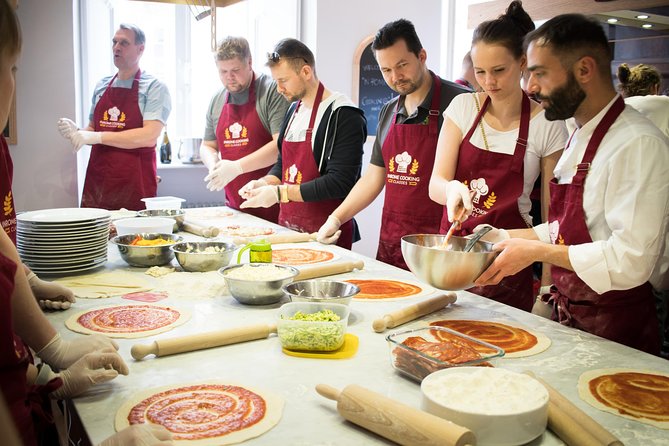
- You make an individual Roman-style pizza: Knead, stretch, top, and bake your own thin, crisp pie.
- Gelato is prepared early: The mixture is made first so it has time to chill before dessert.
- The meal includes drinks: Prosecco and Italian appetizers begin the evening, followed by wine with pizza and gelato.
- The setting is central: The class meets at Corso del Rinascimento 65, close to the Pantheon and public transportation.
- The class is social and small: The maximum group size is 15 people, with chefs guiding each stage in English.
- You get recipes to use later: A QR code provides the class recipes, with some participants receiving a broad collection of additional recipes.
What this Rome cooking class actually feels like
This is not a demonstration where you sit back and watch a chef do everything. You work at the counter, follow the steps, and eat what you prepare. That simple shift makes the evening more memorable than another meal at a pizzeria, especially after several days of museums, churches, and ancient ruins.
The school is in the heart of Rome at Corso del Rinascimento 65, a handy location for an evening activity. It is near the Pantheon, so you can pair the class with a walk through central Rome. The activity begins and ends at the same meeting point, and you need to arrange your own way there and back.
The class is offered in English, and the teaching style is meant to be clear and lively. Past instruction has come from chefs including Marco, Fabio, Simone, Sara, Alessandro, and Julio or Giulio. You should not book around one particular chef unless the provider confirms who will teach your date, but the repeated praise for the instructors points to a consistent focus on patience, humor, and practical guidance.
The maximum of 15 people keeps the group from becoming unwieldy. It is not a private lesson, though. You will work alongside couples, families, and other small groups, which is part of the appeal if you enjoy talking while you cook.
More Cooking Classes in Rome
- 3 in 1 Cooking Class near Navona: Fettuccine, Ravioli & Tiramisu
★ 5.0 · 7,376 reviews - Rome: Pasta Making Class with Wine, Limoncello, and Dessert
★ 4.9 · 3,177 reviews - Rome: 3-in-1 Fettuccine, Ravioli, and Tiramisu Cooking Class
★ 4.9 · 2,704 reviews
Starting with Prosecco and Roman antipasti
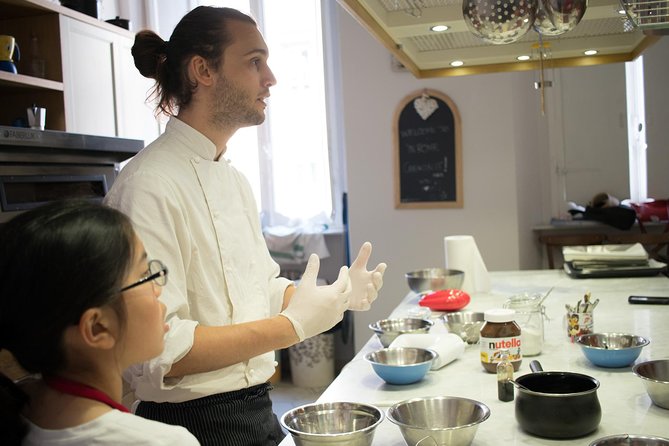
The class opens with Prosecco and light Italian appetizers. This is more than a pleasant extra. It gives you something to eat while everyone arrives, gets settled, and receives the first instructions.
The welcome food has included items such as bruschetta and other Roman-style antipasti. Drinks help turn the lesson into a full evening out rather than a school exercise. If you are booking this as dinner, remember that the early food is a starter, not the main meal.
Alcoholic drinks are included, and wine is served with the food later. That is good value for adults, though parents should note that the listing specifically includes alcoholic beverages rather than promising a full range of nonalcoholic choices. Light refreshments are also included.
The atmosphere is social. You may find yourself sharing a work area with a family from another country or chatting with a couple at the next station. If you prefer a calm meal with no group interaction, a regular restaurant will suit you better.
Making gelato first so it has time to chill
The gelato usually comes before the pizza. That order makes sense: the mixture needs time to freeze or chill while you prepare and cook the dough.
You learn how gelato differs from ordinary ice cream, then help craft the dessert. Available flavors have included vanilla, chocolate, Nutella, and coffee, though the exact choices can vary. That flexibility adds a playful part to the lesson, especially for children and anyone with a serious sweet tooth.
The finished gelato is served at the end with your meal. The creamy texture and strong flavors have been a major part of the class for many people. Still, you should keep your expectations practical. This is a group lesson, so the chef may handle some of the more technical work, such as the final chilling process.
One useful point came up in the class experience: not every part of gelato making is necessarily done by each participant. You may not whip every ingredient yourself or repeat the full commercial process from start to finish. You do learn the basic method, but the pizza portion offers more direct hands-on work.
If you have food allergies or dietary needs, tell the provider when booking. Vegetarian preparation is available if requested in advance, and care has been taken with allergies. Do not wait until you arrive, since the kitchen needs notice.
Kneading and shaping your own pizza dough
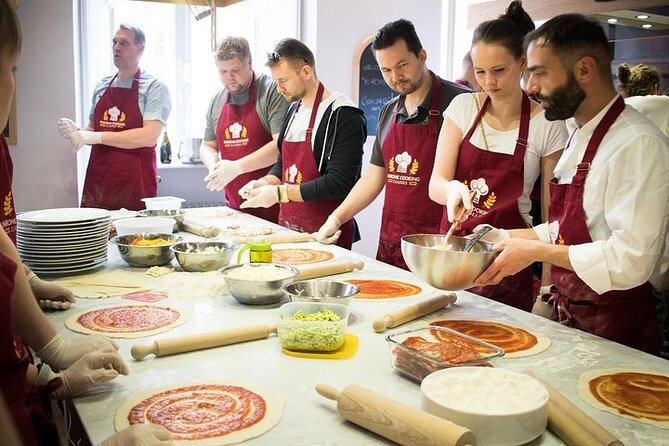
The pizza is the heart of the evening. Under the chef’s direction, you knead the dough, work it into shape, and prepare it for the oven. This is where the class earns its place on a Rome itinerary.
Roman pizza can be lighter and crisper than the thick, chewy style many people know from elsewhere. The pizzas prepared in this class have been described as thin, crisp, and light, with enough sauce, basil, and mozzarella to keep the toppings in balance.
You are not limited to one fixed combination. Toppings have included prosciutto, salami, spicy salami, fresh vegetables, olives, arugula, red onion, mushrooms, and zucchini. The available selection may change, but the basic idea is the same: build the pizza you want rather than receive an identical pie to everyone else.
The chef demonstrates each step before you try it. This helps if you have never worked with pizza dough. It also means you can ask questions about kneading, stretching, sauce, and baking instead of guessing your way through the process.
The lesson is practical without becoming technical for its own sake. You learn enough to repeat the method at home, but you do not need prior cooking skill. Children can take part, and teenagers often enjoy the freedom to choose toppings and see a personal pizza go into the oven.
Same city, an entirely different afternoon:
- Vatican Museums & Sistine Chapel Tour with Optional Basilica
★ 4.3 · 67,413 reviews - Colosseum, Roman Forum & Palatine Guided Tour
★ 4.7 · 63,148 reviews - Vatican Museums, Sistine Chapel & St Peter’s Basilica Guided Tour
★ 4.5 · 39,149 reviews - Rome: Colosseum, Palatine Hill and Roman Forum Guided Tour
★ 4.8 · 32,814 reviews
Watching the pizzas bake in a very hot oven
Once the pizzas are ready, the chef and assistant handle the oven work. The oven is very hot and cooks the pizzas quickly. In one class, Marco and Rubel moved the pizzas into the oven and brought them out after a short cooking time.
That division of labor is sensible. A professional oven is not a place for a group of first-time cooks to crowd around, and the quick bake helps preserve the crisp crust. You still see the final stage and understand how the pizza changes under high heat.
This is also the moment when your pizza becomes a proper meal rather than a craft project. The ingredients are simple, but the result depends on dough handling, sauce quantity, topping balance, and heat. The chef’s comments can help you avoid the common home mistake of piling on too much topping.
When the pizzas are ready, you sit down in the school’s cozy dining area. Wine is served with the meal, and the evening shifts from cooking lesson to shared dinner. The food is meant to be eaten fresh, so this is not a class where you pack up your pizza and leave.
Pizza, wine, and gelato for dinner
The included meal is the main reason the price can work for many people. You receive a pizza you made yourself, homemade gelato, welcome refreshments, and alcoholic drinks. At $119.77 per person, this is not a bargain cooking demonstration, but it combines instruction, dinner, drinks, and a central Rome location in one booking.
I would compare it with the cost of a good central dinner plus a separate activity. If you already plan to spend about two and a half hours eating and drinking in Rome, the class gives that time more purpose. You also leave with recipes and new skills, which adds value beyond the meal itself.
The value is weaker if you do not drink alcohol, have a very limited diet, or mainly want to eat traditional Roman food without doing kitchen work. The class includes wine and Prosecco, but the supplied details do not promise a discount for skipping alcohol.
The food itself receives strong praise from the people who took part. Pizza has been called light, crisp, and delicious, while the gelato has been described as creamy and full of flavor. Those descriptions are encouraging, but the final result still depends partly on how carefully you handle the dough and toppings.
Some of the best flavor combinations are simple. Tomato, mozzarella, basil, and a restrained amount of topping let the crust do its job. If you choose several heavy ingredients, your pizza may become less crisp. Listen when the chef explains portion sizes.
Why families often find this worth the evening
A Rome sightseeing plan can become tiring, especially for children. This class offers a break from looking at monuments and gives everyone a task. A 12-year-old described it as the highlight of a trip, and family groups ranging from children to grandparents have taken part together.
The class works well because each person can participate at a different level. A young child can help add toppings, a teenager can shape dough, and an adult can focus on the chef’s technique. No one has to be an expert to feel involved.
It also counts as dinner, which helps with family planning. You do not need to leave the class and search for a restaurant afterward. The meal is served as part of the experience, with gelato to finish.
There are two cautions. First, the session lasts about 2 hours and 30 minutes, so very young children may lose interest before dessert. Second, this is a shared class, not a private family kitchen. The social setting is often a plus, but it may not suit a child who dislikes group activities.
Teenagers and older children should find plenty to do. The activity has enough movement and choice to avoid the feel of a formal lecture. Adults also get useful cooking tips, including advice that can be applied to future pizza nights at home.
What you take home besides a full stomach
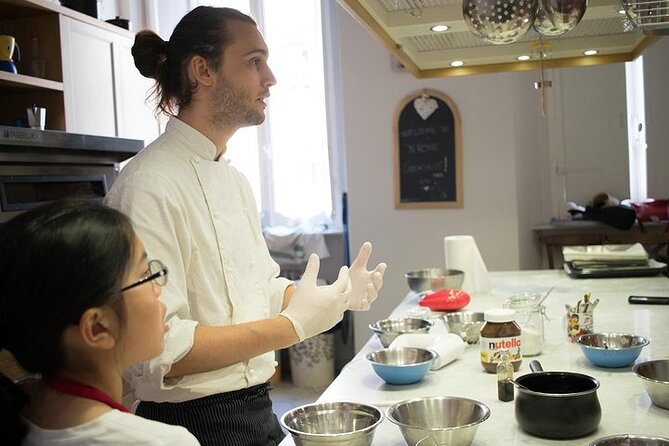
The practical value of this class is stronger than it first appears. You do not simply eat a pizza shaped by someone else. You learn a basic dough process, watch how the chef handles the crust, choose toppings, and see how a hot oven finishes the pie.
A QR code with recipes is provided at the end. The exact number can vary, but one class participant reported leaving with 60 recipes. That suggests the material may include more than just the pizza and gelato prepared that evening.
The recipes make this a useful choice for people who like to bring home a skill rather than a souvenir. You may not reproduce a professional oven in your kitchen, but you can still work on dough, sauce, topping amounts, and timing.
The class also provides local food context. You learn why Roman pizza is made in its particular style, how the sauce is used, and how baking affects the crust. One chef also gave recommendations for pizza places in Rome, which can help you continue your food search after the class.
Do not expect a full course in Italian cooking. The focus is narrow and deliberate: pizza and gelato. That focus is a strength if those are the foods you want to learn, but it will not replace a broader pasta or Roman cuisine lesson.
Timing, meeting point, and booking details
Plan to arrive at Corso del Rinascimento 65, 00186 Roma RM, Italy. The activity ends back at the same meeting point. The location is near public transportation and close to central sights, including the Pantheon.
Allow extra time to find the address, particularly if you are arriving after dark or navigating Rome’s busy historic center. The class is popular and is booked an average of 76 days ahead, so I would reserve early if your Rome dates are fixed.
Confirmation is sent within 48 hours of booking, subject to availability. The class requires a minimum number of participants, so a cancellation for that reason can lead to a different date or experience, or a full refund.
Free cancellation is available when you cancel at least 24 hours before the start time. Cancellations or changes made inside that 24-hour window are not refunded or accepted. The cutoff follows local Rome time.
Mobile tickets make the arrival process simple. Hotel pickup and drop-off are not included, so this is best for people comfortable making their own way through central Rome.
Who should book this class
I would put this near the top of the list for families, couples, friends, and food-focused visitors who want an active evening. It is especially useful midway through a busy Rome visit, when you need a break from monuments but still want something tied to local culture.
It also suits multigenerational groups. Everyone can work at a different pace, and the meal gives the group a shared goal. English-speaking instruction makes the class accessible to people who do not speak Italian.
This is a good choice for you if:
- You want a full dinner plus an activity.
- You enjoy meeting other people while cooking.
- You would like to repeat the recipes at home.
- You are traveling with children or teenagers.
- You want to learn the difference between Roman pizza and other pizza styles.
- You appreciate included wine and Prosecco.
I would choose another activity if you want a private lesson, a quiet restaurant meal, or advanced culinary training. The class is built for fun and clear instruction, not for professional cooks seeking difficult techniques.
Should you book the Rome pizza and gelato class?
For most visitors, yes, if the $119.77 price fits your budget. The package covers about two and a half hours of instruction, a welcome drink and appetizers, pizza, gelato, wine, and recipes. That is a fair package for central Rome, particularly when you count it as dinner.
The strongest reason to book is the mix of useful skills and easy fun. You get to make a personal pizza, prepare gelato, meet other people, and leave with instructions you can use at home. The class has also worked well for children, teenagers, adults, and grandparents.
Reserve early, request the vegetarian option or note allergies when booking, and arrive ready for a social cooking session rather than a formal meal. If that sounds like your kind of Rome evening, this class is a practical and tasty choice.
FAQ
How long does the pizza and gelato class last?
The class lasts approximately 2 hours and 30 minutes.
Where does the class meet?
It starts at Corso del Rinascimento 65, 00186 Roma RM, Italy, in central Rome.
Does the activity include dinner?
Yes. The experience includes a two-course dinner with homemade pizza and gelato, along with light refreshments.
Are drinks included?
Yes. Prosecco, Italian appetizers, and alcoholic beverages are included. Wine is served with the meal.
Is the class taught in English?
Yes. The class is offered in English by English-speaking professional chefs.
Can vegetarians take part?
Yes. A vegetarian option is available, but you should request it when booking.
How many people can join the class?
The maximum group size is 15 people.
Can I cancel for a full refund?
Yes, if you cancel at least 24 hours before the experience start time. Cancellations or changes made less than 24 hours in advance are not refunded or accepted.
More Workshops in Rome
- Rome: Pasta & Tiramisu Class with Fine Wine by the Vatican
★ 4.9 · 4,852 reviews - Rome: Fettuccine Pasta Cooking Class in Rome’s City Center
★ 4.8 · 2,414 reviews - Rome: Traditional Pasta with Cocktails Cooking Class
★ 5.0 · 2,374 reviews - Become a Masterchef in Rome: Pasta, Ravioli and Tiramisù Class
★ 5.0 · 2,156 reviews
Fresh on the Rome list
- Rome: Guided Catacombs Tour & Capuchin Crypt (Audio Guide)★ 4.3 · 191 reviews
- Guided tour of the Colosseum, Roman Forum and Palatine in Spanish★ 4.5 · 191 reviews
- Rome: Borghese Gallery Guided Tour with Skip-the-Line Ticket★ 4.5 · 192 reviews
- Rome: Arena Colosseum Tour with Arena Access★ 4.6 · 193 reviews
- Colosseum, Forum, Palatine Hill with audio guide and Arena or Bus option★ 4.0 · 193 reviews
- Rome: Colosseum & Roman Forum Guided Tour★ 5.0 · 194 reviews
- Rome: Domus Aurea Guided Tour and Virtual Reality Experience★ 4.7 · 194 reviews
- Rome Vintage Fiat 500 car Tour With Photographer★ 5.0 · 194 reviews
Cooking Classes, compared.
3 in 1 Cooking Class near Navona: Fettuccine, Ravioli & Tiramisu
Read our review →
Florence Pizza or Pasta Class with Gelato Making at a Tuscan Farm
Read our review →
Pasta & Tiramisu Cooking Class with Unlimited Wine
Read our review →
Cooking Class and Lunch at a Tuscan Farmhouse with Local Market Tour from Florence
Read our review →
Authentic Pizza Making Class in Naples with Appetizers and Drink
Read our review →
Pasta Making Class with Wine, Limoncello, and Dessert
Read our review →Browse the lists this tour appears in