Reviewed · FLORENCE TOURS
Medici Legends & Renaissance Wonders: Florence Small Group Tour
Florence’s Medici story is best understood outdoors, where a church, palace, bridge, and public square become pieces of one family’s long campaign for power. This 1-hour-45-minute walk links San Lorenzo with the Duomo, Palazzo Vecchio, Ponte Vecchio, and the Medici’s palace across the Arno, giving you a fast read on how Florence became the capital of Renaissance culture.
I like the small maximum of 15 people, which makes it easier to hear the guide and ask questions. I also like the way the route connects famous sights to less obvious details, including the Medici crest, family influence, architecture, and the political meaning of public buildings.
The main caution is the short stop at each location, usually about five minutes, and admission is not included. This is an orientation walk rather than a museum visit, so you should not book it expecting time inside the Medici Chapels, Uffizi, or cathedral complex.
Key points to know before booking

- The Medici lens ties the route together: You see Florence as the city shaped by one banking family’s money, taste, alliances, and ambition.
- The group is capped at 15: That is a useful size for a walking tour, especially when the guide is explaining details in busy streets.
- The route covers a remarkable amount: San Lorenzo, the Laurentian Library, Medici Chapels, Palazzo Medici Riccardi, the Duomo, Baptistery, Brunelleschi’s Dome, Giotto’s Campanile, Palazzo Vecchio, Piazza della Signoria, Ponte Vecchio, Palazzo Pitti, and the Uffizi.
- It is mainly an outside orientation: Each listed stop lasts about five minutes, and entrance tickets are not included.
- The guide makes or breaks the experience: Manuel, Martina, Amanda, and Giacomo have each been singled out for clear storytelling, warmth, humor, and strong answers to questions.
- The best timing is early in your Florence stay: You get a useful map of the center before returning to the museums and monuments on your own.
A fast walk through Medici Florence
The tour begins at Caffè Scudieri Firenze, at Piazza di San Giovanni 19R, close to the cathedral and Baptistery. The scheduled start is 12:15 pm, and the endpoint is in the Ponte Vecchio area.
The route is compact in geographic terms but broad in subject. You move through Florence’s religious center, its civic heart, and the river crossing that connects the old political quarter with the Medici residence at Palazzo Pitti.
That arrangement matters. The Medici were not simply art collectors. They used churches, libraries, palaces, public ceremonies, and works of art to shape how Florence saw them. A good guide helps you notice that each building had a purpose beyond beauty.
A few other Florence mornings to weigh against this
- Florence: Skip-The-Line Uffizi Gallery Timed Entry Ticket
★ 4.5 · 27,832 reviews - Tuscany Day Trip from Florence: Siena, San Gimignano, Pisa and Lunch at a Winery
★ 5.0 · 21,634 reviews - Florence: Timed Entrance Ticket to Michelangelo’s David
★ 4.6 · 16,983 reviews
San Lorenzo, the family church
The Basilica di San Lorenzo is the first major Medici stop. It sits in the city’s central market district and served as the burial place for principal Medici family members from Cosimo the Elder through Cosimo III.
You get only a short look here, but the stop gives the tour its family anchor. The church was not just a place of worship. It was tied to the Medici household, their patronage, and their public identity.
The practical point is simple: do not expect to explore the basilica during this tour. Admission is not included, and the listed time is about five minutes. If the Medici tombs and chapel interiors are high on your list, plan a separate visit to the Medici Chapels.
Michelangelo’s library and the Medici Chapels
The nearby Biblioteca Medicea Laurenziana introduces a different side of the family. The library was backed by Medici Pope Clement VII and helped present the family as patrons of learning and the Church, not merely wealthy merchants.
Its architecture is especially important. Michelangelo designed the library, and its Mannerist style reflects a period when artists and architects were testing the rules of the earlier Renaissance. From the street, you may not grasp all of the interior’s design, but the guide can explain why the building mattered to Medici image-making.
The Cappelle Medicee carry that message into grander territory. Built in the 16th and 17th centuries as additions to Brunelleschi’s earlier church, they were created to honor the Medici as patrons and Grand Dukes of Tuscany. Michelangelo designed the Sagrestia Nuova, or New Sacristy.
Again, the tour gives you context rather than interior access. The five-minute stop is useful if you are deciding which Florence museums deserve your limited time. It also prevents a common mistake: treating all Medici sites as interchangeable. San Lorenzo, the Laurentian Library, and the chapels each present a different version of Medici power.
Palazzo Medici Riccardi and the family’s first great address
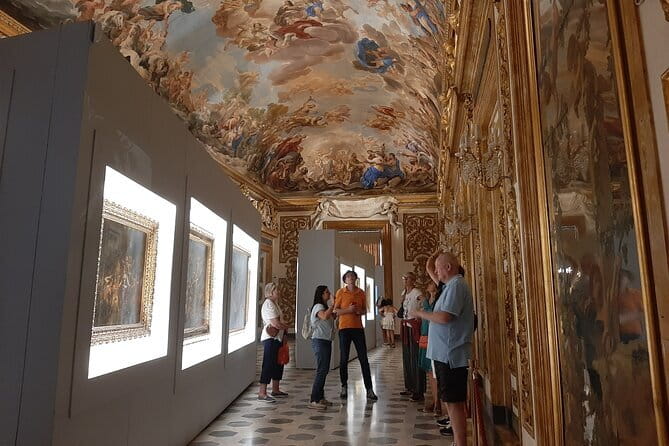
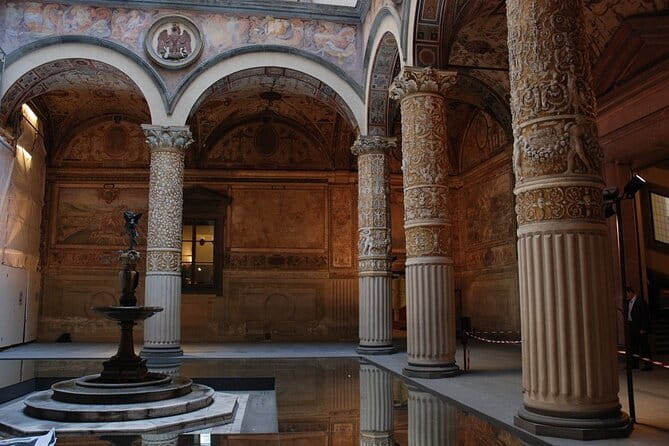
Palazzo Medici Riccardi was designed for Cosimo de’ Medici, head of the banking family, and built between 1444 and 1484. This is where the story turns from religious patronage to domestic and political power.
The palace was an important statement. Cosimo needed a residence that showed status without appearing too openly royal, since Florence was still a republic. A guide can help you read the building as a carefully judged public message: wealthy enough to impress, restrained enough to avoid provoking every rival.
The short stop is valuable for first-time visitors because it gives a clear starting point for the family’s rise. If you already know the Medici story well, you may find the treatment too brief. One useful way to get more from it is to ask your guide about the difference between Medici banking wealth, family patronage, and later Medici rule.
Same city, an entirely different afternoon:
- Florence: Michelangelo’s David Skip-the-Line Entry Ticket
★ 4.5 · 12,764 reviews - The Best tour in Florence: Renaissance & Medici Tales – guided by a STORYTELLER
★ 5.0 · 12,316 reviews - Florence: Leonardo Interactive Museum Entry Ticket
★ 4.5 · 11,763 reviews - The Best Tour in Florence: Renaissance and Medici Tales
★ 5.0 · 10,810 reviews
The Duomo complex, Florence’s great public face
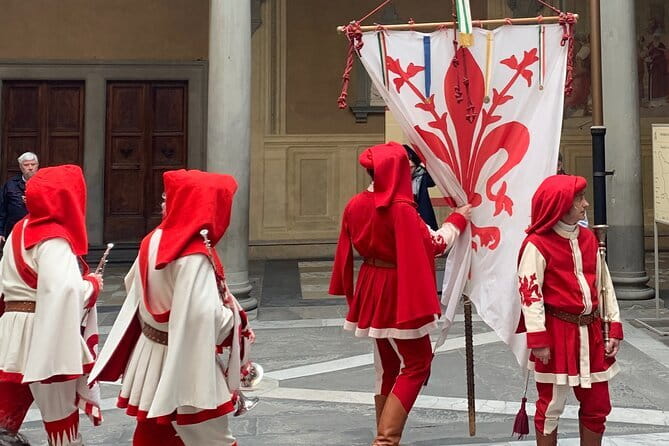
The route then reaches Piazza del Duomo, where the cathedral, Baptistery, Campanile, and Brunelleschi’s dome crowd into one of Europe’s most famous urban spaces.
The Cattedrale di Santa Maria del Fiore began in 1296 in the Gothic style, before the Medici reached their height. That detail matters. The family did not create Florence from nothing. They inherited a city already shaped by ambitious civic building, then used its institutions and monuments to strengthen their own position.
You see the cathedral’s white, green, and pink marble exterior, along with its immense scale. The Baptistery across the piazza is one of Florence’s oldest buildings, constructed between 1059 and 1128 in the Florentine Romanesque style.
The tour lists the cathedral twice, along with separate stops for the Baptistery, dome, and Campanile. In practical terms, think of this as one extended Duomo-area explanation rather than fourteen separate attractions with full visits. The repeated cathedral entry reflects the importance of the complex, not extra interior time.
Brunelleschi’s dome and Giotto’s tower
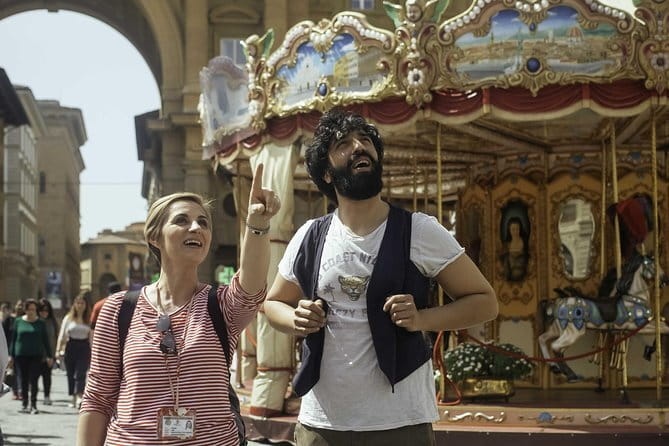
The Cupola del Brunelleschi is one of the tour’s strongest architectural talking points. It was once the largest dome in the world and remains the largest brick dome ever built.
You get the essential achievement in a few minutes: the problem of covering a vast cathedral crossing, the audacity of the design, and the reason the dome still dominates Florence’s skyline. The tour does not include a climb or dome admission, so you should book a separate cathedral pass if you want to go inside or reach the upper levels.
Giotto’s Campanile gives you a second view of Florentine ambition. Adjacent to the cathedral and Baptistery, the tower combines Gothic design, sculptural decoration, and colored marble panels.
I find this pairing especially useful. The dome represents engineering on a huge scale, while the Campanile shows how carefully Florence decorated even its vertical structures. Together, they explain why the Duomo complex is part of the UNESCO World Heritage site covering Florence’s historic center.
Palazzo Vecchio and Piazza della Signoria
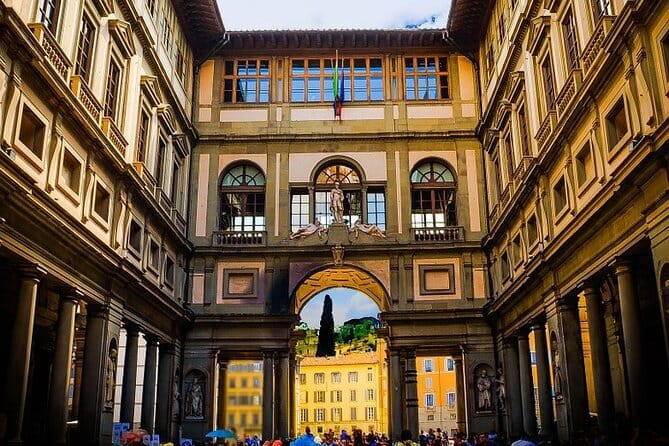
From the Duomo, the walk continues to Palazzo Vecchio, Florence’s town hall. This massive fortress-palace overlooks Piazza della Signoria, where the city’s public and political life played out.
The square is more than a photo stop. It is an open-air display of civic power, with the copy of Michelangelo’s David outside Palazzo Vecchio and the statues in the adjacent Loggia dei Lanzi. The nearby Uffizi adds another layer, since the building began as government offices before becoming one of the world’s best-known art museums.
This part of the route helps you understand the difference between private Medici wealth and public Medici authority. The family’s story moved through banking houses and chapels, but it also took shape in city government and in the symbols placed before the people of Florence.
The pace can be a strength here. You get a readable explanation before facing the many rooms, statues, and paintings inside Florence’s major museums. The drawback is that five minutes cannot do justice to Palazzo Vecchio or the square. Treat the stop as a briefing, not a substitute for entry.
Ponte Vecchio and the move to Palazzo Pitti
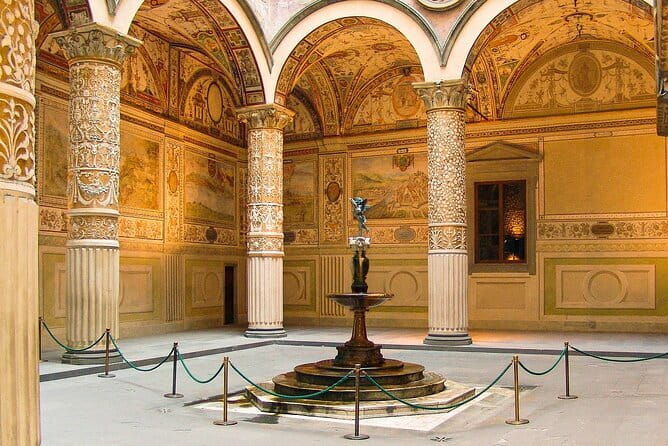
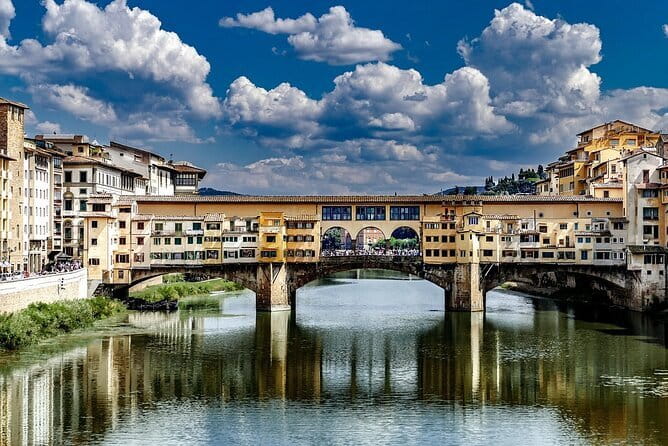
Ponte Vecchio is the only listed stop with free admission, and it is the natural closing section of the walk. The medieval bridge is the oldest bridge over the Arno in Florence and is known for its shops built along the crossing.
Its commercial past adds a human touch to the grand Medici story. Butchers, tanners, and farmers once occupied the shops. Today, jewelers and art dealers fill them. The bridge shows how Florence’s working city and elite city have always shared the same narrow streets.
The endpoint is listed as Ponte Vecchio, though it can vary slightly within the stated area. That is useful to know if you have a strict reservation immediately afterward.
Across the river, Palazzo Pitti brings the Medici story to its later phase. The family bought the palace in 1549, and it became the main residence of the ruling families of the Grand Duchy of Tuscany. Over time, it grew into a vast storehouse of paintings, plates, jewelry, and luxury possessions.
You may see Pitti Palace as a destination rather than a full stop on this tour. The route uses it to show how far the family had moved from Cosimo’s first palace. The change is striking: from careful republican restraint to the scale expected of ruling grand dukes.
The Uffizi as the final art connection
The Uffizi appears near the end of the route, and it gives the guide a chance to connect architecture with art. The museum holds major Renaissance works by Michelangelo, Leonardo da Vinci, Raphael, Botticelli, and other artists, spread through more than 80 halls covering art from the 12th through the 16th centuries.
The tour does not include Uffizi admission, so do not confuse seeing the building with seeing the collection. Still, the explanation can make a later museum visit much easier. You will have a clearer idea of why the Medici sponsored artists and why collecting art was also a way to build prestige, alliances, and cultural authority.
If you have only one day in Florence, this outside view may be enough to help you choose. If Renaissance painting is your main reason for coming, reserve separate Uffizi time. Five minutes cannot replace the museum itself.
Guide quality, group size, and sound
The guide is the most important variable in a tour built around stories. Manuel has been praised for answering many questions, explaining details visitors would miss, and giving the city’s history a clear shape. Martina is especially strong for lively facts and her enthusiasm for Medici symbols, including the changing family crest.
Amanda has been described as smart, funny, and very well versed in the Medici family. Giacomo has led intimate departures and is noted for answering questions about Florence while offering ideas for further activities. These names do not guarantee who will lead your departure, but they show the level of guide-led storytelling the experience can offer.
A whisper system is included, which should help in crowded streets. One important caution comes from the walking format: the guide may speak while moving, and street noise can make some words hard to catch. A hearing aid user was checked on several times by the guide, while another older couple found the sound system less effective than hoped.
For the best experience, stay close to the guide and speak up early if you cannot hear. The group limit of 15 is helpful, but it cannot remove every sound problem in a busy historic center.
Is $119.77 a good value?
At $119.77 per person, this is not a cheap introductory walk. It can be worthwhile if you want a licensed guide to connect many major Florence sights in less than two hours, especially at the beginning of your visit.
The value comes from interpretation, not admission. You are paying for a structured route, a small group, a licensed guide, and a story that links buildings many people otherwise see as separate photo stops. The price is harder to justify if you want long visits inside museums or monuments, since tickets are not included.
Group discounts may improve the cost for larger parties. The tour is also often booked well ahead, with an average advance booking period of 58 days, so popular dates may require planning.
Who should book this Florence walk?
I would choose this tour for a first visit, a short stay, or a family that wants a clear introduction without committing to several long museum visits. It also fits anyone who has watched a Medici drama and wants to connect the story to real streets, palaces, churches, and symbols.
The route works well for older children and teenagers. A family with three teenagers found the storytelling held their attention, and another booking described it as suitable for children aged 10 and up.
I would be more cautious if you already know Florence well or have studied the Medici in depth. The tour is designed for a broad introduction, not an advanced seminar. One repeat visitor wanted a more specialized experience beyond the basics.
Expect substantial walking through the historic center, but the activity information says most people can participate and that public transportation is nearby. The pace has been described as relaxed, though the number of stops means the route still covers a lot of ground.
Final verdict: book it for the story, not the entry tickets
Book Medici Legends & Renaissance Wonders if you want Florence to make sense quickly. Its best feature is the guide’s ability to turn a short city walk into a connected story about banking, patronage, religion, architecture, art, and political power.
Do not book it as your only visit to the Uffizi, Medici Chapels, Palazzo Vecchio, or the Duomo. Use it first, then return to the places that catch your interest. The combination of a 15-person limit, strong guide-led storytelling, and a route from San Lorenzo to Ponte Vecchio makes it a useful orientation, provided you understand that the major sights are viewed briefly from outside.
Free cancellation is available up to 24 hours before the 12:15 pm start. Bad weather or failure to meet the minimum group size can lead to a new date, another experience, or a full refund.
FAQ
Where does the tour begin?
It begins at Caffè Scudieri Firenze, Piazza di San Giovanni 19R, 50123 Florence, Italy.
What time does the tour start?
The scheduled start time is 12:15 pm.
Where does the tour end?
The stated endpoint is Ponte Vecchio, 50125 Florence. The exact endpoint may vary slightly within the indicated area.
How long is the experience?
The tour lasts approximately 1 hour and 45 minutes.
How large is the group?
The tour has a maximum of 15 travelers.
Is the tour offered in English?
Yes. The activity is offered in English.
Are entrance tickets included?
No. Admission tickets for the listed sights are not included. Ponte Vecchio is free to enter.
What is included in the price?
The experience includes a licensed tour guide, a small group, and a whisper system.
Is the tour suitable for most people?
The activity information says most travelers can participate, and public transportation is nearby.
Can I cancel for a full refund?
Yes, if you cancel at least 24 hours before the experience’s start time. Cancellations or changes made less than 24 hours before the start are not refunded.
Fresh on the Florence list
- Semi Private Deep Wine Chianti and San Gimignano from Florence★ 5.0 · 191 reviews
- From Florence: Wine Tasting and Dinner in Chianti Vineyards★ 4.6 · 192 reviews
- Small Group Florence Cathedral Guided Tour with Priority Access★ 4.0 · 192 reviews
- Hard Rock Cafe Florence with Set Menu for Lunch or Dinner★ 4.5 · 193 reviews
- Florence Sunset Food Tour with Wine & Dine at a Tuscan farmhouse★ 5.0 · 194 reviews
- Wine Experience In Chianti Hills from Florence★ 4.5 · 195 reviews
- Florence: Duomo Complex Guided Tour★ 4.2 · 195 reviews
- Brunelleschi’s Dome and Cathedral Complex Reserved Ticket★ 4.5 · 195 reviews
Florence Tours, compared.
Skip-The-Line Uffizi Gallery Timed Entry Ticket
Read our review →
Tuscany Day Trip from Florence: Siena, San Gimignano, Pisa and Lunch at a Winery
Read our review →
Timed Entrance Ticket to Michelangelo’s David
Read our review →
Michelangelo’s David Skip-the-Line Entry Ticket
Read our review →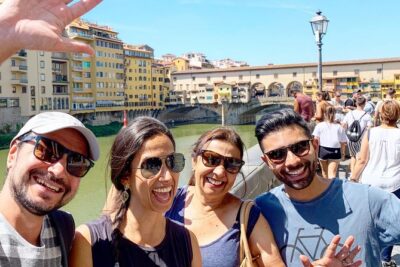
The Best tour in Florence: Renaissance & Medici Tales – guided by a STORYTELLER
Read our review →
The Best Tour in Florence: Renaissance and Medici Tales
Read our review →