
Reviewed · UFFIZI & ACCADEMIA GALLERY TOURS
Florence: Uffizi & Accademia Small Group Walking Tour
Michelangelo’s David is the headline, but the real prize is seeing Florence’s two major art museums in one well-planned morning or afternoon. The guide links the works to the city streets, Medici power, and the artists who changed European art.
I like the small groups, which make it easier to hear and ask questions, and the skip-the-ticket-line entry at both museums. The main drawback is the pace: four hours with no guaranteed drink or bathroom stop can feel long, especially in summer or with young children.
Key points to know before booking
- David comes first: See Michelangelo’s famous marble figure at the Accademia with a guide who explains its details and purpose.
- Two major museums in four hours: The tour covers the Accademia and Uffizi, then adds Florence’s key outdoor sights.
- The guide makes the difference: Sylvia, Deborah, Rosa, Margaret, Amanda, and others have been praised for clear explanations, humor, and crowd control.
- Small means 10 to 15 people: Some departures may be smaller, with one group reported at only three people.
- Bring water and wear good shoes: The route combines museum walking with city streets, and the schedule may leave little time for a break.
- Best for first-time Florence visitors: You get a strong introduction to Renaissance art without planning two museum visits yourself.
Michelangelo’s David at the Accademia
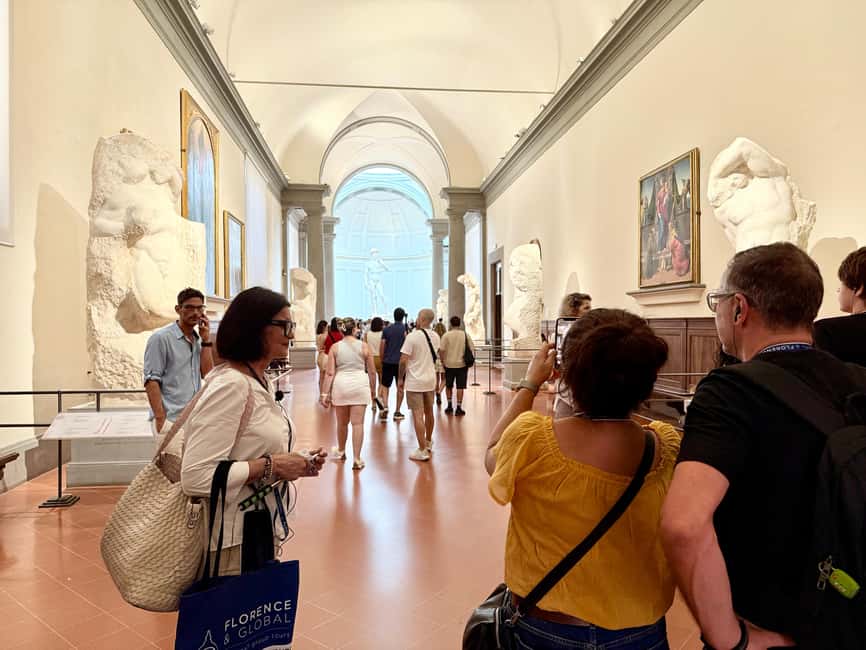
The tour begins at the Accademia Gallery, home to Florence’s most famous resident: Michelangelo’s David. The statue is enormous, polished, and familiar from countless photographs, but it has far more force in person. A guide can point out the uneven proportions, the alert expression, the huge hands, and the way Michelangelo made a single block of marble appear ready for action.
This is where a guided visit earns its keep. Without context, you may admire David and move on. With an art-focused guide, you get the story behind the statue, its place in Florentine civic identity, and the technical skill needed to carve such a commanding figure.
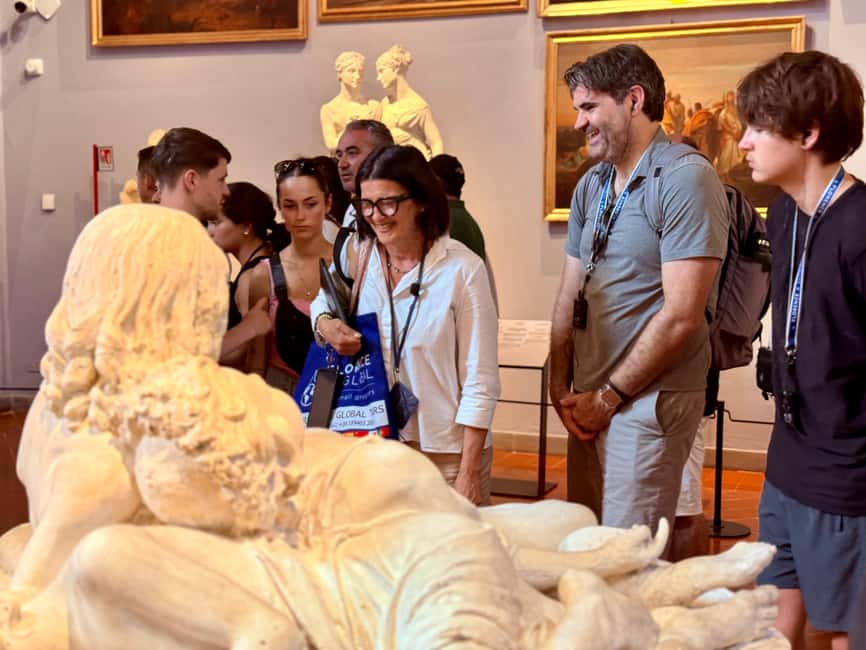
You should have time to look closely and take photographs, though the exact rhythm depends on the group and crowd levels. One guide may spend longer on Michelangelo, while another may give more attention to the surrounding works. Guides such as Sylvia, Deborah, Rosa, and Margaret have been praised for making the art easy to follow without turning the visit into a dry lecture.
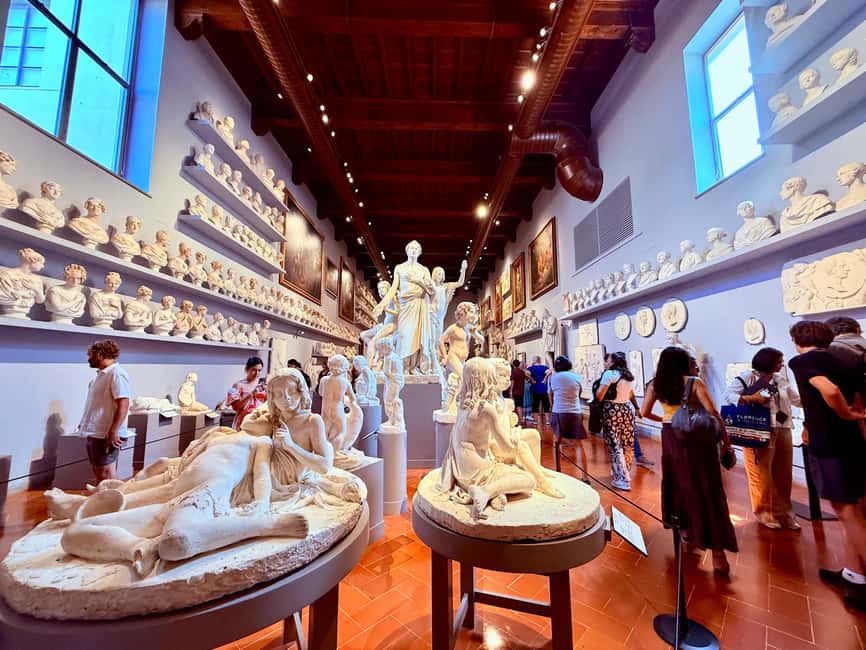
The Accademia is not only about David. The museum also contains other works connected to Michelangelo and Florentine art, but this tour is designed around the key sights rather than a room-by-room study. That is useful if your time is limited. It is less suitable if you want to examine every gallery at length.
One practical point matters here: re-entry is not available, so you cannot casually leave and come back to the Accademia later. If you want independent time in the museum, plan that separately.
More Walking Tours in Florence
- Florence: Guided Walking Tour
★ 4.5 · 3,334 reviews - Skip the line: Uffizi and Accademia Small Group Walking Tour
★ 4.5 · 3,135 reviews - Florence: Guided Walking Tour
★ 4.6 · 1,602 reviews
Duomo Square and Brunelleschi’s great dome
After the Accademia, the route moves outdoors to Piazza del Duomo. This section gives you a welcome change of setting and helps connect the art inside the museums with the city that produced it.
You will see the cathedral façade, Giotto’s Campanile, the Baptistery area, and Brunelleschi’s famous dome. The tour does not include a climb of the dome, and it does not promise entry into the cathedral. Instead, the guide explains the square and its major buildings from the outside.
Brunelleschi’s dome is one of Florence’s great engineering stories. Its scale is easy to appreciate from the square, but the best part of the guide’s explanation is understanding why the dome was such a difficult project and why its construction mattered to Florence.
This stop also gives you useful orientation. Florence’s historic center is compact, but its streets can feel confusing on a first visit. A guide can point out where the museums sit in relation to the Duomo and explain how the city’s main squares fit together.
Bring comfortable shoes. The walking between museums is not a separate transportation segment, and the four-hour schedule keeps moving. The route is manageable for many people, but it is not a slow café stroll.
Piazza della Signoria and Florence’s public art
The tour continues through Piazza della Signoria, the grand civic square beside the Palazzo Vecchio and near the Uffizi. Here, you see Florence’s public face: statues, political symbols, and open-air art that has shaped the city’s identity for centuries.
This outdoor section is valuable because it gives you more than a list of indoor masterpieces. Florence’s art was made for churches, palaces, government buildings, and public squares. In Piazza della Signoria, you begin to see how art worked as public messaging, not just decoration.
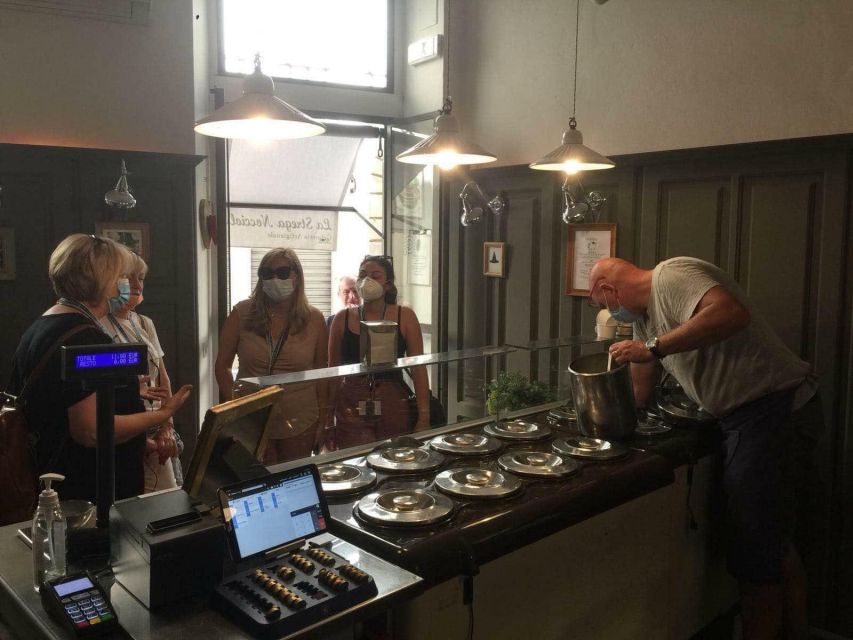
The guide may point out major sculptures and explain the square’s role in Florentine life. Guides are also able to answer questions about nearby buildings, local customs, food, and places to find good gelato. One guide used the walk between museums to discuss the differences in gelato quality, a small but useful bit of local advice.
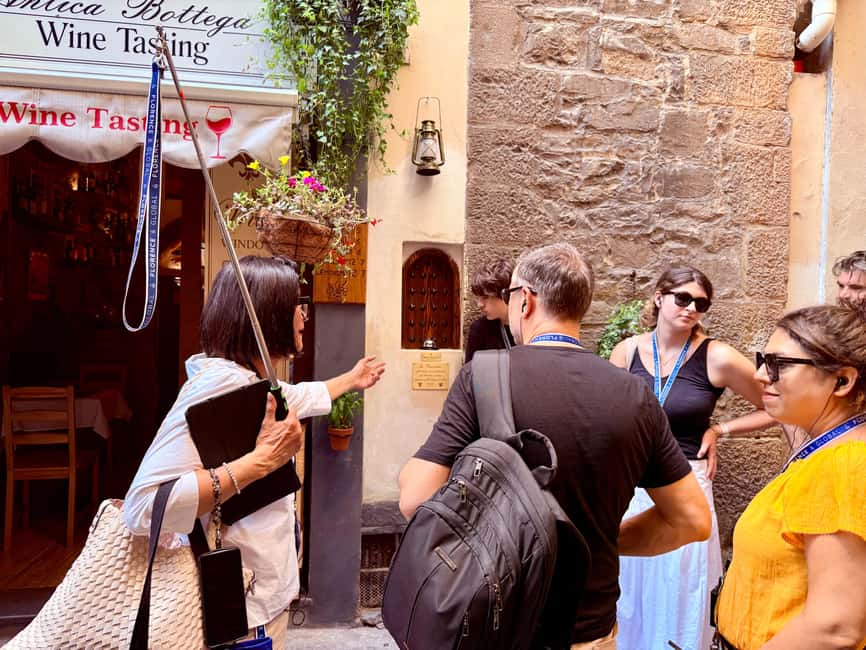
The square can be crowded, and keeping the group together matters. Radios and headsets are included, so you can hear the guide while standing a short distance away. This is especially helpful near popular statues, where a group gathered around one person can quickly block the view.
Botticelli and the Uffizi Gallery
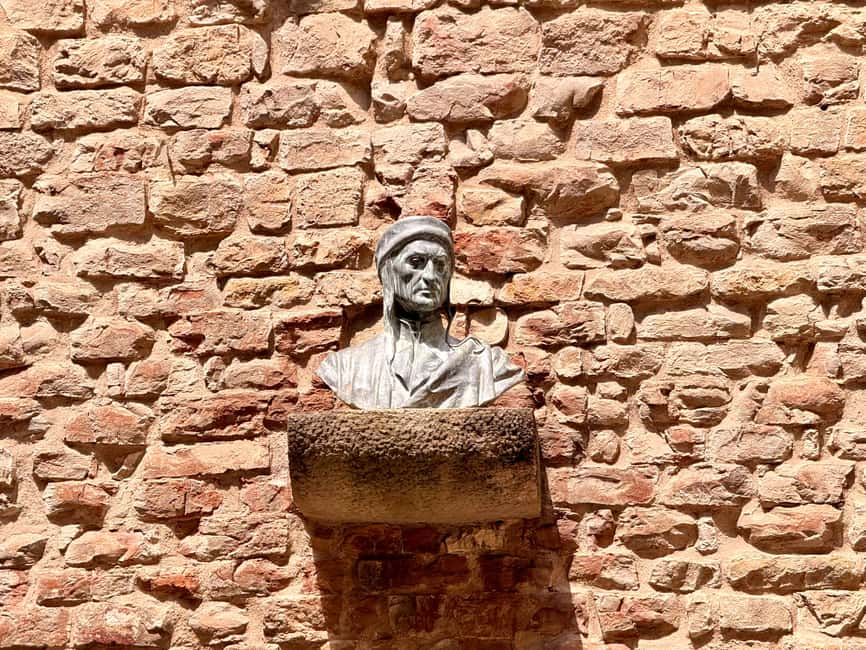
The final major stop is the Uffizi Gallery, Florence’s great collection of Renaissance painting. The museum can feel overwhelming because room after room contains works that would be the main attraction anywhere else. A guide gives you a route through the highlights and helps you understand what changed from one period to the next.
Botticelli’s Birth of Venus is the famous draw. Seeing it in person lets you appreciate the scale, delicate lines, pale colors, and strange dreamlike mood that reproductions often flatten. The guide can also place Botticelli among the Medici circle and explain why mythological scenes mattered in Renaissance Florence.
The Uffizi visit also includes major works associated with Leonardo, Michelangelo, and other important artists. You will not study every painting, but you should see a useful selection of the museum’s best-known rooms and learn how to recognize major developments in Renaissance art.
I like this approach for a first visit. You get the names, stories, and visual clues that help the paintings make sense. A strong guide can show you where to look in a work, explain why a particular detail matters, and connect one artist to another.
The Uffizi is large, and four hours for the complete tour means the museum visit cannot be exhaustive. If you already have a serious interest in a particular artist, you may want to return on your own with extra time. The tour is best viewed as an introduction with expert direction, not a complete survey of the collection.
A few other Florence mornings to weigh against this
- Florence: Skip-The-Line Uffizi Gallery Timed Entry Ticket
★ 4.5 · 27,832 reviews - Florence: Timed Entrance Ticket to Michelangelo’s David
★ 4.6 · 16,983 reviews - Florence: Michelangelo’s David Skip-the-Line Entry Ticket
★ 4.5 · 12,764 reviews - Florence: Cathedral & Brunelleschi’s Dome Ticket & Audio App
★ 4.4 · 6,973 reviews
Views from the Uffizi’s upper floor and terrace
The tour also includes views from the Uffizi’s upper level and terrace. From there, you can look toward the Ponte Vecchio and across Florence’s rooftops.
This is a welcome pause after the galleries. It gives you a visual sense of the Arno, the bridge, and the dense historic center. I find city views more useful when I know what I am looking at, and the guide can help turn a pretty panorama into a simple map of Florence.
The terrace is also a good place for photographs, though the time available depends on the group schedule and museum conditions. Do not count on a long rest stop. The day is built around seeing the main works, not lingering at each viewpoint.
Why the guide matters on this tour
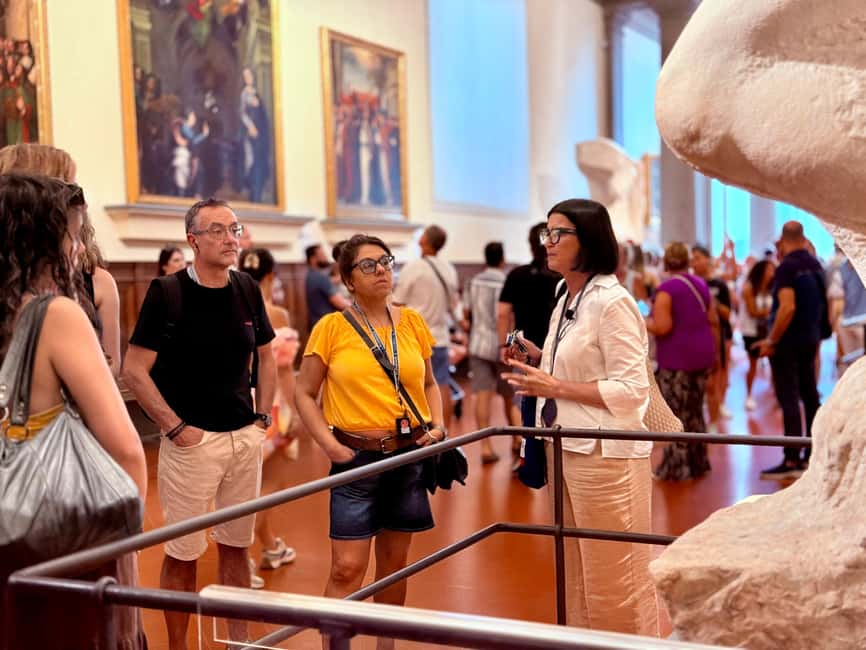
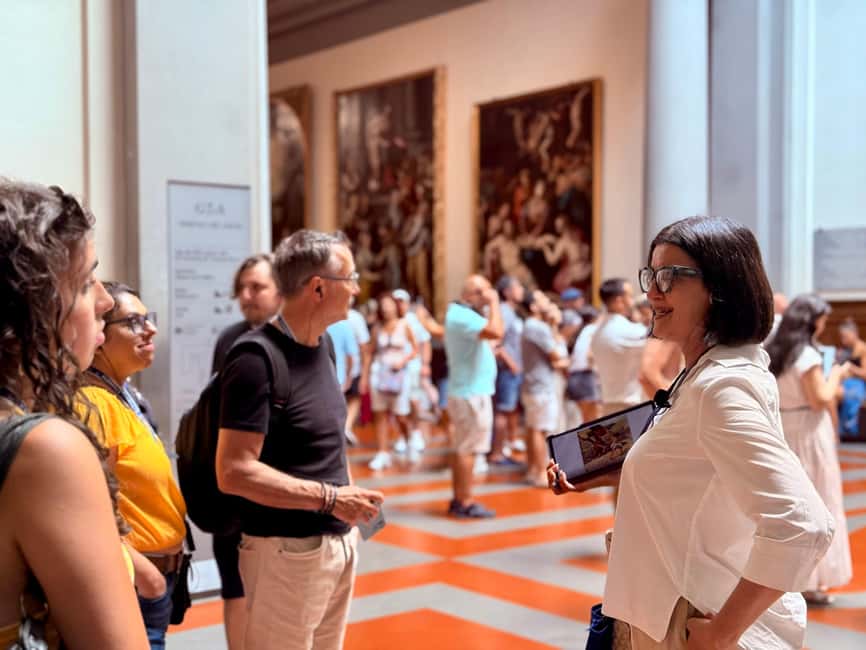
The strongest part of this experience is the quality of the guiding. Guides named in the feedback include Sylvia, Deborah, Rosa, Margaret, Amanda, Anna, Elena, Caterina, Cosetta, and others. The guide assigned to your departure can vary, but the repeated pattern is clear: the best guides bring humor, personal enthusiasm, and strong command of the art.
Deborah is especially praised for navigating crowds, keeping groups together, and explaining both the museums and the city. Rosa is described as warm, organized, and able to take charge when entrances become confusing. Margaret is praised for making art history entertaining, while Sylvia is noted for her energy and care with groups.
That human element matters because Florence’s museums can be tiring. You are looking at complicated works, moving through crowded rooms, and trying to remember names and dates. A good guide gives you a story to follow and helps you avoid spending half your visit wondering what you are looking at.
The headsets are included and are an important practical feature. In a group of 10 to 15, you do not need to stand shoulder to shoulder with the guide. You can step back to see a painting, then continue listening.
The guides also appear attentive to individual needs. One guide helped a family with a stroller use an elevator entrance, and another helped a visitor who needed to leave briefly for water and food before rejoining the group. These moments cannot be guaranteed, but they show why a small group can be more flexible than a large coach-style tour.
Group size, pace, and physical demands
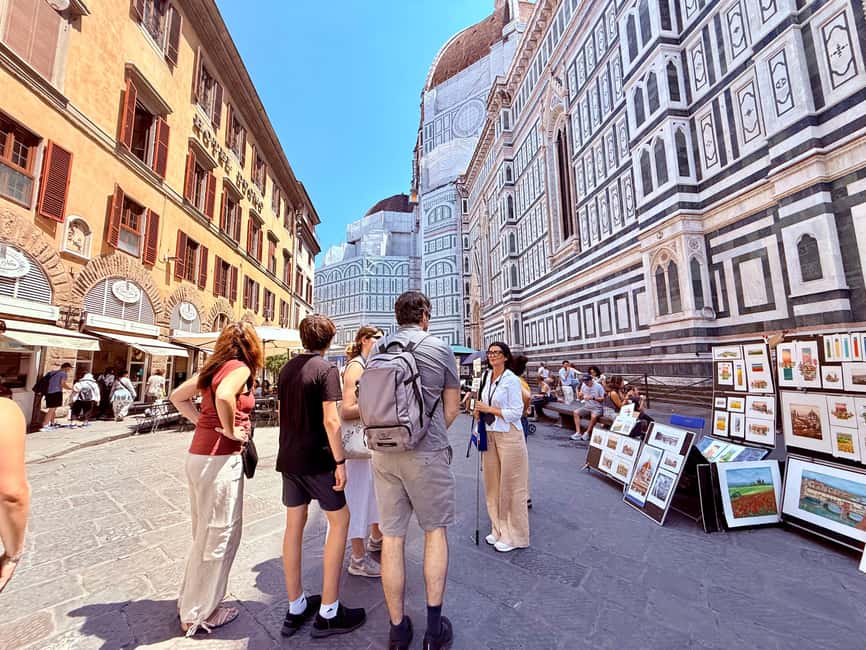
The advertised group size is 10 to 15 people, and some departures may be smaller. One group had only three people, while another had around a dozen. A small group makes questions easier and helps the guide watch the group in crowded galleries.
You should still expect a steady pace. The tour lasts four hours and includes two museums plus outdoor walking. You will spend much of that time on your feet, so wear shoes you can comfortably use on city streets and museum floors.
The tour is listed as wheelchair accessible, but the meeting point and precise route can vary by booking option. If you need specific assistance, confirm the details before you reserve. The same advice applies to families with strollers, since museum entrances and elevators may differ.
The biggest comfort issue is break time. Some departures include a brief chance to use facilities between stops, but the schedule does not guarantee a proper bathroom or drink break. A bathroom queue at the Accademia can take longer than the short pause available. I would use the facilities before meeting the guide and carry water, provided it meets the museum’s bag rules.
Large bags and luggage are not allowed. Pets are also not permitted. Bring your passport or identity card, and provide each participant’s name exactly as it appears on the travel document. Children need identification as well.
Skip-the-line access and crowded galleries
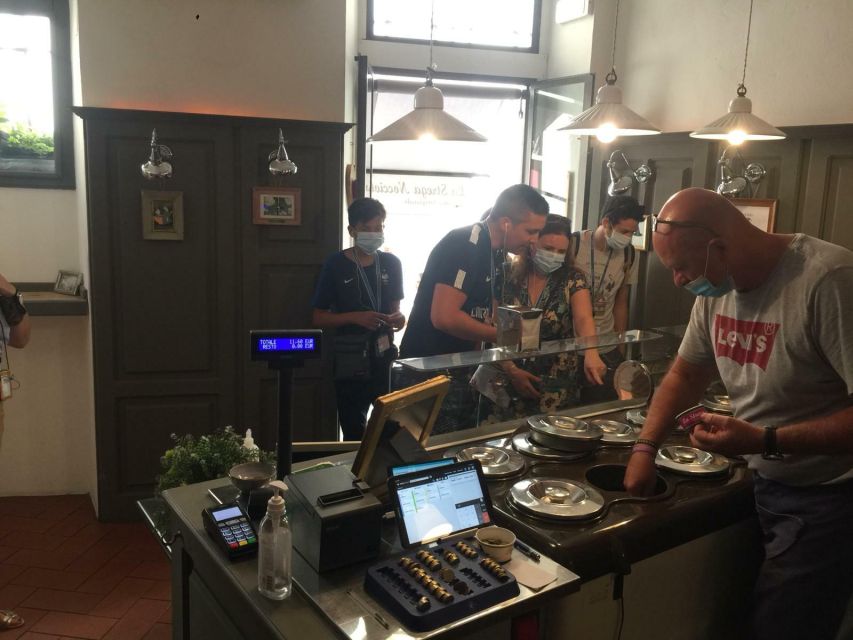
Skip-the-ticket-line entry is included for both the Accademia and Uffizi. This is one of the main reasons to consider the tour, especially during busy periods when unscheduled museum entry can consume a large part of your day.
Skip-the-line does not always mean walking straight inside. Security checks, timed admissions, ticket collection procedures, and crowd control can still create a short wait. One departure experienced less than 15 minutes in line, while high-season conditions can feel more demanding.
This is where an experienced guide is useful. The guide knows where the group needs to go, keeps the admission process orderly, and helps you focus on the art instead of paperwork. In a crowded museum, that can save both time and patience.
Do not book this expecting empty rooms. The Uffizi and Accademia are popular, and even a well-managed visit can involve people around the major works. The tour helps you handle the crowds, but it cannot remove them.
The $148 price and what you receive
At $148 per person, this is not a budget museum visit. The price includes skip-the-ticket-line entry to both museums, a live guide, and the radio headset system. You are paying for access, planning, interpretation, and time saved.
For a first visit, I consider the price reasonable if you want both museums in one half-day and do not feel comfortable building the route yourself. Buying entry separately may cost less, but you would need to secure suitable times, study the collections, and navigate the city between stops without the guide’s help.
The value is strongest when your Florence schedule is tight. You see David, the Duomo area, Piazza della Signoria, the Uffizi highlights, and the Ponte Vecchio view in four hours. That is a lot of Florence in one sitting.
The value is weaker if you prefer slow museum visits or already know Renaissance art well. You may feel rushed at times, and you will likely want a separate return visit to the Uffizi if you have a long list of specific paintings to see.
A first-Sunday issue is worth noting. Admission to the museums is free on the first Sunday of each month, but tickets cannot be reserved ahead of time and entry is not guaranteed. On that date, the normal price calculation changes, but so does the certainty of getting inside.
Who should book this Florence art tour?
I would choose this tour if you are visiting Florence for the first time, want the essential works, and prefer a guide to explain what you are seeing. It is also a good fit for families with older children or teenagers, since the mix of stories, statues, squares, and famous paintings keeps the day varied.
The tour suits couples and friends who want structure without a large group. It also works well for people who have only one day in Florence and want to cover the two major museums efficiently.
I would think twice if you need frequent rest stops, dislike fixed schedules, or want several hours with one collection. The four-hour duration is efficient, but it demands energy and attention. Start hydrated, use the bathroom before the meeting time, and carry only a small bag.
The meeting point can vary by the option you book, so check your confirmation carefully. Hotel pickup and drop-off are not included, and you need to make your own way to the starting point.
Should you book the Uffizi and Accademia tour?
Book it if David and the Uffizi are high on your Florence list and you want someone to make sense of them. The small group, headsets, museum access, and strong record of guides such as Deborah, Sylvia, Rosa, and Margaret make this a practical choice for a concentrated art-and-city introduction.
Skip it if you prefer to wander alone, need a leisurely pace, or plan to spend most of a day in one museum. For most first-time visitors with four hours to spare, the tour gives you a clear route through Florence’s greatest hits, plus enough context to make the paintings and streets more memorable.
FAQ
How long does the tour last?
The tour lasts four hours and includes the Accademia, outdoor stops at the Duomo and Piazza della Signoria, and the Uffizi.
Which museums are included?
Skip-the-ticket-line entry is included for both the Accademia Gallery and the Uffizi Gallery.
Is Michelangelo’s David included?
Yes. The tour begins with a guided visit to the Accademia, where you see Michelangelo’s David.
Is the tour available in languages other than English?
Yes. Live guiding is available in English, German, Spanish, French, and Italian. The available language depends on the option and departure you select.
How many people are in the group?
Small groups generally contain 10 to 15 people. Some departures may be smaller.
Can I cancel the booking?
You can cancel up to 24 hours in advance for a full refund. Reserve-now, pay-later booking is also available.
Fresh on the Florence list
- Florence: Uffizi Guided Tour with Skip-the-Line Entry Ticket★ 4.8 · 499 reviews
- The Best of Florence Walking Tour in a Small Group★ 5.0 · 503 reviews
- Florence: Uffizi Gallery Tickets with Optional Audio Guide★ 4.1 · 503 reviews
- Premium Pasta and Gelato Cooking Class in Florence★ 5.0 · 508 reviews
- From Florence: Tuscany & San Gimignano Tour with 2 Tastings★ 4.8 · 511 reviews
- Florence: Guided Tour of Medici Family Secrets and Chapels★ 4.7 · 512 reviews
- Tuscany Vespa Tours Through the Hills of Chianti★ 5.0 · 515 reviews
- Pasta and Tiramisu Cooking Class with optional Local Market Tour★ 5.0 · 515 reviews
Uffizi & Accademia Gallery Tours, compared.
Skip-The-Line Uffizi Gallery Timed Entry Ticket
Read our review →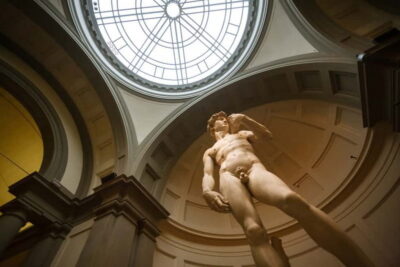
Timed Entrance Ticket to Michelangelo’s David
Read our review →
Michelangelo’s David Skip-the-Line Entry Ticket
Read our review →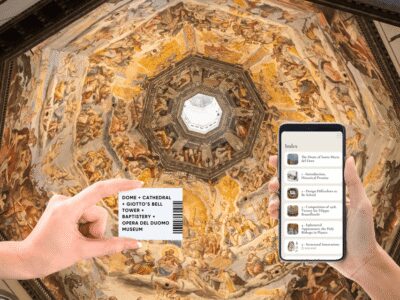
Cathedral & Brunelleschi’s Dome Ticket & Audio App
Read our review →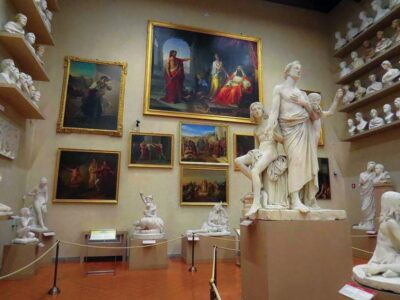
Michelangelo’s David Priority Ticket & Audio App
Read our review →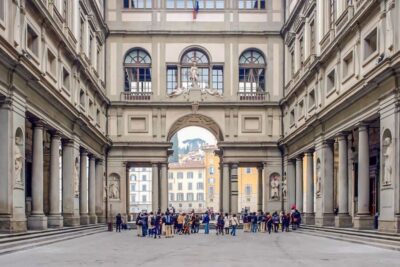
Uffizi Priority Ticket & Masterpieces Audio App
Read our review →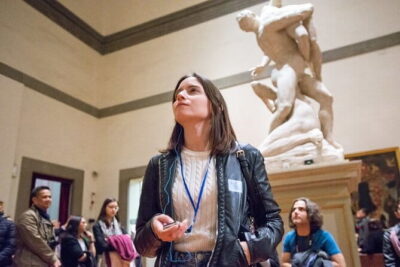
Florence Accademia Gallery Tour with Entrance Ticket Included
Read our review →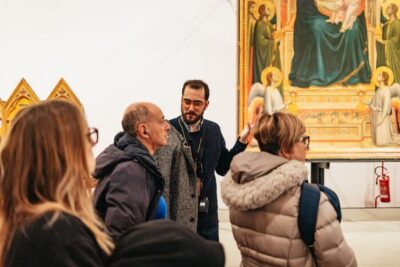
Browse the lists this tour appears in