
Reviewed · PASTA
Florence: Pasta Class with Wine, Limoncello and Dessert
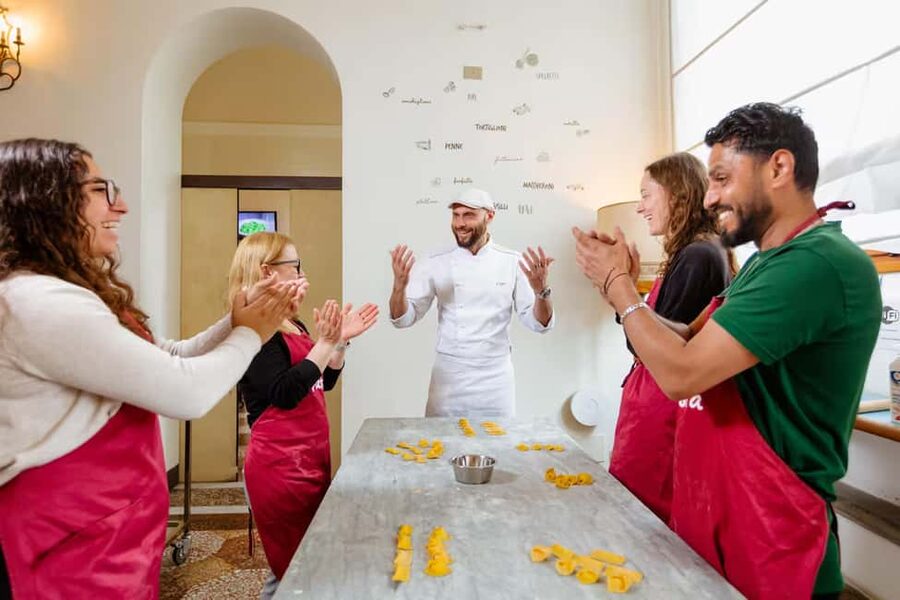
The best part of this Florence cooking class is that you do not simply watch a chef make pasta. You knead the dough, roll it thin, shape three kinds of pasta, and then eat the results in a historic palace near Ponte Vecchio. The setting gives the lesson a strong sense of place, while the hands-on work keeps it lively.
I like the small-group feel, which lets the instructor help beginners without turning the class into a stiff demonstration. I also like the generous finish: several pasta shapes, sauces, Tuscan wine, dessert, and limoncello are all part of the three-hour gathering. The main drawback is dietary: the booking information says some dietary needs can be discussed, but the detailed restrictions say vegan, gluten-sensitive, lactose-intolerant, and nut-allergic diners cannot be accommodated. Ask before booking.
Key points to know
- Three pasta shapes in one class: Make ravioli, tortelli, and fettuccine by hand from eggs and flour.
- Historic Florence setting: The cooking school sits at Lungarno Guicciardini 17r, just steps from Ponte Vecchio.
- Warm, personal teaching: Instructors such as Camilla, Giacomo, Francesca, Sarno, Caterina, and Lucrezia are praised for keeping beginners involved.
- A full meal, not just a lesson: Your pasta is cooked and served at the end, with sauces, wine, dessert, and limoncello.
- Good for families and mixed skill levels: Children, non-cooks, couples, groups, and corporate teams can all take part.
- Plan for food restrictions: Vegan, gluten-free, lactose-free, and nut-free diets are listed as unsuitable, so check carefully before reserving.
A pasta class inside a Florence palace
This activity begins in one of Florence’s most striking historic buildings, on Lungarno Guicciardini, across the river from the main center and close to Ponte Vecchio. You come directly to the school rather than waiting for a hotel pickup, so allow enough time to find the entrance and arrive five minutes early for check-in.
The location matters. You are not being sent out to an industrial suburb for a generic cooking lesson. You start near one of Florence’s most famous sights, in a place connected to the city’s older architectural fabric. That makes the class easy to pair with a walk around the Oltrarno, Ponte Vecchio, or the Uffizi side of the river.
The opening is designed to set the mood. A short introductory presentation, described by one participant as a film-style video, explains the background of the school and the pasta tradition. Some sessions also begin with a welcome drink such as prosecco.
I see this introduction as a pleasant way to settle in, especially if you have just arrived and need a moment to switch from sightseeing mode to cooking mode. If you are eager to get your hands into the dough, you may find the opening a little long. One participant would have preferred more time in the kitchen and less time watching the film.
A few other Florence mornings to weigh against this
- Florence: Handmade Pasta & Dessert Class with Unlimited Wine
★ 4.8 · 788 reviews - Rome: Pasta Making Class with Wine, Limoncello, and Dessert
★ 4.9 · 3,177 reviews - Rome Cooking Class: Make Pizza and Pasta with Wine & Dessert
★ 4.5 · 651 reviews
From eggs and flour to fresh dough
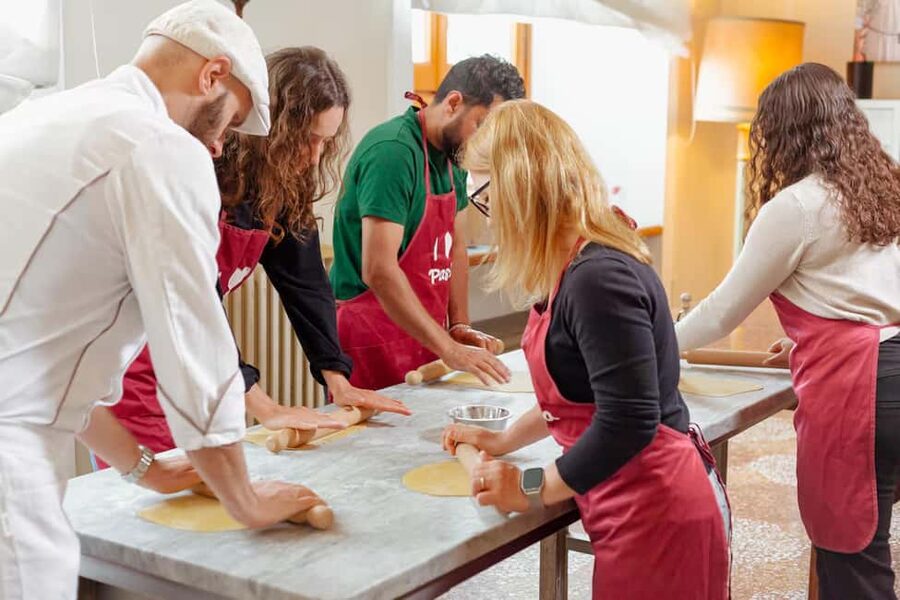
Once the class moves to the worktables, you put on an apron, take up a rolling pin, and begin with the basic dough. The core ingredients are simple: flour and eggs. That simplicity is part of the lesson. Fresh pasta is not magic, but it does depend on touch, pressure, timing, and a feel for the dough.
You work through the process with direct help from an English-speaking instructor. This is suitable for a first-time pasta maker. You do not need advanced kitchen skills, and the instruction is set up so a person who rarely cooks can keep pace. At the same time, experienced home cooks can pay attention to details such as thickness, filling, folding, and shaping.
The instructors are repeatedly praised for their energy and patience. Camilla is described as engaging and funny. Giacomo is noted for getting people talking while offering local food and sightseeing tips. Sarno receives special praise for his passion and clear teaching. Caterina, Francesca, Lucrezia, Nicola, Ezgi, and others are also singled out for making sure the whole table stays involved.
That range of instructors means the tone may vary from one session to another. The common thread is a friendly, social approach rather than a formal chef demonstration. You are expected to work, ask questions, make mistakes, and try again. That is exactly what makes the class useful.
Ravioli, tortelli, and fettuccine
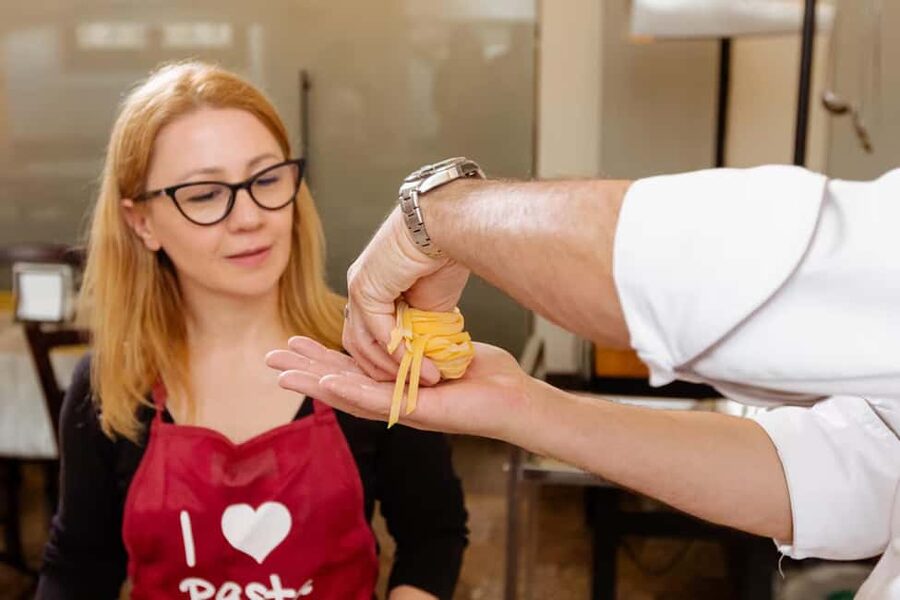
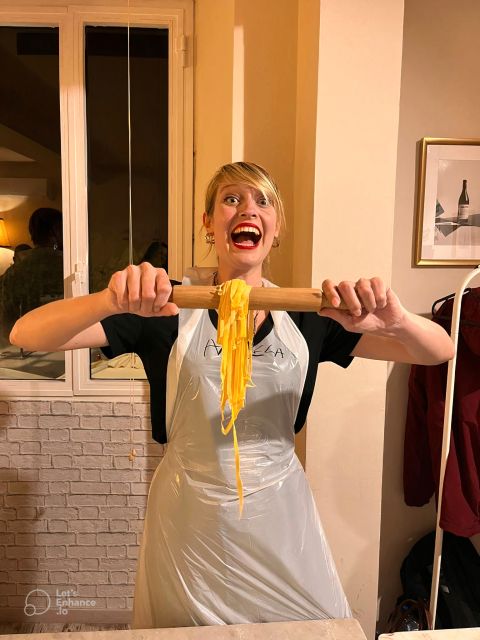
The class covers three different pasta styles, giving you more than one technique to take home. You make ravioli and tortelli with filling, then prepare fettuccine. Each shape asks for a slightly different touch, so the lesson gives you a broad introduction to fresh pasta instead of repeating one simple cut.
The filled pasta is especially useful for learning. You see how to handle the filling, close the dough, and shape the pieces so they do not split during cooking. The fettuccine gives you a chance to work with longer strands and a different thickness.
One unusual detail mentioned in the class is the pasta guitar, a traditional cutting tool that creates strands with a distinctive shape. It is the sort of small, memorable detail that can make the lesson more than a standard rolling-pin exercise. If you enjoy kitchen tools, you may want to ask about it and see how it is used.
You prepare your own pasta, but the cooking is done together. The portions are combined in the same pot and served for the group, much as you might eat at an Italian family table. That shared approach is practical for the school and social for you. It also means the meal is not a private, restaurant-style course for each individual. You are part of a communal table.
Two sauces and the meal you helped make
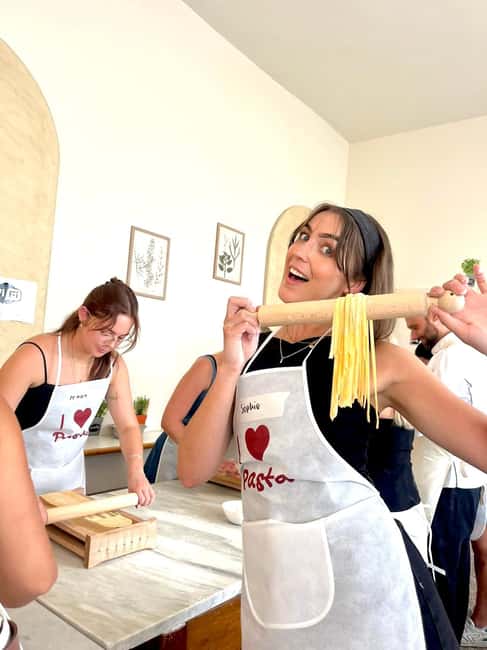
The school prepares a tomato sauce in advance, allowing it to simmer for hours before the class begins. That is a sensible choice. A three-hour lesson cannot also provide the full cooking time needed for a slow tomato sauce, and making it ahead leaves you more time to work with pasta.
The ravioli and tortelli receive butter and sage sauce, prepared by the instructor in front of you. This gives the meal some contrast. You get the fuller flavor of the tomato sauce with one pasta, then a lighter, more delicate sauce with the filled shapes.
The payoff comes when everyone sits down together to eat. You are not handed a small sample while the staff clears away the equipment. The pasta you made becomes the main meal, followed by dessert and limoncello.
The food is a strong part of the value here. Several participants describe the pasta as fresh, well cooked, and full of flavor. One person notes that the filling and sauces were prepared ahead for practical reasons, while the recipes were provided so the dishes could still be recreated at home. That is an important distinction: you make the dough and shape the pasta, but not every single component is made from the first step during the class.
Same city, an entirely different afternoon:
- Florence: Skip-The-Line Uffizi Gallery Timed Entry Ticket
★ 4.5 · 27,832 reviews - Tuscany Day Trip from Florence: Siena, San Gimignano, Pisa and Lunch at a Winery
★ 5.0 · 21,634 reviews - Florence: Timed Entrance Ticket to Michelangelo’s David
★ 4.6 · 16,983 reviews - Florence: Michelangelo’s David Skip-the-Line Entry Ticket
★ 4.5 · 12,764 reviews
Tuscan wine, dessert, and limoncello
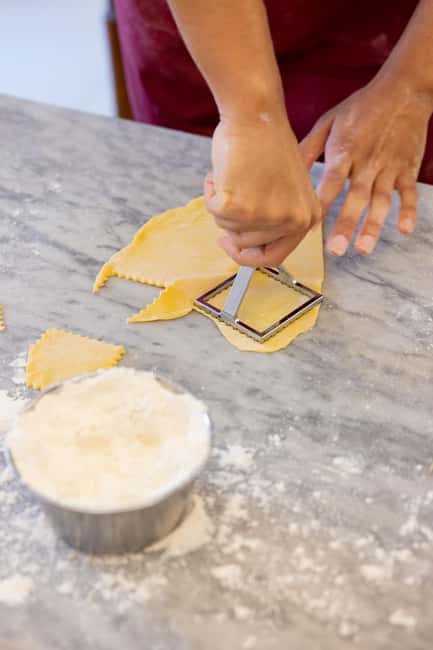
Wine is woven into the meal rather than treated as a separate tasting lecture. You sample organic Tuscan wine from Dalle Nostre Mani, a producer presented as working naturally. The wine is served alongside the pasta and helps turn the lesson into a long, relaxed lunch or dinner.
If you are especially interested in wine, keep your expectations measured. This is primarily a pasta class, not a dedicated Tuscan wine tour. You will taste the included wines, and some participants have enjoyed staying afterward for an additional wine tasting, but the main subject remains pasta.
Dessert and a limoncello shot close the class. The dessert is prepared in advance rather than made at your station. That may disappoint anyone hoping for a full pastry lesson, but it keeps the focus on pasta and gives you a pleasant final course without extending the session.
Alcohol is served, and wine is available only to people of legal drinking age. You can still take part in the cooking if you do not drink, but the included food and beverage package is built around wine, dessert, and limoncello.
The social side of the three hours
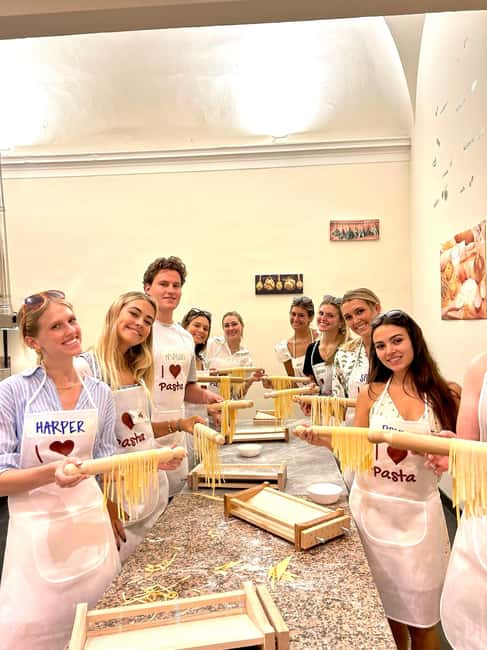
This is as much a shared meal as it is a cooking lesson. The class brings together couples, families, solo participants, students, groups of friends, and corporate teams. One small class had 10 people from several countries, which is about the right scale for meeting others without feeling lost in a crowd.
The social format works particularly well for families. Children aged 12 and 15 took part successfully in one family group, and another large family used the class to celebrate a 50th wedding anniversary. The instructors make a point of including different ages and skill levels, so the activity does not depend on everyone being equally confident in the kitchen.
You should still know what kind of social experience you are booking. This is not a quiet private lesson. You will share tools, workspace, food, and conversation. If you prefer to cook alone or want advanced technical training, the group format may feel less focused than a private class.
For most people, the shared table is the reward. You begin as strangers, work side by side, and finish by eating from the same production line of pasta. Florence is a city of grand art and architecture, but food is one of the easiest ways to connect with its everyday culture.
What you will take home
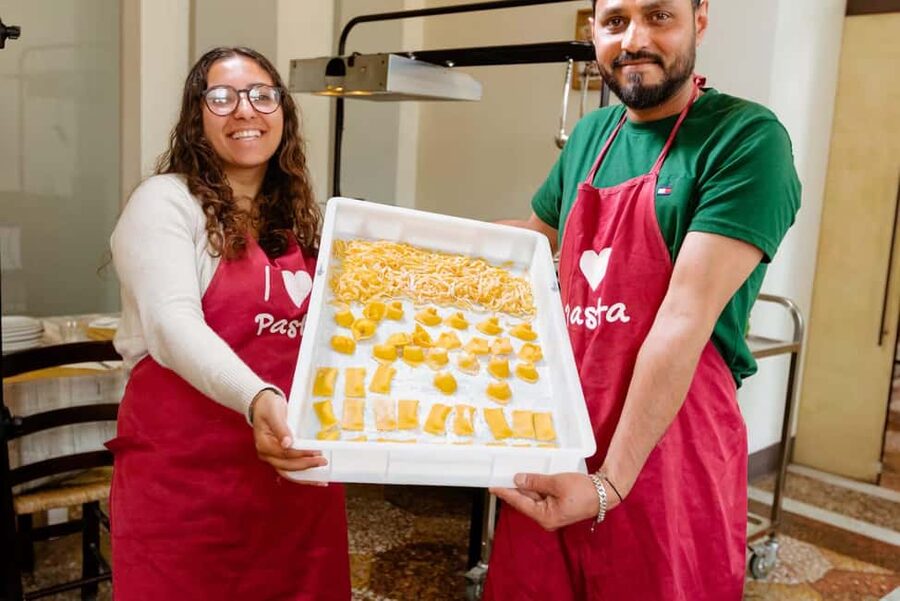
The practical value continues after you leave. Recipes are provided, and one participant specifically appreciated receiving a recipe book. That turns the activity into something you can repeat at home rather than a meal that disappears as soon as you leave the table.
You also leave with a better feel for the dough. A written recipe can tell you quantities, but it cannot fully explain how pasta should feel under your hands or how thin to roll it. The instructor’s corrections during the class are likely to be more useful than a recipe alone.
Do not expect to become a professional pasta maker in three hours. You will learn a solid set of basic methods and three shapes, but practice will still be needed at home. The class gives you confidence and a workable starting point, not a complete culinary education.
Who will get the most from this class
I would recommend this activity to you if you want a break from museums and churches, enjoy eating what you make, or prefer a social activity with a clear result. It is also a good choice for a family looking for something that works across age groups.
It suits beginners particularly well. The instructors are used to helping people who do not cook often, and the process is broken into clear stages. You can also join as an experienced cook if you enjoy Italian food and want to practice filled pasta.
Couples may like it as an alternative to another restaurant meal. Families can use it for a birthday or anniversary. Solo participants have a natural way to meet people, since the work and meal are shared.
This is less suitable for anyone with limited mobility, since the activity involves practical kitchen work and is specifically listed as unsuitable for people with mobility impairments. It is also not suitable for vegans, people with gluten intolerance, lactose intolerance, or nut allergies.
The dietary notes need careful attention. The booking details say vegetarian, vegan, lactose-intolerant, and other options can be discussed, but the restrictions section says vegan, gluten sensitivity, and lactose intolerance cannot be accommodated. Since those statements conflict, contact the school before booking if you have any dietary concern. Do not assume a substitution will be available.
Value, timing, and practical details
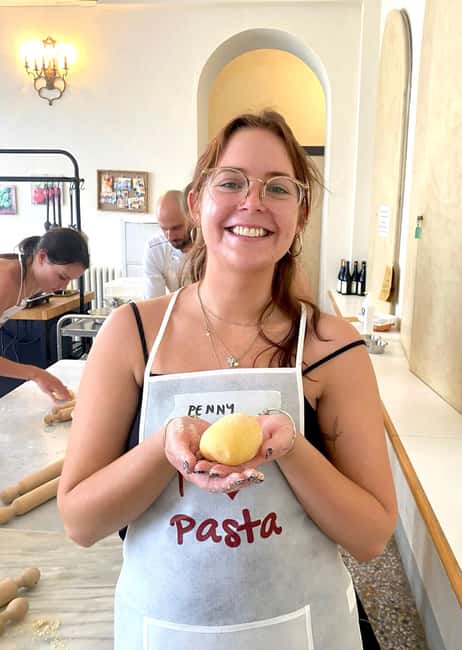
The class lasts three hours and includes instruction, equipment, ingredients, the pasta meal, organic Tuscan wine, dessert, and limoncello. No price is provided here, so I cannot make a precise cost comparison. In value terms, you are paying for several things at once: a guided lesson, a substantial meal, drinks, a central Florence setting, and recipes for later use.
That package can be good value if you would otherwise pay separately for lunch or dinner and a food activity. It is less compelling if you want a serious wine education, a private chef, or a class devoted to advanced pasta technique.
Starting times vary, so check the available session when booking. A morning class can work as an early lunch, while an afternoon or evening class may replace dinner. Since the school is near Ponte Vecchio, you can plan it around sightseeing, but leave a little extra time for finding the address at Lungarno Guicciardini 17r, 50125 Firenze FI.
Wear comfortable clothes that can handle flour and cooking. Smoking is not allowed. Hotel pickup and drop-off are not included, so you make your own way to the school.
Cancellation is flexible up to 24 hours before the activity for a full refund, and you can reserve now and pay later. The school also requires a minimum number of participants. If that number is not reached, you may be offered another date, another time, or a full refund.
Should you book the Florence pasta class?
Book it if you want an easygoing, hands-on food experience with a real meal at the end. The combination of three pasta shapes, friendly instruction, a palace near Ponte Vecchio, Tuscan wine, dessert, and limoncello gives the class more substance than a short demonstration.
I would especially choose it for families, couples, first-time cooks, and anyone who wants a social evening away from the usual sightseeing circuit. The consistently high 4.9 rating from 674 reviews supports the strong impression created by the repeated praise for the instructors, food, and relaxed atmosphere.
Skip it if you need a fully accessible activity, cannot eat its core ingredients, or want a private and highly technical lesson. Also confirm dietary arrangements directly, since the stated options and restrictions do not match. For everyone else, this is a practical way to meet Florence through its food, with enough instruction to keep the memory alive in your own kitchen.
FAQ
Where does the pasta class take place?
The class takes place at the activity provider’s cooking school at Lungarno Guicciardini, 17r, 50125 Firenze FI, Italy, just steps from Ponte Vecchio.
How long does the experience last?
The pasta class lasts three hours.
What language is the class taught in?
The instructor teaches in English.
Which pasta shapes will I make?
You will prepare ravioli, tortelli, and fettuccine by hand.
Do I eat the pasta I make?
Yes. The pasta is cooked and served as a shared meal at the end of the class.
Is wine included?
Yes. The experience includes tastings of organic Tuscan wines from Dalle Nostre Mani. Legal drinking age rules apply.
Are dessert and limoncello included?
Yes. Dessert and a shot of limoncello are included.
Do I need previous cooking experience?
No. The class is designed to be approachable for beginners, and the instructors provide hands-on guidance.
Can children attend?
The experience is suitable for families, and children aged 12 and 15 have taken part in family groups. The supplied information does not give a minimum age, so confirm the age policy when booking.
Can people with dietary restrictions attend?
The information says dietary needs should be reported when booking, but it also lists vegan, gluten-sensitive, lactose-intolerant, and nut-allergic people as unsuitable. Contact the provider before booking to confirm what can be accommodated.
What should I wear?
Wear comfortable clothing suitable for cooking.
Is hotel transportation included?
No. Hotel pickup and drop-off are not included. You go directly to the cooking school.
How early should I arrive?
Arrive five minutes before the start time for check-in.
Can I cancel the booking?
You can cancel up to 24 hours in advance for a full refund. Reserve-now, pay-later booking is also available.
More Workshops in Florence
- Cooking Class and Lunch at a Tuscan Farmhouse with Local Market Tour from Florence
★ 5.0 · 4,831 reviews - Pastamania – Florence Pasta Making Class
★ 5.0 · 3,050 reviews - Florence: Cooking Class Pasta & Tiramisu Making Unlimited Wine
★ 5.0 · 2,234 reviews - Florence Cooking Class The Art of Making Gelato & Authentic Pizza
★ 5.0 · 2,053 reviews
More Pasta in Florence
- Florence: Pasta Cooking Class with Unlimited Wine
★ 4.9 · 10,285 reviews - Florence Pizza or Pasta Class with Gelato Making at a Tuscan Farm
★ 5.0 · 6,801 reviews - Florence: Pasta & Tiramisu Cooking Class with Unlimited Wine
★ 4.9 · 6,708 reviews - Florence: Pasta Cooking Class with Unlimited Wine
★ 5.0 · 6,413 reviews
Fresh on the Florence list
- Florence: Uffizi Guided Tour with Skip-the-Line Entry Ticket★ 4.8 · 499 reviews
- The Best of Florence Walking Tour in a Small Group★ 5.0 · 503 reviews
- Florence: Uffizi Gallery Tickets with Optional Audio Guide★ 4.1 · 503 reviews
- Premium Pasta and Gelato Cooking Class in Florence★ 5.0 · 508 reviews
- From Florence: Tuscany & San Gimignano Tour with 2 Tastings★ 4.8 · 511 reviews
- Florence: Guided Tour of Medici Family Secrets and Chapels★ 4.7 · 512 reviews
- Tuscany Vespa Tours Through the Hills of Chianti★ 5.0 · 515 reviews
- Pasta and Tiramisu Cooking Class with optional Local Market Tour★ 5.0 · 515 reviews
Pasta, compared.
Florence Pizza or Pasta Class with Gelato Making at a Tuscan Farm
Read our review →
Pasta & Tiramisu Cooking Class with Unlimited Wine
Read our review →
Pasta & Tiramisu Class with Fine Wine by the Vatican
Read our review →
Pasta Making Class with Wine, Limoncello, and Dessert
Read our review →
Fettuccine Pasta Cooking Class in Rome’s City Center
Read our review →Browse the lists this tour appears in