
Reviewed · UFFIZI & ACCADEMIA GALLERY TOURS
Florence: Accademia Gallery Guided Tour
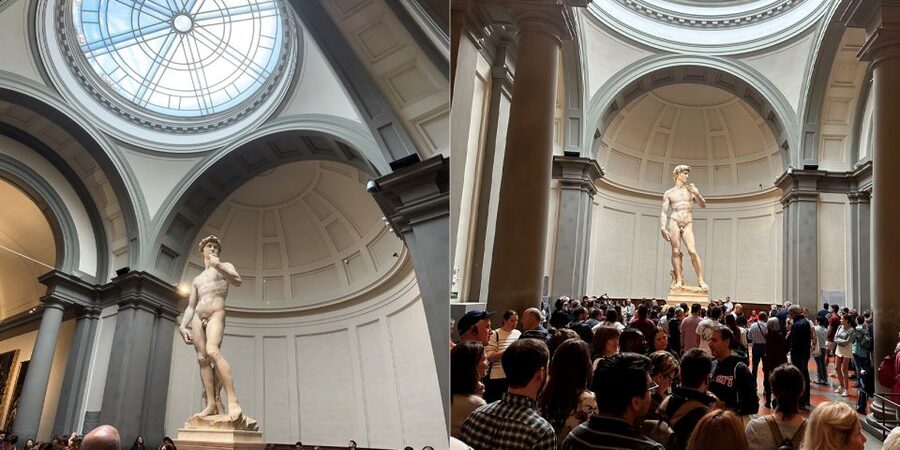
Florence’s Accademia Gallery is small, but Michelangelo’s David is anything but. This guided visit gets you close to the statue from several angles while explaining why a young Florentine republic chose David as its symbol of courage and defiance. You also hear how the Medici family shaped Michelangelo’s career and Florence’s Renaissance.
I like the separate entrance, especially when the regular queue stretches around the block. I also like the tight focus: you see David, the unfinished Prisoners, and key paintings without being dragged through every room. The drawback is that the visit lasts only about an hour, and one guest found the headset sound fuzzy and the guide’s English hard to follow through static.
Key points to know before booking
- David is the clear star: You study the statue from different sides while the guide explains its scale, pose, details, and place in Florentine history.
- The short route has a useful focus: The tour gives priority to Michelangelo, the Prisoners, Lippi, Ghirlandaio, and the Medici rather than attempting every corner of the museum.
- The queue benefit can be major: You use a separate entrance, then pass through security instead of waiting in the standard line.
- Guides bring different strengths: Elisa Raimondo, Claudio, Anna, Victoria, Oxsana, Emanuella, and Elvis have all been praised for clear, lively explanations and a warm manner.
- Headsets are included: They help you follow the commentary in a busy gallery, though sound quality may vary.
- The practical limits matter: Bring ID, leave large bags elsewhere, and expect English only.
Why David deserves a guided look
You can walk into the Accademia, take a photograph of David, and leave with the basic memory of a very large marble man. A guide helps you notice why the statue feels so alive.
David is shown before his fight with Goliath, not after it. His alert eyes, tense hands, and turned head suggest a mind working through danger. The guide’s explanation gives you a way to read those details instead of simply admiring the statue’s size.
You also get the chance to look from more than one position. The front view is the famous one, but the side angles reveal the turn of the torso, the weight carried through the legs, and the careful balance of the figure. At this distance, small details matter: the sling over David’s shoulder, the tension in his hands, and the way Michelangelo made the body feel ready to move.
The statue’s scale can be hard to grasp in photographs. Standing near it makes its height and physical presence clear. Your guide adds the human story behind the marble, including Michelangelo’s working methods and the way his art was understood in his own time.
More Museums in Florence
- Florence: Skip-The-Line Uffizi Gallery Timed Entry Ticket
★ 4.5 · 27,832 reviews - Florence: Leonardo Interactive Museum Entry Ticket
★ 4.5 · 11,763 reviews - Florence Accademia Gallery Tour with Entrance Ticket Included
★ 4.5 · 6,148 reviews
Meeting in Piazza delle Belle Arti
The meeting point is in Piazza delle Belle Arti, the main square by the Accademia. Look for a sign reading Florence with Elvis Guided Experience. Arrive with enough time to locate the guide without rushing, since the group must enter together through the designated access point.
This is a useful location for a first-time visitor because the museum is the obvious landmark. Still, Florence’s streets can be busy with pedestrians, and a square near a major museum may have several tour groups gathering at once. Check the name on the sign rather than joining the first group you see.
The guide leads you through the separate entrance. This does not mean you avoid all museum procedures. You still pass through security, and large bags or luggage are not allowed. Bring a passport or identity card, including for children. A copy is accepted according to the tour information.
The separate entrance and the value of saved time
The strongest practical reason to book this tour is the entry arrangement. You receive guaranteed museum entry and use a separate entrance, so you do not need to face the regular queue.
That matters most during the busiest parts of the day. One person described a line with a wait of more than three hours, while the guided group moved through security and entered smoothly. Queue conditions change, of course, but the Accademia is one of Florence’s places where a timed visit can save a large piece of your day.
At $53 per person, the price is not simply the cost of looking at David. You are paying for a reserved way in, an English-speaking guide, and the explanation that turns a quick museum stop into a short art lesson. If you are visiting during a crowded period or have only one day in Florence, the time saved can justify the cost.
If you arrive when the museum is quiet and already understand Renaissance sculpture, the value is less obvious. You could prefer a less expensive independent visit, assuming you can arrange entry. For many people, though, the combination of entry help and a focused explanation makes the price reasonable.
A compact tour through the Accademia
The visit is advertised as one hour, and the itinerary also includes a 75-minute guided portion. Plan for roughly an hour, while allowing a little flexibility around entry and the pace of the group.
The guide does not treat the Accademia as a giant museum that must be covered room by room. Instead, the route concentrates on the works that explain why this museum matters. That is a good match for you if David is the main reason you came.
You begin with the gallery’s wider collection, including paintings associated with Filippino Lippi and Domenico Ghirlandaio. These works help place Michelangelo in the artistic world of Florence rather than presenting him as an isolated genius.
The paintings also give the guide a chance to explain how artists worked, trained, and gained support in Renaissance Florence. The Medici family enters the story here. Their wealth and influence affected the city’s art, politics, and artists, including Michelangelo.
This context is brief, not a full course in Florentine history. That is both a strength and a limit. You get enough background to understand the artworks, but people who want a long, detailed look at every painting should plan extra time in the museum.
A few other Florence mornings to weigh against this
- Florence: Timed Entrance Ticket to Michelangelo’s David
★ 4.6 · 16,983 reviews - Florence: Michelangelo’s David Skip-the-Line Entry Ticket
★ 4.5 · 12,764 reviews - Florence: Cathedral & Brunelleschi’s Dome Ticket & Audio App
★ 4.4 · 6,973 reviews - Florence: Michelangelo’s David Priority Ticket & Audio App
★ 4.4 · 6,812 reviews
The unfinished Prisoners and Michelangelo’s working process
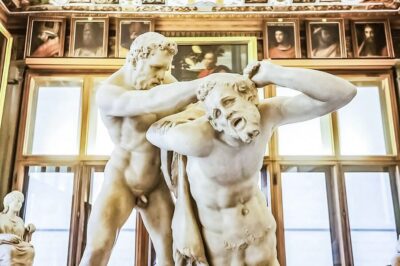
The unfinished sculptures known as the Prisoners are an important part of this experience. They are less instantly famous than David, yet they may give you a clearer sense of Michelangelo’s sculpting process.
The figures appear to emerge from the marble. Your guide can use them to explain the idea of a form being released from the stone and to point out how unfinished surfaces affect the way you see the human body. You also learn how these works connect to Michelangelo’s larger projects.
Several people particularly valued the explanation of the Prisoners. That makes sense: David is polished and complete, while the unfinished figures show a different stage of artistic work. Seeing both in the same museum gives you a useful comparison.
The route does not promise every major room or every painting. If your interest is mainly Michelangelo, this focused approach works well. If you want a broad survey of the Accademia’s full collection, the short visit may feel selective.
Painting, politics, and the Medici connection
The Accademia’s paintings by Lippi, Ghirlandaio, and others give the tour a wider frame. You are not just looking at a single statue in a vacuum. You are seeing art shaped by religion, patronage, family power, and the competitive culture of Florence.
The Medici story is especially useful because it explains why Florence became such an important center for Renaissance art. The family’s influence reached far beyond private wealth. Their support helped create the setting in which artists could receive commissions, gain status, and develop ambitious ideas.
For Michelangelo, the Medici connection adds personal and political context. Your guide explains why this family mattered to him and how artists and powerful patrons interacted. That makes the statue feel tied to the city around you, not just to a textbook chapter.
The tour keeps this material moving. Guides such as Elisa Raimondo, Claudio, Anna, Oxsana, Victoria, Emanuella, and Elvis have been praised for explaining difficult material in an approachable way. The best guides combine facts with stories and pause for questions rather than delivering a speech without checking the group.
What the guide adds to the experience
The guide is the main reason to choose this tour over simply entering the museum alone. The most consistent strength is clear, lively instruction about Michelangelo, David, and the surrounding works.
You can expect an English-speaking guide and headsets so you can hear while standing with the group. Several guides have been described as patient, friendly, entertaining, and easy to follow. One guide was praised for giving just the right amount of information without stretching the visit.
That balance matters in a small museum. Too little explanation leaves you looking at marble without a way in. Too much can make a one-hour visit feel like a lecture. A good guide keeps the story moving and gives you time to look.
There is one practical caution. At least one person found the radios fuzzy, with static making the guide’s English difficult to understand. Another noted that slower speech would have helped with hearing. If you have trouble hearing, stay close to the guide and mention it early. The headsets are useful, but they are not a guarantee of perfect sound.
Photos, crowds, and time inside
You have a chance to take photographs during the visit, particularly around David. The guide’s positioning can help you see the statue without spending your whole visit trying to work out where to stand.
Crowds still exist. A skip-the-line entrance gets you through the door faster, but it does not empty the gallery. Your best chance for a calmer experience may be an afternoon departure. One person specifically found a 4 p.m. visit relatively quiet and easier for taking a clear photograph.
The available information does not promise a particular group size, so you should expect to share the experience with other people. The headset system helps separate the guide’s voice from general museum noise, though the sound issue noted above is worth keeping in mind.
After the guided portion, check with your guide about remaining in the gallery. One person was allowed to stay and look around afterward, but this should not be treated as a guaranteed part of every departure. The advertised experience is the guided visit itself.
Who will get the most from this tour
This is a strong choice if you are seeing David for the first time and want help understanding what you are looking at. It also works for a repeat visitor who wants more detail about Michelangelo’s technique, the Prisoners, or the statue’s connection to Florence.
Families can benefit from the short length and direct route. One family managed the visit with two children under five and a double stroller, and the guide was described as accommodating. That does not mean every movement through the museum will be effortless with a stroller, but the tour is listed as wheelchair accessible and has been used successfully by families.
Art students, museum regulars, and people who already know Renaissance history may find the material familiar in places. The value for you will then rest mainly on the guide’s stories, the entry arrangement, and the chance to see the sculpture with expert direction.
This is not the best match if you want a slow, silent museum visit. You will be part of a guided group, follow a set route, and hear commentary through headsets. It is also not designed for people carrying luggage, since large bags are not allowed.
Booking, cancellation, and timing details
The experience costs $53 per person and lasts about one hour. English is the listed language, and the guide is live rather than an audio recording.
You can cancel up to 24 hours before the start for a full refund. The reserve now and pay later option keeps your plans flexible, which is useful when your Florence schedule is still changing.
Because the price and availability can vary by start time, check the available departures before planning the rest of your day. If you want the best chance of a less crowded visit, an afternoon time may be worth considering, based on the quieter 4 p.m. experience described above.
Is the Accademia guided tour worth $53?
I would book it if you want three things: fast entry, a focused look at Michelangelo, and a guide who can explain why David matters beyond its fame.
The strongest guides on this experience, including Claudio, Elvis, Anna, Elisa Raimondo, Oxsana, Victoria, and Emanuella, have been praised for warmth, clarity, humor, and strong command of Michelangelo’s work. Guide quality can vary from one departure to another, but the overall pattern is encouraging.
I would skip it only if you already have museum entry arranged, prefer exploring alone, and are comfortable supplying your own art-historical context. For everyone else, the tour offers a sensible short introduction to one of Florence’s essential sights. You save time at the door, see David properly, and leave with a better understanding of the city that produced him.
FAQ
Where does the Accademia Gallery tour meet?
The meeting point is Piazza delle Belle Arti, in the main square of the Galleria dell’Accademia. Look for a sign with the name Florence with Elvis Guided Experience.
How long does the tour last?
The listed duration is one hour. The itinerary also describes a 75-minute guided portion, so allow roughly an hour and a little extra flexibility around entry.
What language is the tour in?
The live guided tour is offered in English.
Does the tour include museum admission?
Yes. Guaranteed museum entry and the tour guide are included.
Can I skip the regular Accademia line?
Yes. The tour uses a separate entrance for priority access. You still need to pass through museum security.
What should I bring?
Bring a passport or identity card. A copy is accepted, and identification is also required for children.
Can I bring luggage or a large bag?
No. Luggage and large bags are not allowed.
Is the tour wheelchair accessible?
Yes. The activity is listed as wheelchair accessible.
Fresh on the Florence list
- Florence: Uffizi Guided Tour with Skip-the-Line Entry Ticket★ 4.8 · 499 reviews
- The Best of Florence Walking Tour in a Small Group★ 5.0 · 503 reviews
- Florence: Uffizi Gallery Tickets with Optional Audio Guide★ 4.1 · 503 reviews
- Premium Pasta and Gelato Cooking Class in Florence★ 5.0 · 508 reviews
- From Florence: Tuscany & San Gimignano Tour with 2 Tastings★ 4.8 · 511 reviews
- Florence: Guided Tour of Medici Family Secrets and Chapels★ 4.7 · 512 reviews
- Tuscany Vespa Tours Through the Hills of Chianti★ 5.0 · 515 reviews
- Pasta and Tiramisu Cooking Class with optional Local Market Tour★ 5.0 · 515 reviews
Uffizi & Accademia Gallery Tours, compared.
Skip-The-Line Uffizi Gallery Timed Entry Ticket
Read our review →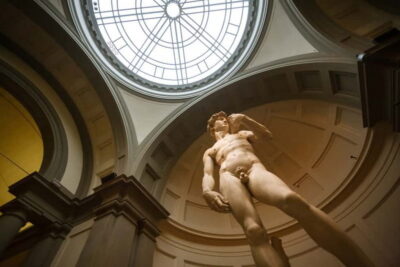
Timed Entrance Ticket to Michelangelo’s David
Read our review →
Michelangelo’s David Skip-the-Line Entry Ticket
Read our review →
Cathedral & Brunelleschi’s Dome Ticket & Audio App
Read our review →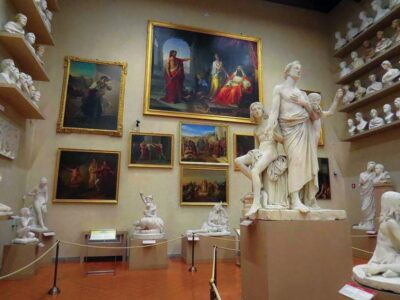
Michelangelo’s David Priority Ticket & Audio App
Read our review →
Uffizi Priority Ticket & Masterpieces Audio App
Read our review →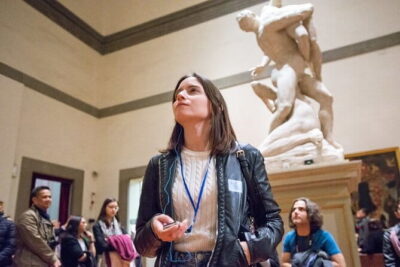
Florence Accademia Gallery Tour with Entrance Ticket Included
Read our review →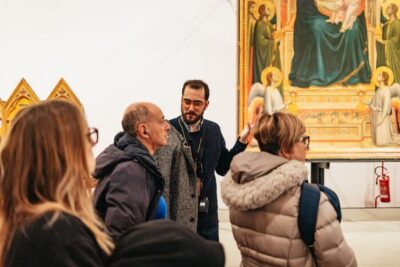
Browse the lists this tour appears in