
Reviewed · UFFIZI & ACCADEMIA GALLERY TOURS
Cooking Art Brunelleschi
Making pasta inside a 1200s medieval tower just steps from Brunelleschi’s Dome gives this Florence class a setting far more memorable than a plain cooking studio. You roll dough, shape ravioli and tortelli, cut pappardelle, and then sit down to eat what the group has prepared.
I like the generous menu and the cheerful, hands-on teaching. Three pastas, three sauces, lunch, wine, and soft drinks make the $39.92 price unusually good for Florence. Chefs such as Valentino, Lorenzo, Jacob, Eno, and Giordano are praised for keeping the class moving while still helping at the table. The catch is that the pasta is combined and cooked together, so you may not eat the exact pieces you shaped.
Key points to know before booking
- Three pastas in one class: Make ravioli, tortelli, and pappardelle, then pair them with butter and sage, arrabbiata, and Tuscan ragù.
- A remarkable cooking room: The class takes place in a medieval tower near Brunelleschi’s Dome, with a strong connection to Florence’s medieval past.
- A full meal, not just a lesson: You eat the pasta prepared during the class, with Tuscan wine and unlimited soft drinks included.
- Friendly, energetic instruction: The chef varies by session, with Valentino, Lorenzo, Jacob, Eno, Arturo, Victoria, Andrea, and others leading recent classes.
- Good for mixed ages: Families with teenagers, couples, solo participants, and groups can all take part. No cooking equipment is required.
- Allow for heat and close quarters: The room can feel warm and crowded, so wear light clothing and expect a lively shared setting.
Cooking pasta beneath Brunelleschi’s Dome
Florence has no shortage of cooking classes, but location matters. Cooking Art Brunelleschi meets at Via de’ Bardi 23 r, near the historic center and within easy reach of public transportation. The class takes place in a stone medieval tower close to the Duomo, a setting that gives the activity a sense of place before you even touch the flour.
The tower is tied to Dante Alighieri’s family through his wife’s relatives, adding an unusual link to the city’s medieval literary world. You are not simply making pasta in a generic kitchen. You are working in a room connected to the Florence of Dante and the Medici, with old stone around you and the great dome nearby.
That backdrop does not replace good teaching, of course. Here, it adds character to an already practical activity. I would choose this class for a first or second day in Florence, when you are still getting your bearings and want an easy way to connect food with local history.
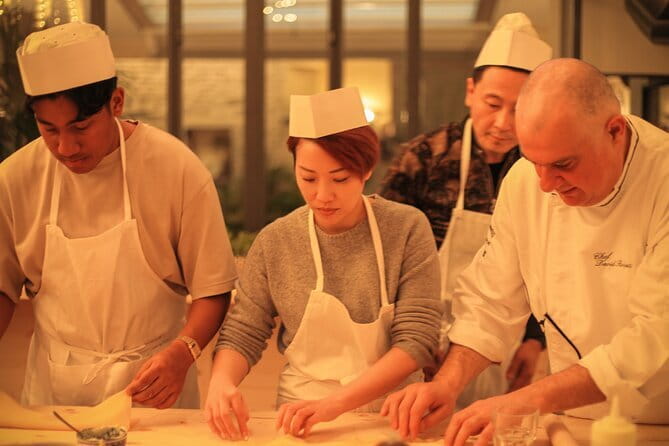
The listed maximum is 19 participants, though the wider venue may be active and the room can feel busy. Several groups may be working at once, with each table assigned to a chef. That arrangement keeps the class social and gives you the chance to meet people from different places, but it is not the quiet, private kitchen lesson some people expect.
A few other Florence mornings to weigh against this
- Florence: Skip-The-Line Uffizi Gallery Timed Entry Ticket
★ 4.5 · 27,832 reviews - Florence: Timed Entrance Ticket to Michelangelo’s David
★ 4.6 · 16,983 reviews - Florence: Michelangelo’s David Skip-the-Line Entry Ticket
★ 4.5 · 12,764 reviews
What happens during the three-hour class
The experience lasts about three hours, usually enough time for a lesson, plenty of food, and a relaxed meal. You do not need to bring equipment. The ingredients and tools are supplied, and the chef takes you through the process step by step.
Starting with fresh pasta dough
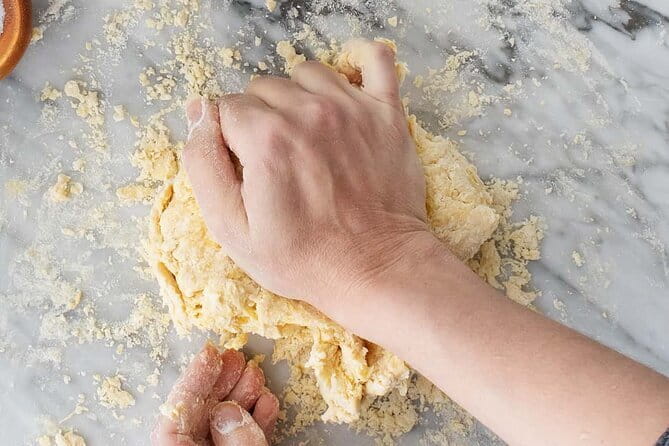
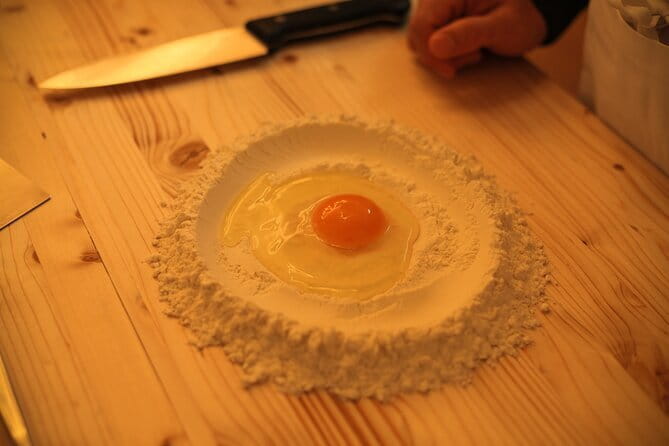
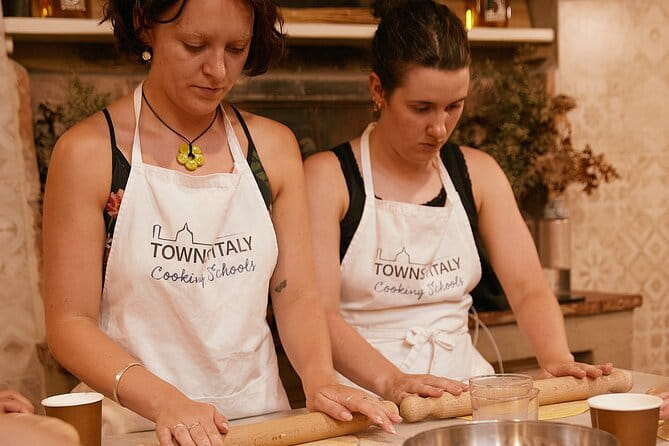
The class begins with the foundation of Italian pasta: flour, careful mixing, and kneading. You learn how the dough should feel and how to work it until it becomes smooth enough to roll. This is the most useful part to remember at home, since the right texture matters more than owning expensive equipment.
The chefs make the process approachable for beginners. Jacob, for example, is praised for giving personal help with kneading and rolling, while other instructors such as Victoria and Andrea are noted for clear explanations and individual attention. You are not expected to know how thin the dough should be or how much pressure to use. That is what the chef is there to show you.
The pace is active, though. If you want to ask questions, do it early and often. A busy group means the chef cannot stand beside one person for the entire lesson.
Shaping ravioli and tortelli
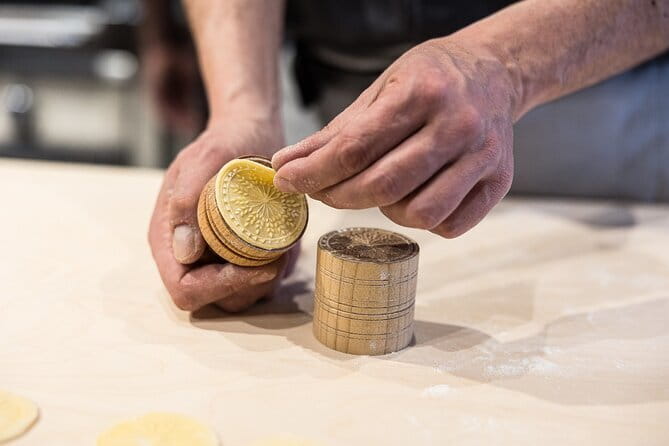
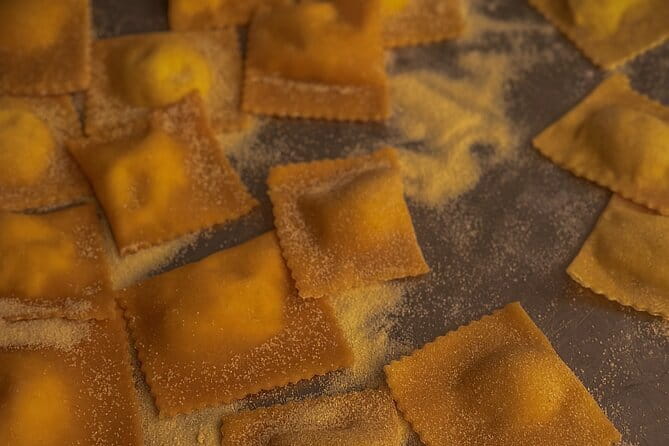
Next comes the filled pasta. Ravioli and tortelli look similar at first, but the shapes and folding methods differ. You learn to place the filling, seal the dough, and cut the pieces without leaving air pockets or letting the filling escape.
This is where the class becomes especially satisfying. A sheet of dough turns into something that looks like proper Italian pasta in just a few minutes. It is also where hands-on help matters most. Giordano and other chefs are praised for walking around the tables to correct technique and show participants how to handle the dough.
The fillings and exact seasonal ingredients can vary, but the course focuses on products from Italy and vegetables selected for the season. The kitchen team prepares the sauces while you work, allowing the meal to keep moving without forcing you to spend the whole class chopping.
Same city, an entirely different afternoon:
- Tuscany Day Trip from Florence: Siena, San Gimignano, Pisa and Lunch at a Winery
★ 5.0 · 21,634 reviews - The Best tour in Florence: Renaissance & Medici Tales – guided by a STORYTELLER
★ 5.0 · 12,316 reviews - Florence: Leonardo Interactive Museum Entry Ticket
★ 4.5 · 11,763 reviews - The Best Tour in Florence: Renaissance and Medici Tales
★ 5.0 · 10,810 reviews
Cutting pappardelle
Pappardelle is the broad ribbon pasta of the group, and it gives you a different lesson in cutting and portioning. You roll the dough, fold or arrange it for cutting, and create wide strips that can carry a hearty sauce.
For many people, this becomes the favorite pasta of the meal. The broad noodles work especially well with the old-fashioned Tuscan ragù, which is more substantial than the lighter butter and sage sauce served with ravioli.
The three pasta shapes are a smart choice for a class. You learn different skills rather than repeating the same process three times. Ravioli teaches filling and sealing, tortelli adds another shape, and pappardelle shows how to make long pasta by hand.
Three sauces, three different Tuscan lessons
While the class focuses on pasta, the chef also prepares sauces to match each shape. The sample menu includes ravioli with butter and sage, tortello all’arrabbiata, and pappardelle with Tuscan ragù.
The butter and sage sauce is simple, but that is exactly why it works. With a delicate filled pasta, a heavy sauce can cover the filling. Butter and sage let the pasta remain the main event.
Arrabbiata brings tomato, garlic, and heat to the tortelli. It gives the meal a sharper edge and shows how the same basic pasta dough can take on a completely different character with a lively sauce.
The Tuscan ragù is the richest pairing. Served with pappardelle, it makes the broad noodles feel substantial and turns the final course into a proper lunch. The class provides enough food that many people consider it dinner, depending on the start time and how much you eat.
The sauces are also useful for home cooking. Fresh pasta can seem like the hard part, but sauce pairing is what helps you use it well. The lesson gives you three combinations to remember rather than one recipe you may never repeat.
Eating the pasta you helped make
At the end, the pasta is cooked and served for the group to eat. This is a communal meal, not a private plate prepared only from your own work. Pasta from the tables can be combined and cooked together, which means the ravioli or pappardelle on your plate may have been shaped by someone else.
I see this as part of the class’s social design, but it is also the main point to consider before booking. If you are uncomfortable eating food handled by a large group, choose a more private cooking lesson. The shared approach keeps the price down and makes the class more about the group experience, but it removes some control over your individual portion.
The food itself is widely praised for being plentiful and delicious. The ingredients are described as high quality, and the teaching chefs cook the sauces as part of the class rather than leaving you with a plate of plain pasta. You get to eat a complete meal, not a tiny sample.
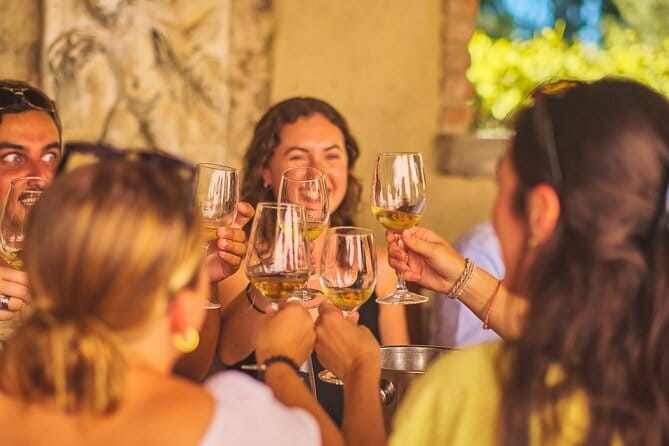
Tuscan wine and unlimited soft drinks are included. Red and white wine are available, along with water and sodas. Alcohol is limited to participants aged 18 and over. One practical note: the wine is part of a casual, all-inclusive meal rather than a formal wine tasting. Come for the pasta first, and treat the wine as a pleasant extra.
The chefs make the difference
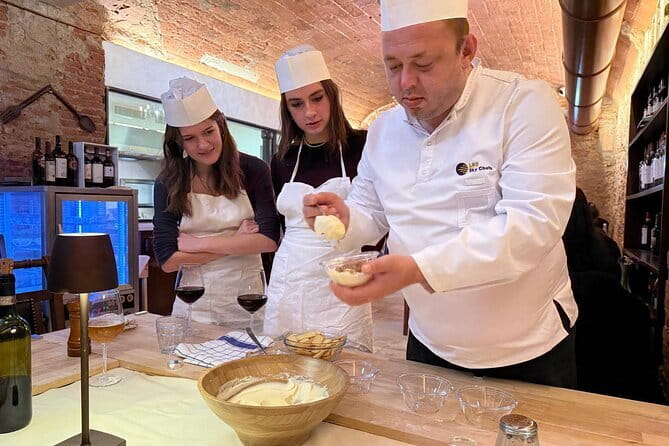
The chef leading your table depends on the date. Valentino is praised for his humor and energy. Jacob receives strong marks for teaching pasta techniques that participants felt ready to repeat at home. Lorenzo is described as both entertaining and helpful, while Eno is noted for patience and care with different dietary needs.
Arturo, Victoria, Andrea, Giordano, Antonio, Francesca, and Sal are also named as effective instructors in different sessions. That range tells you something useful: the class is built around the chef’s personality, and the mood can vary slightly from one date to another.
The best instructors do more than demonstrate. They circulate, correct hand positions, explain why ingredients are used, and keep the class from stalling while sauces cook. Several chefs also add facts about Florence, Tuscan food, regional recipes, and old cooking traditions.
You should expect an outgoing style rather than a formal culinary lecture. The experience works because the chef keeps people laughing and involved. If you prefer silent concentration and exact professional training, this may feel noisy. If you want to learn while meeting people, the energy is a plus.
Group size, room comfort, and the practical details
The activity is conducted in English and confirmation is provided when you book. The meeting point is Via de’ Bardi, 23 r, 50100 Firenze FI, Italy, and the class ends back at that same meeting point. Private transportation is not included, but the location is near public transportation and sits in the central Florence area.
Arrive ready to start at the stated time. The entrance may not open before the class begins, so you might be asked to wait across the street until the staff is ready. Once inside, you are divided into smaller working groups led by individual chefs.
The room has enough space for the activity, but several people describe it as tight. Smooth floor tiles also call for care, especially if you have low mobility. This is not presented as a mobility-focused activity, and the supplied information does not promise special accessibility services.
Heat is another recurring practical point. With ovens, cooking, people, and old stone walls, the room can become warm. Wear light clothes and choose comfortable shoes. You will be standing, rolling dough, shaping pasta, and moving around the table for much of the three hours.
The atmosphere can also get loud. Wine is included, and a social group may become quite lively. That can be part of the fun, but it is worth knowing if you are hoping for a calm lesson.
Is $39.92 good value in Florence?
At $39.92 per person, this is one of the stronger value choices for a Florence food activity. You receive roughly three hours of instruction, all ingredients, equipment, three pasta dishes, three sauces, lunch, Tuscan wine, and unlimited soft drinks.
The value improves if you count the skill you take home. A museum ticket gives you an afternoon of art, while this class gives you a meal and techniques you can use again. Several participants left ready to make pasta for family and friends, which is a fair measure of a practical cooking class.
The tradeoff is personal attention. A private lesson would likely give you more control and a quieter pace, but it would cost more. Here, the lower price comes from the shared kitchen, communal cooking, and group meal.
A free gelato coupon is also provided according to the experience details, though the gelato stop is at another establishment about a 15-minute walk away. You do not have to use it immediately, and it can be saved for another day. Treat it as a bonus, not a central part of the pasta class.
Who should book this pasta class?
I would recommend it to families with older children and teenagers, couples, solo participants who enjoy meeting people, and groups looking for a meal with a story behind it. The activity suits mixed skill levels because the chef demonstrates each stage and supplies everything you need.
It is especially good for anyone who wants to recreate a Florence memory at home. The techniques are simple enough for beginners, yet useful enough to improve your homemade pasta. You will learn by handling the dough rather than watching a chef work from a distance.
I would hesitate if you need a private table, strict control over food preparation, a cool and quiet room, or a carefully paced culinary course. The communal cooking method means your work is mixed with the group’s pasta, and the room may feel crowded or warm.
The class also works well as a midday anchor in a Florence itinerary. You finish with a full meal, so you can plan a lighter evening. It is near major sights, but schedule some breathing room around it rather than racing straight to another timed admission.
Should you book Cooking Art Brunelleschi?
Book it if you want hands-on pasta making with a full meal at a reasonable Florence price. The medieval tower, central location, lively chefs, and three pasta shapes give the class more character than a basic cooking demonstration.
Go in with the right expectations. This is a shared, social lesson, not a private kitchen table. Your pasta may be cooked with everyone else’s, the room may be warm, and the wine service can make the atmosphere loud. For many people, those are small costs for three hours of cooking, eating, and meeting others in a very Florentine setting.
Free cancellation is available if you cancel at least 24 hours before the start time. Changes or cancellations made later are not accepted for a refund. At $39.92, I would book this class for a fun and useful Florence afternoon, especially if your group includes a teenager who would rather make dinner than look at another church ceiling.
FAQ
How long does the cooking class last?
The experience lasts approximately three hours, including the pasta lesson and the meal at the end.
Where does Cooking Art Brunelleschi meet?
The meeting point is Via de’ Bardi, 23 r, 50100 Firenze FI, Italy. The activity ends back at the same meeting point.
What types of pasta will I make?
You will prepare three types of fresh pasta: ravioli, tortelli, and pappardelle.
What sauces are served with the pasta?
The sample menu pairs ravioli with butter and sage, tortello with arrabbiata, and pappardelle with old-fashioned Tuscan ragù.
Are drinks included?
Yes. Tuscan wine and unlimited soft drinks are included. Alcoholic beverages are available only to participants aged 18 and over.
Do I need to bring cooking equipment?
No. The ingredients and all cooking equipment for the fresh pasta course are provided.
Fresh on the Florence list
- Semi Private Deep Wine Chianti and San Gimignano from Florence★ 5.0 · 191 reviews
- From Florence: Wine Tasting and Dinner in Chianti Vineyards★ 4.6 · 192 reviews
- Small Group Florence Cathedral Guided Tour with Priority Access★ 4.0 · 192 reviews
- Hard Rock Cafe Florence with Set Menu for Lunch or Dinner★ 4.5 · 193 reviews
- Florence Sunset Food Tour with Wine & Dine at a Tuscan farmhouse★ 5.0 · 194 reviews
- Wine Experience In Chianti Hills from Florence★ 4.5 · 195 reviews
- Brunelleschi’s Dome and Cathedral Complex Reserved Ticket★ 4.5 · 195 reviews
- Florence: Duomo Complex Guided Tour★ 4.2 · 195 reviews
Uffizi & Accademia Gallery Tours, compared.
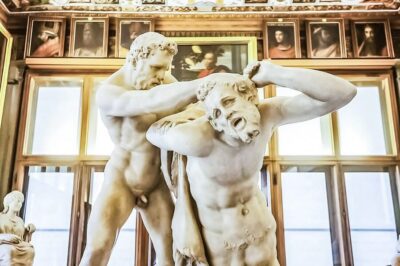
Skip-The-Line Uffizi Gallery Timed Entry Ticket
Read our review →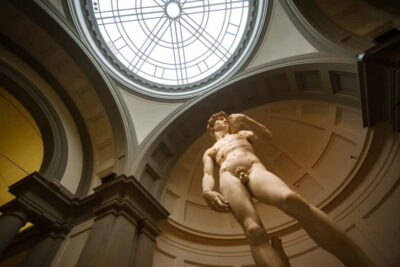
Timed Entrance Ticket to Michelangelo’s David
Read our review →
Michelangelo’s David Skip-the-Line Entry Ticket
Read our review →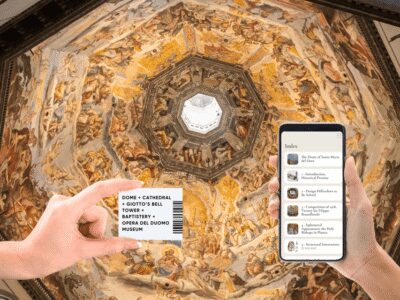
Cathedral & Brunelleschi’s Dome Ticket & Audio App
Read our review →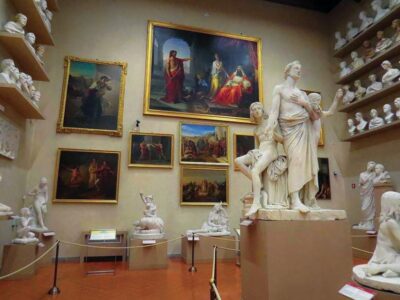
Michelangelo’s David Priority Ticket & Audio App
Read our review →
Uffizi Priority Ticket & Masterpieces Audio App
Read our review →
Florence Accademia Gallery Tour with Entrance Ticket Included
Read our review →
Browse the lists this tour appears in