
Reviewed · TRAIN EXPERIENCES
From Rome: Ostia Antica Guided Half-Day Trip by Train
Ostia Antica gives you something Rome’s famous center often cannot: room to picture ordinary Roman life. This former port has streets, apartment blocks, taverns, baths, shops, warehouses, and a theater spread across a large archaeological park, and the Baths of Neptune mosaic is a real showstopper.
I like the quick train ride from central Rome, and I like the small groups capped at 12 people. Guides such as Rob, Cat, Alberto, Laura, and Caterina are praised for making daily life feel real through stories, humor, pictures, and even a little acting. The main drawback is that the site is broad, hot, and exposed, so four hours gives you a strong introduction rather than a complete look.
Key points at a glance
- A short train ride from Rome: The outward trip takes about 15 minutes, with the return journey taking about 20 minutes.
- Roman life beyond emperors: See commercial buildings, thermal baths, taverns, warehouses, housing, and public washrooms.
- The best-known sights: The three-hour walk includes the Decumanus Maximus, Baths of Neptune, amphitheater, and communal Forica.
- A small English-speaking group: The tour is limited to 12 participants, making it easier to hear the guide and ask questions.
- Flexible ending: You can return to Rome with the group, continue exploring Ostia Antica, visit the modern town, or head toward the beach.
- Good value at $58: The price includes train tickets, admission, and a guided visit, which is useful at a large site with limited on-site explanation.
Why Ostia Antica is worth your morning
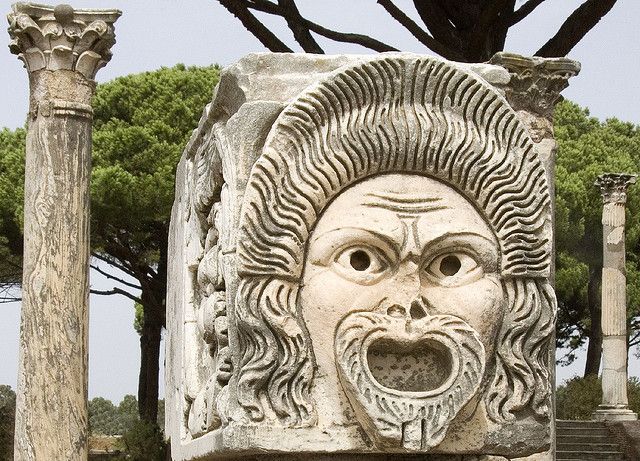
Ostia was Rome’s port city, founded in the 4th century BC at the mouth of the Tiber. Its role was practical and crucial: goods moving toward Rome passed through here, and the town grew into a busy center for commerce, shipping, storage, administration, and military activity.
That purpose gives Ostia a different feel from the Forum or Colosseum. In central Rome, you often focus on monuments built to impress. At Ostia, I find the small details more revealing. You walk past shop fronts, public baths, apartment buildings, food businesses, and places where people handled the routine work of keeping a major city supplied.
The ruins are also unusually easy to read. Walls remain high in many places, some buildings preserve upper floors, and mosaics still mark the floors of baths and public spaces. You may not see every building in one morning, but the surviving streets let you understand how a Roman town was laid out.
Ostia is sometimes compared with Pompeii. That comparison is useful, though the two places tell different stories. Pompeii is famous for the disaster that preserved it. Ostia is especially valuable for showing a working port town, with trade and public life at its center. It is also much closer to Rome, making it a sensible half-day choice if you do not want to spend most of a day on transport.
More Train Trips in Rome
- Rome to Pompeii Guided Tour with Wine & Lunch by High Speed Train
★ 5.0 · 1,379 reviews - Ancient Ostia Antica Semi-Private Day Trip from Rome by Train with Guide
★ 4.5 · 579 reviews - Rome: Pompeii Tour with Wine and Lunch by High Speed Train
★ 4.8 · 485 reviews
Meeting at Cafe Piramide
The tour begins at Cafe Piramide beside the Piramide Metro Station on Line B, the blue line. When you face the metro stop, the cafe is on your right, near the railway tracks and the train exit. Look for the white umbrellas outside and a City Wonders sign held by the guide.
Give yourself enough time to find the correct side of the station. One practical point is easy to miss: white umbrellas across the street can look like the meeting place, but the cafe you need is just to the left as you emerge from the station. If you are coming from Termini, allow extra time for the metro ride and station crowds.
This is not a hotel pickup tour. You make your own way to Piramide, which keeps the price down but means you need to plan your morning. Once the group meets, the guide provides the return train tickets and explains the journey.
The train ride from Rome to the ruins
The train ride is one of the strongest practical features of this excursion. The outward trip takes around 15 minutes, so you are not spending half the tour sitting in a coach. Your guide accompanies the group to Ostia Antica and helps organize the trip, which is useful if you are unfamiliar with Rome’s suburban rail system.
The tour includes a return ticket, but pay attention to how the morning ends. If you return with the group, the service finishes back at Piramide at approximately 1:00 PM. If you remain at Ostia Antica or continue to modern Ostia, your later return to Rome is unescorted, although the train ticket is provided.
In the event of a public transport strike or another unexpected transport problem, a minibus is provided at no additional cost. That is a reassuring backup, though no transport plan is entirely immune to delays.
Walking the Decumanus Maximus
The guided visit at Ostia lasts about three hours. The route follows the Decumanus Maximus, the main street through the ancient town. Walking this broad thoroughfare helps you grasp the scale of the settlement before you begin studying individual buildings.
Your guide explains what you are seeing and, just as important, what it meant to people who lived and worked here. The focus is not only on wealthy Romans or famous rulers. You learn about the commercial workers, residents, bathhouse users, shopkeepers, and other ordinary citizens who depended on Ostia’s port.
This is where guides make a major difference. The site is large, and many walls look similar if you do not know what they once contained. Rob is particularly praised for clear explanations, funny anecdotes, and small acted scenes that help you imagine how the spaces were used. Cat is noted for keeping the group moving at a comfortable pace while stopping at important places. Alberto is frequently praised for combining clear explanations with a friendly manner.
Guide assignments can change, so you should not book on the assumption that one named guide will lead your particular departure. The common thread is an English-speaking guide who provides the historical framework that the bare ruins cannot provide on their own.
A few other Rome mornings to weigh against this
- Hadrian’s Villa and Villa d’Este Half-Day Trip from Rome
★ 3.5 · 808 reviews - Rome Golf Cart Tour : Half-Day Private or Small Group Sightseeing
★ 5.0 · 528 reviews - Murano, Burano and Torcello Half-Day Sightseeing Tour
★ 3.5 · 7,928 reviews - Milan’s Must See: Half-Day Tour of Last Supper, Duomo & La Scala
★ 4.0 · 4,193 reviews
Baths of Neptune and the surviving mosaics
The Baths of Neptune are one of the clearest highlights. Their centerpiece is a large mosaic showing the sea god Neptune riding a four-horse chariot. The image connects directly with Ostia’s role as a port, while the baths themselves show how public bathing was part of urban routine.
Do not rush past the floor decoration. Mosaics were not simply attractive finishing touches. They helped communicate the purpose and status of a building, and here the sea imagery makes sense in a town tied to maritime trade and transport.
The ruins preserve other art, frescoes, statues, and architectural details as well. You may see original decoration still attached to walls rather than only isolated pieces in a museum. The guide’s explanation helps you separate what you are looking at from the modern assumptions you may bring to an ancient ruin.
The amphitheater and a public seat
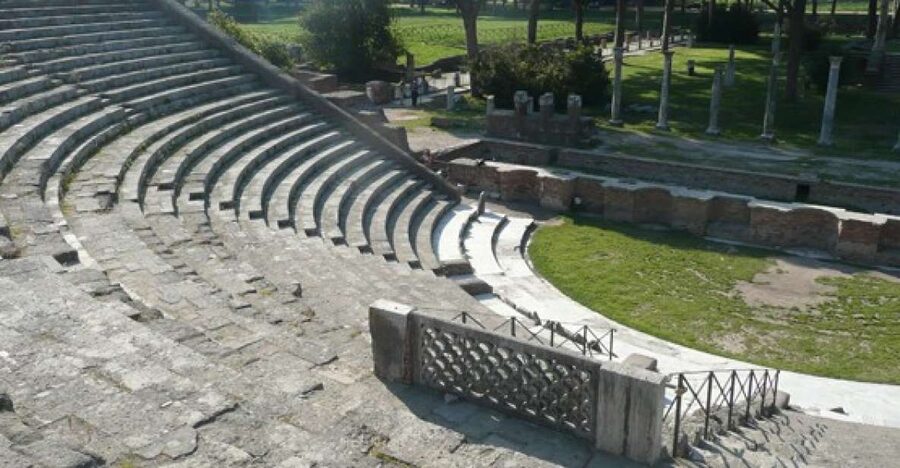
The amphitheater was built in 12 BC and held about 3,500 spectators. Sitting in the stands gives you a simple but effective sense of the building’s design. The surviving structure is not just a photograph stop. It shows how entertainment was organized and how a town of Ostia’s size gathered for public events.
The amphitheater is also a good place to notice the tour’s pace. The guide pauses at major sights, but the visit continues through the wider site rather than spending the entire morning at one monument. You get a broad view of Ostia, with enough time to ask questions and take in the setting.
Several people who stayed on after the guided portion found the extra time worthwhile, especially near the museum. If the museum is important to you, check its opening hours on the day of your visit, since seasonal hours can affect access. One winter visit found it closing early, around 1:30 PM.
The Forica, a very Roman detail
The communal Forica is one of the most memorable stops because it is so direct. This public washroom has a marble bench with 20 evenly spaced openings along four walls of an open room.
It may prompt a laugh, but that is part of its value. Ancient Rome can seem remote when you look only at temples and statues. A public toilet brings you back to the ordinary, physical side of city life. You can see how shared facilities worked and how public spaces served large numbers of people.
The guide gives this stop the right amount of context without turning it into a cheap joke. It is a small detail, yet it helps make Ostia feel inhabited rather than merely monumental.
Taverns, warehouses, housing, and daily work
Ostia’s commercial buildings explain why Rome needed this town. Warehouses stored goods, shops faced the streets, and businesses served people involved in trade and transport. The remains of taverns and other public spaces help you picture a town where work, food, business, and social life were closely mixed.
The site once had more than 100,000 residents, according to the tour information. That figure matters because the ruins can appear quiet today. High walls and surviving street plans make it easier to understand that this was once a substantial urban center, not a small outpost.
I especially like that the tour treats architecture as evidence of social life. A bathhouse tells you about hygiene and leisure. A warehouse points to supply networks. A theater shows public entertainment. A shop front hints at the daily economy. The guide connects those pieces so you are not left with a string of disconnected ruins.
Is three hours enough?
Three hours with a guide is enough to see the principal sights and gain a working understanding of Ostia. It is not enough to inspect every street, building, and mosaic in the archaeological park. That is not a flaw so much as a choice built into the half-day format.
The site is extensive, and walking surfaces may be uneven. You need comfortable shoes, water, and protection from the sun. Summer can be especially demanding because much of the visit takes place outdoors. One useful habit is to take the planned toilet and snack break seriously rather than trying to push through.
The group size, limited to 12, helps. A guide can keep people together without the stiffness of a large coach group, and you have a better chance of asking a question or hearing a story. The pace is active, but the tour is not designed as a race.
This experience is not suitable for wheelchair users, and baby strollers are not allowed. Families with older children can enjoy it, especially because the guides use stories and visual explanation rather than relying only on dates and names. Very young children may find three hours of ruins tiring.
What to do after the guided tour
At the end of the guided walk, you have several choices. You can return to Rome with the guide, remain inside the archaeological park to explore independently, visit the museum, continue to the modern town of Ostia, or head to a nearby beach.
Staying longer is the best use of the ticket if ancient sites are a major interest. The guided route gives you the main framework, then independent time lets you move at your own speed. You might want to revisit a building, spend longer with the mosaics, or explore parts not covered during the group walk.
The beach option makes this more than a history outing, especially in warm weather. Bring a towel, beachwear, and sports shoes if you plan to add that stop. Just remember that the return to Rome is not guided if you separate from the group.
Price, value, and who should book
At $58 per person, the tour includes the return train ticket, entry to Ostia Antica, and three hours with a live English-speaking guide. I consider that fair value for a first visit, mainly because the site is large and its meaning is not always obvious from the ruins alone.
You could visit independently, but you would need to arrange transport, admission, and your own explanation of the buildings. The guided option turns a potentially confusing archaeological park into a readable town. It also removes the worry of getting the group onto the correct train in the morning.
I would choose this tour if you have already seen central Rome’s major monuments or want a quieter alternative to Pompeii. It is also a good fit for anyone curious about work, trade, public services, and home life in the Roman world.
I would hesitate if you dislike walking outdoors, have limited mobility, or want a slow, highly detailed archaeological study. In that case, four hours may feel too structured and the site too broad. Also check the weather, since heat can affect your enjoyment more than the ruins themselves.
Flexible booking helps if your schedule is uncertain: you can cancel up to 24 hours in advance for a full refund, and reserve now while paying later. That is useful in a Rome itinerary where weather and museum plans often shift.
FAQ
Where does the Ostia Antica tour meet?
Meet at Cafe Piramide beside Piramide Metro Station on Line B. When facing the metro stop, the cafe is on your right, near the train tracks and train exit. Look for white umbrellas and the City Wonders tour sign.
How long is the tour?
The experience lasts four hours. The guided visit at Ostia Antica takes about three hours, with train travel from Rome and back included.
How long is the train ride?
The outward train trip takes about 15 minutes. The return trip takes about 20 minutes.
Is the train ticket included?
Yes. The tour includes a return train ticket from Rome to Ostia Antica.
Is admission to Ostia Antica included?
Yes. Entry to the Ostia Antica archaeological site is included in the price.
What language is the tour in?
The live guided tour is conducted in English.
How large is the group?
The tour is limited to 12 participants.
Can I stay at Ostia Antica after the guided tour?
Yes. You may remain at Ostia Antica, explore the modern town of Ostia, or continue to a nearby beach. Your return journey to Rome will be unescorted, although a train ticket is provided.
What should I bring?
Bring comfortable shoes, water, a towel, beachwear, and sports shoes if you plan to visit the beach. Baby strollers are not allowed, and the tour is not suitable for wheelchair users.
Should you book this Ostia Antica tour?
Book it if you want Roman history with fewer crowds and more attention to ordinary life. The short train ride, included admission, small group, and strong guide-led storytelling make this an efficient addition to a Rome visit.
The best reason to go is not one single monument. It is the chance to walk through a former port town and see how commerce, bathing, entertainment, housing, and public services worked together. Choose the half-day format for a focused introduction, then stay on for the museum or beach if you have the time and energy.
More 1-Day Tours in Rome
- From Rome: Pompeii, Amalfi Coast, and Sorrento Day Trip
★ 4.6 · 7,031 reviews - From Rome: Pompeii, Amalfi Coast and Positano Day Trip
★ 4.6 · 6,620 reviews - Pompeii, Amalfi Coast and Positano Day Trip from Rome
★ 4.5 · 6,250 reviews - Pompeii and Mount Vesuvius Day Trip from Rome with Pizza Lunch
★ 4.5 · 6,151 reviews
Fresh on the Rome list
- Exclusive Golf Tour Private VIP with Local & Gelato o Wine★ 5.0 · 500 reviews
- Colosseum, Palatine Hill and Roman Forum with Guided Tour★ 5.0 · 500 reviews
- Rome Trastevere Pasta Making Class with Eating Europe★ 5.0 · 505 reviews
- Rome by Night Walking Tour★ 4.5 · 506 reviews
- Rome: Colosseum Express Tour with Forum & Palatine Access★ 4.5 · 511 reviews
- Rome Food Experience Max 6 People Group Tour | w/Private Option★ 5.0 · 516 reviews
- Rome: Navona Square Underground Ticket with Audio Guide★ 4.0 · 518 reviews
- Rome: Escorted Papal Audience Experience with Entry Ticket★ 4.4 · 518 reviews
Train Experiences, compared.
Bernina Red Train, Swiss Alps & St Moritz From Milan
Read our review →
Swiss Alps Bernina Red Train and St.Moritz Tour from Milan
Read our review →
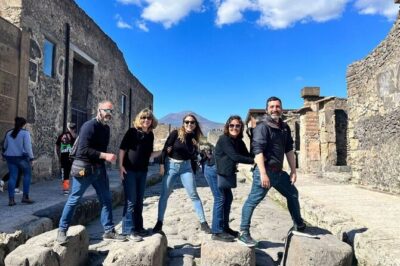
Rome to Pompeii Guided Tour with Wine & Lunch by High Speed Train
Read our review →
Small-Group Lake Como & Lugano by Swiss Train + Boat Cruise
Read our review →
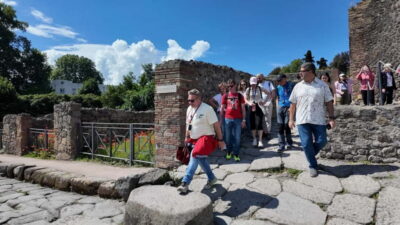
Guided tour of Pompeii skip-the-line and round-trip train
Read our review →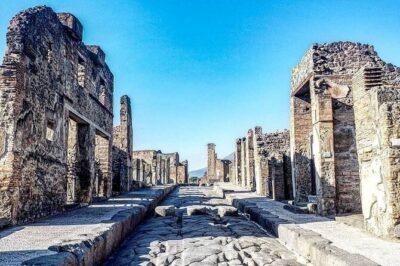
Pompeii Express Guided Tour by Train from Sorrento
Read our review →Browse the lists this tour appears in