Reviewed · HALF-DAY
Rome Golf Cart Tour : Half-Day Private or Small Group Sightseeing
Rome is a city best understood by moving through it, but its heat, traffic, and uneven cobbles can make a full day of walking a slog. This three-hour golf cart tour gives you a quick, comfortable sweep of the historic center, with stops at the Pantheon, Colosseum, Trevi Fountain, Circus Maximus, and several less obvious corners.
I like the way the cart gets you close to sights that are spread across a wide area, and I like the chance to shape a private tour around your interests. Guides such as Nicola, Daniela, Matteo, Max, and Ginevra are praised for their Rome stories, safe driving, and useful local suggestions. The main catch is that the tour is mostly an outdoor viewing experience, and three hours is not enough for long visits at every stop.
Key points to know before booking

- Eight major stops in about three hours: You cover the Pantheon, Colosseum, Circus Maximus, Piazza Navona, Trevi Fountain, Campo de’ Fiori, Teatro di Marcello, and the Orange Garden.
- Private pickup changes the experience: Private-rate bookings include pickup in central Rome, and guides have also collected guests from hotels, apartments, and even a restaurant.
- No monument entry is included: You see the sights from outside, so you need separate tickets and extra time if you want to enter the Pantheon or Colosseum.
- Ask for your priorities early: The route is flexible, but there may not be time for every listed stop at length.
- Small carts reach places buses cannot: Side streets, overlooks, and quiet corners give you a different view of Rome.
- Expect some bumps: Roman cobblestones are part of the ride, and one passenger described the cart as rough but still worthwhile.
Why a golf cart works well in Rome
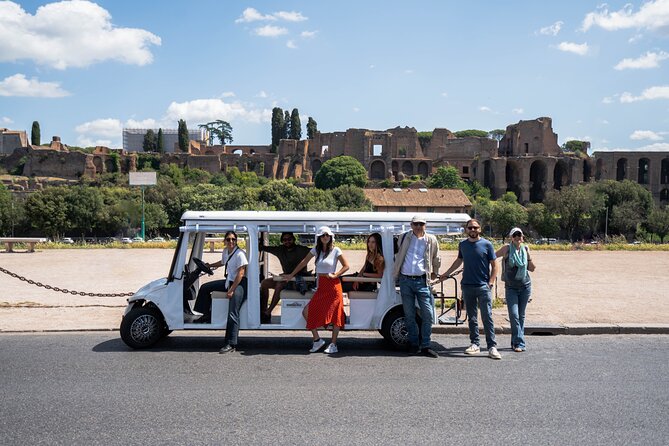
Rome’s headline sights are not neatly gathered in one compact district. The Pantheon, Colosseum, Trevi Fountain, Campo de’ Fiori, and Orange Garden each sit in a different part of the old city. On foot, connecting them can take much of your day, especially when you stop for photos, maps, food, and the occasional wrong turn.
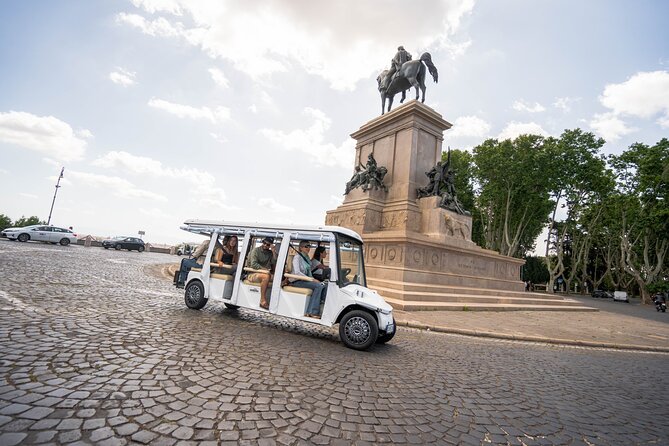
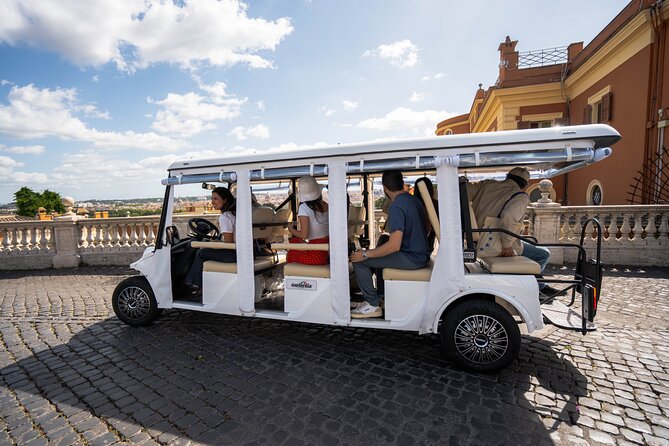
The cart gives you a useful middle ground between walking and a large vehicle. You can see the streets as you ride, rather than watching Rome through a coach window, but you avoid covering every stretch on foot. The open sides also make it easy to pull over, step out, and take pictures.
The tour is listed at $107.63 per person. That is not the cheapest way to see Rome, but it can be fair value for a first morning in the city, a family group, or anyone who cannot manage long walks in the heat. Private bookings are particularly useful for groups who want hotel pickup and control over the route.
The tradeoff is pace. The scheduled stops are short, often 10 or 15 minutes. You will hear the story, take photographs, and get your bearings, but you will not have time to study every detail. Think of this as a guided overview and orientation, not a substitute for an archaeological visit.
A few other Rome mornings to weigh against this
- Hadrian’s Villa and Villa d’Este Half-Day Trip from Rome
★ 3.5 · 808 reviews - From Rome: Ostia Antica Guided Half-Day Trip by Train
★ 4.8 · 486 reviews - Murano, Burano and Torcello Half-Day Sightseeing Tour
★ 3.5 · 7,928 reviews
The Pantheon starts the history lesson
The Pantheon is one of Rome’s great surprises. From the outside, it looks solid and imposing, but its famous interior centers on a huge dome with an open oculus at the top. That opening connects the building to the sky and lets light, and sometimes rain, enter the space.
Your guide explains how the building began as a temple dedicated to all gods and later became a church. The short stop is enough to introduce its engineering and long afterlife as a model for architects, but admission is not included. If you want to go inside, plan a separate visit and do not expect to fit a full interior tour into this three-hour outing.
The Colosseum gives you Rome’s big photo stop
The Colosseum is the tour’s most recognizable stop. From the cart, you get time to look at its vast exterior, hear about gladiator contests and animal hunts, and take photographs without spending the entire morning crossing the city on foot.
A guide can add useful scale to the monument. This was not simply a ruin or a backdrop for pictures. It was a huge Roman arena built for mass entertainment, with complex systems beneath the floor and seating that reflected the social order of the city.
You do not enter the Colosseum on this tour. That matters because the interior requires more time and a separate ticket. If this is your first priority in Rome, book an entry visit for another part of the day and use the cart tour to connect it with other sights.
Circus Maximus shows Rome at open-air scale
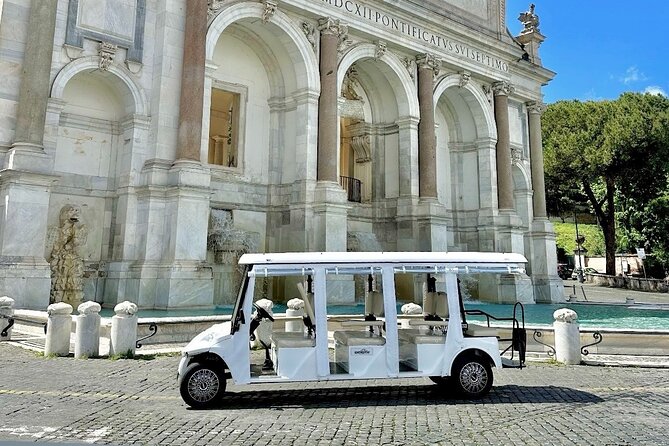
The Circus Maximus is less visually complete than the Colosseum, but it helps you understand the size of ancient Rome. The former racing ground is now a broad open area, and the guide’s explanation supplies the missing images: chariots charging around the track, crowds packed into the stands, and public events unfolding on a scale difficult to picture today.
This stop is free and outdoors. It is a good place to pause, stretch your legs, and take in the space. You will need to use your imagination more here than at the Pantheon or Colosseum, but that is part of the appeal.
Same city, an entirely different afternoon:
- Vatican Museums & Sistine Chapel Tour with Optional Basilica
★ 4.3 · 67,413 reviews - Colosseum, Roman Forum & Palatine Guided Tour
★ 4.7 · 63,148 reviews - Vatican Museums, Sistine Chapel & St Peter’s Basilica Guided Tour
★ 4.5 · 39,149 reviews - Rome: Colosseum, Palatine Hill and Roman Forum Guided Tour
★ 4.8 · 32,814 reviews
Piazza Navona brings in Baroque Rome

Piazza Navona changes the mood. Built on the site of an ancient Roman stadium, the long square is now framed by Baroque buildings, fountains, cafes, and street life. Its main feature is Bernini’s Fountain of the Four Rivers, with figures representing major rivers from different parts of the world.
The scheduled stop lasts about 15 minutes. That gives you time to walk around, look at the fountain, and take pictures, but not much time for a leisurely cafe break. Keep your attention on the guide while crossing and walking through the square, since the cart cannot show you every detail from one position.
Trevi Fountain is best for a quick visit
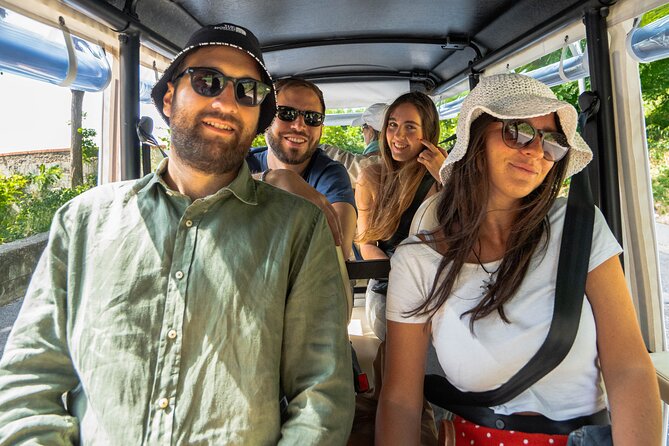
The Trevi Fountain is another short stop with a large payoff. Its theatrical sculptures and flowing water turn a tight city space into one of Rome’s most memorable scenes. The guide also connects the fountain to the aqueducts that carried water into the city.
You will have time for photographs and the familiar coin-toss tradition. The exact access point can change when events or crowd controls affect the area. One tour group found that a special event prevented the cart from getting close to the usual Trevi stop, so keep some flexibility in mind.
This is a place where the cart’s convenience has limits. You still need to get out and walk toward the fountain, and the area can feel crowded. The advantage is that your guide gets you there as part of a wider route instead of asking you to spend a large part of the day finding it yourself.
Campo de’ Fiori connects food and public life
Campo de’ Fiori gives you a taste of present-day Rome as well as its past. During the day, market stalls sell produce, flowers, and local items. Later, the square becomes a meeting place surrounded by cafes and restaurants.
The name refers to a former field of flowers, but the square has also played a darker role in Rome’s public life. Your guide can explain its past and its place in the city today. The stop is brief, so treat it as an introduction rather than a chance to shop at length.
If food is a major interest, tell your guide. Mario is specifically praised for restaurant advice and for calling ahead to help with reservations. That kind of local help can be more useful than another round of facts about ancient stones.
Teatro di Marcello rewards curiosity
Teatro di Marcello is one of the tour’s more unusual stops. At a glance, it can remind you of a smaller Colosseum, but it is older. Julius Caesar began the project and Augustus completed it, and later homes were built above the Roman arches.
That mix of ancient structure and everyday apartments captures Rome’s habit of layering one period on top of another. The site is generally less crowded than the major monuments, making it a calmer place for pictures and a good chance to ask questions.
I value this stop because it broadens the tour beyond Rome’s greatest hits. You see how the city keeps using its old buildings instead of placing every historic structure behind a barrier.
The Orange Garden ends with a view
The Orange Garden, or Giardino degli Aranci, provides a change of pace at the end of the route. It is a quiet hilltop garden with a broad view over Rome, and the short stop lets you breathe, take photographs, and look back across the city you have just crossed.
The view is especially useful after the dense streets around the Pantheon and Trevi Fountain. The stop is free, but remember that a panoramic garden is about atmosphere and sightlines rather than a long guided visit. Your guide may also point out other nearby views, depending on the route and the time available.
What the guide adds to the ride
The driver-guide is the heart of this experience. The company lists English, Spanish, and French service, and the tour is offered in English according to the booking details. Individual guides named in guest accounts include Nicola, Daniela, Matteo, Max, Ginevra, Manu, Valerio, Eva, Mariana, Mario, Tommy, Taiger, Ludo, and Massimo.
The strongest pattern is flexibility. Daniela adjusted a private route for a parent and son and collected them from their hotel. Matteo built a tour around exactly what his group wanted and added coffee and gelato. Nicola helped one family find the famous keyhole, suggested a coffee stop, and offered ideas for the rest of their stay.
Those extras are not promised as fixed tour features, so do not book solely for gelato, cappuccino, or a particular guide. Still, they show why a private booking can be worthwhile. You can explain what you have already seen, name the places you care about, and ask for help with the rest of your Rome plans.
The best approach is to tell your guide your priorities at the start. One group noted that there was not always time for every listed sight, while another appreciated being able to spend more or less time at each place. If you must see the Colosseum, Trevi Fountain, or Vatican area, say so before the cart leaves.
Private or semi-private: choose with care
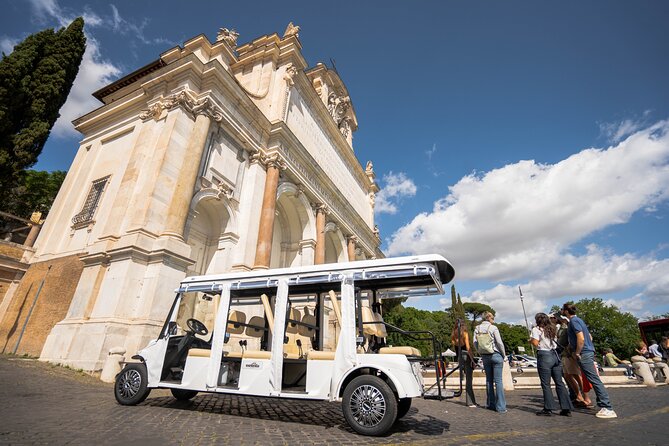
Private-rate bookings include pickup in central Rome and return to the meeting point. The starting point for semi-private tours is Piazza di Santa Caterina della Rota, in front of Bar Peru. Look for the cart with the Gallotour logo.
The maximum group size is 17, but a smaller cart experience will usually feel more personal than a full vehicle. The private option is the better choice for families, couples, or friends who want to adjust the route, avoid repeating sights, or arrange a central pickup.
A semi-private fare can make sense if you mainly want transportation between Rome’s major sights and do not need a custom plan. Just remember that you may have less control over the pace and stop selection.
Private transportation, bottled water, and snacks are included. The guides have also provided soft drinks, coffee, and gelato on some outings, but those treats should be considered a pleasant possibility rather than a guaranteed part of the package.
How comfortable is the ride?
The cart is practical, but Rome’s streets are old. Cobblestones create a noticeable shake, and one passenger described the ride as bumpy. Another called the cart a little rough on the stones but said it did not spoil the tour.
You should also expect some walking. Although the cart removes the long connections between sights, you still get out at monuments and walk through plazas. One person felt the experience included more walking than expected, and found it hard to keep up with the history while moving around.
That makes comfortable shoes important. If you have limited mobility, ask about the exact route and walking required before booking. Service animals are allowed, and the activity is near public transportation. Most people can take part, but the tour is not an indoor, seated sightseeing experience from start to finish.
When this tour earns its place in your Rome plan
I would use this tour early in a Rome stay. In three hours, you can learn the city’s layout, identify places you want to revisit, and collect practical ideas from the guide. It works especially well when you have only a short stay or want to save your energy for museums and churches later.
It also suits families. The cart breaks up the walking, and guides such as Nicola have used questions, jokes, and short stories to keep younger passengers interested. A private route can help if one person wants ancient Rome while another cares more about fountains, viewpoints, food, or photography.
Repeat visitors can enjoy it too. Several stops are familiar, but a guide may point out details, side streets, or architectural connections you missed on an earlier visit. The Teatro di Marcello and Orange Garden add variety beyond the usual Pantheon, Colosseum, and Trevi circuit.
I would not choose it as your only ancient Rome experience if you want long explanations inside monuments. Since admissions are excluded, you need separate time for the Colosseum and Pantheon. This tour works best as a broad introduction, a comfortable city overview, or a smart way to cover ground between more focused visits.
Booking, weather, and cancellation details
Confirmation is provided at booking. Free cancellation is available up to 24 hours before the local start time, while changes or cancellations inside that window are not refunded. The tour needs suitable weather, and if poor conditions cancel it, you can receive another date or a full refund.
A minimum number of participants may also apply. If the company cancels because that minimum is not reached, you will be offered another date or experience, or receive a full refund.
Should you book this Rome golf cart tour?
Book it if you want a fast, personal introduction to Rome and prefer seeing eight different areas over spending three hours in one monument. It is particularly useful in hot weather, for families, for anyone who finds long walks tiring, and for first-time visitors with limited time.
Choose the private rate if pickup, route control, and personal attention matter to you. Choose semi-private if you are happy to meet at Piazza Santa Caterina della Rota and share the pace.
Skip it if your main goal is entering the Colosseum, studying ancient ruins in depth, or lingering over each piazza. For everyone else, the cart offers a sensible way to get oriented, hear local stories, and see Rome from streets and viewpoints that larger vehicles cannot reach.
FAQ
How long is the Rome golf cart tour?
The tour lasts approximately three hours.
What sights are included on the route?
The planned stops include the Pantheon, Colosseum, Circus Maximus, Piazza Navona, Trevi Fountain, Campo de’ Fiori, Teatro di Marcello, and Giardino degli Aranci.
Are entry tickets to the monuments included?
No. The tour provides exterior visits only, and admission tickets to monuments are not included.
Is hotel pickup available?
Pickup in central Rome is guaranteed for private-rate bookings. Some private tours have also arranged pickup from hotels, apartments, and restaurants.
Where does the semi-private tour begin?
Semi-private tours meet in front of Bar Peru at Piazza Santa Caterina della Rota, 00186 Rome. The cart has the Gallotour logo.
Where does the tour end?
The activity ends back at the meeting point.
What languages are offered?
The driver-guide service is listed in English, Spanish, and French. The tour is offered in English according to the booking information.
How many people can join the tour?
The maximum group size is 17 travelers.
Can I cancel for a refund?
Yes. You can cancel at least 24 hours before the experience start time for a full refund. Poor weather or failure to meet the minimum number of participants may also result in another date or a full refund.
Fresh on the Rome list
- Exclusive Golf Tour Private VIP with Local & Gelato o Wine★ 5.0 · 500 reviews
- Colosseum, Palatine Hill and Roman Forum with Guided Tour★ 5.0 · 500 reviews
- Rome by Night Walking Tour★ 4.5 · 506 reviews
- Rome Trastevere Pasta Making Class with Eating Europe★ 5.0 · 505 reviews
- Rome: Colosseum Express Tour with Forum & Palatine Access★ 4.5 · 511 reviews
- Rome Food Experience Max 6 People Group Tour | w/Private Option★ 5.0 · 516 reviews
- Rome: Navona Square Underground Ticket with Audio Guide★ 4.0 · 518 reviews
- Rome: Escorted Papal Audience Experience with Entry Ticket★ 4.4 · 518 reviews
Half-Day, compared.
Murano, Burano and Torcello Half-Day Sightseeing Tour
Read our review →
Milan’s Must See: Half-Day Tour of Last Supper, Duomo & La Scala
Read our review →
From Naples or Sorrento: Pompei Half-Day Tour
Read our review →
Murano and Burano Half-Day Island Tour by Boat
Read our review →
Half-Day Pisa Tour and Optional Leaning Tower
Read our review →