
Reviewed · POMPEII & VESUVIUS TOURS
Skip the Line Guided Tour of Pompeii led by an Archaeologist
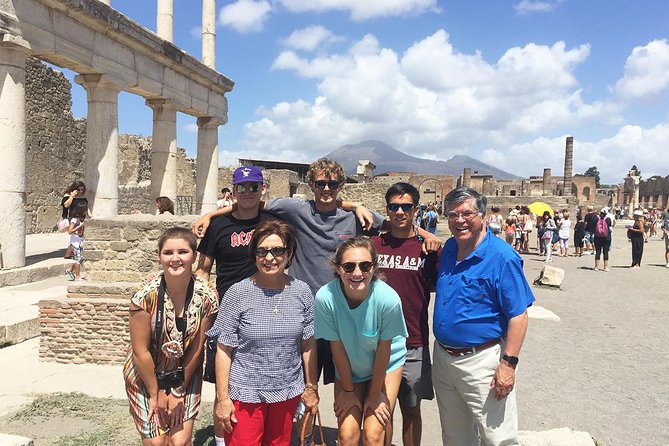
The most useful thing about this Pompeii tour is the guide’s eye. In two hours, an archaeologist such as Lello, Italo, Ana, or Clelia can point out the small signs of daily Roman life that you might walk past alone. I like the small groups of up to 15 and the included skip-the-line entry, which leave more time for the ruins themselves.
I also like the lively teaching style praised throughout the experience, especially the way Lello explains Pompeii through its people, homes, streets, and customs. The main drawback is simple: two hours cannot cover a city this large, and the uneven ancient streets can feel tiring in hot weather.
Key points to know before booking
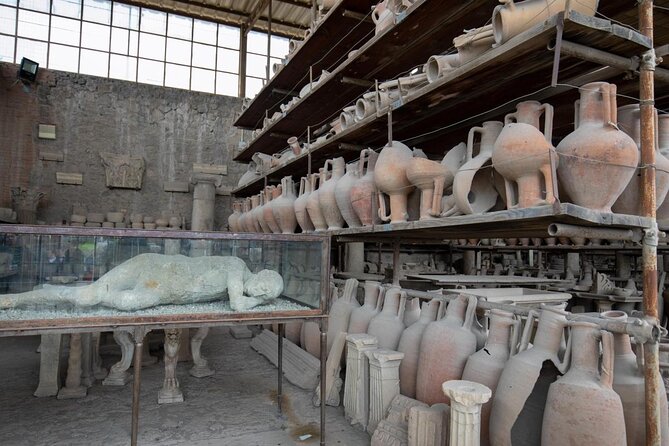
- Archaeologist-led visit: Expect history explained through everyday life, not just dates and emperors.
- Four main sights: The route includes Via dell’Abbondanza, the Forum, Stabian Baths, and Lupanar.
- Small-group format: The maximum is 15 people, though some departures may be much smaller.
- Skip-the-line entry: Your guide handles access, but your confirmation is not a stand-alone ticket.
- Headsets may be provided: These help you hear the guide while walking through crowded ruins.
- Plan extra arrival time: Late arrivals are not refunded, and local traffic can be slow.
Why an archaeologist changes Pompeii
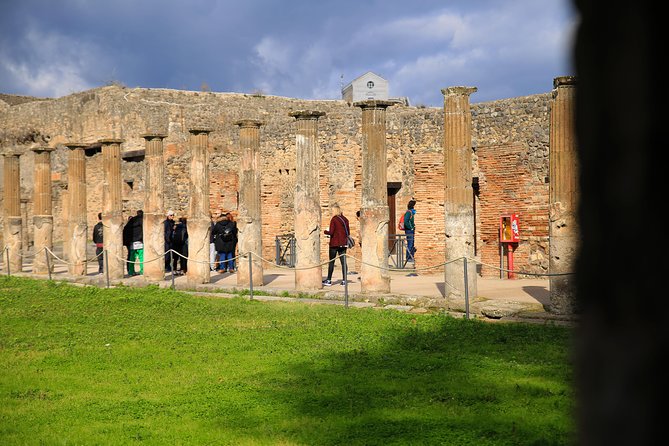
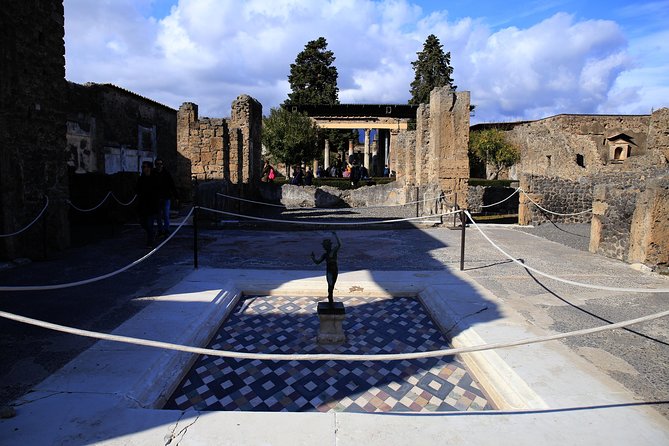
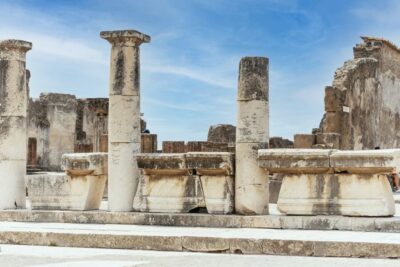
Pompeii is easy to underestimate. You enter expecting a few temples and painted walls, then find yourself walking through a full Roman city with streets, shops, baths, homes, public squares, and signs of ordinary routines frozen by the eruption of Mount Vesuvius in 79 A.D.
The ruins are impressive on their own, but they do not explain themselves. A guide can show you why a street is shaped as it is, what a public building was used for, and how a fresco or worn stone fits into daily life. That is the real value here.
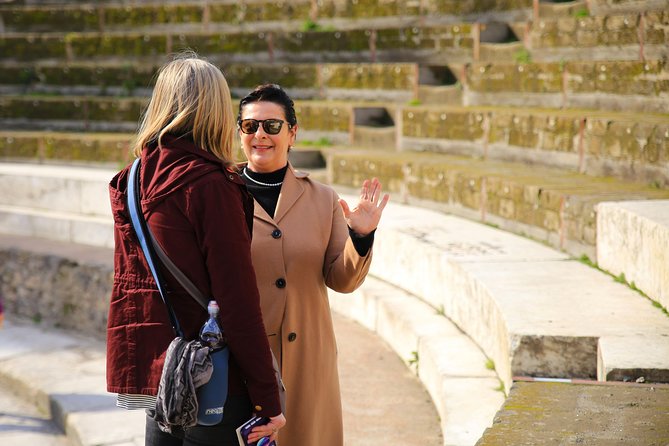
Lello receives especially strong praise for his storytelling, humor, and ability to make Pompeii’s residents feel like real people rather than names in a textbook. Italo is also described as relaxed, friendly, and able to explain small details that are easy to miss. Ana and Clelia are praised for being warm, clear, and engaging.
This matters because Pompeii is not a site you simply glance at and understand. The city is broad, the route can be confusing, and many of its best details are easy to overlook. A good guide gives you a framework, then helps you notice what is in front of you.
More Skip-the-Line Tickets in Pompeii
- Pompeii: Skip-the-Line Entrance Ticket with Audio Guide
★ 4.0 · 2,509 reviews - Pompeii: Skip-the-line-Ticket and Guided Tour
★ 4.6 · 1,152 reviews - Pompeii: Guided Tour with Skip-the-Line Entry
★ 4.9 · 812 reviews
Meeting at Piazza Esedra
The tour begins at Piazza Esedra in Pompei. The meeting point is near public transportation, but private transportation is not included, so you need to arrange your own way there.
Give yourself more time than a map may suggest. A journey that looks short by car can take much longer because of local road delays. One person missed the tour by only five minutes after a delayed drive and received no refund, so arriving early is not a minor suggestion. It is part of the booking strategy.
Bring the identification documents used for the reservation. IDs are mandatory for entry, and the names on the booking must match the names on those documents.
The tour ends back at the meeting point. That makes the experience easy to fit into a day around Pompeii, although you should not treat the two-hour end time as an exact promise if the group is moving slowly or the entrance process takes longer than expected.
Entering the Archaeological Park
The first part of the visit introduces the Archaeological Park of Pompeii and the story of the eruption. Ash and pumice buried the city in 79 A.D., preserving streets and structures in a way that gives the site its unusual power.
The guide’s job here is to establish a sense of place. You are not simply looking at scattered ruins. You are entering an urban community with homes, public buildings, commercial streets, and social spaces.
The skip-the-line feature is useful, particularly when the entrance area is busy. It does not mean you can use the confirmation independently at another time. The voucher is for the guided activity and must be used with the guide.
This distinction is important. If you want to stay behind and return another day, or enter before the group, this is not the right type of ticket. It is a guided tour confirmation with entry arranged as part of the group.
Walking Via dell’Abbondanza
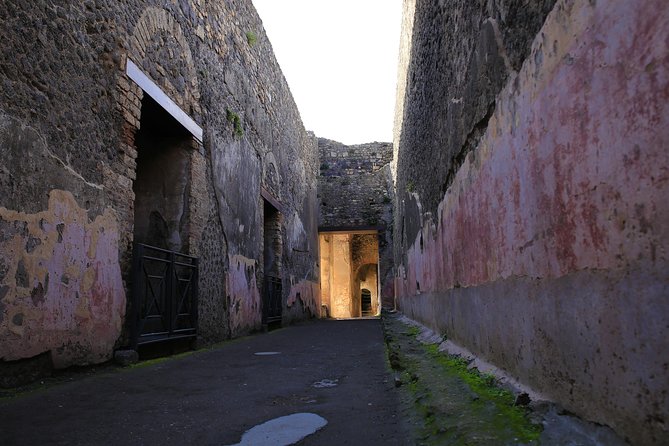
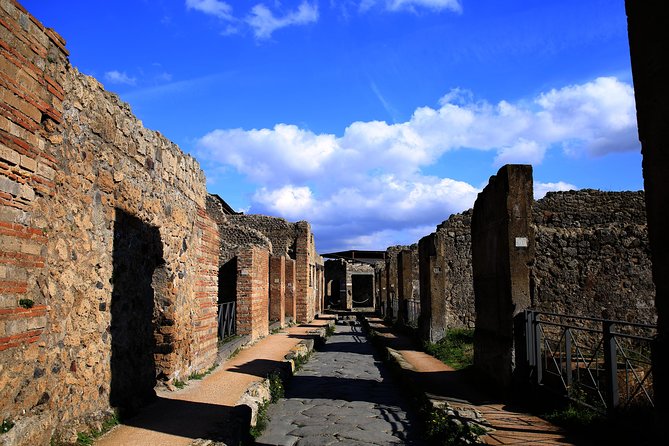
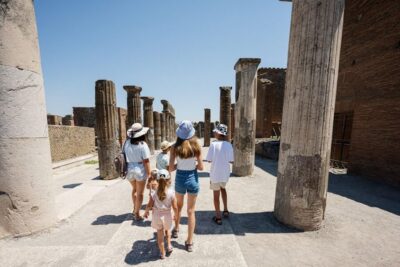
Via dell’Abbondanza is one of Pompeii’s main streets and gives you a practical look at how the city worked. Rather than presenting the road as a backdrop, the guide uses it to explain movement, commerce, and the shape of urban life.
You will walk on original ancient streets, so comfortable shoes are essential. The paving can be uneven, and the route involves steady walking in the open air. One person described the walk as long and tiring even in sneakers, while still finding the visit worthwhile.
That is a fair picture. The tour is not a gentle museum stroll. You should expect hard surfaces, sun exposure, and a moderate level of physical activity. Children can enjoy it, and Lello is praised for keeping even a five-year-old involved, but younger children may tire in summer heat.
The street also helps you understand why a guide is useful. A quick walk alone can leave you seeing only stones and walls. With explanation, small features begin to suggest how people lived, worked, and moved through the city.
A few other Pompeii mornings to weigh against this
- Pompeii: Entry Ticket and Guided Tour with an Archaeologist
★ 4.8 · 19,459 reviews - Pompeii: Entry Ticket with Optional Audio Guide
★ 4.2 · 12,360 reviews - Pompeii: Small Group Tour with an Archaeologist
★ 4.8 · 12,264 reviews - Pompeii Small Group Tour with an Archaeologist
★ 5.0 · 6,593 reviews
The Forum and the city’s public life
The Forum is the natural high point of the route. This was Pompeii’s main square, and the tour leads you there after walking through the city’s streets and markets.
The guide places the Forum in the larger story of Roman public life. You learn how the square functioned and how ancient residents used the center of their city. The goal is not simply to identify buildings, but to help you picture the routines that made this a working urban space.
The Forum is also a practical orientation point. Pompeii uses a grid of streets, but the site is large enough to confuse first-time visitors. One helpful approach used by the guides is to leave you in the Forum after the formal tour and explain how the street system works. You can then use the supplied map to explore other sections on your own.
That arrangement gives the two-hour visit a useful second chapter. The guided portion provides structure, while the remaining time lets you follow your own interests. If you care about seeing every corner, plan to stay longer after the guide finishes, assuming site rules and opening arrangements allow it.
Stabian Baths and Roman routines
The Stabian Baths offer a change from the broad public square. Here, the focus turns to bathing and social routines.
The stop is listed as about 20 minutes, enough for the guide to explain the thermal baths without letting one building consume the whole visit. You can expect a short, focused look rather than an exhaustive architectural study.
This balance is sensible. Pompeii contains far more than any two-hour walk can cover, so the best route gives you several different windows into the city. The baths show one side of public life, while the Forum shows another.
The guide’s archaeological training is especially useful at stops like this. It helps connect the surviving rooms to their function and to the habits of the people who used them. You are given context instead of being left to guess what each space once meant.
The Lupanar and Pompeii’s frank side
The Lupanar is one of Pompeii’s most famous stops because of its erotic frescoes. It attracts attention, but a good visit should treat it as part of the city’s social world rather than as a novelty stop.
The guide explains what you are seeing and places the building within Roman customs and daily life. This is one reason families should think about the ages and interests of their children before booking. Children must be accompanied by an adult, and the site includes mature imagery.
The stop can become crowded, especially because it is widely known. A small group gives the guide more control over where to stand and how to keep everyone within hearing distance. Headsets may also be handed out, making it easier to follow explanations when other groups are nearby.
What two hours really gives you
The advertised duration is approximately two hours. The itinerary divides the visit into several roughly 20-minute sections, including the park introduction, Via dell’Abbondanza, Forum, Stabian Baths, Lupanar, and the final portion of the park visit.
Think of this as a strong introduction, not a complete Pompeii expedition. You will see major highlights and gain a working understanding of the city, but you will not see every house, garden, temple, and painted room.
That limitation is not a flaw if your schedule is tight. Two hours is long enough to build a clear picture without turning the entire day into one archaeological march. It also suits people who want a guided overview before exploring alone.
If Pompeii is your main reason for visiting the area, I would use this tour as the first part of a longer visit. Stay afterward with the map, retrace a favorite street, or look for sections not included in the guided route. The guide can help you understand the site’s grid before you set off.
Small groups, headsets, and the pace
The maximum group size is 15 people. That is small enough for personal contact with the guide, though the actual size depends on the departure. Some groups may be only a few people, while others may approach the limit.
The experience is strongest when the group stays compact. You can hear questions, pause near details, and keep up without the slow shuffle often found in a large guided party. The guides are also described as attentive and good at bringing everyone into the conversation.
Headsets are provided on some departures. They are a useful touch, not a luxury, because Pompeii has open spaces, narrow lanes, and plenty of nearby groups. Hearing the guide clearly helps you keep looking at the ruins instead of turning around every few steps.
The pace is generally described as comfortable and well judged, but the walking remains real. You may feel the distance in your feet, especially at midday. Wear practical shoes, bring protection from the sun, and do not assume smart casual clothing means dressy footwear.
The value of $95.53
At $95.53 per person, this is not the cheapest way to enter Pompeii. The price makes the most sense if you value an archaeologist’s explanation, organized entry, and a small group.
You are paying for more than access. The guide turns a large and sometimes confusing site into a readable story. You also avoid spending your first hour working out where to go, what you are seeing, and how to connect separate ruins.
The value is weaker if you already know Pompeii well, prefer complete independence, or intend to spend many hours reading every sign at your own pace. In that case, a basic entry ticket and a good guidebook may suit you better.
For a first visit, the cost is easier to justify. The tour covers the Forum, main street, baths, and Lupanar, while leaving you with enough orientation to continue independently. Group discounts may also be available, which can help families or larger parties compare the total cost.
The strong rating of 4.9 from 703 ratings and recommendation by 99 percent of customers suggest a very reliable experience, but I would still judge the purchase against your priorities. The guide is the main reason to book, not simply the phrase skip the line.
Who will get the most from this tour
This experience is a good fit for a first visit to Pompeii, especially if you want history explained in plain language and do not want to navigate the site alone.
It also suits families with older children and teenagers. Lello is praised for using humor and keeping a five-year-old interested, while other families with teenagers found the stories about geography, culture, and daily life easy to follow.
History fans should find enough substance here too. One person with extensive ancient-history study still learned new details from Lello’s explanations. That said, the short format means the guide must select highlights rather than offer a specialist lecture on every building.
You may want another option if you dislike group tours, need a slow pace, have trouble walking on uneven streets, or want to see Pompeii in full. The required fitness level is moderate, and summer heat can make the route feel harder than the two-hour duration suggests.
Booking rules worth taking seriously
You receive confirmation when booking, but cancellation is free only if you cancel at least 24 hours before the local start time. Changes made inside that window are not accepted, and late arrivals or missed departures are not refunded.
The tour requires a minimum number of participants. If that minimum is not met and the activity is canceled, you are offered another date or experience, or a full refund.
Children must be with an adult. Smart casual dress is requested, but comfort matters more than style once you are walking across ancient paving.
Most important, arrive early with matching ID and your booking details ready. Traffic around Pompeii can create delays, and the strict late-arrival rule makes a generous buffer worthwhile.
Should you book the Pompeii archaeologist tour?
I would book this tour if you have about two hours, want a clear introduction, and care about understanding what you see rather than simply photographing it. The best guides, particularly Lello and Italo, appear to combine strong archaeological training with humor, patience, and a gift for storytelling.
I would also book it if Pompeii feels intimidatingly large. The Forum orientation and advice on using the map can help you continue on your own after the guided walk.
I would skip it only if you want a full-day exploration at your own pace or if $95.53 feels too high for a short visit. For most first-time visitors, the small group, organized entry, and human stories make this a sensible way to meet Pompeii. Just arrive early, wear good shoes, and save time to wander beyond the route.
FAQ
Where does the Pompeii tour begin?
The tour begins at Piazza Esedra, 80045 Pompei NA, Italy.
Where does the experience end?
The activity ends back at the meeting point.
How long does the guided tour last?
The tour lasts approximately two hours.
Is transportation included?
No. Private transportation is not included, though the meeting point is near public transportation.
Is this a stand-alone ticket to Pompeii?
No. The confirmation is for the guided tour and can be used only with the guide.
How large is the group?
The tour has a maximum of 15 participants.
What happens if I cancel?
You can receive a full refund if you cancel at least 24 hours before the local start time. Cancellations or changes made less than 24 hours before the start are not refunded or accepted.
Fresh on the Pompeii list
- Explore Pompeii with an Archaeologist★ 5.0 · 511 reviews
- Pompeii Skip-the-line Tour with Archaeologist Guide★ 5.0 · 559 reviews
- Pompeii Private Tour with an Archaeologist and Skip The Line – 3 hours★ 5.0 · 564 reviews
- Ercolano: Herculaneum Entry Ticket with Optional Audio Guide★ 4.1 · 581 reviews
- Pompeii private tour with an Official Guide★ 5.0 · 631 reviews
- Pompeii: Exclusive Tour with Archaeologist and Entry Tickets★ 4.9 · 634 reviews
- Pompeii Ticket + Tour with Optional Tasting Experience at Pompeii★ 5.0 · 663 reviews
- From Naples: All-Inclusive Mount Vesuvius Half-Day Tour★ 4.2 · 674 reviews
Pompeii & Vesuvius Tours, compared.

Entry Ticket and Guided Tour with an Archaeologist
Read our review →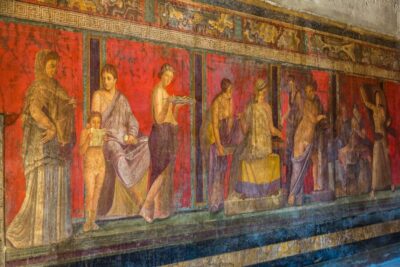


Pompeii Small Group Tour with an Archaeologist
Read our review →
Pompeii, Amalfi Coast and Positano Day Trip from Rome
Read our review →Browse the lists this tour appears in