
Reviewed · POMPEII & VESUVIUS TOURS
Pompeii: Skip-the-line-Ticket and Guided Tour
Pompeii is not just a field of broken walls. With the right guide, its streets become a Roman neighborhood, complete with bakeries, baths, temples, theaters, and homes decorated with startlingly fine art. This tour uses an archaeologist guide to explain how ordinary people lived before Mount Vesuvius buried the city in volcanic ash.
I like the reserved entrance, which saves you from standing in the main ticket queue, and I like the way the two-hour route covers the essential sights without wasting time. Guides such as Diana, Ester, Roberta, Paul, Marcela, and Valentina have been praised for making the past easy to follow. The catch is that Pompeii is enormous, so two hours gives you a useful introduction, not a complete visit.
Key points to know before booking
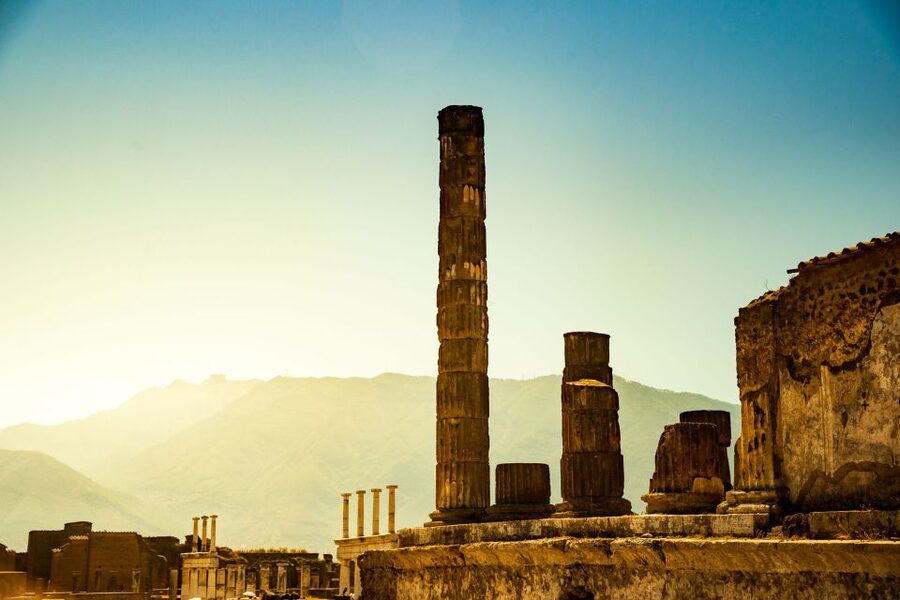
- Enter through Porta Marina Superiore: The tour begins at one of Pompeii’s historic gates, rather than simply dropping you at an anonymous meeting spot.
- See the city’s daily-life highlights: The route includes the forum, baths, temples, bakery, theater, brothel, frescoes, and mosaics.
- Choose a smaller group: The semiprivate option limits the group to 12 people, making it easier to hear the guide and ask questions.
- Look for Mount Vesuvius: The volcano remains visible beyond the ancient streets and helps explain Pompeii’s tragic story.
- Plan for a short overview: Two hours is enough for the main sights, but you will need extra time if you want to explore Pompeii in depth.
- Meet away from the main entrance: The office is next to Chalet Donna Lucia at Piazza Esedra, so allow time to find it.
Meeting at Piazza Esedra and entering through Porta Marina
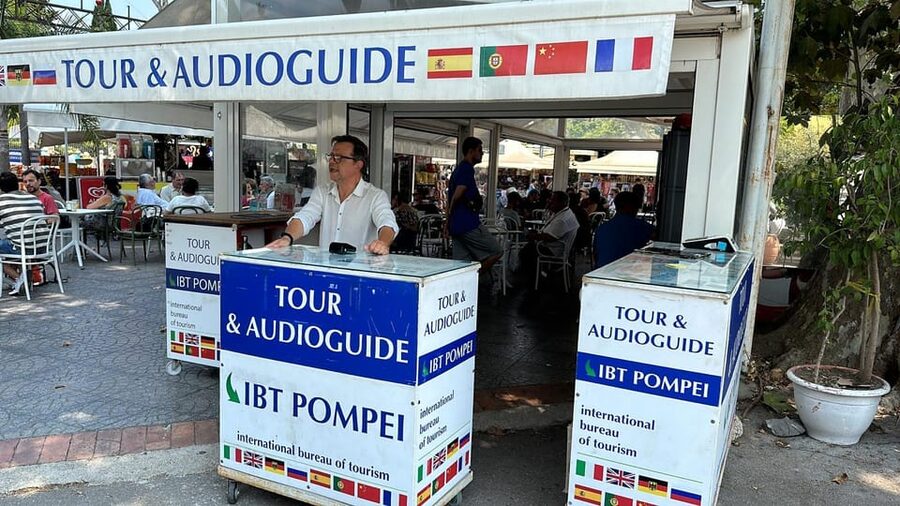
Your starting point is the IBT Center/Touristation office at Piazza Esedra, 11, next to Chalet Donna Lucia. This is important: the meeting point is not directly at Pompeii’s main entrance and can be confusing if you arrive from the train station or drive in without checking the location first.
The local staff provide assistance at the tourist office, and the entrance ticket is handled as part of the tour. You should bring a passport or identity card, since identification is required for everyone. Large bags, suitcases, umbrellas, smoking, and pets are not allowed, although small dogs may enter on a leash and must be carried inside buildings.
Once the group is gathered, you head toward Porta Marina Superiore, one of Pompeii’s seven gates. This is a fitting beginning. You are not starting with an isolated monument or a museum display. You are entering the ancient city through one of the same gateways used by its residents.
The reserved entry is useful on a busy day. It does not make Pompeii quiet, and it does not remove the need to walk over uneven ancient paving, but it cuts out one of the least rewarding parts of the visit: waiting to buy or validate an entrance ticket.
If you arrive by train, check the timing carefully. The train schedule does not always fit neatly with the tour’s starting times. Give yourself a generous buffer, since arriving late can mean missing the group and waiting for another departure.
More Skip-the-Line Tickets in Pompeii
- Pompeii: Skip-the-Line Entrance Ticket with Audio Guide
★ 4.0 · 2,509 reviews - Pompeii: Guided Tour with Skip-the-Line Entry
★ 4.9 · 812 reviews - Pompeii: Skip-the-Line Entry Ticket with Digital Guide App
★ 4.1 · 770 reviews
The main streets reveal how Pompeii worked
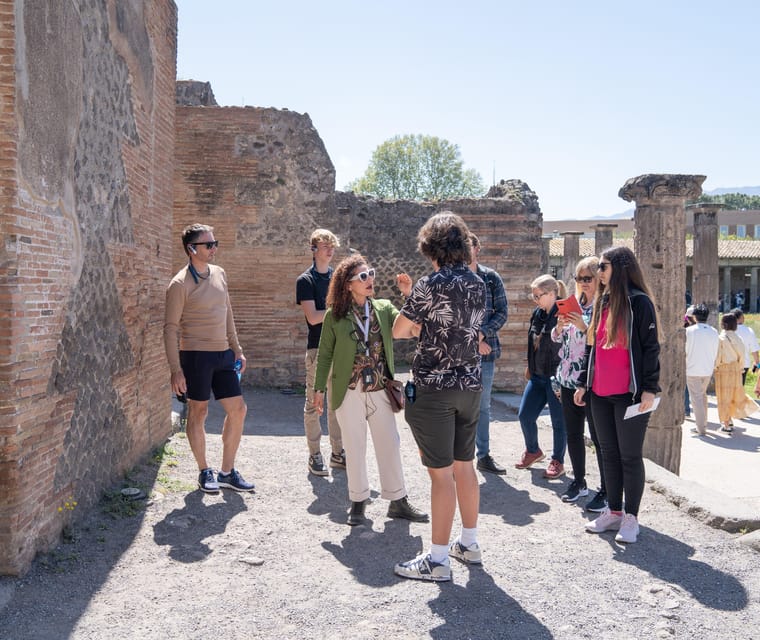
Inside, the guide leads you along the city streets and explains how Pompeii functioned as a living Roman town. This is where a guided tour earns its price. Without context, you can spend a long time looking at walls and paving stones without understanding what each space was for.
The streets themselves are part of the story. The route helps you read the layout of the city, recognize public buildings, and picture the movement of residents through their daily routines. Several guides have been praised for explaining not only major monuments but also the ordinary life of Pompeii, including how people lived and used their homes.
I especially like this focus on daily life. Pompeii is famous because of the eruption, but the most memorable details often concern the people who lived there before the disaster. A bakery, a bath complex, a shop, or a private house can tell you more about Roman society than another grand column.
Your guide also helps connect the streets to the wider history of the city. Expect anecdotes and explanations about ancient inhabitants, their habits, and the way Roman public and private life overlapped. The tone can vary by guide, but the best guides use humor and simple examples to keep the information from becoming a lecture.
The forum and Mount Vesuvius put the story in place
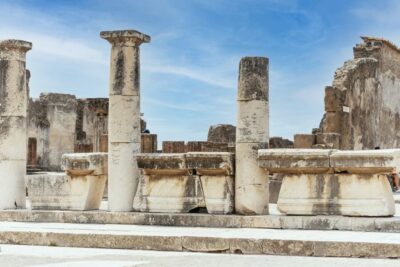
The forum was the heart of Pompeii. This broad public area brought together civic, religious, and commercial activity, making it one of the most important stops on the route.
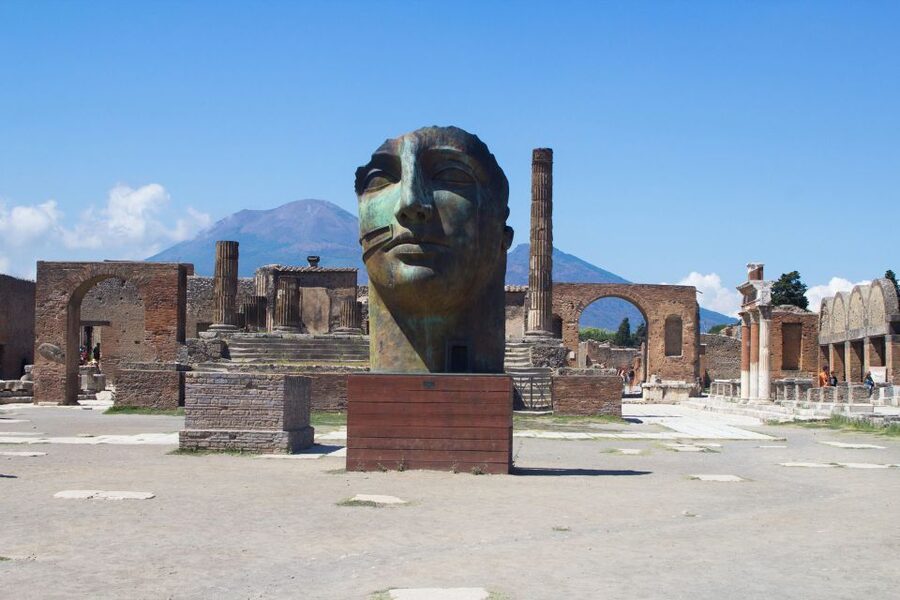
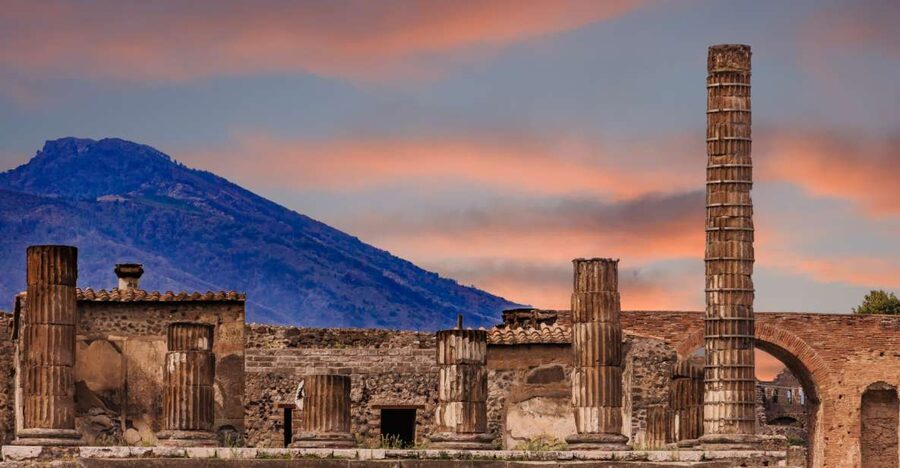
Your guide explains what you are seeing rather than leaving you to guess at the purpose of each building. The forum also provides one of the clearest views toward Mount Vesuvius, the volcano that buried the city. Seeing the mountain above the ruins gives the site an emotional jolt. It is not an abstract historical event when the source of the eruption is right there beyond the broken columns.
The view is best understood as part of the whole visit. Pompeii was a working city with temples, businesses, homes, and public spaces. Vesuvius was part of its natural setting, not a distant symbol added later. The guide helps connect those two facts.
The forum can also be one of the busier parts of the site. A larger group may need to pause at the edge of the area so everyone can hear. If you can choose the semiprivate option, the maximum of 12 people should make it easier to stay close to the guide and ask questions.
Baths, temples, bakery, theater, and brothel
The route moves beyond the forum to several buildings that show the range of Pompeii’s public and private life. You visit the baths, where Roman ideas about washing, socializing, and public space come into view. You also see temples, which help explain the religious side of the city.
The bakery is a particularly useful stop because it brings the ancient city down to earth. Pompeii was not simply a collection of monuments for wealthy citizens. People needed bread, services, entertainment, and places to meet. A bakery shows the practical systems that kept the city going.
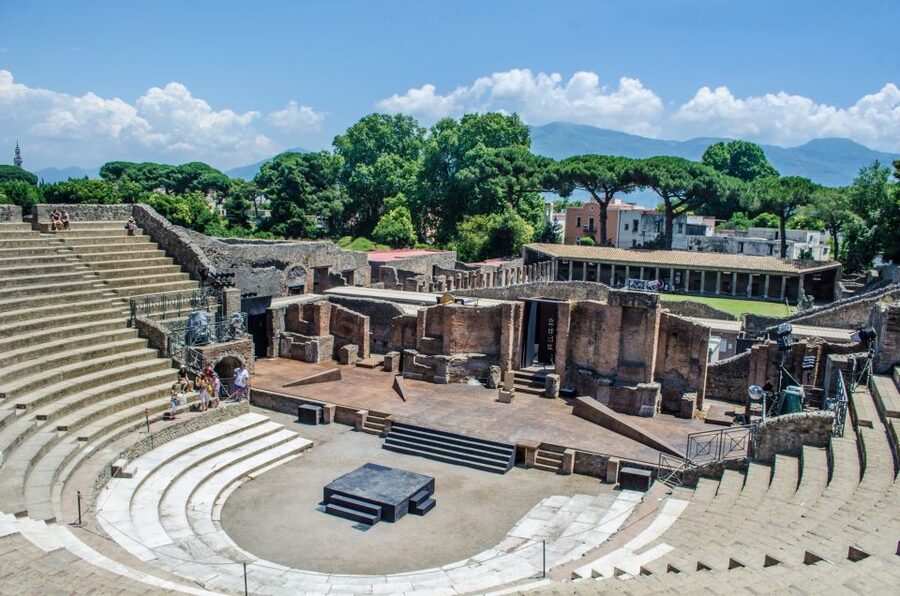
The great theater gives another angle. Here, the guide can explain Pompeii’s entertainment culture and the role of public performances. The theater is not just an attractive ruin. It reflects the city’s social life and the importance of shared public events.
The brothel is one of the site’s more talked-about buildings. It offers a frank reminder that Pompeii’s preserved remains include places associated with every part of urban life, not only temples and official buildings. Your guide can provide the historical setting that makes the stop informative rather than simply sensational.
Because the tour lasts only two hours, you should expect short stops at several major areas rather than lengthy study of each building. That is a fair trade if you want a clear first look, but it may feel rushed if you already know Pompeii well or want time for detailed photography.
A few other Pompeii mornings to weigh against this
- Pompeii: Entry Ticket and Guided Tour with an Archaeologist
★ 4.8 · 19,459 reviews - Pompeii: Entry Ticket with Optional Audio Guide
★ 4.2 · 12,360 reviews - Pompeii: Small Group Tour with an Archaeologist
★ 4.8 · 12,264 reviews - Pompeii Small Group Tour with an Archaeologist
★ 5.0 · 6,593 reviews
Frescoes, mosaics, and artwork up close
Pompeii’s art is one of the strongest reasons to visit with a guide. Frescoes and mosaics survive in homes and public buildings, often retaining enough detail to show the taste, wealth, and habits of the people who commissioned them.
Your guide points out what matters in the decoration, including the subjects, placement, and condition of the artwork. That help changes the experience. You begin to see the difference between a plain wall and a decorated room designed to impress guests or express the owner’s status.
Mosaics are equally valuable because they show how Roman interiors were finished underfoot, not just on the walls. A guide can explain why a particular design matters and how it fits the room around it. This is also where a headset helps. Pompeii is open and spread out, so the guide may need to speak over footsteps and nearby groups.
Several guides have been praised for speaking clearly and answering questions. That matters more here than it might on a short city walk. If you cannot hear the explanation, the most beautiful fresco becomes just another old surface.
The tour supplies headsets, a city map, and Wi-Fi. The map is useful after the guided portion, especially if you plan to continue on your own. The guide can also point out additional areas to visit once the two-hour route ends.
Why the two-hour length matters
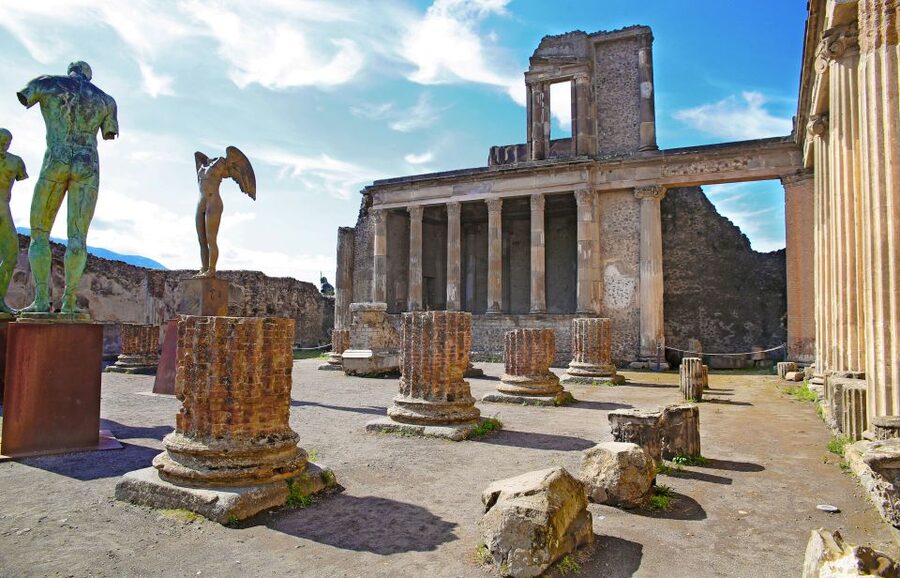
Two hours is a practical length for a first introduction. It gives you a manageable amount of information and lets you see the main landmarks without committing to a long day of archaeological detail.
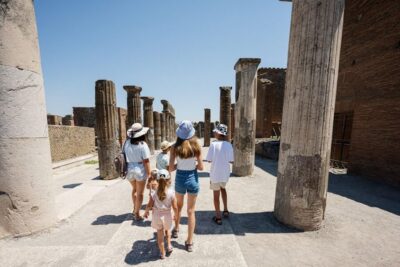
I would choose this format if you are stopping in Pompeii between Naples and Sorrento, traveling with children, or fitting the site into a wider Campania itinerary. One family group found that the tour took just under two hours and left extra time to explore alone. That is the ideal use of the experience: let the guide give you the framework, then revisit what caught your attention.
You should not expect to see every corner of Pompeii. The archaeological area is far too large for that in a short guided visit. The route focuses on key streets and buildings, then gives you pointers for further exploration.
The exclusion of Villa dei Misteri is worth noting. If that building is a priority, this tour does not include its entrance. You will need to make separate plans and allow more time.
At the end of the visit, you may have the chance to continue through the ruins independently. A cafeteria near the exit serves sandwiches, which can be useful if the tour forms part of a day moving between Naples and Sorrento. Food and drinks are not included in the tour price.
Group size and guide quality
The guide makes the largest difference to this experience. The strongest guides on this route have included Diana, Ester, Roberta, Paul, Marcela, Valentina, Annorita, and Laura. The praise directed at them is consistent in one useful way: they explain the site clearly, keep the group moving, and connect buildings to the people who used them.
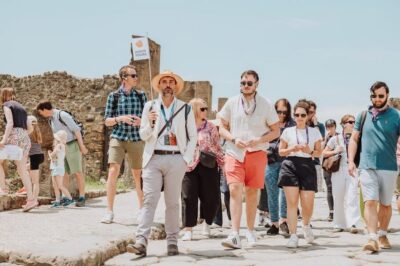
The semiprivate option has a maximum of 12 people. I would favor it if the price difference is reasonable for your budget. A small group makes it easier to hear through the headset, ask about a fresco, or pause briefly without losing the rest of the party.
Larger groups can still work, but Pompeii’s open spaces and scattered ruins create a problem. You may be physically close to the guide yet still struggle to catch every word. One group found its guide excellent but felt the size made it harder to see and hear together.
Language choices are Italian, French, Spanish, and English. English delivery is generally clear, though one person found a guide’s accent difficult to follow. If you are sensitive to accents or have hearing concerns, the smaller group is the safer choice.
Is $64 a fair price?
At $64 per person, this is not the cheapest way to enter Pompeii. You are paying for the reserved entrance, a two-hour guided route, headsets, a map, and assistance at the tourist office, rather than for admission alone.
The value depends on how you approach archaeological sites. If you already know Pompeii well and enjoy reading signs and wandering at your own pace, the price may feel high for two hours. You also need to pay separately for food, transportation, and any visit to Villa dei Misteri.
For a first visit, I think the price is easier to justify. Pompeii can be confusing without background, and the guide turns a sprawling ruin into a readable city. Several people who had visited before without a guide found the second visit much more rewarding with one. That is the key benefit here: you are buying interpretation, not just access.
Families should check the child pricing before booking. One parent felt that paying the full adult price for children made the total less appealing. The tour is also non-refundable, so choose your time carefully and avoid relying on a tight train connection.
Who should book this Pompeii tour?
This tour suits you if you want a structured introduction, reserved entry, and a guide who can explain the site in plain terms. It is a strong choice for a first visit, a short stop between nearby cities, or anyone who feels that ancient ruins are hard to read without help.
It is also a good fit for small groups and families who want to keep moving. The route covers enough variety to hold your attention: public buildings, religious sites, daily services, entertainment, art, and the volcano itself.
I would look elsewhere if you need a wheelchair-accessible route or have significant mobility limitations. The activity is not suitable for wheelchair users or people with mobility impairments, and the ancient paving can be difficult even for people who walk comfortably.
Wear practical shoes and bring only what you need. Large bags, umbrellas, and luggage are not permitted. You will also need your passport or identity card at the meeting point.
Should you book it?
Book this tour if you want Pompeii explained rather than simply entered. The reserved ticket removes some friction, and the guide-led route gives you the basic story, major buildings, artwork, and Vesuvius view in two hours.
Choose the semiprivate option if hearing every word matters to you. Build in extra time for the meeting point, especially if you are arriving by train, and do not expect Villa dei Misteri to be included. For $64, the tour is best value when you are new to Pompeii and want a strong foundation before exploring on your own.
FAQ
Where does the Pompeii tour meet?
Meet at the IBT Center/Touristation office at Piazza Esedra, 11, next to Chalet Donna Lucia.
How long does the guided tour last?
The guided tour lasts two hours.
Is Pompeii admission included?
Yes. The Pompeii archaeological area skip-the-line ticket is included.
Does the tour include Villa dei Misteri?
No. Entrance to Villa dei Misteri is not included.
Which languages are available?
The live guide is available in Italian, French, Spanish, and English.
Is a headset provided?
Yes. A headset is included so you can hear the guide during the visit.
Do I need identification?
Yes. Every participant must bring a passport or identity card.
Can I bring luggage into Pompeii?
No. Luggage, large bags, oversize luggage, and umbrellas are not allowed.
Are pets allowed?
Small dogs are permitted inside the archaeological area, but they must stay on a leash and be carried inside buildings.
Is the tour suitable for wheelchair users?
No. The activity is not suitable for wheelchair users or people with mobility impairments.
Fresh on the Pompeii list
- Explore Pompeii with an Archaeologist★ 5.0 · 511 reviews
- Pompeii Skip-the-line Tour with Archaeologist Guide★ 5.0 · 559 reviews
- Pompeii Private Tour with an Archaeologist and Skip The Line – 3 hours★ 5.0 · 564 reviews
- Ercolano: Herculaneum Entry Ticket with Optional Audio Guide★ 4.1 · 581 reviews
- Pompeii private tour with an Official Guide★ 5.0 · 631 reviews
- Pompeii: Exclusive Tour with Archaeologist and Entry Tickets★ 4.9 · 634 reviews
- Pompeii Ticket + Tour with Optional Tasting Experience at Pompeii★ 5.0 · 663 reviews
- From Naples: All-Inclusive Mount Vesuvius Half-Day Tour★ 4.2 · 674 reviews
Pompeii & Vesuvius Tours, compared.
Entry Ticket and Guided Tour with an Archaeologist
Read our review →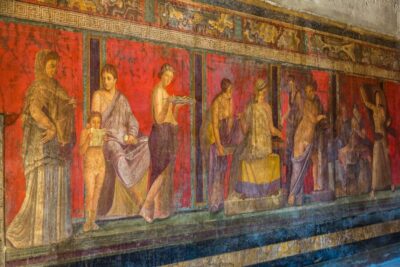


Pompeii Small Group Tour with an Archaeologist
Read our review →
Pompeii, Amalfi Coast and Positano Day Trip from Rome
Read our review →Browse the lists this tour appears in