
Reviewed · POMPEII & VESUVIUS TOURS
Pompeii: Small-Group Tour of Pompeii and Herculaneum
Pompeii gives you the drama of a city stopped in its tracks. Herculaneum gives you something even more intimate: painted rooms, mosaics, wooden objects, and upper floors that make Roman life feel close enough to touch. An archaeologist guide helps you understand what you are seeing instead of leaving you to wander among thousands of silent walls.
I like two things right away. First, you visit both major Roman sites in one well-organized half-day. Second, the guides, including Diego, Paolo, Alfredo, Vincenzo, Julia, and Amedeo, are praised for turning archaeology into clear stories about food, work, family, status, and daily life.
The main drawback is the pace. Two hours at each site means a lot of walking and information, while the planned lunch break is only 30 minutes. The tour also ends at Herculaneum, so you must arrange your own return trip.
Key points at a glance
- Pompeii first, Herculaneum second: See the larger, more dramatic city before the smaller and better-preserved one.
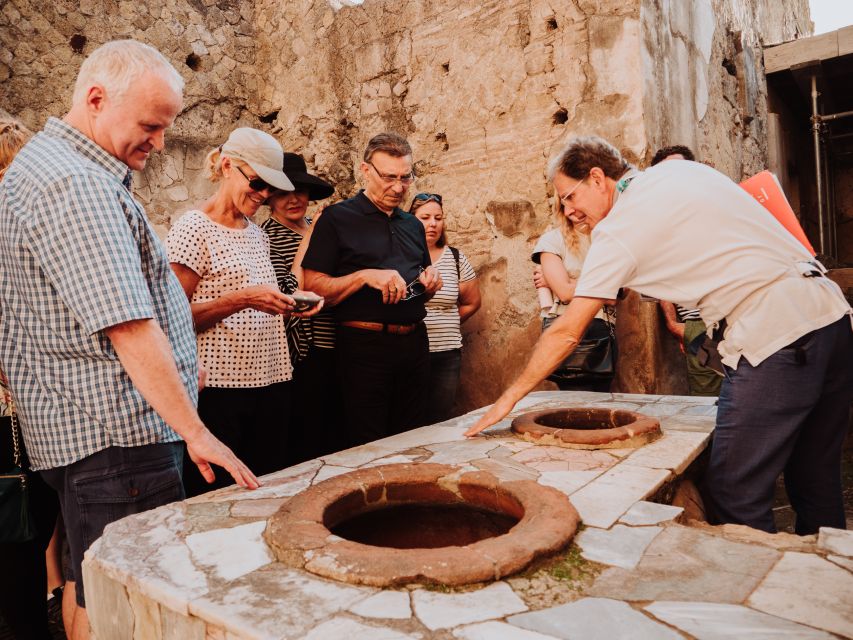
- Working archaeologist guides: Expect explanations about excavations, preservation, inscriptions, buildings, and Roman society.
- A maximum of 20 people: The group is not private, but it is small enough for questions and a more personal walk.
- Only 30 minutes for lunch: Bring a snack or plan on a quick sandwich rather than a relaxed meal.
- Train transfer between the ruins: The Circumvesuviana journey takes roughly 20 to 30 minutes, depending on the schedule.
- The tour finishes in Ercolano: There is no included transfer back to Pompeii, Naples, or another starting point.
Why Pompeii and Herculaneum belong together
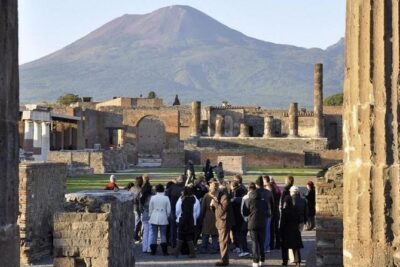
Pompeii and Herculaneum were both buried by the eruption of Mount Vesuvius in 79 A.D., but the two sites tell different stories.
Pompeii was covered by about four meters of pumice and volcanic ash. Its broad streets, public buildings, shops, and homes spread across a large archaeological area. You get the scale of a real Roman city, along with the unsettling reminders of the people caught in the disaster.
Herculaneum was buried under an avalanche of mud about 20 meters thick. That heavy, wet material protected details that did not survive as well at Pompeii. Second floors, carbonized wood, mosaics, paintings, and interior decoration remain in striking condition.
I find the pairing especially useful because one site explains the other. Pompeii shows how a city functioned. Herculaneum shows how wealthy Romans lived inside their homes. Seeing both in one day gives you a stronger sense of Roman Campania than visiting either site alone.
A few other Pompeii mornings to weigh against this
- Pompeii: Entry Ticket and Guided Tour with an Archaeologist
★ 4.8 · 19,459 reviews - Pompeii: Entry Ticket with Optional Audio Guide
★ 4.2 · 12,360 reviews - Pompeii: Small Group Tour with an Archaeologist
★ 4.8 · 12,264 reviews
Meeting your guide at Porta Marina Inferiore
The morning begins at Piazza Porta Marina Inferiore, 1, on the left side of Pompeii’s entrance called Porta Marina Inferiore. Look for the guide holding an Askos Tours sign near the Arte bus stop.
The meeting point is a few minutes from the Pompei Villa dei Misteri Circumvesuviana station. The exact coordinates are 40.7470817565918, 14.484834671020508. That detail is worth saving on your phone because the entrance area can be confusing, with several tour groups gathering nearby.
A practical warning: the company sign may not be large or easy to spot. Give yourself extra time and look specifically for the Askos Tours name rather than assuming the first guide near the entrance is yours.
You will need a passport or ID card. Wear shoes that can handle uneven ancient paving and plenty of walking. In summer, bring water, sunglasses, and a hat. A raincoat or poncho is sensible in other seasons because sudden showers can arrive around Vesuvius.
Two hours among Pompeii’s streets
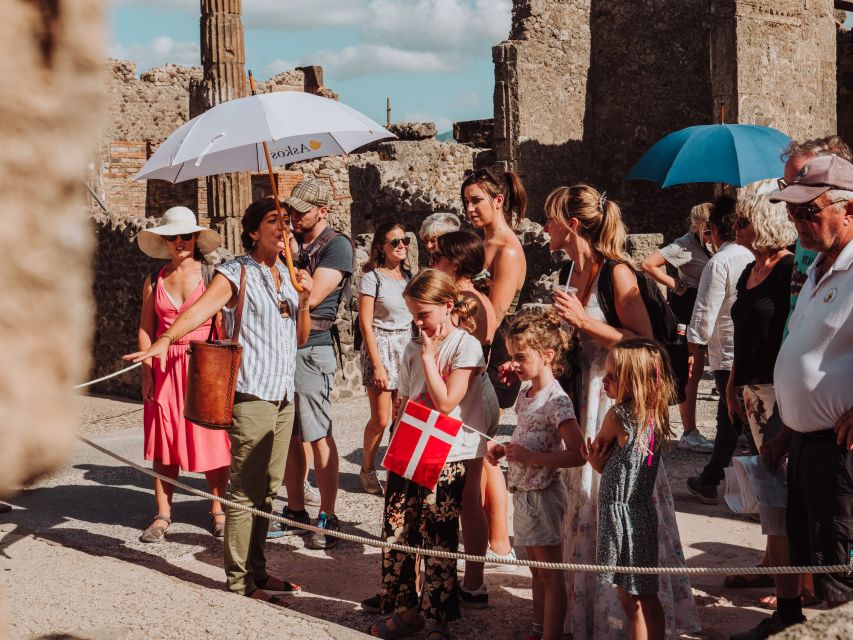
The Pompeii portion lasts about two hours. That is enough time for a thoughtful introduction to the site, but not enough to see every street, villa, and public building. That is a good thing for most people. Pompeii is huge, and trying to cover it all in a single visit can turn archaeology into a tiring checklist.
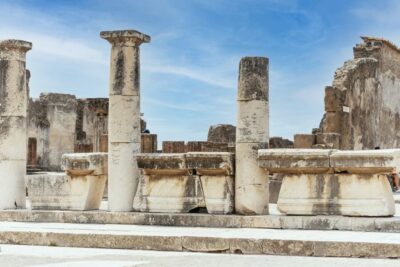
Your guide chooses the most useful areas and explains how to read the remains. A wall is no longer just a wall when you learn what its paint, doorway, inscription, or floor tells you. A street becomes more meaningful when you understand how homes, shops, public spaces, and working areas fit together.
The best guides use the ruins to explain ordinary life. You might hear about how people moved through the city, how businesses operated, or how the wealthy arranged their homes. Guides also discuss the volcano, the excavation process, and the work still being done today.
That human scale is the reason I would not choose to visit Pompeii alone unless you have already studied the site. There is a great deal to look at, but relatively little interpretation is placed beside each ruin. Without help, you can spend time admiring stones without understanding their purpose.
A guide such as Antonio, Paulo, Sergio, or Amedeo can also adjust the walk to the conditions. In hot weather, guides have been praised for finding shade when possible and keeping the group together. In crowded areas, a good guide can move to a quieter spot, then return to an important room when the crowd thins.
Groups can reach 20 people. That is larger than a private tour, but still manageable. If more than 10 people join, headsets are provided. This matters at Pompeii, where the group may spread out across wide streets or gather around a room with limited space.
Pompeii’s emotional side
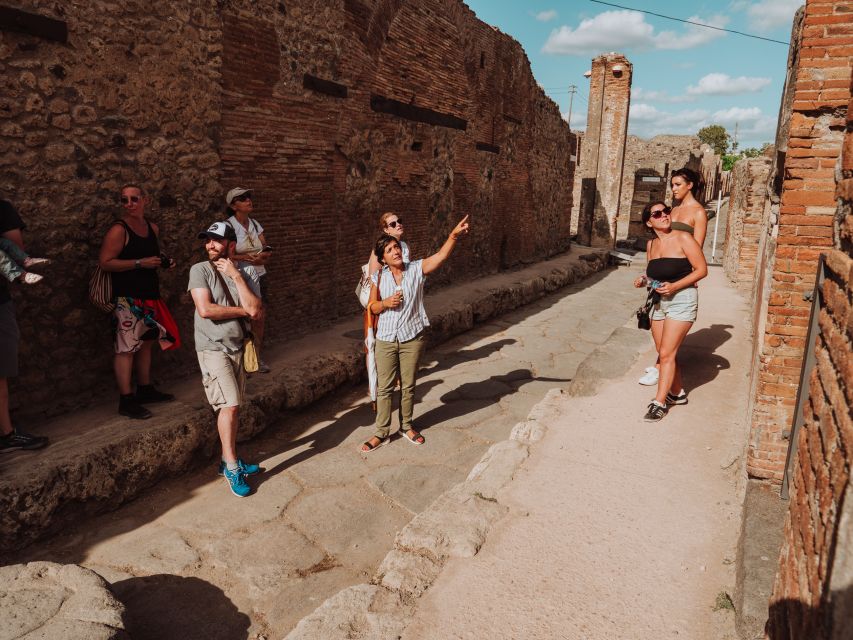
Pompeii is not only an ancient city. It is also the place where the eruption’s human cost is most visible.
The plaster casts of victims can be deeply upsetting. They show the final positions of people who died during the eruption, and seeing them in person brings a harsh reality to what can otherwise feel like a grand archaeological adventure. You should be prepared for that moment, especially if you are visiting with children.
The guides help place those remains in context rather than treating them as spectacle. Their explanations connect the disaster to the city’s buildings, streets, and unfinished excavation work. You may also see areas where archaeologists are still uncovering material, which gives the site a sense of ongoing discovery.
I appreciate that the tour does not present Pompeii as a frozen museum. The ruins are still being studied, protected, and interpreted. That makes the visit more interesting, but it also means some areas may not be open or may look less polished than you expect.
Same city, an entirely different afternoon:
- Pompeii Small Group Tour with an Archaeologist
★ 5.0 · 6,593 reviews - Pompeii: Skip-the-Line Entrance Ticket with Audio Guide
★ 4.0 · 2,509 reviews - Naples: Pompeii and Mt. Vesuvius with Lunch and Wine Tasting
★ 4.5 · 2,454 reviews - Pompeii: Archaeological Park Tour with Ticket on request
★ 4.5 · 2,283 reviews
The short break after Pompeii
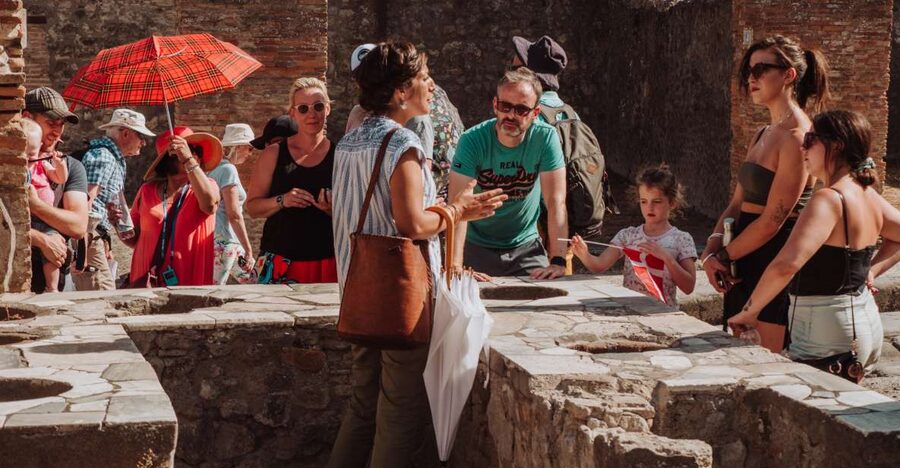
After the Pompeii walk, you get about 30 minutes for a break. This is the weakest part of the schedule.
You can grab lunch or browse the souvenir shops outside the ruins, but half an hour disappears quickly. You may need to use the restroom, find food, eat, and meet the group again before the train. Several people have found this enough for a quick sandwich but too short for a proper sit-down meal and rest.
I suggest arriving with a snack, especially in warm weather. Do not count on having time for a leisurely restaurant lunch. If you need a shaded seat and a substantial meal after two hours on ancient paving, this schedule may feel rushed.
The tradeoff is that the tight break allows the tour to fit both sites into 5.5 hours. If the operator added a long lunch, the outing would become a full-day experience. For history-focused visitors, seeing Herculaneum is probably worth protecting that time.
The Circumvesuviana ride to Ercolano
The group then takes the Circumvesuviana train to Ercolano. The ride is described as roughly 20 minutes, while the formal itinerary allows about 30 minutes. Allowing for boarding, waiting, and walking makes the longer estimate sensible.
This is a local commuter train, not a private sightseeing transfer. Delays can happen, and one reported medical emergency caused a longer journey on one occasion. When train problems occur, the operator has sometimes used a private minibus instead, but that should not be treated as a guaranteed part of the service.
The transfer is still useful. It connects two major sites without requiring you to arrange a taxi or navigate the route alone. Guides may also continue explaining the area during the ride, adding local context to the transition from Pompeii to Herculaneum.
Keep your belongings close on public transport and stay aware of the guide’s instructions. The group needs to board and leave together, so arriving late can affect everyone’s schedule.
Herculaneum’s preserved interiors
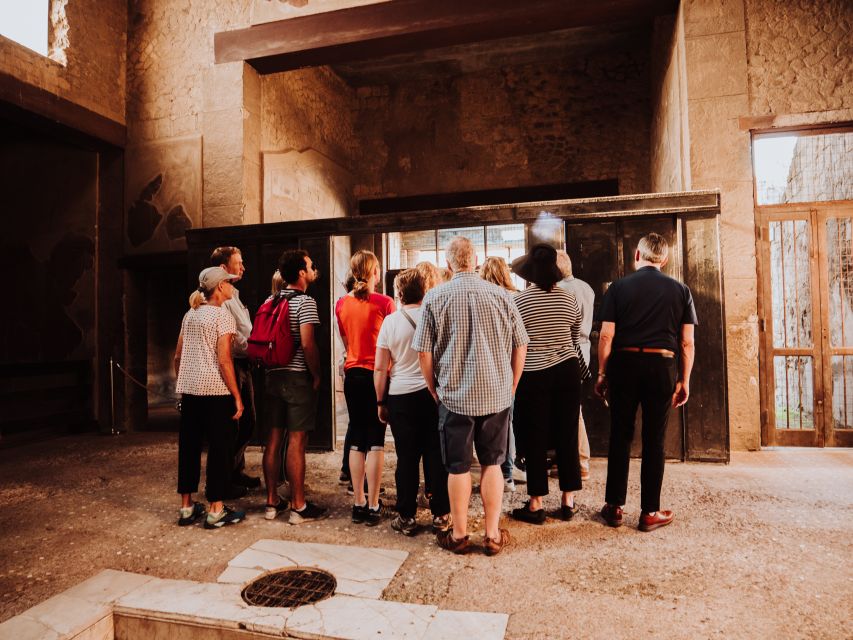
Herculaneum receives about two hours of guided attention. The site is much smaller than Pompeii, which makes it easier to grasp in a short visit. Its preservation, however, is often the real surprise.
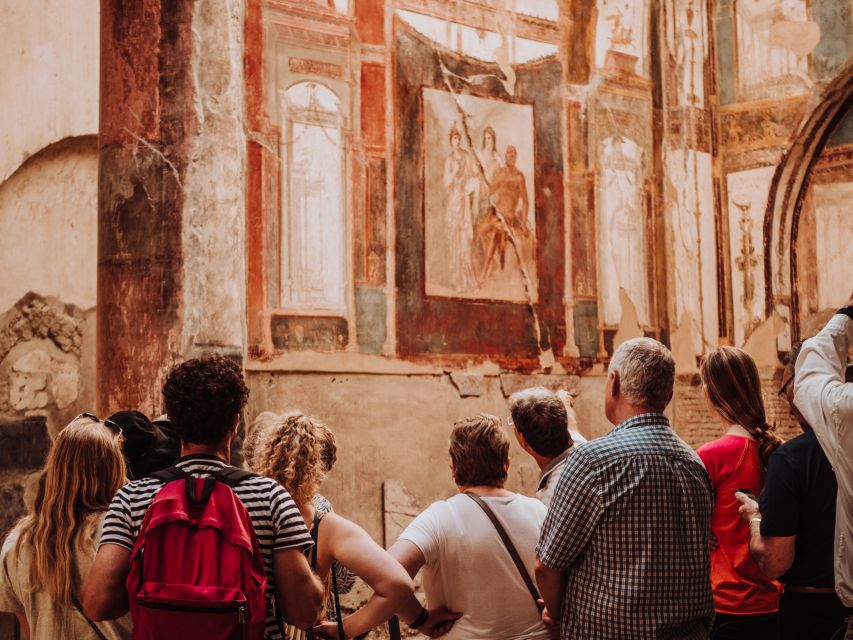
The mud that buried Herculaneum protected wooden doors, beams, furniture, and other organic materials that usually vanish from ancient sites. Painted walls and mosaics remain in homes, while upper floors help you picture buildings as more than roofless shells.
The difference in atmosphere is important. Pompeii feels like a city with streets and public life on a large scale. Herculaneum feels more domestic and refined. You can focus on the details of a wealthy home, from the arrangement of rooms to the quality of its decoration.
A guide explains why the two sites survived differently. The burial material, excavation methods, and later preservation all affect what you see. This is where an archaeologist’s training adds real value. You are not simply told that a mosaic is old. You learn what its condition, placement, and surrounding architecture can reveal.
Herculaneum can also be physically demanding. The surface is uneven, and the tour remains a walking experience after you have already spent two hours at Pompeii. People with mobility impairments or wheelchair users should not book this outing, as the activity is specifically not suitable for them.
The guides make the difference
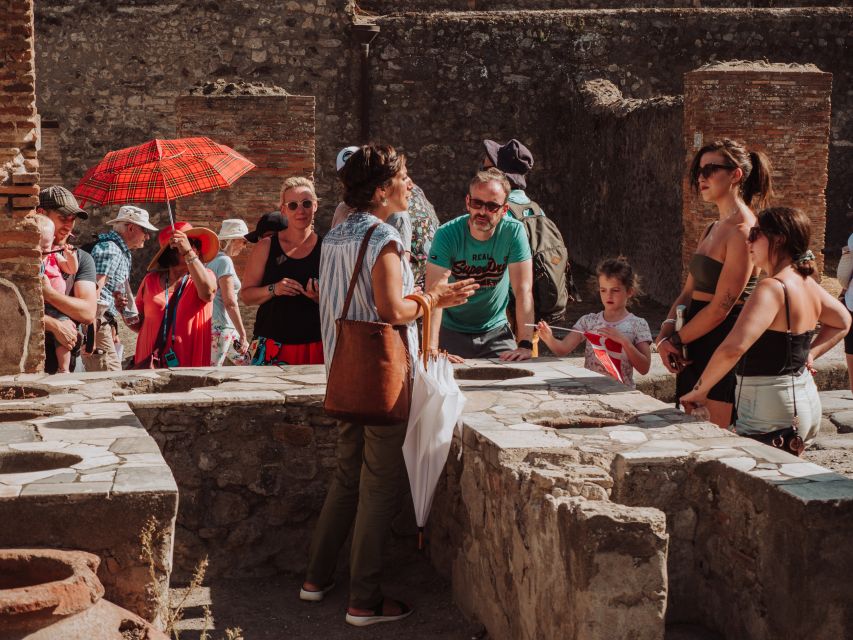
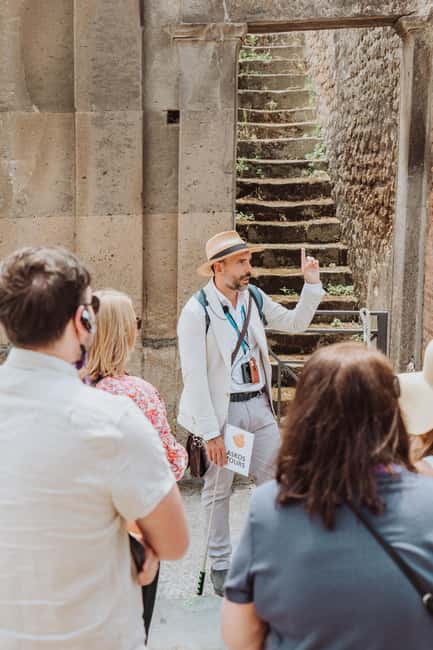
The strongest feature of this tour is the guide. Names that appear repeatedly in the guide roster include Diego, Paolo, Alfredo, Vincenzo, Julia, Sergio, Antonio, Rafael, Ricardo, and Amedeo, also called Amadeus.
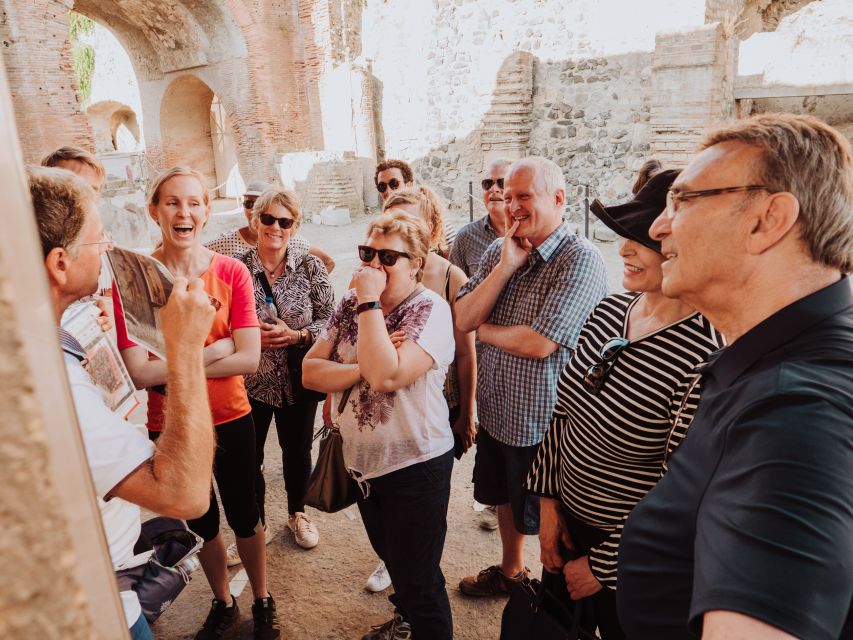
Their strengths are not identical, but the pattern is clear. You can expect archaeological and historical explanations, stories about daily life, answers to questions, and a little humor. Guides have been praised for making complex subjects understandable and for showing the most worthwhile parts of both sites.
That makes a major difference at Pompeii and Herculaneum. The ruins are visually powerful, but many details are easy to miss. An inscription, a household feature, or a change in wall decoration may seem minor until someone explains its purpose.
The guide also controls the rhythm. At a group of up to 20, you need someone who can keep people together without rushing every stop. Headsets for larger groups help, especially when the guide is speaking from several paces away.
No guide can remove every crowd, heat problem, or train delay. The best you can expect is good management, clear instructions, and useful choices about where to spend the limited time. The consistently high rating of 4.8 from 867 reviews reflects how central the guide is to the experience, but your exact guide will shape the day.
Value, tickets, and the real cost of the day
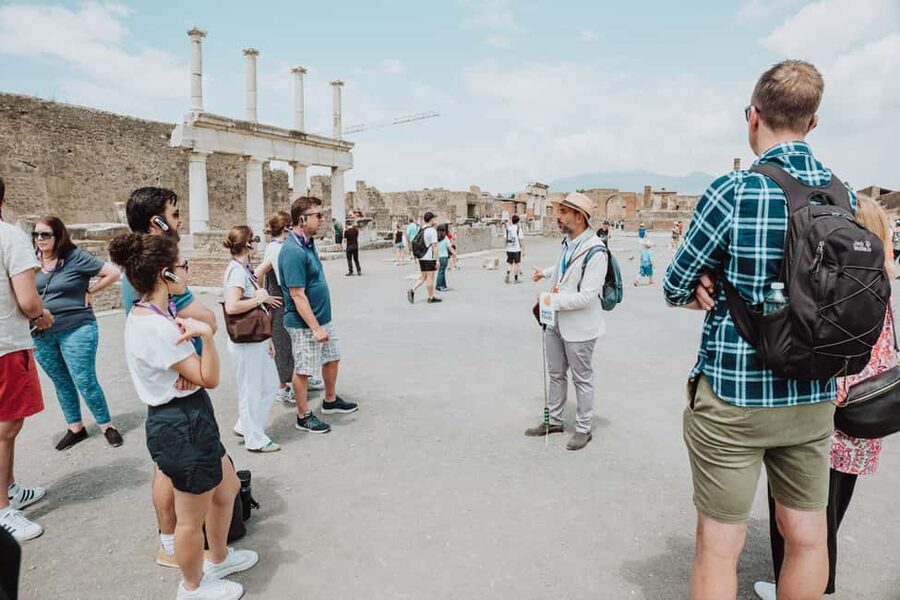
The tour provides entry tickets for both archaeological sites and lets you skip the ticket line. That saves you from dealing with separate admissions and gives the group a cleaner start at Pompeii.
The stated adult admission for Herculaneum is 16 euros, with a 2 euro rate for European Union citizens aged 18 to 25. Since the tour includes entry tickets, compare the total booking price against those admissions, the guide, and the time saved. The guide is the main value here, not merely the ticket access.
I would consider this a sensible purchase for a first visit. You cover both sites, learn what you are seeing, and avoid spending hours trying to build a route through Pompeii on your own. If you already have archaeological training or a detailed guidebook plan, you may prefer separate visits at your own pace.
The reserve-now-and-pay-later option adds flexibility, and cancellation is free up to 24 hours before departure for a full refund. Check the available start time before booking because the tour lasts 5.5 hours and the exact schedule matters for your transport plans.
How to plan the day
Arrive early at Porta Marina Inferiore. Save the meeting point, the coordinates, and the Askos Tours name before leaving your hotel.
Wear comfortable clothing and sturdy walking shoes. A hat and water are essential in summer, and a rain layer is useful at any time of year. Pompeii offers limited shade, so do not treat this as a casual stroll.
Have a quick lunch plan. A packed snack may be the most reliable choice if you dislike eating hurriedly. The break is designed to keep the day moving, not to provide a long restaurant stop.
Plan your journey home before you enter Pompeii. The tour ends at Parco Archeologico di Ercolano, not back at Pompeii. There is a local commuter train, but the station requires an uphill walk of about 25 minutes according to the practical directions supplied for the experience. If you have a rental car at Pompeii, you will need to solve the return independently.
Who should book this tour?
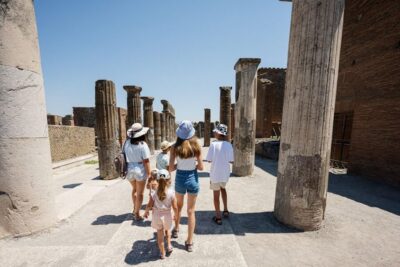
I would book this tour if you want both sites in one day and prefer clear explanation over solitary wandering. It suits first-time visitors, history fans, families with older children, and anyone making a day trip who wants an efficient plan.
It is especially useful if Pompeii has been a lifelong wish. The site can be overwhelming, and a guide gives you a route through the most important areas without asking you to master a large map first.
I would think twice if you need a slow pace, a long lunch, or a fully accessible route. The walking is substantial, the schedule is fixed, the group may reach 20 people, and the final stop is in Ercolano.
Should you book it?
Book it if your priority is understanding Pompeii and Herculaneum rather than simply checking them off. The archaeologist guide, included admissions, small-group format, and efficient train connection make the day good value for a first visit.
Skip it if you want to linger for hours in one house, eat a relaxed lunch, or arrange a round-trip transfer from Pompeii. For most people, though, the combination is the smart choice: Pompeii supplies the scale and emotion, while Herculaneum supplies the startling detail.
FAQ
How long does the Pompeii and Herculaneum tour last?
The tour lasts 5.5 hours, including the guided walks, break, and train transfer.
Where does the tour begin?
Meet at Piazza Porta Marina Inferiore, 1, on the left side of the Pompeii entrance called Porta Marina Inferiore. The guide will hold an Askos Tours sign near the Arte bus stop.
Where does the tour end?
The tour ends at Parco Archeologico di Ercolano, at the Herculaneum archaeological site.
Is transportation back to Pompeii included?
No. The tour finishes in Ercolano and does not provide transportation back to Pompeii. You need to arrange your onward journey yourself.
How do you travel between Pompeii and Herculaneum?
The group takes the Circumvesuviana train to Ercolano. The journey takes roughly 20 to 30 minutes.
Are entry tickets included?
Yes. Entry tickets for both Pompeii and Herculaneum are provided as part of the activity.
What languages are available?
The tour is offered in English and Italian.
Is the tour suitable for wheelchair users?
No. The activity is not suitable for wheelchair users or people with mobility impairments.
What should you bring?
Bring a passport or ID card, comfortable clothing, and suitable walking shoes. In summer, carry water, sunglasses, and a hat. A raincoat or poncho is useful in case of sudden rain.
Fresh on the Pompeii list
- Explore Pompeii with an Archaeologist★ 5.0 · 511 reviews
- Pompeii Skip-the-line Tour with Archaeologist Guide★ 5.0 · 559 reviews
- Pompeii Private Tour with an Archaeologist and Skip The Line – 3 hours★ 5.0 · 564 reviews
- Ercolano: Herculaneum Entry Ticket with Optional Audio Guide★ 4.1 · 581 reviews
- Pompeii private tour with an Official Guide★ 5.0 · 631 reviews
- Pompeii: Exclusive Tour with Archaeologist and Entry Tickets★ 4.9 · 634 reviews
- Pompeii Ticket + Tour with Optional Tasting Experience at Pompeii★ 5.0 · 663 reviews
- From Naples: All-Inclusive Mount Vesuvius Half-Day Tour★ 4.2 · 674 reviews
Pompeii & Vesuvius Tours, compared.
Entry Ticket and Guided Tour with an Archaeologist
Read our review →
Pompeii Small Group Tour with an Archaeologist
Read our review →
Pompeii, Amalfi Coast and Positano Day Trip from Rome
Read our review →Browse the lists this tour appears in