Reviewed · FLORENCE TOURS
Handmade Tuscan Ceramics Masterclass in Montelupo
Montelupo is a short train ride from Florence, but its pottery tradition feels far removed from the city’s packed museums. Here, Matteo introduces you to his family workshop, takes you through a working ceramics factory, and hands you over to his father, Salvatore, for a pottery-wheel lesson. You finish with your own bowl or bowls, which are glazed, fired twice, and shipped to your home.
I like the small group limit of six, which gives the factory visit a personal feel and leaves room for questions. I also like that this is not just a quick craft class: you see clay shaped, decorated, fired, packed, and prepared for shipment before trying the work yourself.
The main consideration is time. The class lasts about two hours, and the trip from Florence adds roughly an hour or more round trip. You also need to wait for firing and shipping, so this is a hands-on memory to enjoy later, not a souvenir you carry away that afternoon.
Key points at a glance
- Meet Matteo and Salvatore: Matteo leads the visit in English, while his father, Salvatore, teaches the wheel work.
- See a real production factory: Watch artisans shape, decorate, glaze, fire, pack, and ship handmade ceramics.
- Make your own piece: Raw clay, work clothes, a ceramic wheel, glazing, double firing, and shipping are included.
- Reachable by train: Montelupo is about 20 to 30 minutes from Florence, with the meeting point a short walk from the station.
- Stay in a small group: The maximum is six people, though a booking may sometimes become a private session.
- Shop without carrying fragile luggage: You can order additional pieces, including personalized ceramics, with shipment available.
Why Montelupo makes a better pottery stop than another Florence workshop
Florence gives you famous paintings, grand churches, and excellent food. It also gives you crowds. Montelupo offers a different kind of Tuscan afternoon: a quiet town with a ceramic tradition reaching back to at least the 15th century, including the Medici period.
That setting matters. You are not simply sitting in a classroom making a generic souvenir. The craft is tied to the town, the factory, and a family business that has worked with ceramics for generations. The visit shows you how a local art survives in practical form, with handmade pieces produced for shops and retailers in Italy and abroad.
I would plan this as a change of pace during a Florence stay. It works especially well after a few days of museums and crowded central streets. You can arrive in Montelupo, walk around the square before or after the class, and add the local ceramics museum if you want more background on the town’s pottery past.
A few other Florence mornings to weigh against this
- Florence: Skip-The-Line Uffizi Gallery Timed Entry Ticket
★ 4.5 · 27,832 reviews - Tuscany Day Trip from Florence: Siena, San Gimignano, Pisa and Lunch at a Winery
★ 5.0 · 21,634 reviews - Florence: Timed Entrance Ticket to Michelangelo’s David
★ 4.6 · 16,983 reviews
Getting from Florence to Corso Giuseppe Garibaldi
The meeting point is La Galleria Nuove Forme d’Arte at Corso Giuseppe Garibaldi 74 in Montelupo Fiorentino. The trip from Florence by train takes about 20 to 30 minutes, and the shop is roughly a three to five-minute walk from the station.
That makes the experience quite manageable without a car. Trains run regularly, according to the practical details shared by participants, but you should still check the current timetable and allow time to find the correct platform. A short walk through Montelupo leads you to the shop, where Matteo normally meets the group.
The factory is outside the town center. Transport by private vehicle is included for the transfer from Montelupo to the workshop, so you do not need to arrange a taxi for that part. This is useful because the factory and the storefront are separate locations, and walking between them is not presented as part of the plan.
If your schedule is tight, tell Matteo ahead of time. He has helped with timing when a visitor had another booking later in the day, but you should not treat that flexibility as a guarantee. Give yourself breathing room for the train back to Florence.
Inside the working ceramics factory
The factory visit is the first major part of the experience. Matteo takes you through the production areas and explains how the pieces move from raw clay toward finished majolica and other decorated ceramics.
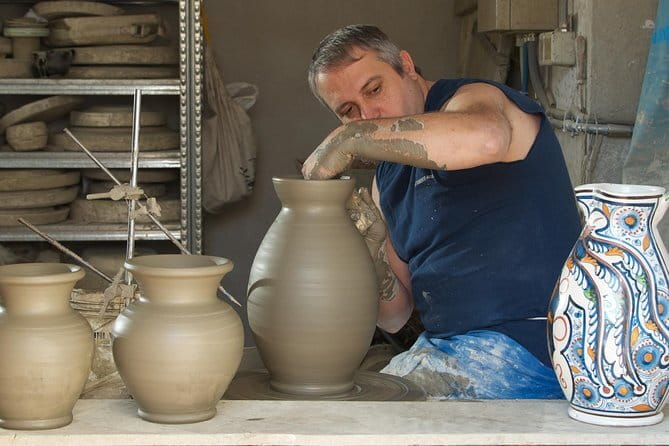
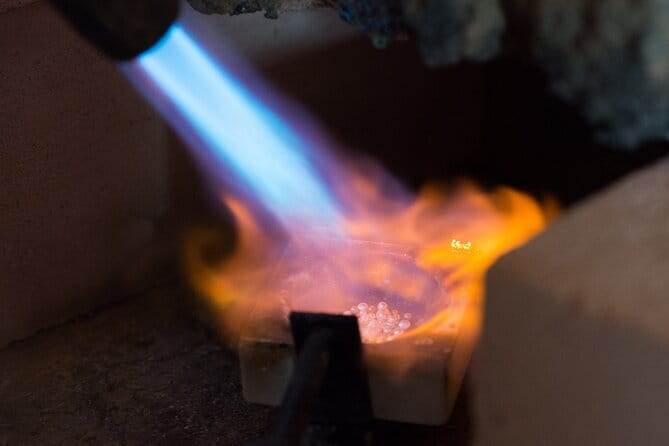
You can expect to see different workers handling different stages of the process. Depending on the production schedule, you might watch shaping, painting, glazing, kiln work, packing, or shipping. The appeal is seeing how old hand skills fit into a functioning small business. Pieces are made by hand, but the operation is organized enough to supply well-known retailers and ship internationally.
This is not a polished museum display. People are working. That gives the visit its value, but it also means the exact activity can vary from one day to the next. You may see one technique in action and only hear about another stage. Ask questions as you go, especially if you want to understand the difference between shaping a piece and decorating it.
The factory tour also helps you appreciate the piece you make later. A bowl seems simple until you see how many steps come after the clay leaves the wheel. Drying, glazing, firing, and careful packing all affect the final result.
The upstairs showroom and the temptation to buy
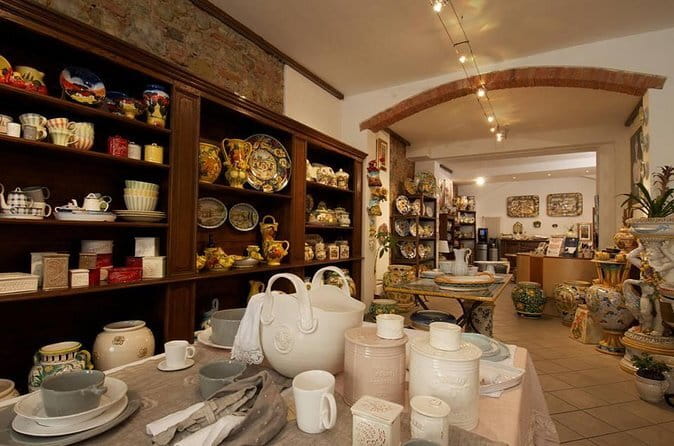
After the factory, the experience includes time in a private showroom with finished pieces and ceramics at different stages of completion. This is one of the most visually rewarding parts of the visit. You see the range of colors, forms, patterns, and finishes in one place, rather than just one sample on a shop shelf.
You can purchase ready-made work or request a personalized piece based on the models produced in the factory. The extra shopping is not included in the $133.08 activity price, so ask about the cost of any added design or custom order before agreeing.
The useful part is shipping. You do not have to wrap a large platter in hotel clothing and hope it survives your flight. The provider says shipment is free for the pieces made during the class, and additional ceramics can also be shipped under special pricing. Confirm the details for any extra purchase at the shop, especially if you order personalization.
I like this arrangement because it turns shopping into part of the craft story. You have just seen the people and processes behind the pieces. Still, there is no need to buy anything beyond your class creation. The showroom is an opportunity, not an obligation.
Same city, an entirely different afternoon:
- Florence: Michelangelo’s David Skip-the-Line Entry Ticket
★ 4.5 · 12,764 reviews - The Best tour in Florence: Renaissance & Medici Tales – guided by a STORYTELLER
★ 5.0 · 12,316 reviews - Florence: Leonardo Interactive Museum Entry Ticket
★ 4.5 · 11,763 reviews - The Best Tour in Florence: Renaissance and Medici Tales
★ 5.0 · 10,810 reviews
Learning the wheel with Salvatore
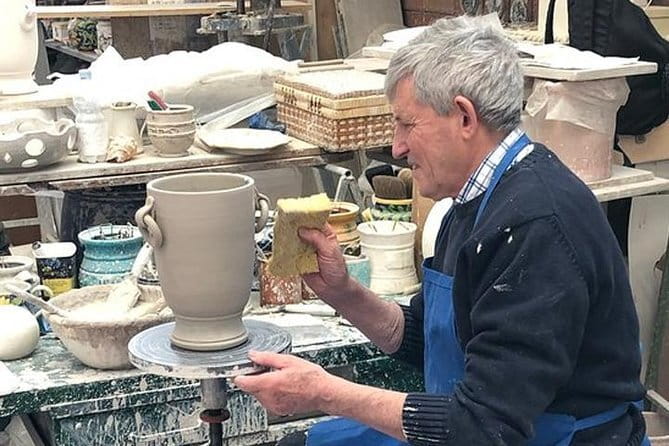
The class returns to the family shop or studio, where Salvatore teaches you to work with clay on the wheel. He has been making pottery for almost 50 years and is described as a master potter. His role is especially helpful for mixed groups, since one person may already work with clay while another has never touched a wheel.
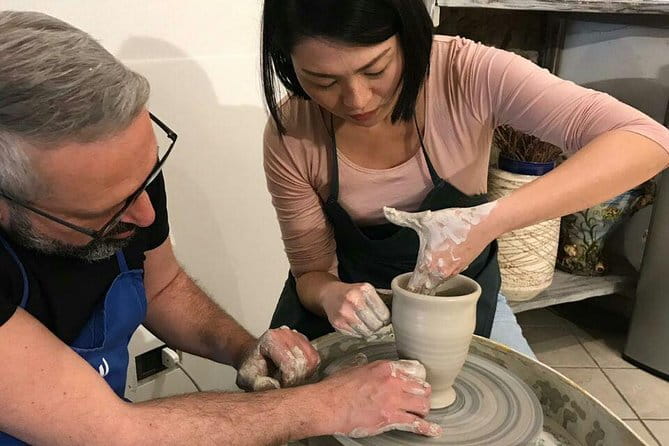
Expect a practical lesson rather than a formal art-school course. Salvatore demonstrates the basic movements, then guides your hands as you center the clay, open it, and shape it into a bowl. Beginners receive patient help, while people with pottery experience can ask about techniques used in Montelupo.
You should keep your expectations realistic. Making a bowl look easy is one of the oldest tricks in pottery. The clay can wobble, collapse, or refuse to do what your hands intend. That is part of the fun, and Salvatore’s patient instruction lets you try again rather than simply watching him make the piece for you.
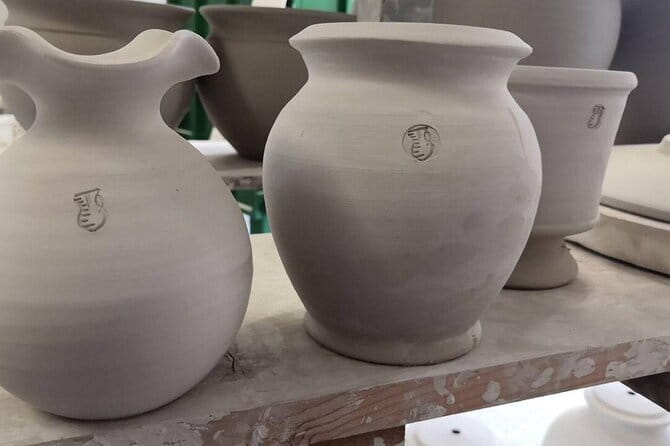
The supplied materials include raw clay, working clothes, and the wheel. The finished work is glazed and fired twice. You can select a glaze, and some participants have added a more detailed pattern for a small extra fee. The included piece is then shipped to your home.
The number of pieces can vary with the group and the session. Several people have made bowls, and the activity description promises a piece created from start to finish. Ask Matteo at the beginning how many pieces your booking includes and what customization costs before you start designing.
The family welcome is part of the experience
Matteo is the main point of contact and guide. His English is described as excellent, and his communication before the activity can help if you have train or timing questions. His warmth is a large part of the day, but the experience does not depend on theatrical guiding. He connects the factory, the town, the showroom, and the family workshop in a natural way.
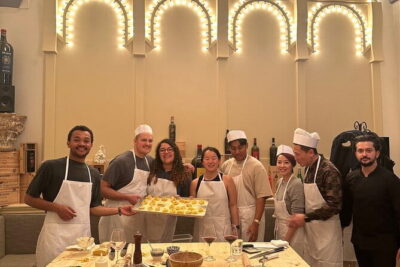
You may meet Matteo’s mother Betty, his brother Marco, and other family members or factory workers. A coffee break or homemade cookies may appear, but these details should be treated as pleasant possibilities, not promised inclusions. The reliable feature is the family-run setting and the chance to meet the people behind the ceramics.
This personal welcome can make the class feel less like a transaction. Matteo has also helped people find lunch nearby and pointed out local details they might otherwise miss. If you have extra time, ask for a suggestion in Montelupo rather than rushing straight back to Florence.
The family atmosphere is a strength, though it may not suit someone who wants a tightly scripted, fast-moving workshop. Conversation and questions are part of the appeal. The pace can be flexible, and the visit may run a little beyond the advertised two hours depending on the group.
What the $133.08 price really covers

At $133.08 per person, this is more expensive than a basic one-hour craft activity. The value comes from the complete package: factory access, private transport to the workshop, instruction with Salvatore, clay, work clothes, wheel time, glazing, two firings, and shipment of your finished piece.
You are also paying for context. A standard pottery class may teach you to form a bowl, but this experience shows how ceramics function as a local industry. You see production at several stages and have the chance to compare your own beginner work with finished family designs.
The price makes the most sense for people who care about pottery, handmade objects, or small-town experiences. It is less compelling if you are looking for a cheap souvenir or a quick activity between major Florence sights. Group discounts may improve the value for families or friends booking together.
Children must be accompanied by an adult. Service animals are allowed, and most people can participate, but the provider does not give detailed information about wheelchair access or specific physical accommodations. Contact the operator before booking if you have mobility concerns or need special support.
Who will get the most from this class
I would recommend it first to anyone curious about ceramics, including complete beginners. You do not need previous pottery experience, and the instruction can be adjusted to your level. The format also suits a mixed pair, such as a hobby potter and someone who has never used a wheel.
Families can enjoy it too, provided children are old enough to follow instructions and work comfortably in a small group. Since the maximum is six people, the setting should feel more personal than a large class, though the exact attention you receive depends on the makeup of your booking.
This is also a good choice for repeat visitors to Florence. If you have already seen the Uffizi and walked the main piazzas, Montelupo offers a fresh reason to leave the center. You get a local town, a working craft, and a souvenir with a story attached.
I would think twice if you have only one short day in Florence. The class itself is about two hours, but train connections, the walk to the shop, and the transfer to the factory take additional time. It is best treated as a half-day outing rather than squeezed into a narrow gap.
Practical details before you reserve
Confirmation arrives at booking, and the activity is offered in English. The meeting and return point is the same shop in Montelupo. You should arrive with enough time to locate Corso Giuseppe Garibaldi 74 without making the group wait.
Wear clothing you do not mind getting clay on, although working clothes are included. The provider does not specify a delivery time for the finished ceramics, so do not plan your Italian itinerary around receiving them before you leave. Give a complete home address for shipping and keep the shipment in mind when booking close to your return date.
Free cancellation is available when you cancel at least 24 hours before the local start time. Cancellations or changes made inside that window are not refunded or accepted. That rule is worth noting if your Florence schedule is still shifting.
Should you book the Montelupo ceramics masterclass?
Book it if you want an activity with real local character, enjoy meeting craftspeople, or like the idea of making something you will use at home. The strongest reasons are the small group, the working factory, Salvatore’s patient wheel instruction, and the fact that your finished pottery is fired and shipped rather than left behind.
Skip it if you want a purely sightseeing-focused day, dislike hands-on work, or cannot spare the time beyond Florence’s center. The class is not a shortcut to becoming a potter, and the final shape may carry a few beginner quirks.
For most people with an interest in handmade Italian goods, I think the price is fair. You get more than a bowl-making lesson: you get a look at Montelupo’s living ceramic trade and a personal link to the family that keeps it going. That is a worthwhile change from another afternoon in line at a museum.
FAQ
Where does the experience begin?
It begins at La Galleria Nuove Forme d’Arte, Corso Giuseppe Garibaldi 74, 50056 Montelupo Fiorentino, Italy.
How long does the activity last?
The ceramics experience lasts approximately two hours.
How far is Montelupo from Florence?
The train journey from Florence takes about 20 to 30 minutes. The meeting point is approximately a three to five-minute walk from Montelupo station.
Is transportation to the factory included?
Yes. Transport by private vehicle is included between Montelupo and the workshop outside town.
What is included in the pottery class?
The price includes raw clay, working clothes, use of a ceramic wheel, factory transport, glazing, double firing, and shipment of the pieces you make to your home.
Can I buy additional ceramics?
Yes. You can purchase ready-made or personalized ceramics from the factory models and shop pieces. These purchases are not included in the activity price.
What happens if I need to cancel?
You can receive a full refund if you cancel at least 24 hours before the local start time. Cancellations or changes made less than 24 hours before the start are not refunded or accepted.
Fresh on the Florence list
- Semi Private Deep Wine Chianti and San Gimignano from Florence★ 5.0 · 191 reviews
- Small Group Florence Cathedral Guided Tour with Priority Access★ 4.0 · 192 reviews
- From Florence: Wine Tasting and Dinner in Chianti Vineyards★ 4.6 · 192 reviews
- Hard Rock Cafe Florence with Set Menu for Lunch or Dinner★ 4.5 · 193 reviews
- Florence Sunset Food Tour with Wine & Dine at a Tuscan farmhouse★ 5.0 · 194 reviews
- Wine Experience In Chianti Hills from Florence★ 4.5 · 195 reviews
- Florence: Duomo Complex Guided Tour★ 4.2 · 195 reviews
- Brunelleschi’s Dome and Cathedral Complex Reserved Ticket★ 4.5 · 195 reviews
Florence Tours, compared.

Skip-The-Line Uffizi Gallery Timed Entry Ticket
Read our review →
Tuscany Day Trip from Florence: Siena, San Gimignano, Pisa and Lunch at a Winery
Read our review →
Timed Entrance Ticket to Michelangelo’s David
Read our review →
Michelangelo’s David Skip-the-Line Entry Ticket
Read our review →
The Best tour in Florence: Renaissance & Medici Tales – guided by a STORYTELLER
Read our review →

The Best Tour in Florence: Renaissance and Medici Tales
Read our review →