
Reviewed · POMPEII & VESUVIUS TOURS
Pompeii: Skip-the-Line Guided Tour with Expert Archaeologist
Pompeii makes far more sense when someone explains what you are looking at. An archaeologist guide can turn a half-buried wall, bakery oven, or worn street stone into a picture of daily life before Mount Vesuvius erupted in 79 AD. I especially like the small-group format and the chance to see recent excavation work rather than only the famous postcard sights.
I also like the three-hour Complete Pompeii option, which gives you time to move beyond the Forum and temples. The drawback is simple: Pompeii is huge, hot, dusty, and short on shade. Three hours on uneven ancient streets can be tiring, so bring water, wear sturdy shoes, and plan your energy wisely.
Key points at a glance
- An archaeologist leads the walk: Guides such as Ilaria, Anna, Enzo, Brunella, and Sonia have been praised for making complex archaeology easy to follow.
- The longer route reaches more than the main landmarks: See streets, baths, villas, shops, a bakery, cemetery, city walls, and newer excavation areas when open.
- Skip-the-line entry saves useful time: Pre-reserved admission lets you start exploring instead of waiting at the gate.
- The Forum is only the beginning: The tour adds ordinary homes, businesses, public buildings, and clues about everyday Roman life.
- The site is demanding: Expect a moderate walking pace, uneven ground, intense sun, and very limited shade.
- You can choose a shorter visit: The Pompeii Express option lasts about two hours and focuses on the Forum, temples, and shops.
Why an archaeologist changes Pompeii
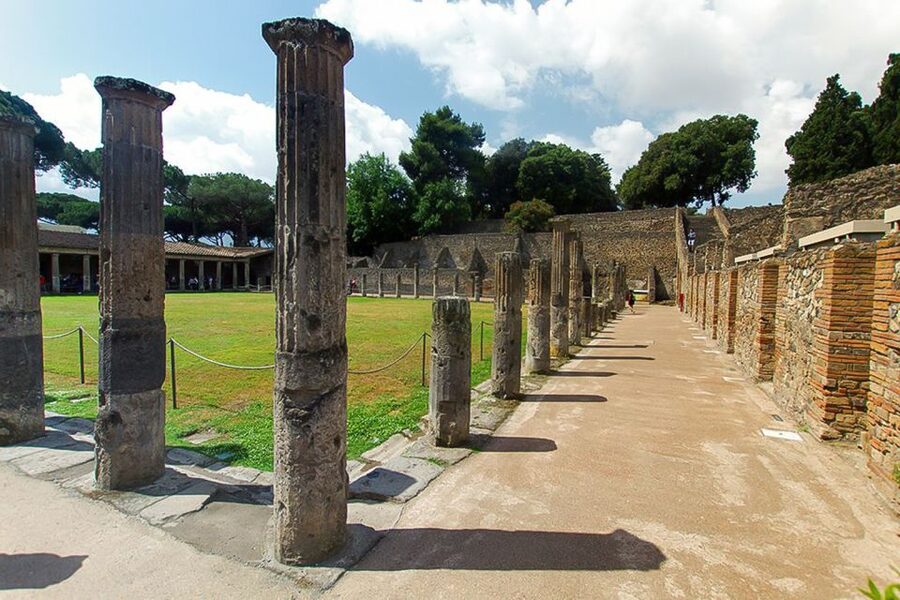
Pompeii is not a tidy archaeological museum. It is a sprawling city of streets, foundations, villas, public buildings, shops, walls, and open courtyards. Without context, you can easily walk past something important and see only old stone.
That is where this tour earns its keep. Your guide explains how the city worked, points out details in the buildings, and connects grand public spaces with the lives of ordinary residents. A bakery becomes evidence of food production. A shopfront shows how commerce met the street. A bath complex reveals how Romans spent leisure time and cared for public life.
The strongest praise has gone to guides who combine facts with stories. Ilaria has been singled out for making the ruins accessible to both adults and children, while Anna, Enzo, Brunella, and Sonia have been praised for clear explanations and lively delivery. That matters at Pompeii, where a guide’s voice and timing can determine whether three hours feel absorbing or exhausting.
The guides do not simply recite dates. They explain what you are seeing and why it matters. That approach is especially useful for families, since children can follow stories about shops, food, buildings, and people more easily than a string of archaeological terms.
More Skip-the-Line Tickets in Pompeii
- Pompeii: Skip-the-Line Entrance Ticket with Audio Guide
★ 4.0 · 2,509 reviews - Pompeii: Skip-the-line-Ticket and Guided Tour
★ 4.6 · 1,152 reviews - Pompeii: Guided Tour with Skip-the-Line Entry
★ 4.9 · 812 reviews
Meeting at the Villa dei Misteri entrance
The meeting point is at Via Villa dei Misteri, 1, by the entrance gate to Pompeii Archaeological Park. Look across from the Hortus Pompei restaurant for a guide holding a green Walks sign, and arrive 15 minutes before the scheduled start.
This detail deserves attention because finding the right entrance is one of the few practical weak spots. The park is large, and a digital map pin may not always make the meeting location obvious. Give yourself extra time, especially if you are arriving by train, taxi, or from another part of Pompeii.
The tour returns to the same general entrance area after the archaeological walk. It does not include hotel pick-up or transportation, so you must make your own way to Via Villa dei Misteri.
Once the group is together, pre-reserved tickets help you get inside without dealing with the regular entry line. That is not just a minor convenience. Pompeii can take much of a day, and every minute saved at the gate is time available for the ruins.
Pompeii’s streets reveal the city first
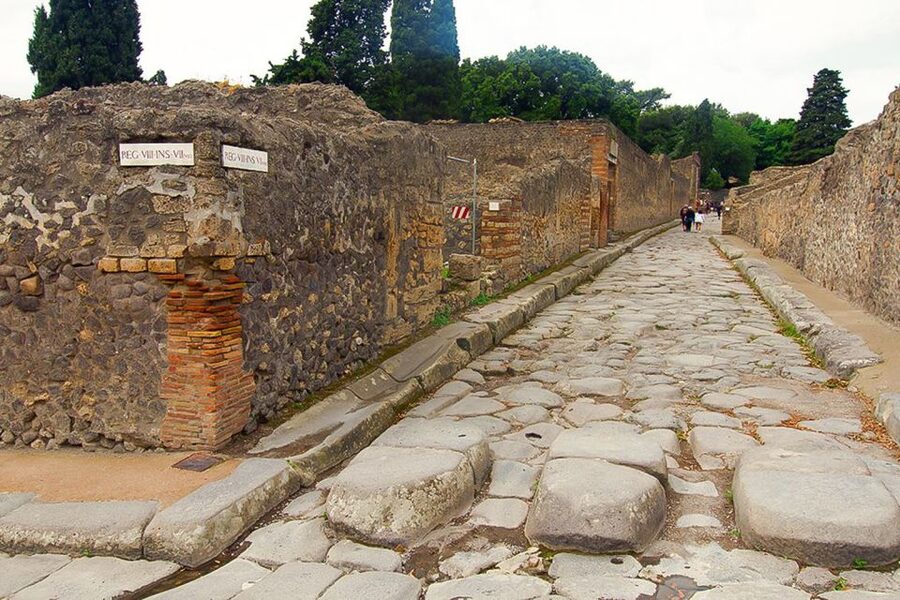
The walk begins among the streets that once carried residents, merchants, workers, and religious processions through the city. You will see the deep wheel ruts made by carts and the raised stepping stones that helped people cross streets when water or waste covered the roadway.
These small features are among the most useful parts of a guided visit. On your own, you might notice the stones but miss their purpose. A guide helps you read the city as a functioning place rather than a collection of disconnected ruins.
The streets lead past shops and houses with entrances opening directly onto public routes. Pompeii’s surviving walls preserve a strong sense of how close work, shopping, worship, bathing, and home life once were. You are not just looking at monuments. You are following the same paths that connected the city’s daily routines.
The group uses headsets when needed, which is helpful when other groups are nearby. You do not need to stand shoulder to shoulder with the guide to hear an explanation, and there is more room for questions and photographs.
The Forum, temples, and public life
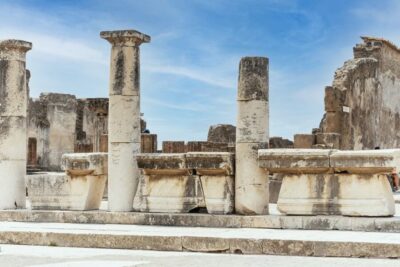
The Roman Forum is one of the essential stops. It was the city’s main civic and religious center, surrounded by important public buildings and temples. The Temple of Apollo offers another look at the religious life of Pompeii and helps place the city within the wider Roman world.
The Forum can feel like a field of columns and broken walls if you do not know how to read it. Your guide explains the role of the space and identifies the buildings around it, giving you a clearer sense of how public business and worship shaped Pompeii.
I appreciate that this section does not treat Pompeii as only a tragedy site. The eruption is the reason the city survived in such detail, but the Forum and temples show Pompeii before disaster: active, organized, prosperous, and tied to Roman customs.
The Express option focuses on this central area, along with temples and shops. That two-hour route makes sense if you have limited time or want a shorter introduction. It will not provide the same range of neighborhoods and daily-life details as the three-hour option, but it covers the central landmarks efficiently.
A few other Pompeii mornings to weigh against this
- Pompeii: Entry Ticket and Guided Tour with an Archaeologist
★ 4.8 · 19,459 reviews - Pompeii: Entry Ticket with Optional Audio Guide
★ 4.2 · 12,360 reviews - Pompeii: Small Group Tour with an Archaeologist
★ 4.8 · 12,264 reviews - Pompeii Small Group Tour with an Archaeologist
★ 5.0 · 6,593 reviews
Baths, villas, shops, and the ordinary city
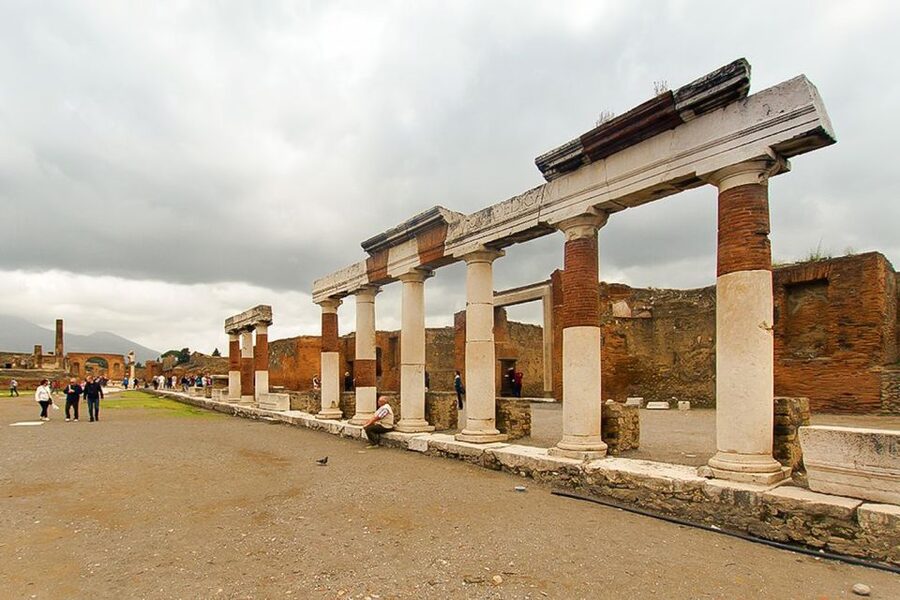
The tour moves beyond official buildings to the places that made Pompeii a living city. You may visit public baths, private houses, commercial spaces, and villas. Each offers a different clue about how people lived nearly 2,000 years ago.
The baths are especially useful for understanding Roman social life. They were not only places to wash. They were public gathering points and part of the rhythm of city life. A guide can explain the sequence of rooms and help you distinguish practical features from decorative ones.
The houses reveal another side of Pompeii. Some are modest, while others preserve more elaborate spaces and decoration. Even when rooms are damaged, their layout can tell you about privacy, hospitality, domestic work, and the way homes faced the street.
The shops make the ancient city feel surprisingly familiar. Storefronts opened onto busy roads, and commercial life was woven into the neighborhoods. The tour also includes an ancient food shop or supermarket, a memorable stop because it gives you a direct link to shopping and eating in the Roman city.
At the bakery, you can see equipment connected with bread production, with food remains described as almost intact. This is the sort of detail I value most. It moves Pompeii away from grand marble monuments and toward the practical work that fed its people.
The bakery, cemetery, and human cost
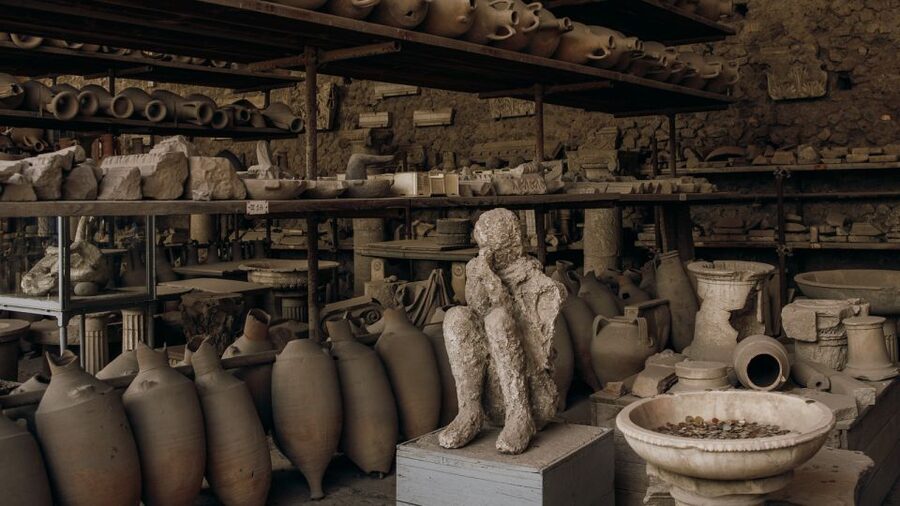
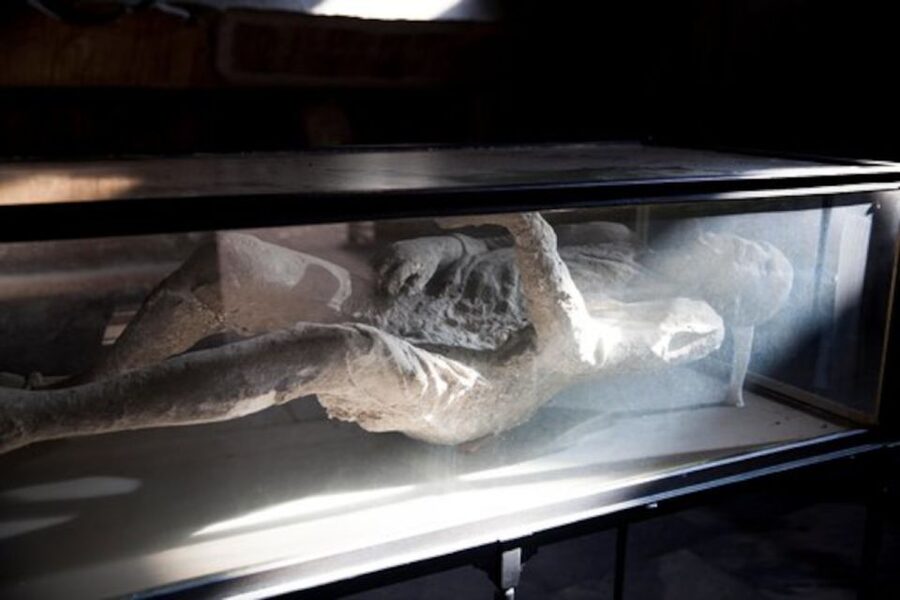
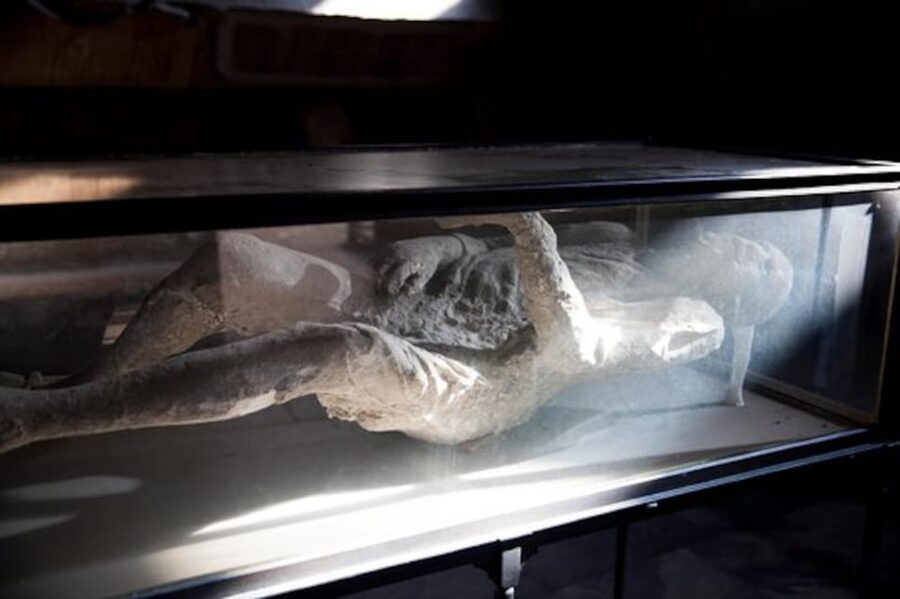
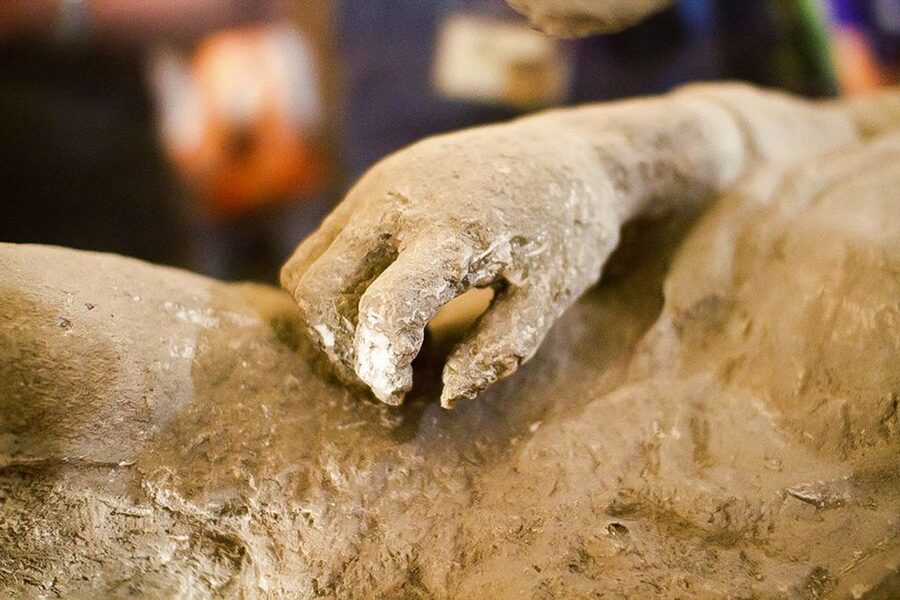
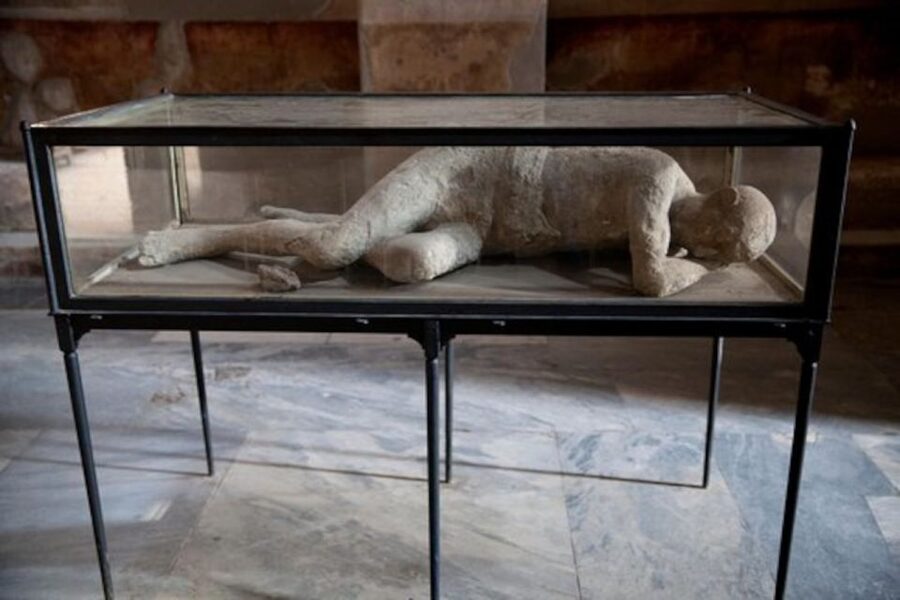
Pompeii is often presented as a remarkable time capsule, but it is also a place of sudden death. The plaster casts are among the most emotional sights in the park. They preserve the forms of people caught in the eruption, giving the disaster a human scale that buildings alone cannot provide.
This part of the tour may be difficult for some children or sensitive adults. The guide can provide context, but the casts remain powerful and unsettling. They are not merely archaeological objects. They represent individuals who were living ordinary lives when the eruption changed everything.
The old cemetery offers a quieter way to think about Pompeii’s residents and their customs. Its location outside the city helps explain how Roman burial practices related to urban planning and the roads leading into town.
These stops balance the tour. You see the city’s food, work, worship, and public life, then confront the event that preserved it. A good guide handles that shift with care rather than turning the tragedy into spectacle.
New excavations keep the route changing
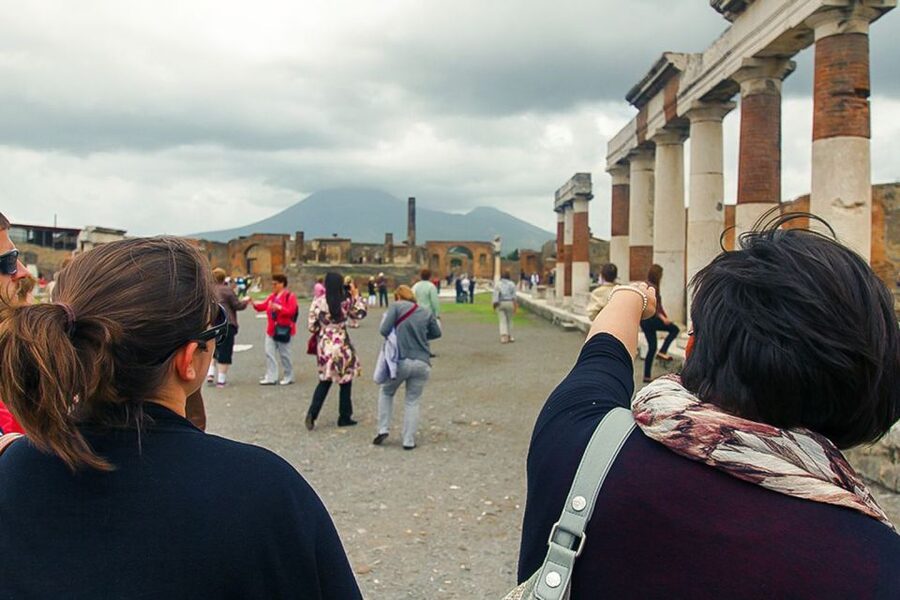
One of the most useful ideas in this experience is that Pompeii is not finished. Roughly one-third of the city remains uncovered, and excavation and preservation work continue.
That means the route can change as new areas open or as ongoing work affects access. If conditions allow, you may see a recently opened archaeological area. A guide can explain not only what was found but also how archaeologists protect exposed walls, floors, objects, and human remains.
This adds value over a fixed audio tour. You are seeing a working archaeological site, not a finished attraction with every detail permanently arranged. The guide adapts the walk to current access and discoveries, so the exact sequence can vary.
It is worth keeping expectations sensible. The promise is access to more of Pompeii when the Complete Pompeii option is selected, not a guarantee that every building will be open on every date. Excavation, preservation, weather, and site rules can all affect the route.
Walking the city walls for Naples views
The city walls provide a change of pace after streets and buildings. From higher ground, you can look back over parts of Pompeii and out toward Naples, with the surrounding area providing a wider setting for the buried city.
The view helps explain Pompeii’s place in Campania. After spending hours among close walls and narrow streets, you get a broader sense of the city and its surroundings.
This stop also shows why comfortable footwear matters. The tour requires a moderate walking pace, and the ground is uneven. High-heeled shoes are not allowed, and closed-toe shoes are a sensible choice. One visitor specifically wished they had known to wear them, which is good advice for everyone.
Heat, shade, food, and the practical side
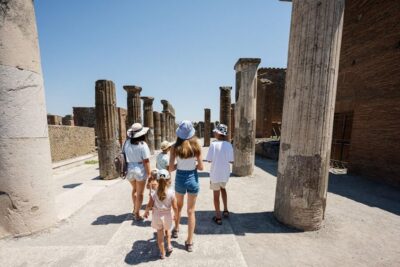
Pompeii has very little shade, and the stone reflects heat. In summer, the sun can turn a three-hour walk into a serious workout. Wear a hat, use sunscreen, carry plenty of water, and consider a UV umbrella if you have one that is practical to carry.
There are limited places to stop for drinks or food, and queues can be long. Do not count on a quick refreshment break whenever you want one. Eat beforehand or bring water so you can stay with the group comfortably.
Toilets are also limited during the walk. Plan ahead before entering, especially if you are visiting with children.
Strollers are not permitted, and the experience is not suitable for wheelchair users or people who cannot walk at a moderate pace. Anyone with walking trouble should think carefully before booking. A guide may be considerate and adjust the pace when possible, but the site itself remains uneven, exposed, and physically demanding.
How the $70 price works for you
At $70 per person, this is not the cheapest way into Pompeii. You are paying for pre-reserved admission, a live English-speaking archaeologist, a small group or private format, and a planned route through a very large site.
I think the price is reasonable if Pompeii is a major part of your Campania visit and you want to understand what you see. The archaeological park is too large and complex for a short, casual wander to cover much ground with confidence. A guide also helps you notice features you would likely pass without explanation.
The value is strongest with the three-hour option. The extra hour gives the guide room to move beyond the Forum, temples, and shops to the baths, houses, bakery, cemetery, city walls, and possibly current excavation areas.
The Express option is a better fit if you have only two hours or do not want a long walk. It gives up some range, but it may be the smarter purchase for travelers with a tight schedule or lower stamina.
Small groups matter here. You can hear the guide through the headset, ask questions, and keep the pace more personal than on a large coach-style outing. Private groups are also available if you want more control over the route and discussion.
The free cancellation deadline is 24 hours before the tour, and you can reserve now and pay later. Full names must be provided at booking and must match passports or identity cards, with no name changes allowed.
Who should book this Pompeii tour
I would choose this tour for first-time visitors who want the ruins explained rather than simply photographed. It is also a strong choice for families, since guides such as Sonia and Ilaria have shown an ability to keep children involved for the full three hours.
History fans will appreciate the archaeologist’s perspective, especially the attention to ongoing excavation and preservation. The experience also suits anyone who wants to see more than the most famous central landmarks.
I would think twice if you dislike walking in direct sun, need frequent seating, use a wheelchair, or are traveling with a stroller. Pompeii itself sets those limits, and a guide cannot remove them.
If you have only a short window, choose Express. If you can spare three hours and have the energy, choose Complete Pompeii for the fuller sense of the city.
Should you book it?
Yes, if Pompeii is one of your main reasons for visiting Campania. The ruins are extraordinary, but their meaning is not always obvious. An archaeologist guide gives you the tools to understand the streets, buildings, businesses, temples, and human stories behind the stones.
The best reason to book is the combination of expert explanation and broader site coverage. The main caution is the physical effort. Bring water, protect yourself from the sun, wear closed-toe walking shoes, and arrive early at the Villa dei Misteri entrance with your identification ready.
Choose the two-hour Express route for the essential center. Choose the three-hour option for the most rewarding visit, particularly if you want Pompeii to feel like a city rather than a set of ruins.
FAQ
How long does the Pompeii tour last?
You can choose a two-hour Pompeii Express experience or a three-hour Complete Pompeii tour. Starting times vary, so check availability when booking.
Where does the tour meet?
The meeting point is at Via Villa dei Misteri, 1, at the entrance gate to Pompeii Archaeological Park, across from the Hortus Pompei restaurant. Look for a guide holding a green Walks sign.
How early should I arrive?
Arrive 15 minutes before the tour begins. This gives you time to find the entrance and identify the guide.
Is skip-the-line admission included?
Yes. The tour includes pre-reserved skip-the-line tickets for Pompeii Archaeological Park.
What does the tour include?
It includes an official Pompeii tour guide, entry tickets, and headsets when needed. Hotel pick-up and drop-off are not included.
Is the tour suitable for wheelchair users or strollers?
No. The experience is not suitable for wheelchair users, people with mobility impairments, or strollers. It requires walking at a moderate pace over an archaeological site.
What should I bring?
Bring a passport or ID card, including identification for children, along with comfortable walking shoes. Water, sun protection, and a hat are also sensible because the site is hot and has little shade.
Fresh on the Pompeii list
- Stories of Pompeii: Small Group tour with archeology expert guide★ 5.0 · 191 reviews
- Mount Vesuvius: Vineyard Tour with Wine Tasting and Lunch★ 4.8 · 193 reviews
- Pompeii: 2 Hour Private Tour with an Archeologist Guide★ 5.0 · 214 reviews
- Pompeii: Skip-the-Line Entry & Audioguide★ 3.8 · 225 reviews
- Herculaneum: Tickets & Tour with a Local Archaeologist★ 4.8 · 226 reviews
- Pompeii and Mount Vesuvius Small Group Tour★ 4.5 · 233 reviews
- From Naples/Salerno: Pompeii, Sorrento, and Positano Tour★ 4.5 · 250 reviews
- Pompeii: Day Tour of Pompeii and Vesuvius with Bus Transfer★ 4.2 · 250 reviews
Pompeii & Vesuvius Tours, compared.

Entry Ticket and Guided Tour with an Archaeologist
Read our review →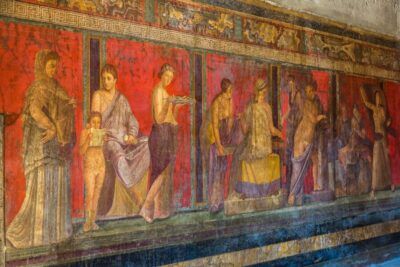


Pompeii Small Group Tour with an Archaeologist
Read our review →
Pompeii, Amalfi Coast and Positano Day Trip from Rome
Read our review →Browse the lists this tour appears in