
Reviewed · POMPEII & VESUVIUS TOURS
Pompeii: Skip-the-Line Entry & Audioguide
Pompeii is one of those places where an ordinary street can suddenly become the main event. You walk past a fountain, bakery, home, or theater and realize that daily Roman life ended here in a single eruption. I especially like the freedom to set your own pace and the chance to use an audioguide instead of being tied to a guide for every step.
The central forum with Mount Vesuvius behind it gives you the essential Pompeii view, while the map helps you make sense of a very large archaeological park. The main caution is value: the $53 price may be worthwhile when entry lines are long, but local prices and ticket arrangements can be cheaper, and the skip-the-line advantage may be modest on a quiet day.
Key points to know before entering Pompeii
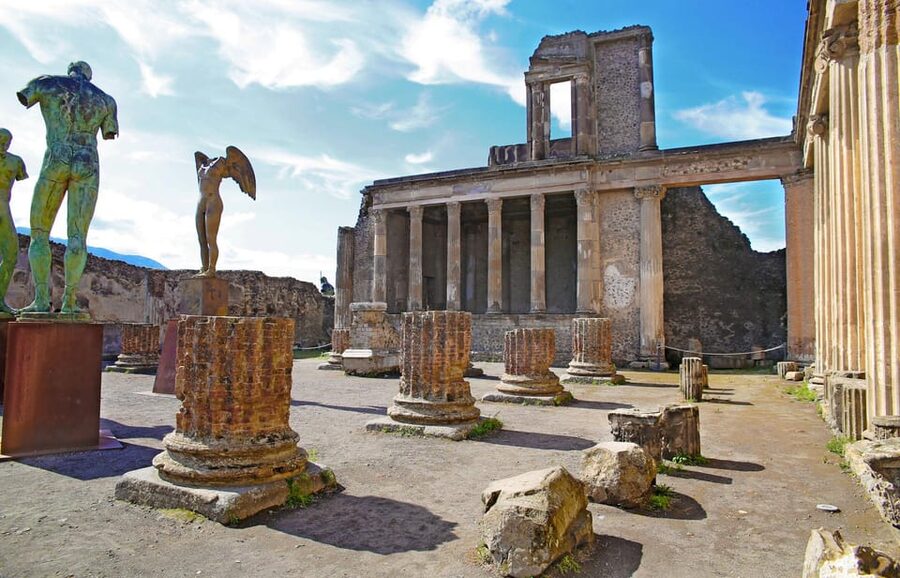
- The forum gives you the best first look: Begin at Pompeii’s civic center, with columns, doorways, and Vesuvius framing the ruins.
- You control the length: The activity can last about two hours or stretch to a full day, depending on how much of the park you explore.
- The audioguide covers eight languages: Choose Italian, English, French, Spanish, German, Portuguese, Chinese, or Japanese.
- Villa dei Misteri is not included: You need to plan separately if that site is a priority.
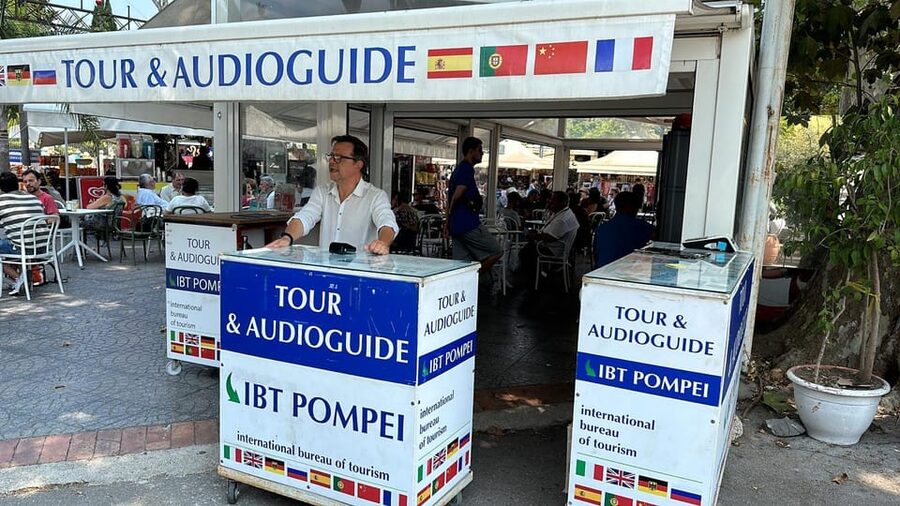
- The meeting point matters: Go to the IBT Center, also called Touristation, next to Chalet Donna Lucia.
- Price needs a close look: A recent booking cost €140, while the buyer said local entry with audioguides totaled €78, so compare before paying.
Pompeii begins with a practical meeting point
Your visit starts at the IBT Center, also called Touristation, next to Chalet Donna Lucia. This is not an archaeological landmark, so allow a little time to find the office rather than walking straight toward the entrance and hoping the ticket appears there.
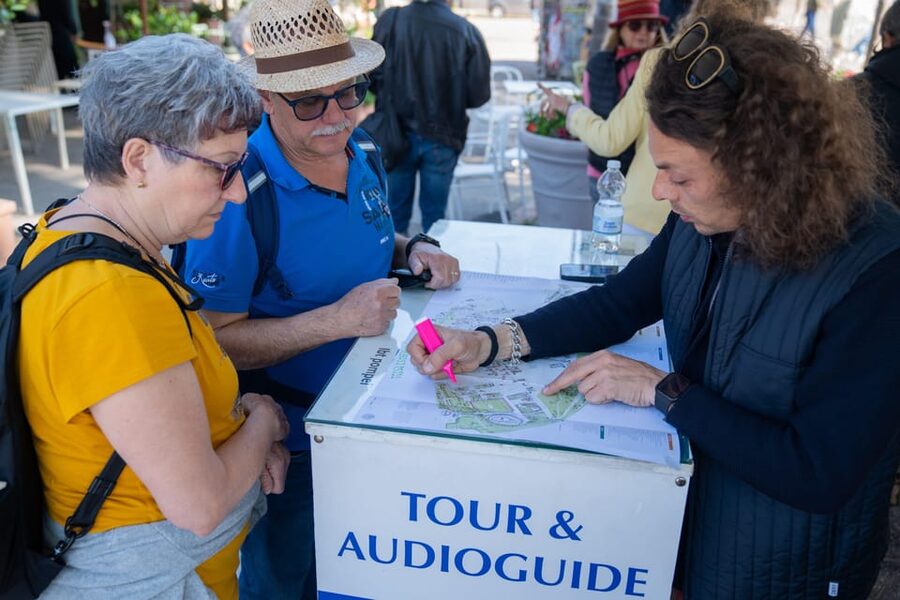
At check-in, you receive access to the Pompeii Archaeological Park, a paper city map, and the audioguide. An opening introduction may be provided by Daniel, whose short briefing was praised for being clear and useful. That introduction matters because Pompeii can feel confusing at first. The ruins cover a broad area, and a map helps you see the city as a connected place rather than a pile of isolated walls.
Bring your passport or ID card. Identification is required for all participants. The published information also says to avoid luggage and large bags, so arrive with only what you need for the walk. Pets are not generally allowed, although small dogs can enter if kept on a leash and carried inside buildings. Smoking, alcohol, and drugs are not permitted.
One practical concern deserves attention. A recent booking described being asked to leave a passport as a deposit for the audioguide and feeling uneasy about how it was handled outdoors. If the local check-in process asks for a deposit, clarify exactly how your document will be stored and returned before handing it over. You may prefer to carry another accepted form of ID if the staff allows it, but the formal requirement is an ID for every participant.
More Skip-the-Line Tickets in Pompeii
- Pompeii: Skip-the-Line Entrance Ticket with Audio Guide
★ 4.0 · 2,509 reviews - Pompeii: Skip-the-line-Ticket and Guided Tour
★ 4.6 · 1,152 reviews - Pompeii: Guided Tour with Skip-the-Line Entry
★ 4.9 · 812 reviews
The central forum puts Roman life in view
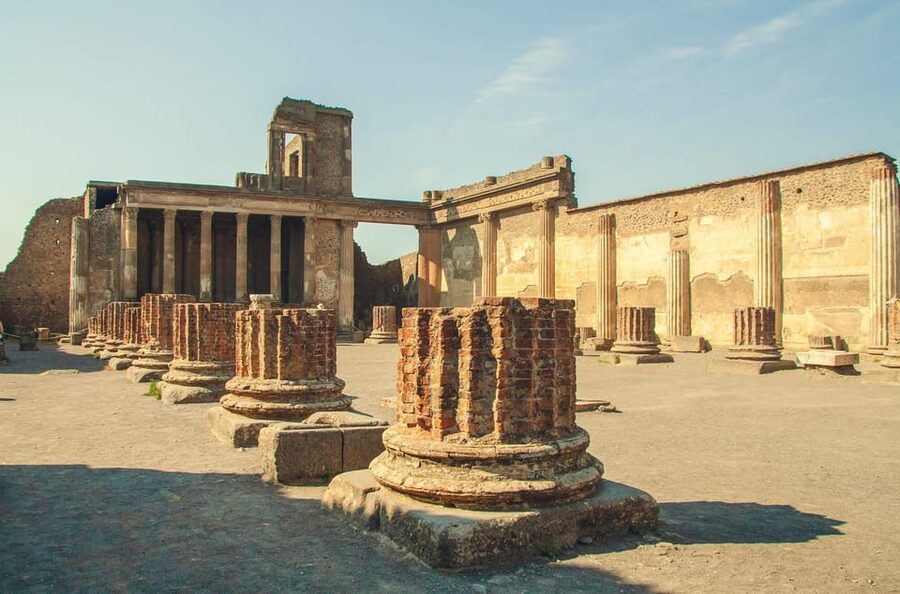
The forum is the natural place to get your bearings. This broad civic space was the center of public life, and the remaining columns and doorways help you picture a city organized around politics, trade, religion, and public gathering.
The appeal is not just the age of the stones. It is the scale of the setting. With Mount Vesuvius in the background, you can connect the preserved city to the event that destroyed it in 79 AD. The volcano is not merely scenery. It gives the ruins a sense of place and makes the eruption feel less like a distant textbook event.
Use the audioguide here to slow down and listen. The forum is easy to cross quickly, but that would miss the point. Look at how the surrounding buildings face the open space, then notice the fragments of columns and surviving entrances. The audioguide is most useful when it explains how each structure fitted into the city’s daily routine.
The downside is that an audio visit depends on your own attention. If you prefer a guide who can point out details, answer questions, and adjust the pace, select the guided-tour option if it is available when you book. The standard visit gives you more independence, but you need to do more of the work yourself.
Pompeii’s streets reveal the city block by block
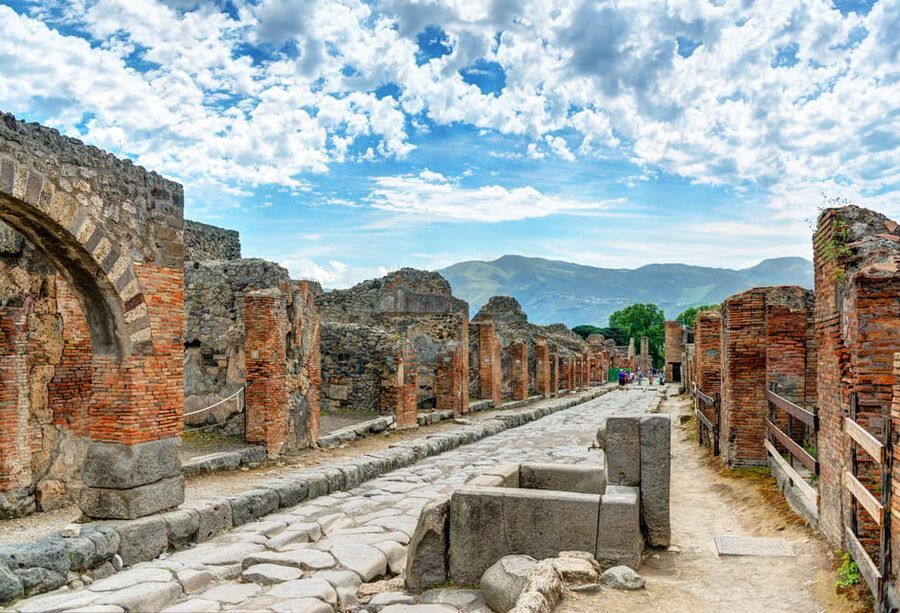
After the forum, the streets become the main attraction. You pass along ancient routes lined with houses, shops, fountains, and public buildings. The remains of aqueducts and water points show that Pompeii was not a simple settlement frozen in time. It had systems for moving water, supplying homes, and serving the public.
I like this part of the visit because it turns archaeology into something practical. You are not only looking at broken walls. You are following the routes people used to reach work, markets, baths, theaters, and public squares. The surviving streets let you see how close homes and businesses were to one another.
Private houses add another layer. Their rooms and wall paintings can be unevenly preserved, but the remaining frescoes still show how much color once filled these spaces. The audioguide can help you read the difference between a residential room and a commercial space, especially when only foundations or partial walls remain.
Do not expect every building to be open or complete. Pompeii is a large outdoor archaeological park, and the condition of one house may be very different from the next. Some spaces will reward close attention to a small fresco or threshold, while others may appear to be little more than walls and paving.
Baths, fountains, and businesses show daily routines
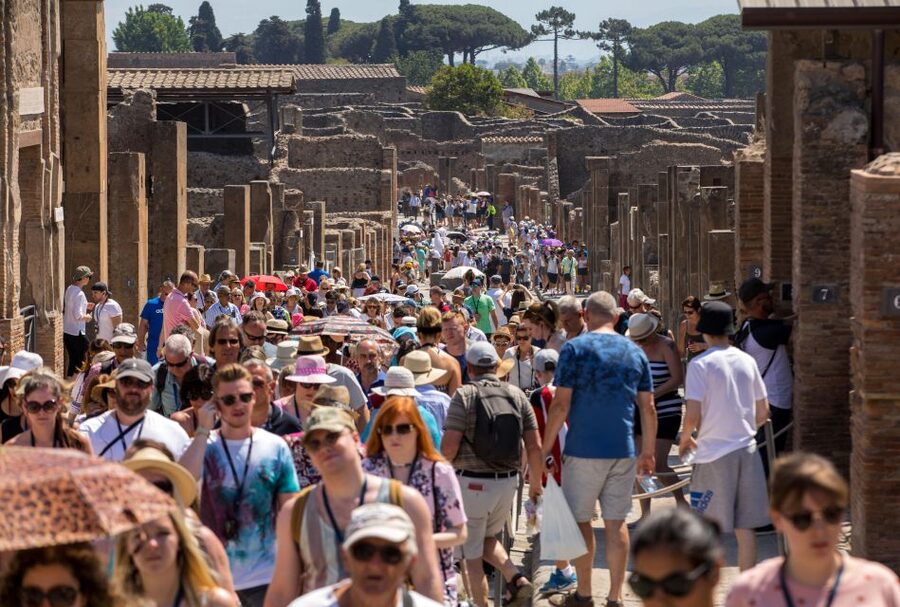
The public baths are among the best places to imagine ordinary social life. They were more than places to wash. They were public meeting spaces where people spent time, followed routines, and took part in a shared civic life.
Fountains and water features help explain how the city functioned. Even partial remains can show the importance of public water access, while aqueduct fragments point to the systems behind it. These details are easy to skip when you are focused on famous buildings, but they are some of the most useful clues to Pompeii’s everyday operation.
Businesses provide another welcome change from grand civic ruins. Shop fronts, counters, doorways, and work areas connect the city to commerce. You can picture residents moving through the same streets for food, services, and errands. The site becomes more human when you pay attention to these modest spaces.
The paper map is valuable here. Mark the areas you have visited, then use it to choose your next direction instead of wandering without a plan. Since the visit can last from two hours to a full day, you should decide early how much ground you want to cover. A short visit calls for the forum, a few streets, and one or two major buildings. A full day gives you time to stop often and listen to more of the commentary.
A few other Pompei Campania mornings to weigh against this
- Pompeii: Entry Ticket and Guided Tour with an Archaeologist
★ 4.8 · 19,459 reviews - Pompeii: Small Group Tour with an Archaeologist
★ 4.8 · 12,264 reviews - Naples: Pompeii and Mt. Vesuvius with Lunch and Wine Tasting
★ 4.5 · 2,454 reviews - Pompeii: Small-Group Tour of Pompeii and Herculaneum
★ 4.8 · 867 reviews
The amphitheater and theaters change the mood
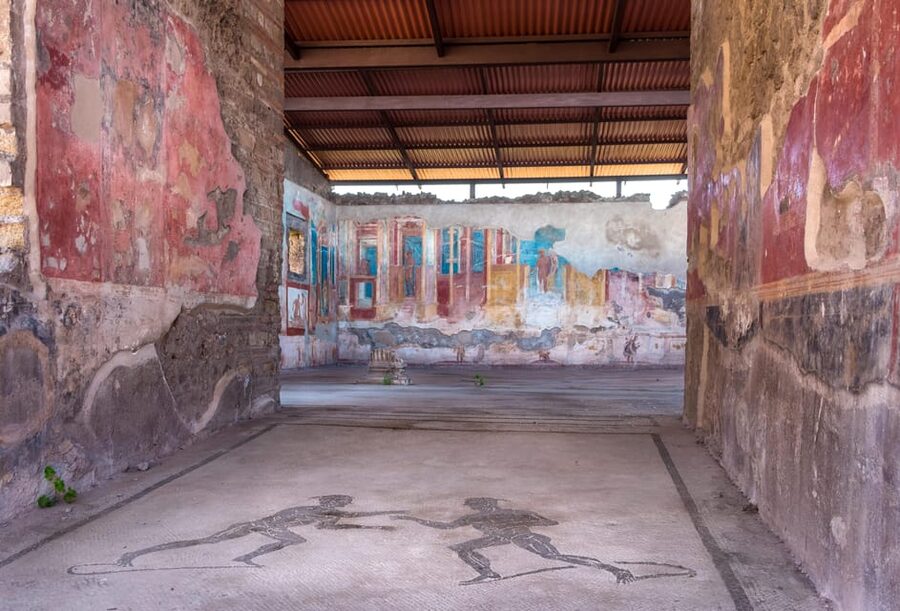
Pompeii’s amphitheater gives you a different view of the city. This was a venue for large crowds, and its shape makes the public excitement easy to imagine even when the stone seating is quiet.
The dramatic theater is more intimate. Its design shows how performances fit into the city’s social life, while the surviving structure gives you a clear sense of the audience area and stage setting. These buildings are worth seeing even if you are not especially interested in ancient entertainment because they reveal how Romans spent leisure time together.
I would not rush through the theaters simply because you have already seen the forum. They change the rhythm of the visit. After streets and houses, these large public spaces show Pompeii as a city that gathered people for events, not only a place where residents worked and lived.
The audioguide should be useful at both venues, but the exact depth depends on the commentary provided. If the recording feels too general, use it as a starting point and spend your time looking at the building itself. The site’s scale and surviving structure do much of the teaching.
What the audioguide adds, and where it falls short
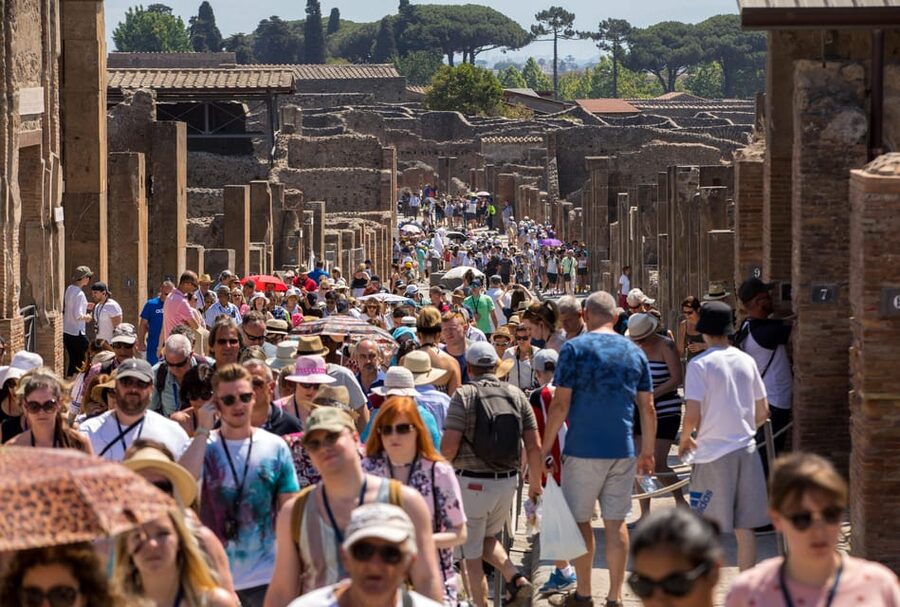
The audioguide is included in Italian, English, French, Spanish, German, Portuguese, Chinese, and Japanese. That broad language choice is a strong point, especially for independent visitors who do not want to read every wall panel or bring a separate guidebook.
I like having commentary available without needing to stay beside a group. You can pause, replay, and move on when a room does not interest you. This works well for families, mixed-interest groups, and anyone who wants to spend extra time with frescoes or public buildings.
The paper map remains important. An audio device tells you what you are seeing, but the map helps you decide where to go next. Together, they give you a simple structure for a self-guided visit.
There are limits. An audioguide cannot answer a follow-up question or point to a detail you have overlooked. A guided option is listed for those who select it, so compare the choices carefully. One recent introduction by Daniel was well received, which suggests that the opening briefing can make the first part of the visit easier, but the standard package is primarily an independent exploration.
Two hours or a full day in the archaeological park
The stated duration is unusually broad: about two hours to one day. That is useful because Pompeii can fit different travel plans, but it also means the experience depends heavily on your choices.
For two hours, concentrate on the forum, nearby streets, a selection of homes and shops, and either the amphitheater or theater. Listen to the audioguide only at the places that interest you most. Trying to cover the whole park in a short visit would leave you tired and distracted.
With half a day, you can add the baths, fountains, aqueduct remains, more private houses, and both entertainment venues. A full day lets you take a slower look at frescoes and compare residential, commercial, and public buildings.
The exact starting times vary, so check availability before booking. The activity is non-refundable, which makes it especially important to choose a time you can keep. If your schedule is uncertain, a walk-up ticket may offer more flexibility, but you would give up the convenience of arranging entry in advance.
Is the $53 price good value?
At $53 per person, this is not automatically a bargain. The value rests on three things: how busy Pompeii is when you visit, how much you value the audioguide, and how much help you want finding the meeting point and collecting your ticket.
Skip-the-line entry can save time during a crowded period. Yet the benefit may be smaller than the wording suggests. One booking reported that most people were already entering as part of organized groups, so the regular line was not much longer. On a quiet day, buying directly at the park may be cheaper and nearly as quick.
Price comparisons are important. A recent booking reported paying €140, while the buyer said entry plus an audioguide purchased locally cost €78. That is a large difference. Prices may change, but this example is enough reason to check the official local price and compare it with the package before you commit.
The package makes more sense if you want a ready-made arrangement, a map, commentary in your language, and the reassurance of prearranged entry. It makes less sense if you are comfortable buying at the entrance, already have a guidebook, and are visiting at a time when lines are short.
What is not included in the Pompeii visit
Villa dei Misteri is not included. If you specifically want that site, check its access arrangements rather than assuming the ticket covers every Pompeii-area attraction.
Food and drinks are not included, and there is no hotel pickup or drop-off. You arrange your own way to the meeting point and manage your own refreshments. That keeps the visit independent, but it also means you should plan the outing as a walking visit rather than a fully hosted excursion.
The activity also does not promise a private guide unless you select the guided option. The basic package is built around the audioguide, map, and archaeological entry.
Who should book this Pompeii experience?
I would consider this a good fit for you if you want to explore independently but still want basic commentary in your own language. It is also useful if you are visiting during a busy period and value having entry arranged before you arrive.
Families and couples may like the flexible timing. One person can pause at a house while another moves ahead, and you do not have to keep a group together. The broad language selection makes it practical for international parties.
I would be more cautious if you are focused on low cost, visiting during a quiet period, or expecting a full guided tour. You may get better value by buying an official ticket directly and arranging your own written or audio information. I would also avoid booking until you have checked the price difference and understood the ID or deposit procedure at check-in.
FAQ
Where is the meeting point?
Meet at the IBT Center, also called Touristation, next to Chalet Donna Lucia.
How long does the activity last?
The visit can last from about two hours to one full day. Check availability for the starting times.
Is Pompeii entry included?
Yes. The package includes skip-the-line entry to the Pompeii Archaeological Park.
Is an audioguide included?
Yes. An audioguide is included with the standard activity.
Which audioguide languages are available?
The audioguide is available in Italian, English, French, Spanish, German, Portuguese, Chinese, and Japanese.
Is a paper map provided?
Yes. A paper city map is included.
Is a guided tour included?
A guided tour is included only if you select that option.
Is Villa dei Misteri included?
No. Entrance to Villa dei Misteri is not included.
What identification do I need?
Every participant must bring a passport or ID card.
Can I bring a dog?
Small dogs are permitted in the archaeological area if they remain on a leash and are carried inside buildings. Pets are otherwise listed as not allowed.
Should you book it?
Book this experience if you want a flexible Pompeii visit with an audioguide, a map, and prearranged entry. The forum, streets, homes, water systems, baths, amphitheater, and theaters give you plenty to see, and the option to stay for two hours or most of a day is useful.
Before paying, compare the $53 package with the direct local cost. That is the deciding point. If the price gap is small and the entrance line looks long, the convenience may be worth it. If the local ticket and audioguide are much cheaper, buy directly and use the map or your own guide. Either way, leave time to look beyond the famous forum. Pompeii’s fountains, shop fronts, painted rooms, and ordinary streets are where the ancient city feels closest.
More Skip-the-line Tickets in Pompei Campania
- Pompeii: Skip-the-Line Entry Ticket with Digital Guide App
★ 4.1 · 770 reviews - Pompeii: Tour with Archaeologist Guide & Skip-the-Line Entry
★ 4.5 · 478 reviews - Florence: Skip-The-Line Uffizi Gallery Timed Entry Ticket
★ 4.5 · 27,832 reviews - Vatican Museums & Sistine Chapel Skip-the-Line Entry Ticket
★ 4.4 · 13,838 reviews
Fresh on the Pompei Campania list
- From Naples/Salerno: Pompeii, Sorrento, and Positano Tour★ 4.5 · 250 reviews
- Pompeii: Day Tour of Pompeii and Vesuvius with Bus Transfer★ 4.2 · 250 reviews
- Discover Pompeii: French Walking Tour of the Buried City★ 4.8 · 253 reviews
- Pompeii: Tour with Archaeologist Guide & Skip-the-Line Entry★ 4.5 · 478 reviews
- Pompeii: Afternoon to Sunset Guided Tour with Ticket★ 4.9 · 484 reviews
- Pompeii 3hours Villa of Mysteries tour with an Archaeologist★ 4.8 · 486 reviews
- From Pompeii: Bus Transfer to Vesuvius with Park Entry Fee★ 4.2 · 700 reviews
- Pompeii: Small-Group Tour of Pompeii and Herculaneum★ 4.8 · 867 reviews
Pompeii & Vesuvius Tours, compared.

Entry Ticket and Guided Tour with an Archaeologist
Read our review →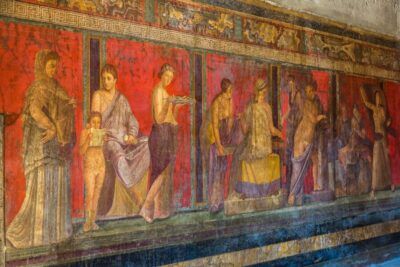


Pompeii Small Group Tour with an Archaeologist
Read our review →
Pompeii, Amalfi Coast and Positano Day Trip from Rome
Read our review →Browse the lists this tour appears in