
Reviewed · POMPEII & VESUVIUS TOURS
Pompeii: Entry Ticket with Optional Audio Guide
Pompeii is more than a collection of ruins. It is a Roman city you can walk through, street by street, from its market and baths to its theaters, temples, villas, and amphitheater. Volcanic ash froze ordinary life in place, giving you an unusually direct look at how an ancient town worked.
I like the freedom to explore without being tied to a group, and I like that the reserved entry ticket helps you avoid the longest ticket-buying queues. The optional audio guide is also useful for finding your way across this huge site. The catch is simple: Pompeii is enormous, and the audio guide can be awkward to match with the buildings in front of you.
Key points to know before booking
- Choose the right ticket: Pompei Express covers the ancient city only. Pompei+ also includes Villa of the Mysteries, Villa of Diomedes, and Villa Regina in Boscoreale with its Antiquarium.
- Plan for serious walking: Pompeii is large enough to take much of a day, with uneven streets, open courtyards, and plenty of sun.
- Collect the audio guide inside: Pick it up at the official audio guide desk near the ticket office at Porta Marina Superiore.
- Bring your own headphones: Headphones are not included, and Bluetooth headphones do not work with the physical audio guide device.
- Arrive with your phone and ID ready: Your voucher is accepted on your phone, while a valid ID is required as a deposit for the audio guide.
- Allow extra time for the villas: The Pompei+ option has a last entry time of 3:30 p.m. in winter and 5:30 p.m. in summer.
Walking into a Roman city preserved by ash

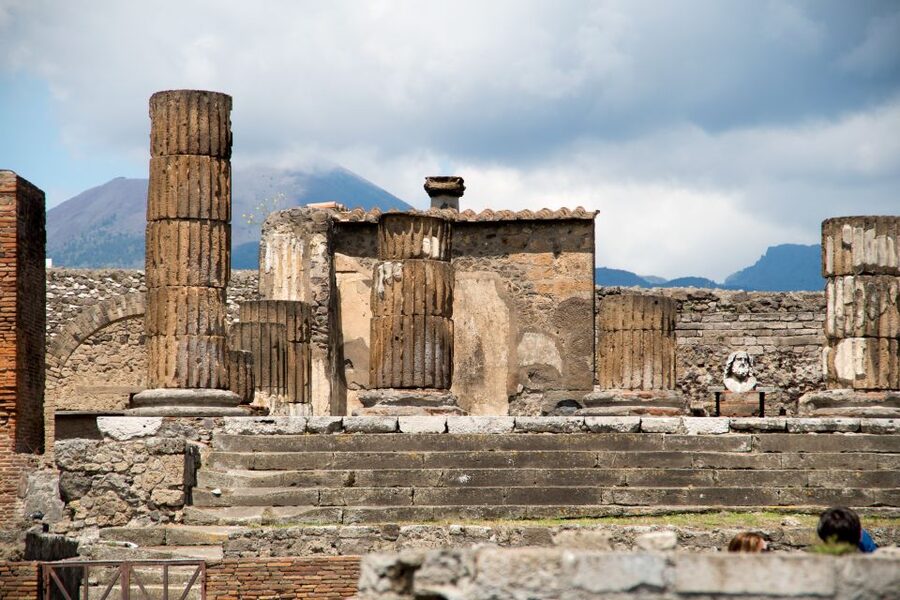
The first streets of Pompeii make the site special at once. You are not looking at one isolated temple behind a barrier. You are walking through an entire urban center, with roads, homes, shops, public buildings, religious sites, and entertainment venues arranged much as they were before Mount Vesuvius erupted in AD 79.
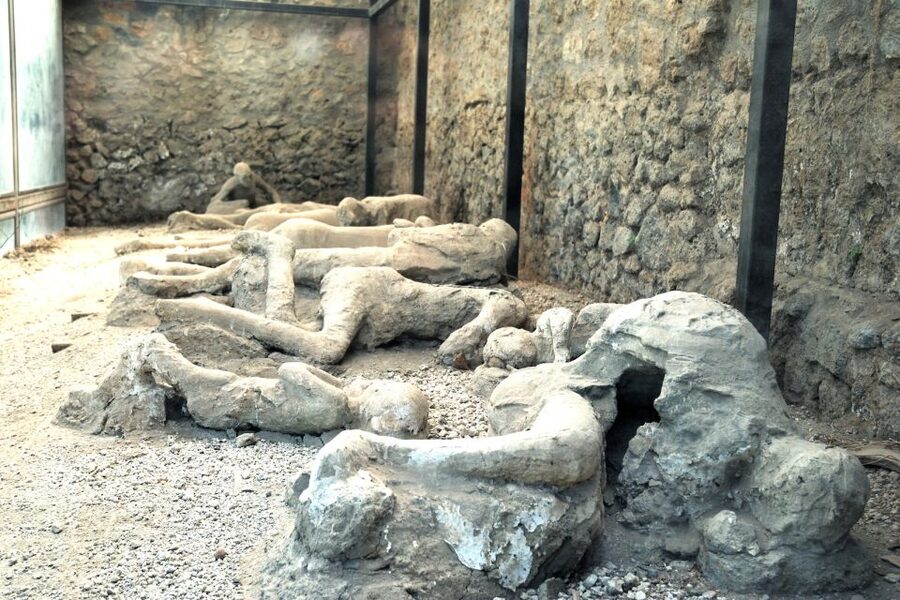
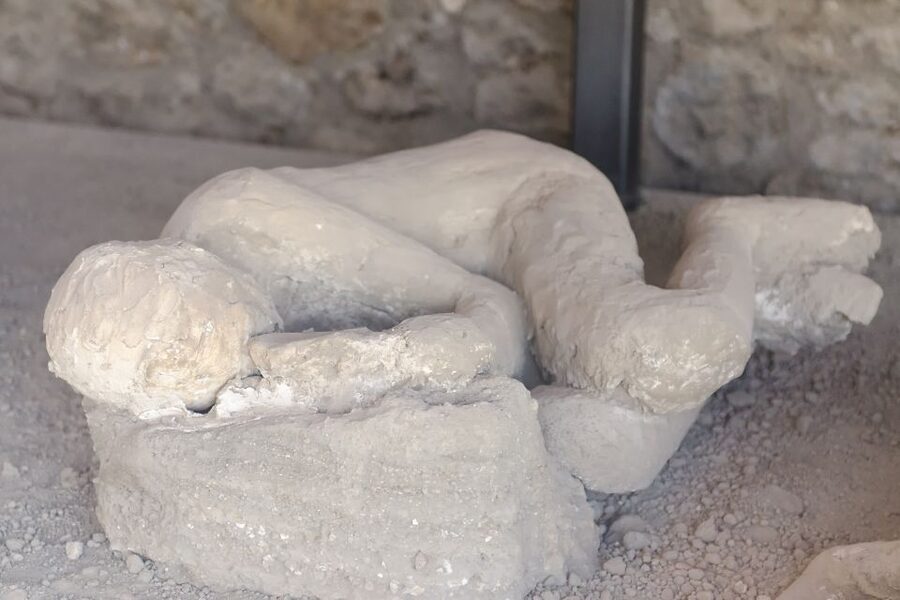
The eruption killed Pompeii’s residents and buried the city beneath ash. That disaster was terrible, but the covering material also protected walls, mosaics, frescoes, paving stones, and everyday details that usually disappear from ancient sites.
Start by getting your bearings with the site map or the audio guide map. Pompeii is easy to underestimate. You can spend a long time admiring one house, then realize you have crossed only a small part of the archaeological area.
The reserved ticket is valuable mainly because it cuts down the stress at the entrance. The entrance system can be confusing, and signs do not always make it obvious where people with vouchers should go. The Piazza Esedra entrance is useful for electronic tickets, while the audio guide desk is at Porta Marina Superiore. Check your voucher carefully before walking to the wrong gate.
A few other Pompeii mornings to weigh against this
- Pompeii: Entry Ticket and Guided Tour with an Archaeologist
★ 4.8 · 19,459 reviews - Pompeii: Small Group Tour with an Archaeologist
★ 4.8 · 12,264 reviews - Pompeii Small Group Tour with an Archaeologist
★ 5.0 · 6,593 reviews
Pompei Express or Pompei+?
The basic Pompei Express ticket includes the ancient city of Pompeii. This is enough for a major visit, especially if you have limited time or want to focus on the central streets, villas, temples, baths, and theaters.
The Pompei+ ticket adds three suburban sites:
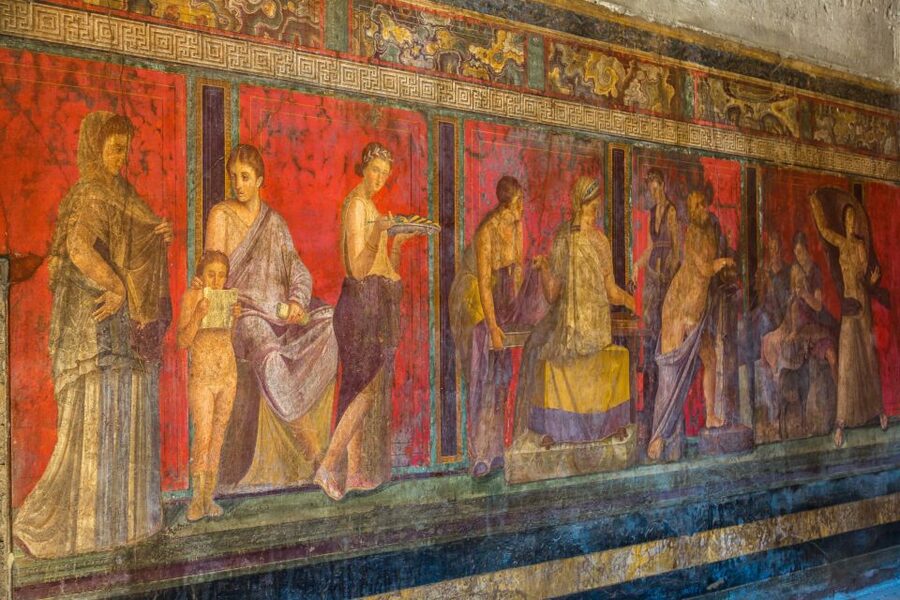
- Villa of the Mysteries: Famous for its preserved frescoes and one of the most memorable buildings connected with Pompeii.
- Villa of Diomedes: An additional villa outside the main ancient city.
- Villa Regina in Boscoreale with Antiquarium: A suburban site that broadens the picture beyond the city center.
I would choose Pompei+ if you have several hours and care about Roman domestic life, wall painting, and the parts of Pompeii beyond the main grid. The extra cost is easier to justify when Villa of the Mysteries is a priority.
You need to watch the clock with Pompei+. Last entry is 3:30 p.m. from November 1 through March 31 and 5:30 p.m. from April 1 through October 31. A late arrival can leave you with a ticket that covers more than you have time to see.
The market, baths, and ordinary Roman life
Pompeii becomes most interesting when you stop thinking only about famous buildings. At the market, you can picture residents buying food and supplies in a busy public setting. The site also preserves clues about where people ate, worked, worshipped, relaxed, and watched performances.
The public baths are especially helpful for understanding Roman social life. Look for the mosaics and the arrangement of rooms, then imagine this as a shared civic space rather than a silent ruin. Pompeii’s value comes from these small connections: a doorway, a worn street, a shop counter, or a decorative floor can explain daily life better than a grand monument alone.
The site contains many temples, including those dedicated to Venus, Apollo, and Jupiter. Each gives you another view of Roman religion and city planning. The Temple of Apollo, in particular, helps show how sacred spaces were built into the urban center.
You will also see buildings that are closed on the day of your visit. That can make the audio guide frustrating, since it may explain rooms you cannot enter. Treat the guide as background context, not as a promise that every stop will be open.
Pompeii’s houses and painted interiors

The House of the Faun is one of the key residential buildings to seek out. Its scale and Hellenistic design show that Pompeii was not a poor or minor town. Wealthy homes could contain courtyards, decorative floors, wall paintings, and carefully planned rooms for receiving guests.
Villa of the Mysteries is the major reason to consider the Pompei+ ticket. Its frescoes are the star attraction, and seeing them in the context of the villa makes the visit more meaningful than viewing painted panels in a museum. The building also requires extra time and planning, so do not add it casually to a short afternoon visit.
Pompeii’s frescoes and mosaics are not always easy to appreciate from a distance. Some areas are protected, some rooms are dim, and some viewpoints are limited. The audio guide can explain what you are seeing, but it may not always tell you exactly where to stand inside each house. Take a moment to compare the guide’s description with the walls, floors, and surviving details around you.
Same city, an entirely different afternoon:
- Pompeii: Skip-the-Line Entrance Ticket with Audio Guide
★ 4.0 · 2,509 reviews - Naples: Pompeii and Mt. Vesuvius with Lunch and Wine Tasting
★ 4.5 · 2,454 reviews - Pompeii: Archaeological Park Tour with Ticket on request
★ 4.5 · 2,283 reviews - Discover the Ancient Ruins of Pompeii: Day Trip from Rome
★ 3.5 · 2,247 reviews
The amphitheater and Pompeii’s public life

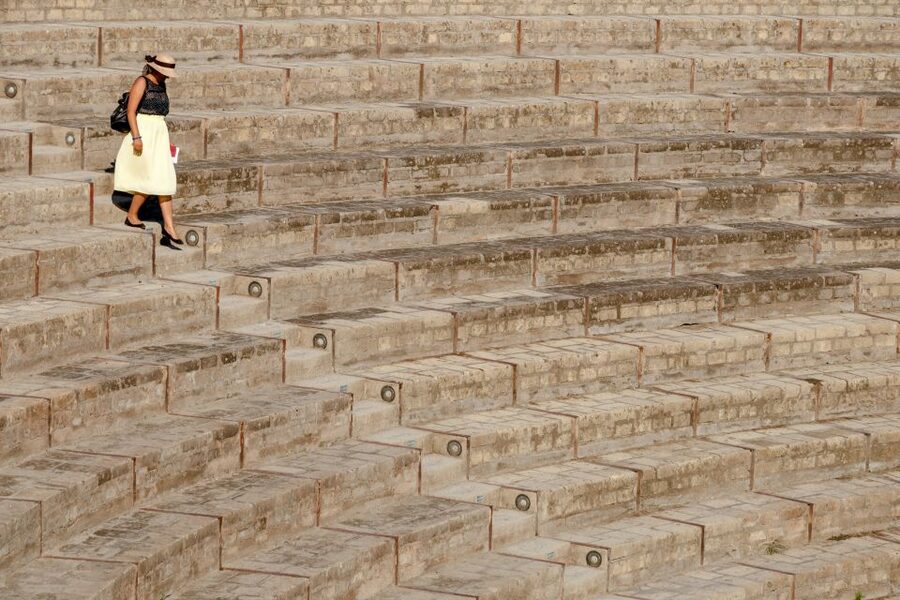
The amphitheater gives the city a strong sense of scale. Instead of reading about Roman entertainment, you can stand where an audience once gathered and look across the seating area toward the performance space.
The theaters offer another view of public life. Together with the baths, market, and temples, they show that Pompeii was a functioning city with civic routines and shared events. These buildings are not just attractive backdrops. They help you understand how Roman communities organized themselves.
A visit without a guide gives you flexibility, but it also asks more from you. If you simply follow random streets, you can miss major sites or spend too much time in one neighborhood. Use the map to mark each major stop, and cross places off as you go. This small habit can save you from ending the day wondering what you failed to see.
Using the official audio guide

The audio guide is available as a physical device if you select that option, and a digital version is offered in English, German, French, Italian, and Spanish. The wider language selection listed for the optional guide also includes Chinese, Japanese, Portuguese, and Russian, so check the exact option before booking.
Collect the physical unit at the official audio guide desk near the ticket office inside the archaeological site. The desk is associated with Porta Marina Superiore. A valid ID is required as a deposit, and you return the device at the same official desk.
Bring wired headphones. Bluetooth headphones do not work with the physical unit, and headphones are not included. Some audio guide devices use a map or GPS feature to help you orient yourself, which can be handy in a site this large. Still, do not expect perfect navigation. The location function may not always match your position, and some explanations can feel out of step with the building in front of you.
I would choose the audio guide if you are visiting independently and want more context than the site signs provide. I would skip it if you prefer to read at your own pace or plan to hire a private guide. The audio guide gives information, but it does not replace a human guide who can point out the exact doorway, fresco, or architectural detail you are trying to understand.
How much time should you allow?
The ticket is valid for one day, but the right visit length depends on your priorities. Two hours can give you a useful first look, especially if you arrive late or have children with you. You can reach several major buildings and get a feel for the ancient city.
A half-day is more comfortable. It gives you time for the amphitheater, temples, baths, major houses, and central streets without racing from one point to the next.
A full day is justified if you want to explore carefully or use the Pompei+ option. One visitor spent an entire day and still saw only about two-thirds of the site. That is a warning to plan realistically, not a reason to rush.
Arriving early helps with cooler temperatures and thinner crowds. Late afternoon can also work for a shorter visit, but check closing times and the Pompei+ last entry rule. Pompeii involves plenty of walking, and the exposed streets can feel demanding in warm weather. Wear comfortable shoes and carry water.
Free luggage storage is available, which is useful if you arrive with bags from a train journey. The site also has toilets, but a map will help you plan your route around them.
Access, price, and practical value

At about $26 per person, this is not the cheapest way to buy an entrance ticket. You may find a lower price at the gate, and the site itself is accessible without booking a package. The value here is convenience: a reserved place, a phone voucher, and the option to add an audio guide.
The ticket makes the most sense during busy periods, when walk-up lines can be long. Booking ahead also helps if your day in Campania is tightly planned. If you arrive in a quiet period and only want the basic entry, the price difference may matter more.
Pompeii is wheelchair accessible, although the ancient streets and surfaces can still make movement uneven in places. Free entry applies to EU citizens under 18, as well as disabled citizens and their relatives, so check the current eligibility rules before paying for a standard ticket.
Free cancellation is available up to 24 hours before the visit, and the reserve-now, pay-later option gives you some flexibility when your plans are still changing.
Who will enjoy this Pompeii ticket?
I recommend this experience for independent visitors who want to set their own pace and do not need a timed group tour. It works well for families too, provided you set a modest goal rather than trying to cover every street.
History fans should choose the audio guide or Pompei+ option, depending on their interests. First-time visitors with only two or three hours may prefer Pompei Express and a simple list of must-see buildings.
If you want clear explanations at every doorway, a human guide may be a better match. Several people find the audio guide hard to follow, especially when a building is closed or the location feature is inaccurate. You can still have a rewarding visit without it, but you need to use the map and plan your route.
Should you book Pompeii: Entry Ticket with Optional Audio Guide?
Book it if you want independent exploration, need a reserved entry, or plan to visit during a busy season. The basic ticket covers enough of the ancient city for a strong first visit, while Pompei+ is worth considering if Villa of the Mysteries and the suburban villas matter to you.
Choose the audio guide only if you are comfortable bringing wired headphones and managing a map-based device. For a quick visit, it can add useful context. For a full day, the guide helps you connect ordinary streets with Roman life, even if you occasionally need to pause it and work out where you are.
The main decision is not the ticket itself. It is your time. Pompeii rewards patience, comfortable shoes, water, and a sensible route. Give it those things, and the preserved streets, frescoed homes, baths, temples, and theaters become far more than a checklist of ruins.
FAQ
How long is the Pompeii ticket valid?
The ticket is valid for one day. Starting times depend on availability when you book.
What is included with the Pompei Express ticket?
Pompei Express includes entry to the ancient city of Pompeii. It does not include the suburban villas.
What does the Pompei+ ticket include?
Pompei+ includes the ancient city of Pompeii, Villa of the Mysteries, Villa of Diomedes, and Villa Regina in Boscoreale with its Antiquarium.
What is the last entry time for Pompei+?
The last entry is 3:30 p.m. from November 1 through March 31, and 5:30 p.m. from April 1 through October 31.
Where do I collect the physical audio guide?
You collect and return the physical audio guide at the official audio guide desk inside the archaeological site, near the ticket office at Porta Marina Superiore.
Do I need headphones for the audio guide?
Yes. Headphones are not included. Bluetooth headphones do not work with the physical audio guide device.
Do I need identification to rent the audio guide?
Yes. A valid ID is required as a deposit for the audio guide device. Bring your passport or ID card.
Is Pompeii wheelchair accessible?
Yes, the activity is listed as wheelchair accessible. The site includes ancient streets and surfaces, so conditions may vary across different areas.
More Audio Tours in Pompeii
- Venice: La Fenice Opera House Entry Ticket with Audio Guide
★ 4.6 · 11,742 reviews - Rome: St. Peter’s Basilica & Dome Entry Ticket & Audio Tour
★ 4.2 · 7,537 reviews - Florence: Cathedral & Brunelleschi’s Dome Ticket & Audio App
★ 4.4 · 6,973 reviews - Florence: Michelangelo’s David Priority Ticket & Audio App
★ 4.4 · 6,812 reviews
More Self-Guided Tours in Pompeii
- Pompeii: Skip-the-Line Entry Ticket with Digital Guide App
★ 4.1 · 770 reviews - Ercolano: Herculaneum Entry Ticket with Optional Audio Guide
★ 4.1 · 581 reviews - Rome: Colosseum & Forum with Audio Guide App -Optional Arena
★ 4.2 · 24,770 reviews - Rome: Pantheon Fast-Track Ticket and Official Audio Guide
★ 4.3 · 21,008 reviews
Fresh on the Pompeii list
- Explore Pompeii with an Archaeologist★ 5.0 · 511 reviews
- Pompeii Skip-the-line Tour with Archaeologist Guide★ 5.0 · 559 reviews
- Pompeii Private Tour with an Archaeologist and Skip The Line – 3 hours★ 5.0 · 564 reviews
- Ercolano: Herculaneum Entry Ticket with Optional Audio Guide★ 4.1 · 581 reviews
- Pompeii private tour with an Official Guide★ 5.0 · 631 reviews
- Pompeii: Exclusive Tour with Archaeologist and Entry Tickets★ 4.9 · 634 reviews
- Pompeii Ticket + Tour with Optional Tasting Experience at Pompeii★ 5.0 · 663 reviews
- From Naples: All-Inclusive Mount Vesuvius Half-Day Tour★ 4.2 · 674 reviews
Pompeii & Vesuvius Tours, compared.

Entry Ticket and Guided Tour with an Archaeologist
Read our review →



Pompeii Small Group Tour with an Archaeologist
Read our review →
Pompeii, Amalfi Coast and Positano Day Trip from Rome
Read our review →
Pompeii and Mount Vesuvius Day Trip from Rome with Pizza Lunch
Read our review →Browse the lists this tour appears in