
Reviewed · POMPEII & VESUVIUS TOURS
Pompeii: Guided Tour with Skip-the-Line Entry
Pompeii is far too large and layered to understand from a map alone. This two to three-hour guided walk gives you a clear route through the Roman city, with an archaeologist guide explaining what you are seeing instead of leaving you to guess at piles of ancient stone. I especially like the separate priority entrance and the way strong guides adjust the route to avoid crowds.
I also like the choice between a small group and a private visit. Guides such as Frankie, Angelo, Anna, Sasa, and Alessandra have been praised for bringing daily life into focus, not just reciting dates. The main drawback is time: Pompeii can fill many hours, and a two-hour visit covers the key sights rather than the whole site. It can also be hard going in hot weather, with limited shade and uneven ancient streets.
Pompeii Guided Tour: Key Points
- Priority entry through a separate entrance helps you spend more time inside the ruins and less time waiting.
- The Forum, Basilica, baths, theaters, homes, bakery, and Antiquarium give you a broad picture of civic, commercial, and private life.
- Private and small-group formats let you choose between personal attention and a lower-cost shared experience.
- English and Italian-speaking guides lead the walk, with several guides praised for humor, clear explanations, and thoughtful routing.
- A reverse route can reduce crowd pressure, with some guides taking groups to important houses early.
- The $58 price is reasonable if you value context, efficient sightseeing, and a guide who can point out details you would likely miss alone.
Why a Guide Changes Pompeii
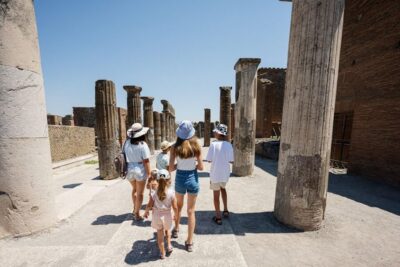
Pompeii is not simply a collection of ruins. It was a working Roman city, with public buildings, shops, bakeries, homes, baths, theaters, and streets built for daily use. Without help, you can see the walls but miss the connections between them.
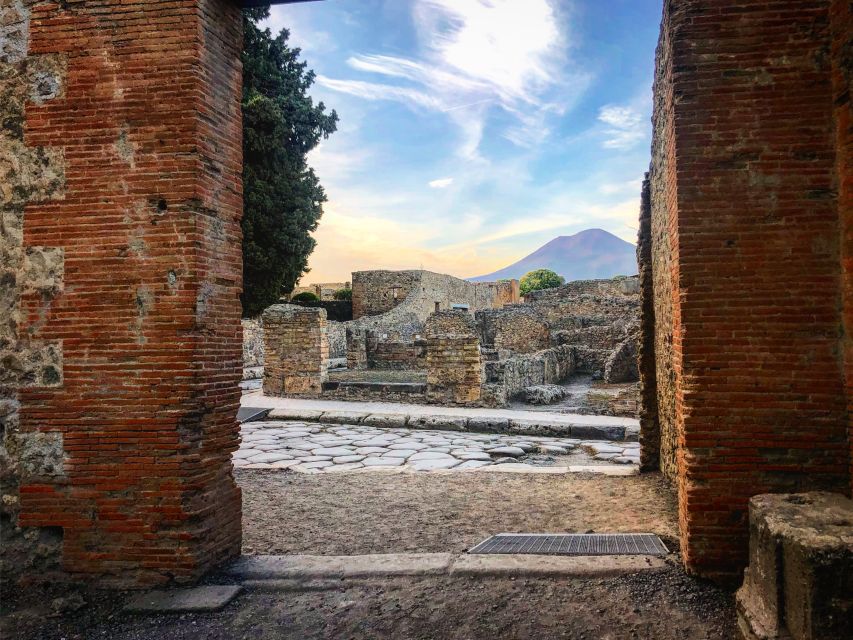
A good guide turns the site into a readable place. You begin to understand where civic business happened, how people spent leisure time, and how commercial and residential areas fitted together. The best guides also explain what archaeologists know, what remains uncertain, and how the eruption of Mount Vesuvius in 79 AD changed the city forever.
I would especially value a guide here because Pompeii’s scale can be confusing. Several reviews describe guides taking a reverse route, choosing less crowded paths, and stopping at details that are easy to pass without noticing. Angelo, who is also a volcanologist, was praised for explaining both the excavation work and the volcanic event. Anna, described as being born in Pompeii and trained as an art historian, was singled out for her strong personal connection to the site.
That variety matters. A guide with an archaeology background may focus on excavation and buildings. A volcanologist can add useful context about Vesuvius. A strong storyteller such as Frankie can make the visit lighter and easier to follow. The exact guide is not guaranteed, but the experience has several guides who appear comfortable combining facts, humor, and questions.
More Skip-the-Line Tickets in Pompeii
- Pompeii: Skip-the-Line Entrance Ticket with Audio Guide
★ 4.0 · 2,509 reviews - Pompeii: Skip-the-line-Ticket and Guided Tour
★ 4.6 · 1,152 reviews - Pompeii: Skip-the-Line Entry Ticket with Digital Guide App
★ 4.1 · 770 reviews
Meeting at Ristorante Bar Sgambati
The meeting point is Ristorante Bar Sgambati, where you should look for the Enjoy Pompeii red sign. This is a useful detail to note before you arrive. Pompeii has several entrances and a busy area around the archaeological park, so do not rely on simply spotting a guide in a crowd.
The meeting point also gives you a simple place to orient yourself before the walk. You can confirm the group, find your guide, and prepare for the entrance process. Parking is not included, so anyone arriving by car needs to handle that separately.
The railway can also affect your plans. One booking had to be moved because of a railway strike, and the operator helped arrange a later tour. That is encouraging, but you should still keep a backup transport plan if your day depends on a train connection. A delayed train can turn a carefully planned Pompeii visit into a race.
Priority Entry and the First Steps Inside
The skip-the-line ticket uses a separate entrance. It does not mean you have the whole site to yourself, especially during the busy summer months, but it can remove one of the most frustrating parts of a major archaeological attraction: waiting before you even begin.
Once inside, the guide sets the pace and explains the plan. The walk lasts about two to three hours, depending on the specific departure and group. Some tours have gone a little longer when the guide had more to explain, while one booking noted that the time did not last exactly two hours. That flexibility can be welcome, but keep it in mind if you have a train, lunch, or Mount Vesuvius visit scheduled afterward.
Pompeii is exposed and physically demanding. The old streets can be uneven, and many areas offer little shade. Guides have been praised for stopping in shaded spots when possible, especially during days around 35 degrees Celsius. Even so, you should expect a lot of walking in the open air and plan your clothing and water accordingly.
The activity is not suitable for people with pre-existing medical conditions. That is a broad warning rather than a detailed medical assessment, so use your own judgment before booking.
The Forum and Basilica: Pompeii’s Public Center
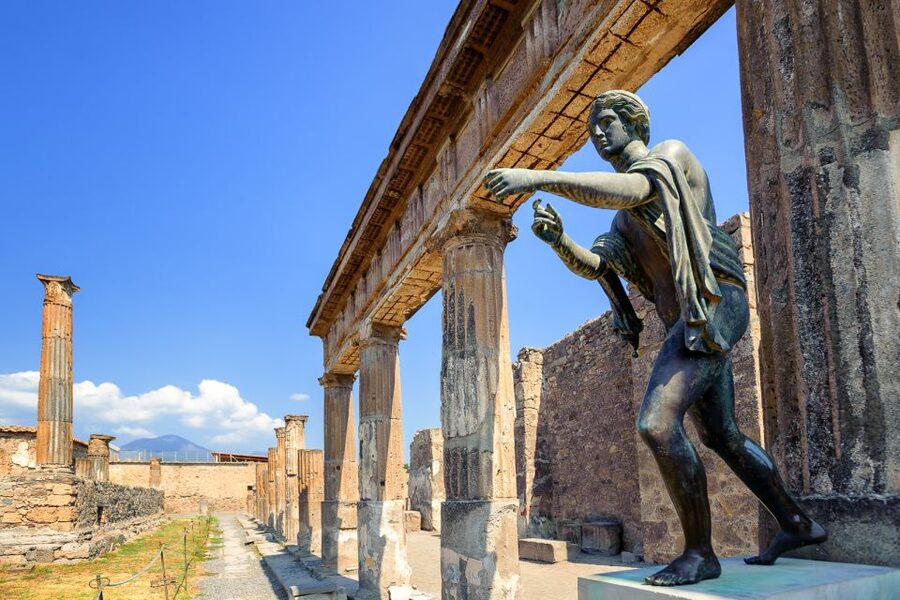
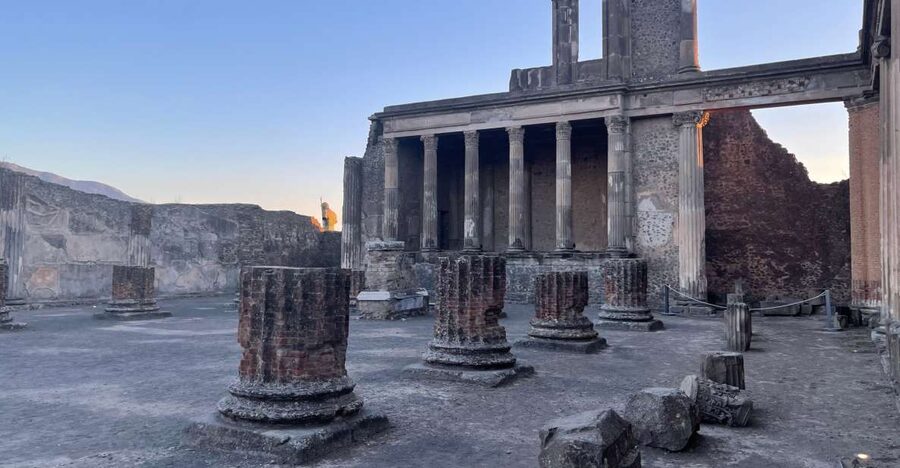
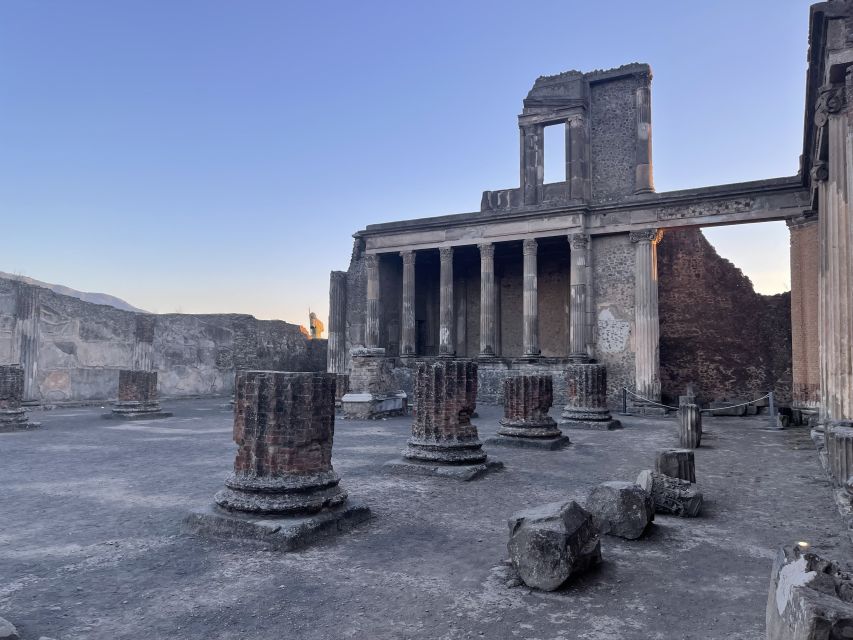
The Forum is one of the essential stops because it shows how public life was organized. This was not a quiet neighborhood square. It was the city’s central civic area, surrounded by important buildings and used for business, politics, religion, and public gatherings.
A guide can help you read the open space and its surrounding structures. Otherwise, the Forum may feel like a large field of columns and broken walls. The Basilica, another planned stop, was central to legal and commercial activity. Its remains help show the scale and ambition of the Roman city.
This is where context pays off. You can look at columns and foundations on your own, but a guide explains how the buildings worked together. You also get a clearer sense that Pompeii was a prosperous, active city before the eruption, not a small settlement frozen in time.
That point came through strongly in the tour experience. One guide was praised for correcting common assumptions about Pompeii’s final days and showing it as a major, growing city. This makes the visit more interesting because you are seeing a complete urban society, not only a disaster site.
A few other Pompeii mornings to weigh against this
- Pompeii: Entry Ticket and Guided Tour with an Archaeologist
★ 4.8 · 19,459 reviews - Pompeii: Entry Ticket with Optional Audio Guide
★ 4.2 · 12,360 reviews - Pompeii: Small Group Tour with an Archaeologist
★ 4.8 · 12,264 reviews - Pompeii Small Group Tour with an Archaeologist
★ 5.0 · 6,593 reviews
Baths, Theaters, and the Shape of Daily Life
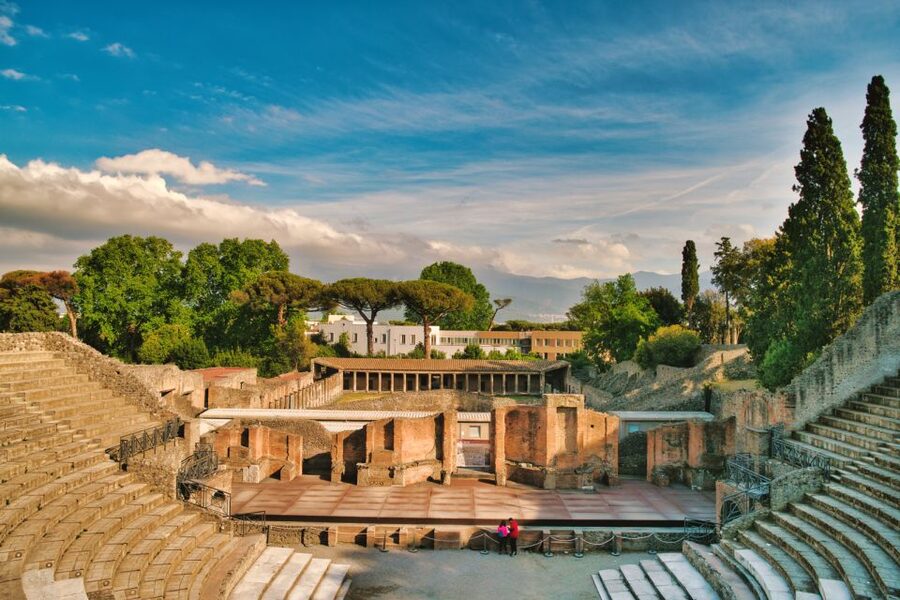
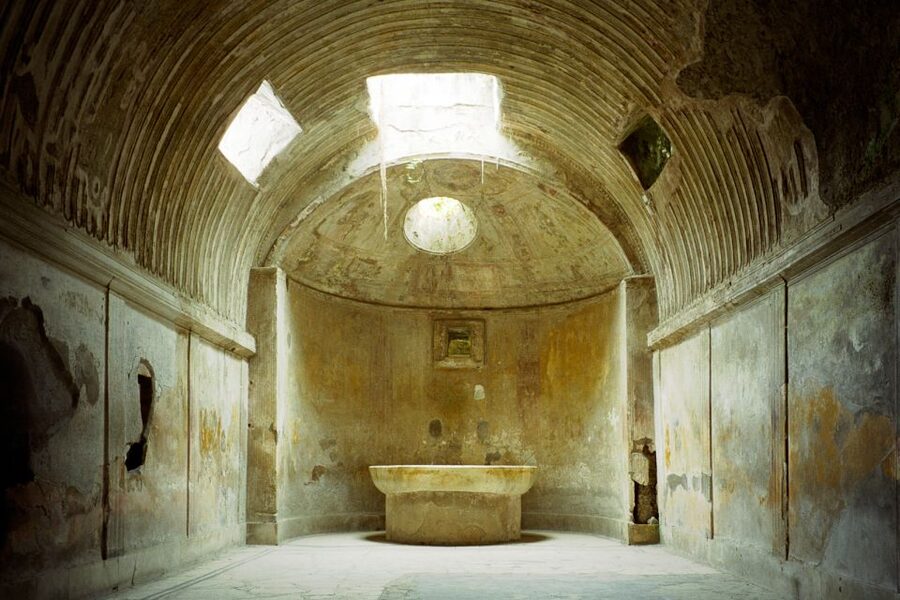
The thermal baths reveal how important public leisure and social life were in Roman cities. The buildings were not only places to wash. They were part of a wider culture of meeting, relaxing, and spending time in public.
The theaters add another side of Pompeii. They show that entertainment had a formal place in city life, alongside civic business and religious activity. Seeing the baths and theaters on the same walk helps you picture a city where work, politics, leisure, and social contact were tightly linked.
Your guide should connect the architecture to ordinary routines. Several of the strongest tours were praised for explaining society as well as buildings. That makes the difference between simply visiting a ruin and understanding how people used it.
The two to three-hour length works well for this part of the route. You get enough structure to see major public sites without spending an entire day on foot. If you want every theater, bath complex, house, street, and excavation area, this tour will not be enough. If your main goal is a useful introduction, the length is more manageable.
Homes, Shops, and a Pompeii Bakery
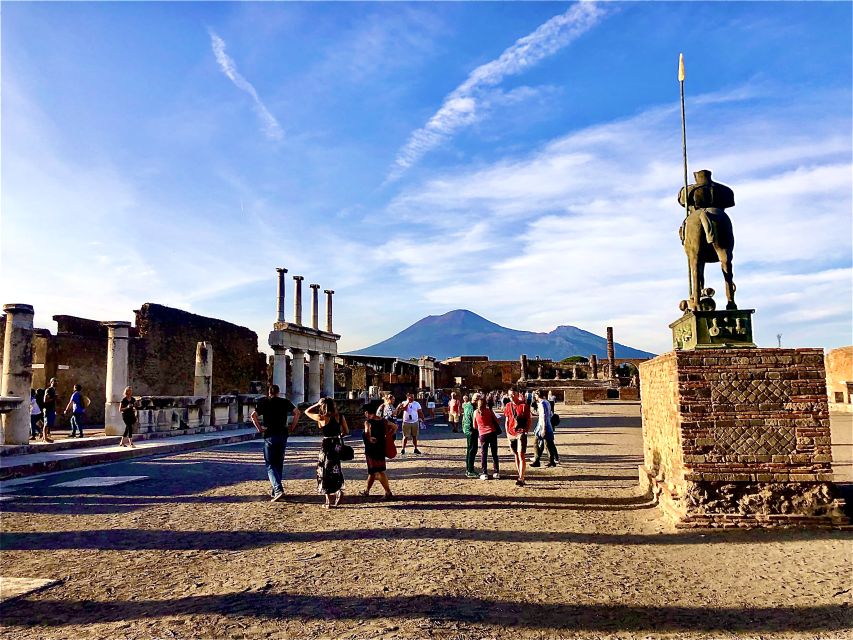
The residential and commercial areas are among the most rewarding parts of the visit. Public monuments tell you how the city presented itself. Homes and shops show how people actually lived.
The tour includes typical housing blocks and a bakery. These stops help you move beyond grand Roman architecture and think about food production, household space, trade, and neighborhood life. A bakery, in particular, gives the ancient city an everyday scale. You are no longer looking only at temples or public squares. You are seeing evidence of work done to feed the local population.
The houses can also be visually striking. One guide took the group first to the area around the House of the Vettii, allowing them to see it with fewer people. This is a smart use of timing. Pompeii’s most famous houses can become difficult to appreciate when several groups are packed into the same rooms.
A private tour may give you more room to linger over a house or ask about a particular architectural feature. A small group can still work very well, especially if the guide keeps everyone together and uses a route that avoids the largest crowds.
Frescoes, Casts, and the Human Cost of the Eruption
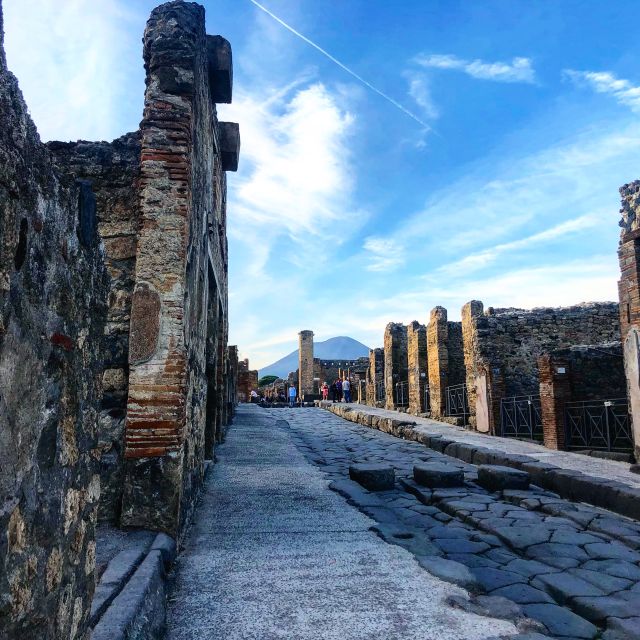
Pompeii’s preserved frescoes are among the site’s most memorable remains. Their colors and designs give you a rare look at Roman decoration, taste, and domestic surroundings. A guide can explain what you are seeing and help separate important details from background patterns.
The casts of victims are more emotionally difficult. They make the eruption personal and remind you that this was a disaster affecting real people, not just an archaeological puzzle. A good guide should handle these areas with care, giving you space to look and think rather than rushing through them.
The tour’s value here comes from balance. Pompeii is fascinating because of its streets, buildings, art, and daily routines, but the story also ends in sudden death and destruction. A guide can connect the human evidence to the wider history without reducing the entire city to the eruption.
If you prefer a lighter family outing, note that the tour is not designed specifically for children. A family with children aged nine and twelve found the visit manageable, but the two-hour walk felt a little long for them and the guide’s serious tone was not aimed at young children. Older children and teenagers who enjoy history may do well, especially with an adult ready to explain the more difficult parts.
The New Antiquarium and What It Adds
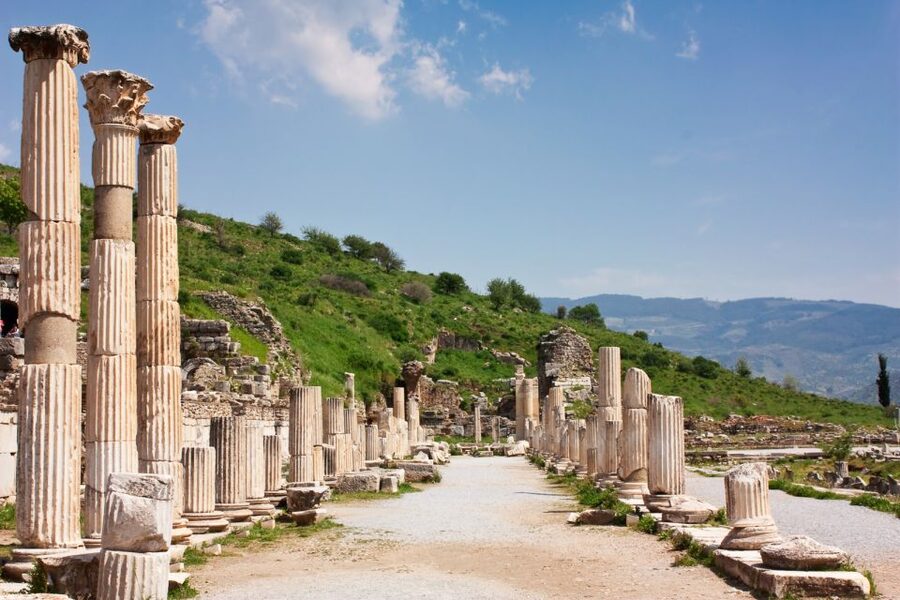
The new Antiquarium is included among the key buildings visited. Museums and display spaces can help you understand objects that are hard to interpret in the open ruins. They give you a closer look at the material culture of the city and can provide a useful bridge between loose artifacts and the rooms where they were found.
I would pay attention to how the guide uses this stop. The best tours do not treat it as a quick list of objects. They connect what you see there with the homes, businesses, and public spaces outside.
Because the archaeological area is large, the Antiquarium also helps round out the visit. You are not seeing only architecture. You are getting a broader look at the people and systems that made Pompeii function.
Group or Private Tour: Which Works Better?
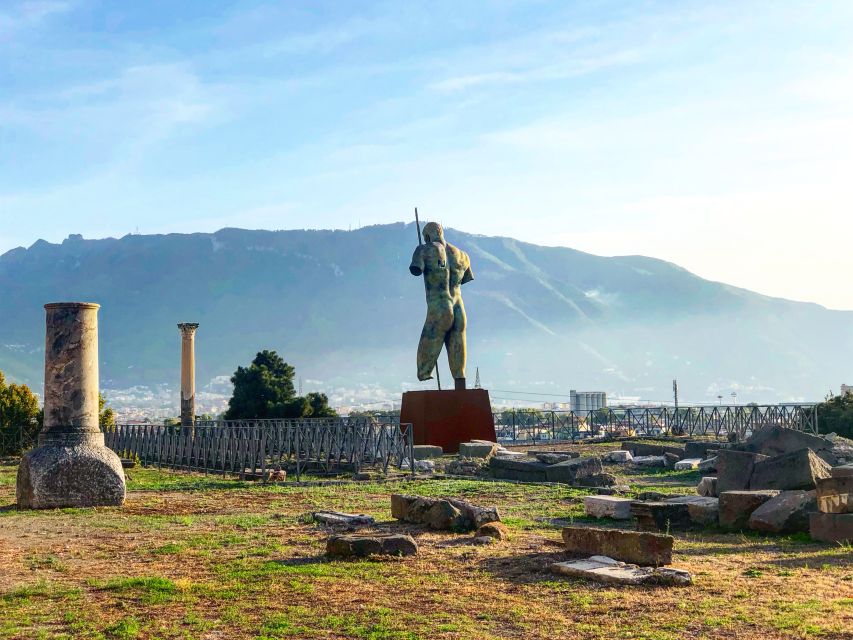
The private option is the better choice if you have specific interests or want the guide’s full attention. One private booking was able to visit areas not open to the general public, though you should not assume that access is guaranteed on every departure. Availability can depend on current site rules and conditions.
Private tours also make it easier to adjust the pace. You can ask more questions about art, architecture, the eruption, or Roman society. Families and groups with different walking speeds may find this format more comfortable.
A small group is likely the better value for most people. The price is $58 per person, and group sizes described in the feedback included around 12 people or smaller. That is small enough to hear the guide and ask questions, while costing less than a fully private experience.
Group quality depends partly on the guide and partly on the other people in the party. The strongest guides keep the walk interactive, allow time for questions, and avoid making the entire experience one long speech. Frankie was repeatedly praised for humor and audience participation. Angelo was praised for giving people time to look around without rushing them.
Is $58 Good Value?
At $58 per person, this is not the cheapest way to enter Pompeii, especially if you only want a ticket and prefer to explore alone. The price includes the priority entry ticket, walking tour, and guide, so you are paying for more than admission.
I think the price is fair if Pompeii is a major reason for your visit. The site is enormous, and a good route saves time and helps you see important areas before the crowds build. You also avoid spending your first hour trying to work out which street leads to the Forum or which house is currently open.
The value is strongest for a first visit. If you have already been to Pompeii and know exactly what you want to see, an independent visit may give you more freedom. But if this is your first time, the guide can make the admission fee work harder.
You also get practical help at the end of the tour. Guides have offered directions to the train station and advice for onward travel. One group continued exploring Pompeii after the guide left, then planned to climb Vesuvius. That is a good way to use the tour as an introduction, not as the end of your visit.
Timing, Heat, and Crowds
Early morning is a sensible choice if available. June and summer conditions can be very hot, and the site has limited shade. Some guides deliberately use shaded areas for explanations, but you will still walk through open spaces.
An afternoon start is not automatically a bad idea. One guide explained that breezes from the mountains can make the later part of the day more comfortable than a still morning. Still, the hottest part of the day can be unpleasant, so check the forecast and choose your start carefully.
The off-season has clear benefits. A December visit had pleasant weather and fewer crowds, making it easier to see the ruins. The tradeoff is that weather can be less predictable and opening conditions may affect which areas you see.
A skilled guide can reduce crowd problems but cannot remove them entirely. The route may change to reach an important house or public building at a quieter moment. That is one of the most useful parts of the experience, particularly at famous sites such as the House of the Vettii.
Who Should Book This Pompeii Tour?
I would recommend it to first-time visitors who want the site explained in plain language and who do not want to spend their day reading guidebooks while walking. It is also a good match for couples, families with older children, and anyone combining Pompeii with other Campania sights.
The tour suits you best if you want a focused introduction rather than an all-day archaeological study. You will see major civic buildings, baths, theaters, homes, commercial spaces, and the Antiquarium, but you will not cover every corner of Pompeii.
Choose private if you want a personal pace, have strong interests, or are willing to pay more for flexibility. Choose the small-group option if you want the guide’s insight while keeping the cost at $58 per person.
Should You Book It?
Yes, if you are visiting Pompeii for the first time and want more than a quick walk through ruins. The separate entrance, clear route, and guide-led explanations solve the two main problems at Pompeii: wasting time at the gate and missing what the buildings mean.
Book with realistic expectations. This is a concentrated visit, not a full-day exploration, and the heat, uneven streets, and limited shade can test your stamina. If you want to see as much as possible afterward, keep extra time in your schedule and ask your guide which areas to visit next.
I would also request a guide known for your preferred style if the booking system allows it. Frankie is a strong choice for humor and lively storytelling. Angelo is a good fit if volcanic science and careful crowd avoidance interest you. Anna has been praised for art history and her connection to Pompeii, while Sasa and Alessandra have been praised for clear explanations and personal attention.
FAQ
How long does the Pompeii guided tour last?
The tour lasts about two to three hours. The exact length can vary, and some visits may run a little longer depending on the guide and the amount of information covered.
What is included in the price?
The $58 price includes a skip-the-line entry ticket, a walking tour of Pompeii, and a live tour guide.
Where is the meeting point?
Meet the guide at Ristorante Bar Sgambati. Look for the Enjoy Pompeii red sign.
Does the tour use a separate entrance?
Yes. The activity includes priority entry through a separate entrance.
Which languages are available?
The live tour is available in English and Italian.
Can I choose a private tour?
Yes. Private and small-group options are available.
Is parking included?
No. Parking is not included in the activity.
Is entry free on any day?
On the first Sunday of each month, entrance to Pompeii is free of charge. You should still check the available tour arrangements for that date.
Can I cancel the booking?
You can cancel up to 24 hours in advance for a full refund. A reserve-now, pay-later option is also available.
Fresh on the Pompeii list
- Explore Pompeii with an Archaeologist★ 5.0 · 511 reviews
- Pompeii Skip-the-line Tour with Archaeologist Guide★ 5.0 · 559 reviews
- Pompeii Private Tour with an Archaeologist and Skip The Line – 3 hours★ 5.0 · 564 reviews
- Ercolano: Herculaneum Entry Ticket with Optional Audio Guide★ 4.1 · 581 reviews
- Pompeii private tour with an Official Guide★ 5.0 · 631 reviews
- Pompeii: Exclusive Tour with Archaeologist and Entry Tickets★ 4.9 · 634 reviews
- Pompeii Ticket + Tour with Optional Tasting Experience at Pompeii★ 5.0 · 663 reviews
- From Naples: All-Inclusive Mount Vesuvius Half-Day Tour★ 4.2 · 674 reviews
Pompeii & Vesuvius Tours, compared.

Entry Ticket and Guided Tour with an Archaeologist
Read our review →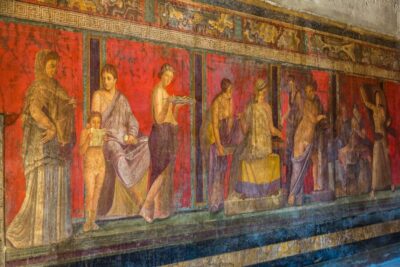


Pompeii Small Group Tour with an Archaeologist
Read our review →
Pompeii, Amalfi Coast and Positano Day Trip from Rome
Read our review →Browse the lists this tour appears in