
Reviewed · MUSEUMS
Naples: National Archaeological Museum of Naples Guided Tour
The museum’s greatest challenge is its size. You can wander into room after room of Greek and Roman sculpture, frescoes, mosaics, coins, and painted walls, then realize you have seen plenty but understood little. This two-hour guided tour gives you a clear route through the major collections, with skip-the-line entry at the start.
I like two things in particular: the focus on Pompeii and Herculaneum, which helps you read the objects after visiting the buried towns, and the chance to ask a real archaeologist questions. The main drawback is time. Two hours is enough for a strong introduction, not every floor or gallery, and some visitors have found it hard to hear when the sound system was poor.
Key points to know before you book
- The Farnese Hercules and Toro Farnese anchor the visit: These huge classical sculptures give you an immediate sense of the museum’s scale and ambition.
- Pompeii and Herculaneum get special attention: Frescoes, mosaics, and household objects connect directly with the archaeological sites around Naples.
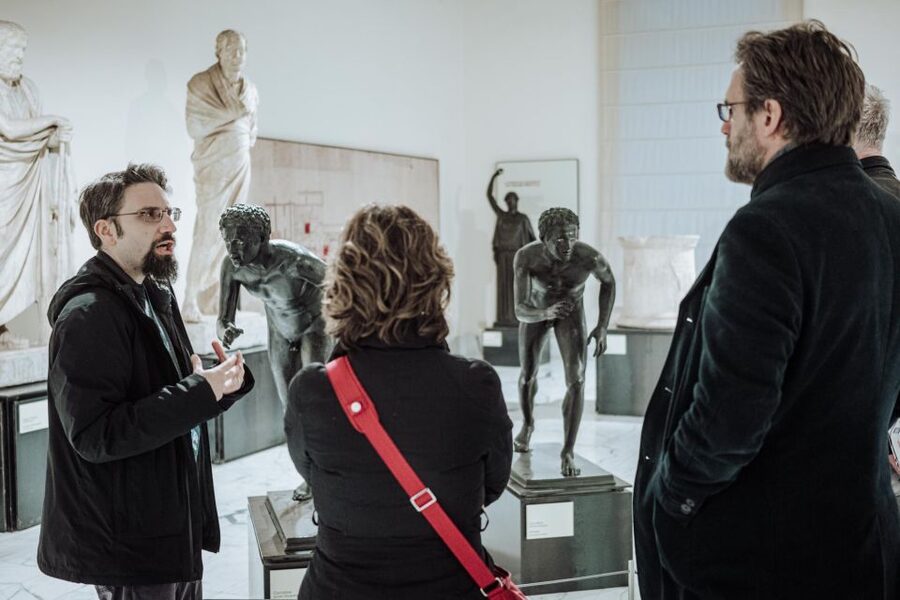
- An archaeologist leads the tour: Guides including Silvia, Nicoletta, Salvatore, Gennaro, and others have been praised for clear explanations and lively storytelling.
- The group can make a big difference: Several tours had only five or six people, making questions and movement easier in the large galleries.
- You can stay after the tour: The guided visit finishes after two hours, but you can continue looking around on your own.
- Plan for a museum visit, not a quick photo stop: Large bags, oversize luggage, strollers, and wheelchairs are not permitted on this activity.
Why this museum belongs on your Naples schedule
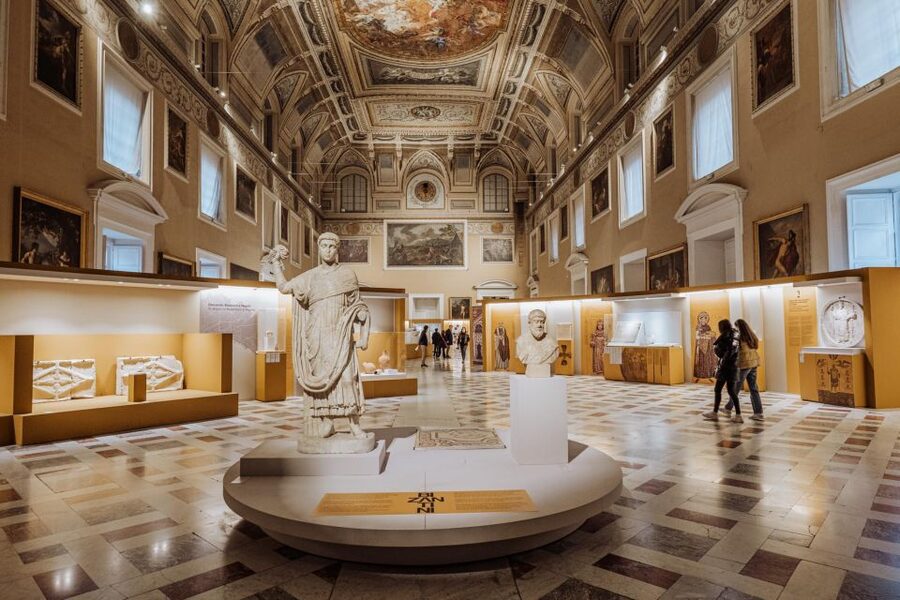
Naples’ National Archaeological Museum is the place where many famous objects from the Bay of Naples come together. Pompeii and Herculaneum give you streets, houses, temples, and walls in their original settings. The museum adds the portable art and grand sculpture that help explain the people who made, collected, and admired those things.
That combination matters. At Pompeii, you might see a worn wall painting in a dining room and wonder what it once looked like. Here, you can stand before remarkably preserved frescoes and mosaics from the same ancient world. The museum also holds major Greek and Roman works, including pieces collected by powerful families rather than found only at the Vesuvius sites.
I would not treat this as a simple collection of old statues. The visit works best as a lesson in how ancient art was used. The corridors lined with busts of gods, emperors, and other figures show how Roman culture borrowed from Greece while giving familiar gods and heroes new settings and meanings.
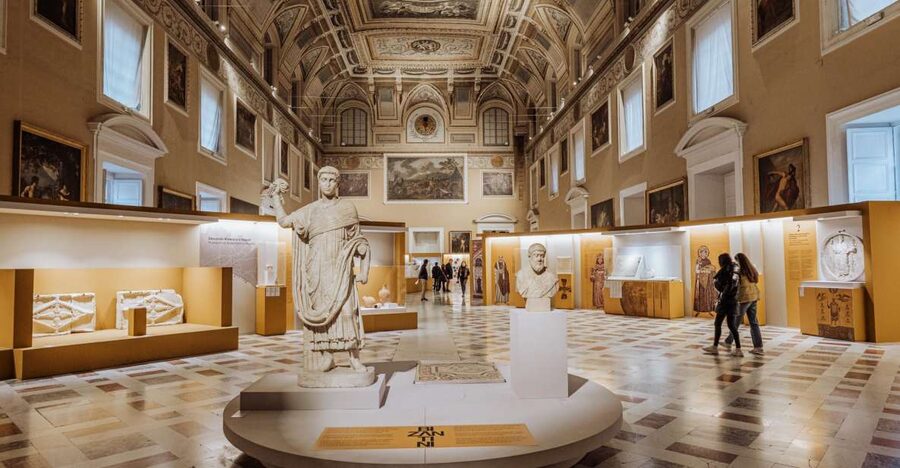
The building itself also adds to the experience. It is a grand setting for large sculptures and wall paintings, and one visitor rightly pointed out that the building deserves attention along with the objects inside it.
More museums in Naples:
- Naples: National Archaeological Museum Ticket & Audio App
★ 4.4 · 617 reviews - Vatican: Museums & Sistine Chapel Entrance Ticket
★ 4.5 · 144,003 reviews - Vatican Museums & Sistine Chapel Tour with Optional Basilica
★ 4.3 · 67,413 reviews
Meeting the guide outside the ticket office
Your meeting point is outside the museum ticket office. Look for the guide holding an ASKOS TOURS sign. This is a useful detail because the museum is a busy urban destination, and you do not want to spend your start time guessing which entrance or staff member to approach.
The tour includes museum admission and skip-the-line access. Transportation, food, and drinks are not included, so you make your own way to the museum and arrive ready to begin. Starting times vary, so check the available slot when booking.
The advertised duration is two hours. That is a sensible length for a guided introduction, especially in a museum this large. It is long enough to cover major works without turning every room into a lecture, but short enough to leave you energy for Naples afterward.
The guide speaks English or Italian, depending on the departure. Several guides have been singled out for their strong English and approachable style. Names that appear repeatedly in the tour feedback include Nicoletta, Silvia, Salvatore, Gennaro, Laura, Adele, and Barbara. The exact guide is not guaranteed, but the best accounts describe guides who explain clearly, answer questions, and adjust the pace to the group.
The Farnese Collection: start with the giants
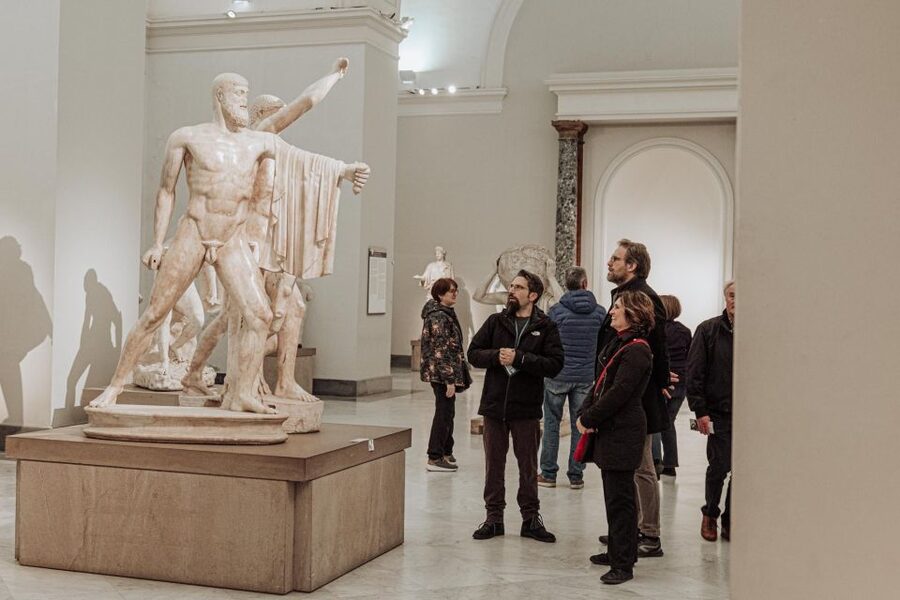
The Farnese Collection is one of the main reasons to choose a guided visit. It is known for major classical sculptures, and the Farnese Hercules is the obvious showstopper. The statue presents Hercules as a powerful figure resting after his labors, but a guide can help you notice more than the size and muscle.
The Toro Farnese, or Farnese Bull, is another essential stop. This enormous sculpture is crowded with figures and action, so it can be difficult to understand at a glance. A guide gives you a way into the scene, pointing out the characters and explaining how ancient myths were translated into large-scale Roman sculpture.
These works are not small, quiet objects you can absorb in passing. They were designed to impress. Their scale, movement, and theatrical poses tell you something about the tastes of the people who collected them and the public spaces or grand homes where such art could be displayed.
I especially like this part of the tour for first-time museum visitors. You do not need a background in Greek mythology or Roman art. A good guide, such as those described in the feedback, makes the subjects approachable and explains why the works matter rather than simply naming them.
The limitation is that the Farnese rooms can become a highlight reel. You will see major sculptures, but two hours cannot give equal attention to every ancient figure, inscription, and fragment. If one statue catches your eye, note its location and return to it after the formal tour.
Frescoes from Pompeii and Herculaneum
The museum’s Pompeii and Herculaneum material is the strongest reason to schedule this visit after visiting at least one of those archaeological sites. You begin to recognize the connection between the objects in the cases and the houses, gardens, and public buildings you have already seen.
The frescoes are especially valuable. At Pompeii, paintings remain attached to walls in their original rooms, while the museum lets you study other paintings at close range and in a more focused setting. The color and detail that survived the eruption of Mount Vesuvius in 79 AD can make the ancient world feel less abstract.
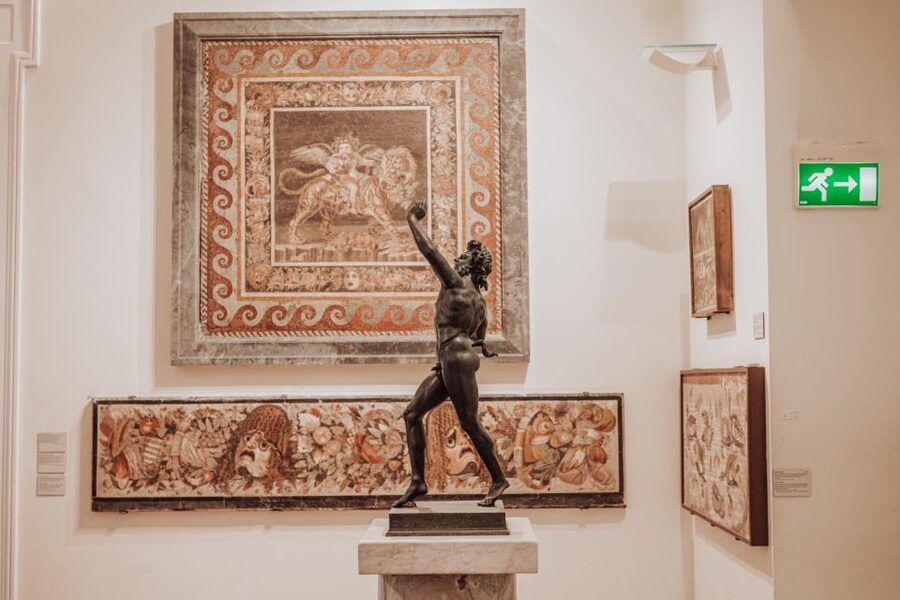
The mosaics are just as important. Some depict elaborate scenes, while others use patterns and borders to finish a room. The famous Alexander mosaic, showing Alexander the Great and Darius, is among the works associated with this collection. One section has been under restoration at times, so do not assume every celebrated piece will always be fully visible.
A guide helps you read these works. You may learn how a painting fitted into a Roman house, what a mosaic says about the owner’s taste, or how the eruption preserved art that would otherwise have vanished. The value is not just seeing a beautiful floor or wall. It is understanding its place in daily life.
If you have already visited Pompeii, the museum can supply the missing close-ups. Several people who paired the sites found that the museum completed the picture. If you have not yet visited Pompeii or Herculaneum, the tour still works, but some of the connections will land more strongly later.
A few other Naples mornings to weigh against this
- Naples: Naples Underground Entry Ticket and Guided Tour
★ 4.4 · 21,781 reviews - Naples: Catacombs of San Gennaro Entry Ticket & Guided Tour
★ 4.6 · 7,941 reviews - Naples: Spanish Quarters Underground Guided Tour
★ 4.8 · 5,064 reviews - Naples: Street Food Walking Tour with Local Guide
★ 4.8 · 4,256 reviews
Busts, gods, emperors, and the Roman habit of collecting
Between the headline sculptures and archaeological treasures, you will walk through corridors filled with busts. These faces include Roman emperors, Greek and Roman gods, and other important figures.
This can be one of the more tiring parts of a large museum if you view each bust as an isolated object. A guide gives the rows a purpose. You can compare hairstyles, clothing, facial types, and the way political power was presented in stone.
The museum also contains coins and other works of classical art. They may not have the immediate impact of the Hercules or the mosaics, but they add useful evidence about trade, rulers, religion, and everyday life. A strong guide will select a few examples rather than bury you under dates and names.
That selection is where the tour earns its fee. Without help, the museum’s huge number of exhibits can feel bewildering. With a clear route, you get the main story first and can decide what deserves a longer look afterward.
How the archaeologist guides shape the experience
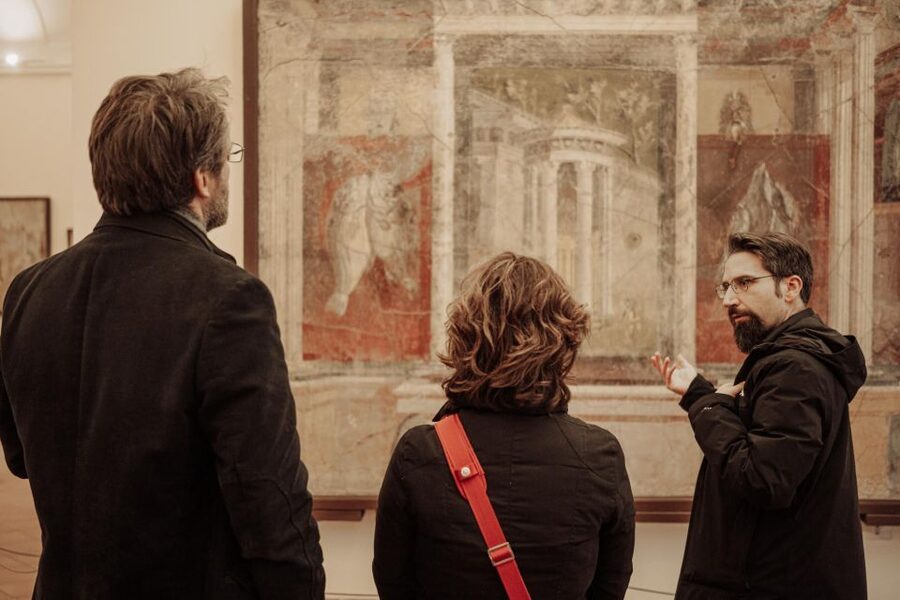
The most highly praised feature is the quality of the guides. Silvia has been described as an archaeologist who works at Pompeii and teaches archaeology at university. Nicoletta has been praised for her knowledge of Naples and the Roman world around the Bay of Naples, as well as her enthusiasm for the museum.
Salvatore is another name to remember. He has been praised for making the art approachable and for handling questions with ease. Gennaro has been singled out for bringing the ancient world to life after a Pompeii visit. Other guides, including Adele, Laura, Barbara, and Vincent, have also received strong marks for clear, engaging presentations.
Of course, the guide assigned to your departure may differ. The important point is what the activity promises: a live guide with archaeological expertise, not a recorded route. You can ask why a sculpture looks a certain way, how a mosaic was found, or how a museum object relates to a site you saw earlier.
That conversation is the main advantage over an audio guide. You can stop for a question, ask for a simpler explanation, or request extra context about a work that interests you. One guide even spent extra time showing additional exhibitions after covering the main works.
The teaching style varies. Most feedback describes enthusiasm and clear explanations, but one person found a guide difficult to hear because of a sore throat and a weak sound system. Another suggested that a microphone and visitor headsets would help. Some guides do provide ear pieces, which is useful if you are hard of hearing, but I would still stay close to the guide and speak up if you miss something.
Group size, pace, and what two hours really covers
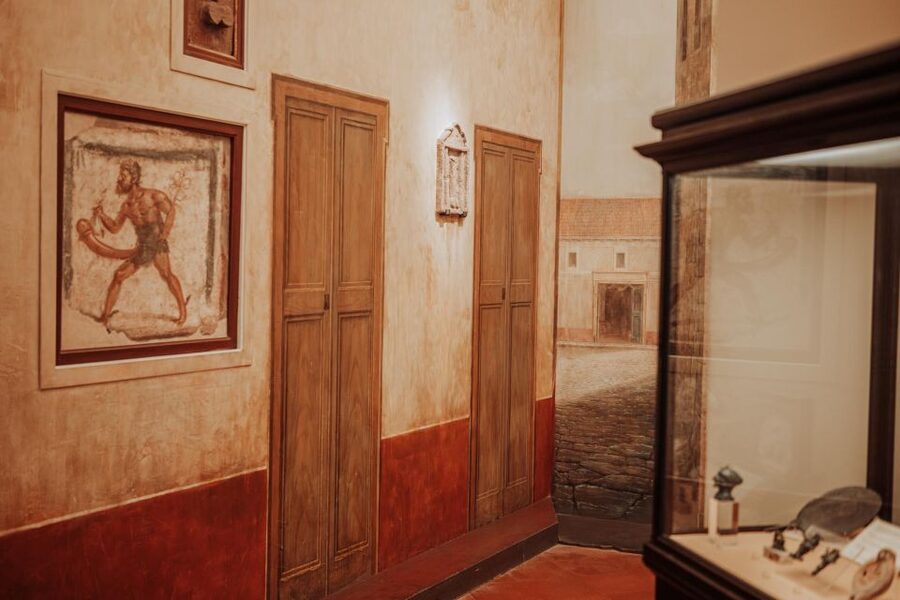
The tour is designed as a walking overview. Small groups of five or six have been reported, and that size makes it easier to move through crowded rooms and ask questions. The group size may vary, so do not book on the assumption that every departure will be tiny.
The pace is generally manageable, with time to stop at the principal works. You will not see every floor. One person wished the tour were longer for exactly this reason, while another appreciated getting a two-hour orientation and then continuing alone.
That is the best way to think about the schedule. You are paying for a guided framework, not an exhaustive study of the museum. The guide takes you to major highlights such as the Farnese sculptures and Pompeii collection, explains their place in the larger story, and then leaves you free to explore.
If you want to see everything, plan extra time after the tour. The museum is large, and your personal interests may lead you toward paintings, coins, or rooms the guide cannot include in a short route.
There are also limited chances to rest during a concentrated visit. One person specifically wished for more places or minutes to sit. Wear comfortable shoes, and do not treat the two hours as a race.
Is $52 a fair price?
The listed price is $52 per person. Museum admission is included, with standard adult entry listed at 20 euros and reduced admission of 2 euros for EU citizens ages 18 to 25. The rest of the price pays for the guide and the convenience of skip-the-line access.
That is not the cheapest way to enter. If you qualify for reduced admission, or visit on a free-admission day, a self-guided visit costs much less. One person noted that the museum is free to all visitors on the first Sunday of the month, though you would need to confirm current arrangements before relying on that option.
The value improves if you have limited time, feel unsure about classical art, or plan to connect the museum with Pompeii and Herculaneum. A two-hour route can prevent you from losing half a day to random wandering, and an archaeologist can explain details you might otherwise miss.
I would skip the premium if you already know the museum well and prefer a slow, independent visit. For a first visit, especially after Pompeii, the guide is the part that makes the price easier to justify.
Practical limits and who should avoid this tour
This activity is not suitable for people with mobility impairments or wheelchair users. Non-folding wheelchairs and electric wheelchairs are not allowed. Baby strollers are also excluded.
Large bags, oversize luggage, and other large items are not permitted. Arrive with only what you need for the museum visit. Transportation is not included, so you are responsible for getting to the National Archaeological Museum of Naples.
The museum can be visually and mentally demanding. If you are traveling with an older family member, the tour can still work well, but build in rest time and remember that the route involves walking and standing. A visitor who brought a grandmother had a very positive experience, while another wished for more places to sit.
This tour suits you best if you:
- Have visited, or plan to visit, Pompeii or Herculaneum
- Want the main works explained in clear English or Italian
- Prefer a live guide to an audio recording
- Have about two hours for a focused museum introduction
- Like asking questions as you look at the art
- Can manage a walking tour without a wheelchair or stroller
Free cancellation is available up to 24 hours before the activity for a full refund, and you can reserve now and pay later. Those options help if your Naples schedule may change.
Should you book the National Archaeological Museum tour?
I would book this tour if you want the museum to make sense rather than simply want to walk through it. The Farnese Hercules and Toro Farnese are memorable on their own, but the Pompeii and Herculaneum collections become far more useful when someone links them to the places around Vesuvius.
Book it after Pompeii if possible. That order gives you the strongest connection between the excavated houses and the art now displayed in Naples. Then stay in the museum after the two-hour tour to revisit the Hercules, spend time with the mosaics, or find the rooms the guided route could not cover.
I would choose a self-guided visit instead if you need wheelchair access, are carrying large luggage, want a very slow pace, or already have a firm plan for the museum. For most first-time visitors who can manage the walking, $52 buys more than entry. It buys orientation, context, and a much better chance of recognizing why this museum is central to a visit around the Bay of Naples.
FAQ
Where does the tour meet?
Meet outside the ticket office of the National Archaeological Museum of Naples. The guide will hold an ASKOS TOURS sign.
How long does the guided visit last?
The guided tour lasts two hours.
Is museum admission included?
Yes. Entry to the Archaeological Museum of Naples is included. The listed admission is 20 euros for adults and 2 euros for reduced EU citizens ages 18 to 25.
Does the tour include skip-the-line access?
Yes. Skip-the-line entry is included.
Which languages are available?
The live guide speaks English or Italian, depending on the tour.
Is transportation included?
No. You must make your own way to the museum.
Are food and drinks included?
No. Food and drinks are not included.
Can I continue exploring after the guided tour?
Yes. You can remain in the museum after the two-hour guided visit and look at additional exhibits on your own.
Can I bring large luggage or a stroller?
No. Oversize luggage, luggage or large bags, and baby strollers are not allowed.
Is the tour suitable for wheelchair users?
No. The activity is not suitable for wheelchair users or people with mobility impairments. Non-folding and electric wheelchairs are not permitted.
Can I cancel the booking?
Yes. You can cancel up to 24 hours in advance for a full refund. You can also reserve now and pay later.
Fresh on the Naples list
- Sorrento, Positano and Amalfi: Private Tour of Coastal Gems★ 5.0 · 196 reviews
- Naples Shore Excursion: Pompeii and Sorrento Day Trip★ 3.5 · 198 reviews
- Naples Walking Tour: Old Town and Spaccanapoli★ 5.0 · 200 reviews
- Naples Pizza & Drinks Tour: A Slice of Naples with Eating Europe★ 5.0 · 203 reviews
- From Naples: Ruins of Pompeii★ 4.3 · 204 reviews
- Tour of the island of Ischia in schooner★ 5.0 · 208 reviews
- Naples: Historic Center and Sansevero Chapel Walking Tour★ 4.8 · 208 reviews
- From Naples: Tour of the Amalfi Coast, Sorrento, and Pompeii★ 5.0 · 211 reviews
Museums, compared.

Vatican: Museums & Sistine Chapel Entrance Ticket
Read our review →
Vatican Museums & Sistine Chapel Tour with Optional Basilica
Read our review →
Vatican Museums, Sistine Chapel & St Peter’s Basilica Guided Tour
Read our review →
Skip-The-Line Uffizi Gallery Timed Entry Ticket
Read our review →
Vatican Museums, Sistine Chapel & Basilica Tour
Read our review →
Vatican Museums & Sistine Chapel Skip-the-Line Entry Ticket
Read our review →Vatican Museums, Sistine Chapel & Basilica Tour
Read our review →
Vatican Museums & Sistine Chapel Guided Tour
Read our review →Browse the lists this tour appears in