
Reviewed · POMPEII & VESUVIUS TOURS
From Naples: Ruins of Pompeii
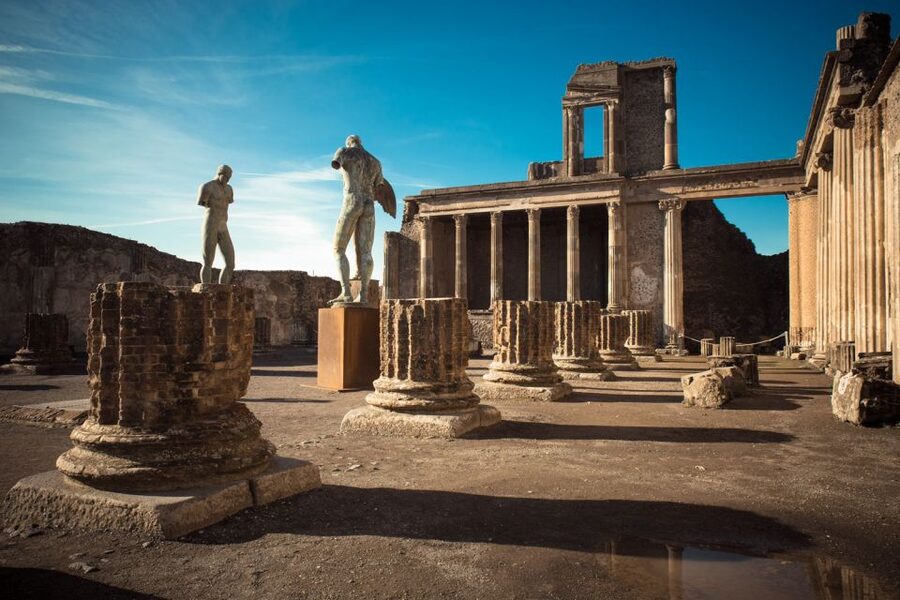
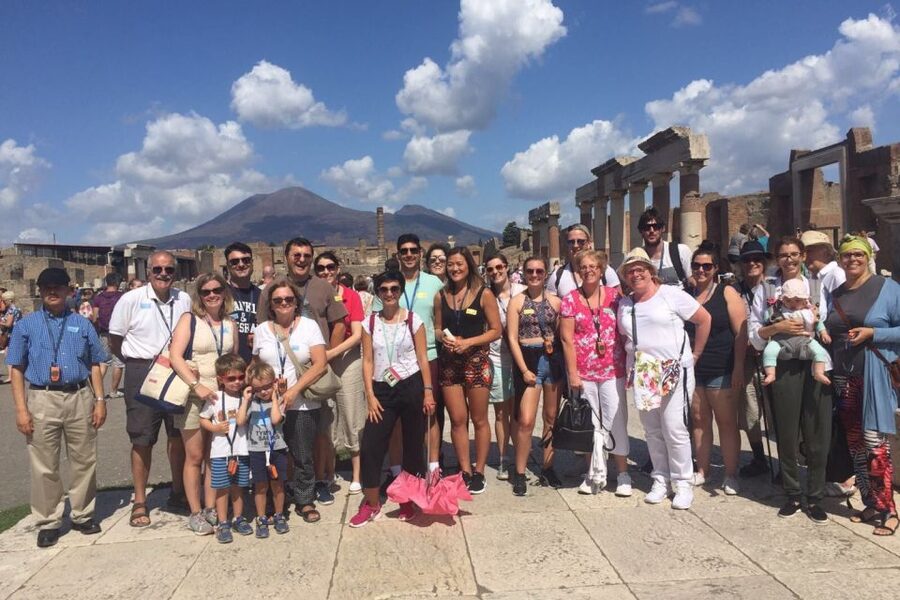
Pompeii is most powerful when you stop seeing it as a pile of ruins and start noticing the ordinary details: bakeries with stone ovens, shops lining the streets, public baths, and a theater built for Roman crowds. This three to four-hour outing from Naples gives you a clear, guided route through that buried city without asking you to manage Naples traffic or arrange admission on your own.
I like the central pickup points, which include hotels along the Lungomare and around Piazza Garibaldi, and I like the way the tour focuses on daily life as well as major monuments. Guides such as Fabio, described as an archaeologist, and Salvatore have brought strong subject knowledge and a lively touch to the visit. The main drawback is time: with roughly two hours inside Pompeii, you will see the key areas but cannot cover the whole site.
Key points to know before you book
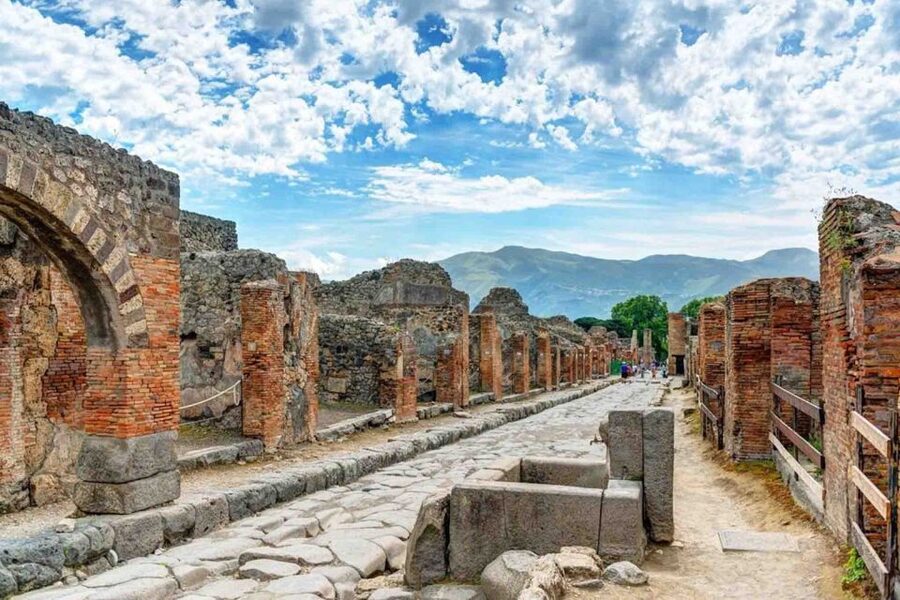
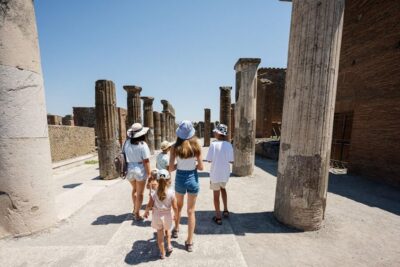
- Pompeii is explored on foot for about two hours, with stops at the forum, baths, necropolis, theater, villas, bakeries, and shops.
- Pickup is available at selected Naples hotels and meeting points, beginning around 8:00 a.m. along the Lungomare and ending near Naples Central Station around 8:45 a.m.
- A guide is offered when at least six people choose the same language. Otherwise, an audio guide is supplied.
- The tour can be bilingual, so your live commentary may be shared between two languages.
- A cameo and coral workshop may be included if time permits, but it should not be the reason you book the tour.
- Comfortable shoes, a hat, and sunscreen matter, while large bags and luggage are not allowed.
Why Pompeii works best with a guide
Pompeii covers a large area, and its most interesting clues are easy to miss. A bakery can look like a simple stone room until someone explains how the ovens, mills, and counters fit into Roman street life. A bathhouse becomes more meaningful when you understand that bathing was a social routine, not simply a way to wash.
That is the strength of this outing. You are not left to wander among walls with only a map. The guide connects the buildings to the people who used them, explaining how Romans lived in the first century AD, shopped, met friends, attended performances, and used public facilities.
The guides vary by day and language. Fabio has led the site visit as an archaeologist, while Salvatore, Maria, Anita, and others have been praised for keeping the route clear and the group together. You should not book expecting one particular person, but the tour has a good record of using guides who can explain the site in a lively, human way.
The audio-guide option is useful if the minimum number for a live guide is not reached. One audio guide, described as witty and well informed, made the route engaging. Still, a live guide can answer questions and adjust the pace, which matters in hot weather or crowded sections.
A few other Naples mornings to weigh against this
- From Naples: Pompeii Ruins & Mount Vesuvius Day Tour
★ 4.3 · 11,459 reviews - Naples or Sorrento: Full-Day Pompeii and Mount Vesuvius Tour
★ 4.6 · 4,235 reviews - Herculaneum: Skip-the-Line Guided Tour with Archaeologist
★ 4.8 · 3,439 reviews
Getting from Naples to the ruins
The morning begins with a series of pickup points. The earliest departures, around 8:00 a.m., serve the Royal Continental, Grand Hotel Vesuvio, Grand Hotel Saint Lucia, and Eurostars Hotel Excelsior along the Lungomare Caracciolo. Later stops include Molo Beverello, NH Napoli Panorama on Via Medina, Hotel Naples on Corso Umberto, UNAHOTELS near Piazza Giuseppe Garibaldi, and Starhotels Terminus.
You need to contact the operator after booking to confirm your exact meeting point and time. Do not simply assume that the hotel lobby is the pickup spot. Some locations are hotels, while others are places such as Bar Picnic or the Molo Beverello area.
The listed transfer time is about 20 minutes each way, but the full pickup circuit and Naples traffic can make the ride longer. One departure took around 45 minutes each way once traffic and collection stops were counted. That is still a sensible trade for many people. Driving or parking near Pompeii can be stressful, and a driver who knows the route removes that burden.
Transport has usually been a clean, air-conditioned coach or minivan. Smaller groups may travel in a minivan, which can make the ride more personal and speed up the pickup process. At least one departure had a late vehicle and switched to a comfortable minivan, so allow some flexibility at the start.
The driver waits only five minutes if you are late. Naples traffic is not a good place to test that limit, so arrive early and stand where the driver can see you. Keep your phone available in case the operator needs to clarify the meeting point.
Entering Pompeii and setting the pace
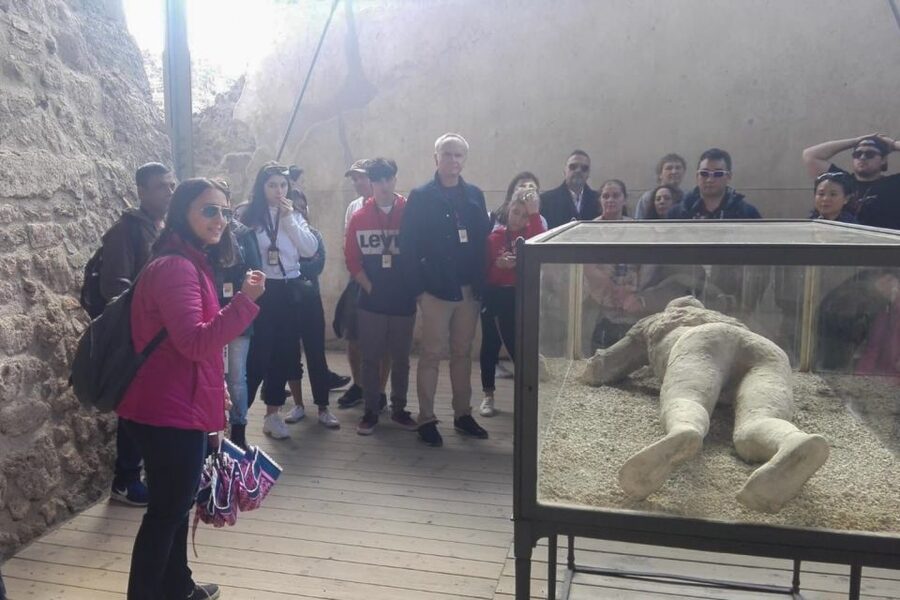
Once you reach the archaeological site, the visit lasts about two hours. That is enough for a well-shaped introduction, especially if this is your first time at Pompeii. It is not enough for every street, villa, and public building.
The route is designed around the places that best explain the city. You will likely spend time around the main forum, the public baths, the necropolis, the theater, and the old shopping street. The precise order can change with crowd conditions, closures, and the guide’s judgment.
Expect uneven ancient paving, exposed ground, and long periods in the sun. This is not a sit-down museum visit. Wear shoes that can handle rough surfaces, carry sunscreen, and bring a hat. Large bags and luggage are not allowed, which is especially important if you are heading to or from a train or cruise connection.
The guide’s job is partly to keep the group moving. Pompeii can become crowded, and groups sometimes converge at the same doorway or street corner. Maria, for example, has been especially effective at keeping people together in difficult crowd conditions. That may mean you pause briefly while another group passes, or move on before you have examined every detail.
If you have limited mobility, this is not a good match. The activity is specifically unsuitable for wheelchair users and people with mobility impairments. Even able-bodied visitors should expect a fair amount of walking over old stone surfaces.
Roman shopping streets, bakeries, and pizzerias
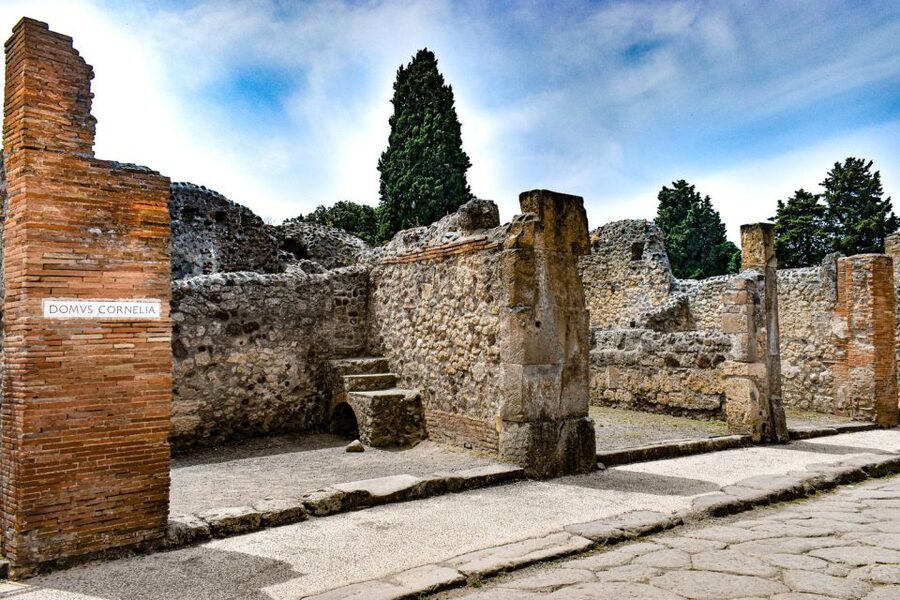
The shopping street is one of the tour’s most memorable sections because it makes Pompeii feel like a working town rather than a silent monument. You will see ancient shops and preserved bakeries, with the remains of ovens and milling equipment offering a direct link to food production.
The reference to pizzerias needs a small clarification. These were not modern pizza restaurants in the familiar sense, but food shops and bakeries that help you picture where ordinary residents bought prepared food. The guide’s explanation is what turns the masonry into a scene of daily commerce.
I especially like this part of the route for families and first-time visitors. Children can understand a bakery or shop quickly, even when the surrounding political and religious buildings require more background. You can also compare the practical street businesses with the grander villas and forums seen later.
The preserved street layout gives you a sense of movement through the town. You can see how stores faced the road and how public and private spaces were arranged. Do not expect every building to be open or perfectly preserved. Pompeii is an archaeological site under constant care, and the route depends on what is accessible that day.
Same city, an entirely different afternoon:
- Naples: Naples Underground Entry Ticket and Guided Tour
★ 4.4 · 21,781 reviews - From Naples: Sorrento, Positano and Amalfi Full-Day Tour
★ 4.6 · 10,988 reviews - From Naples: Sorrento, Positano & Amalfi Coast – Small Group Tour
★ 5.0 · 8,643 reviews - Naples: Catacombs of San Gennaro Entry Ticket & Guided Tour
★ 4.6 · 7,941 reviews
The theater, forum, baths, and necropolis
The ancient theater adds a welcome change of scale. Here, the guide can explain how Roman entertainment fit into civic life and how the building worked as a gathering place. It is more than a photo stop, but you will probably have only a short time to take in the structure before continuing.
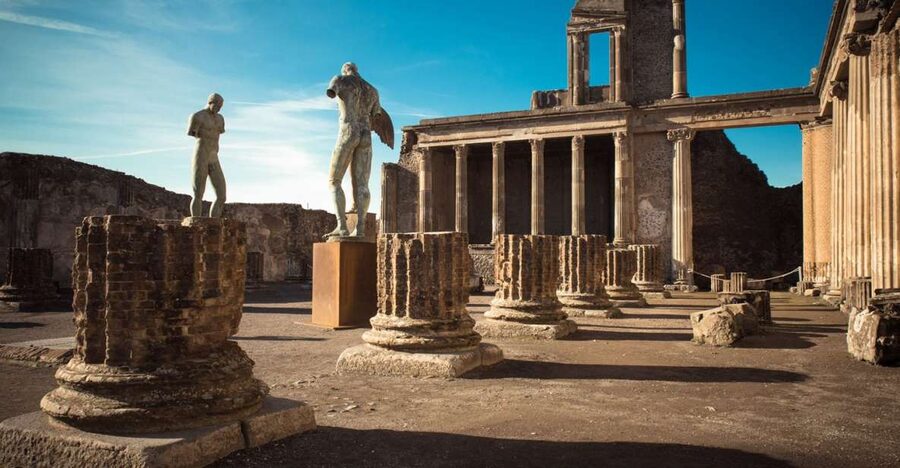
The forum is Pompeii’s central public space and one of the essential stops. It helps you understand the city’s political, religious, and commercial center. From here, you can better read the relationship between temples, administrative buildings, and the streets that fed into the square.
The bathhouses show another side of Roman life. These were public places where people spent time together, and their surviving rooms help explain Roman engineering and social habits. You may find that the baths are more revealing than a grand residence because they show how the wider population used the city.
The necropolis, or cemetery area, brings the city’s relationship with death into view. It is usually more subdued than the forum or shopping street, but it adds an important part of the story. A good guide will keep the explanation focused rather than turning the stop into a long lecture.
Crowds can affect all four areas. You may need to wait for a clear view, listen while standing to one side, or stay close to the guide. The best approach is to accept the route as a well-chosen introduction, not a private archaeological survey.
The house of Pompeii’s richest man
The tour also takes you to the house associated with Pompeii’s wealthiest resident. The value of this stop lies in contrast. After seeing bakeries and street shops, you get a look at the private world of an elite household and the scale of property available to the city’s richest citizens.
The exact rooms open to the public can vary, so your guide’s explanation matters. Look for the way the house is organized and how its size differs from the more modest commercial spaces. You will get a clearer picture of the social gap within Roman Pompeii.
This is also where a short visit can feel frustrating. A two-hour route gives you a taste of the house, but not the leisure to study every wall decoration, courtyard, or architectural detail. If domestic architecture is your main interest, you may want a longer Pompeii visit on another day.
A possible cameo and coral workshop stop
If time permits, the outing may stop at a local factory or workshop devoted to cameos and coral. These traditional jewels are made from coral and seashells, and the stop offers a link between Pompeii sightseeing and a craft associated with the Campania region.
Treat this as an extra, not a fixed highlight. The main Pompeii visit comes first, and traffic, group timing, and site conditions can leave little room for an additional stop. If you are interested in handmade jewelry, it may be a pleasant addition. If you want every available minute inside the ruins, you may prefer that the schedule stay focused on Pompeii.
The older experience format included a comfortable bus, a hotel pickup, and time at the cameo and coral factory. Current departures list the stop only if time allows, so check the option you select and do not count on it.
Guide, audio guide, and language choices
Live guiding is available in English, Italian, and Spanish. French, Chinese, German, Japanese, Russian, and Portuguese may be available through an audio guide, depending on the option and season.
The tour can be bilingual. That may mean commentary in two languages and a slightly slower rhythm at some stops. If a live guide is not assigned because fewer than six people share a language, each person receives an audio guide instead.
A live guide is most useful if you like questions, human stories, and help with the site layout. An audio guide can work well if you prefer to pause, look around, and control the amount of information you hear. Check the selected option carefully because entry ticket arrangements and guiding format can differ.
The strongest guide feedback has focused on clarity, humor, and care with the group. Salvatore handled heat thoughtfully by seeking shade when possible. Fabio brought an archaeological background. Maria kept a group together in crowded conditions. Those details matter more here than a polished speech, because Pompeii rewards clear timing and practical care.
Is $59 a fair price?
At about $59 per person, the value depends on what your selected option includes. Round-trip transport from Naples and a two-hour guided walk save you the trouble of arranging trains, local transfers, and a site visit on your own. If the Pompeii admission ticket is included, the package is easier to price against separate arrangements.
Check the booking details before paying because the entry ticket is listed as included only when that option is selected. Lunch is not included, so plan to eat before or after the tour rather than expecting a meal stop.
I see this as good value for a short first visit, especially if you are staying in central Naples, traveling with family, or working around a cruise or flight schedule. It is less compelling for a dedicated archaeology enthusiast who wants several hours to explore at an unhurried pace.
One visitor with a same-day flight returned without disrupting the plan, but I would still avoid scheduling a tight onward connection. Traffic and pickup delays are possible, and the tour itself is designed as a half-day outing rather than a precise airport transfer.
Who should book this Pompeii tour?
I would choose this experience if you want the major sights explained clearly and do not want to drive through Naples. It suits first-time Pompeii visitors, people staying near the listed central pickup points, and anyone who values door-to-door transport over maximum time inside the ruins.
It also works for visitors who want a structured route. With bakeries, shops, the theater, forum, baths, necropolis, and a wealthy residence all on the plan, you will leave with a broad picture of Roman urban life.
I would look elsewhere if you need wheelchair access, carry large luggage, dislike group pacing, or want to spend a full day studying Pompeii. You should also think twice if the possible bilingual format or audio guide would bother you.
Free cancellation up to 24 hours before departure and reserve-now, pay-later booking add useful flexibility. Still, the practical decision is simple: confirm your pickup location, verify whether admission is included, and allow more time than the listed transfer estimate.
FAQ
How long does the full Pompeii tour take?
The activity lasts about three to four hours in total. The Pompeii walking portion lasts about two hours, with transportation between Naples and the site.
How long is the guided visit inside Pompeii?
The walking tour inside the archaeological site lasts approximately two hours.
Is transportation from Naples included?
Yes. Round-trip transportation from Naples is included, using a bus, coach, or minivan depending on the departure.
Where can I be picked up in Naples?
Pickup is available at selected hotels and meeting points, including the Royal Continental, Grand Hotel Vesuvio, Grand Hotel Saint Lucia, Eurostars Hotel Excelsior, Molo Beverello, NH Napoli Panorama, Hotel Naples, UNAHOTELS Napoli, and Starhotels Terminus.
Is the Pompeii entrance ticket included?
The entry ticket is included when you select the option that includes it. Check the exact option before booking.
What languages are available?
Live guides are available in English, Italian, and Spanish. Audio guides may be offered in French, Chinese, German, Japanese, Russian, and Portuguese.
Will I always have a live guide?
A live guide is provided when at least six participants are booked for the same language. Otherwise, each participant receives an audio guide.
Can I bring luggage or a large bag?
No. Luggage and large bags are not allowed. Bring comfortable shoes, a sun hat, and sunscreen instead.
Is the tour suitable for wheelchair users?
No. The activity is not suitable for wheelchair users or people with mobility impairments.
Should you book it?
Book it if you want a well-organized Pompeii introduction from Naples, with transport and a guide handling the complex parts. The strongest reasons are the practical pickup network, the focused route through everyday Roman spaces, and the consistently warm, attentive guiding style shown by people such as Fabio, Salvatore, and Maria.
Skip it if two hours inside the ruins will feel too short. For most first visits, $59 is a reasonable price for transport, admission when selected, and a structured explanation of Pompeii. Just confirm the pickup details, wear proper shoes, and treat the cameo workshop as a possible extra rather than part of the core promise.
Fresh on the Naples list
- Sorrento, Positano and Amalfi: Private Tour of Coastal Gems★ 5.0 · 196 reviews
- Naples Shore Excursion: Pompeii and Sorrento Day Trip★ 3.5 · 198 reviews
- Naples Walking Tour: Old Town and Spaccanapoli★ 5.0 · 200 reviews
- Naples Pizza & Drinks Tour: A Slice of Naples with Eating Europe★ 5.0 · 203 reviews
- Tour of the island of Ischia in schooner★ 5.0 · 208 reviews
- Naples: Historic Center and Sansevero Chapel Walking Tour★ 4.8 · 208 reviews
- From Naples: Tour of the Amalfi Coast, Sorrento, and Pompeii★ 5.0 · 211 reviews
- Naples: Pompeii Self Guided Audio Tour★ 3.9 · 211 reviews
Pompeii & Vesuvius Tours, compared.

Entry Ticket and Guided Tour with an Archaeologist
Read our review →


Pompeii Small Group Tour with an Archaeologist
Read our review →
Pompeii, Amalfi Coast and Positano Day Trip from Rome
Read our review →Browse the lists this tour appears in