
Reviewed · WALKING TOURS
Skip the Line: Siena Duomo and City Walking Tour
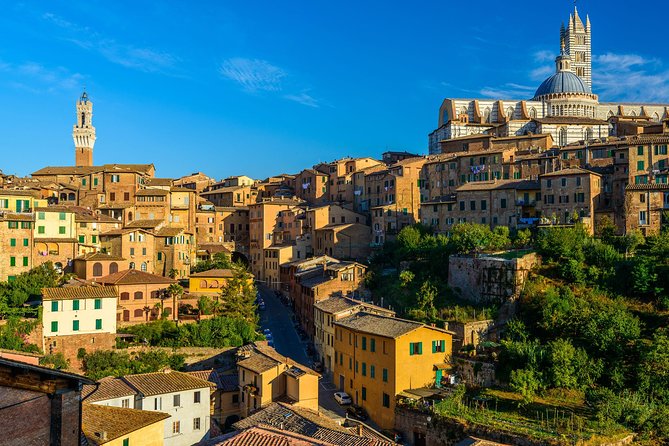
Siena’s contrade, or historic neighborhood districts, are the key to understanding this proud Tuscan city. This two-hour walk links those local traditions with the grand public spaces and churches that most first-time visitors want to see, ending inside the spectacular Siena Duomo.
I like the efficient route and the skip-the-line Duomo entry, which saves precious time and gives the final part of the tour a clear focus. I also like the local flavor: guides such as Elio, Claudia, Julia, and Daniele explain the Palio horse race and neighborhood rivalries with the warmth of people who know Siena from the inside.
The main caution is the group size, which can reach 30 people. That is manageable on open squares but less easy in narrow lanes and inside the Duomo. One participant also found the audio equipment hard to hear at times, so your experience may depend partly on how well the guide uses the microphone.
Key points to know before booking
- A strong first look at Siena: Cover four central sights and the Duomo in about two hours.
- The Palio gets real attention: Learn how Siena’s neighborhood districts shape local identity and the famous horse race.
- The Duomo is the finale: Spend about 40 minutes inside with guided commentary and priority entry.
- Expect uphill cobblestones and steps: Wear practical shoes and clothing that covers your shoulders and legs.
- Guide quality is a major strength: Elio, Claudia, Julia, Daniele, Julia, Silvia, Sarah, and others are praised for humor and local insight.
- Large groups can affect the pace: The maximum is 30 people, and movement may feel tight at busy sights.
Why this two-hour route works well in Siena
Siena is easy to admire but not always easy to read. Its streets twist through a compact medieval center, and many of the most important stories are tied to places that look ordinary until someone explains them.
This tour gives you a useful framework. You meet your English-speaking guide at Piazza San Domenico, then walk through the historic center to Piazza del Duomo. There is no hotel pickup, so you need to reach the meeting point yourself. The tour finishes inside the cathedral, leaving you well placed to continue exploring on your own.
The route is almost entirely on foot, with frequent pauses for photographs and explanation. That suits Siena better than a vehicle tour. Cars cannot reach many of the most interesting lanes, and a guide saves you from stopping at every corner to check a map.
At $48.37 per person, the price is fair if you want both a city orientation and a guided cathedral visit. The value comes from combining the walking tour with included Duomo admission and priority access. If you already know Siena well and mainly want to enter the cathedral, you may prefer a shorter cathedral-only visit. For a first visit, the combination makes better sense.
More skip-the-line tickets in Italy:
- Florence: Skip-The-Line Uffizi Gallery Timed Entry Ticket
★ 4.5 · 27,832 reviews - Vatican Museums & Sistine Chapel Skip-the-Line Entry Ticket
★ 4.4 · 13,838 reviews - Skip-the-Line Group Tour of the Vatican, Sistine Chapel & St. Peter’s Basilica
★ 4.5 · 12,779 reviews
Starting at Basilica San Domenico
The opening stop is the Basilica Cateriniana di San Domenico, a large red-brick Gothic church with a strong connection to Saint Catherine of Siena. You can see relics associated with the saint, making this more than a quick exterior photo stop.
Plan on about 20 minutes here. The church is also your first reminder that Siena’s story is tied closely to religious life, powerful local families, and neighborhood loyalties. Your guide can give the setting meaning before you encounter the grander Duomo later in the walk.
Dress properly for church interiors. Your shoulders and legs need to be covered, and comfortable shoes matter from the start. The route uses Siena’s uneven cobblestone streets, so this is not the place for thin soles or shoes that slip.
This first stop is especially useful if you know little about Saint Catherine or medieval Siena. It is less satisfying if you want a long art-focused visit, since the tour must keep moving toward the cathedral.
Piazza Salimbeni and Siena’s working identity
The brief stop at Piazza Salimbeni shifts the focus from saints and churches to finance. You see the Gothic Rocca Salimbeni, headquarters associated with Monte dei Paschi di Siena, described here as the world’s oldest bank still in operation.
The visit lasts about five minutes, so think of it as a carefully chosen viewpoint rather than a full stop for interior sightseeing. It gives you a fresh way to think about Siena. This is not only a museum town preserved for visitors. It has long been a place of commerce, banking, and civic power.
The square also helps break up the religious and artistic themes. A good guide can connect the building’s appearance to the city’s older political and economic life without turning the tour into a lecture.
Admission to the square is not included as a separate ticket, but the stop is an exterior visit. You will not need extra payment for the brief look.
Piazza del Campo and the story of the Palio
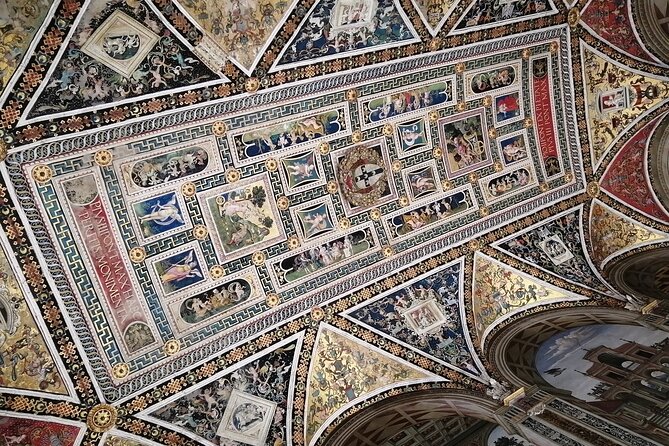
Piazza del Campo is the tour’s largest and most important outdoor stop. The shell-shaped square has served as Siena’s civic gathering place for centuries, and it remains the city’s great public room.
You spend about 30 minutes here, enough time to take in the broad curve of the paving, the Palazzo Pubblico, and the tall campanile rising beside it. Your guide also points out the Fonte Gaia, the Fountain of the World, created in 1419.
The Palio horse race is central to the explanation. Siena is divided into contrade, and each has its own identity, symbols, traditions, and emotional ties. The horse race takes place in this square, but the important point is what the Palio means to local life. It is not simply a sporting event added for summer entertainment. It expresses the old neighborhood loyalties that still shape how many Sienese see their city.
Guides including Elio and Claudia are praised for adding personal local detail, while Julia is noted for making the race especially lively. That enthusiasm can be a major advantage if you want to understand the Palio beyond a few dates and rules.
There is also a possible mismatch in emphasis. If your main interest is architecture, painting, or everyday city life, the Palio discussion may feel too long. One participant felt that most of the first part of the tour focused on horse-race history, leaving less time for other subjects. I would book this tour expecting the Palio and contrade to be a major theme, not a minor aside.
More walking tours in Italy:
- Milan: Guided Walking Tour & Last Supper Visit with Ticket
★ 4.7 · 5,409 reviews - Naples: Street Food Walking Tour with Local Guide
★ 4.8 · 4,256 reviews - Venice Walking Tour and Gondola Ride
★ 3.5 · 3,630 reviews - Venice: Rialto Bridge & Offbeat Unusual Venice Walking Tour
★ 4.2 · 3,538 reviews
Palazzo Chigi Saracini and Siena’s palace streets
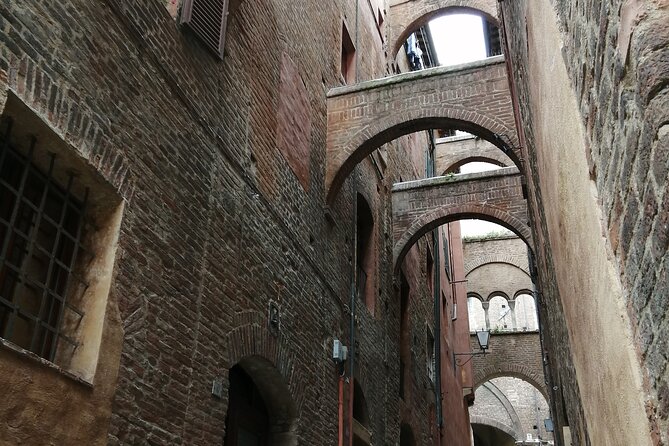
The next stop is Palazzo Chigi Saracini, seen from the outside for about 10 minutes. The palace adds another layer to the city’s story: Siena’s streets are lined with buildings shaped by aristocratic families, civic ambition, and centuries of political change.
Because the visit is exterior only, do not expect a palace tour or interior art collection. Its value is in the setting and the guide’s explanation. It gives you time to notice how Siena’s grand buildings fit into the tight medieval street plan.
This is also where a local guide can help you see what you might otherwise walk past. The palace facade, surrounding lanes, and nearby neighborhood boundaries make more sense when you understand that Siena’s identity is divided into both civic spaces and fiercely loyal contrade.
Entering the Siena Duomo without the regular wait
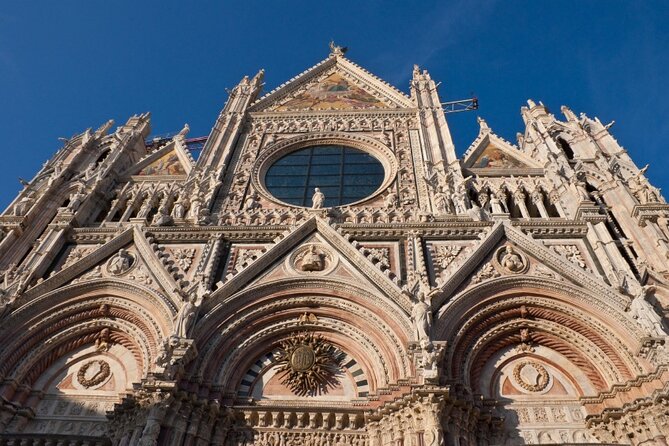
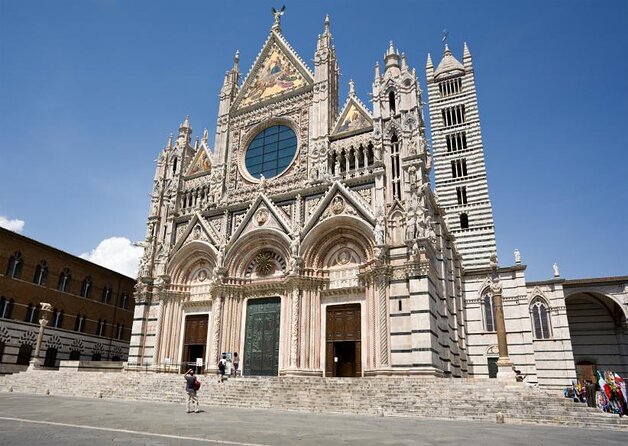
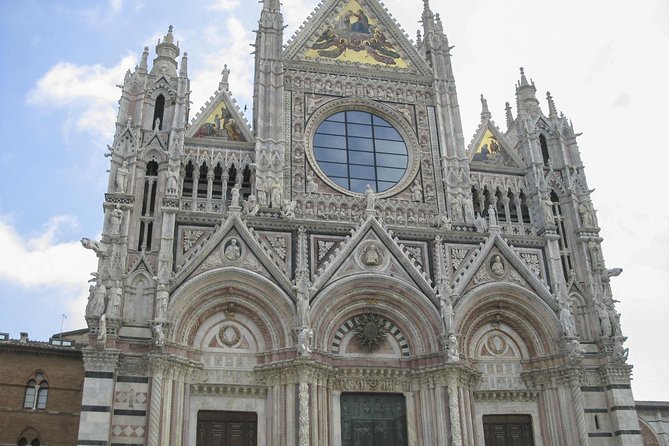
The cathedral is the final and longest stop, with about 40 minutes inside. The black-and-white striped facade prepares you for a dramatic interior, where Gothic design meets later Renaissance art.
Priority entry matters here. Siena is a popular stop in Tuscany, and waiting outside the cathedral can eat into a short visit. With admission included, the group can move inside and spend its time looking rather than queuing.
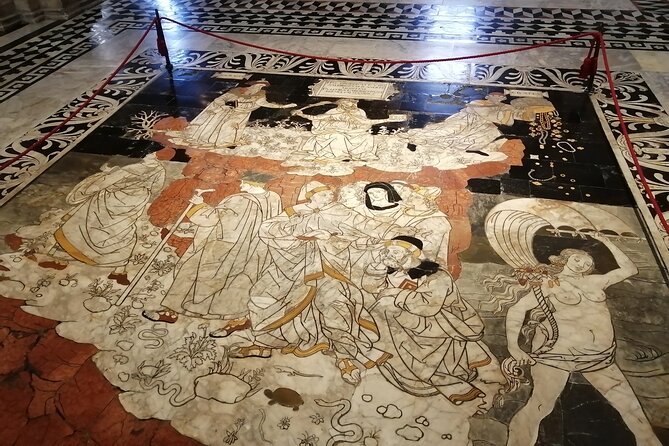
Your guide leads you through works connected with artists including Donatello, Bernini, and Michelangelo. You also see Renaissance-era busts of popes and emperors, along with the cathedral’s Gothic interior. This is where the tour’s art and architecture focus becomes strongest.
The guided visit helps you connect separate works to the building around them. Instead of seeing a striped wall, marble floor, sculpture, or painted detail as an isolated photo opportunity, you get a sense of how the cathedral developed over time.
Forty minutes is enough for an informed introduction, but not enough for every detail. If you care greatly about art, you will want to return after the tour and explore at your own pace. The tour ends inside the Duomo, which is convenient for doing exactly that.
The cathedral has a dress code, so keep your shoulders and legs covered. You will also appreciate having shoes that can handle the walk before and after the visit.
The guides make the difference
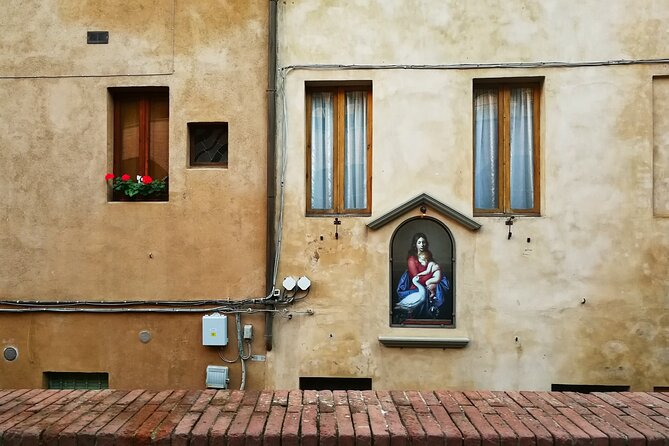
The strongest part of this experience is the guide. The most praised guides are described as warm, funny, energetic, and deeply familiar with Siena’s traditions.
Elio is repeatedly singled out for his humor, local perspective, and ability to answer questions. Claudia is praised for her upbeat manner and understanding of the city’s contrade. Julia receives especially strong marks for her clear explanations and lively account of the Palio, though her focus on that subject may not suit everyone.
Daniele is noted for explaining Siena’s history, culture, and economics while keeping the group engaged. Silvia, Sarah, Georgia, Gorga, and others are also described as friendly and effective.
Guide assignments can change, so you cannot count on a particular person. What you can expect is a tour built around spoken explanation rather than a simple route from sight to sight.
The audio system deserves a practical note. The group may use headphones, and one participant had trouble hearing because the microphone position changed as the guide turned her head. If sound is unclear, say so early. In a group of up to 30, standing near the guide may also help.
Group size, pace, and what to wear
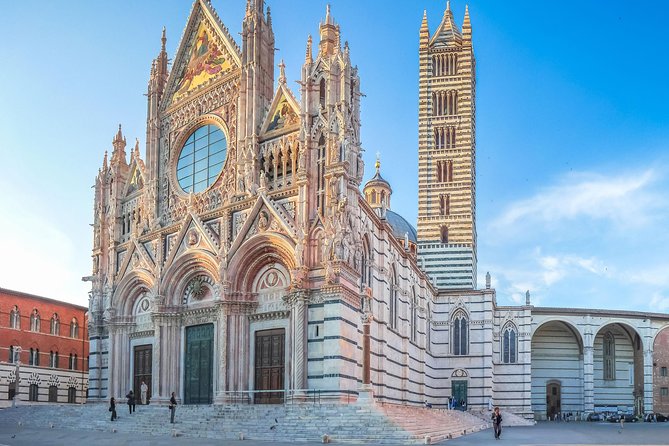
The maximum group size is 30. A group this large can still work well in Piazza del Campo, where there is room to spread out, but it becomes harder in narrow lanes and the Duomo.
One person found a group of 28 difficult to manage in crowded areas, especially inside the cathedral. If you prefer quiet, flexible sightseeing, a private guide or smaller group may suit you better. If you mainly want a structured overview at a moderate price, the group format keeps the cost reasonable.
The pace is steady but not punishing. The tour lasts about two hours, and the stops are spaced well: 20 minutes at San Domenico, five minutes at Piazza Salimbeni, 30 minutes in Piazza del Campo, 10 minutes at Palazzo Chigi Saracini, and 40 minutes in the Duomo.
Wear shoes made for cobblestones. Bring water if you need it, though food and drinks are not included. Since this is an outdoor walking route followed by church visits, check your clothing before leaving your hotel.
Who should book this Siena tour?
I would recommend it to a first-time visitor who wants the major central sights explained in one compact outing. It is also a good choice if you are arriving in Siena for a short stay and want to get your bearings before exploring alone.
It suits you if you enjoy local customs, civic history, architecture, and art in equal measure. The contrade and Palio material gives the tour a local angle that a basic sightseeing walk may miss.
Families and most reasonably mobile adults can participate, according to the stated conditions. The main challenge is the walking surface and the possibility of a full group. Anyone who has difficulty walking on uneven streets should consider that before booking.
Art lovers should see this as an introduction, not a complete study of the Duomo. The included guided entry is valuable, but you will need extra time afterward if you want to inspect every major work.
Booking timing and cancellation terms
This experience is often reserved about 34 days ahead, which suggests that popular dates can fill before a Siena visit. If your schedule is fixed, booking early is sensible.
You can cancel for a full refund up to 24 hours before the start time. Changes or cancellations made within 24 hours are not accepted for a refund. The tour also requires a minimum number of participants. If that minimum is not reached and the activity is canceled, you are offered another date or experience, or a full refund.
My verdict: a useful first chapter in Siena
Book this tour if you want Siena’s main sights tied together by local stories, especially the contrade and the Palio. The Duomo entry adds clear value, and the route finishes in the best possible place: inside one of Italy’s most striking cathedrals.
Skip it if you want a slow art tour, a private experience, or a walk with little attention to horse-racing culture. For most first-time visitors, though, the two-hour format is well judged. You get the city’s essential shapes, learn why Siena’s neighborhoods matter, and leave with enough time to return to the sights that caught your eye.
FAQ
Where does the tour begin?
The tour begins at Piazza San Domenico, Piazza S. Domenico, 53100 Siena, Italy.
Where does the tour end?
The tour ends inside the Siena Duomo at Piazza del Duomo.
How long does the experience last?
The tour lasts approximately two hours.
Is Duomo admission included?
Yes. Admission to the Siena Duomo and the guided Duomo visit are included.
Does the tour include skip-the-line access?
Yes. The experience includes fast-track entry to the Duomo.
What language is the tour offered in?
The tour is offered in English.
How much does the tour cost?
The listed price is $48.37 per person.
Is hotel pickup included?
No. Hotel pickup and drop-off are not included.
What clothing should I wear?
You need clothing that covers your shoulders and legs for the church interiors. Comfortable shoes suitable for cobblestone streets are also necessary.
How many people can join the tour?
The maximum group size is 30 people.
Can I cancel for a full refund?
Yes. You can cancel at least 24 hours before the start time for a full refund. Cancellations made less than 24 hours before the start time are not refunded.
Fresh on the Italy list
- Florence: Uffizi Guided Tour with Skip-the-Line Entry Ticket★ 4.8 · 499 reviews
- Milan: Last Supper and Sforza Castle Guided Tour★ 4.6 · 498 reviews
- Boat trip La Maddalena Archipelago – Departure from Palau★ 4.5 · 499 reviews
- Turin: Egyptian Museum Skip-the-Line Group Tour★ 4.7 · 500 reviews
- Exclusive Golf Tour Private VIP with Local & Gelato o Wine★ 5.0 · 500 reviews
- Itria Valley: Polignano, Ostuni, and Locorotondo, from Bari★ 4.6 · 502 reviews
- Colosseum, Palatine Hill and Roman Forum with Guided Tour★ 5.0 · 500 reviews
- Catania: Etna Nature Tour with Hiking, Cave Visit, & Tasting★ 4.7 · 502 reviews
Walking Tours, compared.
Guided Walking Tour & Last Supper Visit with Ticket
Read our review →
Rialto Bridge & Offbeat Unusual Venice Walking Tour
Read our review →
Private 3 hrs Venice Tour: St Mark’s, Walking tour & Boat tour
Read our review →
Skip the line: Uffizi and Accademia Small Group Walking Tour
Read our review →Browse the lists this tour appears in