
Reviewed · DESSERT TOURS
Rome: Trevi Fountain District Underground Tour and Ice Cream
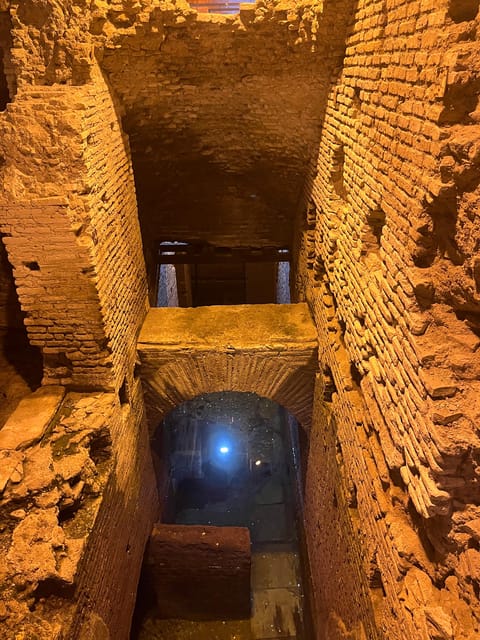
Beneath the crowds and selfie sticks at Trevi Fountain is a small but absorbing slice of ancient Rome. This one-hour tour leads you into the Vicus Caprarius archaeological area, where water from the ancient Virgo aqueduct still passes through Roman masonry and once supplied a luxurious Domus residence.
I like two things here. First, the archaeologist-led storytelling gives real meaning to Rome’s famous fountains instead of treating Trevi as a quick photo stop. Second, the gelato at the end is a smart finish, especially when you receive a voucher and can enjoy it at a convenient time near the fountain. The main drawback is scale: the underground site is compact, and the fountain portion may be viewed from the busy plaza rather than from a special close-up access point.
Key points to know before booking
- Roman water still shapes the story: See how the Virgo aqueduct fed buildings, pools, pipes, and the Trevi area.
- A small underground site with strong detail: The three antiquarian sections contain coins, amphorae, marble coverings, and sculpture fragments.
- Guides make the difference: Carla, Erika, Alessia, Noemi, Naomi, and others are praised for clear, warm, lively explanations.
- Only one hour long: The tour fits neatly into a morning or afternoon around Trevi Fountain.
- Gelato comes as a voucher: You choose when to use it at a historic shop near the fountain.
- Plan for steps and uneven ground: The site is not suitable for wheelchair users or people with mobility impairments.
Why Rome’s City of Water begins beneath Trevi Fountain
Trevi Fountain is usually treated as a grand Baroque showpiece. This tour gives you a different starting point. Before looking at the fountain as a work of art, you learn about the water that made this part of Rome useful, wealthy, and habitable.
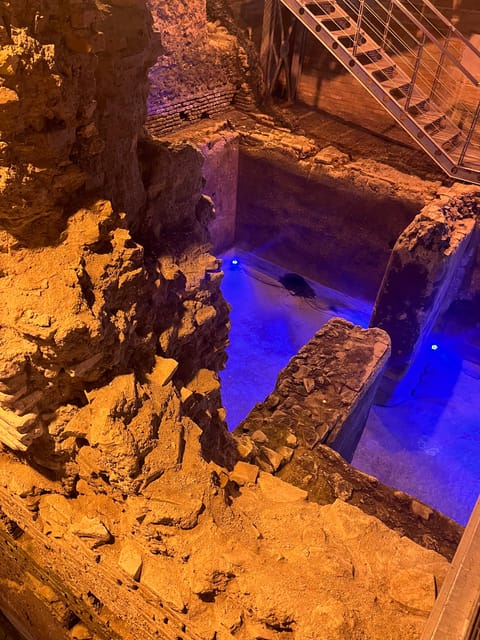
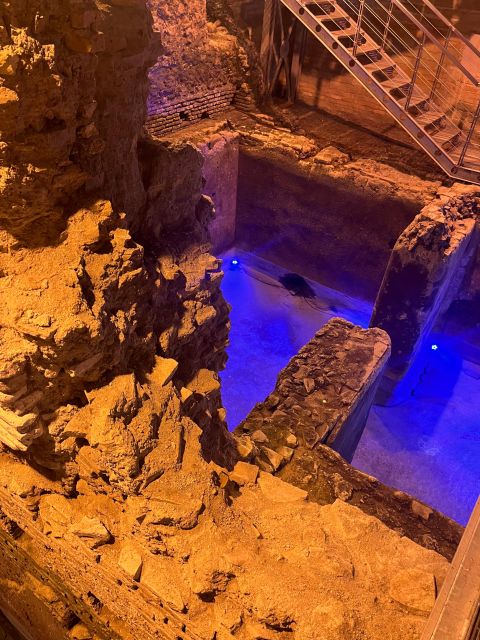
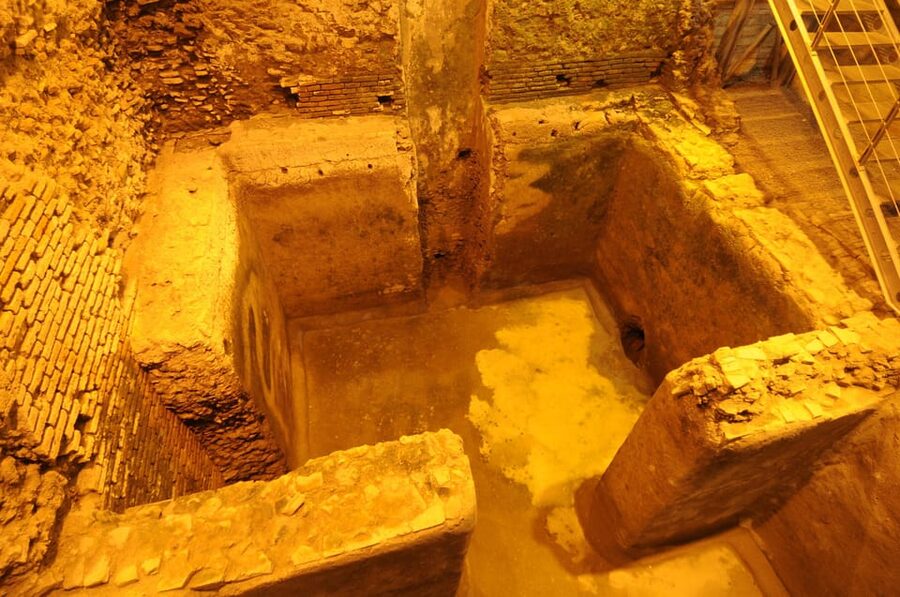
The underground Vicus Caprarius site reveals what Romans built below and around their streets. You will see ancient walls, water channels, and remains of a Domus residence, a large Roman house whose pools and pipes were supplied by the water system.
I like this approach because it connects a famous sight above ground with the less obvious machinery below. The fountain is not an isolated monument. It belongs to a much older story about aqueducts, masonry, urban growth, and the practical need to move clean water across Rome.
The tour is led in English, with assistance and a live guide. The guides named in the experiences include Carla, Erika, Alessia, Noemi, Naomi, Viola, Michelle, and Jesse. The strongest feature of the tour is not a grand interior or a long route. It is the way a good guide turns a compact excavation into a readable account of Roman life.
A few other Rome mornings to weigh against this
- Rome: Pasta Making Class with Wine, Limoncello, and Dessert
★ 4.9 · 3,177 reviews - Rome Cooking Class: Make Pizza and Pasta with Wine & Dessert
★ 4.5 · 651 reviews - Florence: Handmade Pasta & Dessert Class with Unlimited Wine
★ 4.8 · 788 reviews
Starting at Vicolo del Puttarello, 25
Your meeting point is at Vicolo del Puttarello, 25, close to Trevi Fountain. Arrive at least 15 minutes before your selected time. This matters in the Trevi area, where crowds can make a short walk feel slow, especially around the fountain plaza.
One booking arrived late after getting caught in the crowd, but the operator still allowed the group to join. Do not rely on that kindness, though. A punctual arrival makes the start calmer and gives you time to find the entrance without rushing.
Comfortable shoes are important. The tour is not suited to wheelchair users or people with mobility impairments, so check your own needs before reserving. The information supplied does not describe a long walk between sites, hotel pickup, or transportation. You make your own way to the meeting point.
The reserved entry ticket is included for Vicus Caprarius. The booking information also says skip the ticket line, while the exclusions say skip-the-line entry is not included. I would treat this as a reserved admission rather than a promise of priority access through every queue. The tour is short, so an efficient entry is useful, but the underground visit itself is the main reason to book.
Forty minutes beneath the Trevi District
The core of the experience lasts about 40 minutes at Vicus Caprarius. That is enough time for a guided explanation of the site, but not enough for a sprawling archaeological complex. Go in expecting close observation and interpretation, not a large museum with room after room.
The excavation is arranged in three sections of an antiquarian area. You move among ancient remains and displayed objects while the guide explains how the different layers fit together. This is where the idea of Rome as an underground lasagna becomes useful: the city was built, altered, repaired, and built over again.
The phrase is more than a joke. It helps you picture the layers beneath modern streets. One level may preserve an earlier Roman building, while later construction changes the function of the space above it. The site gives you a clear, physical look at this process.
The water story is the star. Water linked to the Trevi Fountain filters through the ancient masonry and continues through pipes and pools associated with the Domus. That detail makes the visit especially worthwhile for anyone interested in Roman engineering. You are not just looking at old walls. You are seeing how the city’s water supply affected private buildings and daily life.
The guide also explains why the Trevi area is called the City of Water. The name reflects the presence and importance of the aqueduct system, not just the modern fountain. You get a sense of how water could support comfort, status, sanitation, and public display.
The Domus residence and Roman private life
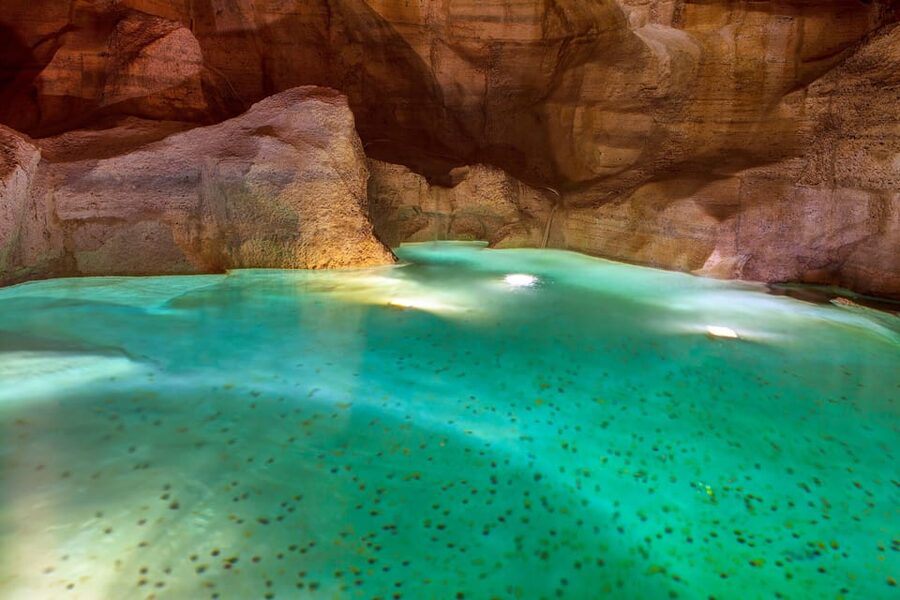
The remains of the Domus offer a useful change of scale. Trevi Fountain is public, theatrical, and enormous. The Domus is tied to private Roman life, with rooms, surfaces, pools, and water features that show how wealth could be expressed inside a residence.
The site includes precious polychrome marble coverings. These colorful stone surfaces help you imagine the original finish of the building, even when only sections remain. A guide can explain why a small piece of marble matters, since bare masonry alone rarely tells the whole story.
This is one reason I would not visit Vicus Caprarius without a guide if you can avoid it. The physical remains are limited, and some details may be easy to miss. A strong guide points out the relationship between the masonry, water routes, building levels, and decorative objects.
The guide names reported for this experience include Erika, Carla, Alessia, and Noemi, with many comments praising their warmth, humor, and ability to answer questions. Several guides also made the material easy for children to follow. That matters because Roman archaeology can quickly become a list of dates and technical terms. Here, the best explanations place the objects in the world of people who lived with the water system every day.
Same city, an entirely different afternoon:
- Vatican Museums & Sistine Chapel Tour with Optional Basilica
★ 4.3 · 67,413 reviews - Colosseum, Roman Forum & Palatine Guided Tour
★ 4.7 · 63,148 reviews - Vatican Museums, Sistine Chapel & St Peter’s Basilica Guided Tour
★ 4.5 · 39,149 reviews - Rome: Colosseum, Palatine Hill and Roman Forum Guided Tour
★ 4.8 · 32,814 reviews
Coins, marble, and an African amphora
The antiquarian sections contain several memorable finds. One is a famous head of Alessandro Helios. Another is a collection of 800 coins, described as a treasure trove found during excavation. A large coin group gives the guide a chance to discuss money, trade, and the sudden decisions that can leave a hoard buried for centuries.
You will also see the Spatheia, a special African amphora used to transport oil. This is a particularly useful object because it links the Trevi District to a wider Roman economy. An amphora is not just a container. Its shape, material, and origin can show how goods moved across the empire.
Ancient coins and amphorae dating to the Imperial Age add human scale to the water and architecture. Walls explain construction. Objects hint at the people, trade, habits, and wealth connected to the building.
The experience includes access to the antiquarian area, but it does not describe a large collection or extensive free time for independent study. If you want a full museum visit, this will feel brief. If you want a focused introduction to one archaeological site beneath a major Rome landmark, the compact format works well.
What you actually see at Trevi Fountain
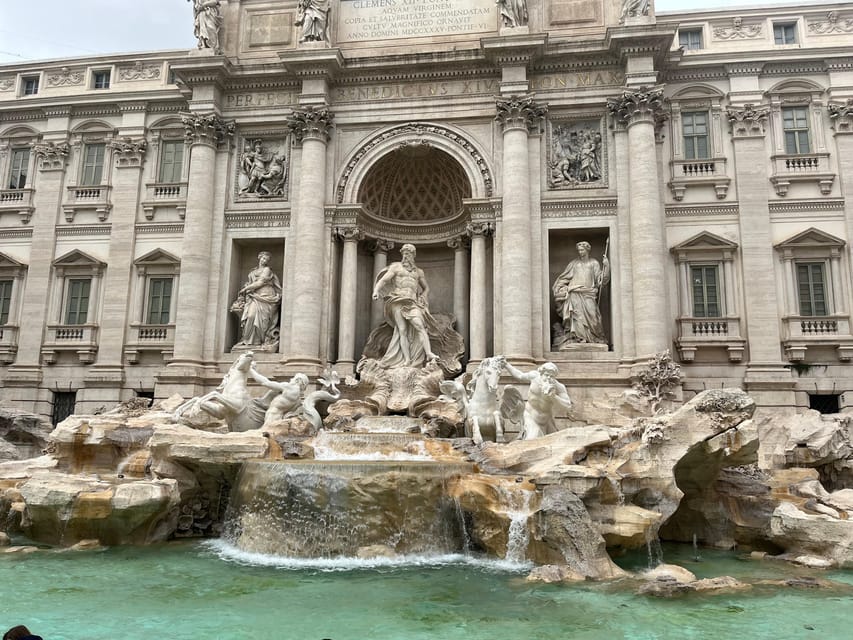
After the underground visit, the tour includes a short, roughly five-minute guided look at Trevi Fountain. The fountain is the largest Baroque fountain in Rome, and it is the obvious visual climax of the neighborhood.
You begin by making a wish at the fountain, then return to it after learning about the water system beneath the district. That sequence gives the fountain more context. You can look past the statues and theatrical stonework and think about the aqueduct water moving through the city.
Be aware of the viewing conditions. The tour does not promise a private area or a special close-up position. One experience found the fountain visible from the middle of the crowded plaza, with the guide explaining the exterior features from the crowd side. Another group was able to enter more closely with help from a guard, but that should be considered a fortunate circumstance, not a guaranteed part of the booking.
The fountain stop is short because the underground site carries most of the tour’s content. If you want a long Trevi Fountain photography session, plan extra time before or after the tour. Guides may offer useful picture tips, and one guide stayed longer to help with photos and nearby suggestions, but the advertised duration remains one hour.
Gelato at a historic shop
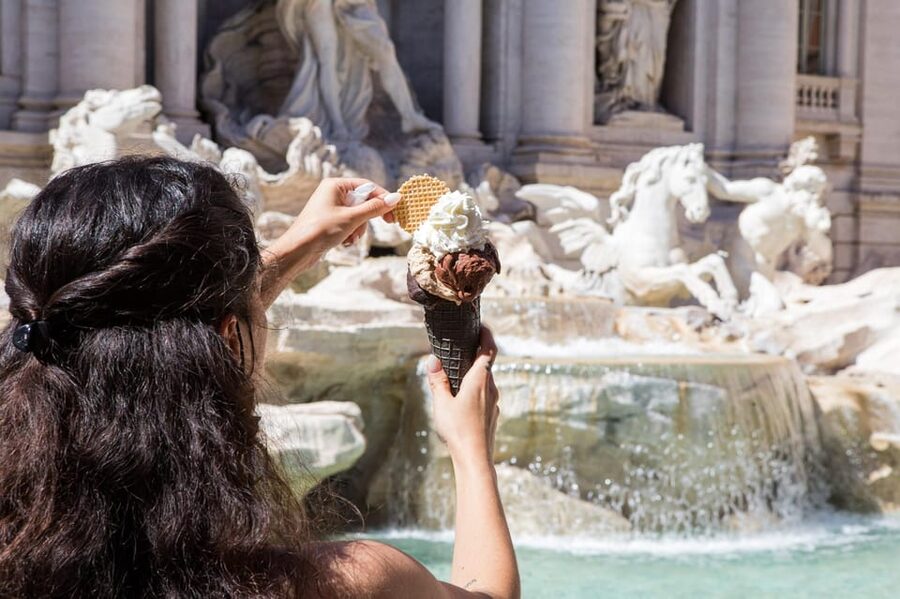
The final treat is Italian gelato at one of Rome’s historic ice cream shops near Trevi Fountain. This is included in the price, and it gives the tour a pleasant, low-key ending.
The gelato is not necessarily a sit-down tasting led by the guide. The practical detail is that you receive a voucher, then use it at the designated shop. You may be able to use it later rather than immediately, which gives you flexibility if you want to take photos, visit another nearby sight, or avoid eating dessert while the group is still moving.
That arrangement has a small advantage: you decide when the gelato fits your day. It also means the tour does not escort you through a formal tasting or explain the production process. You receive the included treat and choose your flavor at the shop.
Several experiences singled out the gelato as a very good finish. I see it as a useful bonus rather than the main reason to pay $52. The archaeological visit and guide-led interpretation carry the value. The gelato rounds out the hour and makes the tour feel less solemn after a concentrated look at ruins.
Is $52 good value for one hour?
At $52 per person, this is not a bargain-priced walk. You are paying for a reserved archaeological admission, an English-speaking guide, assistance, the Trevi Fountain visit, and gelato. There is no hotel pickup or drop-off, and the experience lasts only one hour.
The price makes more sense if you value interpretation. Vicus Caprarius is small, and the most interesting parts are the links between the aqueduct, ancient masonry, Domus pools, sculpture, coins, and amphorae. A guide who explains those links can make a short visit feel substantial.
The cost is less appealing if you mainly want to see Trevi Fountain. The fountain itself is free to view in the public plaza, and the guided stop is brief. You should book this for the underground archaeology and water history, with the fountain and gelato as useful additions.
I also like that the tour is easy to fit into a busy Rome schedule. One hour leaves room for the Pantheon, Spanish Steps, shopping, or a meal nearby. It can also provide a cool break from summer heat, since the underground area is noticeably cooler according to one experience.
Who will get the most from this tour?
I would choose this for you if Roman engineering, aqueducts, archaeology, and the way cities grow over old cities all hold your attention. It is also a good pick if you have already visited Rome’s major monuments and want a less obvious site near a place you will probably see anyway.
The tour suits families when the guide is patient and lively. Several guides were praised for keeping children engaged, and the use of headsets was appreciated because the guide did not need to shout. That said, the underground space is compact and the material is historical, so very young children may not find every explanation easy to follow.
It works well for first-time visitors, too. The guide can supply background about ancient Rome, the aqueduct, and the fountain in a single short session. You do not need to be an archaeology specialist to follow the story.
I would think twice if you have mobility limits, dislike enclosed or uneven archaeological spaces, or want a long, leisurely tour. The activity specifically excludes wheelchair users and people with mobility impairments. I would also skip it if your main goal is privileged access to the fountain itself.
Practical advice for a smooth visit
Wear comfortable shoes and arrive 15 minutes early. The meeting point is near one of Rome’s most crowded attractions, and the plaza can slow you down.
Keep your expectations clear. The underground site is small but dense with detail. Give yourself time to look closely at the marble, masonry, objects, and water routes rather than expecting a long walk through many rooms.
Use the fountain stop for orientation and photos, but reserve extra time if photography matters to you. The five-minute guided section is not designed to replace a separate visit to Trevi Fountain.
Remember that the gelato is provided through a voucher. You can use it at the historic shop near the fountain, and the timing may be flexible. Ask for any details you need before the guide leaves the group.
The activity is offered in English. Free cancellation is available up to 24 hours before the start time, and the reserve-now, pay-later option can help if your Rome plans are still shifting.
Should you book it?
Book this tour if you want to understand what lies beneath Trevi Fountain rather than simply photograph what is above it. The combination of the Virgo aqueduct, ancient water channels, Domus remains, Imperial Age objects, a compact guided excavation, and gelato creates a neat one-hour package.
I would call it a strong choice for history and architecture fans, especially those who appreciate clear storytelling from guides such as Carla, Erika, Alessia, Noemi, and Naomi. I would not book it solely for close-up fountain access, since that is not guaranteed and the fountain portion is short.
For $52, the value rests on the guide and the archaeological context. If those matter to you, this is a practical way to see a quieter side of the Trevi District. If you only need a fountain visit, spend the money on gelato and explore the plaza on your own.
FAQ
How long does the tour last?
The activity lasts one hour. About 40 minutes are allocated to the guided Vicus Caprarius visit, followed by a short guided look at Trevi Fountain and the gelato stop.
Where is the meeting point?
Meet at Vicolo del Puttarello, 25. You should arrive at least 15 minutes before your selected start time.
Is the tour offered in English?
Yes. The tour includes a live English-speaking guide.
Is entry to Vicus Caprarius included?
Yes. A reserved entry ticket and the guided tour of Vicus Caprarius are included.
Is a skip-the-line ticket included?
The activity information refers to skipping the ticket line, but also lists skip-the-line entry among the exclusions. Treat the admission as reserved entry, and confirm the current arrangement when booking.
Is Trevi Fountain admission included?
A Trevi Fountain access ticket is listed among the inclusions. The guided fountain portion lasts about five minutes and may take place from the public plaza.
Is gelato included?
Yes. Italian gelato is included. You receive a voucher for gelato at a historic shop near Trevi Fountain.
Can I use the gelato voucher later?
The activity information says the voucher can be used at the gelato shop, and one experience reported being able to use it at a later time rather than only immediately after the tour.
Is the tour suitable for wheelchair users?
No. The activity is not suitable for wheelchair users or people with mobility impairments.
Can I cancel for a refund?
Yes. You can cancel up to 24 hours in advance for a full refund. A reserve-now, pay-later option is also available.
Fresh on the Rome list
- Rome: Guided Catacombs Tour & Capuchin Crypt (Audio Guide)★ 4.3 · 191 reviews
- Guided tour of the Colosseum, Roman Forum and Palatine in Spanish★ 4.5 · 191 reviews
- Rome: Borghese Gallery Guided Tour with Skip-the-Line Ticket★ 4.5 · 192 reviews
- Rome: Arena Colosseum Tour with Arena Access★ 4.6 · 193 reviews
- Colosseum, Forum, Palatine Hill with audio guide and Arena or Bus option★ 4.0 · 193 reviews
- Rome: Colosseum & Roman Forum Guided Tour★ 5.0 · 194 reviews
- Rome: Domus Aurea Guided Tour and Virtual Reality Experience★ 4.7 · 194 reviews
- Rome by Night Private Walking Tour★ 5.0 · 194 reviews
Dessert Tours, compared.
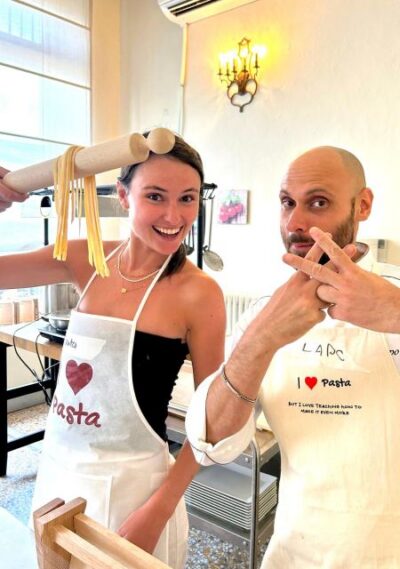
Pasta Making Class with Wine, Limoncello, and Dessert
Read our review →
Handmade Pasta & Dessert Class with Unlimited Wine
Read our review →
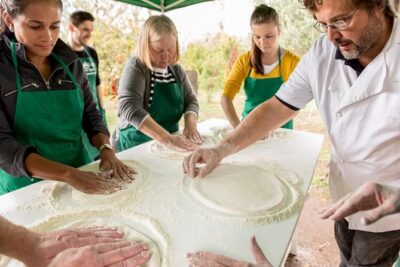
Rome Cooking Class: Make Pizza and Pasta with Wine & Dessert
Read our review →Browse the lists this tour appears in