
Reviewed · CONCERTS
Rome: “The Most Beautiful Opera Arias” Concert
Rome’s Waldesian Church concert offers something the big opera houses cannot: you sit only a few feet from the singers and pianist. In this warm, modest setting near Piazza Venezia, famous Italian arias carry through the room without a wall of orchestra or a distant stage. The result feels personal, direct, and easy to follow.
I like the short running time, which makes this a smart evening choice after a full day of Roman sights. I also like the musical menu: familiar pieces from La Traviata, Turandot, Rigoletto, and Tosca, mixed with Neapolitan songs and Vivaldi. The main thing to consider is that the concert can feel closer to 50 minutes than the advertised 70, and the simple church setting may not suit anyone expecting a full theatrical production.
Key points at a glance
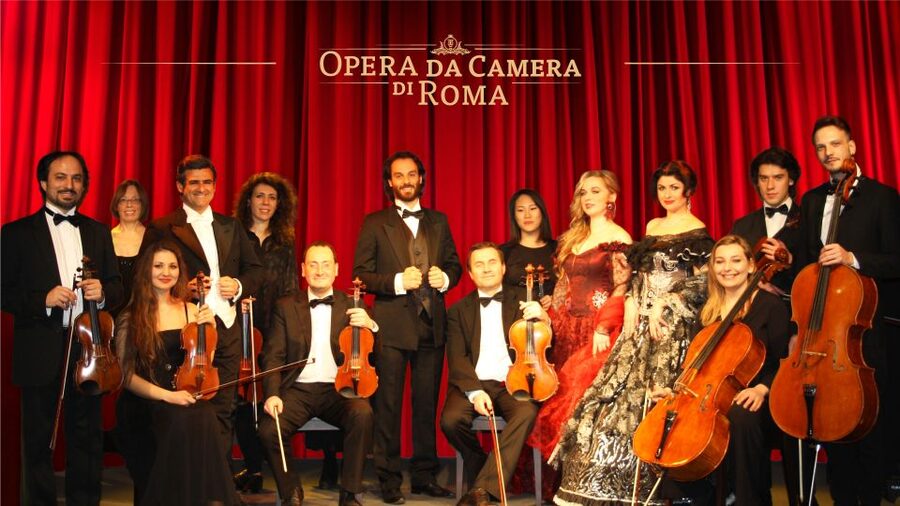
- Arias near Piazza Venezia: The church sits just meters from one of central Rome’s main squares, making it easy to add to an evening walk.
- Close-up music: The small hall brings the singers and pianist unusually near, with excellent acoustics and little distance between you and the performance.
- Familiar Italian favorites: Expect selections linked to La Traviata, Turandot, Rigoletto, Tosca, Neapolitan songs, and Vivaldi’s Four Seasons.
- A good first opera: The accessible program and 50-minute format work well for children, teenagers, and first-time listeners.
- Strong value at $40: You receive a live concert by opera soloists and a pianist in a central Rome location, with no need to commit to a long formal evening.
- Simple, not theatrical: Seating and lighting are practical rather than grand, and the exact meeting point and performers can vary by booking option.
Why this small Rome concert works
Opera can seem like a serious commitment. You picture a grand theater, a long story in Italian, formal clothes, and several hours in a seat. This concert takes a different path. It gives you a compact selection of arias and songs, performed by two singers with piano accompaniment, so you get the emotional force of opera without needing to know the plot first.
That makes it especially useful if you are curious about opera but unsure where to begin. You do not need a background in classical music to recognize the shape of the evening. A soaring soprano line, a powerful tenor aria, and the familiar melodies of Italian opera make the music understandable through feeling alone.
The setting helps. The Waldesian Church is not presented as a full opera house, and it does not try to be one. Its modest interior creates a close concert climate, with the piano and voices filling the room naturally. The acoustics are one of the strongest parts of the experience, letting you hear the singers clearly without the volume becoming overpowering.
At $40 per person, I consider this a fair price for a live performance in central Rome. You are paying for the ticket only, but you are also getting a convenient location and a format that fits neatly into a sightseeing day. A full opera at a major theater costs more and requires a bigger time commitment. This is a smaller musical outing, but the price reflects that.
A few other Rome mornings to weigh against this
- Rome: Opera Concert at Palazzo Poli – Fontana di Trevi
★ 4.7 · 1,026 reviews - Rome: The Three Tenors at St. Paul’s Church Concert Ticket
★ 4.7 · 699 reviews - The Great Opera Arias Concert at Palazzo Poli – Trevi Fountain
★ 5.0 · 533 reviews
Arriving near Piazza Venezia
The church is only a short distance from Piazza Venezia, one of Rome’s easiest central reference points. That location matters because you can pair the concert with an evening around the square, the Roman Forum area, or the streets leading toward the Pantheon and Trevi Fountain.
Your exact meeting point can vary according to the option you book, so check the address and map before setting out. This is not a guided walking tour, and hotel pickup and drop-off are not included. You make your own way there, with an English- or Italian-speaking host or greeter helping you at the venue.
That independent arrival is simple, but give yourself enough time to find the church. Rome’s center can be confusing after dark, especially around large squares where several streets meet. The directions are intended to be clear, yet I would still save the address on your phone and avoid arriving at the last minute.
At the door, a host shows you to your pew. That small touch is useful in a church setting, particularly if seating is not assigned in a way that is obvious from outside. The atmosphere is informal rather than ceremonial, so you can settle in without the pressure that sometimes comes with entering a grand concert hall.
Inside the Waldesian Church
The Waldesian Church is warm and comfortable, but it is not a lavish concert theater. Expect a simple church interior adapted for music, with pew seating and a piano at the front. The appeal is the room’s acoustic character, not ornate stage design.
The small scale brings a real advantage. You are close enough to watch the singers’ expressions and hear the pianist’s work clearly. One of the most interesting parts of a piano-and-voice concert is noticing how much the pianist shapes the performance, following the singers closely and setting the pace between arias.
The seating is worth keeping in mind. One attendee found some seats uncomfortable and noted that a few needed repair. Another felt that a premium seat did not provide the expected position. These points do not define the concert, but they are good reasons to arrive with realistic expectations and to check exactly what your selected seating option includes.
The lighting is also basic. If you want theatrical spotlights, elaborate staging, or costumes, this may feel plain. The church supplies the atmosphere, while the music does most of the work.
The opening songs and piano
The concert begins with the piano establishing the tone, followed by the singers and the first selections. The program is designed as a sequence of recognizable pieces rather than a single opera performed from start to finish. That structure keeps the pace moving and gives you a broad sample of Italian vocal music.
The pianist is not just background support. The piano carries the orchestral role, providing melody, rhythm, and dramatic tension while leaving room for the voices. Performers vary, but Roberto has been identified as both host and pianist on some evenings. Other performances have featured pianists named Julia, so you should not assume one fixed cast when booking.
This changing lineup is common for concert programs of this sort, and it means the exact balance between voices and personalities may differ from one date to another. The quality praised most consistently is the musicians’ ability to work as a trio, especially the pianist’s sensitivity to the singers.
The host may also add a little explanation or humor. At some performances, the audience has been taught Italian words and invited to join in. That kind of light interaction can make the concert less formal and help younger listeners stay engaged.
Same city, an entirely different afternoon:
- Vatican Museums & Sistine Chapel Tour with Optional Basilica
★ 4.3 · 67,413 reviews - Colosseum, Roman Forum & Palatine Guided Tour
★ 4.7 · 63,148 reviews - Vatican Museums, Sistine Chapel & St Peter’s Basilica Guided Tour
★ 4.5 · 39,149 reviews - Rome: Colosseum, Palatine Hill and Roman Forum Guided Tour
★ 4.8 · 32,814 reviews
Familiar arias from famous operas
The core of the program draws from well-known Italian operas. Selections may include music from La Traviata, Turandot, and Rigoletto, with Tosca also represented in at least one performance by the famous tenor aria E lucevan le stelle. The exact running order can change, so think of these titles as likely highlights rather than a guaranteed set list.
This choice of music is one reason the concert works for newcomers. You are not asked to follow a complex story or remember a cast of characters. Instead, you hear some of opera’s most direct musical moments, each one built to express love, loss, longing, pride, or despair in a few powerful minutes.
The soprano often receives especially strong attention. Several performances have highlighted the female singer’s control and emotional force, with one listener describing the voice as moving enough to bring tears. The tenor has also been praised for dramatic delivery, and sometimes for a playful or comic presence between songs.
That contrast helps the evening avoid becoming a solemn wall of sound. A good aria needs drama, but a little humor from the performers gives the program breathing room. You may find the balance particularly helpful if you are attending with teenagers or with someone who has never chosen to hear opera before.
Neapolitan songs and Vivaldi
The program is not limited to opera. Neapolitan songs add a more familiar, songlike quality, often making the evening feel less formal and more connected to Italian popular tradition. These pieces can be easier for a first-time listener to enter because they are usually more immediately melodic than a long operatic scene.
Vivaldi’s Four Seasons adds a different color. It is not an opera selection, but its inclusion broadens the concert beyond vocal showpieces and gives the pianist a chance to display another side of the repertoire. You should not expect the full orchestral version, since this is a piano-led performance, but the piece helps create variety.
The mixture is well suited to a short concert. A program made only of heavy dramatic arias could feel intense, while a program made only of light songs might lack contrast. Moving among opera, Neapolitan music, and Vivaldi gives the 50-minute format a clear sense of movement.
How long the concert really feels
The supplied duration is listed as 50 minutes, while the description also refers to a 70-minute journey. In practice, plan for roughly 50 minutes of performance, with some attendees finding that the concert lasted closer to that figure than to 70 minutes. There is no need to build an entire evening around it.
That short format is a major plus in summer, when you may not want to sit through a long indoor performance after hours in the heat. It also works well before dinner or after an early meal, since you can continue your night in the Piazza Venezia area.
The trade-off is obvious. If you want a complete opera, multiple scenes, an orchestra, costumes, and a large stage, this will feel abbreviated. If you want a concentrated taste of Italian opera, the length is about right.
There may be an encore, especially when the audience is small and the performers have room to extend the evening. Do not count on one when planning your schedule, but it can be a pleasant extra.
Who will enjoy this most
I would recommend this concert to first-time opera listeners, couples looking for a cultured evening, and families who want to introduce children to classical music without asking them to sit still for several hours. A short sequence of recognizable arias is easier for young listeners than a full production in an unfamiliar language.
It is also a good choice for mixed-age groups. The program includes serious vocal pieces, lighter moments, and songs that do not require you to understand every word. Teenagers may be more receptive than expected, especially because the performers are close and the host can keep the mood friendly.
You should also consider it if you have already spent the day visiting museums and ancient sites. Rome’s major attractions can be tiring, and this offers a calm change of pace without sending you across the city. The central address makes it practical for an evening itinerary.
Opera specialists may want more. The piano arrangement cannot reproduce the force of a full orchestra, and the small venue lacks the visual spectacle of a major production. Still, the close view of the singers can offer its own reward, especially if you care more about voice and phrasing than scenery.
Practical value and small drawbacks
The $40 ticket is good value if you treat this as a polished introduction to opera rather than a substitute for Teatro dell’Opera di Roma. You get live singers, a pianist, a central location, and a program filled with familiar music. For many visitors, that is enough to make the evening worthwhile.
The venue’s simplicity keeps the concert accessible, but it also limits the sense of occasion. Seating may not be perfect, lighting is not highly theatrical, and the room can feel underfilled on some dates. A sparse audience does not stop the music, though it can make the event feel less like a major Roman night out.
There is no guide in the usual sightseeing sense. You receive the address and make your own way to the church, then a host helps you inside. If you want detailed explanations of each opera, translations, or a lecture on Italian musical history, check what your particular booking option includes before you pay.
Free cancellation up to 24 hours before the start gives you useful flexibility, and reserve-now-pay-later booking can help when your Rome schedule is still shifting. Parking and hotel transfers are not included, so plan on reaching the central venue independently.
Should you book The Most Beautiful Opera Arias?
Book it if you want a compact, central, and personal introduction to opera. The voices and piano are the main event, and the church’s acoustics put you close to the music. At $40, it is an easy addition to a Rome itinerary, especially before dinner or after an evening stroll.
Skip it if you need a full-scale opera production with orchestra, scenery, costumes, and a guaranteed 70-minute program. Also keep your seating expectations modest. For everyone else, this is a practical way to hear famous Italian music in Rome without turning the night into a major commitment.
FAQ
Where does the concert take place?
The concert takes place in Rome’s Waldesian Church, located just meters from Piazza Venezia in central Rome.
How long does the concert last?
The listed duration is 50 minutes. The description also refers to 70 minutes, but you should plan for about 50 minutes of performance.
What music is performed?
The program can include arias from La Traviata, Turandot, Rigoletto, and Tosca, along with Neapolitan songs and Vivaldi’s Four Seasons.
Is this a full opera production?
No. This is a concert of opera arias and songs, performed by opera soloists with piano accompaniment. It does not present a complete opera with a full orchestra, costumes, or staged scenes.
Is the concert suitable for people who have never attended opera?
Yes. The short format and familiar music make it a practical first opera experience, and it can also suit teenagers and children.
What is included in the ticket?
The opera concert ticket is included. Parking and hotel pickup and drop-off are not included.
Can I cancel my booking?
You can cancel up to 24 hours in advance for a full refund. Reserve-now-pay-later booking may also be available, depending on the option selected.
What languages are available?
The host or greeter can communicate in English and Italian. The music itself includes Italian opera and songs.
Fresh on the Rome list
- Exclusive Golf Tour Private VIP with Local & Gelato o Wine★ 5.0 · 500 reviews
- Colosseum, Palatine Hill and Roman Forum with Guided Tour★ 5.0 · 500 reviews
- Rome Trastevere Pasta Making Class with Eating Europe★ 5.0 · 505 reviews
- Rome by Night Walking Tour★ 4.5 · 506 reviews
- Rome: Colosseum Express Tour with Forum & Palatine Access★ 4.5 · 511 reviews
- Rome Food Experience Max 6 People Group Tour | w/Private Option★ 5.0 · 516 reviews
- Rome: Navona Square Underground Ticket with Audio Guide★ 4.0 · 518 reviews
- Rome: Escorted Papal Audience Experience with Entry Ticket★ 4.4 · 518 reviews
Concerts, compared.
Interpreti Veneziani Concert at Church of San Vidal
Read our review →
Santa Monaca Church Italian Opera Concert Ticket
Read our review →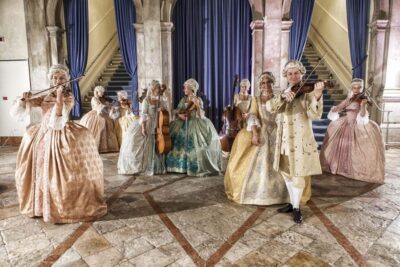
Vivaldi’s Four Seasons Live Classical Music Concert
Read our review →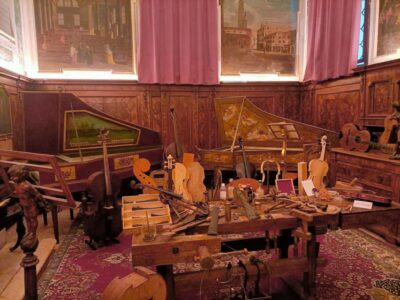
Vivaldi’s Four Seasons Concert & Music Museum Visit
Read our review →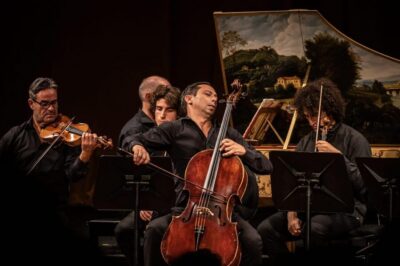
Vivaldi Four Seasons Concert at Vivaldi Church
Read our review →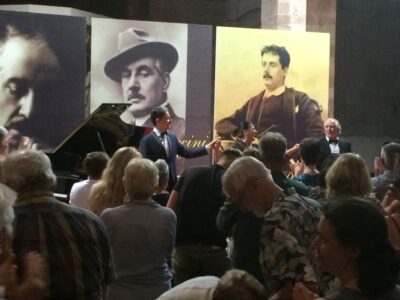
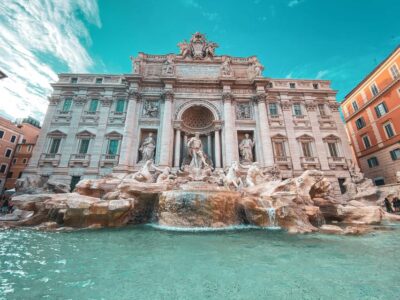
Opera Concert at Palazzo Poli – Fontana di Trevi
Read our review →Browse the lists this tour appears in