
Reviewed · WALKING TOURS
Rome: Fountains and Squares Small-Group Walking Tour
Rome’s grandest sights line up neatly on this 2.5-hour walk from the Spanish Steps to the Trevi Fountain. Along the way, you’ll step inside the Pantheon, study Bernini’s fountains, see Raphael’s tomb, and look up at one of Rome’s cleverest painted ceilings.
I like the route because it gives you a quick grasp of central Rome without wasting time on buses or taxis. I also like the guides’ lively style. Stefano, Bruno, Matteo, Paolo, and Andrea are among the guides praised for humor, patience, and strong storytelling. The main drawback is that the walk is almost entirely outdoors, so rain, cold, heat, and crowded streets can affect your comfort.
Key points
- Spanish Steps starting point: Meet by the Keats and Shelley Museum, in front of the Acqua di Parma store.
- Bernini’s boat fountain: See the Fontana della Barcaccia at Piazza di Spagna before walking uphill toward Trinità dei Monti.
- Piazza Navona and the ancient stadium: Compare Baroque Rome with the Stadium of Domitian, built in 85 A.D.
- Pantheon interior: Go inside one of the best-preserved ancient Roman buildings on the route.
- Sant’Ignazio’s false dome: See an impressive trompe l’oeil ceiling that creates the illusion of a real dome.
- Trevi Fountain finale: Toss in a coin and finish among Rome’s most famous crowds.
Why this short walk works so well in Rome
Rome can feel scattered at first. Ancient ruins sit beside Renaissance palaces, churches hide behind ordinary-looking facades, and a grand fountain may appear at the end of a narrow lane. This route helps you make sense of that mix on foot.
You begin at the Spanish Steps and move through a compact part of the historic center. The stops are close enough to connect naturally, yet each one opens a different chapter of Rome: late Renaissance church design, Baroque sculpture, imperial architecture, Christian art, and modern movie associations.
At $45.55 per person, this is not the cheapest way to see Rome’s center. But the price is reasonable if you want a live English-speaking guide, an organized route, and the chance to enter the Pantheon without having to build the walk yourself. The group can reach up to 20 people, though some sessions have been much smaller, even just two participants.
That smaller feel matters. You can hear the guide more easily, ask a question, and keep the group together around busy squares. The strongest guides, especially Stefano, are praised for keeping the pace moving while adding jokes and useful advice about what to see next.
More Walking Tours in Rome
- Rome: Trastevere & Campo de Fiori Street Food Walking Tour
★ 4.9 · 2,768 reviews - Rome: Paranormal Night Walking Tour & Secret Backstreets
★ 4.9 · 1,921 reviews - Rome by Night Walking Tour – Legends & Criminal Stories
★ 4.5 · 1,003 reviews
Starting at the Spanish Steps and Keats Shelley Museum
The meeting point is by the entrance to the Keats and Shelley Museum at the bottom of the Spanish Steps. Look for a guide wearing a GETYOURGUIDE badge or holding a matching sign.
Arrive 10 minutes early. The Spanish Steps area is busy, and a late arrival can be a real problem. One particularly useful piece of advice from the tour information is to have your voucher ready, and printed if required for the booking. Do not count on joining if you are only a few minutes late.
The steps themselves rise toward Trinità dei Monti, the late Renaissance church at the top. The walk’s opening is visually strong, but it is not a museum visit focused on the Keats Shelley Museum. The museum serves mainly as a clear meeting landmark.
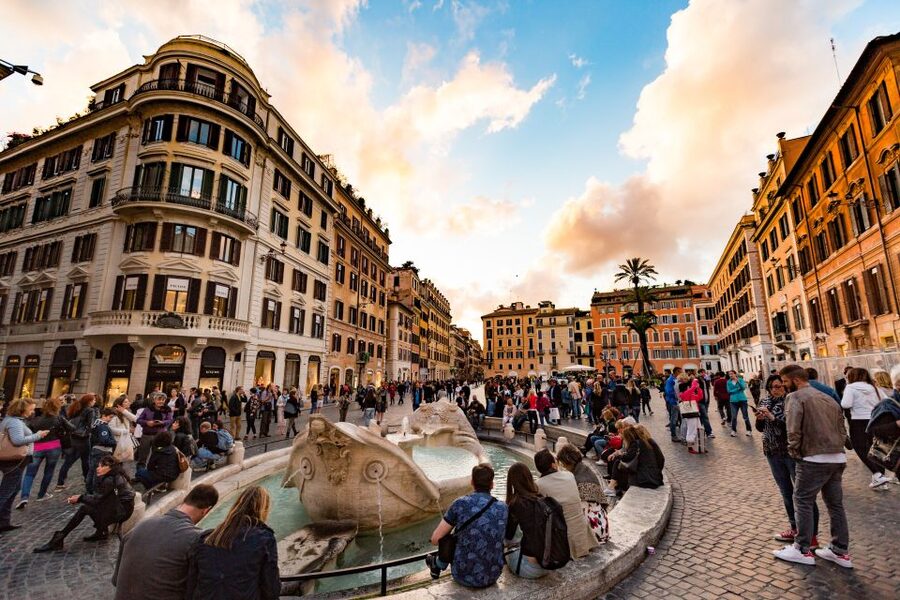
You’ll soon get your first look at Bernini’s work in the Fontana della Barcaccia, the half-sunken boat fountain at the foot of the steps. Its low shape is not accidental. The fountain was designed to look as if it is partly floating or settling into the square.
This is a useful first lesson in Roman Baroque design. Rome’s fountains were not placed only for decoration. They helped shape public spaces, guided movement, and turned everyday water sources into grand works of art.
From Trinità dei Monti to Piazza Navona
After the Spanish Steps, the walk heads toward Piazza Navona. This stretch connects elegant central streets with one of Rome’s most famous public squares.
Piazza Navona occupies the site of the Stadium of Domitian, built in 85 A.D. for athletic games. The long, oval shape of the modern piazza follows the earlier stadium. Once you know that, the square feels less like a random Baroque plaza and more like a city space that has been reshaped over many centuries.
Today, Piazza Navona is one of the clearest expressions of Baroque Rome. Its fountains, church facade, and surrounding buildings were designed to impress from a distance and reward closer attention.
The centerpiece is Bernini’s Fountain of the Four Rivers. The four monumental figures represent the Danube, Ganges, Nile, and Rio de la Plata. Your guide will explain the symbolism and the personalities behind the design, which makes the fountain easier to read than it would be during a quick solo visit.
Piazza Navona can also be one of the most crowded parts of the walk. Stay close to the guide, especially when the group stops near the fountain. A group of 10 is easier to manage than 20, and one of the practical advantages of a small group is getting near enough to hear without standing directly in the guide’s path.
Entering the Pantheon
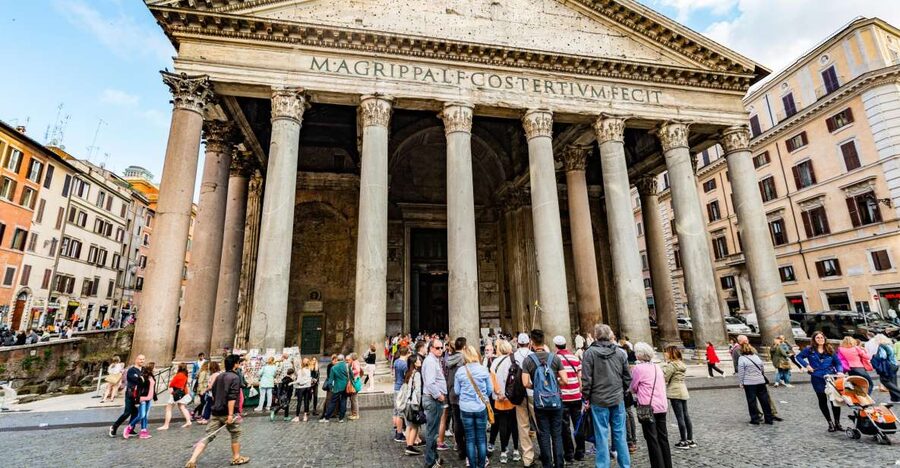
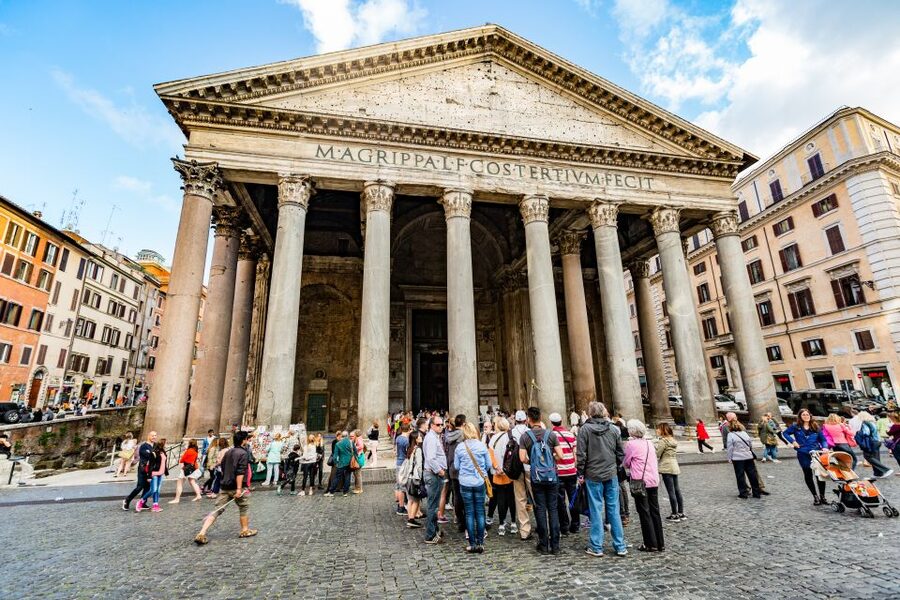
The Pantheon is the most important indoor stop on this route. It began as a Roman temple and remains remarkably intact, making it easier to picture ancient Roman building methods here than at many ruined sites.
The interior is famous for its enormous concrete dome and central opening, but the value of entering goes beyond taking a photograph. You can look up through the oculus, examine the scale of the interior, and see how the building has continued to serve a purpose long after its original Roman use.
The tour description also highlights the tomb of Raphael. The celebrated Renaissance painter is buried inside the Pantheon, giving the building a direct link to the artistic world that shaped later Rome.
Your guide’s explanation is especially useful here because the Pantheon can be confusing when approached alone. You might notice the massive columns and the dome, but miss how unusual it is to find an ancient structure still in such complete form.
Allow yourself a little patience at this stop. The group may need to enter together, and the interior can be busy. The itinerary is timed as a walking overview, not as a long art lecture, so you should expect a focused explanation rather than an extended visit.
Same city, an entirely different afternoon:
- Vatican Museums & Sistine Chapel Tour with Optional Basilica
★ 4.3 · 67,413 reviews - Colosseum, Roman Forum & Palatine Guided Tour
★ 4.7 · 63,148 reviews - Vatican Museums, Sistine Chapel & St Peter’s Basilica Guided Tour
★ 4.5 · 39,149 reviews - Rome: Colosseum, Palatine Hill and Roman Forum Guided Tour
★ 4.8 · 32,814 reviews
Marcus Aurelius and the story carved in stone
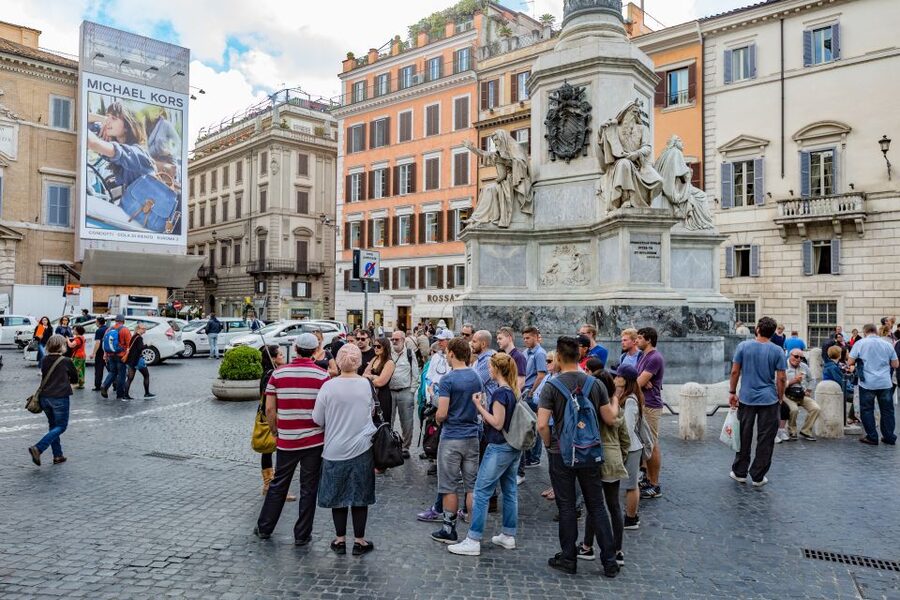
After the Pantheon, the route continues to the Column of Marcus Aurelius. Its carved scenes spiral upward around the column, recording military campaigns from the emperor’s reign.
The column is easy to pass without a guide. It stands in a busy urban setting, and the reliefs are high above eye level. A guide helps you understand what you are looking at and why the monument belongs in a tour about Rome’s changing public spaces.
The walk also points out scenes associated with the movie Gladiator. That connection adds a pop-culture hook, though you should not expect a film-location tour. The main focus remains the monument and the city around it.
This part of the route is a good reminder that Rome works on several time scales at once. A Roman imperial column can sit near Renaissance churches, Baroque fountains, shops, restaurants, and modern traffic. The tour keeps bringing those layers together.
Sant’Ignazio and the painted false dome
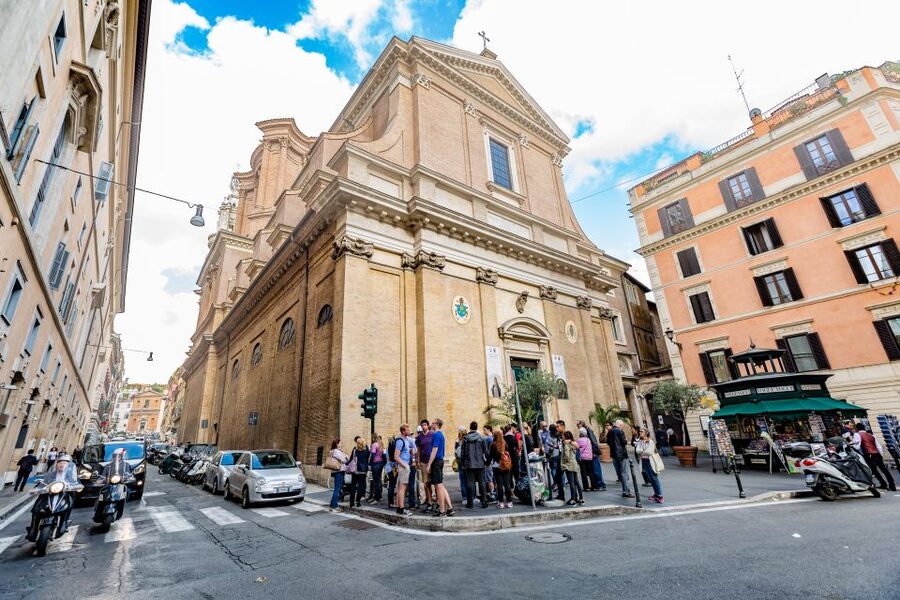
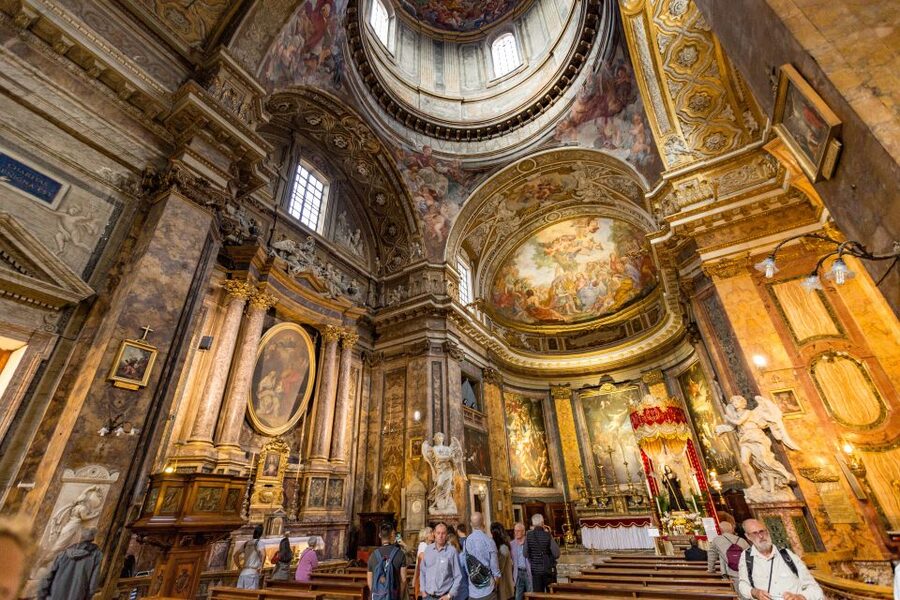
Sant’Ignazio Church is one of the more rewarding stops because it is easy to miss if you are rushing between the major sights. Inside, you’ll see a celebrated example of trompe l’oeil, a painted illusion designed to make a flat surface appear three-dimensional.
The effect is most striking when you stand in the right place and look upward. A painted ceiling gives the impression of a full architectural dome, even though the illusion is created with perspective and paint.
This is a short visit, but it adds variety to the tour. The Pantheon gives you ancient engineering. Piazza Navona gives you open-air Baroque sculpture. Sant’Ignazio shows how artists could create grandeur even when a church lacked the resources for a built dome.
Wear suitable clothing for this stop. The tour enters churches and other religious or historic spaces, so your shoulders and knees should be covered. Shorts, short skirts, and sleeveless shirts are listed as unsuitable. A light scarf or wrap is a smart addition to your day bag, though large bags and oversize luggage are not allowed on the tour.
Finishing at the Trevi Fountain
The Trevi Fountain is the natural climax of the route. It is much larger and more theatrical than many first-time visitors expect, especially when you see it framed by the surrounding buildings.
The traditional coin toss is included in the tour’s spirit. Throw a coin into the fountain if you want to follow the familiar Roman custom of hoping to return one day.
Expect crowds here. The fountain is one of Rome’s most popular sights, and the final stop can feel less relaxed than the earlier churches. One useful point from the practical information is that the walk’s published route ends at Trevi Fountain, while the meeting-point details also describe the activity as ending back at the meeting point. Confirm the exact end point when you book or ask the guide at the start, since this affects your plans afterward.
One person found the Trevi stop a little rushed, possibly because of rain and the need to keep the group moving. That is worth keeping in mind. The tour gives you an introduction and a good view, but it is not designed for a long, unhurried photo session at every monument.
The guides make the difference
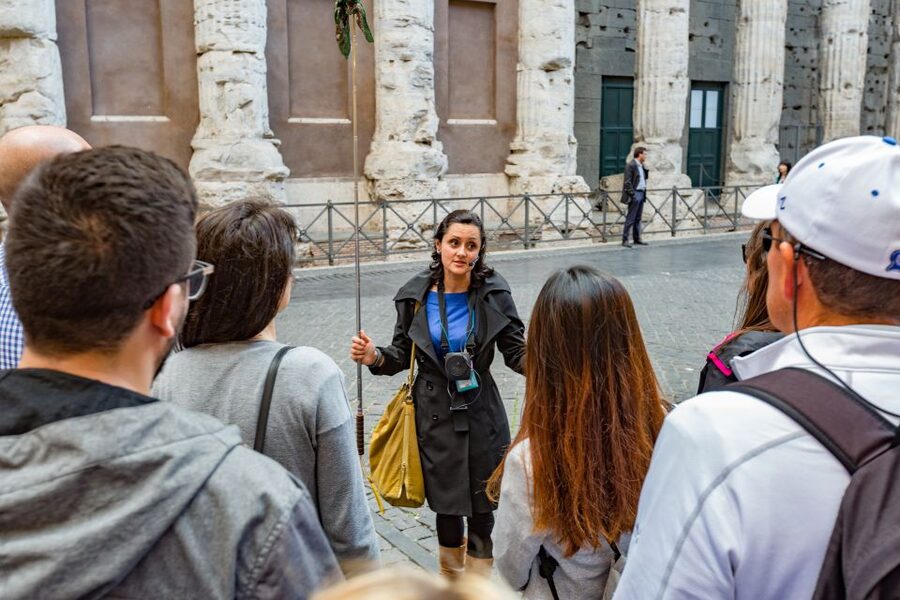
A walking tour rises or falls on the person holding the sign. This one has several guide names associated with especially strong sessions.
Stefano is repeatedly praised for humor, energy, and his ability to keep information clear. Bruno is described as personable and flexible, with one tour including a surprise tiramisu treat. Matteo is noted for enthusiasm and a respectful manner, even in heavy rain. Paolo’s walk was described as a highlight of a longer Rome visit, while Andrea is praised for explaining the sights and offering ideas for other places to visit.
You should not assume that you can request a particular guide unless the booking system allows it. Guides can change, and the experience will depend partly on who leads your departure.
Still, the pattern is clear: the best version of this tour is not a dry list of dates and names. It is a moving conversation through Rome, with historical facts, local humor, and practical suggestions. Several tours continued in unpleasant weather, including a cold, pouring December morning, because the guide kept the group interested.
The tour is conducted in English, and translating for other members of the group is not allowed. That rule keeps the pace fair and makes sense in a group setting, but it means you should be comfortable following spoken English for the full walk.
Is the $45.55 price good value?
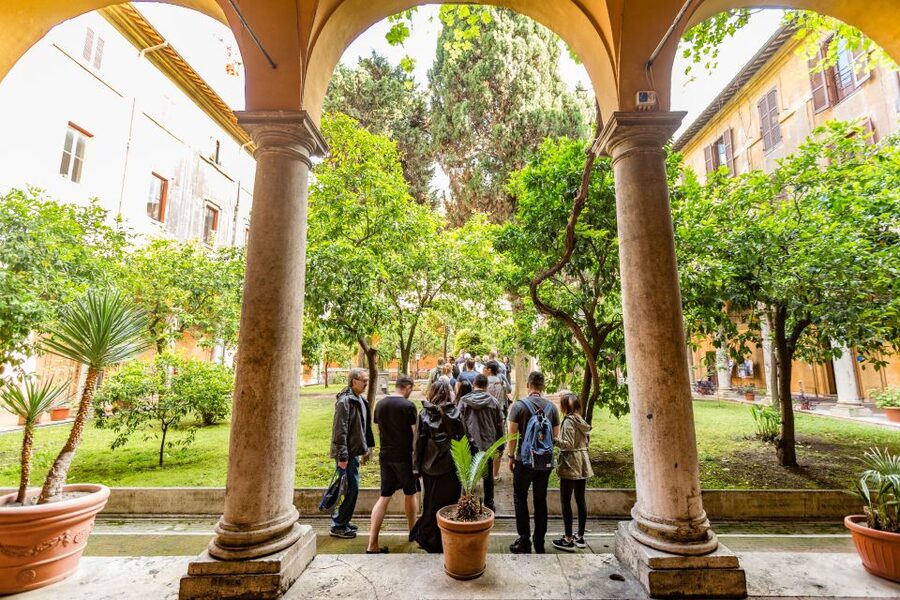
At $45.55, this is a mid-priced orientation walk rather than a bargain stroll. The value comes from the route, the licensed guide, the Pantheon visit, and the time saved planning the order of the sights.
You are paying for context as much as access. The Spanish Steps, Piazza Navona, Pantheon, Marcus Aurelius Column, Sant’Ignazio, and Trevi Fountain are all possible to visit independently. But a guide can show you the relationship between them and point out details you might otherwise walk past.
The tour is most useful near the beginning of your Rome stay. One guide specifically suggested using it early to get your bearings, and that is sound advice. Afterward, you will know where Piazza Navona and the Pantheon sit in relation to Trevi Fountain, and you can return later for a slower look.
The price is less attractive if you want long stops, extensive indoor time, or a specialist art lecture. This is a brisk city walk with several stops, not a private tour or a full treatment of each monument.
Food and drinks are not included. One guide may offer a small treat, as Bruno apparently did with tiramisu, but do not book expecting refreshments. There is also a gelato recommendation built into the guide’s local advice, yet you will need to pay for anything you buy separately.
Who should book this Rome walk?
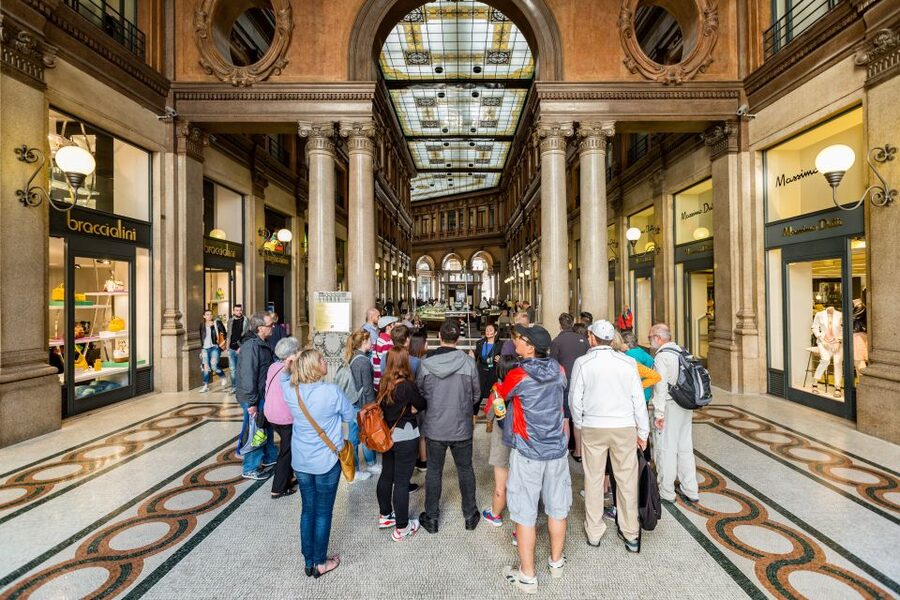
I would choose this tour if you want a first look at central Rome and prefer a guide who can connect art, architecture, and ancient history without making you study beforehand.
It suits adults, older children, and teenagers who can manage two and a half hours on foot. The activity is not suitable for children under 10, wheelchair users, or anyone bringing a stroller. Large bags, oversize luggage, pets, smoking, and food or drinks are not allowed.
Comfortable shoes matter. Rome’s historic center is best handled at walking pace, and even a relatively short route can feel tiring if your footwear is poor. Dress for church entry, and prepare for weather since most of the experience takes place outside.
This is also a good choice for a short Rome stay. In two hours, you get a useful run through major sights without committing a whole day. Pair it with a separate visit to the Colosseum and Roman Forum, since this route does not cover those sites.
Practical details before you reserve
The group maximum is 20 people. Smaller departures can feel almost private, while a full group requires more attention to where you stand and how quickly you move between stops.
The guide is licensed and English-speaking. The tour does not provide food or drinks, and translating during the walk is not allowed.
You can cancel up to 24 hours before the start for a full refund, and the reserve-now, pay-later option gives you some flexibility while finalizing your Rome plans.
Plan to arrive early, wear comfortable clothing, and bring something that covers your shoulders and knees. Since strollers and wheelchairs cannot manage this itinerary, check those limits before booking rather than treating them as minor details.
Should you book it?
Book this tour if you want a lively, well-organized introduction to Rome’s central fountains, churches, and squares, especially on your first day or two. The route packs in genuine highlights, and strong guides such as Stefano and Bruno can turn a busy walk into an enjoyable lesson.
Skip it if you dislike group pacing, need extensive time at each monument, or want a tour built around one subject in great depth. The walk can be affected by rain and crowds, and the Trevi Fountain stop may feel brief.
For most visitors who want to understand how Rome’s ancient, Renaissance, and Baroque layers fit together, the $45.55 cost is fair. Wear good shoes, arrive early, and keep your expectations focused on a smart city overview rather than a slow museum visit.
FAQ
How long is the Rome fountains and squares walking tour?
The tour lasts about 2.5 hours. Starting times vary, so check availability when booking.
Where does the tour meet?
Meet by the entrance to the Keats and Shelley Museum at the bottom of the Spanish Steps, in front of the Acqua di Parma store.
How do I identify the guide?
The guide will wear a GETYOURGUIDE badge or hold a sign with the same logos.
What language is the tour conducted in?
The live tour is conducted in English.
What sights are included?
The route includes the Spanish Steps, Trinità dei Monti, Piazza Navona, the Stadium of Domitian, the Pantheon, the Column of Marcus Aurelius, Sant’Ignazio Church, and the Trevi Fountain.
Can I go inside the Pantheon?
Yes. The tour includes an interior visit to the Pantheon, including the tomb of Raphael.
Is food or drink included?
No. Food and drinks are not included, and eating or drinking during the tour is not allowed.
What should I wear?
Wear comfortable shoes and clothing. Since the tour enters churches and some monuments, your shoulders and knees should be covered.
Is the tour suitable for wheelchair users or strollers?
No. The route is not suitable for wheelchair users, and strollers cannot be used on the tour.
Can I cancel for a refund?
Yes. You can cancel up to 24 hours in advance for a full refund. You can also reserve now and pay later.
Fresh on the Rome list
- Rome: Guided Catacombs Tour & Capuchin Crypt (Audio Guide)★ 4.3 · 191 reviews
- Guided tour of the Colosseum, Roman Forum and Palatine in Spanish★ 4.5 · 191 reviews
- Rome: Borghese Gallery Guided Tour with Skip-the-Line Ticket★ 4.5 · 192 reviews
- Rome: Arena Colosseum Tour with Arena Access★ 4.6 · 193 reviews
- Rome: Colosseum & Roman Forum Guided Tour★ 5.0 · 194 reviews
- Colosseum, Forum, Palatine Hill with audio guide and Arena or Bus option★ 4.0 · 193 reviews
- Rome: Domus Aurea Guided Tour and Virtual Reality Experience★ 4.7 · 194 reviews
- Rome Vintage Fiat 500 car Tour With Photographer★ 5.0 · 194 reviews
Walking Tours, compared.
Guided Walking Tour & Last Supper Visit with Ticket
Read our review →
Rialto Bridge & Offbeat Unusual Venice Walking Tour
Read our review →
Private 3 hrs Venice Tour: St Mark’s, Walking tour & Boat tour
Read our review →
Skip the line: Uffizi and Accademia Small Group Walking Tour
Read our review →Browse the lists this tour appears in