
Reviewed · POMPEII & VESUVIUS TOURS
Pompeii: Group Tour with an Archeologist Guide
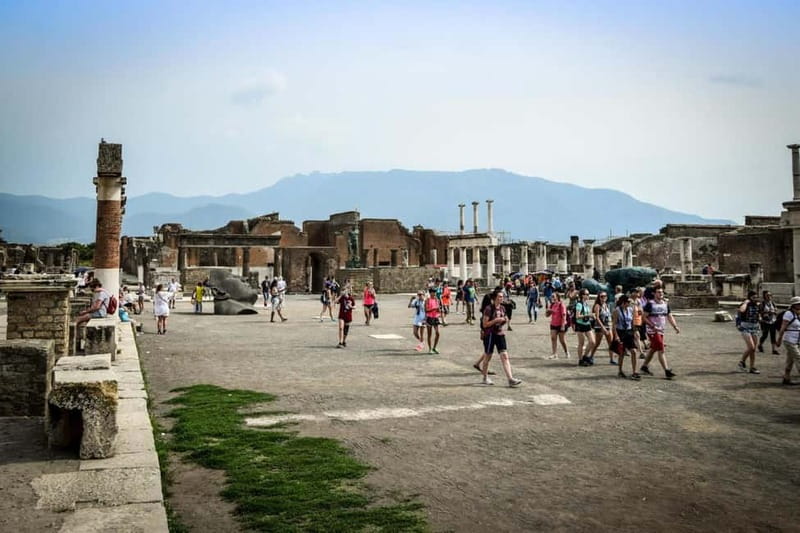
Pompeii is not just a field of broken stones. It is a Roman city caught in the middle of daily life, with bakeries, baths, theaters, temples, homes, and streets still laid out beneath Mount Vesuvius. This two-hour tour with an archeologist guide gives you a clear route through the most important western section, where a solo visit can quickly become a hot, confusing march.
I like the skip-the-ticket-line entry and the practical route through the Forum, Basilica, baths, Lupanar, theaters, and famous houses. I also like the human touch provided by guides such as Lena, Laura, Alfonso, Giuseppe, and Eraldo, who have been praised for clear storytelling and good pacing. The main drawback is the large-group format, which can feel less personal, and two hours is enough for an overview, not every corner of Pompeii.
Key points to know before booking
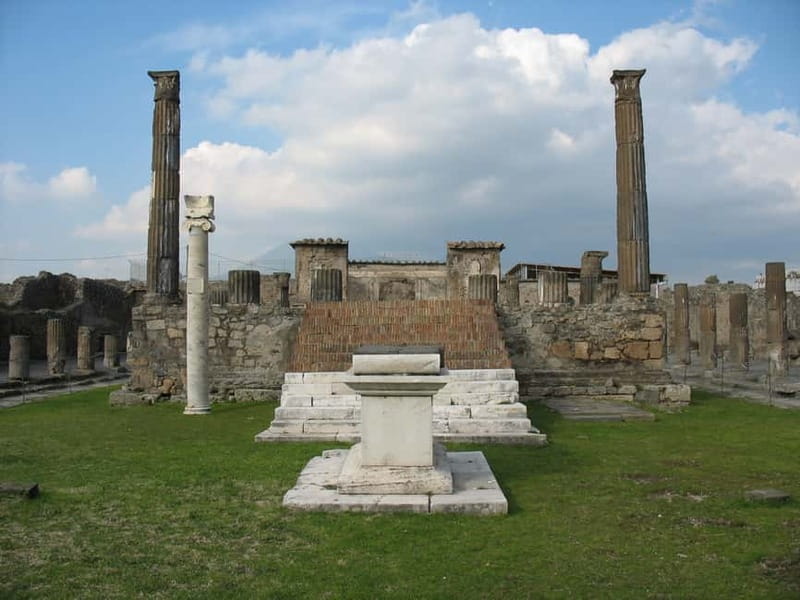
- Porta Marina is your gateway: Meet at Tempio Travel near the Circumvesuviana train station, then enter Pompeii through the main western entrance.
- The route covers major sights: Expect the Forum, Basilica, baths, Lupanar, theaters, central streets, plaster casts, and several named houses.
- An archeologist adds useful context: Guides including Lena, Laura, Alfonso, Giuseppe, Antonio, and Eraldo have been praised for lively explanations and Roman history.
- Two hours keeps the visit manageable: Pompeii is enormous, and this shorter route helps you see important areas without spending a full day in the heat.
- Headsets help in a group: Whisper systems are provided for larger groups, though the earpiece may feel a little uncomfortable.
- Bring only the basics: Comfortable shoes and a passport or ID card are required. Large bags and luggage are not allowed.
Meeting at Tempio Travel beside Pompeii station
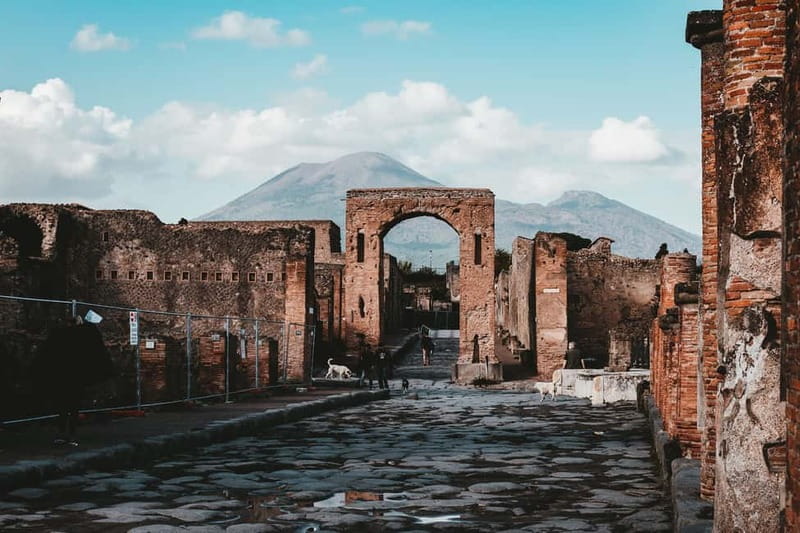
The tour begins at the Tempio Travel office on the first floor of the Circumvesuviana train station. Look for the building with the red logo and allow a little time to find the office before the scheduled start.
This meeting point is useful if you are arriving by train, since you do not need to cross town to join the group. The guide gathers everyone at the office before leading the group toward Pompeii’s archaeological entrance. The official meeting point is not inside the ruins, so do not head straight to the site and expect to find the guide there.
The visit ends back at the meeting point. In practice, you can remain in the archaeological area after the guided portion if you want to continue exploring, as several tour participants have done. Confirm the exact arrangements with the guide before separating from the group.
You will need an ID card or passport, even though this is a short local tour. Leave suitcases and large bags elsewhere. Free parking may be available, but only if the parking area is open and spaces remain, so I would not build an entire transport plan around it.
A few other Pompeii mornings to weigh against this
- Pompeii: Entry Ticket and Guided Tour with an Archaeologist
★ 4.8 · 19,459 reviews - Pompeii: Entry Ticket with Optional Audio Guide
★ 4.2 · 12,360 reviews - Pompeii: Small Group Tour with an Archaeologist
★ 4.8 · 12,264 reviews
Entering through Porta Marina and the western city
The group enters through Porta Marina, one of Pompeii’s best-known gates. This entrance gives you an immediate sense of the city’s scale and helps set the scene before the main monuments appear.
Pompeii was buried by the eruption of Mount Vesuvius in 79 AD. Ash and volcanic material covered streets, buildings, household objects, wall paintings, and the remains of people. That sudden burial is what makes the site so powerful: you are not looking only at isolated monuments, but at the plan of a working Roman town.
The western section contains many of the city’s most important public buildings. A guide matters here because the ruins do not always explain themselves. A wall may look plain until you learn what it was used for, and a wide paved street becomes more meaningful when you understand how people moved through the city.
The opening part of the tour is also where a group can lose time. Pompeii has uneven paving and crowded passageways, so stay close and use the provided whisper headset if your group is large. The headset lets you hear the guide without everyone having to gather tightly around one spot.
The Forum, Basilica, and public heart of Pompeii
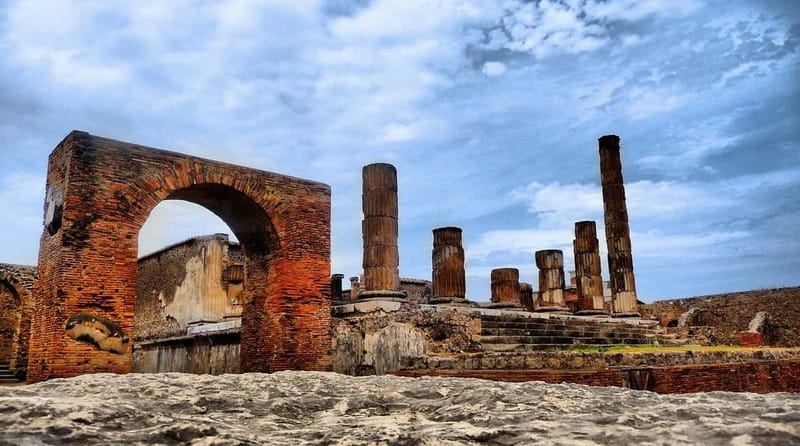
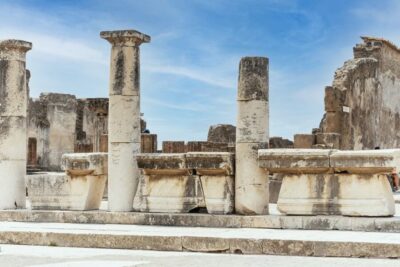
The Forum is the natural center of the tour. This large public space was where civic, religious, commercial, and social life came together. It offers one of the clearest ways to understand Pompeii as a city rather than a collection of houses.
Nearby, the Basilica shows the formal side of Roman public life. It was used for legal and business matters, and its scale helps you picture the importance of the Forum district. Your guide can point out the relationship between these buildings, which is easy to miss if you simply follow the streets without a plan.
I especially like having this context early in the visit. Once you understand the public center, the private homes and entertainment buildings later in the route make more sense. You begin to see how Roman life moved between government, religion, business, leisure, and home.
The Forum is exposed, with limited shade. On a hot day, the stone reflects the sun and two hours can feel plenty long. Wear sturdy, comfortable shoes, carry water if permitted, and consider a hat. One family found the afternoon heat intense enough to buy a paper umbrella outside the entrance.
Baths, theaters, and the Lupanar
The tour continues to several buildings that show how Pompeii’s residents spent their free time. The baths reveal the social side of Roman life. They were not simply places to wash, but public spaces where people could meet, relax, and follow familiar routines.
The theaters bring a different mood. Their design gives you a sense of Roman entertainment and the importance of performance in civic life. The route includes the theaters rather than leaving you to find them on your own, which is valuable in a site where a wrong turn can cost a great deal of walking.
The Lupanar, Pompeii’s famous brothel, is one of the most talked-about stops. It is compact and can draw a crowd, so you may not have much time to linger. The guide’s explanation helps place it within the wider city instead of treating it as a quick novelty.
The main street provides another useful lesson. Pompeii’s roads, raised sidewalks, entrances, and building fronts show how residents navigated the city. You will get more from these ordinary details when the guide points them out than you would by photographing them without explanation.
Same city, an entirely different afternoon:
- Pompeii Small Group Tour with an Archaeologist
★ 5.0 · 6,593 reviews - Pompeii: Skip-the-Line Entrance Ticket with Audio Guide
★ 4.0 · 2,509 reviews - Naples: Pompeii and Mt. Vesuvius with Lunch and Wine Tasting
★ 4.5 · 2,454 reviews - Pompeii: Archaeological Park Tour with Ticket on request
★ 4.5 · 2,283 reviews
Plaster casts and the Garden of the Fugitives
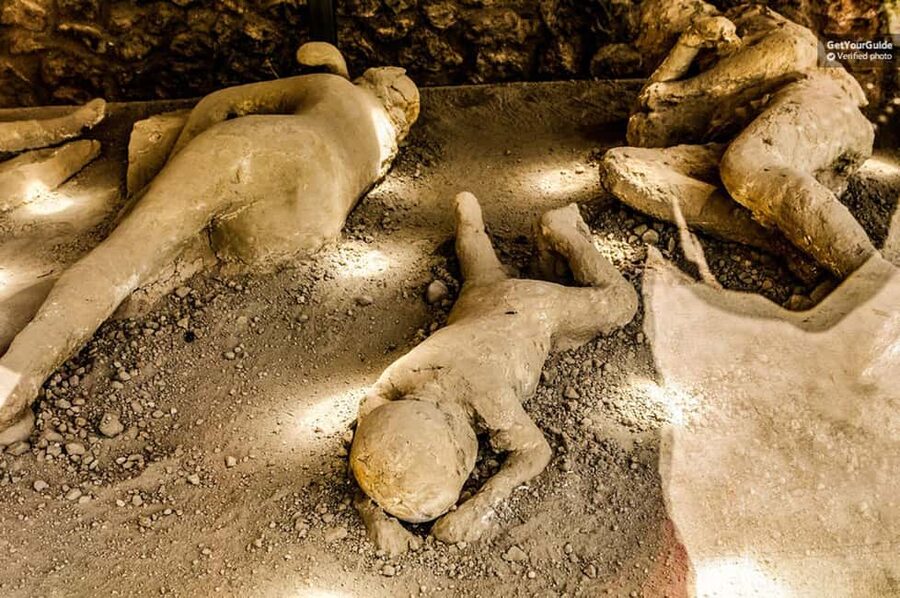
The plaster casts are among the most affecting parts of the visit. Archaeologists used empty spaces left in the hardened volcanic material to create casts of bodies, preserving the final positions of Pompeii’s citizens.
This is a difficult sight, and it deserves a respectful approach. The casts are not decorative objects. They are a direct reminder that Pompeii was a living city when the eruption struck. A guide can provide the needed background without turning the moment into spectacle.
The Garden of the Fugitives adds another layer to this part of the visit. Its name refers to the people who tried to escape the eruption. Seeing it after the public buildings and homes gives you a stronger sense of Pompeii’s human scale.
If you are visiting with children, the subject may need a little preparation. One guide named Lena was praised for working patiently with children between eight and twelve, but the casts and the story behind them can still be serious. Parents should decide how much detail suits their family.
Pompeii’s famous houses and their frescoes
The route includes the House of the Tragic Poet and the House of the Golden Cupid, along with other named homes. These houses help you picture how wealthy residents arranged private life around courtyards, gardens, reception rooms, and painted walls.
The frescoes are a major reason to take the tour. Pompeii is famous for wall paintings that retain color and detail despite the city’s destruction. A guide can help you notice scenes, decorative choices, and the position of rooms instead of reducing every house to a quick photo stop.
The House of the Tragic Poet is especially useful for understanding how Roman homes were presented to visitors. The House of the Golden Cupid adds another example of domestic decoration and status. You may not have enough time to study every room, but the guide gives you a framework for recognizing the differences between public-facing spaces and more private areas.
This is one place where the group format has both strengths and limits. The guide can move efficiently between the most important rooms, but you may need to wait for other people to take photographs. If you want long, quiet study of frescoes, plan to return after the tour if the day’s access allows it.
What the archeologist guides add

The strongest feature of this experience is the person leading it. The archeologist guide does more than point toward ruins. The guide connects the buildings, explains what they were for, and helps you picture ordinary life before the eruption.
Several guides have drawn particularly warm praise. Alfonso was described as detailed, attentive to questions, and good at keeping the subject lively. Giuseppe was praised for passion and strong knowledge of Pompeii and Roman history. Lena and Laura were noted for clear explanations, humor, patience, and a good pace.
Eraldo, also listed in some feedback as Ernaldo, was praised for being informative and engaging. Antonio led a tour successfully in rainy weather, showing that the visit can continue when conditions are less ideal. These names do not guarantee who will lead your departure, but they give you a sense of the guide team’s range.
The best guides use short stories and questions to keep you involved. One guide encouraged the group to guess what they were seeing before explaining it. That approach works well at Pompeii because so many details are easy to overlook.
The tour is offered in English or Italian. Large groups receive whisper headsets. One person found the earpiece slightly uncomfortable, but still considered it useful. I would take the headset, especially if you are near the back of the group.
Is $50.11 good value for two hours?
At $50.11 per person, this is not the cheapest way to enter Pompeii. You are paying for the skip-the-line ticket, the live archeologist guide, and the structure of a carefully selected route.
The value is strongest if you have limited time or this is your first visit. Pompeii is so large that wandering without a plan can leave you tired before you find the Forum, theaters, major houses, or plaster casts. A guide also helps you understand why a plain wall, street, or room matters.
The price is less compelling if you already know the site well or want a slow, independent day. Two hours gives you a solid introduction, but it cannot cover all of Pompeii. You may still want extra time afterward for areas outside the western route.
For cruise passengers and day visitors, the time savings are important. The guided route gets you into the site and toward the key monuments without spending part of your visit working out the layout. The guide’s final suggestions can also help you use the rest of the day in the modern city.
Heat, rain, crowds, and walking
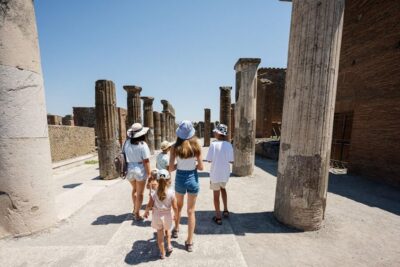
Pompeii is an outdoor archaeological site. Weather affects the experience more than the short duration might suggest. The heat can be strong even in the afternoon, and there is not always shade when you need it.
Comfortable shoes are essential. The ancient paving is uneven, and the route involves walking through open streets and building remains. This activity is not suitable for people with mobility impairments, so consider that carefully before booking.
Rain does not automatically cancel the visit. One tour continued successfully on a wet day, but you should bring your own umbrella or raincoat. Roadside stalls outside the entrance may sell rain gear, but you should not count on buying supplies inside the site.
Groups can be fairly large. That may mean waiting at popular buildings and listening through a headset instead of standing close to the guide. On the positive side, the guides are expected to keep the group together and maintain a steady pace. If a personal, quiet tour is important to you, a private option may suit you better.
Planning the rest of your Pompeii day
At the end of the guided walk, ask the guide for suggestions for the modern city of Pompeii. The Sanctuary Dedicated to Our Lady of the Holy Rosary is only a few steps from the archaeological site and provides an easy addition to your day.
You can also continue exploring the ruins after the two-hour tour if access and timing work for you. This is the best way to handle the experience if you want both expert guidance and independent time. Let the guide show you the essential areas first, then use the remaining hours for photographs or a slower look at buildings that interested you.
Do not book the first Sunday of the month assuming free entry will make the day simple. Admission is free then, but tickets cannot be reserved ahead of time and entry is not guaranteed. The skip-the-line benefit also matters less if you arrive when access is already easy, though the guide remains useful.
Free cancellation is available up to 24 hours before the start, and you can reserve now and pay later. Those policies are helpful if your Campania plans depend on trains, weather, or a cruise schedule.
Should you book this Pompeii tour?
Book it if you want a well-organized first look at Pompeii, especially if you have only two or three hours, are visiting from a cruise, or would rather not decode the ruins alone. The guides’ clear explanations, the direct entry, and the route through major buildings make the price reasonable for many first-time visitors.
Skip it if you want a full-day archaeological study, dislike group tours, or need a slower route because of mobility limits. You will see the highlights, not every street and house.
For most first visits, I would book the tour, wear good shoes, bring protection from sun or rain, and plan to stay in Pompeii afterward if you have the energy. Two hours with a good guide can turn a huge ruin into a city you can actually understand.
FAQ
How long does the Pompeii group tour last?
The guided tour lasts two hours. You can check available starting times when booking.
Where do I meet the guide?
Meet at the Tempio Travel office on the first floor of the Circumvesuviana train station near Pompeii. The office has a red logo.
Where does the tour enter Pompeii?
The guided visit enters the archaeological site through Porta Marina.
Which languages are available?
Live tours are available in English and Italian.
Are skip-the-line tickets included?
Yes. The price includes skip-the-line entrance tickets and the two-hour guided tour.
What should I bring?
Bring a passport or ID card and comfortable shoes. Sun or rain protection is also sensible because much of Pompeii is outdoors.
Can I cancel or pay later?
You can cancel up to 24 hours before the tour for a full refund. You can also reserve your place and pay later.
Fresh on the Pompeii list
- Stories of Pompeii: Small Group tour with archeology expert guide★ 5.0 · 191 reviews
- Mount Vesuvius: Vineyard Tour with Wine Tasting and Lunch★ 4.8 · 193 reviews
- Pompeii: Skip-the-Line Guided Tour with Expert Archaeologist★ 4.8 · 196 reviews
- Pompeii: 2 Hour Private Tour with an Archeologist Guide★ 5.0 · 214 reviews
- Pompeii: Skip-the-Line Entry & Audioguide★ 3.8 · 225 reviews
- Herculaneum: Tickets & Tour with a Local Archaeologist★ 4.8 · 226 reviews
- Pompeii and Mount Vesuvius Small Group Tour★ 4.5 · 233 reviews
- From Naples/Salerno: Pompeii, Sorrento, and Positano Tour★ 4.5 · 250 reviews
Pompeii & Vesuvius Tours, compared.

Entry Ticket and Guided Tour with an Archaeologist
Read our review →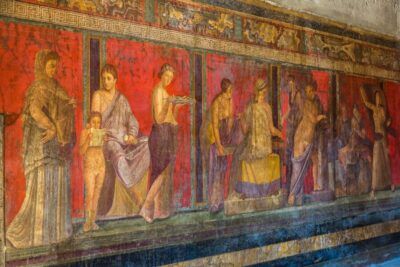


Pompeii Small Group Tour with an Archaeologist
Read our review →
Pompeii, Amalfi Coast and Positano Day Trip from Rome
Read our review →Browse the lists this tour appears in