
Reviewed · COOKING CLASSES
Polignano a Mare: Pasta Making Cooking Class with Drink
The best part of this Polignano a Mare class is simple: you learn the pasta shape that gives Puglia its identity, then eat what you made. Orecchiette and cavatelli are not just cooking-school projects here. They are everyday Apulian food, shaped by hand and served with a simple sauce.
I like the small, friendly format and the way the lesson goes beyond finger exercises. Annamaria and Daniele explain why pasta is made differently across Italy, offer useful tips for cooking at home, and bring in local stories. I also like that the aperitivo is part of the evening, with taralli, preserved vegetables, seasonal greens, wine, and other Apulian tastes.
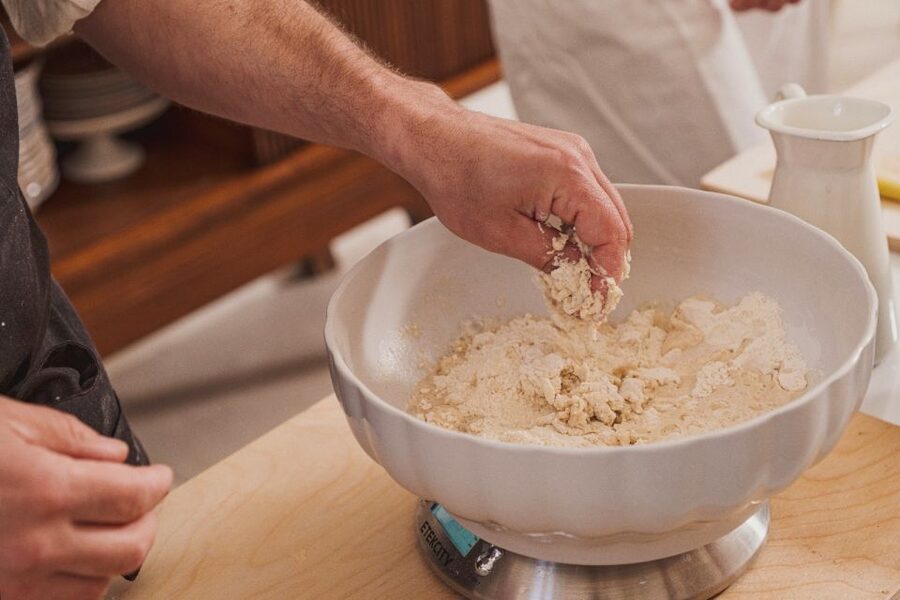
The main thing to know is that you may not prepare every part of the meal yourself. The dough and sauce are largely demonstrated or prepared for you, so this suits someone who wants focused instruction on shaping pasta rather than a full restaurant-style cooking session.
Key points to know before booking
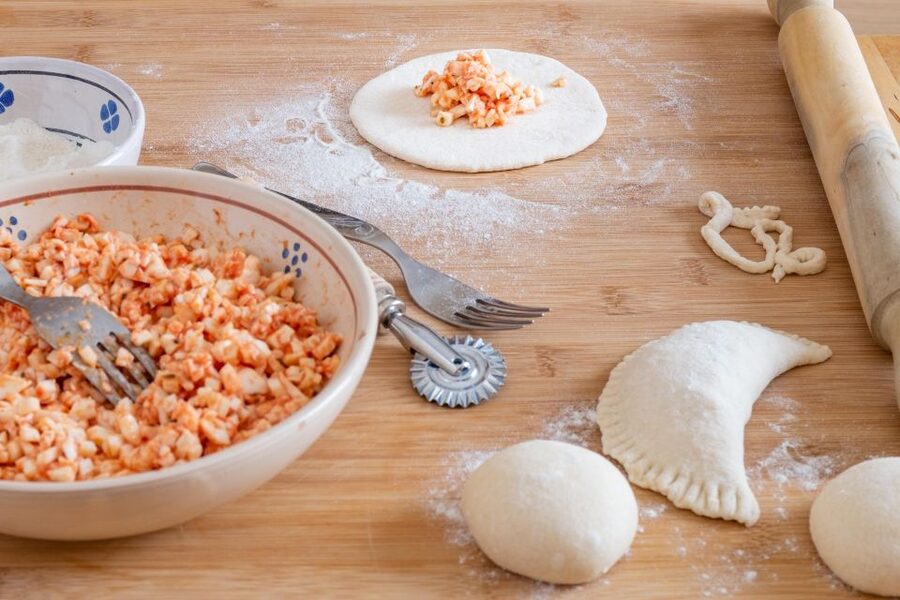
- Shape two classic Apulian pastas: Learn the hand movements for ear-shaped orecchiette and ridged cavatelli.
- Work with local teachers: Annamaria and Daniele lead sessions in English and Italian, with patient help at the table.
- Eat what you make: The class includes orecchiette with tomato sauce, along with drinks and local food.
- Expect an aperitivo first: Taralli, preserved vegetables, seasonal greens, olives, focaccia, and wine may form part of the opening spread.
- Good for families: Children as young as five have taken part, and older children and teenagers can follow the lesson.
- Plan for a central meeting point: The class takes place at a typical house on Via S. Vito, 20, in Polignano a Mare’s old center.
Shaping Puglia’s famous pasta by hand
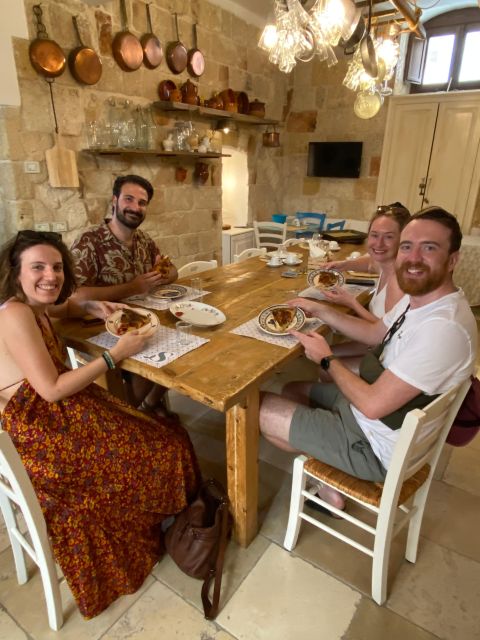
Puglia is known for pasta made from simple ingredients and shaped without elaborate equipment. That makes this class appealing: you are not watching a chef perform from across a kitchen. You work with the dough and repeat the gestures yourself.
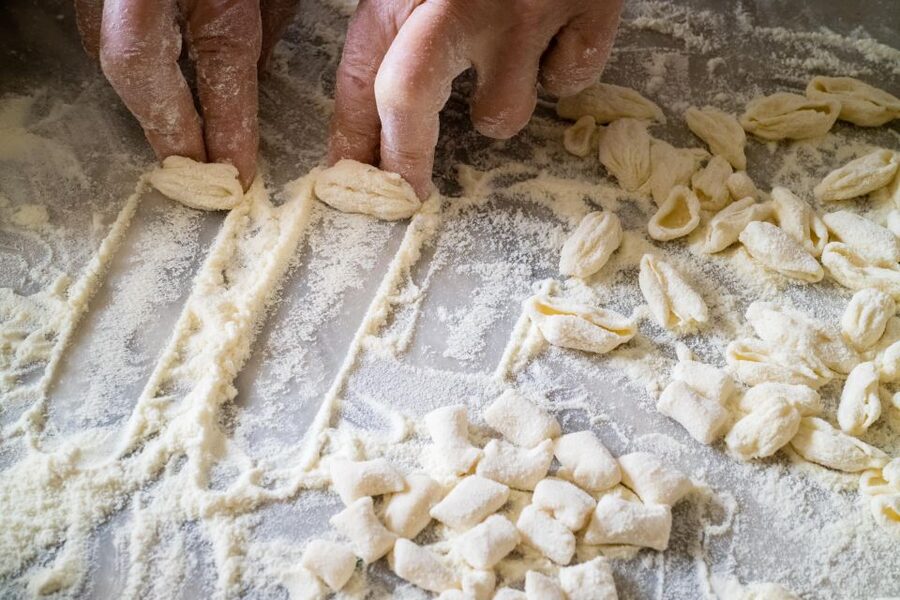
Orecchiette means little ears, a fair description of the small, cupped pieces. The shape is made by dragging or cutting a small piece of dough with a knife or similar tool, then turning it over the fingertip. The result should have a thinner center and a slightly thicker rim, allowing sauce to cling to it.
Cavatelli are formed differently, with a small shell-like shape and a hollow center. Making both types in one sitting gives you a useful comparison. You can feel how pressure, speed, and the amount of dough change the result.
The lesson is especially useful for first-time pasta makers because the teacher watches your hands. Annamaria is repeatedly praised for correcting technique one person at a time, rather than simply demonstrating once and moving on. Daniele is described as patient, funny, and clear in his explanations.
Do not expect every piece to look perfect. That is part of the charm, and the finished bowl will taste good even if your first orecchiette looks more like a pebble than a little ear. The point is to leave with a method you can repeat at home.
More cooking classes in Italy:
- Florence: Pasta Cooking Class with Unlimited Wine
★ 4.9 · 10,285 reviews - 3 in 1 Cooking Class near Navona: Fettuccine, Ravioli & Tiramisu
★ 5.0 · 7,376 reviews - Florence Pizza or Pasta Class with Gelato Making at a Tuscan Farm
★ 5.0 · 6,801 reviews
What the two-hour class feels like
The class lasts two hours, a sensible length for a hands-on food activity during a day in Polignano a Mare. It is long enough to explain the ingredients, demonstrate the shapes, allow practice, and sit down for a meal. It is short enough to fit around sightseeing or dinner plans.
The pace appears relaxed rather than rushed. You spend some time watching and listening before getting your hands dirty. One useful detail from the class format is that you do not necessarily make the dough or sauce from scratch yourself. The instructor explains the process, then focuses your practical work on forming the pasta.
That arrangement has two sides. It lets the chef cover Italian cooking customs, pasta technique, sauce, and regional food in a compact session. But if you want to weigh flour, knead dough, prepare a sauce, and manage the cooking from beginning to end, you may find the hands-on portion narrower than expected.
The teaching also reaches beyond pasta. Daniele has spoken about the science behind different pasta methods across Italy, while Annamaria has explained food traditions and local life. Several sessions have included useful guidance on sauce, focaccia, cooking pasta correctly, and reducing food waste.
The instruction is in English and Italian. English-speaking participants have described the teachers as easy to understand, and Annamaria in particular is noted for strong English. Still, cooking classes involve gestures and demonstrations, so you can follow the basic technique even if your Italian is limited.
The Apulian aperitivo before the meal
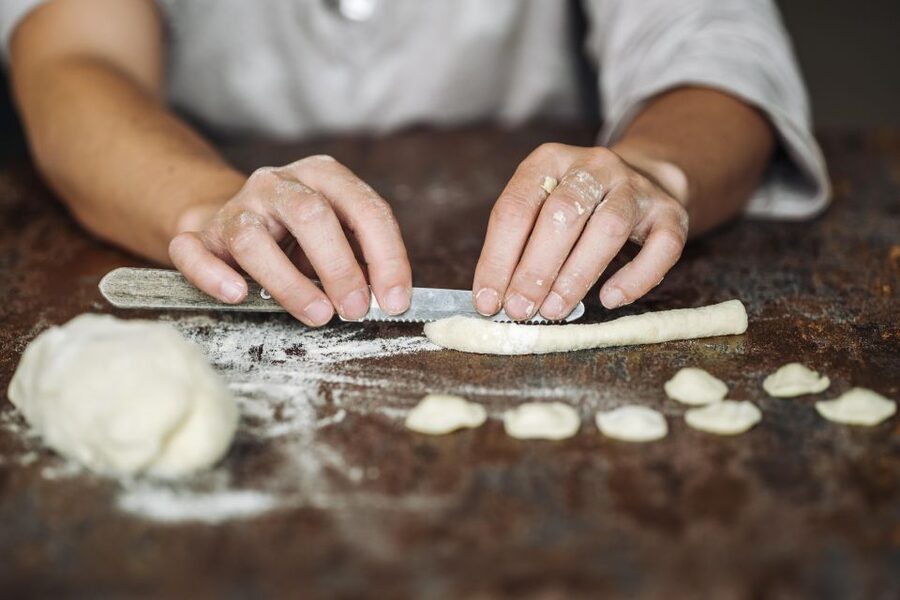
The food begins before the pasta reaches the table. The aperitivo may include taralli, the dry, crunchy ring-shaped snack found across Puglia, as well as preserved vegetables, seasonal greens, olives, focaccia, and other local products.
This opening spread matters because it gives you a taste of how Apulians eat socially. The class is not only about a bowl of pasta. You sit with other people, snack, ask questions, and pair local foods with regional wine.
Wine is included, and several participants specifically appreciated having red wine during the lesson. Some also noted generous pours or an unlimited-wine option, but the exact serving arrangement can vary, so do not book this as a drinking tour. The focus remains food, conversation, and instruction.
The included drinks add real value to the $77 price. A private pasta meal and an aperitivo in Polignano can cost a fair amount on their own, while this also gives you a skill and a local host. If you do not drink alcohol, the activity is still built around food and teaching, though the information provided does not specify a separate nonalcoholic pairing.
Eating the pasta you shaped
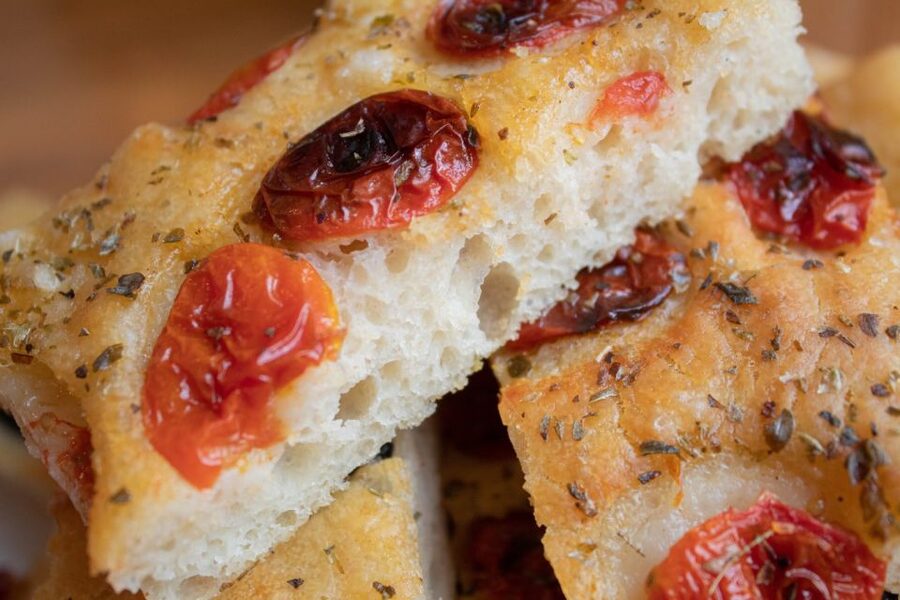
At the end, the orecchiette is served with tomato sauce. Some sessions have included pesto or other sauce preparations, but tomato sauce is the stated included dish, so that is the meal you should count on.
I like the fact that you eat the pasta made during the lesson. Many cooking classes prepare the food you shape for later, or offer a separate dish that has little connection to your work. Here, the final bowl gives you an immediate lesson in texture and shape.
Fresh pasta is also a good way to understand why the technique matters. A properly formed piece holds sauce differently from a flat or uneven one. The meal lets you taste the practical result, not just admire a tray of raw pasta.
Portions have been described as generous, and the class includes local products alongside the pasta. Even so, people with a large appetite should think of this as an aperitivo and light meal experience rather than a long multi-course dinner.
A few other Italy mornings to weigh against this
- Florence: Pasta & Tiramisu Cooking Class with Unlimited Wine
★ 4.9 · 6,708 reviews - Florence: Pasta Cooking Class with Unlimited Wine
★ 5.0 · 6,413 reviews - Rome: Pasta & Tiramisu Class with Fine Wine by the Vatican
★ 4.9 · 4,852 reviews - Rome: Pasta Making Class with Wine, Limoncello, and Dessert
★ 4.9 · 3,177 reviews
The teaching style: patient, local, and conversational
The strongest part of the class is the instructors. Names can vary by session, but Annamaria and Daniele appear frequently, with Maria, Daniela, and other staff also mentioned in connection with individual classes.
Annamaria’s approach is warm and precise. She gives individual attention, explains how to form orecchiette correctly, and shares recipes and cooking advice. Daniele brings professional kitchen experience and a lively teaching style, with sessions that include discussion of Italian food, regional customs, sustainability, and life in southern Italy.
That wider conversation is a pleasant surprise if you like food with context. Several classes have touched on Italian history, politics, social issues, and the origins of Apulian recipes. This can make the two hours feel less like a technical workshop and more like a conversation around the table.
The style may not suit everyone. If you want a quiet, highly structured lesson with little talking, you could find the broader discussion distracting. I see it as part of the value, especially in a small group where questions are welcomed.
Small groups are another strong point. A session has been held with six people, and the intimate format allows the instructor to check each person’s shaping technique. Group size may change, so confirm the details when booking, but this is not presented as a large demonstration class.
Is $77 a fair price?
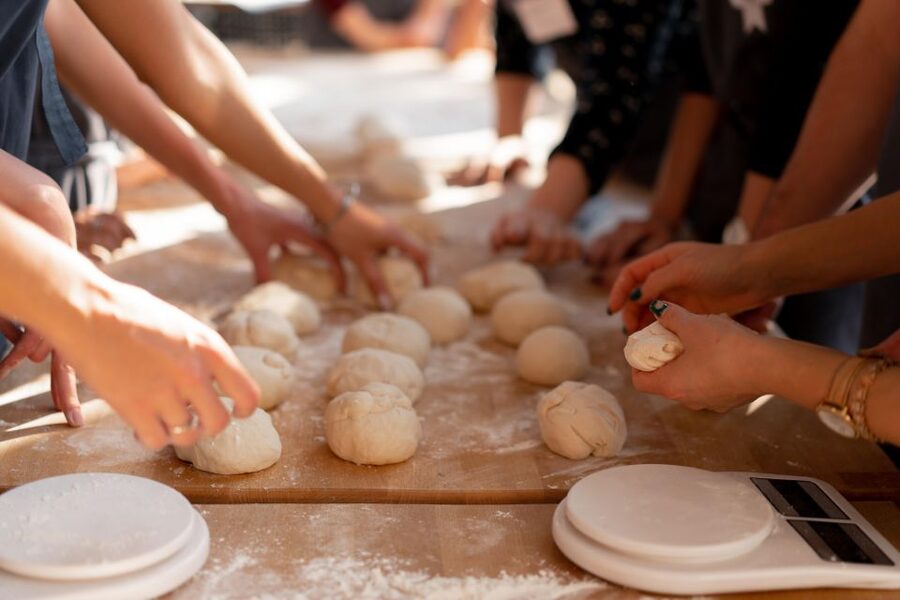
At $77 per person, this class sits above a basic pasta demonstration but includes more than instruction alone. You receive a two-hour lesson, kitchen utensils, a professional chef, local products, drinks, wine, an aperitivo, and a serving of orecchiette with tomato sauce.
The value is strongest if you care about meeting a local cook and learning a skill you can use at home. The teachers do not only show the shape. They explain ingredients, pasta rules, cooking methods, sauces, and ways to avoid waste. That extra guidance gives the class lasting value after your trip.
The value is weaker if you compare it with a full cooking workshop where you prepare dough, sauce, and several dishes yourself. One participant felt the price was high for the amount of cooking involved, and another had hoped to learn more Apulian sauces.
My advice is to compare the class with the kind of evening you want. If you would otherwise pay for a meal, drinks, and an activity, $77 is reasonable. If your main goal is maximum time with your hands in the dough, ask in advance how much of the preparation you will do.
A good family activity in Polignano a Mare
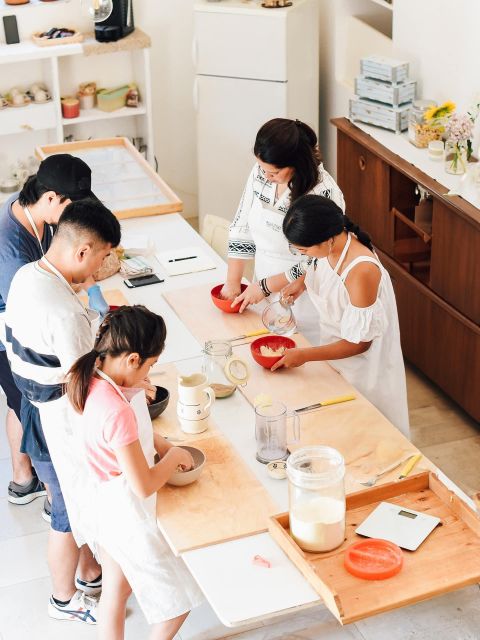
This class works well for families because the task is tactile, social, and easy to understand. Children aged five and eight have taken part with parents and grandparents, while teenagers have also enjoyed the lesson.
You should still consider your child’s patience. Part of the two hours involves listening to explanations and watching demonstrations. The actual shaping is the most active section, so younger children may need help staying involved until that point.
For adults, the class offers a break from sightseeing and beach time. Polignano a Mare is known for its dramatic coastal setting, but not every memorable moment has to involve a viewpoint or boat trip. A local food lesson gives you a different way to connect with the town.
Vegetarians and vegans can take part. The provided details specifically state that the activity is suitable for both, though you should mention dietary needs when booking so the food served alongside the pasta can be handled properly.
Location and practical planning
The meeting point is Annamaria’s typical house at Via S. Vito, 20, 70044 Polignano a Mare BA. The establishment is in the historic center, which makes the activity easy to combine with a walk through town.
Allow a little time to find the address, especially if you are arriving after dark or carrying luggage. The supplied information does not describe parking or exact directions from the station, so do not assume a vehicle can pull directly to the door.
Optional pickup can be requested from Monopoli and nearby cities. Hotel pickup and drop-off are not included, and transfers must be arranged separately. This could make the class more practical if you are staying outside Polignano, but confirm availability and any extra cost before you rely on it.
The activity is wheelchair accessible. Since it takes place in a typical house in the old center, it is sensible to confirm the exact access arrangements for your needs when booking, especially if you require a particular entrance or bathroom setup.
Cancellation is free up to 24 hours before the start time, and you can reserve now and pay later. Those terms are useful if your Puglia route is still shifting, though they do not replace checking the available starting time for your date.
What to bring and what to expect
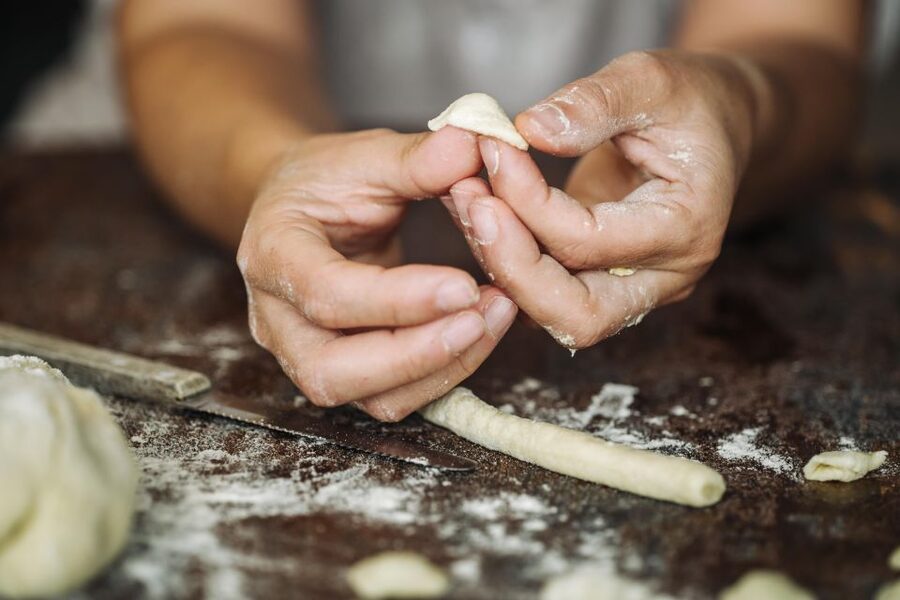
Wear clothes you do not mind cooking in. The class is not described as messy, but you will work directly with pasta dough and kitchen utensils.
Bring curiosity and a willingness to repeat the same hand movement several times. The first few pieces may not cooperate. Ask questions, watch the instructor’s fingers closely, and use the chance to record the demonstration if permitted. One participant wished for a recipe sheet, while the teacher did allow video of the lesson.
You should also arrive ready to eat socially. Wine, snacks, and conversation are central to the format. If you need a completely private class or a formal, silent meal, this may not be the right choice.
Who should book this pasta class?
I would recommend it to you if you want:
- A short food activity in Polignano a Mare
- A chance to learn two traditional pasta shapes
- A small-group lesson with personal correction
- Local wine and Apulian snacks included
- A family-friendly activity for children or teenagers
- Food stories and regional context alongside cooking
- A meal made from the pasta you shape
I would look elsewhere if you want to prepare every ingredient yourself, make several sauces, or spend most of the session cooking rather than listening and shaping. This is a focused pasta-forming lesson with an aperitivo and meal, not a full professional kitchen course.
Should you book it?
Book this class if you want an authentic, sociable taste of Puglian food and a skill you can try again at home. The patient teaching, small-group feel, local wine, and chance to eat your own orecchiette give the two hours a clear purpose.
Think twice only if $77 feels high for a lesson where the dough and sauce are not fully prepared by you. For most people who value local instruction, a relaxed meal, and useful cooking tips, the price is fair. I would especially choose it for a family, a couple, or anyone whose boat or outdoor plan has been cancelled and wants a dependable indoor activity in Polignano.
FAQ
Where does the pasta-making class take place?
The class takes place in Polignano a Mare, at a typical house in the historic center. The meeting address is Via S. Vito, 20, 70044 Polignano a Mare BA.
How long does the class last?
The activity lasts two hours. Starting times depend on availability for your chosen date.
How much does the experience cost?
The listed price is $77 per person.
Which pasta shapes will I learn to make?
You will learn to make two typical Apulian pastas: orecchiette and cavatelli.
Will I eat the pasta I make?
Yes. Orecchiette with tomato sauce is included, along with a tasting of local products and drinks.
What food is included besides pasta?
The aperitivo can include taralli, preserved vegetables, seasonal greens, and other typical Puglian products. Sessions may also include items such as olives and focaccia.
Is wine included?
Yes. Drinks and local Puglian wine are included in the activity.
Is the class suitable for vegetarians and vegans?
Yes. The activity is described as suitable for both vegetarians and vegans.
Is transportation included?
Hotel pickup and drop-off are not included. Optional pickup from Monopoli and nearby cities is available on request.
What languages are spoken during the class?
The instructors teach in English and Italian.
Is the activity wheelchair accessible?
Yes. The activity is listed as wheelchair accessible.
Can I cancel for a refund?
You can cancel up to 24 hours in advance for a full refund. You can also reserve now and pay later.
More Workshops in Italy
- Naples: Pizza-Making Workshop with Drink and Appetizer
★ 4.9 · 5,411 reviews - Cooking Class and Lunch at a Tuscan Farmhouse with Local Market Tour from Florence
★ 5.0 · 4,831 reviews - Authentic Pizza Making Class in Naples with Appetizers and Drink
★ 5.0 · 3,178 reviews - Pastamania – Florence Pasta Making Class
★ 5.0 · 3,050 reviews
Fresh on the Italy list
- Rome: Guided Catacombs Tour & Capuchin Crypt (Audio Guide)★ 4.3 · 191 reviews
- Guided tour of the Colosseum, Roman Forum and Palatine in Spanish★ 4.5 · 191 reviews
- Bolgheri: Winery Tour with Wine Tasting★ 4.7 · 191 reviews
- Stories of Pompeii: Small Group tour with archeology expert guide★ 5.0 · 191 reviews
- Palinuro: Costa del Mito Boat Tour★ 4.9 · 191 reviews
- From Palau/La Maddalena: All inclusive Yacht Tour★ 4.8 · 191 reviews
- Small-Group Cooking Class in Positano: Gnocchi, Tiramisù & Drinks★ 5.0 · 191 reviews
- Semi Private Deep Wine Chianti and San Gimignano from Florence★ 5.0 · 191 reviews
Cooking Classes, compared.
3 in 1 Cooking Class near Navona: Fettuccine, Ravioli & Tiramisu
Read our review →
Florence Pizza or Pasta Class with Gelato Making at a Tuscan Farm
Read our review →
Pasta & Tiramisu Cooking Class with Unlimited Wine
Read our review →
Cooking Class and Lunch at a Tuscan Farmhouse with Local Market Tour from Florence
Read our review →
Authentic Pizza Making Class in Naples with Appetizers and Drink
Read our review →
Pasta Making Class with Wine, Limoncello, and Dessert
Read our review →Browse the lists this tour appears in