
Reviewed · WALKING TOURS
Palermo: NO Mafia Walking Tour
Palermo’s No Mafia Walking Tour is not a hunt for movie-style Mafia scenes. It is a serious walk through the city’s old center, using places such as Teatro Massimo, Palermo Cathedral, and Piazza della Memoria to explain how organized crime shaped daily life, politics, and business in Sicily. The most useful lesson is that the story is also about resistance.
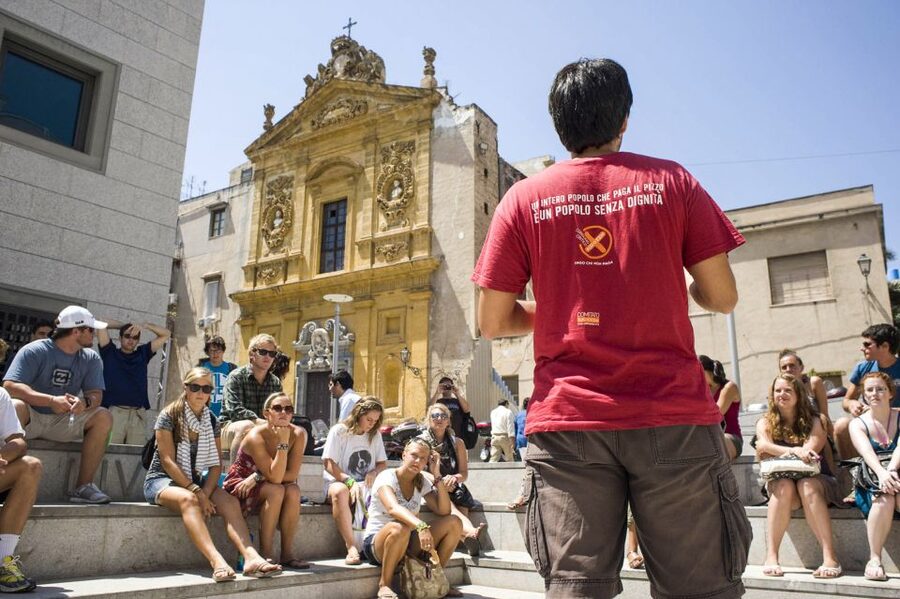
I like the way the tour pushes past romantic Mafia myths, and I like the visible link to modern civic action: shops displaying orange stickers have rejected extortion and support Addiopizzo’s pago chi non paga campaign. The guide’s passion is a major part of the experience, with guides including Valeria, Attilio, Salvatore, Giuseppe, and Laura praised for clear, lively storytelling.
The main consideration is that this is a three-hour outdoor talk while walking, not a museum tour or a visit to Mafia crime sites. You will not enter monuments, and the subject includes violence, intimidation, corruption, and murder. That makes it powerful, but not light sightseeing.
Key points to know before booking
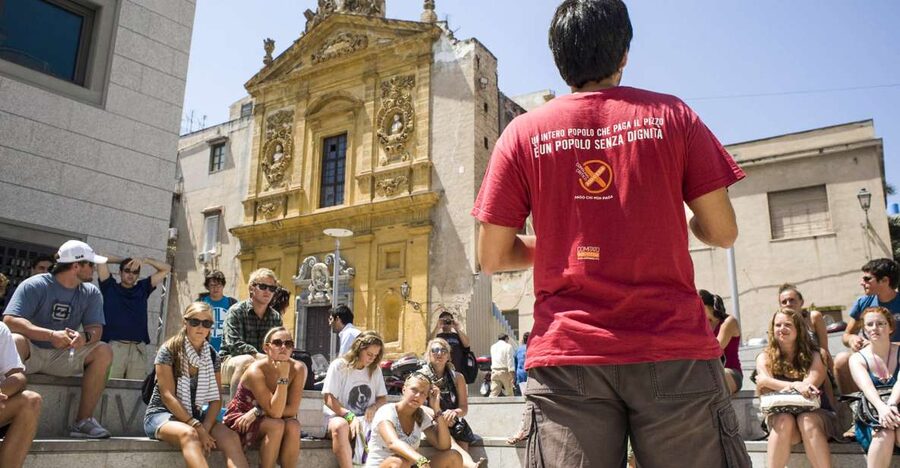
- The route joins Palermo’s famous sights to a difficult civic story, including Teatro Massimo, Il Capo market, the cathedral, city hall, and Mafia memorials.
- The focus is anti-mafia resistance, not glamorous crime lore or movie locations.
- Orange stickers on shop windows have a clear meaning: the businesses refuse extortion and support ethical spending.
- Guides make or break the experience, and the strongest praise goes to guides who combine historical detail with warmth, humor, and passion.
- The $40 price includes a contribution to Addiopizzo, giving the tour a direct connection to Palermo’s anti-mafia work.
- Comfortable shoes matter, and you should be ready to spend three hours outdoors with no monument admissions included.
Palermo’s Mafia story begins in the streets, not on a movie set
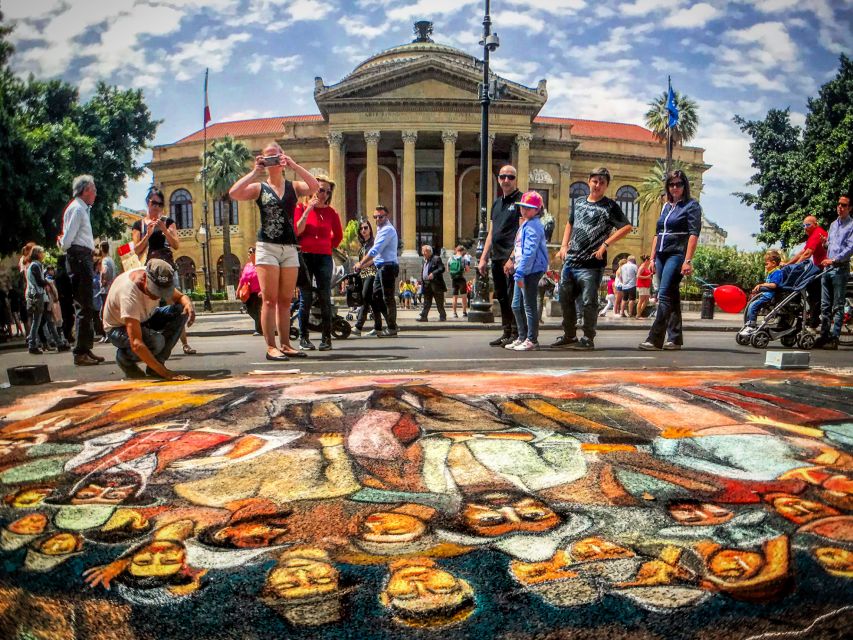
The clever idea behind this tour is simple: Palermo’s historic center becomes the classroom. You walk past churches, markets, government buildings, shops, and public squares while the guide explains how Mafia power affected ordinary life and how citizens pushed back.
That approach gives you a better picture than a string of dramatic anecdotes. Cosa Nostra is presented as a social and political force, not as a collection of colorful gangsters. You hear about corruption, pressure on businesses, violence, intimidation, and the damage done to local communities. Just as important, you learn about the people and groups who challenged that power.
I appreciate that balance. Popular films and television often make the Mafia look stylish, clever, or almost folkloric. This walk works against that image. It gives you the harder truth and then shows that Palermo’s story is not only one of fear. It is also one of civic courage and organized resistance.
The subject can be heavy. If you want a relaxed introduction to Palermo’s food and architecture, choose a standard city walk instead. If you want to understand the forces behind some of Sicily’s modern identity, this is a far more useful starting point.
More Walking Tours in Palermo
- Palermo Original Street Food Walking Tour by Streaty
★ 5.0 · 2,105 reviews - Palermo: Street Food and History Walking Tour
★ 4.9 · 1,294 reviews - Palermo No Mafia walking tour: discover the Anti-mafia culture in Sicily
★ 5.0 · 1,011 reviews
Teatro Massimo sets the tone for the walk
Teatro Massimo is one of the first major landmarks connected with the route. Its scale and fame make it an easy place to orient yourself in Palermo, but the tour uses the setting for more than an architectural photo stop.
Here, your guide begins linking the polished image of the city to the less visible forces that shaped it. The exact emphasis can vary with the guide, but the larger point is consistent: Palermo cannot be understood through grand buildings alone. Its public life has also been shaped by power, fear, protest, and the long effort to make institutions answer to citizens.
You should expect explanation rather than an extended visit inside the theater. Entrance to museums and monuments is not included, so you see the landmark from the walking route. That is not a flaw if you already plan to tour Palermo’s interiors separately. It simply means you are paying for interpretation, not admission tickets.
Guides such as Attilio and Valeria have been especially effective at holding attention through long stretches of spoken history. Their work matters here because the buildings are only prompts. The real experience comes from the story attached to them.
Il Capo market brings the subject down to daily life
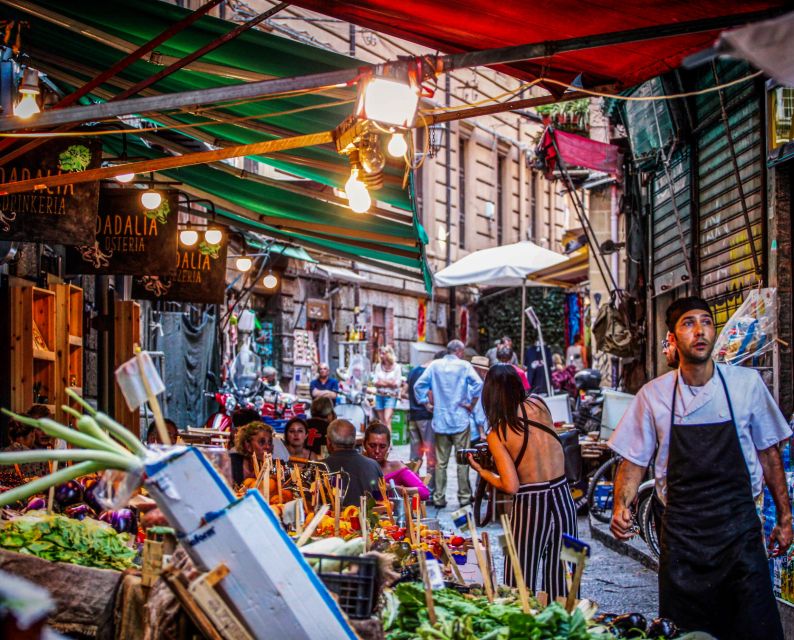
The walk continues through Il Capo, Palermo’s open-air market. This is one of the route’s most useful stops because it places the Mafia discussion among everyday commerce, food, movement, and neighborhood life.
Markets help you understand that organized crime is not some distant problem reserved for courtrooms. The tour explains how Mafia influence could reach businesses and local society, and how people who run shops or stalls face choices about pressure, silence, and resistance.
Il Capo also gives the three-hour walk a change of pace. You are not standing in front of memorials the whole time. You move through a working part of the historic center, taking in the atmosphere while listening to the guide connect the scene to wider social issues.
Do not expect the market to function as a food tour. The focus remains the anti-mafia story, though your guide may offer advice about Sicilian specialties and places to eat at the end. If you want to shop or taste slowly, return later. Trying to combine close market browsing with careful listening will split your attention.
Piazza della Memoria remembers the people who paid the price
Piazza della Memoria is dedicated to prosecutors and judges killed by the Mafia. This stop gives the walk a solemn center.
Your guide explains the people and events behind the memorial, placing their deaths within Sicily’s wider struggle against Mafia power. The stories are difficult, but they keep the subject grounded in real human loss. You are not dealing with an abstract label or a film plot. You are hearing about public servants and citizens who faced a violent system.
This is one reason the tour works best with a guide who can handle serious material without turning it into theater. The strongest guides, including Giuseppe, Marinella, Ermes, and Salvatore, have been praised for combining clear explanation with a personal sense of commitment.
The tone is not relentlessly grim. The walk also covers the resistance that followed, including the civic work aimed at reducing Mafia influence. Still, you should come prepared for frank discussion of murders, intimidation, and corruption. Families with older teenagers may find the subject engaging, but the content deserves a mature approach.
Same city, an entirely different afternoon:
- Palermo: Hop-on Hop-off Bus Tour 24-hour Ticket
★ 3.9 · 2,410 reviews - Segesta, Erice and Salt Pans Full-Day Excursion from Palermo
★ 4.2 · 1,791 reviews - Palermo: Teatro Massimo Opera House Guided Tour
★ 4.5 · 1,573 reviews - From Palermo: Monreale and Cefalù Half-Day Trip
★ 4.2 · 1,354 reviews
Orange stickers make ethical spending visible
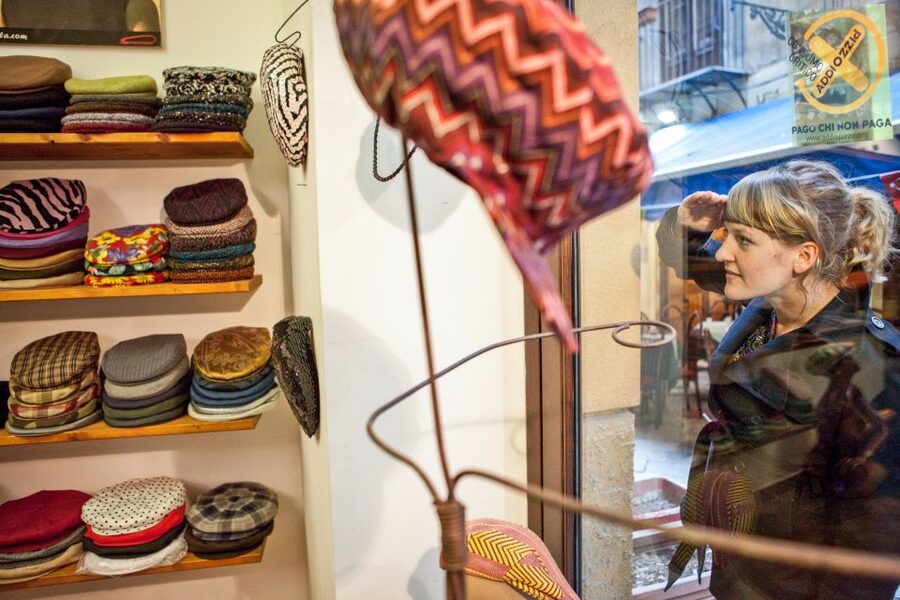
Along the Cassaro, look for businesses displaying orange stickers. These signs identify owners who have said no to paying extortion and joined the ethical consumer campaign pago chi non paga, meaning I pay those who do not pay.
This is perhaps the most practical detail on the route. It turns anti-mafia action into something you can recognize while walking and support as a customer. The tour explains that the sticker is not decoration. It signals a decision to resist the extortion racket and take part in a wider civic effort.
That connection gives the $40 price more weight. You are not only buying three hours of guiding. Part of the fee goes to Addiopizzo, the charitable organization behind this work. You also leave with a clearer idea of how your choices as a customer can support businesses that reject Mafia pressure.
The tour does not promise that one purchase will solve a major social problem. Its value is more modest and more honest: it introduces you to a local movement and shows how public participation can help it continue.
Piazza Beati Paoli and the danger of romantic myths
Piazza Beati Paoli brings another layer to Palermo’s story. The name is linked with a secretive group from local legend and literature, and it can easily feed the kind of romantic image that popular culture has built around Sicily’s underworld.
The tour uses such ideas to separate folklore from the real Mafia phenomenon. That distinction is important. You may arrive with images borrowed from American films, novels, games, or television. The guide helps replace those images with a more accurate account of social control, political ties, business pressure, and the harm inflicted on communities.
This is not a tour designed to make crime look thrilling. It is also not a lecture detached from the city. The streets give the discussion texture, and the guide keeps bringing the subject back to Palermo’s people and institutions.
Different guides bring different personalities. Laura has been praised for adding humor and offering places to sit in the shade during the three-hour walk. Claudio is known for mixing strong information with humor. That range can make the experience feel personal without changing its serious purpose.
The cathedral and city hall connect crime to public life
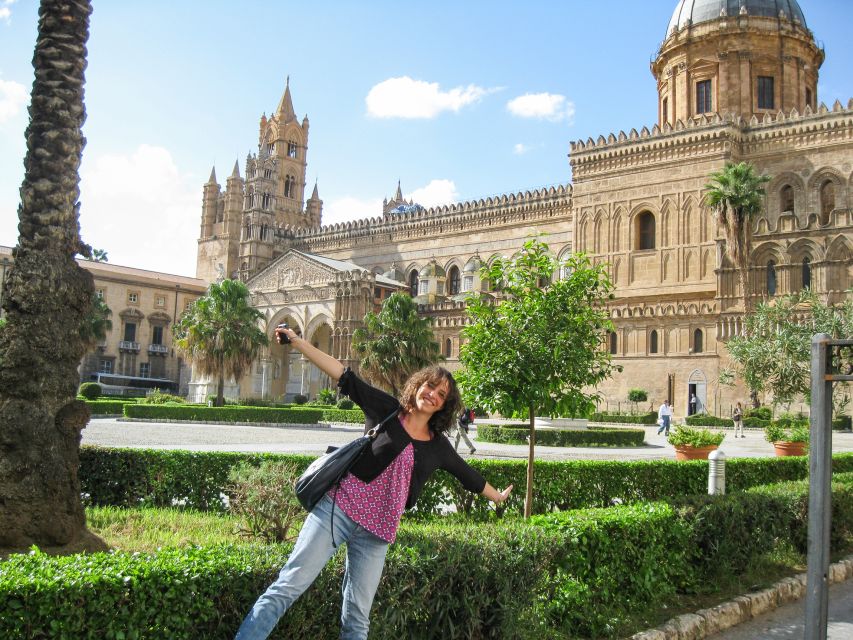
Palermo Cathedral and the city hall are among the major landmarks on the route. You will see them as part of a larger walk through the old center, but the guide’s attention remains on how public institutions and civic life fit into the story.
At the cathedral, the architecture offers a reminder of Palermo’s long religious and political past. At city hall, the conversation can turn more directly toward government, public responsibility, and the relationship between organized crime and political power. The tour’s strength is the way it makes those connections without pretending that one building explains everything.
You should not expect a detailed art-history tour at either site. If you want to study the cathedral’s architecture or visit its interior, allow separate time. The No Mafia walk gives you context and a city view that a normal sightseeing route may skip.
The route also passes the Fountain of Shame, another well-known Palermo sight. It adds to the city tour element and helps you see how much of the historic center you can cover in three hours. Still, the narrative is the main event. The landmarks support the story rather than replacing it.
What the guide contributes to the experience
This tour depends heavily on the person leading it. The route matters, but the guide is the voice that turns a walk into an education.
The strongest guides speak with commitment rather than simply reciting dates. Valeria has been praised for her pride in the work and her strong command of the anti-mafia movement. Attilio has kept groups engaged for the full three hours, while Salvatore has been noted for answering questions patiently and clearly. Giuseppe, Marinella, Ermes, Laura, and Claudio have also received praise for their command of the subject and their ability to keep the pace moving.
That does not mean every moment will feel equally dramatic. Three hours is a long time to listen outdoors, and some sections may feel dense if you prefer quick sightseeing. The payoff comes from allowing the guide to explain connections that are hard to see on your own.
English, Italian, French, and Spanish are offered. The available language depends on the scheduled option, so check carefully before booking. Polish is not listed among the available choices. If you need a particular language, confirm it rather than assuming the tour will be offered in it.
Small-group availability is another plus. A smaller group makes it easier to hear, ask questions, and stay connected with the guide in busy streets. The group size can depend on the option you choose, so look at the booking details.
Is $40 a fair price for three hours?
At $40 per person, this is not the cheapest way to see Palermo’s monuments. You are not receiving museum entry, food, or transport. You are paying for a three-hour guided walk and a contribution to Addiopizzo.
I consider that fair if you value context and local civic history. A conventional sightseeing tour may show you the cathedral, theater, market, and public squares. This experience shows you how to read those places through the history of power and resistance. That extra layer is what gives the price its value.
It is less attractive if you want a photo-focused route or a fast introduction to architecture. You might prefer to spend $40 on a general city tour that includes more monuments or a food experience. The No Mafia walk is a focused subject tour, and its success depends on your interest in that subject.
The charitable contribution also matters. Addiopizzo is not treated as a distant name attached to the booking. The tour explains its work and the ethical consumer campaign connected with local businesses. You get an experience and a practical way to think about where your spending goes.
Timing, shoes, and what to bring
Set aside the full three hours. The walk covers several parts of Palermo’s old center, and rushing away early would mean missing much of the explanation.
Wear comfortable shoes. That is the one item specifically recommended, and it is sensible for a long walk on city streets. Bring the usual protection for outdoor sightseeing, but the key preparation is mental: you will spend a lot of time listening, not simply moving from one landmark to the next.
The route includes opportunities to sit in the shade according to one guide’s approach, but you should not count on every stop having seats or shade. Conditions can vary with the guide, the time, and the streets along the route.
Meeting points can vary by booking option. Check your confirmation closely rather than heading automatically to a familiar Palermo landmark. Free cancellation is available up to 24 hours before the start time, and you can reserve now while paying later if that option is offered for your booking.
Who will get the most from this walk?
I would put this near the top of your Palermo plans if you want to understand Sicily beyond churches, markets, and beautiful facades. It is especially useful on your first day because the guide can give you context for the rest of your time in the city, along with suggestions for Sicilian food and places to visit.
It suits adults, students, history fans, journalists, and anyone curious about how organized crime affects society. One guide kept a teenager engaged for the full walk, so older children may enjoy it if they can handle serious subject matter.
It also suits people who are tired of standard European sightseeing tours. You still see major Palermo landmarks, but the route gives them a sharper social meaning.
You may want to skip it if you dislike long spoken tours, have limited walking time, or want a cheerful morning centered on food and architecture. The subject is troubling by design, and the experience does not soften the reality of violence and intimidation.
Should you book the Palermo No Mafia Walking Tour?
Book it if you want a thoughtful, local view of Palermo and are willing to trade a few monument interiors for a stronger understanding of the city’s modern social story. The route is useful, the charitable connection is real, and the best guides bring unusual force to the subject.
I would book it early in a Palermo stay, choose your language carefully, wear good shoes, and leave time afterward to revisit the market or landmarks at your own pace. The tour is not about Mafia glamour. It is about memory, responsibility, and the ordinary people who refuse to accept criminal power as normal.
FAQ
How long does the Palermo No Mafia Walking Tour last?
The tour lasts three hours, with a guided walk through Palermo’s historic center.
How much does the tour cost?
The listed price is $40 per person.
Which Palermo sights are included on the route?
The route includes Teatro Massimo, Il Capo open-air market, Piazza della Memoria, the Cassaro, Piazza Beati Paoli, Palermo Cathedral, city hall, and the Fountain of Shame.
Are museum or monument entrance tickets included?
No. Entrance to museums and monuments is not included in the tour price.
What languages are available?
Live guiding is available in English, Italian, French, and Spanish. Polish is not listed as an available language.
Is a small group available?
Yes. A small-group option is available, depending on the booking choice.
What should I bring?
Bring comfortable shoes. The activity is a three-hour walking tour.
Does the booking support Addiopizzo?
Yes. The tour includes a contribution to the Addiopizzo charitable organization and introduces its anti-mafia work, including the pago chi non paga ethical consumer campaign.
Fresh on the Palermo list
- Palermo: Street Food and Local Market Tasting Tour★ 4.9 · 540 reviews
- Palermo: UNESCO World Heritage Sites Guided Walking Tour★ 4.8 · 548 reviews
- Palermo: Small Group Night Street Food Tour★ 4.8 · 589 reviews
- Palazzo Conte Federico★ 5.0 · 650 reviews
- Palermo: Private Custom Walking Tour with Local Guide★ 4.7 · 661 reviews
- Palermo: Pizza and Gelato Cooking Class with Dinner and Wine★ 4.9 · 951 reviews
- Palermo: Agrigento and the Valley of the Temples Day Tour★ 4.2 · 1,240 reviews
- Palermo Walking Tour and Street Food★ 5.0 · 617 reviews
Walking Tours, compared.
Guided Walking Tour & Last Supper Visit with Ticket
Read our review →
Rialto Bridge & Offbeat Unusual Venice Walking Tour
Read our review →
Private 3 hrs Venice Tour: St Mark’s, Walking tour & Boat tour
Read our review →
Skip the line: Uffizi and Accademia Small Group Walking Tour
Read our review →Browse the lists this tour appears in