
Reviewed · WALKING TOURS
Florence Walking Tour
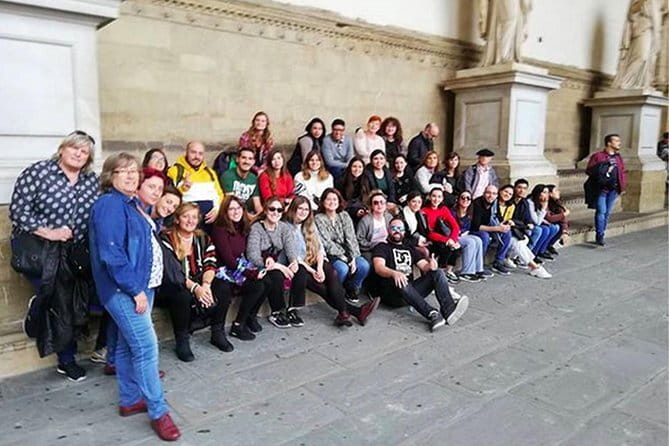
Florence reveals itself best on foot, and this two-and-a-half-hour city walk gives you the basic map before you spend time and money on museums. You move from the Medici district to the Duomo, across the Arno, and on to Santa Croce, with stories and practical advice along the way.
I like the route for two reasons: it covers the famous sights without making you fuss with a map, and guides such as Armando, Alessandro, Gino, and Barbara add restaurant, shopping, restroom, and sightseeing tips. The low booking price also makes this an easy first-day choice.
The main caution is communication. One guide received criticism for a garbled microphone, while another spoke quickly with a strong accent. The tour also requires good weather, and a schedule change caused one booking problem, so check your confirmation and meeting time carefully.
Key points to know before you book
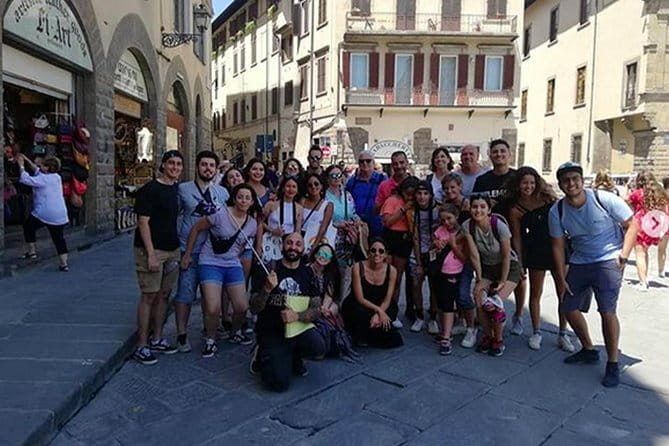
- A full Florence orientation in 150 minutes: See the Duomo, Ponte Vecchio, Uffizi exterior, Santa Croce, Medici sights, and several central squares.
- A voluntary-tip format: The listed booking price is only $3.63 per person, with a tip at the end left to your judgment.
- A very small maximum group: The experience allows no more than four people, which should make it easier to hear and ask questions.
- Best at the start of your stay: Guides offer advice on restaurants, gelato, public restrooms, opening hours, and places worth returning to.
- English-language guiding: The tour is offered in English, though accents, speaking speed, or audio equipment may affect how easily you follow every detail.
- An outdoor-only introduction: Admission is free because you see the sights from outside, rather than entering the museums and churches.
Why this Florence walk works as a first-day plan
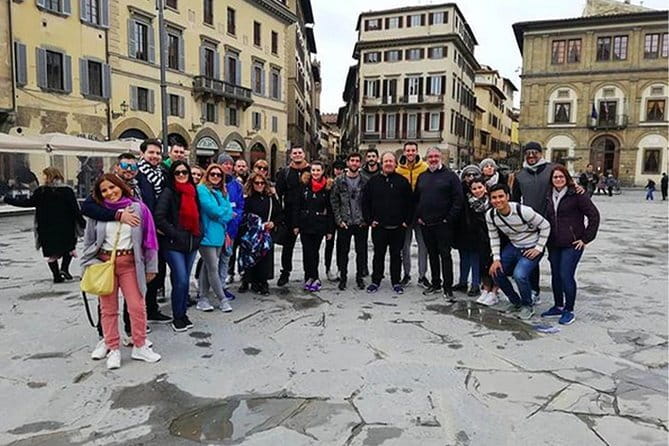
Florence is compact, but its streets can feel confusing when you first arrive. The major sights sit close together, yet each belongs to a different part of the city story: Medici power near San Lorenzo, religious authority around the cathedral, civic life at Signoria Square, trade by the river, and the old neighborhood around Santa Croce.
This walk connects those pieces in one outing. You get a useful mental map, then decide which places deserve a longer visit on your own. That is more valuable than simply collecting photographs, especially if you have limited time in Florence.
The guide-led format also saves you from stopping every few minutes to check a phone. You can look up at the buildings while the guide explains what you are seeing. Pauses are built into the walk, and the best guides use those stops for stories rather than rushing through a list of names.
Past guides have included Armando, Alessandro, Gino, Barbara, Simone, Manuel, Elizabeth, Deb, and Samona. Their styles vary, but the strongest feedback centers on humor, local insight, patience, and useful advice beyond the monuments.
More Walking Tours in Florence
- Florence: Guided Walking Tour
★ 4.5 · 3,334 reviews - Skip the line: Uffizi and Accademia Small Group Walking Tour
★ 4.5 · 3,135 reviews - Florence: Guided Walking Tour
★ 4.6 · 1,602 reviews
Starting near Santa Maria Novella
The walk begins at Piazza dell’Unità Italiana, close to Florence’s main railway station and the Santa Maria Novella area. That location is practical if you arrive by train or stay near the station.
You should arrive with comfortable shoes and enough time to find the meeting point. The exact end point is different from the starting point, so do not plan a tight return journey based on the starting address alone.
The tour runs for about 2 hours and 30 minutes. That is long enough for a real orientation, but short enough to fit beside a museum visit or an evening meal. You will be outside for the full experience, and the tour can be canceled in poor weather.
The maximum group size is four people. That is unusually small for a city walk and should help with questions and hearing the guide. Still, the audio experience can vary. One person found the microphone and speaker difficult to understand, so standing close to the guide is sensible.
Medici Chapel, San Lorenzo Market, and the Medici district
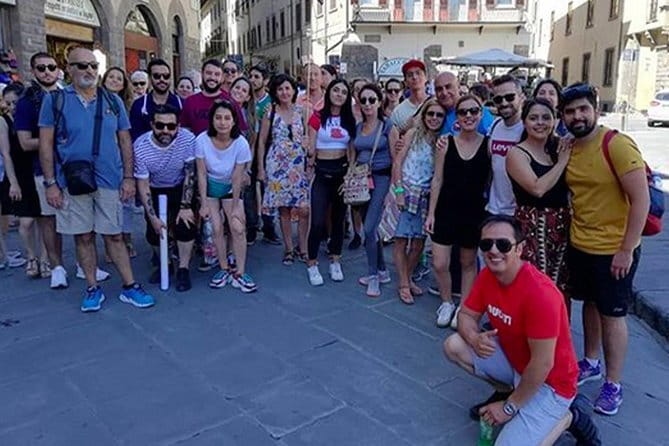
The first part of the route introduces you to Florence through the Medici family. You see the Medici Chapel, San Lorenzo Market, Medici Riccardi Palace, and San Lorenzo Church.
This is a strong opening because the area shows how religion, wealth, politics, and daily commerce once worked side by side. The Medici Chapel points to the family’s power and devotion, while the palace helps place that power in the city itself. San Lorenzo adds another layer, with its church traditions and market life.
The market stop is especially useful for orientation. It gives you a sense of how central Florence mixes grand architecture with everyday food and shopping. If your guide has a local food focus, this is a natural moment to ask for restaurant or sandwich suggestions.
The tour does not include entry into the Medici Chapel, palace, or church. You are seeing the exteriors and learning what you may want to revisit later. That is a strength for a first look, but not a substitute for an art-focused visit.
The Duomo and Baptistery
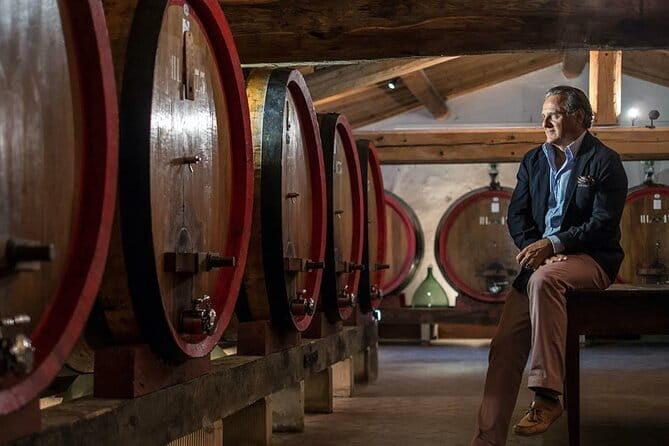
The route then reaches Florence’s most famous architectural pair: the Duomo Cathedral and the Baptistery. This is likely the busiest part of the walk, and it is also where the guide’s explanations can help you make sense of the enormous scale and detail.
The cathedral complex is not just one building. The Baptistery, cathedral, and surrounding structures work together as a major religious center. A guide can point out the relationship between them and explain why this square has shaped Florence’s public image for centuries.
You will view the buildings from outside. That matters because the cathedral interior, dome, and other related sights require separate planning. The walk helps you identify what you are looking at, but it does not provide admission or a timed entry.
I would use this stop to decide what deserves your own time later. If the Duomo is high on your list, ask the guide about practical timing and opening hours. Several guides also give advice on what not to miss, which can help you avoid spending your whole stay in one line.
Same city, an entirely different afternoon:
- Florence: Skip-The-Line Uffizi Gallery Timed Entry Ticket
★ 4.5 · 27,832 reviews - Tuscany Day Trip from Florence: Siena, San Gimignano, Pisa and Lunch at a Winery
★ 5.0 · 21,634 reviews - Florence: Timed Entrance Ticket to Michelangelo’s David
★ 4.6 · 16,983 reviews - Florence: Michelangelo’s David Skip-the-Line Entry Ticket
★ 4.5 · 12,764 reviews
Repubblica Square and Orsanmichele Church
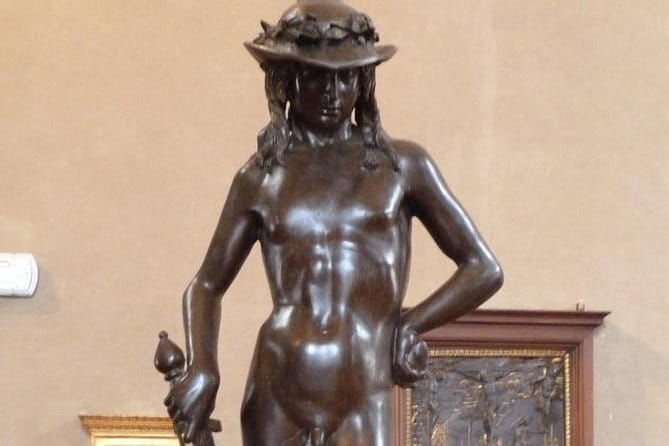
From the cathedral area, the walk continues toward Repubblica Square and Orsanmichele Church. These stops show a different side of Florence.
Repubblica Square is broad and open, with a city-center feel that contrasts with the tighter medieval lanes nearby. It is a useful reference point when you are walking between the Duomo, shopping streets, and the river.
Orsanmichele is easy to pass without understanding its purpose. That is exactly why a guide adds value here. The church connects religious life with the working world of Florence, and its exterior helps explain how trade and civic identity were expressed in stone.
This section is less about entering a major attraction and more about reading the city streets. You begin to see that Florence is not only a museum of famous names. Its smaller buildings and public spaces explain how the city functioned.
Porcellino and Signoria Square
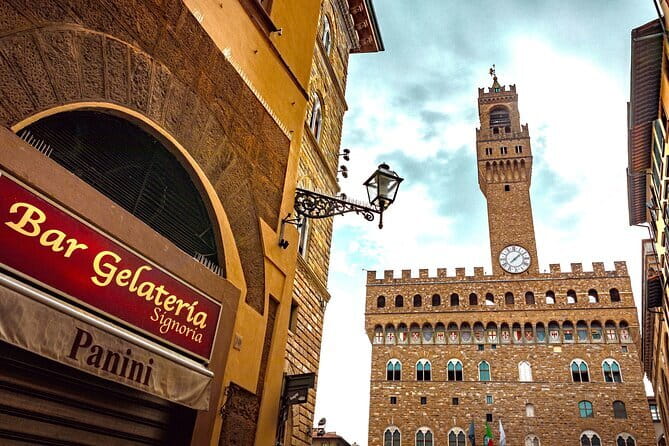
The walk next reaches Porcellino and Signoria Square. Porcellino is the familiar bronze boar, while Signoria Square is one of Florence’s great public stages.
At Porcellino, your guide may explain the local custom associated with the statue. It is a short, lighthearted stop that breaks up the heavier art and political material.
Signoria Square carries more weight. It is tied to Florence’s civic government and public sculpture, and it leads naturally toward the Palazzo Vecchio and the Uffizi area. Even without entering the buildings, you can understand why this square matters.
This is also a good place to ask about museums. A lively guide can help you sort out which attractions you want to pay for later and which ones you can appreciate from the street. Alessandro, Armando, and other guides received strong praise for mixing factual detail with amusing stories, a useful balance in a square packed with information.
The Uffizi exterior and Ponte Vecchio

The Uffizi stop is an exterior visit, not a museum admission. That distinction is important. You get an introduction to one of Florence’s most famous art institutions, but you will need a separate plan if you want to see the paintings inside.
The outside conversation can still be worthwhile. A guide can place the gallery within Florence’s political and artistic center and show how it relates to Signoria Square and the Arno.
The route then reaches Ponte Vecchio, the city’s celebrated old bridge. This is one of the walk’s most scenic points, but it can also be crowded and noisy. Stay close enough to hear, especially if the guide is speaking quickly.
Ponte Vecchio is more than a photogenic crossing. It connects the central Florence route with the Oltrarno side and gives you a clear sense of how the river shapes the city. From here, you can better judge distances between the Uffizi, the cathedral, and the southern side of Florence.
Santa Croce Square and the finish
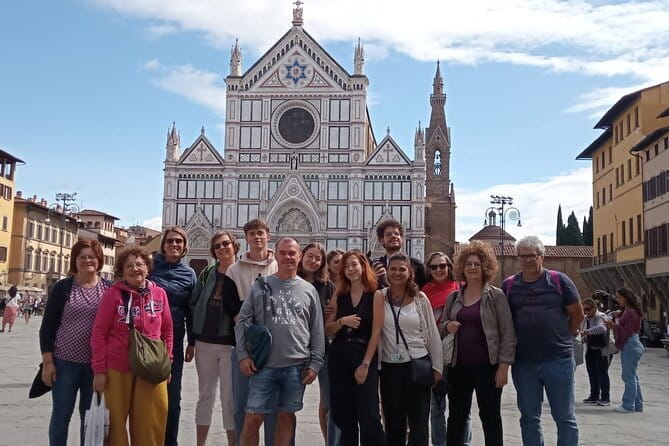
The final listed stop is Santa Croce Square. This gives the walk a satisfying finish away from the Duomo crowds and brings you into another major historic part of central Florence.
Santa Croce is known for its church and its links to important Florentine figures. The square itself is broad and easy to recognize, making it a useful place to end an orientation walk.
Because the activity ends at a different location from where it starts, Santa Croce may be the practical endpoint, but you should confirm the final details before booking other plans. The separate ending is useful for sightseeing because you are not simply returned to the railway station. It also means you should know how you will get back to your lodging.
Guides often add their most useful local advice near the end. Past participants received suggestions for restaurants, gelato, shopping, public restrooms, opening hours, and sights to revisit. Write these down. A good recommendation delivered at the end can save you from an expensive or disappointing meal later.
What the $3.63 price really means
At $3.63 per person, this is one of the cheapest ways to get a guided introduction to Florence. The price should not be confused with an all-inclusive sightseeing ticket. It does not cover entry into the Uffizi, Duomo complex, Medici sites, or other attractions.
The format relies on a voluntary tip at the end. You decide what the walk was worth, based on the guide, the clarity of the presentation, and the practical help you received. That gives you flexibility, but you should budget for a tip if the guide provides a good service.
The value is strongest if you use the walk to plan the rest of your stay. A guide who explains where to eat, how to get around, and which attractions deserve more time can help you make better choices long after the 150 minutes are over.
It is less useful if you want detailed museum interpretation or entry to the monuments. For that, you need a separate paid visit with more time inside each site.
Guide style, sound quality, and the small-group setup
The strongest guide descriptions point to a friendly, funny, and well-informed style. Armando is repeatedly praised for patience, humor, local suggestions, and thorough explanations. Alessandro is noted for his long connection with Florence and for recommending a sandwich shop and gelato place that became trip highlights. Samona adds a personal local touch, including a stop connected with her school years.
Those details matter because Florence can be presented as a string of dates and artists. Personal stories make the streets easier to remember. The best guides also answer questions and make sure the group remains comfortable.
There are two limits to keep in mind. First, guides change, so you cannot assume Armando or Alessandro will lead your departure. Second, accents and sound equipment may affect understanding. One person found a microphone garbled, and another had trouble following a fast delivery.
The small group helps, but it does not solve every audio issue. Stay near the guide, ask for repetition when needed, and do not hesitate to say if you cannot hear.
Who should book this Florence walking tour
I would choose this for a first or second day in Florence, especially if you want a simple overview before committing to museums. It suits solo visitors, couples, and small groups who like historical context but also want direct local advice.
It is a good match if you:
- Want to see the main central sights in one outing
- Prefer a guide to navigating by phone
- Need restaurant and sightseeing suggestions
- Want a low-cost activity
- Can walk outdoors for 2 hours and 30 minutes
- Are comfortable with an English-language tour and possible accent differences
I would look elsewhere if you need guaranteed indoor access, a fixed end point, or a specialist art lecture. The tour is an orientation, not a replacement for the Uffizi or cathedral interior.
The high overall score of 4.8 from 621 ratings and the 95 percent recommendation rate point to a dependable experience, but the individual details still matter. Schedule changes, weather, and audio quality can affect your day.
Booking, timing, and cancellation advice
The activity is often reserved about 26 days ahead, so popular dates may fill early. Confirmation arrives at booking, and you can cancel for a full refund up to 24 hours before the start time.
Changes or cancellations inside that 24-hour window are not accepted for a refund. The cut-off uses Florence local time, so check the clock carefully if you are booking from another country.
The tour needs a minimum number of participants and good weather. If poor weather or low enrollment cancels the activity, you are offered another date or experience, or a full refund.
Check the start time again before leaving for Piazza dell’Unità Italiana. One booking failed after the time changed and the updated notice was missed. That is an avoidable problem with a quick confirmation check.
Should you book it?
Book this Florence walk if you want a fast city orientation, practical local tips, and a very low starting price. It covers an impressive number of central sights in 2 hours and 30 minutes, and the small group should make the experience more personal than a large street procession.
Do not book it expecting museum entry or perfectly uniform audio. The guide you receive may vary, and you need to allow for the voluntary tip, outdoor conditions, and a different finishing point.
For most first-time visits, I would schedule it near the beginning of your stay. Let the walk show you the shape of Florence, then return to the Duomo, Uffizi, Medici sites, or Santa Croce with a better plan.
FAQ
How long does the Florence walking tour last?
The tour lasts approximately 2 hours and 30 minutes.
What language is the tour offered in?
The tour is offered in English.
How much does the tour cost?
The listed price is $3.63 per person. A voluntary tip is expected at the end based on your judgment of the experience.
Where does the tour start?
The meeting point is Piazza dell’Unità Italiana, 50123 Firenze FI, Italy.
Does the tour end at the starting point?
No. The activity ends at a different location, so you should check the final meeting details and plan your return separately.
What sights are included on the route?
The route includes the Medici Chapel, San Lorenzo Market, Medici Riccardi Palace, San Lorenzo Church, Duomo Cathedral, Baptistery, Repubblica Square, Orsanmichele Church, Porcellino, Signoria Square, the exterior of the Uffizi, Ponte Vecchio, and Santa Croce Square.
Are admission tickets included?
The tour itself lists admission as free. It is an outdoor walking tour, so entry to the Uffizi, cathedral complex, Medici sites, or other attractions is not included.
How many people can join?
The activity has a maximum of four participants.
Can I cancel for a full refund?
Yes. You can cancel at least 24 hours before the start time for a full refund. Cancellations or changes made less than 24 hours ahead are not accepted for a refund.
What happens if the weather is bad or the minimum group size is not reached?
If poor weather or the minimum number of participants causes cancellation, you are offered a different date or experience, or a full refund.
Fresh on the Florence list
- Florence: Uffizi Guided Tour with Skip-the-Line Entry Ticket★ 4.8 · 499 reviews
- The Best of Florence Walking Tour in a Small Group★ 5.0 · 503 reviews
- Florence: Uffizi Gallery Tickets with Optional Audio Guide★ 4.1 · 503 reviews
- Premium Pasta and Gelato Cooking Class in Florence★ 5.0 · 508 reviews
- From Florence: Tuscany & San Gimignano Tour with 2 Tastings★ 4.8 · 511 reviews
- Florence: Guided Tour of Medici Family Secrets and Chapels★ 4.7 · 512 reviews
- Tuscany Vespa Tours Through the Hills of Chianti★ 5.0 · 515 reviews
- Pasta and Tiramisu Cooking Class with optional Local Market Tour★ 5.0 · 515 reviews
Walking Tours, compared.
Guided Walking Tour & Last Supper Visit with Ticket
Read our review →
Rialto Bridge & Offbeat Unusual Venice Walking Tour
Read our review →
Private 3 hrs Venice Tour: St Mark’s, Walking tour & Boat tour
Read our review →
Skip the line: Uffizi and Accademia Small Group Walking Tour
Read our review →Browse the lists this tour appears in