
Reviewed · WALKING TOURS
Florence: Renaissance and Medici Tales Guided Walking Tour
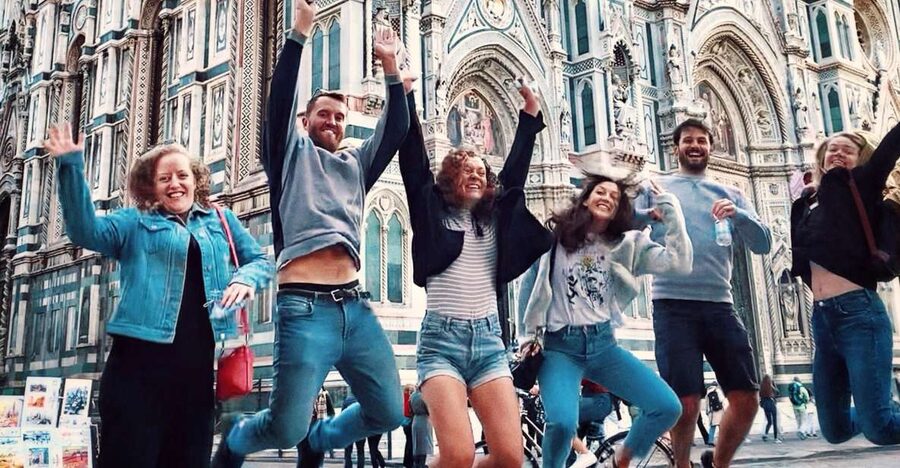
Florence makes far more sense once you connect its grand buildings to the people who paid for them, fought over them, and used them to display power. This walking tour follows that thread from San Lorenzo to the Uffizi, with Medici politics, Renaissance artists, Dante, and the symbols carved into the city’s most famous buildings.
I like the way the route gives you a useful first-day orientation, and I like the guides’ storytelling style. Chiara, Michele, Glenda, Angela, Fabio, and others are praised for making complicated history easy to follow, even for teenagers. The practical advice on food, drinks, shopping, and sightseeing is another welcome touch.
The main consideration is that this is an exterior-focused tour. You will see and discuss the Duomo, Palazzo Vecchio, and other major sights, but entrance tickets are not included. Also, the advertised price is unusually low because this operates as a free-style tour, so you should plan to tip the guide if the experience serves you well.
Key points to know before you book
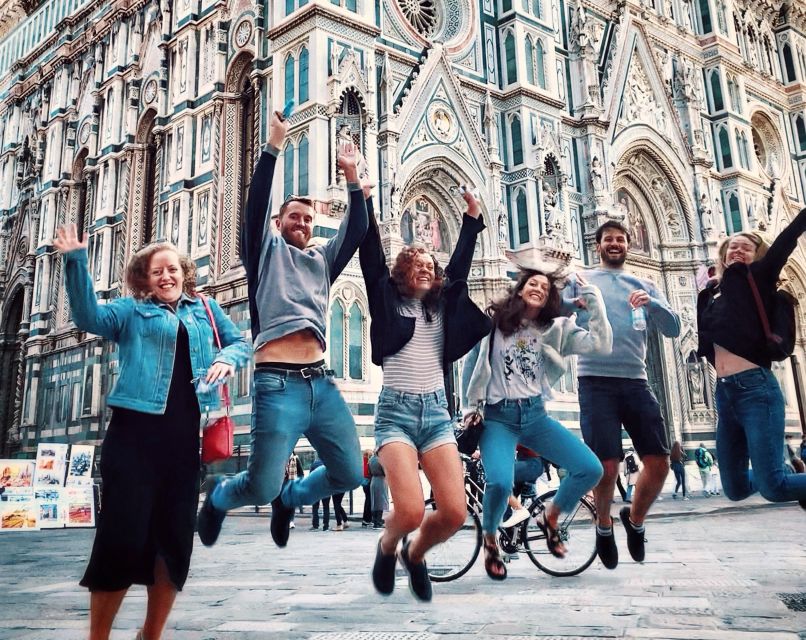
- The route links Florence’s biggest sights: Walk from Piazza di San Lorenzo through the Duomo area, Piazza della Signoria, Ponte Vecchio, and finish by the Uffizi Gallery.
- Medici politics is the main storyline: You learn how generations of the family shaped Florence’s buildings, art, and public life.
- The guides rely on stories, not just dates: Michele, Chiara, Glenda, Fabio, Angela, and other guides are known for clear delivery, humor, and memorable examples.
- It is a strong first-day activity: The route helps you understand the city center before you explore museums and churches on your own.
- You get local planning help: The guide offers suggestions for places to eat, drink, shop, and continue sightseeing.
- Prepare for all weather: The tour runs rain or shine, and comfortable shoes, water, a camera, and suitable clothing are recommended.
Why the Medici make Florence easier to understand
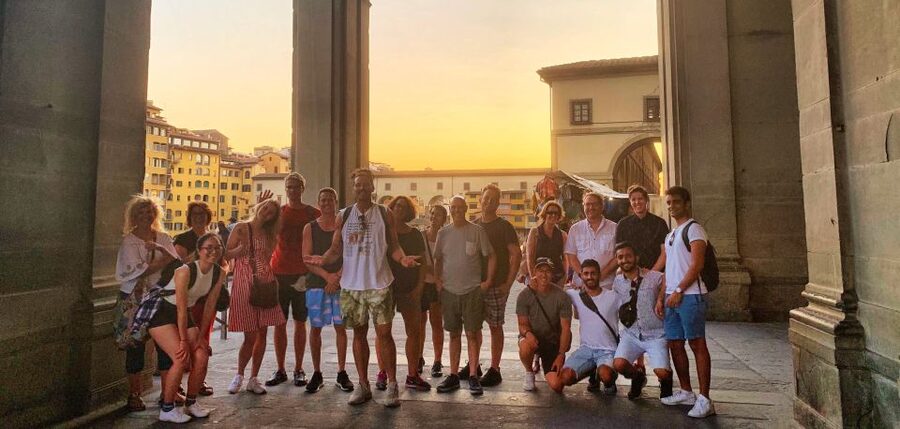
The Medici were not simply wealthy patrons who happened to live in Florence. Their family story is tied to the city’s rise as a center of banking, political influence, art, and learning. As you walk, the guide uses buildings and public spaces to explain how power worked here.
That approach is valuable because Florence can feel like an open-air museum with too many famous names. Brunelleschi, Michelangelo, Dante, Giotto, and the Medici all appear in the story, but without a guide their connections can blur together.
A good guide gives you a simple framework. The Medici supported artists and architects, but they also used architecture to show authority. Public squares were not just pleasant places to stroll. They were stages for ceremonies, political messages, religious life, and family reputation.
The tour also points out symbols along the route. These details can be easy to miss when you are focused on taking photographs. Once someone explains what a coat of arms, sculpture, or architectural feature represents, the buildings begin to feel less like decoration and more like evidence.
The strongest part of the experience is the human scale. The guide discusses ambition, rivalry, loyalty, and family strategy rather than presenting Florence as a list of dates. That helps you remember why the city changed, not just when it changed.
More Walking Tours in Florence
- Florence: Guided Walking Tour
★ 4.5 · 3,334 reviews - Skip the line: Uffizi and Accademia Small Group Walking Tour
★ 4.5 · 3,135 reviews - Florence: Guided Walking Tour
★ 4.6 · 1,602 reviews
Starting at San Lorenzo and the Medici family church
You meet beneath the green umbrella in front of the stairs leading to the main entrance of San Lorenzo Church. This is a practical meeting point, but give yourself enough time to find it because Piazza di San Lorenzo can be busy and the church entrance is the key landmark.
The Basilica of San Lorenzo gives the tour an immediate lesson in Florence’s layered identity. Its architecture combines Renaissance and Romanesque elements, allowing the guide to explain how older religious traditions met the new ideas that transformed the city.
San Lorenzo is also closely tied to the Medici family. That makes it an ideal opening stop. The guide can introduce the family’s influence before you see the later palaces and civic buildings connected with them.
You should expect an exterior discussion rather than a church visit as part of the included experience. If you want to go inside, see additional chapels, or visit other paid sights afterward, plan those separately.
This opening section also sets the pace. The tour is designed for walking and listening, not rushing from one photo stop to the next. One guide, Michele, has been praised for keeping the pace comfortable while still covering a large amount of material.
Palazzo Medici Riccardi and the architecture of power
From San Lorenzo, the route continues to Palazzo Medici Riccardi. This palace helps explain how a private family could make its authority visible in the heart of Florence.
The important lesson here is not only who lived in the building. It is how the palace communicated wealth and status while presenting the family as an important part of Florentine society. The guide connects the building to different generations of the Medici and to the family’s wider impact on the city.
This is one of the better stops for visitors who want the political side of the Renaissance. Florence’s artistic achievements did not happen in isolation. Money, family alliances, public approval, and political control all helped shape the city’s cultural life.
You will likely spend time looking at the exterior and listening to the explanation. That works well for an orientation tour, but it does not replace a full interior visit. If palace interiors are a priority, you will need a separate ticket and more time.
The Duomo complex, Giotto’s Bell Tower, and Brunelleschi’s Dome
The route then reaches the Florence Duomo complex, including Giotto’s Bell Tower and Brunelleschi’s Dome. Even if you already know the outline of the story, it is useful to hear it in the place where the building project unfolded.
The dome is one of the tour’s central subjects. The guide explains the challenge of covering the cathedral’s enormous central space and the importance of Brunelleschi’s solution. This is where architecture becomes a story of competition, technical skill, and civic pride.
The guide also helps you read the cathedral as part of a larger complex. The dome, bell tower, and cathedral are not isolated sights. Together they show how Florence used religious architecture to express wealth, ambition, and confidence.
This stop can be crowded, especially around the cathedral exterior. A microphone and earpieces may be used, which one guide, Chiara, has done to help everyone hear in narrow and busy streets. Still, you should stay close to the guide and keep your attention on the group.
You will not climb Brunelleschi’s Dome or Giotto’s Bell Tower on this walk. The tour gives you context and exterior views, which can make a later climb or interior visit more rewarding. If you have limited time in Florence, this background helps you decide which paid attraction deserves your attention.
Same city, an entirely different afternoon:
- Florence: Skip-The-Line Uffizi Gallery Timed Entry Ticket
★ 4.5 · 27,832 reviews - Tuscany Day Trip from Florence: Siena, San Gimignano, Pisa and Lunch at a Winery
★ 5.0 · 21,634 reviews - Florence: Timed Entrance Ticket to Michelangelo’s David
★ 4.6 · 16,983 reviews - Florence: Michelangelo’s David Skip-the-Line Entry Ticket
★ 4.5 · 12,764 reviews
Dante, symbols, and Florence beyond the postcard view
The House of Dante adds a literary thread to the route. Dante is an important figure in Florence’s cultural story, and this stop broadens the tour beyond architecture and ruling families.
The guide uses places such as this to share smaller, less expected facts about Florence. That variety keeps the walk from becoming one long account of Medici politics. You move between art, literature, buildings, symbols, and the daily character of the city.
I especially value this kind of stop because it gives you something to look for later. Florence is full of plaques, carved details, family emblems, and references to people who shaped the city. You may not remember every name, but you will begin to notice that the center has many layers.
The tour’s style also suits mixed-age groups. One family found that teenagers enjoyed it, which matters if you are trying to keep younger visitors interested in Renaissance history. The storytelling format is more approachable than a formal lecture, and guides are described as willing to answer questions.
Palazzo Vecchio and Piazza della Signoria
Palazzo Vecchio and Piazza della Signoria bring the political story into a public setting. Here, the tour shifts from family influence to the civic heart of Florence.
Palazzo Vecchio is one of the city’s most important landmarks, and the surrounding square is filled with sculptures and architectural messages. The guide explains the relationship between the palace, the square, and Florence’s political life.
This is also where the tour can help you distinguish between simply seeing a famous façade and understanding its purpose. You learn to ask who commissioned a building, who used it, and what its symbols were meant to communicate.
The Piazza della Signoria is an easy place to revisit after the tour. You can return for photographs, compare the sculptures with your notes, or continue into Palazzo Vecchio if you choose to pay for admission. Since the guided walk does not include museum entry, treat this section as preparation for independent sightseeing.
The square may be noisy and crowded, so the quality of the guide’s delivery matters. The guides most often praised for this experience include Chiara, Michele, Glenda, Fabio, Ricardo, and Angela, but the assigned guide can vary by departure.
Loggia dei Lanzi and the art of public display
The Loggia dei Lanzi sits along Piazza della Signoria and gives you another chance to see how art operated in public space. Its sculptures are not tucked away in a museum. They form part of the city’s streetscape.
The guide explains the meaning behind selected works and symbols, helping you see how art could support political ideas. This is one reason the walking format works well. You are standing where the art was meant to be seen, surrounded by the buildings and square that give it context.
You will not get the same quiet concentration as in a gallery. The area can be active, and there may be many people taking photographs. Still, the setting is part of the lesson. Florence’s major works are woven into its public life rather than separated from it.
Ponte Vecchio and the walk toward the Uffizi
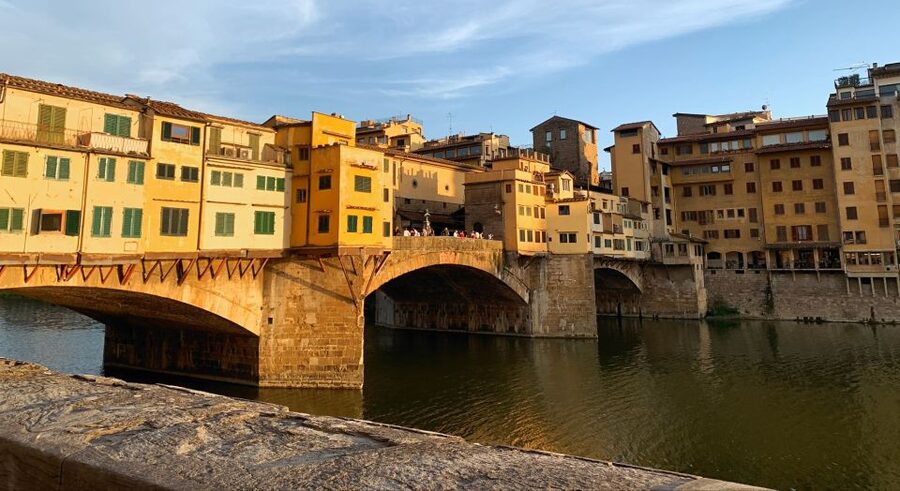
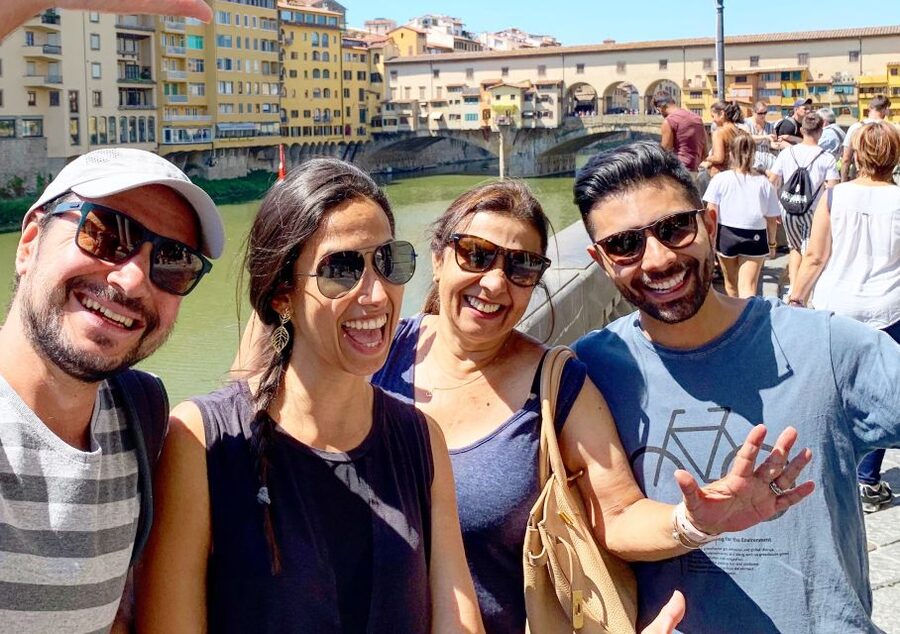
The route continues to Ponte Vecchio, one of Florence’s most recognizable sights. The bridge provides a change of mood after the dense sequence of palaces, churches, and civic buildings.
Here, the guide can connect the bridge to the broader story of Florence as a working city as well as an artistic one. You get a sense of how the river crossing fits into the historic center and why this part of town has remained such a strong focus for visitors.
The bridge itself is busy, and stopping for a long explanation may be difficult. Keep your group in sight, especially if you want photographs. The tour is meant to show you the route and explain its meaning, not give you a private, unhurried bridge visit.
The walk finishes outside the Uffizi Gallery. This is a useful endpoint because you can continue into one of Florence’s major art museums, walk toward the river, or use the guide’s recommendations to plan lunch, dinner, drinks, or shopping.
What the guides do best
The strongest feature of this experience is the guide’s delivery. The recorded guide names include Chiara, Michele, Glenda, Angela, Fabio, Ricardo, Antonio, Autumn, Gabriella, Manuel, and others.
Chiara is often praised for clear storytelling and for managing groups through narrow streets. Michele is described as warm, funny, and especially good at turning the Medici story into something easy to remember. Glenda receives praise for detailed explanations and for answering questions. Fabio, Ricardo, Angela, and Antonio are also noted for strong history and culture coverage.
The exact personality will vary. That is normal for a tour with several guides, and it means you should not book expecting one specific person unless the booking system confirms the guide.
English and Spanish are offered. Some English-language feedback specifically notes clear speech, and the use of a microphone and earpieces may help in crowded areas. If you have hearing concerns, stay near the guide and ask for clarification when needed.
Price, tipping, and overall value
The listed price is $2.36 per person, but this is not a conventional fully paid walking tour. It follows a free-tour model, with a tip expected according to your satisfaction. One published experience specifically notes a payment of 4.90 euros followed by a tip.
That means the headline price is not the full amount you should budget. Think of it as a low-cost booking arrangement with the real cost determined partly by your tip. A significant tip is customary when the guide gives you two hours of lively history and useful local advice.
For value, this is a strong deal if you want orientation and context rather than museum entry. You see many of Florence’s headline sights in one continuous route, and you can use the guide’s food and shopping suggestions during the rest of your stay.
The value is lower if you want to enter every major building or spend long periods examining art. In that case, you will need additional tickets and perhaps a separate specialist tour.
Timing, comfort, and who should take it
The stated duration is two hours, while the detailed route describes about two hours and fifteen minutes. Allow a little extra time rather than scheduling a train, museum reservation, or meal immediately afterward.
Wear comfortable shoes. Florence’s center is best explored on foot, and the tour takes place rain or shine. Bring water, a camera, and clothing suited to the weather.
I would take this tour near the beginning of a Florence visit. It gives you a map in your head, explains why the major sights matter, and supplies ideas for food, drinks, shopping, and further sightseeing.
It suits first-time visitors, families, history fans, and anyone who finds Renaissance names hard to keep straight. It is also useful for a short weekend because the route covers a lot without requiring a full day.
You may want something else if you dislike group walking tours, need long indoor visits, or want a highly specialized art lecture. The tour is broad by design. Its purpose is to connect Florence’s major stories, not examine one painting or building in exhaustive detail.
Should you book this Florence walking tour?
Book it if you want a lively introduction to Florence, especially on your first day. The Medici storyline gives the route a clear focus, while Dante, Brunelleschi, Giotto, Michelangelo, public sculptures, and local recommendations keep it varied.
Just remember three things: the route is mainly outdoors, entrance fees are not included, and the very low advertised price comes with an expected tip. If those conditions suit you, this is an efficient and unusually affordable way to understand why Florence became the center of the Renaissance.
FAQ
How long does the Florence Renaissance and Medici walking tour last?
The activity is listed as two hours. The detailed tour route gives an estimated duration of 2.25 hours, so allow a little extra time.
Where do I meet the guide?
Meet at Florence Free Tour-Tale, in front of the stairs leading to the main entrance of San Lorenzo Church. Look for the green umbrella.
What languages are available?
The live guide is available in English and Spanish.
Does the tour enter the Duomo, Palazzo Vecchio, or Uffizi Gallery?
The tour includes guided visits and explanations at the exteriors of these major sights, but entrance tickets are not included in the activity.
Is the walking tour wheelchair accessible?
Yes, the activity is listed as wheelchair accessible.
What should I bring?
Bring comfortable shoes, water, a camera, and clothing suitable for the weather. The tour takes place rain or shine.
Can I cancel the booking?
Yes. You can cancel up to 24 hours in advance for a full refund. You can also reserve now and pay later.
Fresh on the Florence list
- Florence: Uffizi Guided Tour with Skip-the-Line Entry Ticket★ 4.8 · 499 reviews
- The Best of Florence Walking Tour in a Small Group★ 5.0 · 503 reviews
- Florence: Uffizi Gallery Tickets with Optional Audio Guide★ 4.1 · 503 reviews
- Premium Pasta and Gelato Cooking Class in Florence★ 5.0 · 508 reviews
- From Florence: Tuscany & San Gimignano Tour with 2 Tastings★ 4.8 · 511 reviews
- Florence: Guided Tour of Medici Family Secrets and Chapels★ 4.7 · 512 reviews
- Tuscany Vespa Tours Through the Hills of Chianti★ 5.0 · 515 reviews
- Pasta and Tiramisu Cooking Class with optional Local Market Tour★ 5.0 · 515 reviews
Walking Tours, compared.
Guided Walking Tour & Last Supper Visit with Ticket
Read our review →
Rialto Bridge & Offbeat Unusual Venice Walking Tour
Read our review →
Private 3 hrs Venice Tour: St Mark’s, Walking tour & Boat tour
Read our review →
Skip the line: Uffizi and Accademia Small Group Walking Tour
Read our review →Browse the lists this tour appears in