
Reviewed · MUSEUMS
Florence: Pitti Palace, Boboli Garden, Palatine Gallery Tour
Pitti Palace gives you a different view of Florence: less civic grandeur than Palazzo Vecchio, more royal display, private rooms, polished stone, and family power on a very large scale. The Palatine Gallery is the prize, with works by Raphael, Titian, Rubens, Van Dyck, and Caravaggio hung in rooms that can feel almost as lavish as the paintings.
I like the tour’s combination of serious art and open-air walking. I also like the early start, especially in summer, when Boboli’s paths are cooler and quieter. The catch is the terrain: Boboli is hilly, with plenty of uphill and downhill walking, so comfortable shoes are not optional. At $115, the tour is worthwhile if you want context and guidance, but less so if you prefer to move through museums at your own pace.
Key points to know before booking
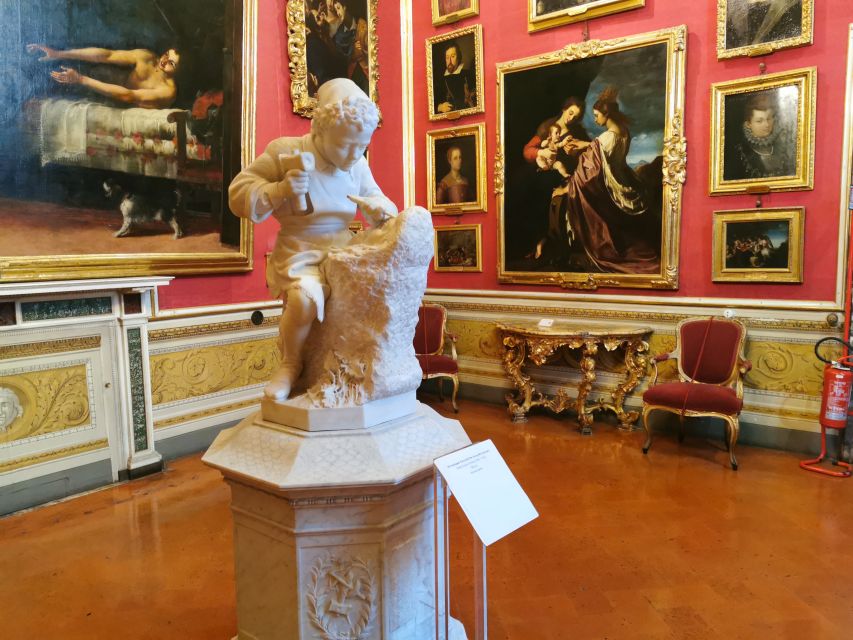
- The Palatine Gallery is the artistic centerpiece: See major Renaissance and Baroque paintings in ornate Medici rooms.
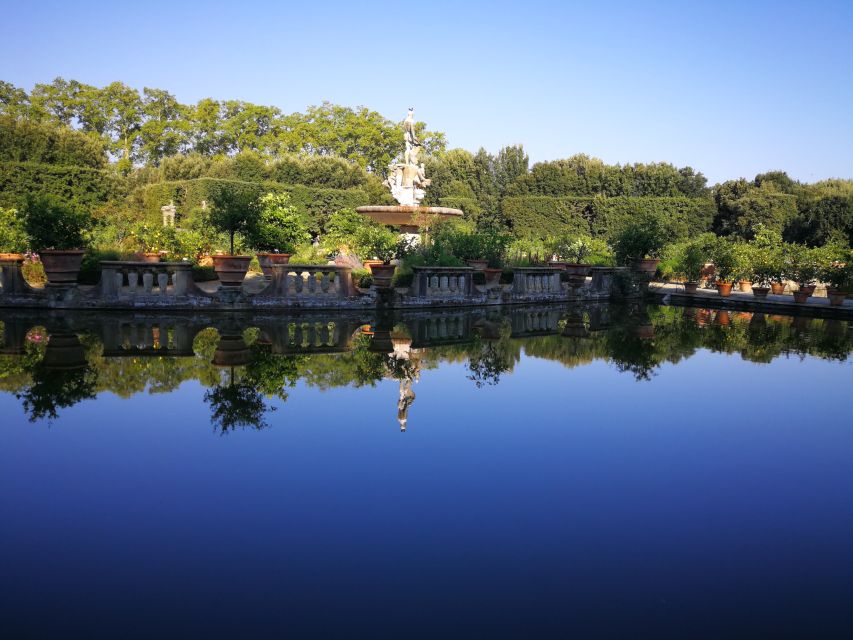
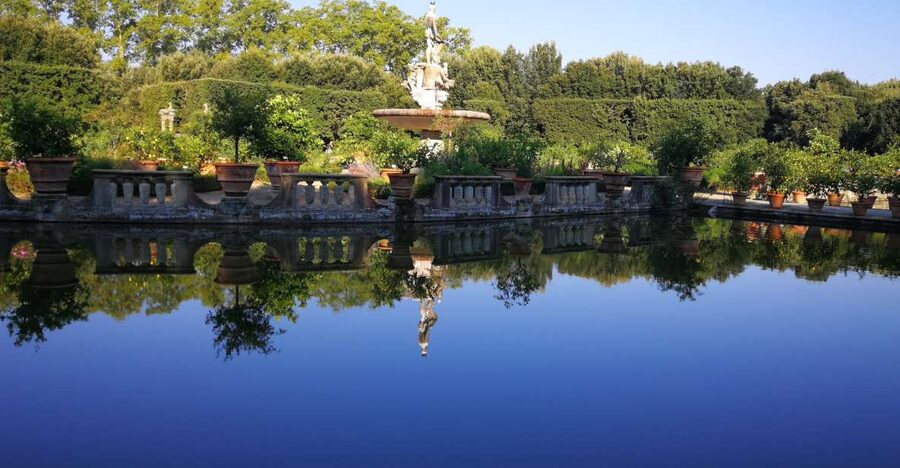
- Boboli adds breathing room: The garden includes the old Amphitheater, broad green spaces, sculpture, and upper-level views over Florence.
- The guide makes the difference: Camilla, Sara, Silvia, Elena, Federica, and other English-speaking guides have led tours praised for clear explanations and strong art knowledge.
- Early morning is smart: The garden is more pleasant before the heat, and the palace is easier to appreciate before you are museum-tired.
- You walk on slopes and stairs: Plan on a fair amount of exercise, with some options for lifts and slower pacing when needed.
- The ticket covers more than the guided highlights: You may have time afterward to see other displays in the palace on your own.
Why Pitti Palace feels different from Florence’s other museums
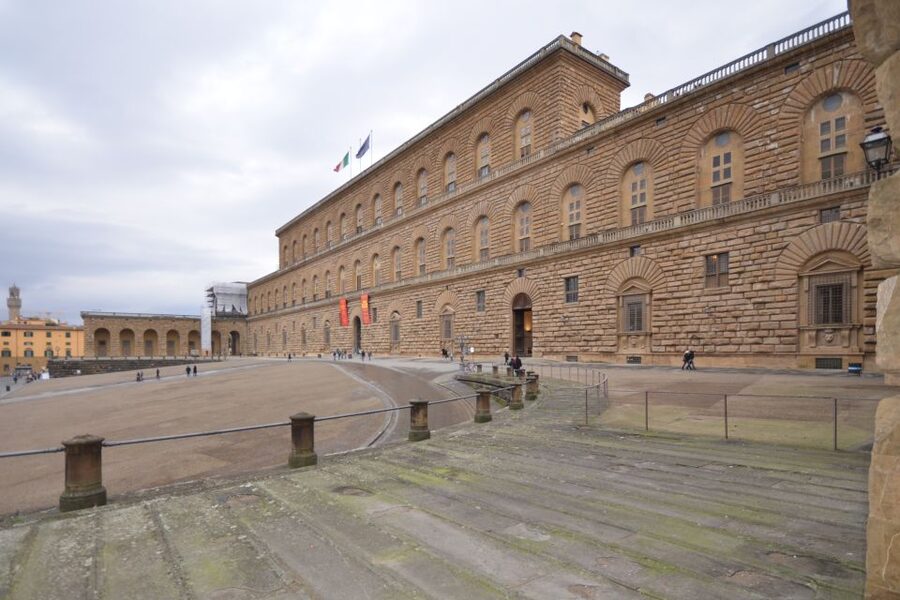
Pitti Palace sits across the Arno in the Oltrarno, facing Piazza Pitti with a broad, stern stone façade. Its scale tells you at once that this was not built as a modest city residence. The palace began for the Pitti family and later became associated with the Medici, followed by the Habsburg-Lorraine rulers and the kings of Italy.
Your tour begins at the main entrance, Piazza Pitti number 1, usually in the early morning. The first stop is the grand courtyard, a useful pause before the ornate rooms upstairs. Here, the palace feels imposing and architectural. You get a sense of how power was presented before a guide starts pointing out individual paintings.
The palace can be overwhelming on your own. Room after room brings another ceiling, cabinet, table, portrait, or framed canvas. I like having a guide select the important pieces instead of trying to absorb every object at once. Several guides, especially Camilla, Sara, and Silvia, are praised for explaining the Medici family while keeping the art accessible to people with different levels of background.
This matters because the palace is not arranged like a simple modern gallery. The works are part of the rooms, and the rooms are part of the message. A guide can explain why a particular ceiling is covered in stucco, why a painting has such an elaborate frame, or how costly materials helped advertise the family’s status.
More Museums in Florence
- Florence: Skip-The-Line Uffizi Gallery Timed Entry Ticket
★ 4.5 · 27,832 reviews - Florence: Leonardo Interactive Museum Entry Ticket
★ 4.5 · 11,763 reviews - Florence Accademia Gallery Tour with Entrance Ticket Included
★ 4.5 · 6,148 reviews
The noble floor and the Palatine Gallery
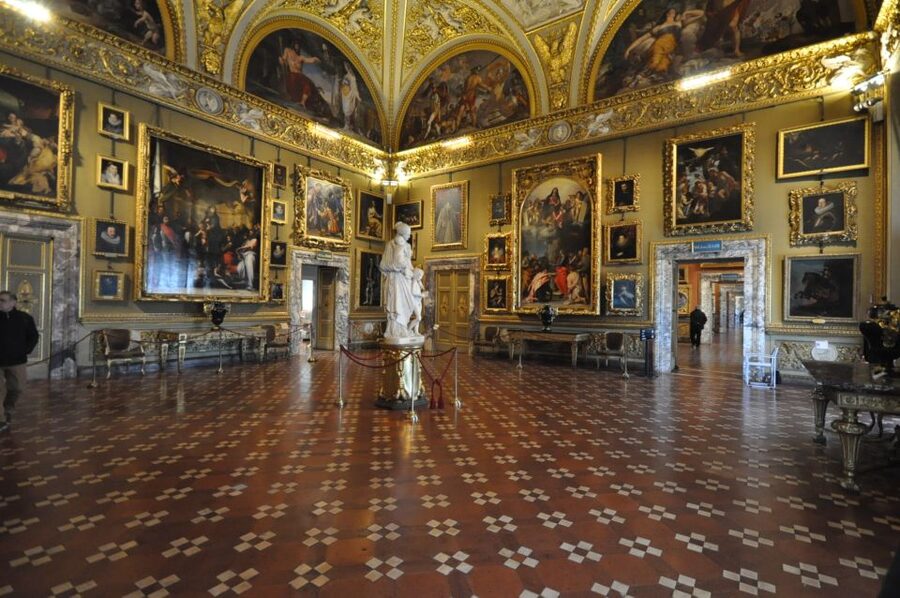
From the courtyard, you go to the noble floor, described here as the first floor. This is where the Palatine Gallery takes over the experience. The rooms contain Renaissance and Neoclassical furniture, frescoed ceilings, gilded frames, and striking inlaid surfaces made with semi-precious stones.
The decoration is not a quiet background. It competes for your attention. You may find yourself looking up at a painted ceiling one moment and down at a polished tabletop the next. Those stone inlays are especially useful for understanding the Medici taste: art was not limited to canvases on walls. Craft, furniture, architecture, and precious materials all worked together.
The paintings include works connected with Andrea del Sarto, Raphael, Titian, Rubens, Van Dyck, and Caravaggio. You will not simply be walking through a long list of famous names. The guide’s job is to show you how to look at the pictures and place them in their period.
That is where this tour earns much of its price. A strong guide can point out a gesture, a composition, or a change in style that you might otherwise miss. Several guides are also described as artists or restorers, including Camilla, whose background in fresco and mosaic restoration has helped participants notice materials and technique as well as subject matter.
The gallery also has a useful advantage over Florence’s busiest museums: the rooms can offer more space to pause. You may be able to get closer to individual works than you can in the most crowded parts of the Uffizi. That does not mean the palace is empty, but the pace can feel less pressured.
The guide usually focuses on highlights rather than every painting. I consider that a strength during a three-hour visit. Pitti Palace is too large for a detailed look at everything in one morning, and trying to cover every room would turn the tour into a march.
Medici power told through rooms, objects, and paintings
The Medici story is central, but this is not a tour built only around names and dates. You see how a grand-ducal residence functioned as a display of authority.
The family’s collection brought together paintings, furniture, decorative arts, and architecture. The result can seem extravagant, even by Florence’s high standards. The guide helps connect the parts: a portrait may tell you about dynastic image-making, while a precious stone tabletop shows the resources available to a ruling house.
I especially like the way the palace can make history physical. Instead of hearing only that the Medici were powerful, you see the size of their rooms and the money spent on surfaces that most households would never have encountered. Frescoes and stuccowork cover ceilings, while paintings sit in gilded frames that are works of art in their own right.
The strongest guides keep this from becoming a lecture. Camilla has been praised for answering questions, adjusting the pace, and explaining complicated art in plain English. Other guides, including Elena, Federica, Ida, and Christian, have also been praised for warmth, humor, and clear communication.
You should not book this tour expecting a specialist seminar on one painter. You should book it if you want a well-chosen introduction to the palace and its collection, with enough detail to make the rooms feel connected rather than random.
Boboli Gardens and the old Amphitheater
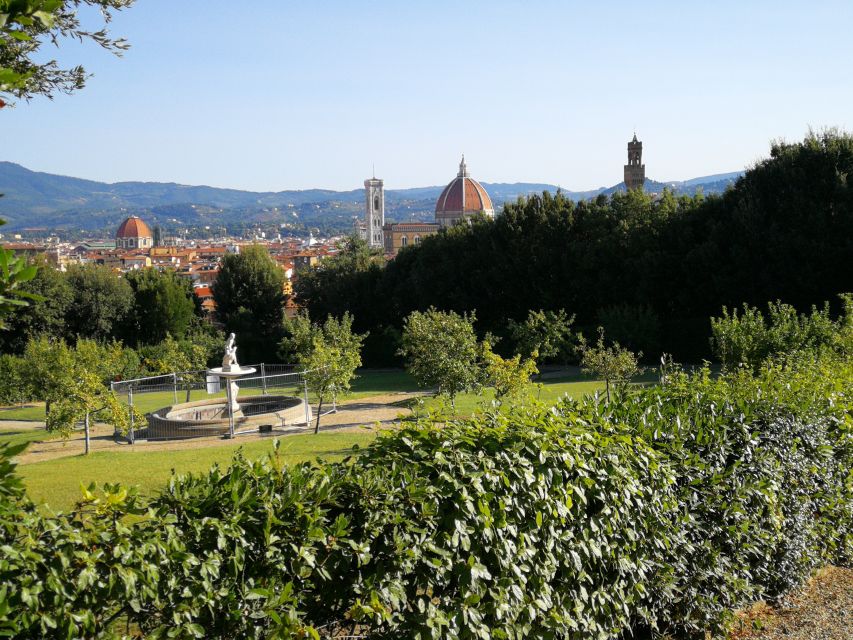
After the palace, the tour moves outdoors to the Boboli Gardens. This change of setting is one of the experience’s best features. You go from crowded visual detail indoors to paths, lawns, sculptures, and long views.
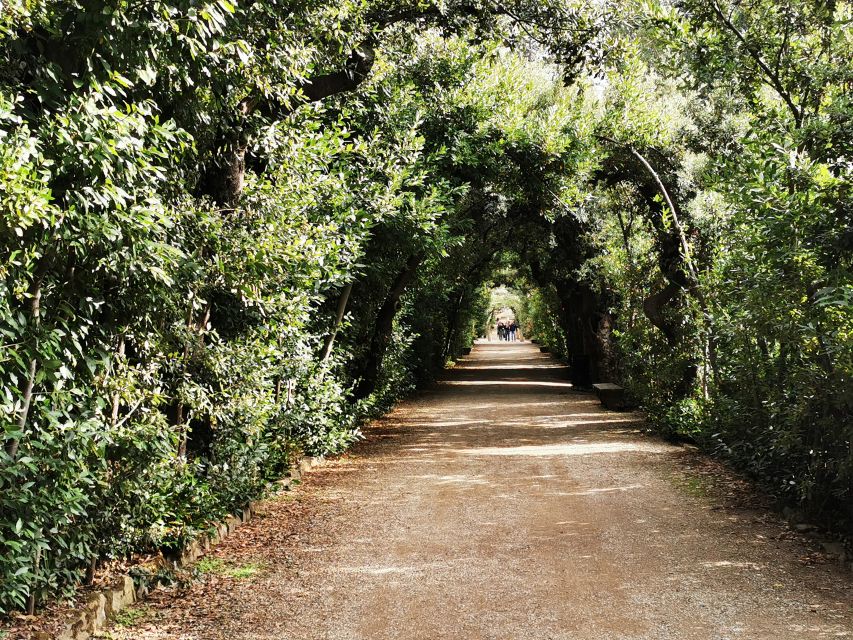
Boboli is not a flat public park. It is a formal historic garden with slopes and stairs, and the route can be a workout. One particularly useful tip is to continue toward the top when conditions and mobility allow. The upper parts give you impressive views of Florence, and stopping halfway means missing one of the garden’s best rewards.
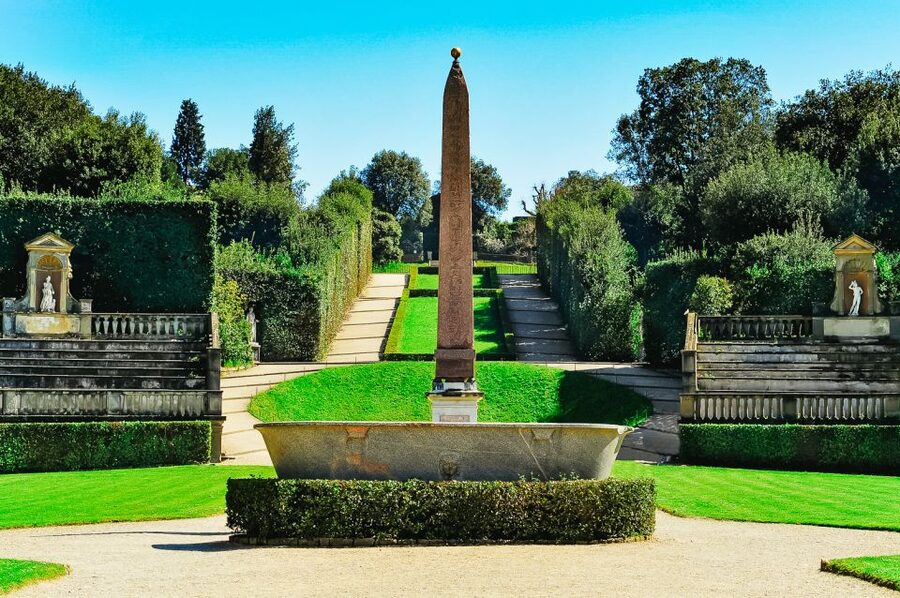
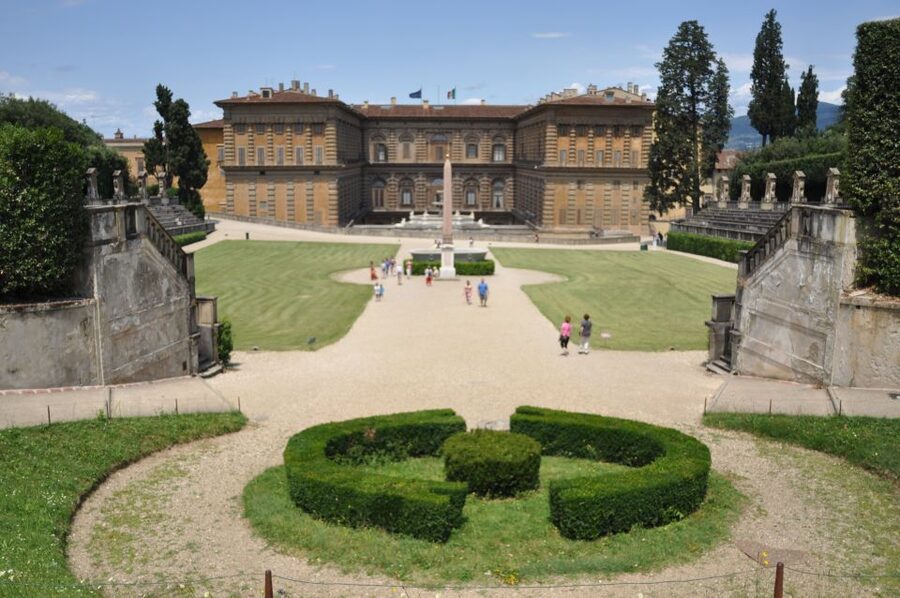
The old Amphitheater is a key stop. Its shape helps you understand how the garden was designed as a stage for court life and ceremony. The setting is not just decorative greenery. Paths, open spaces, sculptures, and architectural features guide your movement and frame what you see.
The tour also explores the oldest part of Boboli. This adds context to the garden’s design and its influence on later garden planners. You can look at it as a pleasant walk, but the guide gives you a clearer sense of how the Medici used outdoor space to project order, wealth, and control.
The early timing is a real advantage. Boboli can be hot in summer, and the garden has limited shade in some areas. An early morning visit gives you a better chance of enjoying the paths before the strongest heat. The garden can also be a welcome break if you have spent several days moving through Florence’s indoor museums.
Still, take the physical side seriously. Wear walking shoes with a firm sole. If stairs or steep paths are difficult for you, tell the guide at the start. Guides have adjusted routes, offered lift options inside the palace, and built in rest or toilet stops for people with mobility concerns. The garden itself remains hilly, so no guide can remove every challenge.
Same city, an entirely different afternoon:
- Tuscany Day Trip from Florence: Siena, San Gimignano, Pisa and Lunch at a Winery
★ 5.0 · 21,634 reviews - Florence: Timed Entrance Ticket to Michelangelo’s David
★ 4.6 · 16,983 reviews - Florence: Michelangelo’s David Skip-the-Line Entry Ticket
★ 4.5 · 12,764 reviews - The Best tour in Florence: Renaissance & Medici Tales – guided by a STORYTELLER
★ 5.0 · 12,316 reviews
How the three-hour schedule works
Three hours is enough for a strong overview, not a full examination of every room and path. You begin at the palace entrance, visit the courtyard, go upstairs for the Palatine Gallery, and then continue to Boboli.
The palace portion often takes the largest share of your attention. You see the grand rooms, major paintings, decorative surfaces, furniture, ceilings, and Medici connections. The garden section then gives you time to walk and see the palace from another angle.
A guide has to keep the group moving. That can be frustrating if you want ten minutes in front of one painting, but it prevents the visit from losing shape. One guide was praised for moving at a perfect pace, while another offered choices about what to see. Those are useful qualities in a complex palace where every room can tempt you to stop.
Earsets are provided when there are four or more participants. That matters in echoing rooms and outdoors, where it can be easy to lose a sentence while looking at a ceiling or walking along a garden path.
The experience is conducted in English. The guide is live rather than recorded, so you can ask questions and request more explanation about a painting, a room, or the Medici family. The quality of the experience depends partly on the assigned guide, but the repeated praise for Camilla, Sara, Silvia, Elena, and others suggests that the guiding is a major part of what you are paying for.
What else you may see after the guided visit
The main tour concentrates on Pitti Palace, the Palatine Gallery, and Boboli Gardens. If you still have energy, the same admission has also allowed some participants to explore other palace areas independently.
These extra displays have included modern art, historic objects, and Italian fashion across several centuries. The fashion presentation is a particularly useful add-on if you enjoy clothing, design, or social history. It also gives you a reason to linger after the guide has finished instead of treating the palace as a quick checklist stop.
Do not count on having unlimited time for every extra room. The tour itself lasts three hours, and your energy will depend on the heat, the hills, and how long you spend in the gallery. But knowing that you may continue on your own makes the ticket more useful for an art-focused day.
If you want a longer independent museum visit, plan your priorities before arriving. Focus on the guided highlights first, then use any remaining time for the displays that interest you most.
Is $115 a fair price?
At $115 per person, this is not a bargain admission ticket. You are paying for more than entry, though: a licensed English-speaking guide, timed access to Pitti Palace, the Palatine Gallery, and Boboli Gardens, plus the benefit of avoiding the ticket line.
The value is strongest for first-time visitors who do not know Florence’s art well. A guide can reduce the palace’s visual overload and give you a story to follow. You also cover two different kinds of sightseeing in one three-hour block, indoor art and outdoor gardens.
The price is harder to justify if you already have a strong background in Renaissance painting or prefer to read labels and set your own pace. You might want to spend a long time with one Raphael or Caravaggio, while a group tour must continue.
I would also compare this cost with your schedule. If you have only a short stay in Florence, the tour gives you an organized route and saves you from working out how to handle a huge palace and garden complex. If you have several open days, an independent visit may offer more freedom, though you lose the guide’s art and Medici context.
Lunch is not included, so plan to eat before or after the tour. The early start can work well with a later lunch in the Oltrarno, but the exact starting time varies, so check availability when booking.
Who will enjoy this tour most?
I would recommend it to you if you like art but do not want to spend hours researching which rooms matter. It also suits couples and families with mixed interests, since the palace offers paintings and interiors while Boboli gives everyone a chance to walk outdoors.
The tour works well for people who want Florence beyond the Uffizi and Accademia. Pitti Palace has a different mood, and Boboli gives you a broader view of Medici life. If the main museums feel too crowded, you may appreciate the more relaxed pace in parts of this complex.
It is also a good fit for older adults or people with some mobility needs, provided you discuss the terrain honestly before booking. Guides have been thoughtful about wheelchairs, hearing difficulty, stairs, and rest breaks, but Boboli’s slopes remain part of the site.
I would be cautious if you dislike hills, want a fully accessible route, or plan to spend the whole morning indoors. Boboli is not an optional little garden stroll. It is a substantial part of the tour and requires comfortable shoes.
Practical advice for a smoother visit
Meet at Piazza Pitti number 1, the main entrance to Pitti Palace. Arrive ready to begin outdoors as well as indoors, since the route includes both formal rooms and uneven garden paths.
Wear comfortable shoes with good support. This is the single clearest practical tip for Boboli, especially if you intend to walk to the upper areas for the views.
Bring questions. The guides are prepared to discuss art, restoration, furniture, architecture, and the Medici family, and the tour is at its best when you engage rather than simply follow.
If you have trouble hearing, mention it early. Earsets are supplied for groups of four or more, and guides have made special efforts to ensure that people with hearing difficulty can follow along.
You can cancel up to 24 hours before the activity for a full refund, and the reserve-now, pay-later option gives you some flexibility while finalizing your Florence plans.
Should you book the Pitti Palace and Boboli tour?
Book it if you want a guided introduction to one of Florence’s grandest residences, with major paintings and a garden that opens up the city after a morning indoors. The combination is unusually well balanced, and the strongest guides bring real art training, historical context, and humor to the visit.
Skip it if you want complete freedom to linger or if steep garden paths are a serious problem. At $115, the tour depends on you valuing interpretation as much as admission.
For most first-time visitors who want the Medici story, the Palatine Gallery’s famous paintings, and Boboli’s upper views in one organized morning, I would book it. Aim for the earliest available start, wear proper shoes, and leave room afterward for any palace exhibits you want to explore independently.
FAQ
How long does the tour last?
The tour lasts three hours.
What sites are included?
The timed entry ticket includes Pitti Palace, the Palatine Gallery, and Boboli Gardens.
Is the tour conducted in English?
Yes. The activity includes a live English-speaking guide.
Where is the meeting point?
Meet at Piazza Pitti number 1, at the main entrance to Pitti Palace.
Are audio devices provided?
Earsets are provided when there are four or more participants.
What should I wear?
Wear comfortable shoes because Boboli Gardens includes uphill and downhill walking.
Fresh on the Florence list
- Florence: Uffizi Guided Tour with Skip-the-Line Entry Ticket★ 4.8 · 499 reviews
- The Best of Florence Walking Tour in a Small Group★ 5.0 · 503 reviews
- Florence: Uffizi Gallery Tickets with Optional Audio Guide★ 4.1 · 503 reviews
- Premium Pasta and Gelato Cooking Class in Florence★ 5.0 · 508 reviews
- From Florence: Tuscany & San Gimignano Tour with 2 Tastings★ 4.8 · 511 reviews
- Florence: Guided Tour of Medici Family Secrets and Chapels★ 4.7 · 512 reviews
- Tuscany Vespa Tours Through the Hills of Chianti★ 5.0 · 515 reviews
- Pasta and Tiramisu Cooking Class with optional Local Market Tour★ 5.0 · 515 reviews
Museums, compared.
Vatican: Museums & Sistine Chapel Entrance Ticket
Read our review →
Vatican Museums & Sistine Chapel Tour with Optional Basilica
Read our review →
Vatican Museums, Sistine Chapel & St Peter’s Basilica Guided Tour
Read our review →
Skip-The-Line Uffizi Gallery Timed Entry Ticket
Read our review →
Vatican Museums, Sistine Chapel & Basilica Tour
Read our review →
Vatican Museums & Sistine Chapel Skip-the-Line Entry Ticket
Read our review →Vatican Museums, Sistine Chapel & Basilica Tour
Read our review →
Vatican Museums & Sistine Chapel Guided Tour
Read our review →Browse the lists this tour appears in