
Reviewed · TICKETS
Florence: Palazzo Vecchio Entrance Ticket & Audioguide
Palazzo Vecchio is Florence’s great civic stage, where medieval government, Medici power, Renaissance art, and modern city life meet under one roof. I like the way the visit lets you explore at your own speed, and I especially like the Salone dei Cinquecento, where Vasari’s huge paintings turn a government hall into a grand statement of Medici ambition.
I also like having a choice between a standard audioguide and a tablet with photographs, video, and 3D scenes. The optional Arnolfo’s Tower climb adds the best payoff: Florence, the Duomo, and the Tuscan hills spread out below you. The catch is that the guide can be hard to follow, the museum route is not always obvious, and the tower involves many steps.
Key points to know before you go
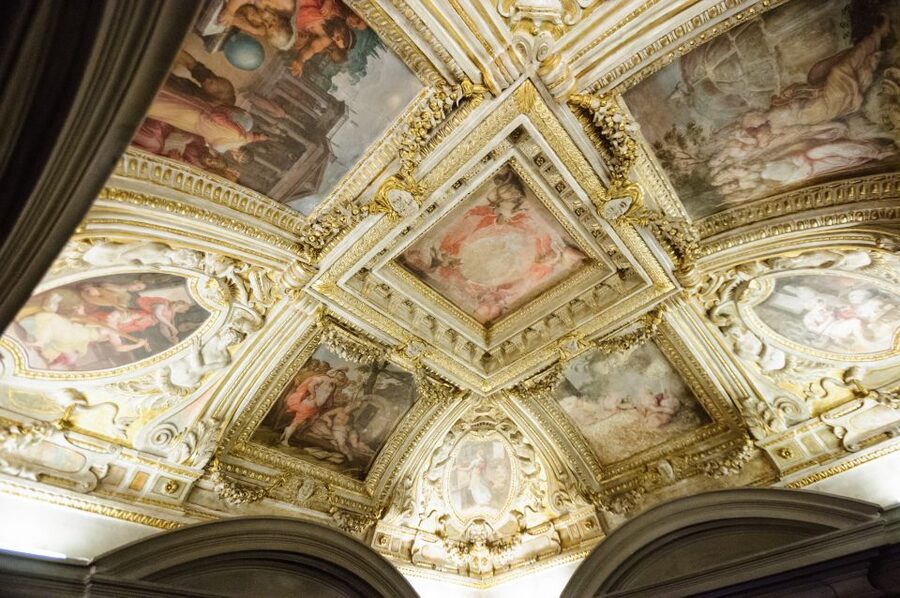
- Medici power in picture form: See the palace rooms, carved ceilings, sculptures, and paintings that explain how Florence’s rulers presented themselves.
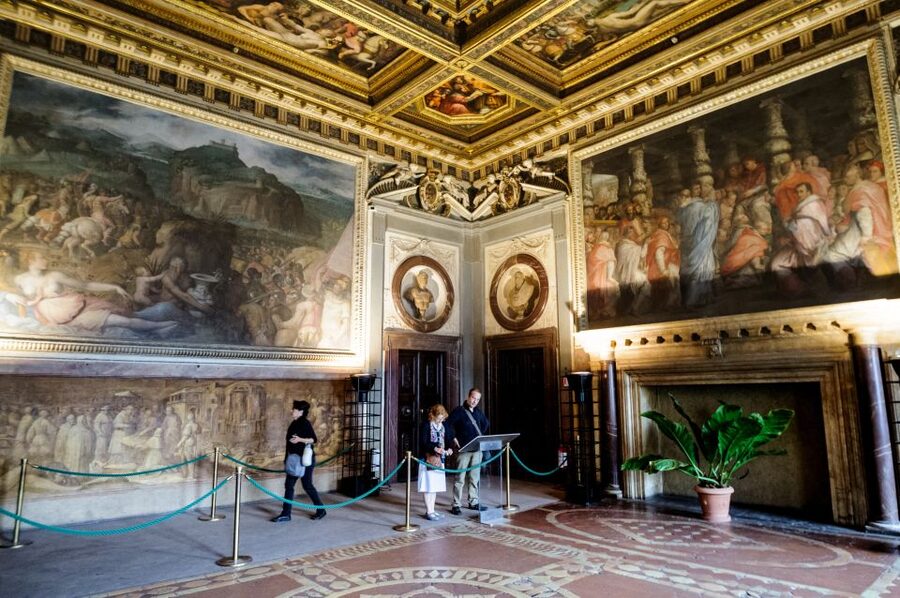
- The Salone dei Cinquecento is the star: Vasari’s work fills the enormous hall and gives the visit its grandest moment.
- Pick your guide with care: The tablet adds images and 3D reconstructions, while the audio option keeps things simpler.
- The tower is worth considering: Arnolfo’s Tower offers fine views, but the climb can involve more than 200 steps and access can stop in rainy weather.
- Allow more than a quick look: The visit can feel short if you move straight through, but the palace rewards time spent studying its ceilings and rooms.
- Bring identification: You need a passport or ID card, and a valid ID must be left at the ticket office for the multimedia tablet.
Why Palazzo Vecchio matters in Florence
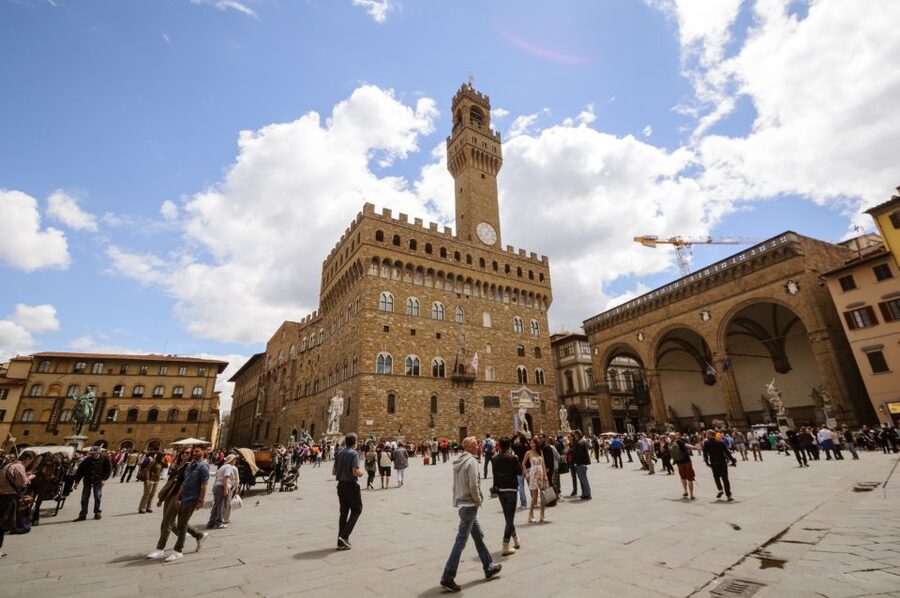
Palazzo Vecchio began in 1299 as the headquarters of Florence’s medieval government. Its name means Old Palace, a practical title that reflects the building’s later change in role after the Medici family made it their residence and reshaped it into a palace.
That change is the key to understanding the visit. You are not simply walking through an old government building. You are moving through rooms designed to show power, wealth, order, and artistic taste. The palace tells the story of Florence through architecture as much as through labels and recordings.
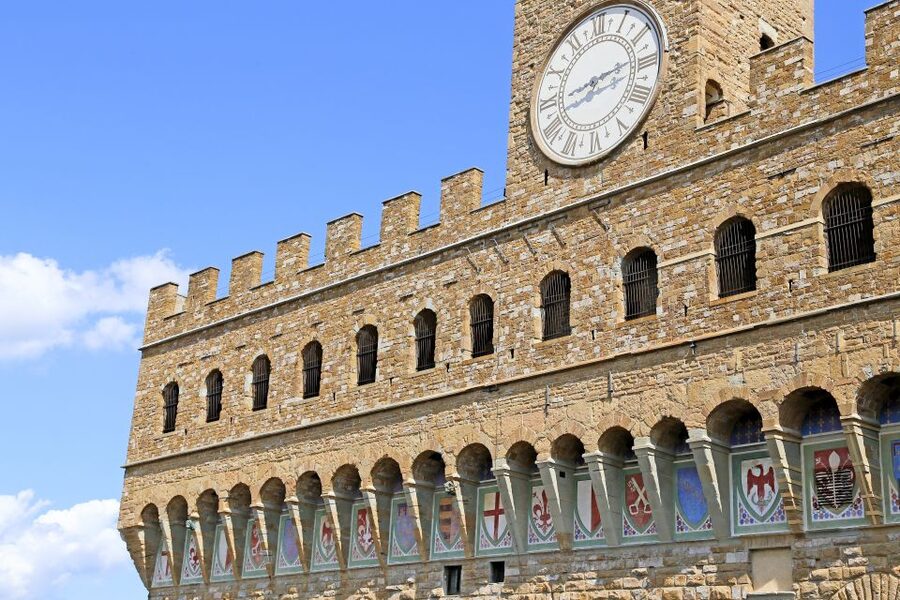
From outside, the building looks stern and defensive, with its stone walls and tall tower. Inside, the mood changes. Courtyards, decorated chambers, painted walls, carved ceilings, and carefully arranged sculpture show how the building moved from city hall to princely residence.
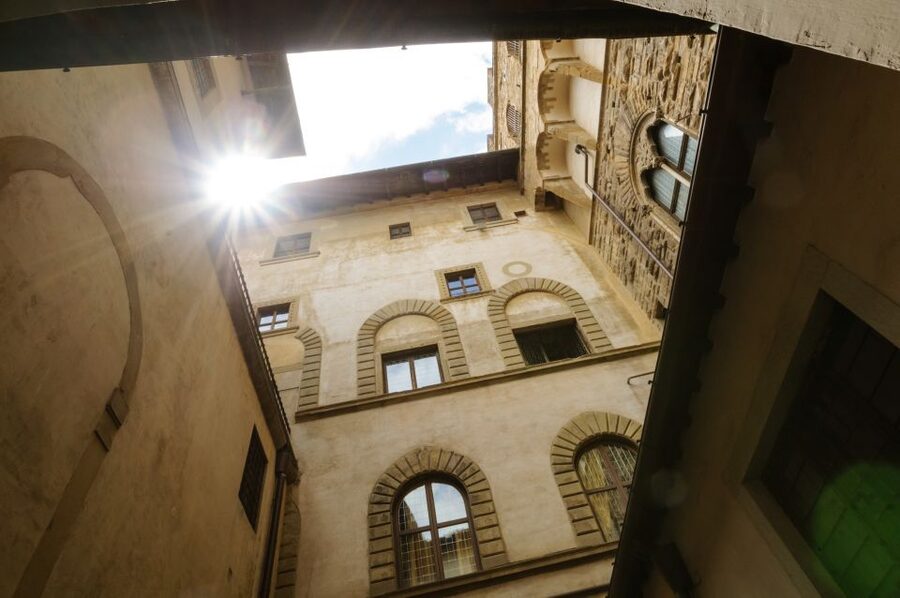
I recommend taking a moment in the courtyard before rushing to the galleries. The transition from Piazza della Signoria into the palace helps you see the building as part of Florence’s public life, not as an isolated museum.
A few other Florence mornings to weigh against this
- Florence: Skip-The-Line Uffizi Gallery Timed Entry Ticket
★ 4.5 · 27,832 reviews - Florence: Timed Entrance Ticket to Michelangelo’s David
★ 4.6 · 16,983 reviews - Florence: Michelangelo’s David Skip-the-Line Entry Ticket
★ 4.5 · 12,764 reviews
Finding the entrance in Piazza della Signoria
The entrance is from Piazza della Signoria, the open square beside the palace. Once inside the Palazzo Vecchio courtyard, go to the ticket office and head directly to the InfoPoint counter to exchange or confirm your admission.
This process is generally simple, but the first few minutes can feel confusing because the courtyard, ticket office, information desk, security arrangements, and museum entrance do not all look like one single queue. I would follow the instructions for the InfoPoint rather than joining a line automatically.
The skip-the-ticket-line admission is most useful at busy times. It may matter less during a quiet weekday, when you might be able to arrange entry directly, but advance booking also gives you a selected entry time. That can help you fit Palazzo Vecchio between the Duomo, the Uffizi, and other fixed appointments.
Bring your passport or ID card. You may need to show it at the ticket office, and you must leave a valid ID there to borrow the multimedia tablet.
Choosing between the audioguide and tablet
You can select a standard audio or a multimedia guide, depending on the option booked. The audio guide is available in Spanish, English, French, German, Russian, Italian, Chinese, and Portuguese.
The multimedia option uses a 7-inch tablet with audio-video narration, high-definition images, and 3D recreations. I would choose this if you enjoy seeing reconstructions of how rooms may have appeared during the Medici period, or if you want extra visual help while looking at a ceiling or wall painting.
The standard audio option is a better fit if you prefer to keep your hands free and move without managing a screen. Both choices give you useful background, but neither replaces the judgment of a live guide. You are responsible for finding the correct room and matching the recording to what you see.
That is the main weakness of the self-guided setup. Numbered stops can be difficult to match with the rooms, and the map may not always make your location clear. In a large palace with several doors and changes in direction, it is easy to press the wrong number or start a recording before you are standing in the right place.
Take a moment to get your bearings before starting each section. Look at the room itself, check the guide map, and do not worry about following the recordings in a perfect order. The palace is more enjoyable when you use the device as help rather than treating it like a strict route.
The courtyard and the palace interiors
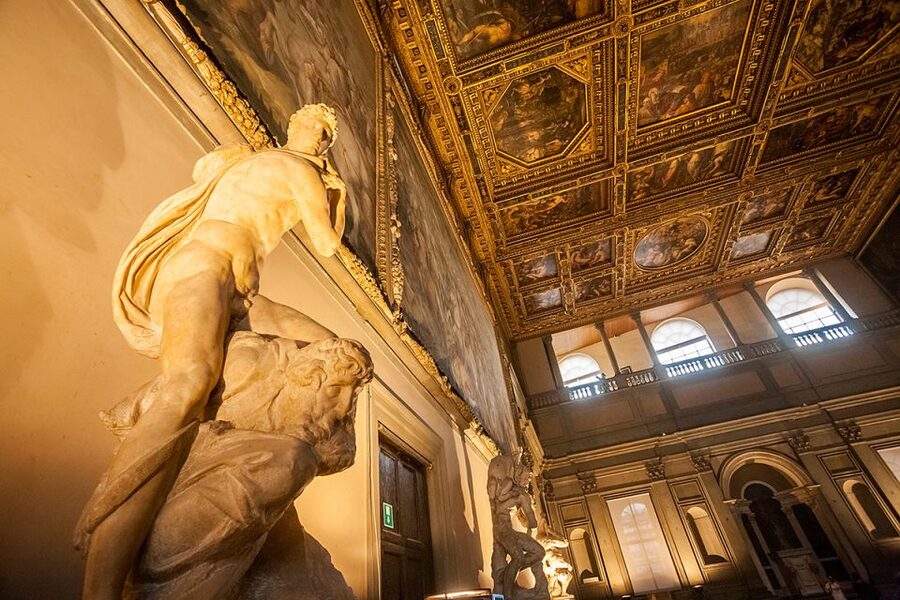
The courtyard provides the first taste of the palace’s decorative side. It is a useful pause between the noisy square outside and the formal rooms inside.
As you continue, pay attention to details above eye level. Painted ceilings can make visitors crane their necks, and some of the most impressive work is easy to miss if you focus only on the large paintings at eye level. The carved ceilings, patterned surfaces, and decorative details reward a slow look.
The museum combines two kinds of appeal. Some rooms are important because of what happened there, while others are memorable because of the art and decoration. The audio or video guide helps connect these two sides, explaining why a room matters instead of leaving you to admire an attractive interior without context.
I would not plan this as a ten-minute stop. The palace can be visited quickly, but that approach may leave you feeling that you saw only a fraction of it. Give yourself enough time to pause in each major room, look upward, and let the guide explain the objects around you.
Same city, an entirely different afternoon:
- Tuscany Day Trip from Florence: Siena, San Gimignano, Pisa and Lunch at a Winery
★ 5.0 · 21,634 reviews - The Best tour in Florence: Renaissance & Medici Tales – guided by a STORYTELLER
★ 5.0 · 12,316 reviews - Florence: Leonardo Interactive Museum Entry Ticket
★ 4.5 · 11,763 reviews - The Best Tour in Florence: Renaissance and Medici Tales
★ 5.0 · 10,810 reviews
The Salone dei Cinquecento and Vasari’s grand message
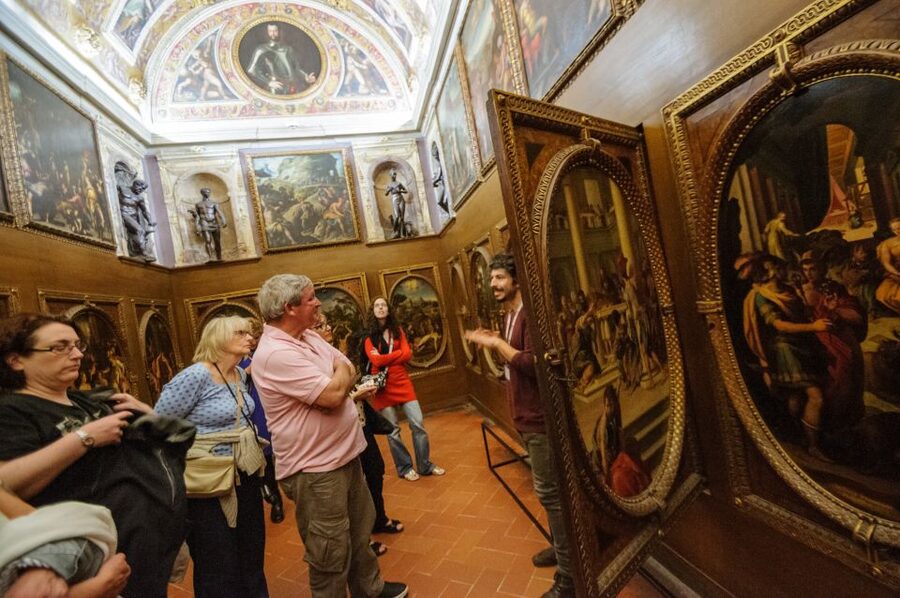
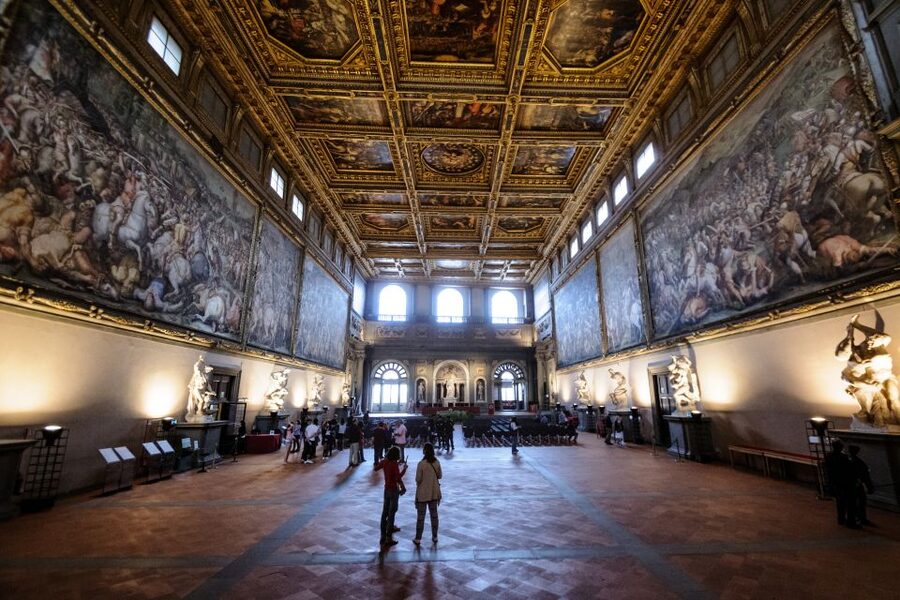
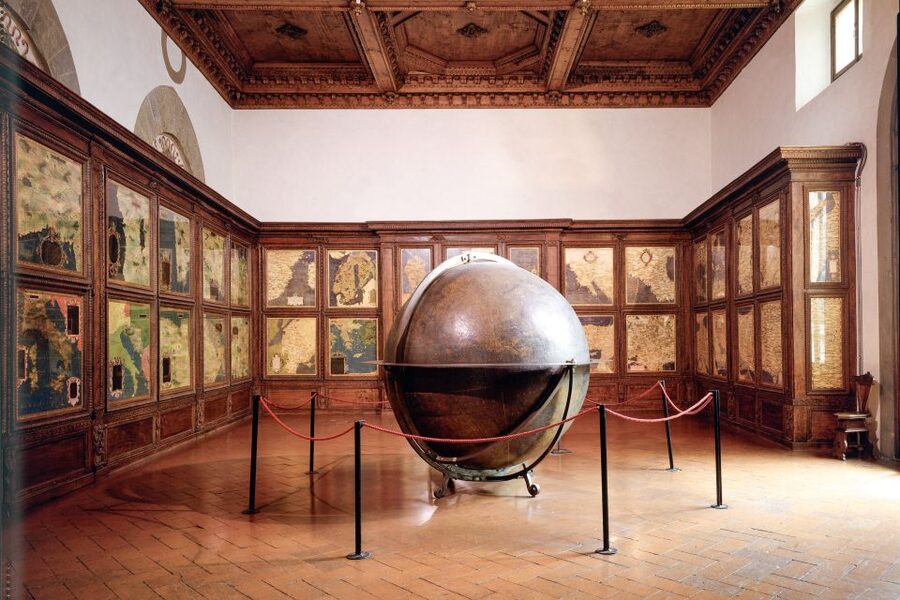
The Salone dei Cinquecento, or Hall of the Five Hundred, is the main event for many visitors. It was built as a large meeting hall and later decorated under Medici rule, giving the room both a civic purpose and a strong political message.
Vasari’s paintings fill the space with scenes of battles and victories. The scale is part of the effect. You do not read the room as a small collection of separate artworks. You experience it as a broad visual statement about Florence and its rulers.
This is where the guide earns its keep. Without context, you can still appreciate the size and color of the hall, but the recording helps explain the relationship between the building, the Medici family, and the artistic program. I would listen while standing in a position that lets you take in the full ceiling and walls, then pause the narration to inspect details.
Be aware that the Hall of the Five Hundred is closed to the public on September 16, 22, 23, 24, and 25. If your visit falls on one of those dates, the palace will still contain other rooms and works of art, but you will miss its largest and most dramatic interior.
Medici rooms, sculpture, and smaller details
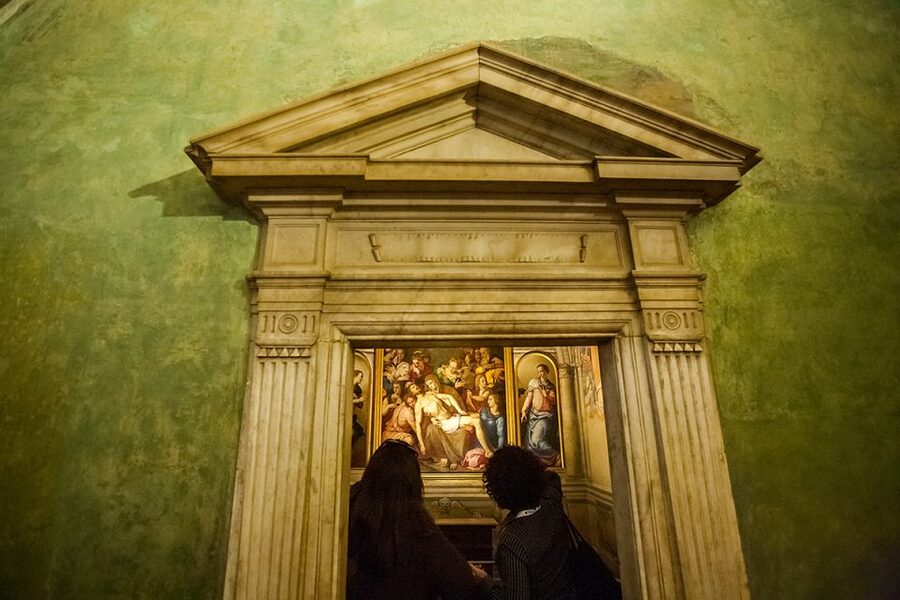
The palace has more to offer than its largest hall. You will find sculptures, paintings, architectural decoration, and rooms tied to the daily and official life of Florence’s ruling family.
I especially like the way the palace makes you look in several directions at once. A sculpture may catch your eye, then a painted wall leads you upward to a ceiling filled with carvings and decoration. This can be visually exciting, but it can also be tiring, especially if you spend the whole visit looking overhead.
The guide provides useful explanations of the rooms and artworks. The tablet’s reconstructions can help you picture the interiors during the Medici period, while the audio narration gives you a simpler way to follow the story.
Do not rush past the less famous rooms. The huge hall is the obvious highlight, but the smaller spaces often show how the palace functioned. I would keep the guide volume comfortable, stop often, and look at the room before listening to its explanation.
Adding Arnolfo’s Tower for the view
The tower option changes the shape of your visit. If you choose it, you visit Arnolfo’s Tower first and enter the museum one hour later. Plan around that fixed gap instead of assuming you can wander into the tower whenever you like.
The climb is the physical challenge. You may encounter more than 200 steps, and one detailed account describes 418 steps to the top. Another visitor found the climb manageable in about ten minutes, but your experience will depend on your pace and comfort with stairs.
The reward is a broad view over Florence. You can look toward the Duomo and across the city toward the Tuscan hills. The height gives you a different sense of Florence than you get from street level, and the view alone can justify the extra cost for many people.
The tower is not suitable for children aged 0 to 6. Visitors aged 7 to 17 must be accompanied by an adult. Access may be suspended in rain, although the battlements may still be available. If the weather is uncertain, treat the tower as a worthwhile extra rather than the one reason to book the palace.
You might also find the tower route more demanding than expected if you are tired from a full day of sightseeing. Wear sensible shoes and save some energy. The climb is short for some people, but the stairs are still the part of the experience most likely to test you.
Timing, comfort, and accessibility
The ticket is valid for one day and tied to the selected time. That makes this a flexible museum visit once you are inside, but you still need to arrive with your schedule in mind.
The palace is wheelchair accessible, though the tower has separate age and weather restrictions. I would check the exact route at the entrance if you have mobility concerns, since access to certain areas can be restricted during events.
Florence can be hot, and the palace may feel warm inside during summer. If you visit in July or another hot period, carry water for before and after the museum and avoid assuming the interior will feel cool.
Some rooms or areas may close when an event is taking place. This is another reason to treat the Hall of the Five Hundred and the tower as important bonuses, not guaranteed parts of every possible visit.
Is $37 a fair price?
At $37 per person, this is not the cheapest way to enter a Florence museum. The value depends on what you choose and how you use your time.
For the basic palace visit, you are paying for reserved admission, the convenience of avoiding the ticket queue, and an audio or multimedia guide. If you want background on the Medici rooms and the art, the guide adds real value. You can arrive, collect the device, and explore without waiting for a scheduled live tour.
The tower option makes the price easier to justify if you care about views. You get the palace interiors and the chance to climb one of Florence’s most prominent towers, but the extra steps and possible rain closure mean the tower should not be treated as a sure thing.
I would consider this good value for a first visit if you have limited time and want a self-guided experience. It is less convincing if you dislike audio tours, prefer a live historian, or plan to spend only a few minutes inside. The palace is worth more when you give it time.
Who will enjoy this visit most?
I would recommend it to first-time visitors who want a clear introduction to Florence’s civic and Medici history. Families may also like the freedom to pause or move on without keeping up with a group, although the audio content is the same for children and adults.
Art lovers will appreciate the paintings, sculpture, and ceiling decoration, while history fans will get more from the building’s change from medieval city hall to Medici residence. Fans of Inferno may enjoy recognizing the setting and atmosphere connected with the story.
The tower is best for people comfortable with stairs and eager for a high view of Florence. If your main interest is the palace’s art and rooms, the basic ticket may be enough.
This is not the best match for someone who wants a lively, continuous explanation from a person. The guide devices are informative, but you must operate them and find your own way through the rooms.
Practical tips for a smoother visit
- Arrive with your ID ready, especially if you are collecting the tablet.
- Find the InfoPoint inside the courtyard instead of joining the first queue you see.
- If you booked the tower, visit it first and return for the museum one hour later.
- Use earphones if you have them. Disposable earphones may be available if you forget yours.
- Check the room and map before starting each audio number.
- Look at the ceilings and carvings. Some of the best details are above your head.
- Leave enough time for the smaller rooms, not only the Hall of the Five Hundred.
- Check the forecast if the tower is important to your plans.
- Remember that the tower is closed to children aged 0 to 6, and ages 7 to 17 need an adult.
- Keep your expectations realistic on hot days. The building may feel warm inside.
Should you book Palazzo Vecchio with the guide?
I would book this experience if you want an easy, self-paced introduction to Florence’s government, Medici power, and Renaissance decoration. The Salone dei Cinquecento gives the visit its grand visual moment, while the optional tower adds a memorable view of the Duomo and Tuscan hills.
Choose the multimedia tablet if images and reconstructions help you understand art. Choose the audio guide if you want a lighter setup. Add the tower if you are comfortable with stairs and can accept the chance of weather-related closure.
I would skip it only if you strongly prefer a live guide or have no patience for finding numbered stops on a map. For most first visits, the combination of reserved entry, palace art, and optional tower access makes $37 a reasonable way to spend part of a day in Florence.
FAQ
Where is the entrance to Palazzo Vecchio?
The entrance is from Piazza della Signoria. Once inside the courtyard, go to the ticket office and head straight to the InfoPoint counter.
What does the ticket include?
It includes skip-the-ticket-line admission to Palazzo Vecchio and either a 7-inch tablet multimedia guide or an audioguide, depending on the option selected. Access to Arnolfo’s Tower is included only with the tower option.
Which languages are available for the guide?
The guide is available in Spanish, English, French, German, Russian, Italian, Chinese, and Portuguese.
Do I need identification?
Yes. Bring a passport or ID card. You will be asked to leave a valid ID at the ticket office when collecting the multimedia guide.
Can children enter Arnolfo’s Tower?
Children aged 0 to 6 cannot enter the tower. Visitors aged 7 to 17 must be accompanied by an adult.
Can the tower close because of weather?
Yes. Access to Arnolfo’s Tower may be suspended in rainy weather. The battlements may still be accessible.
Fresh on the Florence list
- Florence: Uffizi Guided Tour with Skip-the-Line Entry Ticket★ 4.8 · 499 reviews
- The Best of Florence Walking Tour in a Small Group★ 5.0 · 503 reviews
- Florence: Uffizi Gallery Tickets with Optional Audio Guide★ 4.1 · 503 reviews
- Premium Pasta and Gelato Cooking Class in Florence★ 5.0 · 508 reviews
- From Florence: Tuscany & San Gimignano Tour with 2 Tastings★ 4.8 · 511 reviews
- Florence: Guided Tour of Medici Family Secrets and Chapels★ 4.7 · 512 reviews
- Tuscany Vespa Tours Through the Hills of Chianti★ 5.0 · 515 reviews
- Pasta and Tiramisu Cooking Class with optional Local Market Tour★ 5.0 · 515 reviews
Tickets, compared.
Vatican: Museums & Sistine Chapel Entrance Ticket
Read our review →
Cathedral and Duomo’s Terraces Entrance Ticket
Read our review →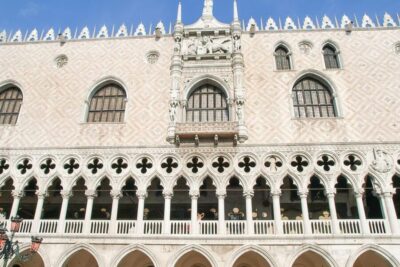
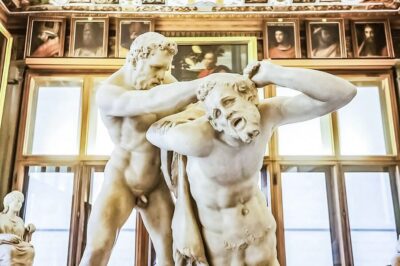
Skip-The-Line Uffizi Gallery Timed Entry Ticket
Read our review →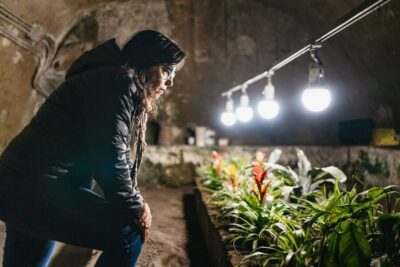
Naples Underground Entry Ticket and Guided Tour
Read our review →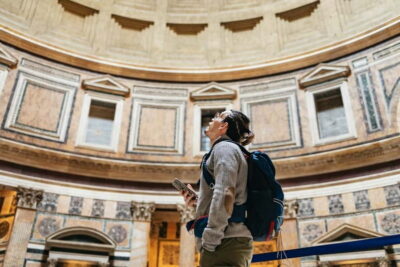
Pantheon Fast-Track Ticket and Official Audio Guide
Read our review →
Entry Ticket and Guided Tour with an Archaeologist
Read our review →
Timed Entrance Ticket to Michelangelo’s David
Read our review →Browse the lists this tour appears in