
Reviewed · COOKING CLASSES
Bari: Pasta and Tiramisu Cooking Class with Wine
Fresh pasta and tiramisu are the heart of this three-hour cooking class near Bari Vecchia. You work in a family-owned restaurant, begin with Prosecco, and finish by eating two pasta dishes and dessert with local wine. Chef Paolo, helped at different sessions by English-speaking hosts such as Alessia, Vincenzo, Marco, or Vincent, keeps the mood light and the instructions clear.
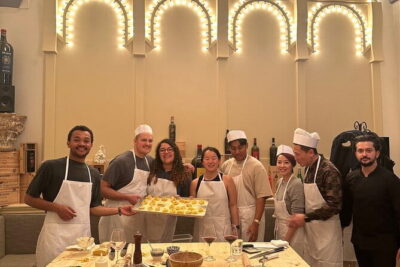
I like the real restaurant setting, rather than a polished studio built only for classes. I also like the social side: solo visitors, couples, and small groups cook at the same tables, then sit down together for wine and conversation. The main consideration is dietary fit. Substitutions are possible, but the traditional recipes contain gluten, eggs, and dairy, and the kitchen cannot promise no cross-contamination.
Key points to know before booking
- Two pasta preparations: You learn to make two types of fresh pasta, not just roll dough and watch a demonstration.
- Tiramisu comes first: Prosecco accompanies the opening lesson, giving the dessert time to rest before the meal.
- A central Bari setting: The restaurant is about 300 meters from Teatro Petruzzelli, 500 meters from Bari Vecchia, and 100 meters from Lungomare Araldo.
- A full social meal: The class includes three glasses of local wine, coffee or limoncello, and time to talk with the group.
- Recipes to take home: You receive the recipes so you can repeat the dishes after your holiday.
- Best for traditional eaters: Vegetarian adaptations are available, but the class is not suitable for vegans or people who cannot eat gluten or lactose.
Why this Bari cooking class works so well
The appeal here is simple: you do not just eat Italian food, you learn how two familiar dishes come together. Pasta and tiramisu are practical choices because you can make them again at home without special equipment.
The class takes place at Ristorante Ceralacca, an award-winning restaurant close to Bari’s seafront. You meet your guide in front of the restaurant, which is an easy landmark in a central part of town. It is close enough to Bari Vecchia to pair with an afternoon walk through the old lanes, but the location also puts you near the Lungomare for a stroll before or after class.
I especially like the balance between instruction and dinner. This is not a serious culinary school session where every minute is spent on technique. You get enough guidance to understand the method, but there is also room for jokes, questions, wine, and conversation. That makes it a good choice for a holiday evening when you want to do something more active than sit at another restaurant table.
More cooking classes in Bari:
- Florence: Pasta Cooking Class with Unlimited Wine
★ 4.9 · 10,285 reviews - 3 in 1 Cooking Class near Navona: Fettuccine, Ravioli & Tiramisu
★ 5.0 · 7,376 reviews - Florence Pizza or Pasta Class with Gelato Making at a Tuscan Farm
★ 5.0 · 6,801 reviews
Starting with tiramisu and a glass of Prosecco
The class begins with a welcome and a glass of Prosecco. Your instructor explains the traditional tiramisu recipe first, then guides you through making it from scratch.
Beginning with dessert makes practical sense. The tiramisu needs time to rest before you eat it, so preparing it first lets the dish develop while you work on the pasta. It also gives you an easy opening task before the flour and dough appear.
The teaching focuses on useful details and small corrections. You learn the order of the steps, how to handle the ingredients, and the tricks that help the finished dessert taste balanced. The class keeps to the traditional recipe, which includes dairy and eggs, though substitutes can be arranged for some food preferences.
Chef Paolo is often paired with an English-speaking assistant. Names have included Alessia, Vincenzo, Marco, and Vincent at different sessions. Their role matters because the chef can focus on the food while the assistant makes sure instructions and questions are clear. Several sessions have been praised for patient explanations and translation, especially when Paolo’s animated style moves faster than your hands.
Do not expect a private lesson with one instructor beside you at every moment. The class is social, and you may be working alongside a fairly large mixed group. That can mean a little waiting while instructions are repeated, but it also creates the friendly table atmosphere that gives the evening much of its charm.
Making two kinds of fresh pasta
After the tiramisu, the class moves to fresh pasta. You learn how to combine and work the dough, then shape two types of pasta from scratch.
This is the most hands-on part of the experience. You are not simply shown a bowl of dough and handed a finished portion. You take part in the process, with the chef correcting technique and helping you get the pasta to the right texture and shape.
The exact pasta shapes are not specified in the booking details, so I would not book this expecting one particular regional form. The useful point is that you prepare two kinds, giving you more than one method to repeat at home. That variety also makes the final meal feel like a proper small menu rather than a single bowl of noodles.
Fresh pasta rewards attention to texture. The dough may look straightforward, but the feel changes as you knead and shape it. This is where an instructor’s practical tips are worth more than a printed recipe. You begin to understand when the dough needs more work and how careful shaping affects the finished dish.
The class is suitable for beginners. You do not need previous cooking experience, and the repeated praise for clear, patient instruction suggests that the hosts are used to helping first-time pasta makers. Still, the setting is communal rather than highly formal. If you want advanced knife work, sauce theory, or a long lesson on regional pasta traditions, this may feel light. If you want a fun introduction you can use at home, it hits the right level.
Sitting down to eat what you made
Once the cooking is complete, you sit down with the group and eat the pasta and tiramisu. The chef cooks the pasta for the final meal, so you get to enjoy the results without worrying about timing every pot yourself.
Three glasses of local wine are included with the food. Water is also available during the meal, and the wine helps turn the class into a relaxed dinner rather than a quick practical workshop. You can talk with the other participants, compare your pasta shapes, and ask the hosts about Bari or Italian food.
This shared meal is one of the strongest parts of the evening. People attend as couples, families, and solo visitors, and the common task gives everyone an easy subject to discuss. You do not have to arrive with a group of friends to enjoy it. In fact, solo participants have found the interactive format a good way to meet people from different countries.
The restaurant setting adds to the sense that you are taking part in a local food tradition, even though the class is designed for visitors. You are cooking in a working family-owned restaurant, not in a rented classroom with a staged kitchen. That setting has character, but it may also mean the experience feels less controlled than a small private workshop.
The food is the reward, but the value comes from the full sequence: welcome drink, instruction, hands-on cooking, wine, dinner, and conversation. At $69 per person, that is a fair package for three hours in central Bari. You are paying for a meal and an activity, with drinks included, rather than for a cooking demonstration alone.
A few other Bari mornings to weigh against this
- Bari: Pasta Experience Walking Tour
★ 4.7 · 660 reviews - Bari Walking Tour with Pasta Experience
★ 4.5 · 270 reviews - Florence: Pasta & Tiramisu Cooking Class with Unlimited Wine
★ 4.9 · 6,708 reviews - Florence: Pasta Cooking Class with Unlimited Wine
★ 5.0 · 6,413 reviews
Coffee, limoncello, and recipes for home
The meal ends with coffee or limoncello. Several sessions have included particularly generous pours of limoncello, and it is a fitting close to a Puglian meal.
You also receive the recipes to take home. This is an important detail if you want the class to have value beyond one evening. A cooking class can be enjoyable but quickly forgotten when the method is hard to recall. Written recipes give you a chance to make the pasta and tiramisu for friends and family later.
The recipes do not replace what you learn by handling the dough. Your best souvenir is the memory of texture, timing, and technique. Still, having the instructions means you can test what you learned in your own kitchen while the experience is fresh.
The final coffee or limoncello also gives you a last chance to speak with the instructor about Bari. If you want ideas for food, neighborhoods, or the city’s character, this is a useful informal moment. The activity is not presented as a walking tour, so do not expect a long sightseeing talk, but the hosts are available for conversation.
Location, timing, and practical details
The meeting point is in front of Ristorante Ceralacca. From Teatro Petruzzelli, it is roughly a 300-meter walk. Bari Vecchia is about 500 meters away, and the restaurant is around 100 meters from Lungomare Araldo.
That location makes the class easy to fit into a day of sightseeing. You could explore Bari Vecchia first, pause for the class, and then walk along the seafront afterward. You could also schedule it early in your stay and use the conversation with the hosts to get a few food ideas for later meals.
The duration is three hours, though the class can feel longer if the group stays talking after the meal. Some sessions have been described as relaxed rather than rushed. That is good news if you like a social evening, but less useful if you have a tightly packed night schedule.
The instructor language is English, with an English-speaking assistant helping at many sessions. If you need detailed explanations, let the team know at the start. The hosts are used to international groups, and clear communication is part of the format.
Wear comfortable clothes. You will be handling flour and dough, so this is not the time for formal evening wear. Pets and smoking are not allowed. The venue is wheelchair accessible, which makes this one of the more practical food activities in Bari for people who need step-free access.
Cancellation is free up to 24 hours before the activity for a full refund, and you can reserve now and pay later. Those terms are useful when your Puglia plans are still shifting, but the dietary rules deserve more attention than the payment policy.
Dietary restrictions and who should skip it
Vegetarian options are available if you request them when booking. You should also report allergies and food restrictions in advance rather than waiting until you arrive.
The traditional recipes contain gluten, eggs, and dairy. Substitutions may be offered for some preferences, but the provider does not guarantee a kitchen free from cross-contamination. For that reason, the class is not suitable for people with gluten intolerance, lactose intolerance, or vegans.
It is also not designed for babies under one year, children under three, or anyone who would find a three-hour food preparation session difficult. Older children may be able to take part only if the booking provider confirms the arrangement, since no broader age policy is provided.
For most other people, the class suits a wide range of cooking ability. You can attend as a solo visitor, a couple, or a group. The emphasis is on participation and enjoyment, not on producing restaurant-perfect pasta on your first attempt.
The best reasons to book
I would book this class if you want a social evening with real participation. You make two pasta dishes and tiramisu, then eat them with wine. That gives you a clear sense of what you are paying for, and the central location saves time on transport.
I would also book it if you want to meet people. The shared tables and group meal create conversation without forcing it. Chef Paolo’s humor and the assistants’ translation help keep the atmosphere relaxed, and the hosts have a reputation for answering questions and sharing recipes.
The class is less suitable if you want a quiet, intimate meal or a highly technical workshop. The group format means the pace and energy depend partly on who else attends. It is also not a safe choice for strict dietary restrictions because of the traditional ingredients and cross-contamination warning.
Is the Bari pasta and tiramisu class worth $69?
Yes, for most visitors who can eat gluten, eggs, and dairy. The $69 price includes three hours of instruction, all ingredients and equipment, Prosecco, three glasses of local wine, the meal you prepare, coffee or limoncello, and recipes to take home.
That is stronger value than paying for a standard dinner alone, especially because the restaurant is central and the class fills an entire evening. You also leave with techniques you can use again, not just photographs and a full stomach.
Book it early if your schedule is fixed, especially if you want a particular time. Tell the provider about dietary needs when booking, wear comfortable clothes, and leave enough room after the class for a relaxed finish.
Should you book it?
Book this experience if you want to cook, eat, drink local wine, and meet people in a family-owned Bari restaurant. It is particularly good for first-time pasta makers, solo visitors, couples, and anyone who prefers an active meal to another restaurant reservation.
Skip it if you are vegan, cannot eat gluten or lactose, or want a private advanced lesson. For everyone else, the combination of two fresh pasta preparations, tiramisu, a central location, friendly English support, and a full shared meal makes this one of Bari’s more useful food activities.
FAQ
How long does the Bari pasta and tiramisu class last?
The class lasts three hours. This includes the cooking instruction, the meal with local wine, and the coffee or limoncello at the end.
Where is the meeting point?
Your guide meets you in front of Ristorante Ceralacca. The restaurant is about 300 meters from Teatro Petruzzelli, 500 meters from Bari Vecchia, and 100 meters from Lungomare Araldo.
What food will I prepare?
You will prepare tiramisu and two types of fresh pasta. You sample the dishes you make during the class.
What drinks are included?
You receive a welcome glass of Prosecco, three glasses of local wine with the meal, and either coffee or limoncello at the end.
Is the class taught in English?
Yes. The instructor language is English, and an English-speaking assistant may help translate and explain the chef’s instructions.
Can vegetarian participants join?
Yes. Vegetarian options are available upon request. You should provide your dietary needs when booking.
Is the class suitable for vegans or people with gluten or lactose intolerance?
No. The activity is not suitable for vegans, people with gluten intolerance, or people with lactose intolerance. Substitutions may be available for some preferences, but the traditional recipes contain gluten, dairy, and eggs, and cross-contamination cannot be ruled out.
More Workshops in Bari
- Naples: Pizza-Making Workshop with Drink and Appetizer
★ 4.9 · 5,411 reviews - Rome: Pasta & Tiramisu Class with Fine Wine by the Vatican
★ 4.9 · 4,852 reviews - Cooking Class and Lunch at a Tuscan Farmhouse with Local Market Tour from Florence
★ 5.0 · 4,831 reviews - Authentic Pizza Making Class in Naples with Appetizers and Drink
★ 5.0 · 3,178 reviews
Fresh on the Bari list
- Bari: Street Food Walking Tour with Wine Tasting★ 5.0 · 211 reviews
- The Original Street Food Walking Tour in Bari★ 4.5 · 226 reviews
- Bari Rickshaw Tour★ 5.0 · 233 reviews
- Bari Vecchia Group Tour in Italian★ 5.0 · 241 reviews
- Guided tour and tasting at La Cantina Frrud – Wine Museum★ 5.0 · 249 reviews
- Alberobello and Matera Bus Tour, from Bari★ 4.5 · 250 reviews
- Bari by boat: admire the city from the sea with Aperitivo★ 4.6 · 256 reviews
- Bari Bike Tour★ 5.0 · 266 reviews
Cooking Classes, compared.
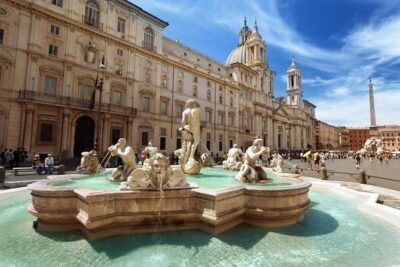
3 in 1 Cooking Class near Navona: Fettuccine, Ravioli & Tiramisu
Read our review →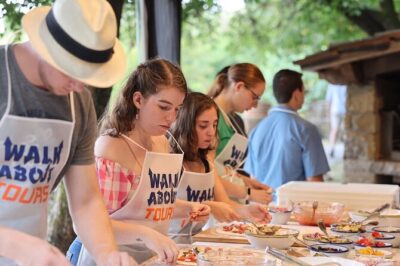
Florence Pizza or Pasta Class with Gelato Making at a Tuscan Farm
Read our review →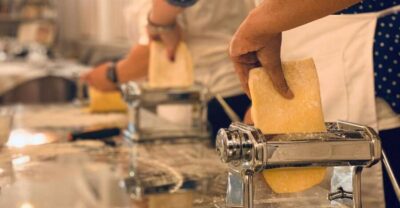
Pasta & Tiramisu Cooking Class with Unlimited Wine
Read our review →
Cooking Class and Lunch at a Tuscan Farmhouse with Local Market Tour from Florence
Read our review →
Authentic Pizza Making Class in Naples with Appetizers and Drink
Read our review →
Pasta Making Class with Wine, Limoncello, and Dessert
Read our review →Browse the lists this tour appears in