
Reviewed · WALKING TOURS
Alternative Walking Tour of Rome’s City Center & Hidden Gems
Rome’s best stories are often hiding in plain sight. This 2.5-hour city-center walk links Trajan’s Column, Trevi Fountain, the Pantheon, and Piazza Navona with lesser-known churches, family rivalries, political scandals, and strange details you could easily miss alone. I like the way the guides connect architecture to the people who paid for it, and I like that the tone is lively rather than textbook-dry.
I also like the strong mix of famous sights and quieter stops, plus the chance to ask questions face to face. Guides including Simone, Jacopo, Iris, Jacob, and Simon have been praised for clear English, humor, and sharp storytelling. The main consideration is the tip-based price: the booking cost is only $3.77, but you are expected to pay the guide at the end, commonly around €10 to $50.
Key points
- Powerful Roman families: Learn how dynasties, popes, artists, and political families shaped the streets and monuments around you.
- Famous sights with a fresh angle: Trevi Fountain, the Pantheon, Piazza Navona, Trajan’s Column, and Piazza Venezia receive more than a quick photo stop.
- A secret stop and monastery visit: The route includes lesser-known places that add texture to the central Rome experience.
- Story-driven guiding: Expect scandals, betrayal, murder, corruption, church politics, and dark humor alongside art and architecture.
- Tip-based value: The listed price is low, but plan for a separate tip that reflects the time and quality of the guide.
- English or Spanish: The walk is led live in either language, with a route lasting about two and a half hours.
Why this Rome walk feels different
Many central Rome walks simply move from monument to monument. This one tries to explain who wanted each monument built, who gained from it, and how power was displayed through churches, fountains, columns, and grand public spaces.
That approach gives the route a clear theme. You are not just looking at old stone. You are tracing the ambitions of emperors, popes, noble families, artists, invaders, and political operators. The stories include crime, murder, war, betrayal, and corruption, so this is not a soft-focus portrait of Rome.
The humor matters, too. The guides use dark jokes and politically incorrect humor, which can make complicated events easier to remember. It also means the tone will not suit everyone. If you want a solemn art lecture or a strictly academic presentation, this may feel too cheeky. If you enjoy history with a human edge, the style should keep you alert.
The route is useful for both first visits and return trips. First-time visitors get a broad framework for understanding Rome, while repeat visitors see familiar landmarks through a different lens. One especially helpful feature is the room for questions. Guides such as Simone and Jacopo have been praised for following questions into Roman culture, art, geography, and family history rather than rushing through a fixed script.
More City Tours in Rome
- Rome: City Sightseeing Hop-on Hop-off Bus with Audioguide
★ 4.0 · 16,045 reviews - City Sightseeing Rome Hop-On Hop-Off Bus Tour
★ 3.5 · 5,446 reviews - Rome: Fettuccine Pasta Cooking Class in Rome’s City Center
★ 4.8 · 2,414 reviews
Starting beside Trajan’s Column
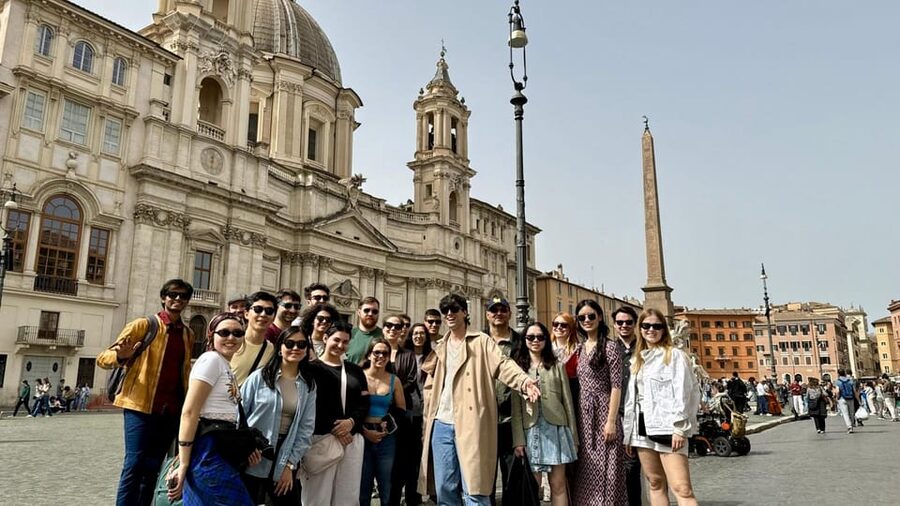
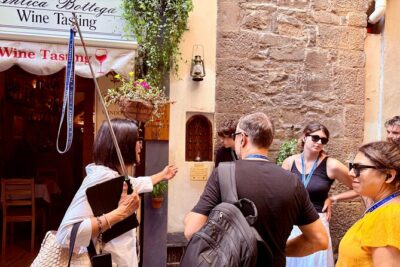
Meet on the steps of Chiesa del Santissimo Nome di Maria al Foro Traiano, beside Trajan’s Column and Trajan’s Forum. The guide carries a sign with the tour name, which helps in a busy central area.
Trajan’s Column makes a strong opening point. Its carved spiral tells a military story, while the column itself shows how Roman rulers used public art to celebrate power. From here, the guide begins the larger question running through the walk: how did Rome turn political ambition into stone?
Allow time to find the church steps before the start. The meeting point is near major monuments, but central Rome can be confusing, especially when several groups gather around Piazza Venezia and the Imperial Forums. I would arrive early rather than try to locate the sign at the last minute.
The first stop lasts about 15 minutes, enough for photographs, orientation, and an explanation of the surrounding ruins. Do not expect an archaeological excavation visit in the formal museum sense. The value here is the context, the link between the column, the forum, and the political message it carried.
Piazza Venezia and the families behind Rome
The short move to Piazza Venezia brings you into one of Rome’s most loaded public spaces. The stop itself is brief, around five minutes, but it helps connect ancient Rome to later political power.
A recurring theme is the role of powerful families. The route looks at dynasties and the people who shaped the city across different periods. That focus gives the walk a more personal storyline than a simple list of dates.
You may hear about the families behind churches, palaces, public works, and artistic commissions. Their influence was not limited to private wealth. They used buildings and public spaces to announce status, secure loyalty, and compete with rivals.
This is one of the strongest parts of the experience for anyone who likes political history. It also means the tour may not linger at every monument. The guide is building a connected story, so some stops receive a quick explanation while others receive more time.
The secret stop and the 25-minute monastery visit
The route then includes a secret stop, listed for about five minutes, followed by a monastery visit lasting around 25 minutes. These are the parts most likely to feel different from a standard Rome highlights walk.
The exact secret stop is not named in the available details, so you should treat it as a surprise rather than plan your day around a particular monument. That uncertainty is part of the appeal. It also means the experience can vary depending on access, the guide, or the day’s route.
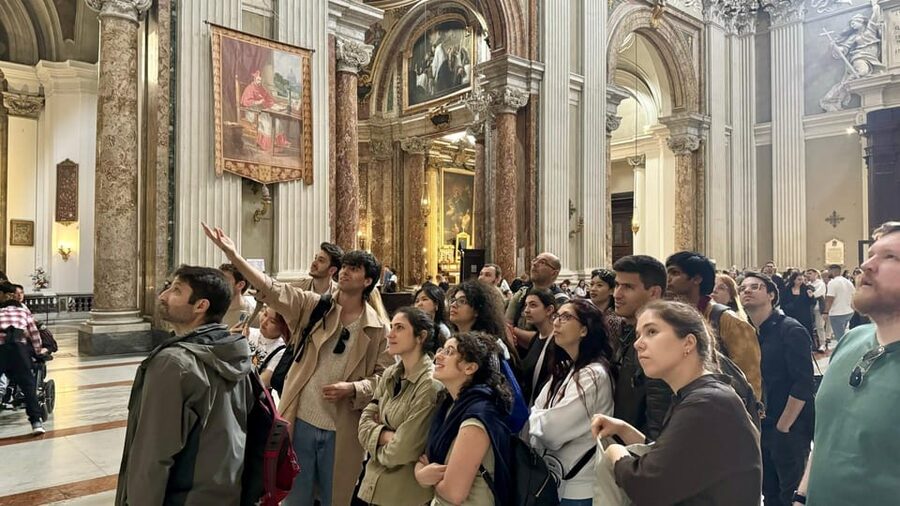
The monastery is the longest stop on the itinerary. That extra time suggests a place where the guide can explain more than a façade or fountain. You may hear about church history, art, religious power, or the way Rome’s institutions shaped daily life.
Several guides have been praised for opening doors to places that are not normally part of a casual sightseeing route. One account describes a priest allowing the group to see an area not usually open to the public. That kind of access cannot be treated as guaranteed, but it shows why a live guide can add something that a self-guided walk may miss.
The tour also includes Papal Private Gardens Admission. The timed route provided does not name the gardens as one of the numbered stops, so I would confirm with the operator how that admission fits into the experience. The inclusion may relate to a special access arrangement, but the details are not clear enough to assume that the gardens form part of every walk.
More Walking Tours in Rome
- Rome: Trastevere & Campo de Fiori Street Food Walking Tour
★ 4.9 · 2,768 reviews - Rome: Paranormal Night Walking Tour & Secret Backstreets
★ 4.9 · 1,921 reviews - Rome by Night Walking Tour – Legends & Criminal Stories
★ 4.5 · 1,003 reviews - Rome: Guided City Center Evening Sightseeing Walking Tour
★ 4.4 · 953 reviews
Trevi Fountain beyond the usual photograph
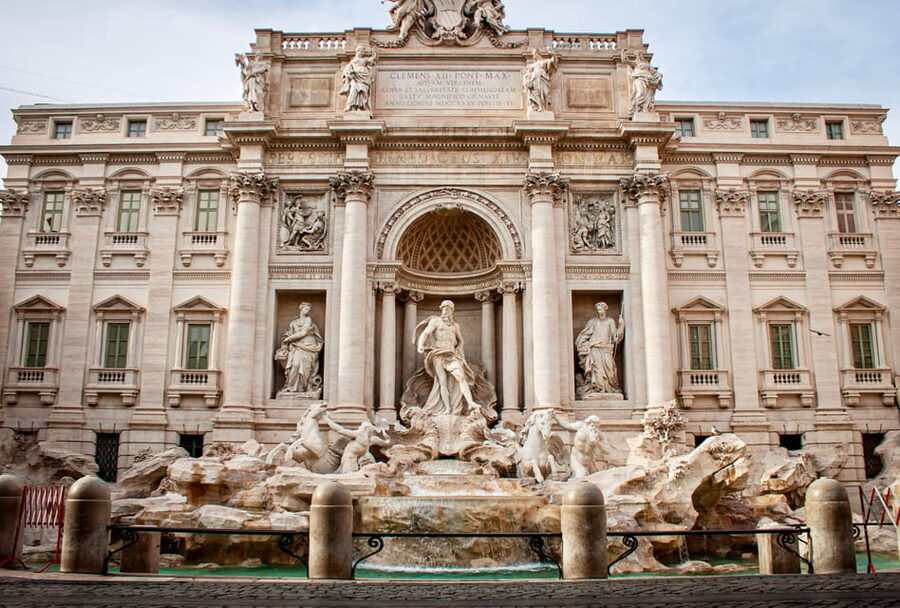
Trevi Fountain is the longest famous landmark stop, with about 15 minutes for a break, photos, guided explanation, sightseeing, and free time. That is enough to take in the fountain and hear its main story, but not enough for a quiet, extended study during peak crowds.
The guide’s role here is to move past the standard coin-toss explanation. Roman fountains were tools of public image and political messaging. Their scale, location, water supply, and decoration all helped powerful patrons project control and generosity.
This is a good place to ask questions about how Rome’s fountains fit into the city’s wider story. The tour connects ancient engineering, papal ambition, Baroque art, and public ceremony rather than treating the fountain as an isolated photo backdrop.
Crowds are the practical issue. Trevi Fountain is one of Rome’s busiest spots, and the group may need to stay close to the guide. One useful quality praised across the guiding team is careful crowd navigation, especially with smaller groups. Still, keep your belongings secure and do not expect an empty view.
Sant’Ignazio and Rome’s theatrical churches
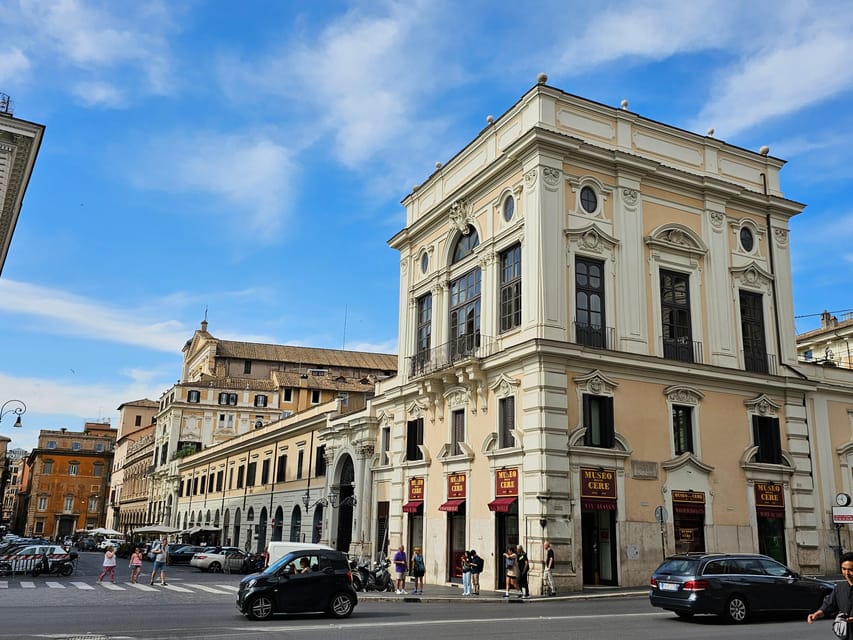
The Church of Sant’Ignazio di Loyola receives about 10 minutes. This is a smart stop because it shows how Rome’s churches can act as art galleries, propaganda, and visual tricks all at once.
The church is known for its dramatic ceiling fresco, and the guide can help you understand how the artwork changes your sense of space. A quick glance upward does not explain the technique or the ambition. The stop gives you a reason to look carefully.
The church also supports the tour’s explanation of why Rome has so many churches. They were not simply places for private worship. Religious orders, noble families, popes, and artists all used churches to establish influence and tell persuasive stories through architecture and decoration.
The 10-minute timing is short, so you may want to return later if the interior catches your attention. That is common on a city walk. The guide gives you the key idea, then you can decide which places deserve a second visit.
The Pantheon in a five-minute stop
The Pantheon appears later, with about five minutes for photographs, guided commentary, and sightseeing. That is a brief encounter with one of Rome’s most important buildings.
The advantage is efficiency. You get the building placed within the broader story of imperial Rome, Christianity, engineering, and changing religious use without spending the whole afternoon at one site.
The drawback is equally clear: this is not a full Pantheon tour. You may not have time to study every detail, linger inside, or explore at your own pace. If the Pantheon is a priority for you, return separately after the walk.
Even a short explanation can change the way you see it. The building is not just an old temple-like structure. It represents Rome’s habit of absorbing earlier ideas, changing their purpose, and giving them new political or religious meaning.
Finishing at Piazza Navona
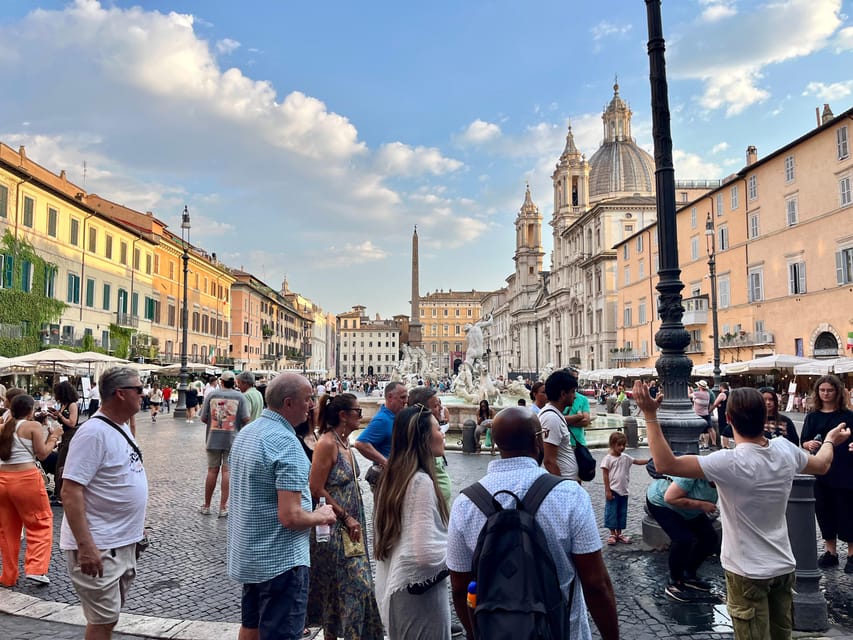
The walk ends at Piazza Navona after a final stop of about 15 minutes. This gives the tour a strong closing scene, with Baroque fountains, grand façades, restaurants, and a lively public square.
The guide explains how fountains became symbols of power and propaganda, a theme that echoes the earlier discussion at Trevi Fountain. You can also connect the square’s layers of ancient, religious, and Baroque Rome.
Finishing here is practical. Piazza Navona is central, so you can continue on foot to nearby churches, cafés, restaurants, or other sights. Several guides also give suggestions for what to see next. I would keep a note on your phone during the tour because the recommendations may be as useful as the formal route.
The square is also a good place to end because the tour leaves you with a working map of central Rome. You have seen monuments, churches, ruins, and public spaces, and you have heard how they fit together.
The guides shape the experience
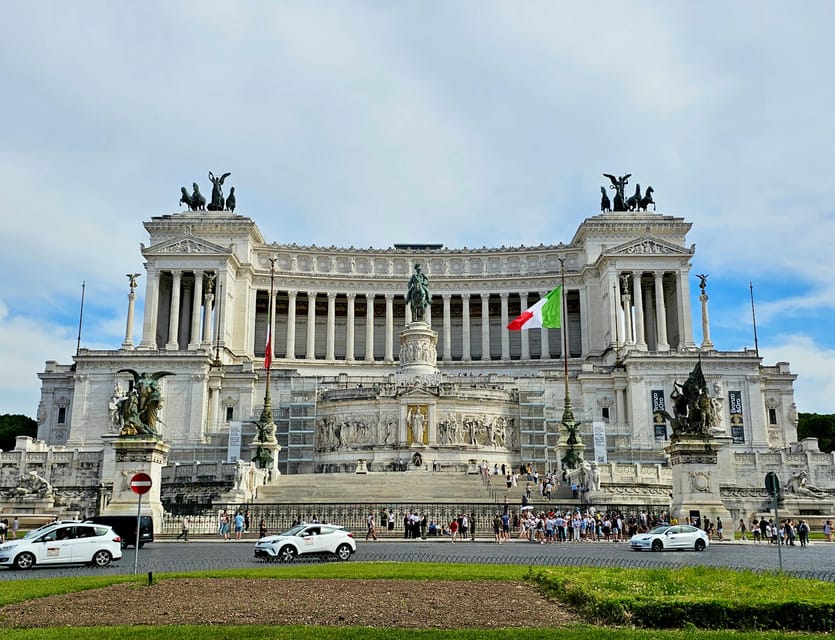
The guide is the main reason to book this format. Names associated with especially strong sessions include Simone, Jacopo, Iris, Jacob, Simon, and Simona. The descriptions of their guiding style are consistent: clear speech, energy, humor, patience, and a willingness to answer questions.
Simone is especially suited to the political and family-centered theme. He has been described as passionate, lively, and able to explain ancient inscriptions, including translations from Latin and Ancient Greek. That level of language skill may not be present on every departure, but it shows the depth some guides bring.
Jacopo is a strong choice for visitors interested in ancient Rome and family history. He has been praised for making Roman culture easy to follow and for speaking clearly even in noisy places.
Iris brings an animated style, while Jacob is noted for a comfortable pace and attention to the whole group. You should understand that a tip-based operation may have several guides, so the exact personality and emphasis can change from one departure to another.
The small-group feel is another advantage when it occurs. One departure had only one participant, while other groups were described as intimate and easy to manage. Group size is not stated as fixed, so do not book expecting a private tour. Still, the format appears designed for conversation rather than a large, anonymous crowd.
Is the $3.77 price really the cost?
The listed booking price of $3.77 per person is attractive, but it is not the full financial picture. This is a pay-what-you-want walking tour, so the guide earns through tips rather than a standard tour fee.
The usual suggested range is about €10 to $50. That is a wide span, and you should decide in advance what the experience is worth to you. A useful way to think about it is to compare the total expected tip with the cost of a standard guided walk, then judge the value based on the storytelling, group size, route, and time.
At the low end, this can be one of the best bargains in Rome. At the high end, it may cost as much as a conventional paid tour. The difference is flexibility. You pay after the walk and can adjust the amount to reflect your experience.
Cash or card may be accepted, but the supplied details do not guarantee a particular payment method for every guide. Bring a practical payment option and remember that the tip is expected, not an optional hidden fee sprung on you at the last second.
Who should book this Rome walking tour?
I would choose this tour if you want a broad introduction to Rome with a strong human storyline. It suits first-time visitors who need help making sense of the city, especially if ancient ruins, church art, political intrigue, and family rivalries sound more appealing than a basic sightseeing checklist.
It also works well for repeat visitors. If you have already seen the Colosseum, Trevi Fountain, and Pantheon, the lesser-known stops and family focus can give central Rome a new shape.
The walk is less suitable if you need extended time at each major monument. The Pantheon receives only about five minutes, and the route gives Trevi Fountain around 15 minutes. Think of this as a city orientation with stories, not a detailed inspection of every famous site.
Wear comfortable shoes and expect to walk between stops. The route ends where it starts in the central city area, but no transport is included or needed for the listed itinerary. English and Spanish are available, and the tour lasts 2.5 hours, making it easy to fit into a morning or afternoon.
Free cancellation up to 24 hours before the start and reserve-now, pay-later booking add useful flexibility. Those terms are helpful when your Rome schedule is still changing.
Should you book it?
Book this walking tour if you want Rome explained through power, personality, art, religion, and scandal. The strongest guides, especially Simone, Jacopo, Iris, and Jacob, bring energy and clear storytelling to a route that mixes major sights with places you might otherwise miss.
I would skip it only if you prefer a quiet, formal lecture, guaranteed access to every advertised special location, or long visits inside each major monument. For most people who want to get their bearings and understand why Rome looks the way it does, the low upfront price and flexible tip model make it a sensible first walk. Just budget for the tip and treat the exact guide and secret stop as part of the day’s uncertainty.
FAQ
Where does the walking tour start?
It starts on the steps of Chiesa del Santissimo Nome di Maria al Foro Traiano, beside Trajan’s Column and Trajan’s Forum. The guide holds a sign with the tour name.
Where does the tour finish?
The tour finishes at Piazza Navona.
How long does the tour last?
The walking tour lasts 2.5 hours.
What languages are available?
The live tour guide is available in English or Spanish.
Is the tour fully paid in advance?
No. It uses a pay-what-you-want model. The listed booking price is $3.77 per person, and you give the guide a tip at the end.
How much should I tip the guide?
The stated usual range is between €10 and $50. You can choose an amount based on what you feel the experience was worth.
Which major sights are included?
The route includes Trajan’s Column, Piazza Venezia, Trevi Fountain, the Church of Sant’Ignazio di Loyola, the Pantheon, and Piazza Navona.
Does the tour include lesser-known places?
Yes. It includes a secret stop, a monastery visit, and lesser-known locations in addition to the major landmarks.
Is admission to the Papal Private Gardens included?
Papal Private Gardens Admission is listed as included. The timed route does not identify the gardens as one of its numbered stops, so confirm how this admission is arranged before booking.
Fresh on the Rome list
- Rome: Guided Catacombs Tour & Capuchin Crypt (Audio Guide)★ 4.3 · 191 reviews
- Guided tour of the Colosseum, Roman Forum and Palatine in Spanish★ 4.5 · 191 reviews
- Rome: Borghese Gallery Guided Tour with Skip-the-Line Ticket★ 4.5 · 192 reviews
- Rome: Arena Colosseum Tour with Arena Access★ 4.6 · 193 reviews
- Rome: Colosseum & Roman Forum Guided Tour★ 5.0 · 194 reviews
- Colosseum, Forum, Palatine Hill with audio guide and Arena or Bus option★ 4.0 · 193 reviews
- Rome: Domus Aurea Guided Tour and Virtual Reality Experience★ 4.7 · 194 reviews
- Rome Vintage Fiat 500 car Tour With Photographer★ 5.0 · 194 reviews
Walking Tours, compared.
Guided Walking Tour & Last Supper Visit with Ticket
Read our review →
Rialto Bridge & Offbeat Unusual Venice Walking Tour
Read our review →
Private 3 hrs Venice Tour: St Mark’s, Walking tour & Boat tour
Read our review →
Skip the line: Uffizi and Accademia Small Group Walking Tour
Read our review →Browse the lists this tour appears in